
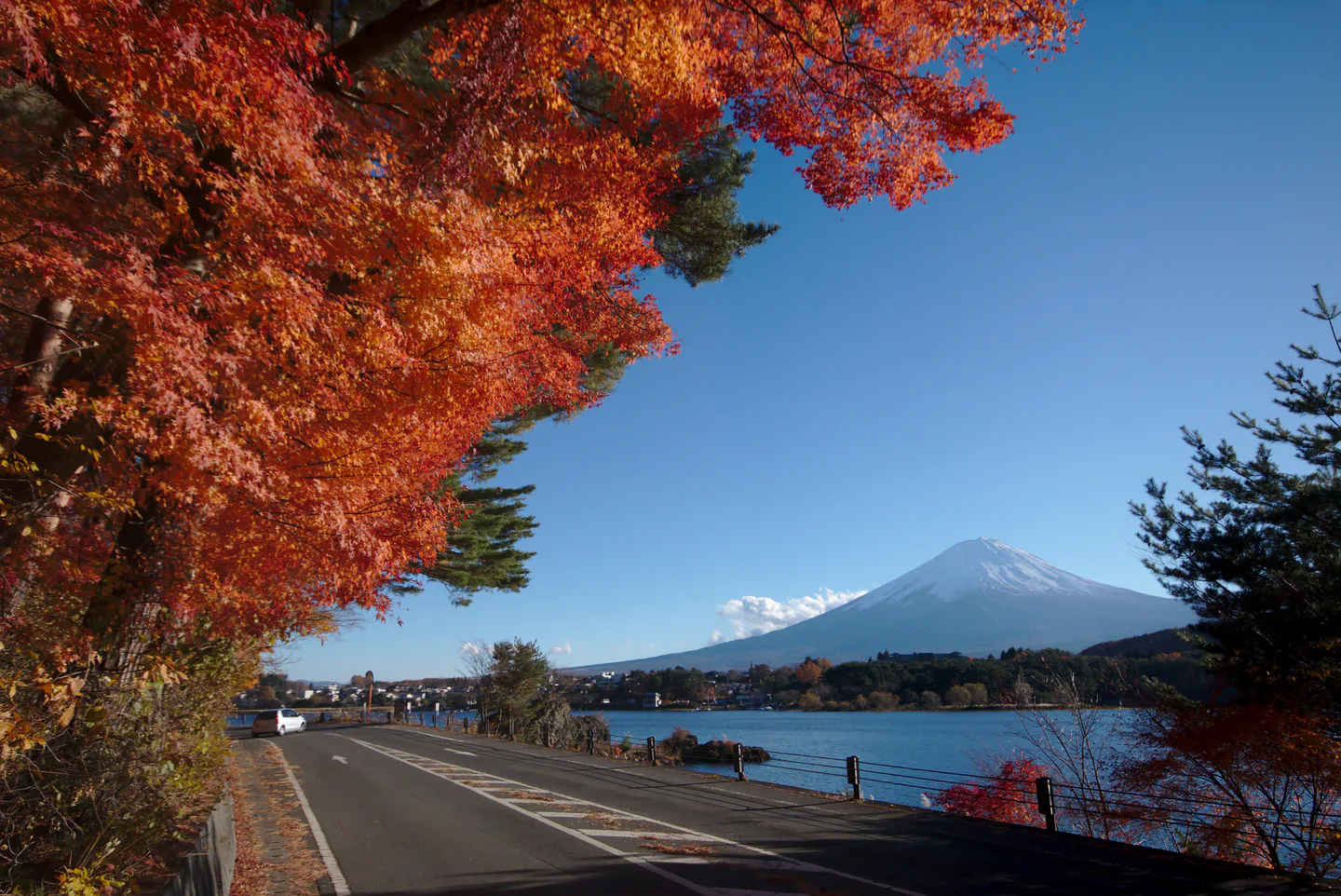
One night at Lake Kawaguchi changes the hours you can use: it gives you the evening and an early look at Mount Fuji without catching a train back to Tokyo that day. A second night does something else. It clears a whole middle day of checkout, bags and an onward departure. Decide whether you need that free day before paying for it. A visitor who wants one viewpoint and a little lakeside time may be happier with a carefully planned day trip; a family using a ryokan, a photographer waiting for dawn or someone exploring Fujiyoshida has a stronger case for two nights.
More nights create opportunities to change the order of outdoor plans, but clouds can still hide Fuji throughout a stay. This distinction matters most in autumn, when the mountain view, the colour of the trees and the traffic around the lake rarely follow the same schedule. If you have not decided whether to sleep here at all, compare the Fuji day-trip and overnight trade-off first. The question below is what another night achieves once Kawaguchiko is already on your route.
Where the extra time actually goes
↔ Scroll table left or right
| What you want from Kawaguchiko | Practical stay | Why that length fits |
|---|---|---|
| One Fuji viewpoint and a compact lakeside visit on a short Japan trip | Day trip | Direct rail can give you a substantial daylight block without moving hotels. |
| First visit with an evening, ryokan dinner, an onsen or autumn illumination | One night | You can use dusk and one dawn without sacrificing a second hotel night. |
| Maple Corridor lights are central to the trip | At least one night | The illuminated corridor continues beyond the normal direct-train return. |
| Photography, unhurried property time or a separate Fujiyoshida or Yamanakako day | Two nights | Day two remains free of checkout and long-distance travel. |
| You only hope the mountain will be clearer tomorrow | Usually one night | A second morning raises the number of chances, with no visibility guarantee. |
| Hakone also matters | One night in each area | A split can be easier than commuting to Hakone from a Kawaguchiko base. |
A short trip of five or six nights often has too little room for a two-night Fuji stay if Tokyo and Kyoto are its main aims. In that situation, the Tokyo day-trip comparison can put the Fuji excursion beside other uses of a full day. On a longer route, the value of one night increases because it avoids making the lake a rushed out-and-back journey. If you are choosing between the two Fuji areas, Hakone versus Kawaguchiko addresses a different choice from simply adding another night here.
↔ Scroll table left or right
| Stay length | Time it adds | Limit it cannot remove |
|---|---|---|
| Day trip | Daylight between your booked inbound and outbound services | No unhurried lakeside evening or dawn |
| First night | After-dark lakeside time, dinner and the next morning | Fuji may still be behind clouds |
| Second night | Another dawn and a complete day without a checkout deadline | The added hotel cost and another day of uncertain weather |
That middle day is especially useful without a car. Moving around the north shore or combining sites in different parts of the basin takes more than the station-to-station train time. It can also give an older traveller a day without breakfast, packing, bus, luggage storage and a long train all compressed together. For a couple planning to leave the hotel at dawn and return after dark, however, paying for a second premium room may add little. The first-trip Japan itinerary lengths helps place that cost of a night in the wider itinerary.
The direct train makes a day trip possible, with a firm end
The regular Fuji Excursion offers a useful benchmark. Its 07:30 Shinjuku departure reaches Kawaguchiko at 09:28; a regular late direct return departs Kawaguchiko at 17:41 and arrives in Shinjuku around 19:48 on weekdays or 19:40 on weekends and holidays. The adult one-way fare is ¥4,200, making the two direct rides ¥8,400 before any local bus, attraction or meal. The railway lists four regular round trips daily and additional services on selected dates. Book your actual date and return seat rather than assuming a seasonal extra train will run.
Between those arrivals and departures lie about eight hours at the station, not eight hours at every attraction. The Maple Corridor, Oishi Park and the ropeway all require a local movement and, sometimes, a queue. A day trip can cover one main part of the lake and one secondary stop comfortably. It becomes brittle if you make the ropeway, cruise, Oishi Park, Maple Corridor, lunch and shopping all compulsory. The Tokyo–Kawaguchiko transport comparison helps with the choice of direct train, coach or tour, while the Kawaguchiko activities guide helps trim the stop list.
Protect your return reservation first. If the inbound train is 45 minutes late or buses crawl around the shore, remove the least important paid attraction. Do not use the last direct departure as though it were a flexible evening service. Coaches can run later, but road congestion is a different uncertainty, and a regular rail alternative needs its own connection plan. The Oishi Park boat-versus-bus route shows how one imperfect connection can absorb more time than the attraction itself.
November has two clocks: daytime ropeway and evening maples
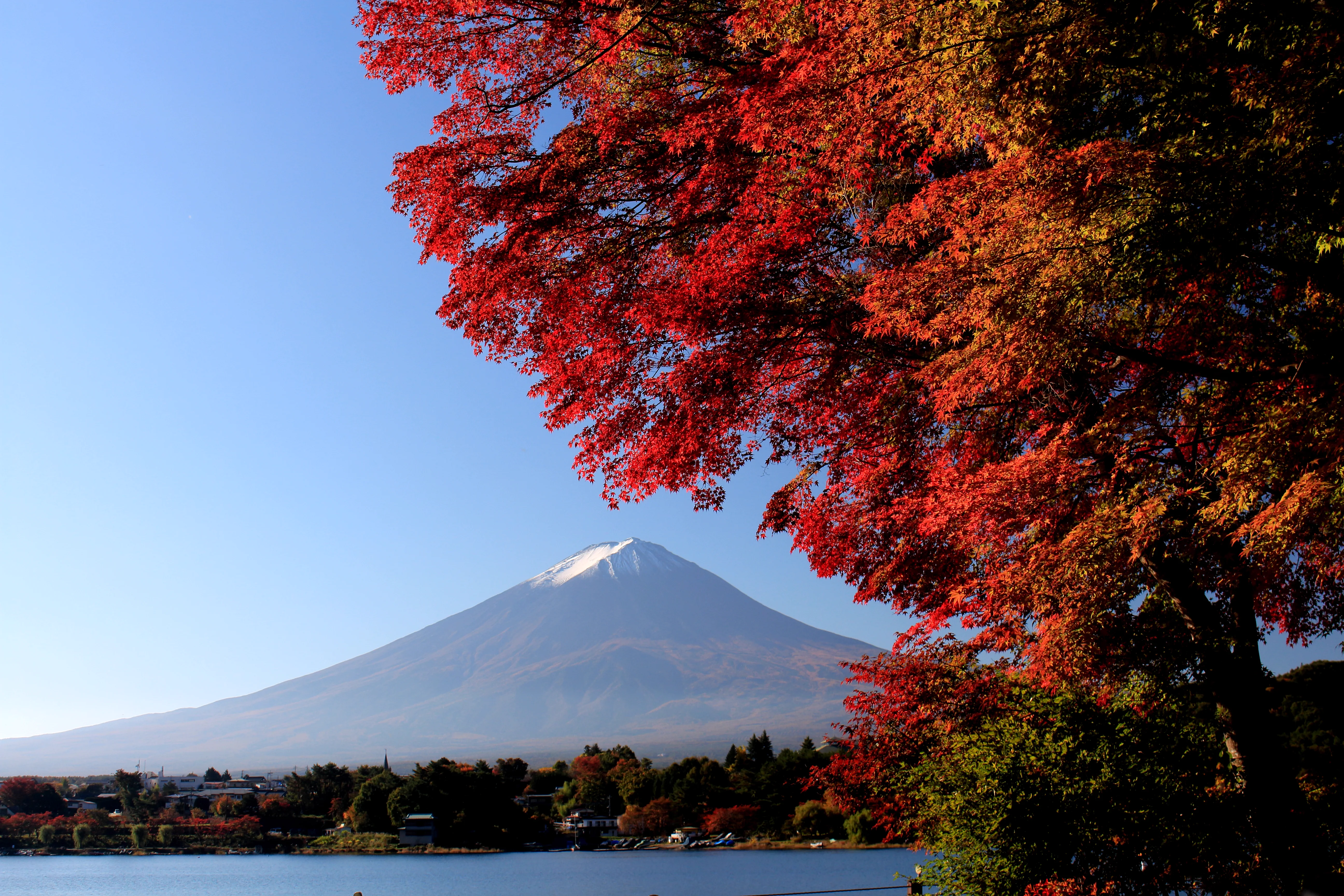
The 2026 Fujikawaguchiko Autumn Leaves Festival is scheduled for 7–29 November, with Maple Corridor lighting from sunset to 21:00. The Mt. Fuji Panorama Ropeway normally runs 08:30–17:00 outside its summer schedule; the last downhill ride is at 17:20 and the adult return ticket is ¥1,000. A plan that puts the ropeway at sunset and then the illuminated trees confuses an afternoon attraction with an evening event. The regular 17:41 direct Fuji Excursion leaves before the lighting is over.
You can still visit the lights on a Tokyo day trip if you secure a suitable later bus or rail itinerary for your specific date. Allow for the return journey before making the illumination the centre of the day. One overnight is simpler: ride the ropeway while it is open, see the Maple Corridor in daylight or after sunset, then finish at your hotel. A half-board ryokan changes the order again, because dinner may have a fixed arrival or serving time. Check that timing against the lights rather than assuming 21:00 gives you a free evening.
Do not use a festival date as a guarantee of peak colour. The trees and the mountain respond to weather separately. A useful first afternoon might begin with a clear Fuji viewpoint, then move to the north shore later; if Fuji is obscured, the corridor, a museum and a bath can still form a worthwhile day. The autumn photography guide covers light and crowds beyond this lake. If your trip can shift by several days, mid-November regional colour choices show why one location's scheduled festival is not the entire season.
A workable first overnight
Arrive early enough to leave the main bag at your hotel or station storage. When the mountain is visible, take the viewpoint before an indoor stop; cloud can move in while you are eating or waiting for a cruise. In autumn, the north-shore foliage can occupy the later afternoon, with a second look at the lit corridor if it is operating. If dinner is included with the room, return at the required time. The autumn hotel-area comparison makes that dinner-versus-corridor walk more concrete.
The following morning can begin from your room, the lakeside path or another nearby viewpoint. Choose one or two remaining activities—Oishi Park, the ropeway, a cruise, a museum or Fujiyoshida—before the onward journey. This sequence gives the weather some room to change without turning the second day into a second full circuit. It also avoids carrying a suitcase through every stop. For more detail on the north-shore connection, see the route to Oishi Park; for a broader three-day split, see Tokyo, Kawaguchiko and Hakone together.
A room advertised with Mount Fuji views has a particular orientation, not a promise that the mountain appears. A lake-facing room may face away from Fuji. For a costly single night, check the precise room category, cancellation terms and what you can enjoy if cloud hides the view. The Fuji-view and private-bath hotel comparison separates property location from room features. If a private bath is central to the booking, ask whether it uses natural hot-spring water, whether it is indoors or outdoors, whether stairs are involved, and whether privacy and the viewing direction meet your needs. Some baths are in-room; others are reservable shared facilities.
When a full middle day earns the second night
↔ Scroll table left or right
| Purpose for day two | What the second night changes | When it loses value |
|---|---|---|
| A second dawn for photography | You can watch early light twice without packing before sunrise. | Your only desired result is one clear iconic frame, with no satisfying cloud plan. |
| Ryokan, meal and private-bath time | The accommodation becomes part of the stay rather than a place to sleep. | You plan to spend almost every waking hour elsewhere. |
| Fujiyoshida or Yamanakako as a distinct outing | A different town or lake gets its own unhurried day. | The side trip is only a quick photo stop. |
| Switching outdoor and indoor blocks with weather | The clearer half-day can take the exposed viewpoint; a museum or onsen fits a poor one. | Every activity only interests you if Fuji is visible. |
Two nights give you a weather exchange, not weather insurance. If cloud sits on Fuji for three days, the extra dawn may offer no different view. It is worth paying for when the lake, food, bath, town or side excursion would still fill the middle day. Lake Kawaguchi versus Lake Yamanaka helps decide whether the second regional day genuinely differs. For Chureito or a theme-park day, the Fuji-Q ticket guide can keep the budget and timing separate from the hotel decision.
Local bus costs do not double just because you use buses on two days. Fujikyu's sightseeing-bus pass covering the Kawaguchiko, Saiko and Narusawa/Shojiko/Motosuko routes is ¥1,500 for one day and ¥2,000 for two, a ¥500 difference. That makes a real two-day bus itinerary easier to budget, though it does not erase the room price. There is also a ¥3,300 bundle including the two-day bus pass, ropeway and either a cruise or the Oishi Park line option. Buy it only if those components match the route you will actually use; a ropeway closure or skipped cruise can defeat the apparent saving. See the regional train, bus and pass comparison before mixing it with wider rail passes.
The older standalone-price arithmetic put the bundle's parts at ¥4,000 and the potential saving at about ¥700. That is a conditional illustration, not a reason to reorganise a day around prepaid attractions. Check the fare and eligibility at purchase, especially if weather makes the ropeway doubtful. The ¥500 one-day-to-two-day pass difference is only meaningful when you would use the covered buses on both days. A station-side stay with one short lakeshore ride might need no pass at all.
The right shore depends on your departure
Near Kawaguchiko Station, the reward is straightforward baggage handling and access to the Fuji Excursion, highway buses and an onward early departure. It suits one night when the hotel mainly supports an evening and dawn. A south- or east-shore base often balances lake access with restaurants and buses for a leisure-focused first overnight. The north shore becomes more attractive over two nights if a Fuji-facing room, dinner, private bath or a walk to the autumn corridor is the point of the stay. The four-area hotel guide breaks down the last-mile trade-offs.
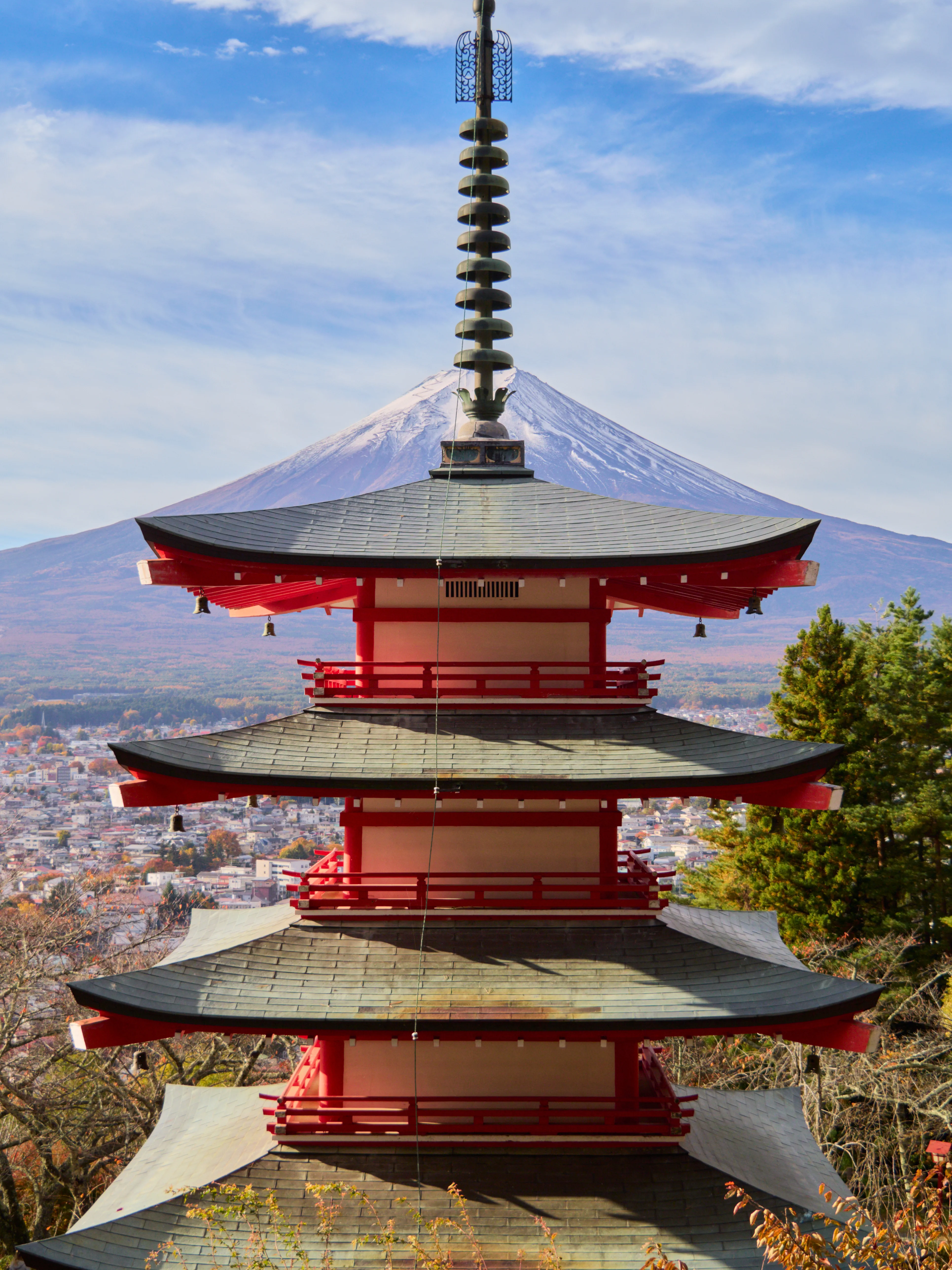
Fujiyoshida serves Chureito Pagoda, Fuji-Q and its own town streets well. It does not put the Maple Corridor within an easy walk. A lower room rate there can be outweighed by buses or rail back to the north shore if that is where every planned activity sits. The pagoda view in the photo here is also a different outing from a Kawaguchiko lakeside walk. If you want to compare specific room and bath products, read Konansou versus La Vista alongside the broader hotel list.
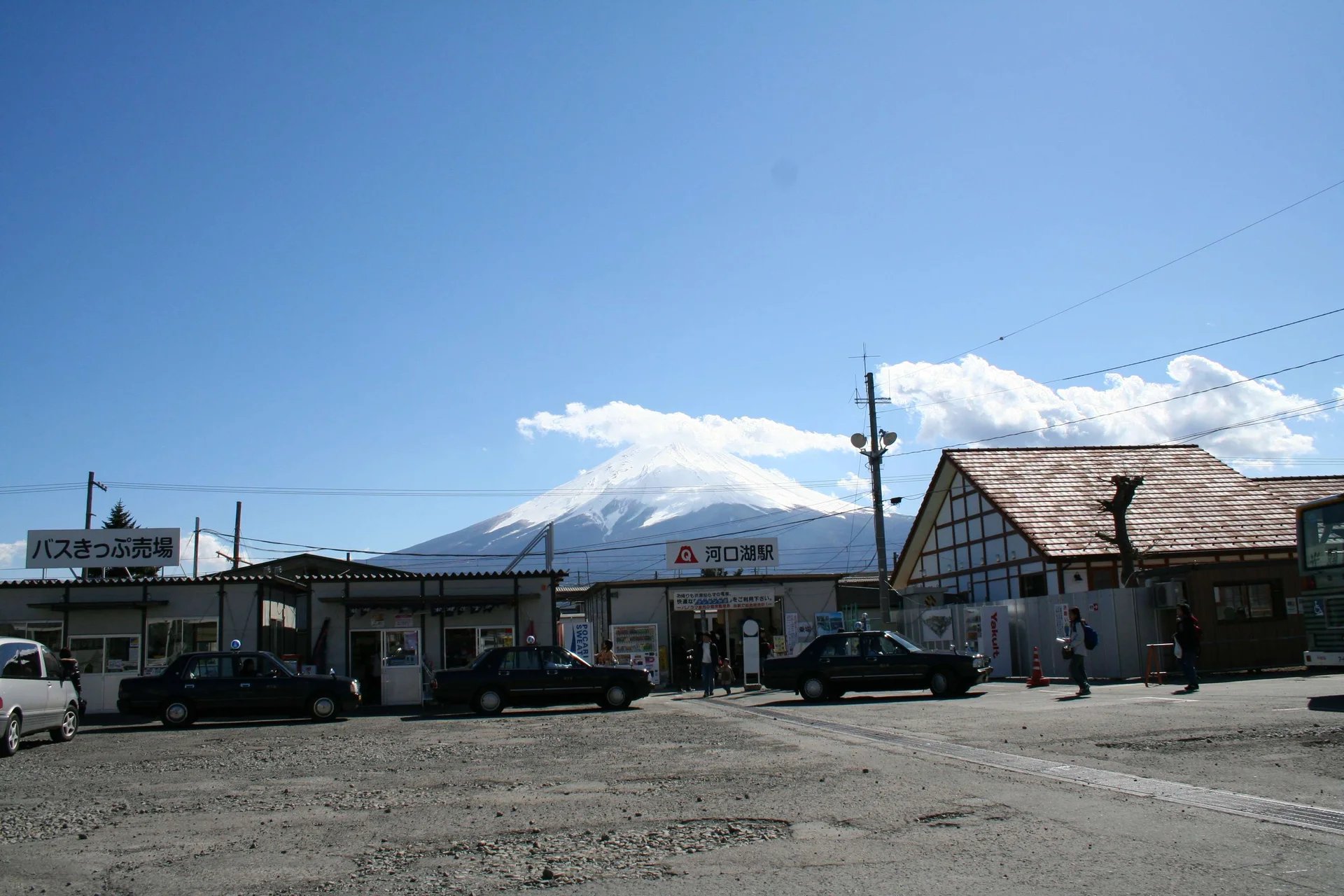
The direct Shinjuku train ends at Kawaguchiko Station, not at a north-shore door. A hotel shuttle may solve the last leg if its hours match your arrival and dinner; a missed pickup can make a nominally easy direct journey awkward. Reserve both Fuji Excursion directions for busy autumn weekends when possible. If you intend to see the late illumination without a car, check the last local bus and hotel shuttle as carefully as the Tokyo return. Luggage forwarding or storage can remove the suitcase from that local calculation.
Going west need not mean returning through Tokyo
For Kyoto or Osaka next, the route through Mishima deserves a look. Fujikyu's Kawaguchiko–Mishima express bus is ¥2,700 one way, with a ¥2,500 web fare, and takes roughly 80–90 minutes before a Shinkansen west. It can turn Tokyo → Fuji → Kansai into a linear journey rather than another Tokyo out-and-back. The benefit depends on the connection you can actually reserve and the baggage you carry; it is not an automatic shortcut for every train departure.
Forwarding the main suitcase and keeping one or two nights of necessities makes this route easier to handle. A hotel near the station may simplify the Mishima departure; a remote lakeshore ryokan may require an early shuttle or extra bus. This is one reason hotel area can matter more than a marginal room rate. The Fuji-area baggage guide covers that particular handoff, while the general luggage guide helps decide whether to send, store or carry.
Weather, leaf colour and movement need separate fallbacks
↔ Scroll table left or right
| What changes | How to use the time |
|---|---|
| Fuji hidden but maples attractive | Keep a foliage walk, museum, meal or bath instead of chasing a clearing around the lake. |
| Fuji clear but trees not yet colourful | Use the mountain viewpoint immediately and regard foliage as an extra. |
| Ropeway stopped by wind | Switch to a lakeside view or indoor activity; do not let a bundle dictate the day. |
| Return train sold out | Replan before departure; do not count on an unreserved seat on the direct service. |
| Early snow or ice | Avoid unfamiliar winter driving and reconfirm local buses and shuttles. |
| Sunshine with slow roads | Reduce the number of bus hops and leave the departure margin intact. |
Those situations can overlap in inconvenient ways. A sunny day can still bring autumn traffic, and a good Maple Corridor afternoon may not reveal the summit. An extra night makes it easier to swap an exposed viewpoint with an indoor block, but it cannot make every condition favourable. The rainy-day itinerary guide offers a way to keep a poor-weather day useful; the autumn photo guide is more relevant if you are carrying a camera specifically for Fuji and foliage.
Families should count hotel changes as well as attractions. One night can be enough when a child sleeps badly in unfamiliar rooms or the Japan trip already changes hotels often. Two nights help when the alternative is a packed checkout day with a bus, bags and a late intercity journey. Older travellers may value the same unhurried day, provided the chosen hotel does not add stairs, distant shuttle stops or an inflexible meal schedule. Comfort comes from the actual base and routine, not merely the number of nights.
↔ Scroll table left or right
| Reason to depart from a one-night plan | Better choice |
|---|---|
| Five or six nights in Japan, with Tokyo and Kyoto as clear priorities | Use a controlled day trip if a Fuji view and short lake visit suffice. |
| A ryokan and its facilities are a principal part of the holiday | Consider two nights so meals and bathing are not squeezed between transfers. |
| Sunrise or sunset photography plus a useful cloud-day activity | Two nights give a second dawn and a full independent day. |
| You dislike hotel changes and would otherwise switch between Kawaguchiko and Fujiyoshida | Two nights in one carefully located base may be easier. |
| Weekend room rates are high and day two repeats day one | Keep the first night and release the second. |
For most first visits, book one night if your budget and wider route allow it: an evening, a morning and a calmer autumn schedule make a visible difference. Keep the second when you can name what its uninterrupted day is for. If that day has no purpose beyond hoping for a clearer mountain, a shorter stay leaves the rest of Japan more room.
If accommodation belongs in the plan, compare stays around Lake Kawaguchi after choosing the shore and checking your onward departure. The room orientation, meal time, bath type and shuttle hours deserve as much attention as the map pin.
More Lake Kawaguchi and Japan routes
Maple Corridor · Fujikawaguchiko Tourism Federation: 2026 · Fujikyu Railway: Fuji Excursion · Fujikyu Bus: Kawaguchiko/Saiko sightseeing · Mt. Fuji Panorama Ropeway: · Fujikyu Bus: Kawaguchiko–Mishima express · Lake Kinrin Autumn Leaves · Iya Valley Autumn Leaves · Japan Autumn Leaves Without · Tohoku Autumn Leaves Itinerary: · Shirakawa-go Autumn Leaves: Buses, · Kenrokuen Autumn Leaves 2026: · When to Book Hotels · Is Hoshino Resorts Aomoriya · Okutama Autumn Leaves Guide: · Yabakei Autumn Leaves Guide: · Takayama Autumn Leaves: Old · Yamadera Autumn Leaves Day · Hakkoda Autumn Leaves Guide: