
November 11–20 is a useful Japan travel window, but it is no longer sound to describe it as a broad 2026 city-maple peak. The published October 2026 forecast from Japan Meteorological Corporation estimates the first day when most leaves on its reference maple tree are red around November 28 in Tokyo, November 28 in Hiroshima, December 7 in Fukuoka and December 11 in Kyoto. That city indicator is not a forecast for every temple, higher hillside or garden. It does warn against selling a mid-November Kyoto street or Tokyo garden as a guaranteed full-red scene.
Build one gateway corridor for a five-day trip and use elevation within it. A seven-day trip may justify a Tokyo arrival with a Kansai departure when both regions have independent reasons to visit; it should not zigzag across Japan for one predicted maple date. Kyoto and Nara remain compelling for architecture and temples; Tokyo still has gardens and day trips; Miyajima has tides, shrines and a confirmed 2026 evening event. Colour can improve any of those trips without being their only reason to exist. The wider 2026 forecast and route planner handles earlier and later travel dates.
Read the November 11–20 window against the current forecast
The old historical pattern put colder places first, Kyoto and Miyajima around the middle, and lowland gardens increasingly useful toward November 20. Keep that as an elevation model, not a date guarantee. The 2026 city-level forecast runs later in several places. A district above Kyoto, Mount Takao above central Tokyo, or a Kyushu highland may be ahead of its nearby city, while an early cold snap or strong wind can also change the sequence. The final choice needs current site photos, weather and transport in the last one to two weeks.
↔ Scroll table left or right
| Fixed 2026 dates | Historical route idea | 2026 caution | Same-base alternative |
|---|---|---|---|
| 11–14 November | Cooler Kyoto districts, Takao, Koyasan or remaining lake colour | Central Kyoto and Tokyo may still be substantially green; higher sites can also have shed leaves | Temples, gardens, museums or an onsen night already worth taking |
| 15–17 November | Kyoto/Nara, Mount Takao and Miyajima begin broadening choices | City-level red-maple dates are forecast later; Daishoin event starts on the 17th but is not proof of peak leaves | One district per day, island tides or a regional town |
| 18–20 November | Lower Kyoto, Nara, Miyajima, Tokyo gardens and Fukuoka lowlands | Many 2026 lowland maples may still be short of full colour | Ginkgo, architecture, food and indoor visits without changing hotel |
Compare the date of the photograph or local report with your exact site. A Kyoto citywide headline does not settle Takao, and a Tokyo reference tree does not tell you whether a particular garden has yellow ginkgo. The planning order is fixed flight dates, current colour at reachable sites, hotel-to-door travel, final return service, then a fallback that keeps the same room. Kyoto's early, middle and late route choices provide the finer local ladder; Tokyo's Takao-to-city sequence does the same for Kanto.
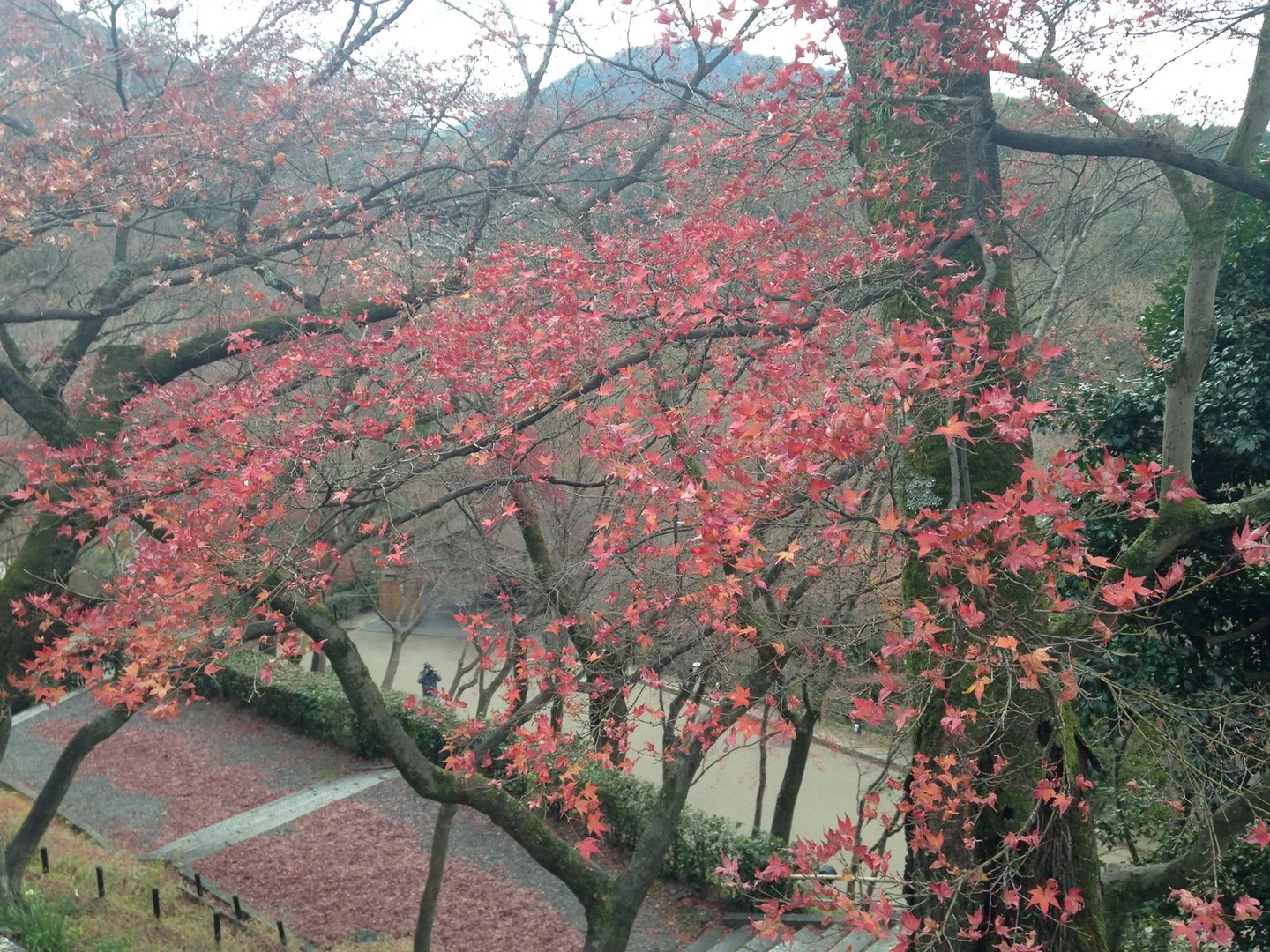
The image shows sparse red maple branches above a garden path; it does not identify Kiyomizudera or prove a mid-November peak at a specific Kyoto temple. Let the actual site report choose the day's district.
Kyoto can fill five days without a peak-colour promise
For November 11–14, cooler Takao, Ohara or Hiei is a more plausible first foliage check than assuming Higashiyama is fully red. Keep a central temple day movable. By November 15–20, some city districts may improve, but the 2026 later-city forecast argues for flexible site selection. Higashiyama, the northern districts, Arashiyama and southern Kyoto are separate travel corridors; attempting two or three in one day before an illumination can spend the best daylight on buses. The Kyoto elevation guide helps choose the next reachable band; the crowd plan limits unnecessary crossings.
A five-day Kyoto/Nara route can use three or four Kyoto nights. Give the arrival day a short Higashiyama walk; keep a northern or western day for Takao, Ohara or Arashiyama; use the next day for whichever central or southern district has the better current report; give Nara a full day; keep Uji, Otsu or departure light. Seven days can add a dawn-oriented Kyoto day or an Otsu night, but only if that night earns a practical morning. Evening illumination fits after a shorter daytime route, not after a second cross-city excursion. A Higashiyama corridor and the 2026 night-viewing details should be checked against reservations and closing times.
Nara's central Park–Todaiji–Kasuga Taisha area involves more walking than its map suggests. Treat Hasedera, Okadera and Murouji as a separate day or an overnight near Nara or Kashihara, rather than an add-on to a Kyoto morning. Nara's tourism material gives an autumn season stretching from mid-November into December, and lower sites can remain useful late. The current local report, not the broad season, decides which temple to choose. Nara's park-versus-outer-temple decision can keep the day within one transport pattern.
Tokyo and Kawaguchiko need two kinds of weather freedom
Tokyo's autumn viewing season is generally described as mid-November to early December, yet JMC's 2026 city maple date is November 28 and its ginkgo date November 26. Those dates measure reference trees rather than every garden. Mount Takao or a cooler western district may be the nature day during November 11–17; central gardens, parks and avenues can be checked individually toward November 18–20. Rikugien, Koishikawa Korakuen, Shinjuku Gyoen, Hamarikyu and Meiji Jingu Gaien can be distributed across city days without changing hotels. When upper Takao has fallen, use a lower city site rather than purchasing an urgent intercity journey.
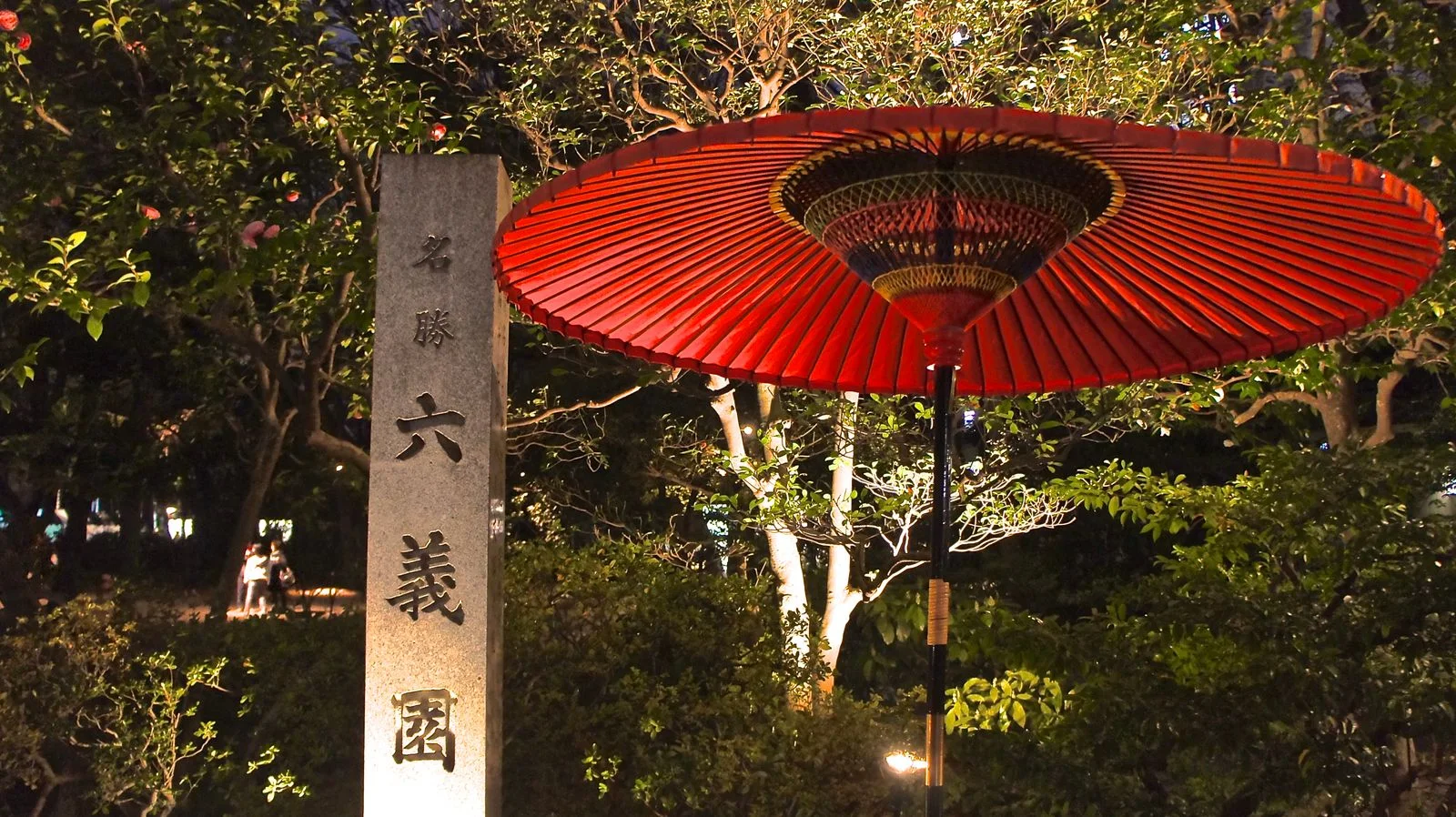
The night photograph shows a red parasol and Rikugien stone sign, not a dense canopy of autumn leaves. It represents a garden evening, whose opening calendar and colour both need a separate check. Tokyo's garden and evening options can fill a city day even if a long mountain trip is poor value.
Kawaguchiko adds a separate weather question: Mount Fuji visibility has no necessary relationship to maple colour or festival crowds. An overnight creates both an evening lake period and a dawn chance for clear Fuji; a Tokyo day trip has only one weather window and needs a reliable return seat. A five-day structure can use two Tokyo nights, one or two lake nights and a final Tokyo night. Wait to place the lake day within the booked route until the short forecast is useful. The lake-night comparison tests whether one or two nights buy enough weather flexibility, while the Maple Corridor guide covers event timing separately from the mountain view.
Do not tack Kyoto onto this compact route merely because the Shinkansen is fast. The added hotel sequence can erase the weather flexibility that justified Tokyo and the lake in the first place. A seven-day version can add Kamakura or western Tokyo if the core weather windows remain protected.
Miyajima's evening date is fixed; its leaf date is not
Miyajima tourism guidance says many trees begin colouring in mid-November and historically approach stronger colour around the twentieth, subject to weather. JMC's 2026 Hiroshima city reference-maple date of November 28 is later than the older regional assumption, though it cannot be applied directly to every island tree. Daishoin's 2026 red-maple illumination is scheduled for November 17–29, 17:30–19:00. That confirms the evening opening, not the amount of red foliage on the seventeenth.
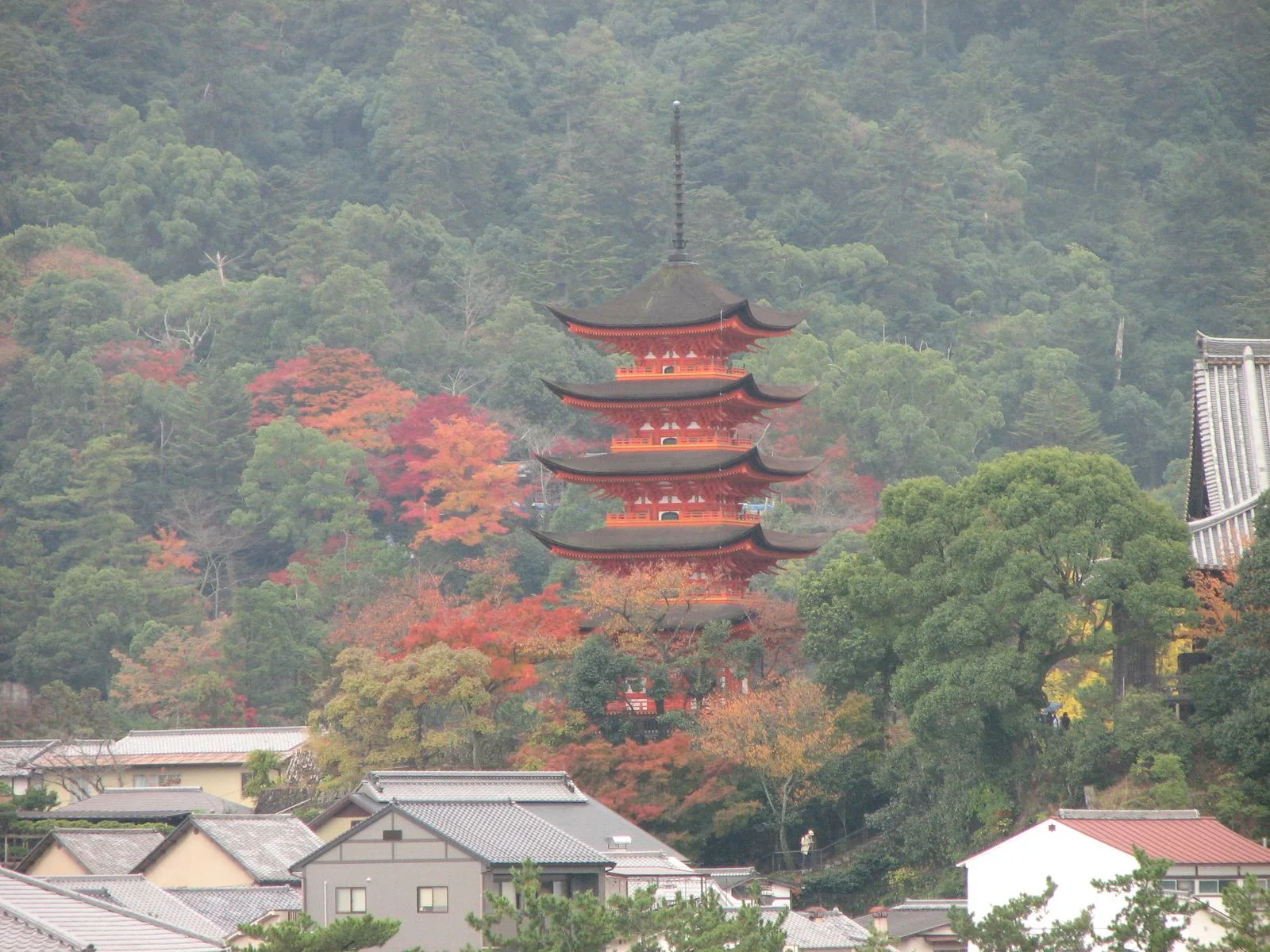
The photograph shows Miyajima's red pagoda surrounded by mostly green and some orange trees. It is a useful reminder that the island itself has architectural and landscape value before every maple turns. An island day can combine Momijidani, Itsukushima Shrine, the tide, Daishoin and sunset. Mount Misen is an optional extension only when wind, ropeway queues and walking ability permit it.
For a Setouchi five-day trip, two Hiroshima nights, one Miyajima night and one or two Okayama nights make a directional route. The island overnight buys quieter early and late hours and makes the Daishoin evening less dependent on the last ferry. Okayama Korakuen and Kurashiki remain useful if leaf colour is weaker; seven days may add Onomichi or a second island night. The Hiroshima-versus-island overnight choice and Okayama's garden-and-town day help price the move.
Kyushu works best when the onsen night stands on its own
Yufuin and other higher Kyushu locations can differ from Fukuoka's lowlands, but the 2026 Fukuoka city reference-maple date is December 7. Treat a mid-November suburban colour day as possible rather than assured. Akizuki's Black Gate often trends later, around late November into early December, while Dazaifu's maples can run from mid-November into early December. Choose one of those after checking current local images, and keep Hakata as an airport and luggage base if that matches the onward route. Fukuoka's foliage day trips compare the final transport legs.
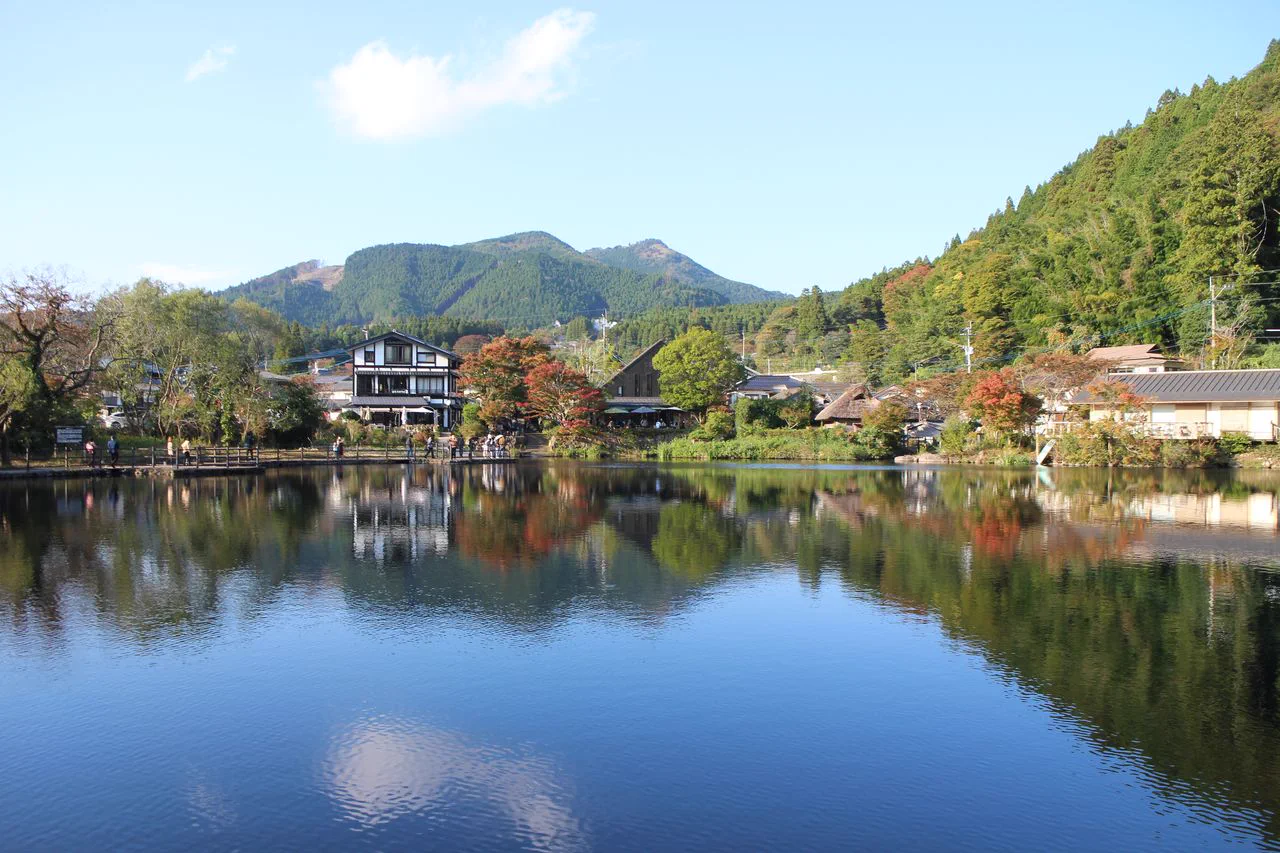
The Lake Kinrin picture shows water reflecting houses and wooded hills, with only scattered autumn colour. That is a more accurate reason to take a Yufuin night: the pond, town, bath, food and morning atmosphere can still justify the stay if a hillside is not fully red. Three Hakata nights and one rural or onsen night create a plausible five-day pattern. A seven-day version may add a second onsen after transport and dinner deadlines are clear. Lake Kinrin's morning and access guide and Kyushu's elevation and timing map keep the choice grounded.
Flights, beds and bags should follow one corridor
Five days generally works with one airport family: Tokyo, Kansai, Hiroshima or Fukuoka. a Tokyo arrival with a Kansai departure can cut backtracking on seven or more days when both regions have independent priorities; it is no reason to add an extra city to a short trip. Keep the last night near the departure gateway. A long-haul flight immediately after Kawaguchiko, Miyajima or a rural ryokan creates cascading risk from buses, ferries, weather or a fixed dinner/check-out. Arrival time matters as much as airfare: a late Kansai arrival is not a useful Kyoto foliage day, and a morning Haneda arrival is not a full Kawaguchiko circuit.
Book cancellable rooms before the best local colour report is available, then change the day trips rather than every hotel. Kyoto is convenient for repeated dawn temple visits; Otsu or Osaka may lower the room price but add morning commuting. Hiroshima usually offers more room choice than Miyajima, while the island buys quiet evening and dawn hours. In Tokyo, a Tokyo Station or Ueno base fits gardens and onward rail; Shinjuku fits Takao and Kawaguchiko departures. Compare taxes, breakfast timing, dinner, local transfer and the first usable hour next morning alongside the nightly rate. A remote cheap room can create a taxi or missed ryokan meal. Kyoto's backup hotel bases clarifies when a cheaper station is a real saving.
Compare Kyoto-area stays for these dates using the actual guest count and cancellation terms if Kyoto is your chosen corridor. There is no universal hotel CTA for all four regional routes; select accommodation around the destination you will actually use.
An IC card handles much city transport, but it does not replace reserved trains, some rural buses, ferry arrangements or ryokan shuttles. Price the actual long-distance sectors before buying a national or regional rail pass; one Tokyo, Kansai, Setouchi or Kyushu corridor does not automatically justify a nationwide pass. The autumn rail-pass comparison checks covered journeys against the real route. Forward the main suitcase between major city hotels and carry an overnight bag to the lake, island or onsen. Confirm the receiving hotel and keep medication, documents and a change of clothes with you. Kyoto tourism guidance promotes travelling without large bags on crowded local transport.
Driving can help when several Kyushu highland or rural Nara stops must be linked, but it will not remove Kyoto road congestion or Miyajima ferry logistics. Rail and local buses usually fit central Kyoto, Tokyo, Nara and Miyajima better. A car needs confirmed parking and a mainly rural itinerary, and a driver unfamiliar with cold roads should not chase an unverified mountain report after dark. Kyushu road versus transit helps with the region where the trade-off is most real.
Keep a useful day after wind, rain or a sold-out evening
Strong wind can strip mature maple or ginkgo leaves quickly, so a colour label alone is incomplete. Check recent rain and wind before committing to a long outdoor transfer. In Kyoto, stay within one corridor and make an evening opening an addition to a complete daytime route. On Miyajima, an early ferry or island room can reduce the crowd cost; in Tokyo, a weekday garden morning is easier to move than a reserved mountain excursion. A sold-out illumination should not invalidate the hotel stay.
For heavy rain, replace a long walk with a garden and museum, temple interiors, an onsen or city dining. After leaf fall, ground colour, architecture, tides and ginkgo can still carry a day. The practical test is whether the alternative keeps the booked accommodation and avoids another baggage transfer. That is also why a family or older traveller may prefer Kyoto/Nara or Tokyo gardens over a mountain route with one scarce last bus. A photographer may rationally pay for an island or lake night to buy dawn rather than add another prefecture.
Choose Kyoto/Nara for temple and historic-city days, Tokyo/Kawaguchiko for fixed Tokyo flights and two Fuji weather chances, Hiroshima/Miyajima for island tides and Setouchi pacing, or Fukuoka/Yufuin for an onsen-led late-season journey. November 11 may be early for central Kyoto; northern districts are the first local check. Tokyo has some mid-November options, but its 2026 city-level maples are forecast later. Miyajima's overnight is worthwhile for evening and morning even without peak leaves. For a five-day trip, one corridor remains the strongest protection against a forecast error.
Regional routes and local calendars
Japan autumn leaves calendar and route planning · Japan autumn leaves in late November · Kyoto autumn leaves timing and map · Japan Weather Association foliage information · Kyoto timing and live calendar · Tokyo foliage guide · Nara autumn guide · Miyajima 2026 November events and Daishoin illumination · Fukuoka late-autumn foliage guide · Mitsui Garden Hotel Ueno vs NOHGA · Hotel Gracery Shinjuku vs HOTEL GROOVE SHINJUKU · Hotel Metropolitan Tokyo Marunouchi vs Hotel Ryumeikan Tokyo · ONSEN RYOKAN YUEN SHINJUKU · Best Kawaguchiko Hotels for Mt Fuji Views · Japan Autumn Leaves December: Tokyo, Kyoto, Osaka, Nara · 7 Day Japan Autumn Leaves Itinerary: Hokkaido, Tohoku, · Kyushu Autumn Leaves: Timing Map from Fukuoka to · Tokyo to Nikko Autumn Leaves: Trains, Passes, Day · Free Autumn Leaves in Kyoto 2026: Parks, Paths, · Asahidake vs Kurodake Autumn Leaves: Ropeways, Hiking and · Ginsendai Autumn Leaves Guide: Shuttle Buses, Access Restrictions