
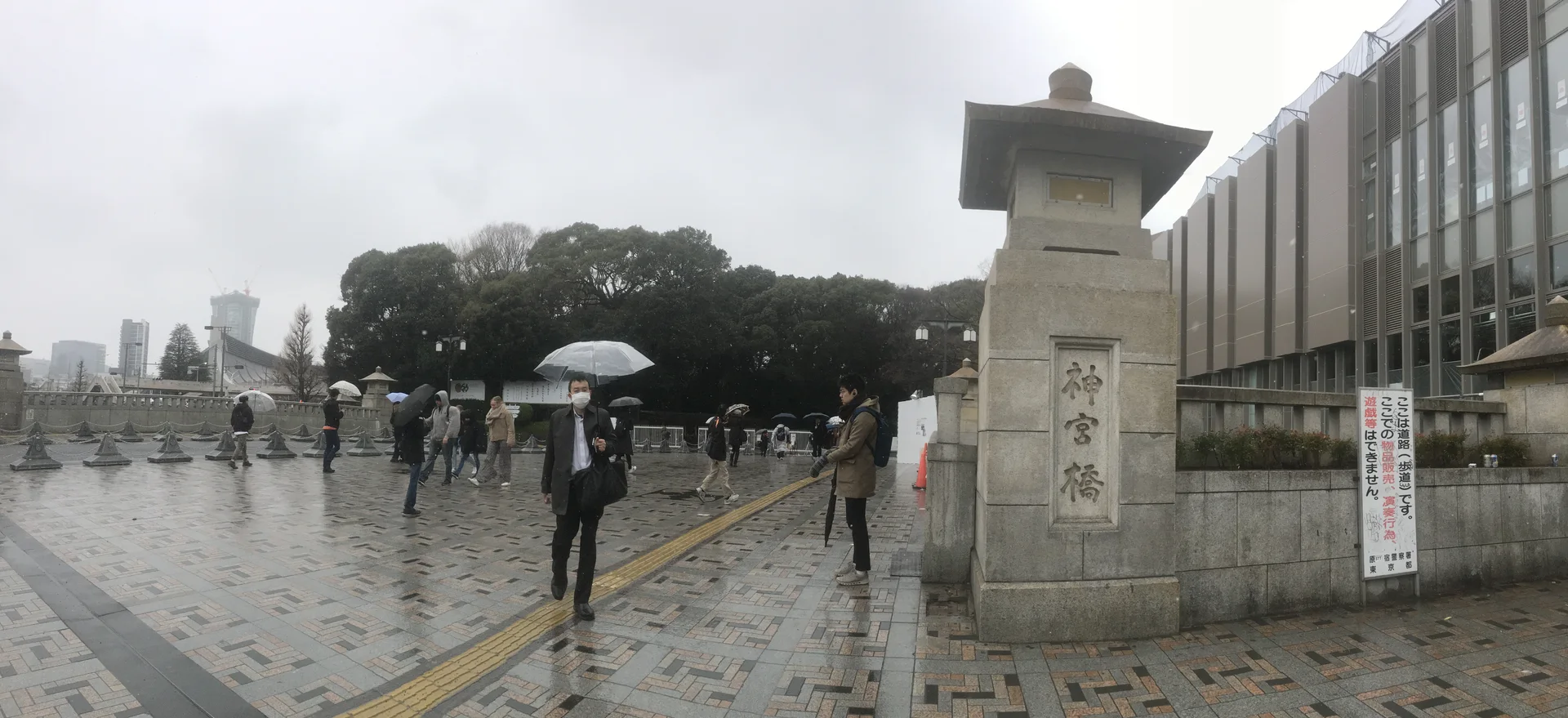
Rain on a Japan forecast calls for a decision about individual stops, not an automatic cancellation of the day. A compact city route often survives with fewer outdoor moves. A gorge boat, highland crossing or distant panorama has a different weak point: river level, wind, a stopped transport segment or a view that has vanished. Before moving a reservation, identify which part of the day depends on those conditions and what else is still usable nearby.
Make the decision in stages. Two days ahead, find the reservations that are difficult to move. The previous evening, cut or exchange the weather-sensitive blocks. On departure morning, check live transport and activity status, then fix a turnaround time. Money already paid explains why a cancellation policy matters; it cannot make a closed boat run or a hazardous path safe. The table below shows how that approach changes across different kinds of trip.
↔ Scroll table left or right
Part of the day | Light rain with services running | If wind, visibility or a notice changes the picture | Likely decision |
City district in Tokyo, Kyoto or Osaka | Stay nearby and reduce wet changes of place | Use local indoor time; avoid exposed sections when conditions warrant | Reorder within the area |
Atmospheric garden, temple grounds or coast | Keep the outdoor visit that matters most | Remove low-value photo stops and long exposed walks | Shorten the outside block |
Highland view or ropeway crossing | Check cameras and each transport leg | A suspension or invisible panorama changes the core purpose | Reassess or move the day |
River or gorge activity | Rain alone need not stop the outing | High water, closed boat service or unsuitable paths change separate parts | Decide boat and walking separately |
Reserved indoor admission | Protect the timed booking | Transport disruption may make arrival impossible | Build the rest of the day around it |
Two days out: map what can actually move
Start with the booking terms rather than the rain icon. An hourly forecast 48 hours ahead is too uncertain for a detailed replacement schedule, but it gives you enough warning to sort tomorrow and the following day into commitments and flexible blocks. Put these three kinds of item on one page:
Hard commitments: timed admission, a restaurant or event booking, a reserved train, a tour with a deadline, and a hotel move.
Flexible outside time: a garden, park, shopping street, shrine grounds, neighbourhood walk or viewpoint that requires no fixed slot.
Weather-sensitive commitments: a boat ride, ropeway, exposed trail, sea activity or excursion planned mainly for photography.
Exchange flexible walks before touching an expensive train or timed admission. A museum ticket does not become the expendable item merely because it is indoors; it may be the fixed point around which an outdoor stop moves. Read the change and cancellation deadline for boats, ropeways and guided trips now. If a weather-dependent reservation can move without a penalty until the preceding evening, preserve that option rather than making a premature decision.
A useful swap keeps geography in mind. Moving a flexible Kyoto garden to a clearer afternoon may be easy. Moving a fixed Tokyo exhibition to rescue a mountain excursion could create a missed admission, a long new transfer and no improvement if the mountain transport later stops. Check the cost of the whole exchange, including hotel moves and reserved rail, rather than treating each attraction as an isolated square on the calendar.
The night before: four tests beyond the rain percentage
An 80% chance of precipitation says little about whether a visit is sensible. Wind, visibility, warnings and the possibility of shortening the route often matter more. By the preceding evening, ask these four questions for every outdoor block:
Weather notice: is the destination under a heavy-rain, flood, landslide or storm-surge warning or advisory? Check the location, not just the city where your hotel sits.
Wind: could it stop a boat, ropeway, coastal activity or an exposed transport connection even if the rain stays light?
Visibility: does the place still provide the experience you chose it for if the distant view is gone?
Route length: can you remove the weakest outdoor section while retaining the booking and district that make the day worthwhile?
Japan Meteorological Agency — current weather warnings/advisories.
Write one action beside each block: keep, shorten or reschedule. For a city morning, “shorten” may mean keeping the district but losing two photo stops. For a highland crossing, it might mean visiting one end only if a safe return is possible. A long list of substitute attractions is less helpful than knowing which train, booking and turnaround time the revised day requires.
On departure morning, use the operating status
Recheck the activity and every transport leg shortly before leaving. A cable car may be suspended even after a forecast seemed manageable; a gorge boat can close because rainfall upstream has raised the water. Confirm the service you actually need, not just that the destination appears open. If an operator has stopped a segment or a warning changes the safety case, the original ticket price is already spent and should not dictate the remaining journey.
The Tateyama Kurobe Alpine Route makes the distinction concrete. A through journey uses several connected modes, including cable car, buses and ropeway, with a planned arrival at the far end. On 26 July 2026, bad weather stopped the Tateyama Cable Car; service was scheduled to resume the next morning after safety was confirmed. One interruption can affect the entire crossing. Its timetables and service notices also matter on fine days because limited capacity can change when travellers board. A short wet-weather stop at Murodo is a different choice from entering a route that cannot carry you onward.
Check the first useful departure, the last onward service and the alternative if a segment stops. A one-way traveller should also check where forwarded luggage and the night’s accommodation will be. If the line is running but the outdoor viewpoints offer little, reduce the Murodo walking period. If a required vehicle is not running, plan around the disrupted crossing itself; an umbrella solves neither the connection nor the bag problem.
City days lose time at the transitions
Tokyo, Kyoto, Osaka, Fukuoka and Hiroshima can all absorb ordinary rain without a complete change of district. The inconvenience accumulates between stops: wet station floors, crowded umbrella storage, coats and bags that must be handled each time you enter, slower crossings and a longer pause to dry off. A distant indoor attraction can add more friction than simply spending longer at the indoor stops already near your planned route.
If a district day originally contains three outdoor sights and two interiors, retain the outdoor place that matters most, give the indoor visits more time and remove a transfer. A garden may still be atmospheric in light rain, but the second park reached by another bus may no longer earn its place. Group the remaining stops around one station or walking corridor. An unhurried meal or covered shopping street can provide time to see whether conditions improve.
A hotel in the same area can become part of the schedule for families or older travellers. Dry socks, a change of clothing or a short rest may preserve an evening reservation and the next day’s energy. This is especially useful when one person is cold or a child’s shoes are soaked. Budget enough time for the return trip: a midday hotel reset is less appealing if the hotel is on the other side of the city. an Osaka family day.
The Tokyo rainy-day itinerary and Fukuoka rainy-day guide offer indoor choices after you have settled the area in which you will spend the day. Pick a nearby option, then remove a weaker outdoor stop. Crossing town simply because a museum appears in a rain search can turn a manageable weather change into a long and tiring travel day. Tokyo rainy-day itinerary. Fukuoka rainy-day guide.
Kamikochi: the open valley may call for a shorter walk
Kamikochi lies at roughly 1,500 metres and private cars cannot drive into the central valley; visitors normally use a bus or taxi for the final approach. That access commitment can make a full circuit feel compulsory. It is not. Decide how much walking still suits your group after you arrive, and keep the return bus in view. The weather at the valley, the condition underfoot and each person’s temperature matter more than the distance you planned at home. JNTO — Kamikochi access and highland context.
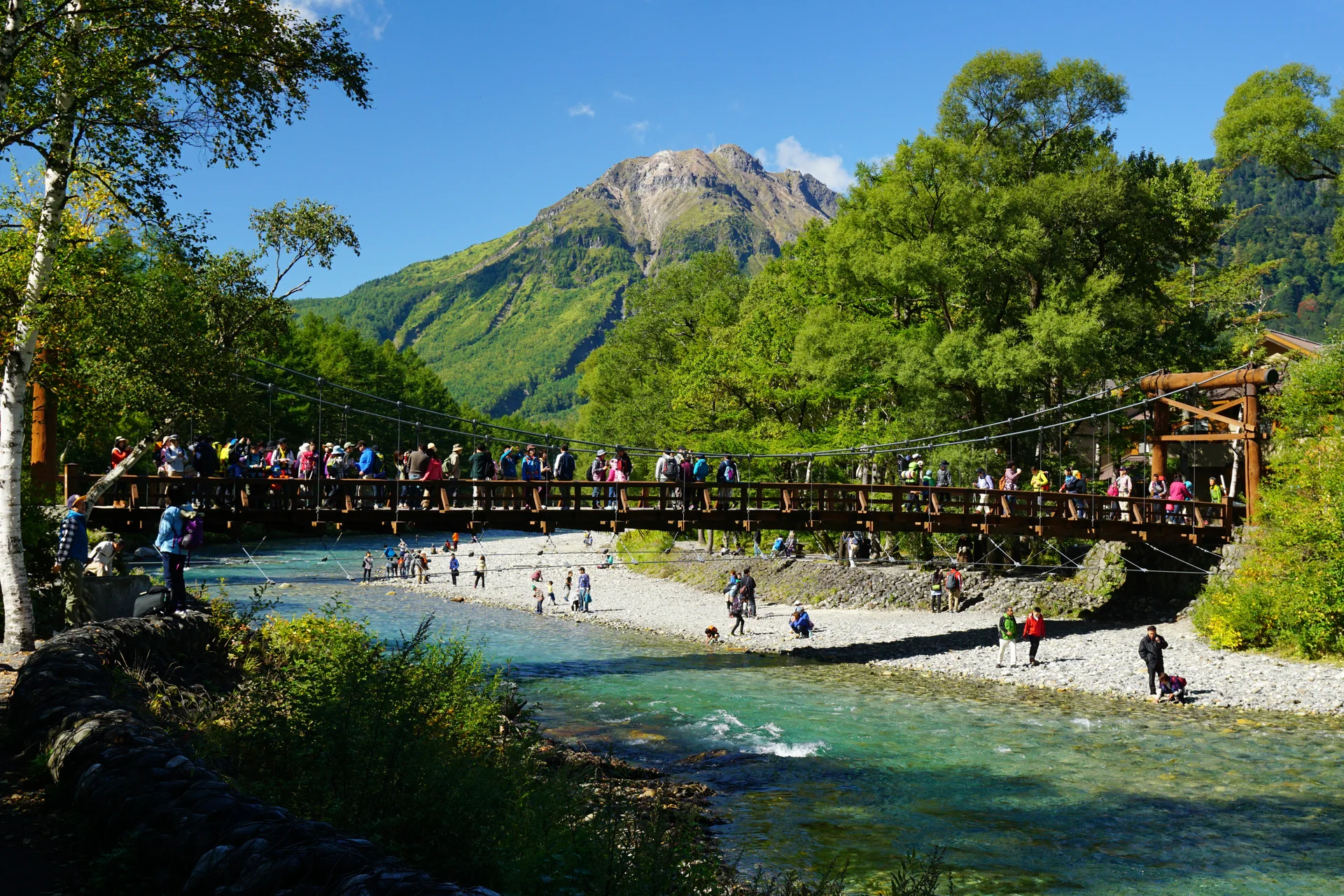
In light rain, the Azusa River, nearby woodland and Kappa Bridge can still make a compact visit satisfying. The accompanying sunny Kappa Bridge photograph shows the mountain view that may be hidden on a wet day; treat that loss honestly when judging the trip. If the air turns cold, visibility collapses or the paths feel uncomfortable, leave Taisho Pond or Myojin for another day rather than insisting on both ends of the walk.
The question is how far to go, not simply whether the gate is open. Establish a time by which you must turn toward the bus terminal, then choose the walk that fits inside it. An early retreat is especially reasonable when the party includes someone who walks slowly on wet boards or when the next connection is difficult to replace. The money and time used to reach the valley do not increase the value of an unsafe extension.
Tateyama Kurobe: a wet crossing has several moving parts
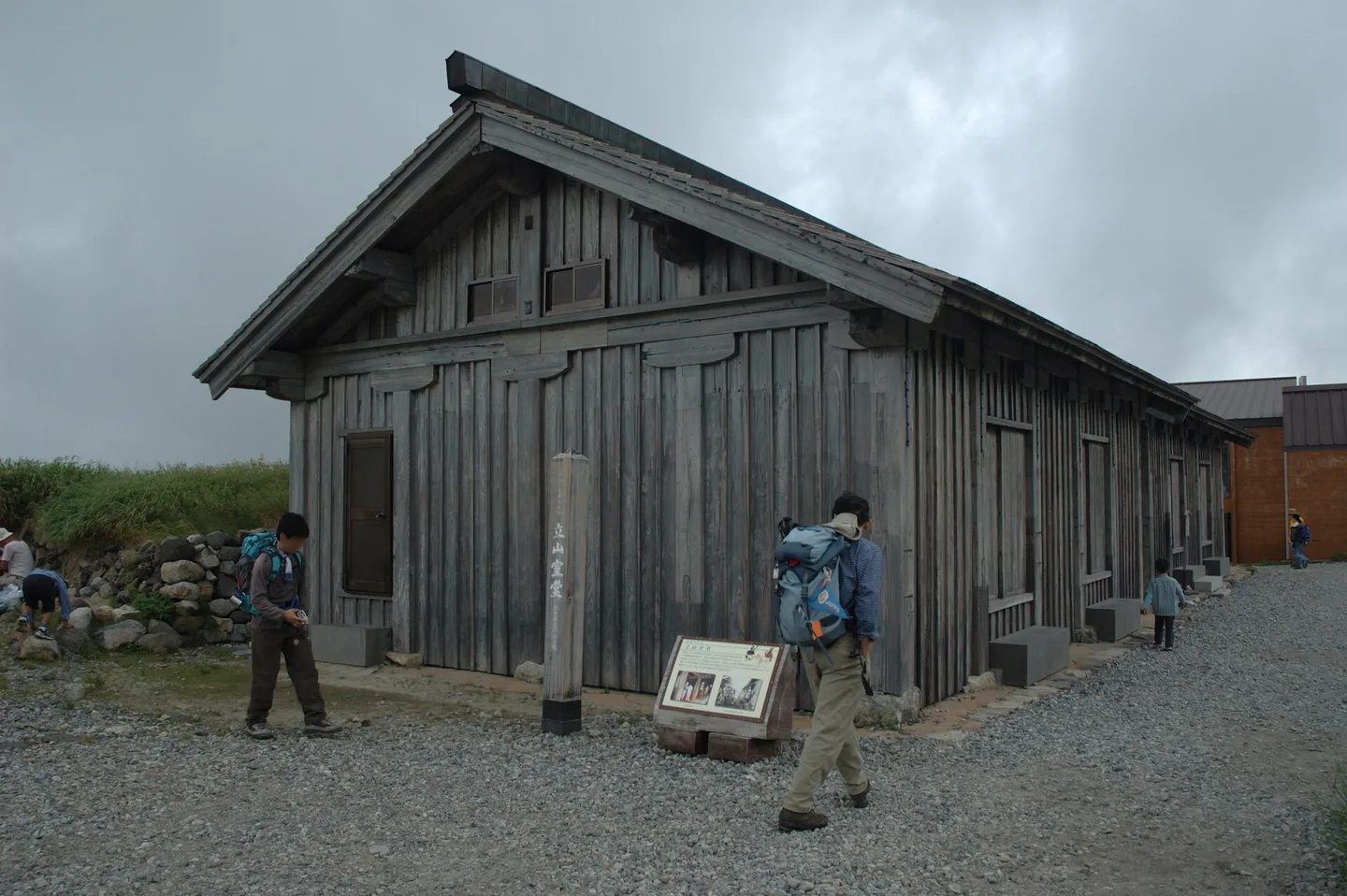
The 2026 operating season runs from 15 April to 30 November. The published timetable and current service notices govern the day’s sequence; cameras help judge the value of outdoor time. Treat Tateyama Cable Car, the highland bus, the tunnel section and the ropeway as linked transport, not separate optional attractions. For a same-side excursion, the return limit matters. For a through journey, every onward connection matters. Tateyama Kurobe Alpine Route — live operating status. Tateyama Kurobe Alpine Route — timetable.
Light rain does not remove the appeal of Kurobe Dam or the engineering of the crossing. If each vehicle is running and those are part of the reason for travelling, keep the core route and shorten the exposed walks. When a segment is suspended, the decision is no longer about scenery alone. Likewise, if Murodo is clouded in and highland views were the day’s main purpose, do not budget a long outdoor stay solely because the ticket allows one.
A one-way journey has a further constraint. A forwarded suitcase may already be heading to the far-side hotel while its owner considers reversing direction. Before changing course, establish where the bag can be collected, whether the accommodation is still reachable and what train follows the revised route. Solve those practical questions before choosing a partial crossing that looks easy on a map.
Takachiho Gorge: separate the boat from the rest of the visit
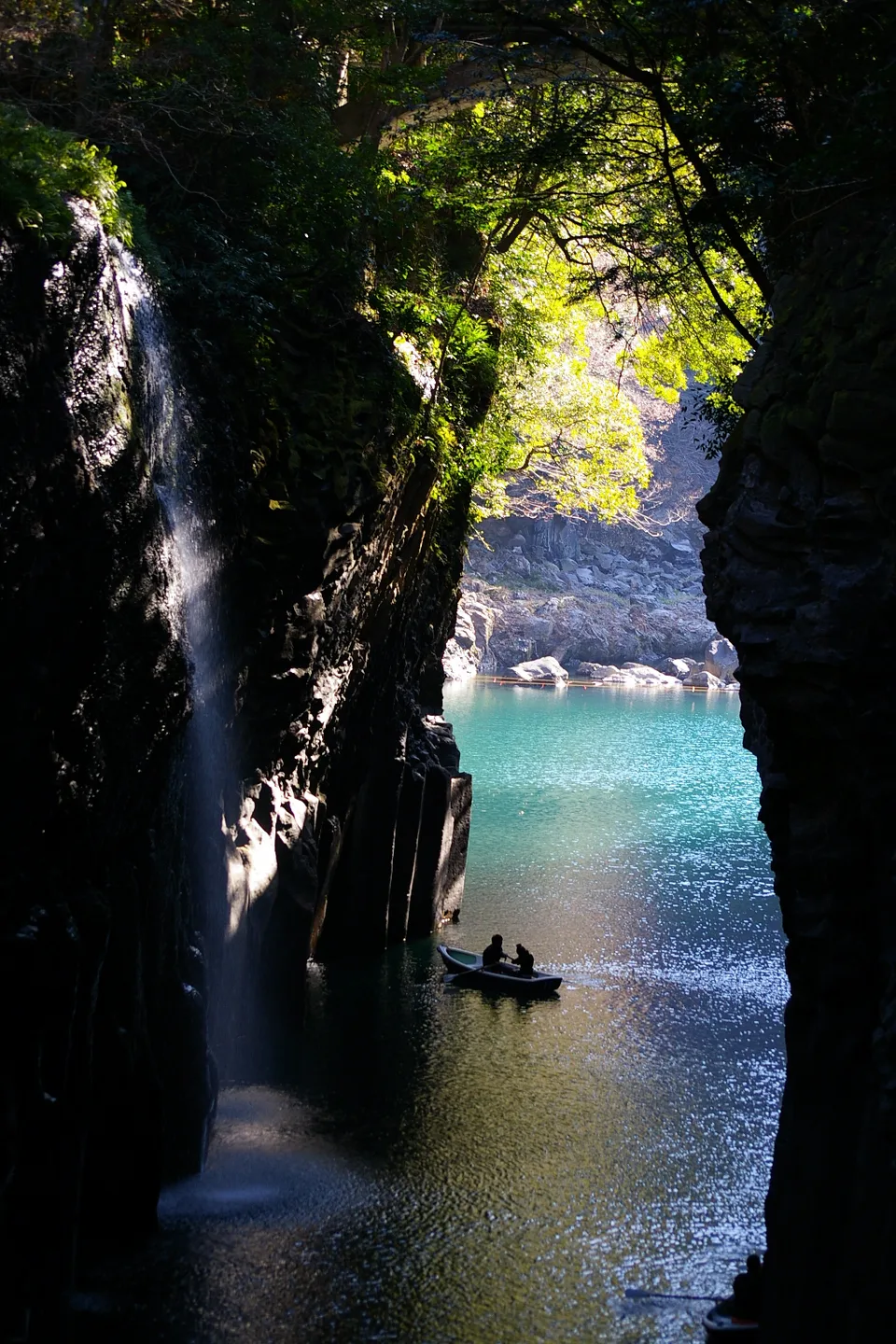
The rental boats can run in rain; falling rain alone is not a closure rule. Rising river water can stop them, including after departures have begun, and heavy rain or a typhoon may prompt a safety inspection. The tourism association updates the day’s operating position around the morning opening. A reservation therefore gives you a place in the booking system, not a promise that conditions will allow boating. Takachiho Tourism Association — live boat status and booking information.
There are two separate choices after that status appears:
Boat operation: check the morning service update. A booking does not overcome high water or a safety suspension.
Walking visit: judge wet paths, stairs and viewpoints for the people in your party independently of the boat decision.
Do not assume a free boat will appear if you wait for a wet morning. Advance inventory and same-day availability are separate from weather, and the number of places changes by date. The earlier article’s 25–26 August 2026 sold-out notice describes a past day and is not useful as current inventory. Check availability for your actual date, then judge whether the remaining walking visit is appealing if boats cannot depart.
If the boat stops, a night in Takachiho may still make sense when shrines, accommodation, evening kagura or other parts of the area are already in the plan. A long day trip made solely for the boat has less to rescue; moving that trip can be the better use of time. The gorge’s walking viewpoints and boat trip are related experiences, but neither automatically guarantees the other in bad weather. Kumamoto and Aso overnight choices.
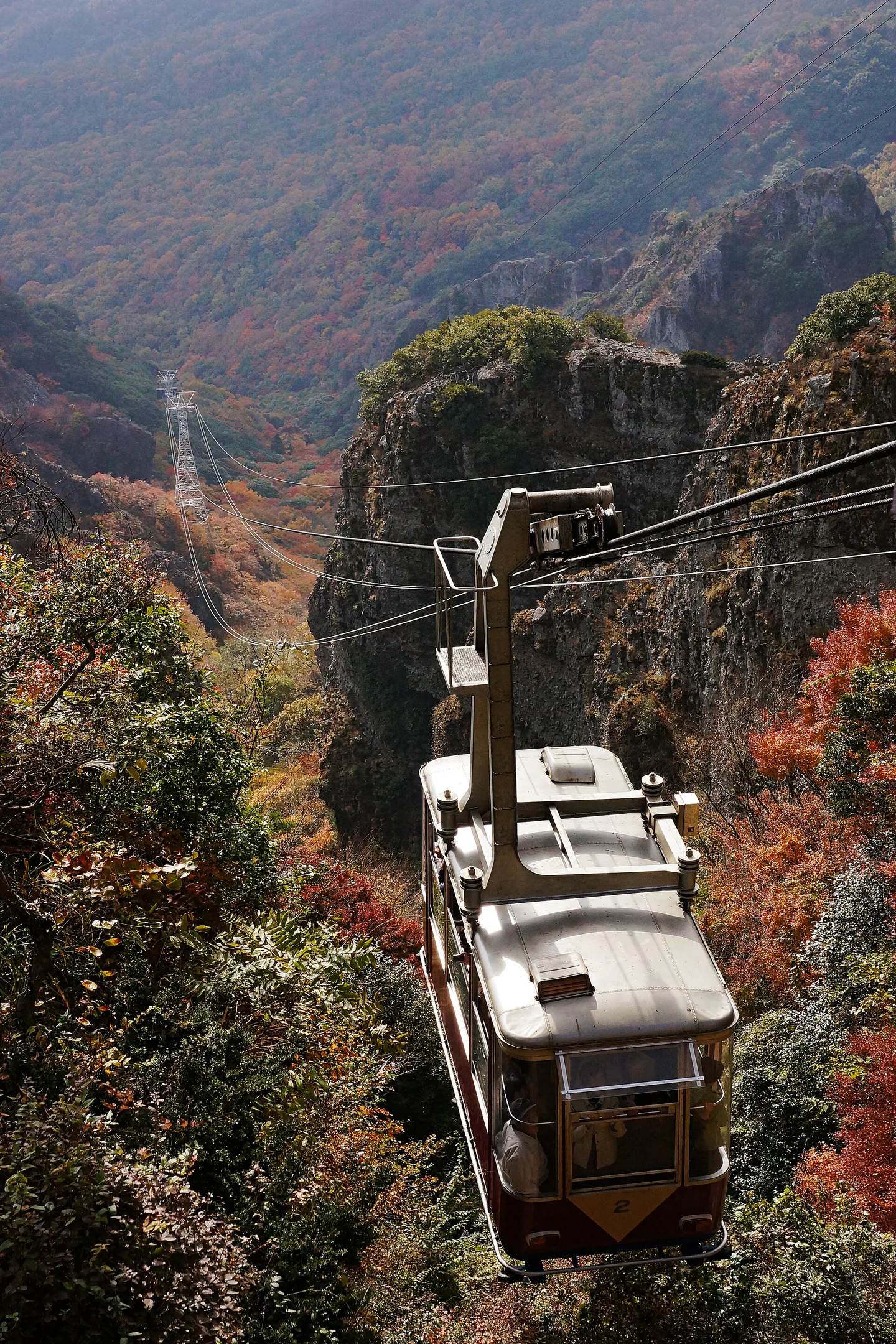
A ropeway can operate while its main view disappears
A view-led attraction needs two checks. First, is the ropeway or other access operating? Second, can you see enough of the panorama to make the journey worthwhile? These are different questions. A city neighbourhood retains restaurants and streets in poor visibility; a long detour whose sole reward is a distant horizon may have very little left when the horizon is hidden.
Look at an available live camera before travelling to the base station or paying. Consider the transfer time as well as the ticket. If the picture is entirely cloud, ask whether the forest, architecture or other nearby activity would still justify the trip. If there is no second reason, keep the viewpoint on a flexible day rather than locking the current schedule to an open but unrewarding ride.
Misty trees and close scenery can remain interesting even when distant peaks vanish. That explains why a forest walk and an observation ride can deserve different decisions on the same wet day. Operating status answers whether you can access the site; visibility and your own purpose determine whether that use of time still makes sense. Neither a functioning vehicle nor a paid reservation supplies a view.
A paid ticket does not settle the safety decision
Read the booking terms early. Some products cannot be refunded but can be moved; others have a deadline for changing the date. A genuine financial loss deserves attention while alternatives are available. Once an operator suspends the service or a warning changes the conditions, however, travelling into the problem does not recover the money. Keep the remaining transport time, fatigue and risk out of the sunk-cost calculation.
One way to test the decision is to imagine that admission is free today. Would you still take the long transfer for a missing view, fragile transport or a walking route that worries your group? If the answer is no, the amount already paid is the only force keeping the old plan alive. Choose what to do with the hours still available; you can deal separately with any claim or change request allowed by the booking terms.
With children or older parents, cut the number of changes
Rain makes small transitions more demanding. A curb can be slippery, a platform crowded with umbrellas, and every toilet stop a chance to handle damp layers and bags. Six short calls in different places may exhaust a group even when the walking distance looks modest on paper. Fewer, longer stops in one district can leave the same people with time and energy for an evening they care about. Kyoto with older parents.
Give the day one substantial indoor destination and a nearby outdoor option that can be dropped without spoiling the booking. Carry a dry layer in the day bag; clothing inside a forwarded suitcase cannot help at lunchtime. If the hotel is near the route, a pause there may be more practical than finding another indoor attraction. Plan for one person to turn back without forcing the entire group to complete an exposed walk.
The next day belongs in this calculation. Wet shoes, a late journey home and an overfull replacement schedule can carry fatigue into a reserved train or another day outdoors. Removing a low-priority stop now protects a later commitment. The goal is a usable trip, not proof that every originally planned attraction remained on the checklist after the forecast changed.
A compact decision schedule
↔ Scroll table left or right
Decision point | Check | Make the smallest useful change |
About 48 hours ahead | Change terms, fixed entry, hotel moves and reserved rail | Identify a day swap that does not create a larger cost |
Previous evening | Local warnings, hourly conditions, wind, visibility and temperature | Keep, shorten or move each weather-sensitive block |
Before departure | Operator service, camera, river or trail information and last useful transport | Set a go/no-go decision and turnaround time |
While travelling | Actual comfort, fatigue and worsening conditions | Drop the weakest remaining stop; retain a safe way back |
Keep the part of the day that still works
For ordinary city rain, retain the neighbourhood and reduce the number of transitions. For mountain and gorge visits, consider the operation of each necessary service, wind, visibility and water or path conditions before deciding how far to go. A distant view has little value when it cannot be seen. Investigate ticket changes before the deadline, then let the conditions on the travel day settle the final route.
A good backup can be shorter than the original plan. Remove the most fragile outdoor block, spend longer at an indoor anchor in the same area and leave room for a later improvement in weather. Recheck the one decision that can still change on the morning itself: the live status of the service or path on which the trip depends. That gives you a plan you can actually follow while travelling.
Other routes where weather changes the calculation
Kamikochi Day Trip · Tateyama Kurobe in Summer · Takachiho Gorge Guide · Japan Luggage Forwarding · Japan Autumn Leaves Calendar
Live conditions and access
Weather alerts, mountain transport and gorge boat operations can change during the travel day. Use the weather warning page, Alpine Route service page and Takachiho boat status before setting out; Kamikochi access information helps with the bus approach. These links serve different decisions, so check the one relevant to your route again before the last practical point to change plans.
Related guides: Tokyo Itinerary 2026: 4, 5 or 7 Days — What Changes When You Add Disney or a Day Trip? · Kansai 7-Day Itinerary From Osaka: One Hotel for Kyoto, Nara, Kobe and USJ — When Not Moving Is Better · 35 Best Things to Do in Osaka 2026: What’s Worth Your Time by Area, Budget and Trip Style · Asahikawa In, New Chitose Out Itinerary: When Open-Jaw Hokkaido Works · Japan August Weather: The Heat Changes Your Itinerary More Than Your Packing List · Hotel Intergate Osaka Umeda: Do the Lounge Hours Fit Your Osaka Itinerary? · 20 Things to Do in Osaka When It Rains: Indoor Plans for Couples, Families and Full-Day Rain · What Your First Onsen Feels Like: The Awkward First Five Minutes · Osaka Itinerary: 3, 4 or 5 Days — When to Add USJ, Kyoto or Kobe · Japan Autumn Leaves Reservations 2026: What to Book Early and What to Keep Flexible
More trip-planning guides
Tokyo Station vs Shinjuku: Which Base Fits Your Japan Itinerary?
Fukuoka Tower: Is the ¥1,000 Ticket Worth the Detour? Timing Changes the Answer
Asakusa Samba Carnival 2026: When to Arrive, Where to Stand and What Not to Bring
Things to Do in Kawaguchiko: What Is Actually Worth Your Time?
How to Book the Fuji Excursion—and What to Do When It Sells Out
On a rain-heavy Tokyo day, a station-area base gives you a simple place to leave wet layers between plans. Compare rooms around Tokyo Station only if that area fits the attractions and rail transfers you are keeping.