
A night at Lake Kawaguchi can solve the difficult part of a Maple Corridor visit: seeing the trees after the day-trip crowd thins, then returning for an early morning without a late bus to Tokyo. Konansou and La Vista Fuji-Kawaguchiko place that night on different sides of the lake routine. Konansou is close to Kawaguchiko Station and the south-shore sightseeing start, with a ryokan-style evening and rooms oriented either toward the lake or Mount Fuji. La Vista is on the north-shore side nearer the corridor, with scenic-bath hotel rooms and a much less convenient spontaneous walk back to the station. The right choice depends on when you visit the corridor, where you arrive with luggage, and what view you actually buy.
JapanLayer hotel assessment by dimension
↔ Scroll table left or right
| Hotel | Access | Space | Comfort | Cleanliness | Neighbourhood | Service | Value |
|---|---|---|---|---|---|---|---|
| Konansou | 9.5/10 | Insufficient evidence | Insufficient evidence | 9.6/10 | Insufficient evidence | 9.5/10 | Insufficient evidence |
| La Vista Fuji-Kawaguchiko | 7.0/10 | 7.6/10 | 8.2/10 | 8.0/10 | 8.7/10 | 8.4/10 | Insufficient evidence |
What the autumn overnight changes
↔ Scroll table left or right
| Decision | Konansou | La Vista Fuji-Kawaguchiko |
|---|---|---|
| Location use | Near Kawaguchiko Station and south-shore sights | North-shore hotel near Maple Corridor |
| Arrival | About 10-minute station walk; shuttle available | Arrange station shuttle or other transfer |
| View purchase | Separate Fuji-side and lake-side room categories | Named Twin/Double scenic-bath categories |
| Two-person room | Choose room orientation and bath type | La Vista Twin 41–42 m²; Double 25–26 m² |
| Evening | Ryokan meal plan can define schedule | Corridor-led dusk walk with hotel meal timing to check |
Swipe to compare the hotels
The local autumn festival has published 7–29 November 2026 dates, but colour and lighting operations can shift with the season. Another visitor-information page describes the best colour broadly as early to mid-November. Do not treat a hotel reservation as a forecast guarantee. Our hotel comparison is useful even if the foliage peaks earlier or later: it tells you which booking makes a twilight corridor walk easy and which makes the arrival and departure legs easier. The Maple Corridor visit guide covers the path itself; this page handles the overnight decision.
One hotel is nearer the corridor; one is nearer your luggage
La Vista is in the Kawaguchi area on the north side of the lake, relatively close to the Maple Corridor and the Itchiku Kubota Museum stop. That position is attractive if you want to visit the trees once in daylight and again after sunset without committing to a cross-lake bus after dinner. Check the exact walking route and street lighting on your dates, especially if anyone has limited mobility. A hotel can be geographically close to the corridor while its entrance lies uphill; the map pin does not describe every step. If dinner is fixed at the hotel, leave enough time to return before the meal service rather than assuming the illumination will fit around it. The things to do in Kawaguchiko guide helps decide whether your other activities are also on that shore.
Konansou stands near the eastern part of the south shore, around a ten-minute walk from Kawaguchiko Station according to the hotel, with a free station shuttle available. A traveller arriving by highway bus or Fuji Excursion can reach it without first transporting luggage to the northern corridor area. That makes an early arrival, a bag drop and a broader lake day straightforward. The corridor is still a separate trip from the hotel. A sightseeing bus, taxi or a long lakeside walk may be suitable in daylight; after the evening lights, confirm the last practical bus rather than assuming daytime sightseeing frequency continues. The Tokyo to Kawaguchiko train, bus or tour comparison should be settled before choosing a nonrefundable room.
The Red Line sightseeing bus lists a Maple Corridor/Itchiku Kubota Museum area stop. Its timetable and crowding are seasonal, so a route that works at midday may fail after a late dinner. The local visitor information warns that festival weekends create road congestion; a short road distance can become a slow taxi ride. For one festival evening, La Vista's closer position can be worth paying for. For an itinerary that uses the station repeatedly, Konansou's easy luggage route can save more effort over two days. The Kawaguchiko or Fujiyoshida two-night base comparison is useful if your trip includes town sights beyond the leaves.
↔ Scroll table left or right
| Overnight movement | Konansou | La Vista Fuji-Kawaguchiko | Decision point |
|---|---|---|---|
| Arrive by bus or train with cases | Walkable from station for many guests; shuttle available | Hotel shuttle or taxi/other transfer needed | Arrival time and shuttle reservation |
| Visit corridor in daylight | Cross-lake bus, taxi or planned walk | North-shore location near the corridor | How many other south-shore stops? |
| Return after illumination | Check late transport before dinner | Shorter local route to hotel | Mobility and actual walking conditions |
| Depart early next morning | Simpler station return | Arrange hotel-to-station journey | First train or highway-bus time |
| Follow a broader lake itinerary | Useful south-shore starting point | Useful north-shore start | Which sights are already on your route? |
The Kawaguchiko to Oishi Park bus and boat guide matters when the corridor is only one north-shore stop. If you plan Oishi Park, the museum and lakeside views on the same afternoon, La Vista's side reduces backtracking. If you plan the ropeway, station area and an onward Hakone bus, Konansou's side may be the more coherent base. A hotel can be close to one photograph and still poorly placed for the entire day.
The view is a category, not a property-wide promise
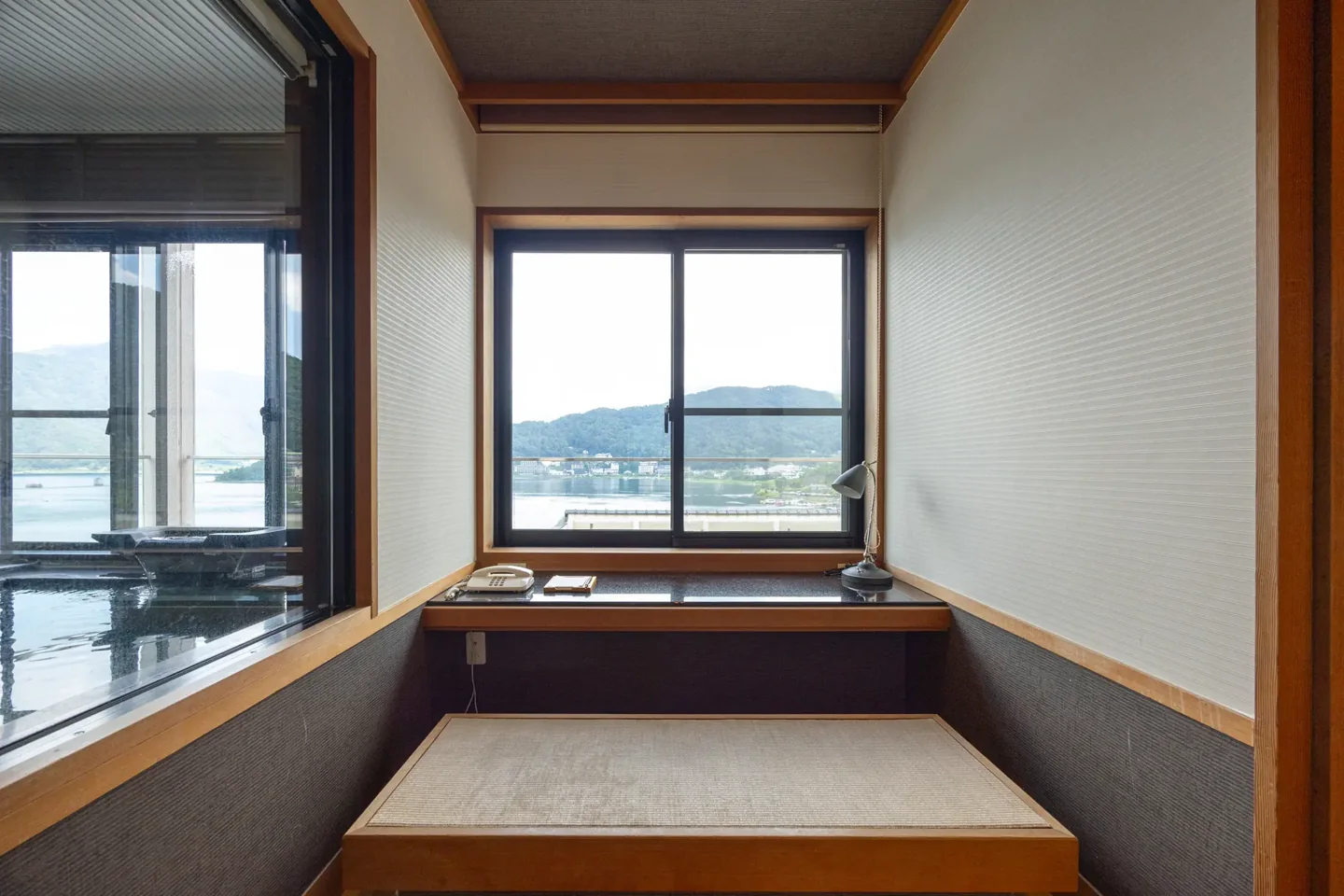
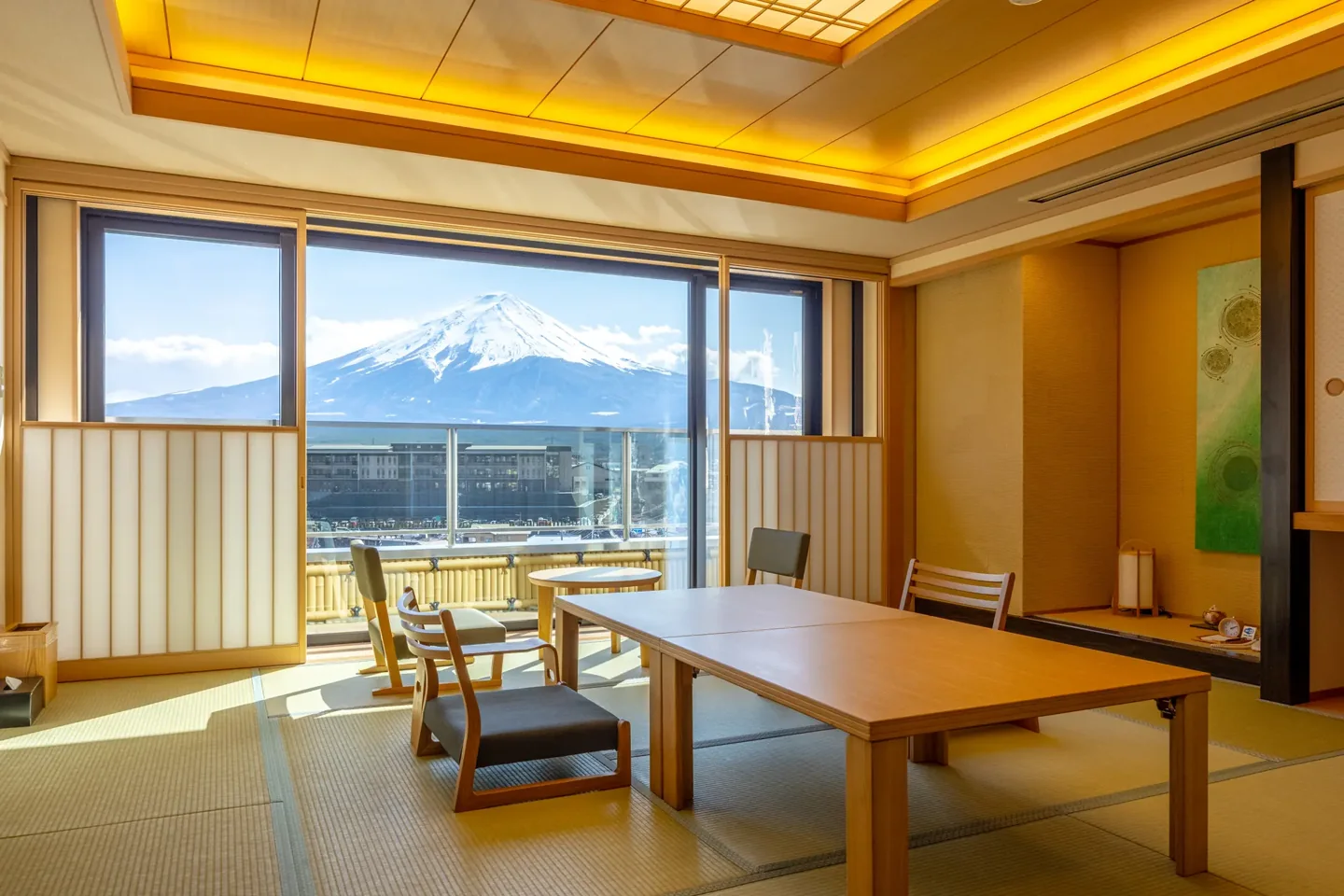
Konansou separates Mount Fuji-side rooms from lake-side rooms. Its current room summary describes ten Fuji-facing rooms, all with private open-air baths, and forty lake-facing rooms in several categories. A lake-facing photograph shows water and opposite hills; it is not proof that the same window frames Fuji. The hotel's rooftop footbath is a separate shared way to enjoy the panorama. Write “Fuji side” or “lake side” into your saved rate. If a private open-air bath is the point of the stay, identify the exact Fuji-side room and its occupancy rather than clicking the cheapest listing carrying the hotel name. The Kawaguchiko Fuji-view and private-bath hotel guide explains why view direction and bath privacy have to be priced separately.
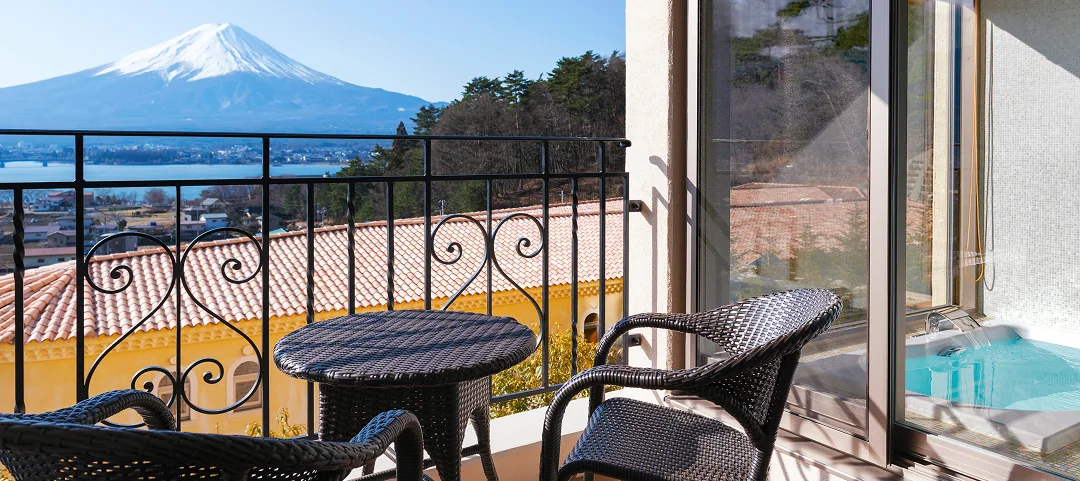
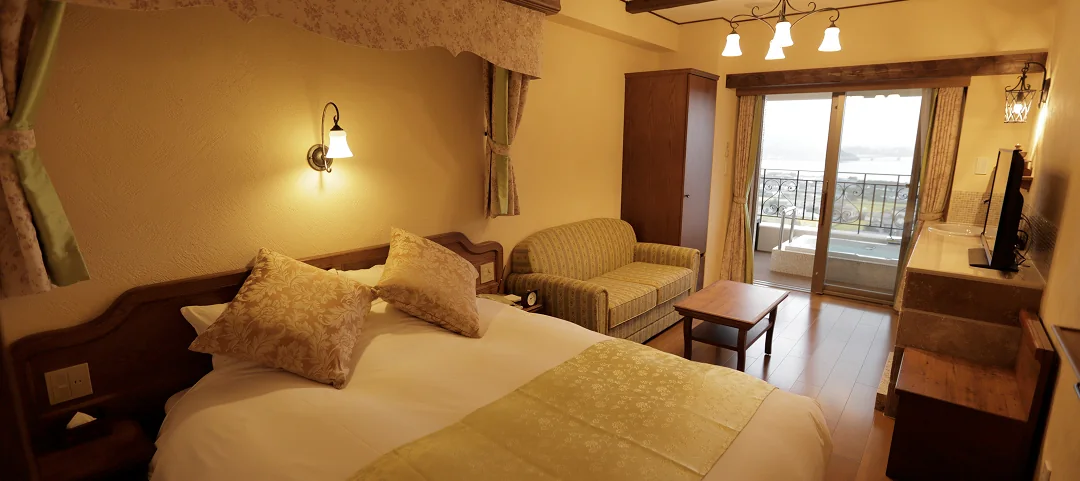
La Vista's La Vista Twin is published at 41–42 square metres for two people; the La Vista Double is 25–26 square metres. Those are materially different purchases, although both can be shown with scenic-bath images. A larger room is useful if two travellers arrive with cases and plan to spend part of a rainy afternoon indoors. A double may suffice when the room is mainly a place to sleep after the corridor walk. The hotel's room list also includes limited three- and four-person categories, so a family should not infer that every twin accepts a child. Verify the bathroom and balcony arrangement of the named category. An image of Fuji beyond the terrace does not guarantee the mountain will be visible on a cloudy afternoon. The Fuji day trip or overnight decision shows why staying overnight increases your chances of encountering a clear viewing window without promising one.
This matters especially in November. The corridor can be colourful while Fuji remains hidden, or Fuji can appear at dawn after a disappointing cloudy arrival. A ryokan room bought solely for a specific view carries weather risk; a hotel close to the corridor protects the leaf-walk portion of the plan but not the sky. If views are the main goal, consider the second morning and a flexible itinerary rather than adding a claim that one hotel always has the better panorama. The Hakone versus Kawaguchiko comparison helps decide if seeing Fuji, using an onsen or visiting a particular lake should drive this leg of the trip.
↔ Scroll table left or right
| Room purchase | What is actually specified | Common mistaken assumption |
|---|---|---|
| Konansou Fuji-side room | One of ten Fuji-side categories; private open-air bath advertised | All Konansou rooms have the same Fuji view and bath |
| Konansou lake-side room | Lake and surrounding mountain outlook; several room types | The lake-facing window must also frame Fuji |
| La Vista Twin | 41–42 m², two-person category | Same space as its smaller Double |
| La Vista Double | 25–26 m², one or two guests | Every scenic image depicts this exact layout |
| Either hotel's view room | Named orientation and specified bath | Clear Fuji weather is included in the rate |
The Japan onsen lodging selection guide helps separate a private in-room bath from a reservable private facility and a communal bath. Konansou advertises large public baths, a Fuji-view private bath and some in-room open-air baths; these are three different products. La Vista has public and private bathing facilities as well as scenic guest-room baths in specified categories. Confirm which is included, which requires reservation and any age restrictions. A private bath photograph cannot be substituted for a written room feature.
The evening meal fixes the timing of the leaf walk
Konansou's ryokan experience includes dining in the guest room for some plans, while other room and meal arrangements can differ. The hotel highlights the in-room dinner tradition, but a booking must name its actual meal venue and service time. If dinner begins while the corridor lights are at their best, you cannot be in both places. A sensible Konansou night may use a daylight corridor visit, return for a settled ryokan dinner, and enjoy the bath afterward. Another plan might visit the illuminated corridor before a later meal, if the hotel confirms a suitable slot and the return transport works. Do not make a reservation based on a hypothetical late seating. The ryokan dinner-included versus room-only guide covers the same contractual distinction in another hot-spring town.
La Vista's restaurant-based evening can make a north-shore corridor walk feel simpler, but its booked meal plan and dinner time still control the night. Verify whether a room-only or breakfast-only rate is offered on your date and where you would eat instead. Autumn weekends bring visitors to the corridor, and nearby restaurants should not be assumed to have a spare table after the lighting period. Reserve a meal where possible or eat before your second walk. A hotel closer to the corridor does not create more hours in the evening. The autumn hotel booking timeline is relevant because popular leaf weekends can narrow both room and dinner choices.
Two people who want the room itself to be the evening event may prefer Konansou's ryokan meal and bath even if they make only one corridor visit. A photographer who expects to repeat the corridor at dusk and early morning may prefer La Vista's north-shore address. A family with a small child may care more about a predictable dinner and one practical return than a third photo opportunity. The autumn leaves with seniors guide is useful when gradients, late buses and crowding matter more than the absolute distance on a map.
Check the transport on both sides of the night
Konansou's station proximity is most useful when the trip starts or ends at Kawaguchiko Station. If you connect from Tokyo, the Fuji Excursion booking guide explains the train decision. If you take a highway bus, check the arrival terminal and luggage rules. The hotel provides a free station shuttle, but contact it for the current pickup method and hours before relying on that service. Ten minutes on foot may be comfortable in fair weather and less pleasant with two cases or rain. Leaving the cases at the hotel before going north avoids taking them onto the crowded sightseeing bus.
La Vista is farther from the station. Travel information describes a free hotel shuttle of about fifteen minutes, yet the departure pattern and reservation rule need confirmation for the booked date. Ask for both arrival and checkout journeys. A pickup that works at 3 p.m. does not necessarily help a traveller landing at the station after an evening corridor visit. If you plan to go directly to the leaves before hotel check-in, ask whether the hotel can hold bags or consider station storage; do not bring a large suitcase onto a narrow, busy promenade. The Kawaguchiko and Hakone luggage-forwarding guide is relevant when the overnight is one stop in a longer route.
An onward Hakone leg adds a second transport calculation. Starting from La Vista's north-shore location may add a hotel-to-station transfer before the intercity bus or rail connection. Konansou's south-shore position makes that leg shorter, but the exact departure stop still needs checking. The Tokyo, Kawaguchiko and Hakone itinerary helps sequence those locations without spending the only lake morning on unnecessary backtracking. The Tokyo to Mount Fuji and Hakone guide is useful when the trip tries to cover both regions in too little time.
The leaf timing itself is uncertain. Local guidance expects colour to start in late October and often peak in early to mid-November, but temperature and rain can move that window. The festival dates are an event schedule, not a biological guarantee. Check recent images or live updates before you commit to a long detour; if colour is late, the lake, hot spring and room can still make an overnight worthwhile. The Japan autumn leaves live update and late-colour backup plan help keep the trip flexible.
Konansou fits a rail or bus arrival, a ryokan dinner and a station-side next morning. La Vista fits a corridor-led night, especially if you want to walk the north shore twice and have arranged the station shuttle. Compare the exact room orientation, bath type and dinner plan, then add the transport you will use after sunset. For a one-night trip, that sequence produces a better answer than choosing by an image of Fuji alone.
For the south-shore ryokan evening, compare a named lake-side or Fuji-side room and its actual dinner plan.
For the north-shore corridor night, compare La Vista's Twin and Double with the same cancellation, meal and bath conditions.