
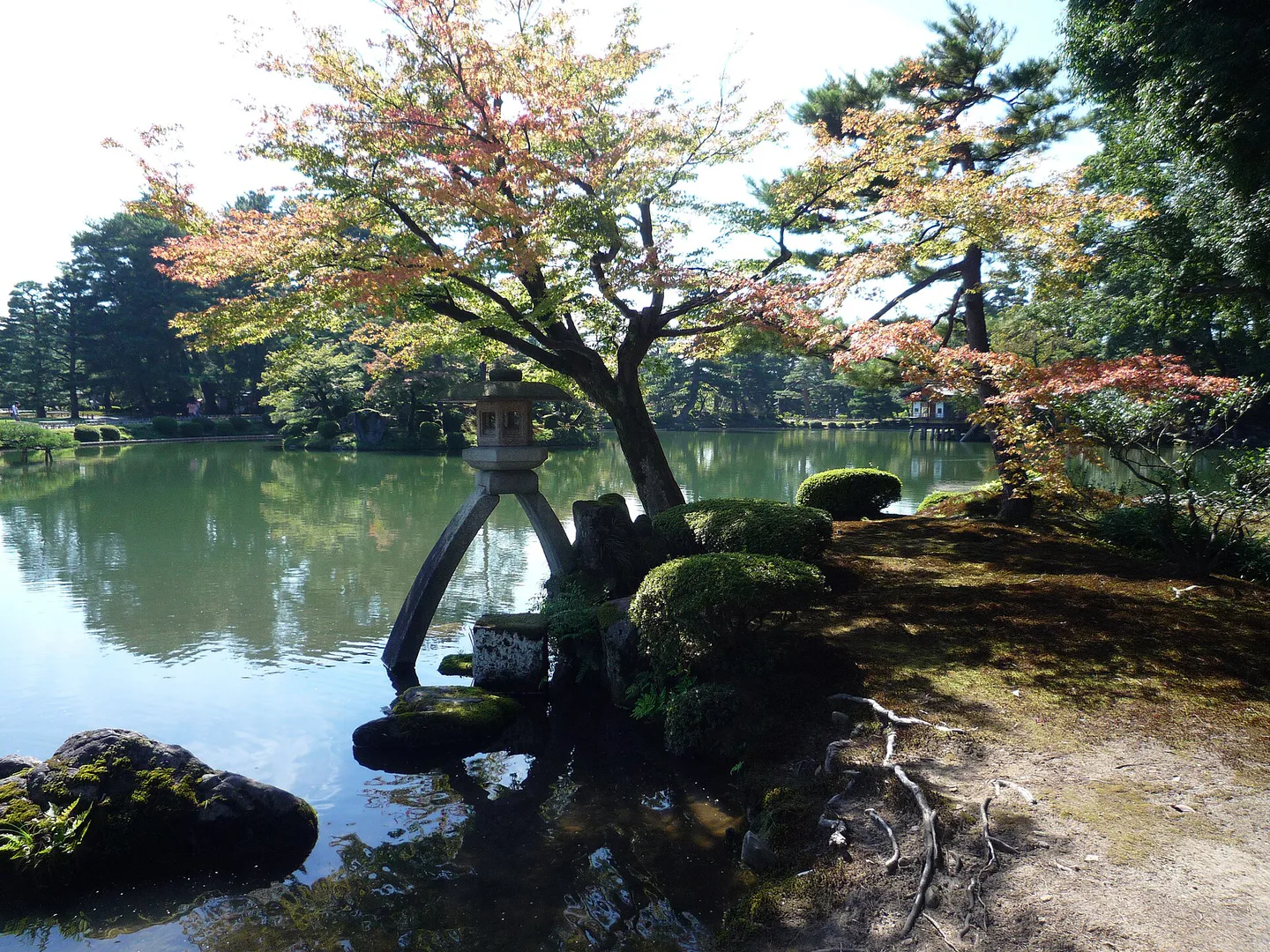
The useful Kenrokuen question in autumn is how much of Kanazawa you want to give the garden. A normal visit costs ¥320 for an adult and shows the paths, pond, trees and slopes in daylight. Free entry before opening offers a quieter version of those views, but everyone must leave before the paid hours begin. The November 2026 illumination adds a genuinely different night scene on seven selected dates. None of these sessions promises peak red leaves on your particular travel day.
If this is your first Kanazawa stop, reserve a daylight visit and decide on a second entry only if its conditions suit your route. The price of the garden is small; a second crossing of the city, a 06:00 start or a fixed evening changes the rest of the itinerary more than the ticket does.
The 2026 dates and access windows
↔ Scroll table left or right
Entry window | 2026 operating detail | Best use | Constraint to build around |
Regular admission | 08:00–17:00 from 16 October through February; last entry 16:30 | First visit, reading the garden and assessing the leaves | ¥320 adult admission; the most recognizable views draw people |
Free morning access | 06:00–07:45 from 1 November through February; last entry 07:30 | Quiet paths, pond reflections and photography | Use Renchimon or Zuijinzaka gate; leave before paid opening |
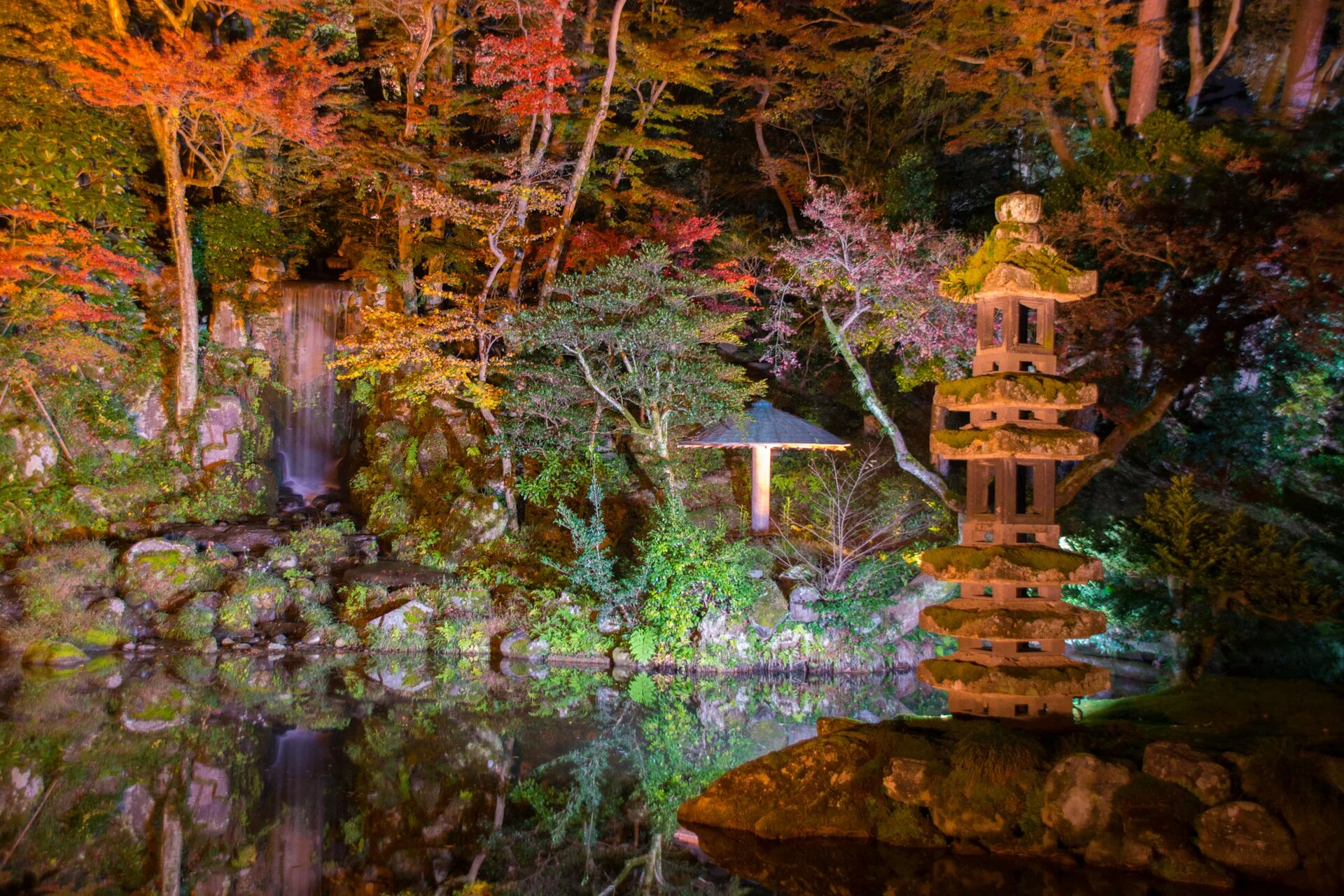
Autumn illumination | 7, 14, 15, 21, 22, 28 and 29 November 2026; lights 18:00–20:45 and garden closes 21:00 | Night lighting and reflections | Free entry, selected dates only, and a separate evening journey |
The garden hours and admission page gives the seasonal schedule. During the free morning interval, the two designated gates are Renchimon and Zuijinzaka. You cannot enter at 06:00 and remain inside for the 08:00 paid session: exit by 07:45, then buy the normal admission if you return. The regular adult fee is ¥320; ages 6–17 pay ¥100, while visitors aged 65 or over can enter free with proof of age. A normal daytime ticket is therefore a modest expense compared with changing hotel or transport plans to chase another access window.
The 2026 lighting calendar lists the seven November dates. It also covered 19–22 September, which had already passed by late October 2026. The November event includes Kanazawa Castle Park, and the published evening admission is free. Severe weather can affect outdoor events, so check the event page near the day rather than treating a planned dinner or hotel choice as a guarantee that the lights will run.
A lit garden is not a leaf forecast
November is broadly the season for Kenrokuen's maples, yet its species and corners do not colour or lose leaves together. The Kanazawa autumn guide identifies Yamazakiyama for concentrated colour and describes the mix of maple, ginkgo and other trees. The garden's seasonal pages help distinguish foliage from other features such as the emerging yukitsuri rope supports. Those ropes are installed to protect branches against heavy snow; their appearance is not proof of peak leaf colour.
For a 7 November visit, early colour remains possible even though the lights are operating. A weekday without illumination may produce a better daylight foliage walk. Later in the month, sheltered trees can still look good after more exposed leaves have fallen, especially following wind or rain. In early December, plan around winter garden structure and Kanazawa itself; any surviving red leaves are a bonus. An autumn trip should not depend on a single photograph taken weeks before arrival. The early-or-late adjustment guide is useful when your dates cannot move but your local walking route can.
↔ Scroll table left or right
Travel period | Sensible expectation | What to decide on arrival | Alternative use of a weak-colour block |
1–10 November | Some areas may be red while others remain green | Whether Yamazakiyama and pond-side trees justify a longer loop | Castle grounds, Gyokusen'inmaru and Omicho |
11–20 November | Historically a strong broad window, with no daily guarantee | How recent rain and wind changed the exposed viewpoints | Keep the best garden zones and spend more time in one historic district |
21–30 November | Mixed late colour and more visible winter preparation | Which sheltered parts still carry leaves | Study the pines, stonework and yukitsuri, then use an indoor stop |
Early December | Early-winter Kanazawa first | Whether any residual foliage is worth a detour | Museums, food and the castle-garden cluster |
This is also why an illumination date should not determine your whole Hokuriku route. If photography under lights matters, choose one of those evenings. If foliage is the goal, protect daylight and adapt the loop to current colour. The same principle applies farther west to Kyoto's separate autumn lighting events and to the destination-specific reservation choices in the Japan foliage planning guide.
One visit usually tells you more than three
In daylight you can read the shape of Kasumigaike, see Kotoji-toro against the water, judge the slopes and decide where the best leaves actually are. Allow roughly 90–120 minutes if the garden is one part of a Kanazawa day; a photographer or someone who wants to sit and watch the pond may use longer. The landmark area near Kasumigaike is worth keeping even when the rest of the route has to shrink. Yamazakiyama adds a denser and higher autumn perspective, with a greater walking cost. Hisagoike has a waterfall and older landscape composition, but its uneven sections are a poorer choice when wet footing or mobility is a concern.
The early window changes the experience in a specific way: fewer people at familiar viewpoints and softer light on the pond. It also creates a gap before the paid opening. A hotel in Korinbo or near the garden makes a 06:00 entrance more realistic than a distant base; from Kanazawa Station, work out the walk, bus or taxi before valuing the free ticket. Breakfast and the forced exit can erase the apparent efficiency of doing early and normal admission back to back. For a first-time visitor who wants to understand the entire garden, arriving at 08:00 and staying in one continuous daylight session is often simpler.
At night, the attraction is lighting and composition rather than an improved test of leaf colour. The paths are darker, people gather around the famous views and some daytime services may not operate. A return makes sense for a garden-focused repeat visitor, a photographer, or someone staying nearby with a flexible dinner. It is harder to justify when this is your only evening in town and you have not yet seen Kanazawa outside the garden. Mifuneyama Rakuen's illumination is another case where the night event is its own planned experience rather than a substitute for a normal daylight landscape visit.
↔ Scroll table left or right
Garden stop | Why keep it | When to shorten or skip it |
Kasumigaike and Kotoji-toro | Pond, lantern, pines and reflections form the essential first-visit view | Only when the route or accessibility requires a very brief entrance |
Yamazakiyama | Layered autumn trees and a higher view | Slopes are difficult, or current colour is weak there |
Hisagoike | Waterfall and a different historical composition | Heavy rain, poor footing or a tight walking budget |
Shigure-tei vicinity | A place to pause and consider tea | Do not assume refreshments are open during early or evening access |
Ishikawamon to Castle to Gyokusen'inmaru | Changes the scene to gates, walls and a smaller garden | If Kenrokuen itself has already taken all available walking time |
For travellers with older parents, it is reasonable to keep the pond and castle edge while leaving the steeper optional zones. The autumn route guide for seniors and children explains the wider trade-off between colour, transfers and walking. If the weather changes suddenly, the rainy-day route method can help decide whether to shorten the garden rather than abandon Kanazawa.
The castle edge earns its place in a short Kanazawa stay
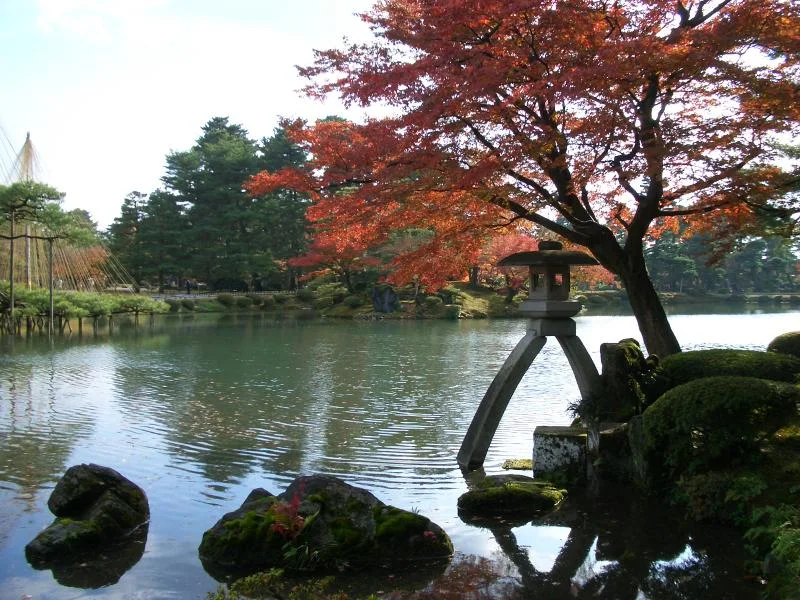
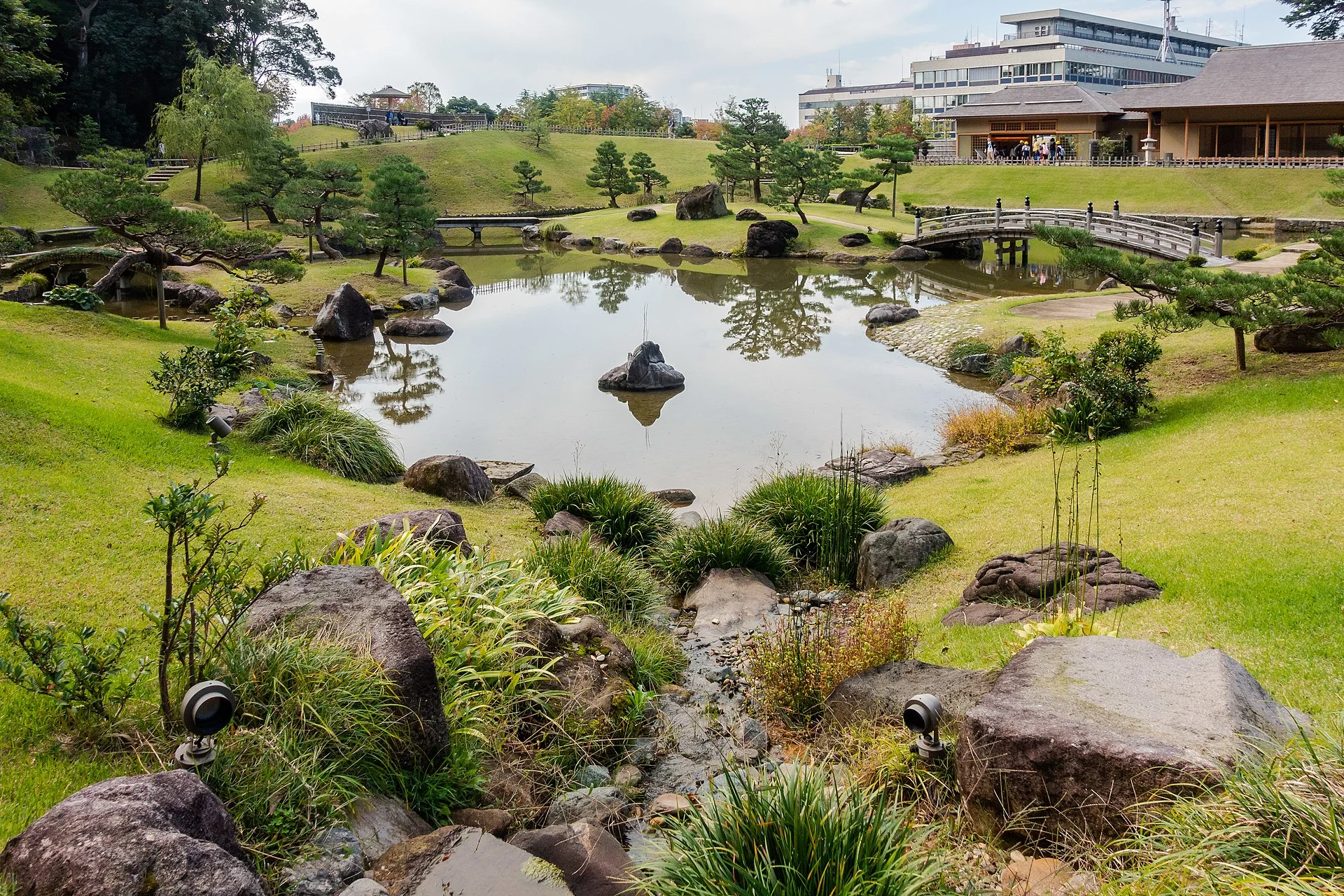
Kenrokuen and Kanazawa Castle are close enough to plan as one walking cluster. Crossing toward Ishikawamon gives you gates and stone walls, while Gyokusen'inmaru offers another garden composition. It is not simply more of the same foliage. The castle's outdoor grounds are generally free; some interior buildings have a separate admission charge. This distinction matters if you are comparing a full garden-and-castle morning with a shorter visit that leaves space for lunch and a historic district.
On a one-day Kanazawa stop, give Kenrokuen one daylight block, cross to the castle and Gyokusen'inmaru, then choose one farther district after lunch: Higashi Chaya or Nagamachi. Omicho can work around lunch or a market visit. Trying to cover both historic districts, a long garden walk and a second evening entry makes transport and meal timing the dominant part of the day. The evening lights are a reasonable extra only if those daytime choices already fit.
With two nights, you can separate the purposes. One afternoon can take Omicho, Higashi Chaya and the castle side; use the first evening's illumination if your date and weather match. The next morning can hold a full 08:00 Kenrokuen visit, or the early slot if quiet photography is your priority, followed by Nagamachi or a museum. If the first evening is wet, you still have daylight. If wind spoils one group of maples, the city still has food, architecture and indoor culture. Longer regional routes, such as the 10-day autumn itinerary or the 14-day foliage itinerary, benefit from this kind of spare half-day rather than assigning every afternoon to a single forecast.
Where you sleep changes the value of an early or late visit
Kanazawa Station is the practical base when a Shinkansen, airport bus, stored suitcase or Shirakawa-go coach dominates the arrival and departure. Korinbo and the garden-castle side are better when you expect repeated walks to the central sights, a later dinner and a return after illumination. One saved transfer rarely pays for a large room premium; the same saving repeated over two or three days can. Compare hotel position against the exact entry gate and departure platform, not just a generic map pin.
If you are choosing between a station-area room and a central room, the five- or seven-day Hokuriku route can show how much time Kanazawa actually gets. For actual availability, view rooms around Korinbo when an early or evening garden visit is planned, then compare the total stay with a Kanazawa Station base. A first-time visitor staying one night and departing early by rail may still prefer the station even when the garden is the main attraction. The Komatsu or Noto airport comparison adds a different arrival constraint for a flight-based route.
Shirakawa-go is a separate scheduling issue. If the village lies between Takayama and Kanazawa, it can be a transfer stop with a defined visit and the main suitcase sent ahead. It is a poor match for a deep Kenrokuen visit on the same day: the mountain bus fixes one end of the schedule, while the garden's best hours depend on daylight. A same-day illumination adds another deadline and leaves little delay margin. The Takayama–Shirakawa-go–Kanazawa four-day route works through that transfer in detail; luggage forwarding for Kawaguchiko and Hakone uses different routes and should not be copied without checking where your Kanazawa bag can actually be accepted.
The Kanazawa Loop Bus serves the garden and castle stop, but early access starts before many travellers would normally board a sightseeing loop. For a 06:00 visit, check that morning's service or plan to walk or use a taxi. The lighting event access page lists the garden/castle bus stop and the short walk for the evening event; it does not make every return connection convenient after dinner. A central stay reduces that uncertainty.
When wind, rain or late colour changes the route
After heavy rain, spend less time on the sloping, exposed garden paths and more on the castle edge, a museum or Omicho. Strong wind after the best foliage has passed is a reason to inspect sheltered trees and the garden's structure rather than walking every autumn viewpoint in hope of an even red canopy. Early snow shifts the emphasis to pines, yukitsuri and stonework. The garden highlights page describes the main landscape features; the useful response on the day is to choose the parts that actually look and feel good in that weather.
If Kanazawa's colour is early or late, moving a whole Japan itinerary may have a worse cost than changing one afternoon. Takayama's old town and Hida Folk Village offer a different mix of architecture and trees; the Karuizawa foliage route and Iya Valley foliage route have their own timing and transport constraints. Those are trip-planning comparisons, not interchangeable last-minute replacements. The November weather guide is also useful when packing for an evening outside.
One paid daylight visit is the dependable core of a first Kenrokuen trip. Choose free morning access for quiet if the 06:00 start and required exit suit your stay; choose an illumination evening when the lighting itself is worth a second journey. The 2026 date list can tell you whether that night option exists. The leaves you actually see, the condition of the paths and the rest of Kanazawa decide how much time to give it.