
A suitcase should travel separately only when its absence makes the trip easier and its delivery date leaves enough margin. Japan gives you several different tools: ordinary parcel forwarding, limited-area same-day service, airport delivery, hotel or station storage, and simply carrying the bag. They solve different problems. A short direct Shinkansen trip may be easier with the case beside you; a one-night mountain or onsen stop may be much easier when the main suitcase skips that hotel entirely.
The central planning question is when and where you need the contents again. Yamato describes ordinary TA-Q-BIN as usually next-day or two-day shipping to much of Japan, with exceptions. An airport parcel must be sent earlier than an ordinary city transfer. Some counters offer same-day delivery within defined areas, but that is a specific service with its own deadline. None of these turns a suitcase into an instantly available bag at every hotel. Keep enough essentials with you to continue if an estimate changes.
↔ Scroll table left or right
| Actual trip shape | Best first option | What to confirm |
|---|---|---|
| Staffed hotel in Tokyo to staffed hotel in Kyoto or Osaka | Forward if the case removes several hand-offs | Receiving hotel acceptance and estimated delivery date |
| Tokyo, one night in Hakone or Kawaguchiko, then Kyoto | Forward past the one-night stop; carry a small bag | Next hotel's reception and all one-night essentials |
| Day trip with return to the same city | Store the case | Locker capacity or staffed storage fallback |
| Flight home in two or three days | Consider airport TA-Q-BIN | Sending cutoff and correct airport collection counter |
| Contents required at the next hotel tonight | Carry unless a named same-day service fits | Specific counter, area, cutoff and delivery window |
| Single easy train and hotel transfer | Carry | Bag dimensions and station or hotel access |
Make the suitcase skip the awkward stop
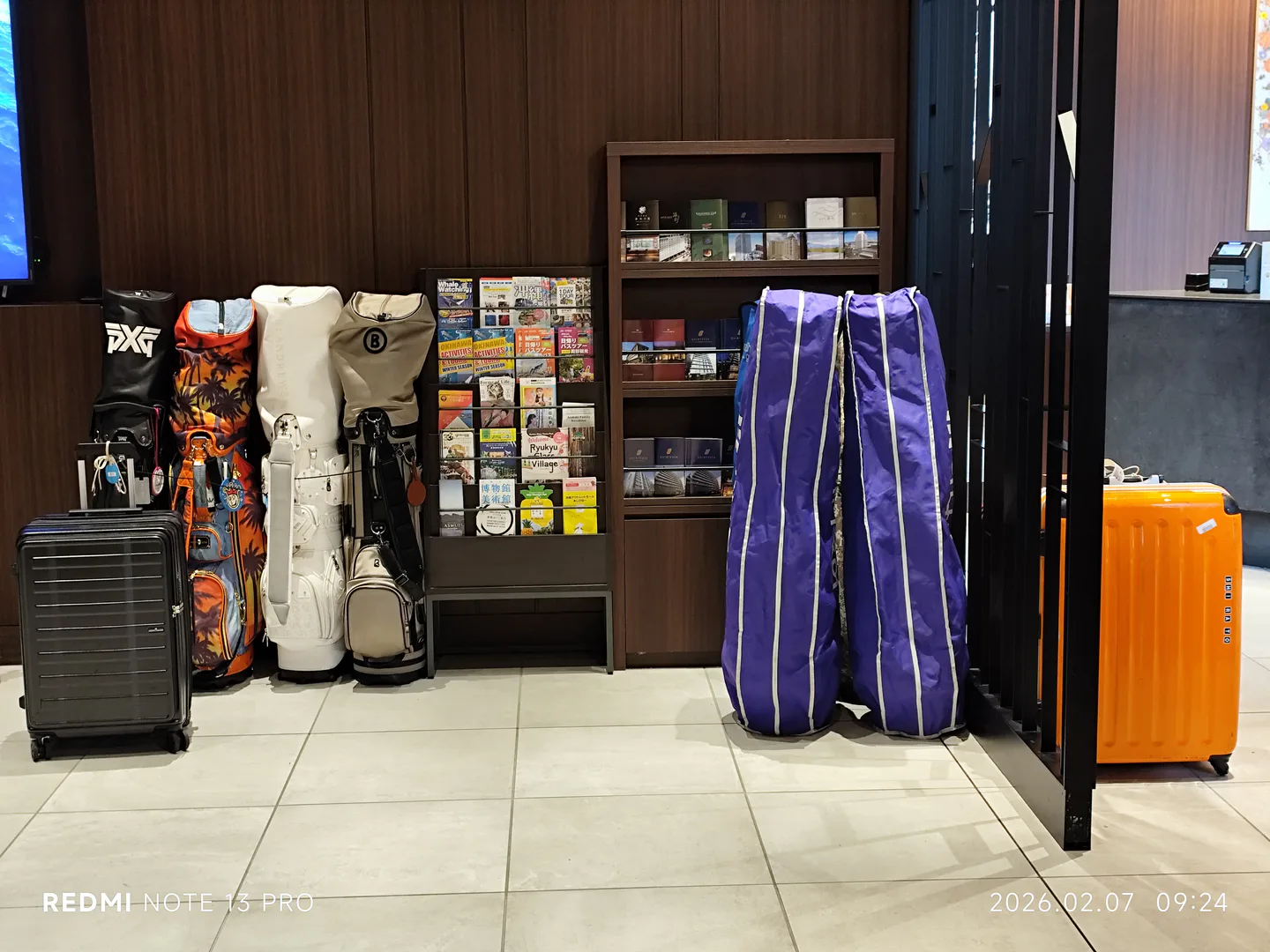
A common high-value pattern sends the main case from a city hotel to the hotel after a one-night stop. Think Tokyo–Hakone–Kyoto, Tokyo–Kawaguchiko–Osaka, Takayama–Shirakawa-go–Kanazawa or Fukuoka–Yufuin–Beppu. The traveller carries a small overnight bag into the mountain, onsen or rural segment; the large case moves separately toward the later staffed hotel. It does not have to arrive before the traveller reaches the intermediate stop. It has to arrive by the agreed date when they reunite.
A Shirakawa-go bus-and-lodging day is a clear test of that approach: the case is easiest to leave behind only if its later delivery date still fits the next staffed hotel. On a Shimanami Kaido cycling departure, decide where the non-riding case ends up before booking a one-way bike. A courier solves the luggage leg only when the traveller and the bag have distinct, workable routes.
That method removes the suitcase from local buses, ryokan pickups, cobbled lanes, station stairs and narrow pavement. The heaviest part of the journey is sometimes the last short walk rather than the intercity train. Kawaguchiko and Hakone luggage planning and Hakata to Yufuin luggage choices apply the same logic to different local transport. The point is to avoid making a large case follow every address merely because a booking confirmation lists it.
Only use the skip-a-hotel method if the small bag can truly cover the stop. A person carrying required medication, cold-weather gear, a child's essential equipment or specialist activity kit may need more than a token change of clothes. If the necessary contents fill most of the original case, the courier creates separation without relief. Another option is to choose a hotel with storage before and after the one-night excursion, then collect the bag on the return. Hakone overnight length changes which of those strategies is sensible.
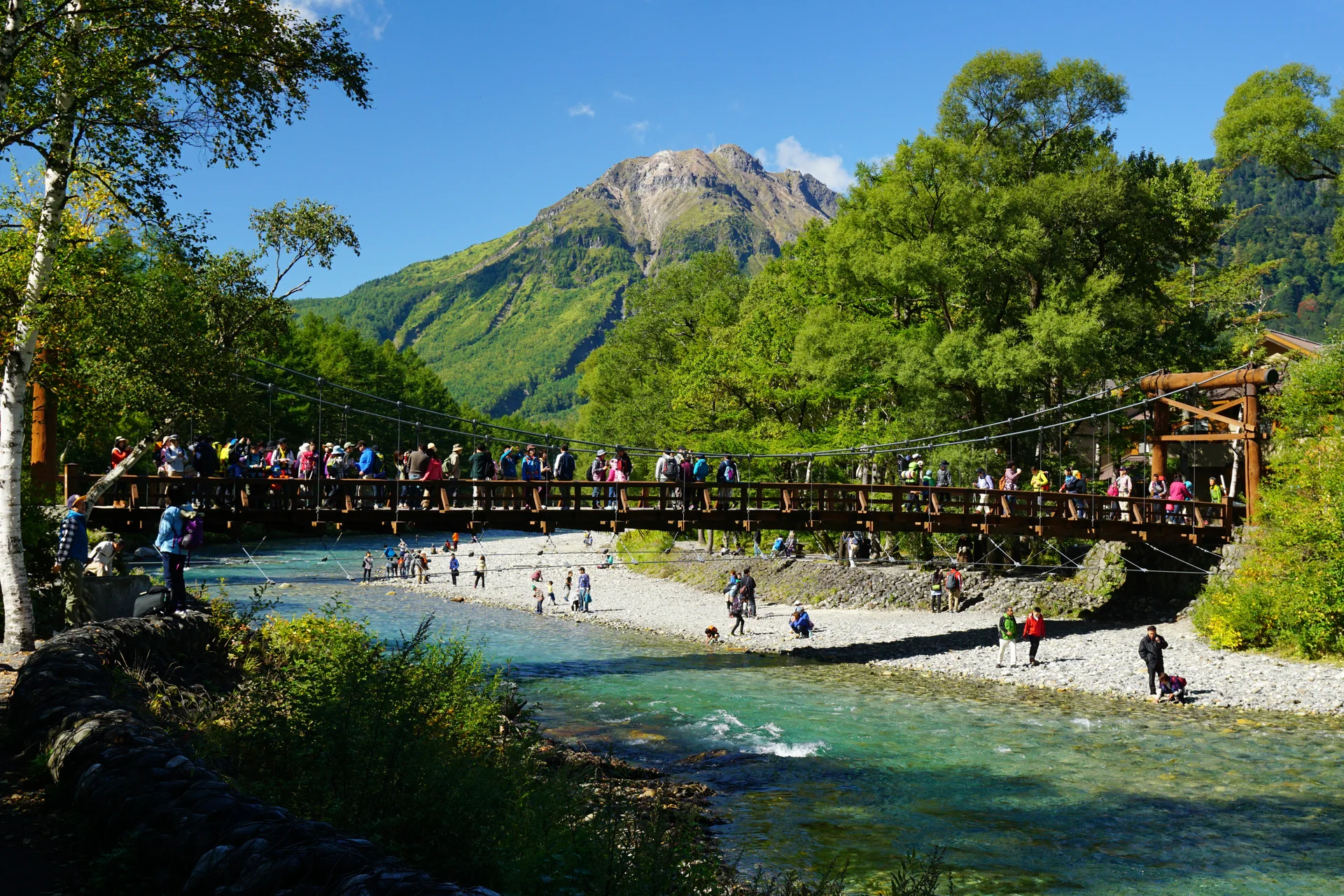
The Kamikochi scene above shows why the walking segment should govern the bag choice. A large case may be easy on a reserved train yet a nuisance on a crowded bus and trail approach. Store or send it before the mountain leg if the receiving arrangement works. The same idea applies to Tateyama Kurobe summer route, where a route-specific seasonal transfer may be relevant. Such services must be checked for the season rather than assumed from the existence of ordinary nationwide delivery.
The destination hotel must be able to receive it
Before handing a suitcase to the sending counter, ask the receiving property whether it accepts prepaid luggage before check-in. A staffed city hotel often has a process; an apartment or lightly staffed rental may not. Yamato's vacation-rental guidance says a property without a reception desk cannot receive its standard luggage delivery in the same way. A Yamato sales-office pickup may be possible, but that adds another trip and needs a Japanese contact phone number on the waybill.
Provide the complete hotel name, branch, postal address, phone number, check-in date and reservation name. Distinguish similarly named branches, and tell the hotel if the parcel name differs from the booking name. A parcel can reach the correct building and still be hard for reception to assign to a guest. Pay attention to whether the property accepts prepaid parcels, whether a charge is due, and how far before arrival it will hold a case.
Do not put a convenience store down as the destination pickup point without confirming that specific service. Convenience stores can be useful drop-off locations for some shipments; they are not a universal luggage reception desk for a traveller's incoming case. The safer alternatives are a staffed hotel or a confirmed Yamato sales office. Yamato's private-lodging guidance spells out why an unstaffed rental changes the delivery plan.
For a family or group, separate parcels can also mean separate tracking numbers and receipt slips. Keep those numbers accessible without digging into the forwarded bag. Write the expected delivery date into the itinerary, not just the address. If a hotel move is already complicated, this small administrative step keeps the courier from becoming another unseen connection.
“Next day” depends on the two endpoints
Ordinary TA-Q-BIN often reaches major cities the following day, sometimes in two days, but the operator excludes some areas from the broad rule. Distance, islands, mountain locations, heavy traffic and weather can alter the estimate. Ask the sending counter for the expected arrival date for the exact origin and destination. Do not take a Tokyo–Kyoto example and apply it automatically to a ski resort, remote island or mountain lodging.
Pack for a one-day delay when the contents matter. Medication, a warm layer for a cold destination, waterproof clothing and the first activity's required equipment should stay with the traveller. Tracking can show where a parcel is; it cannot supply a jacket when weather changes. For a simple city-to-city transfer, a modest overnight bag may be enough. For a Hokkaido winter route or Yakushima hiking plan, carrying the essential layers and footwear has higher value.
A quoted delivery date should be treated as an estimate with a contingency, particularly when a non-replaceable item is inside. The simplest robustness test is to imagine the case arrives one day after its expected date. Can the next morning still proceed? If not, either carry more of its contents or carry the whole suitcase. Yamato's parcel guidance gives the national service scope, while the sending counter can answer for the actual route.
Same-day delivery needs a named counter and route
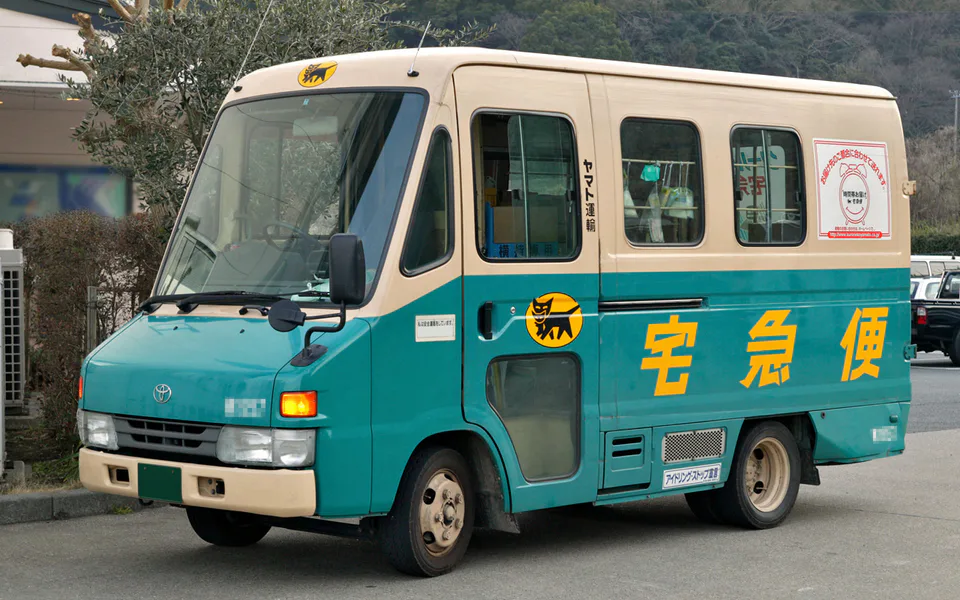
Same-day luggage service exists at selected facilities, but Yamato limits it by the counter's accepted area, intake deadline and delivery window. A traveller cannot infer that a Tokyo hotel checkout in the morning will produce a Kyoto hotel suitcase that evening just because both are in Japan. If the bag is needed at the next destination that night, carrying it is often the more reliable default unless a specific same-day product confirms the exact route.
A service with a named operator, eligible origin and destination is a different proposition from ordinary forwarding. The Tokyo-to-Kansai same-day comparison is useful when evening access is essential; it cannot be replaced by a broad next-day estimate. If you need the case that night and the operator cannot confirm the particular hotel route, carry it.
Check four things before relying on same-day service: where the case must be handed over, whether the receiving address is inside the service area, the cut-off time and the promised arrival window. Weather, traffic and parcel volume can still affect performance. Yamato's same-day service page makes the counter-specific nature explicit. A late arrival flight or morning of sightseeing can make a cutoff impossible; the generic label “same day” does not solve that conflict.
For a day trip that returns to the same hotel or station, a storage counter is usually simpler. You need the bag later in the same city and forwarding it ahead offers no useful journey saving. Lockers can work, but large lockers may be full at a busy station. Look for a staffed storage counter or ask the hotel to hold luggage after checkout when that is available. A Nara day trip and an Otaru day trip are examples where returning to the same base can make storage the cleaner choice.
Storage location should follow the return journey. The Tokyo station storage decision compares places by where the case is needed again, rather than by locker count alone. If the onward travel starts in another district, retrieving a bag from the day’s first station can erase the benefit of storage.
Airport forwarding must be scheduled backward
Yamato currently caps Airport TA-Q-BIN parcels at 30 kg. Its airport rate display includes a ¥660 airport handling fee in the one-way price; the total changes with origin and parcel size. The sending counter has its own deadline, while the airport collection counter and terminal must match your flight. Price the actual case and keep the sender receipt. A recent shopping-heavy final night may make early dispatch awkward; the Okinawa final-two-night base decision is one example where the contents may still need to stay with you.
Airport TA-Q-BIN can free the last days of a trip, but it cannot normally be arranged on departure morning. Yamato instructs travellers to send by the local cut-off at least two days before the flight, or three days in some areas; the parcel should reach the airport by the day before departure. The exact sending deadline depends on the counter and origin. The flight date can be set in advance within the service's conditions, and collection is at a designated counter at the departure airport.
Work backward from the airline check-in desk. On flight day, retrieve the case from the correct airport collection counter before checking it with the airline. The day before, it should already have arrived at the airport. Two or three days earlier, send it by the route-specific cutoff. Keep the sender receipt and tracking details to collect it. Confirm airport and terminal rather than assuming every counter serves every flight in the same way. There is an airport handling fee as well as size and weight limits, so compare the service cost with the actual handling it removes.
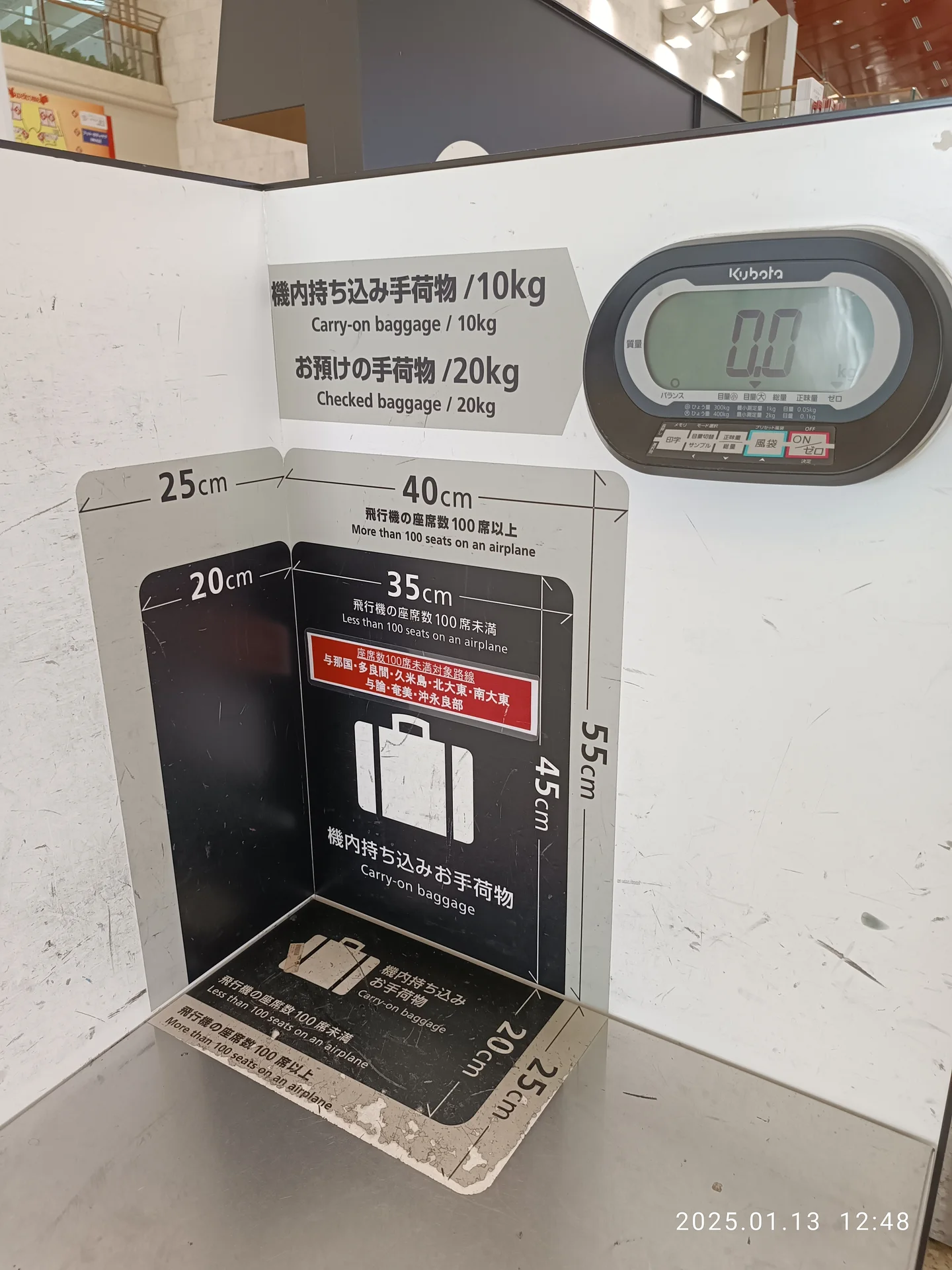
The retained airport image is a photographed airline baggage sizing and scale station, not a Yamato collection counter. Its 10 kg and 20 kg labels belong to the pictured airline display and should not be copied as courier or universal flight limits. Use the airline booking for your allowance and Yamato's airport delivery conditions for the forwarding deadline. Same-day intercity luggage is a separate product decision.
Oversized Shinkansen baggage is a different rule
On the Tokaido, Sanyo and Kyushu Shinkansen, SmartEX requires a seat reservation with oversized baggage space for a case whose three outer dimensions total 160 cm or more and up to 250 cm. Current guidance lists a ¥1,000 handling fee if oversized baggage is brought without the required reservation. Measure the case including wheels and handles instead of deciding from a “28-inch” or “29-inch” marketing label. The rule is not a universal requirement on every Japanese train.
If the suitcase falls below the threshold and there is one straightforward Shinkansen journey followed by a short accessible hotel walk, carrying it may be perfectly sensible. If it exceeds the threshold, reserving the appropriate space can still be easier than forwarding when the contents are needed at arrival. SmartEX's current baggage rule addresses the train booking; it does not decide whether a separate courier is worth buying. A station-near hotel can also change the total handling cost.
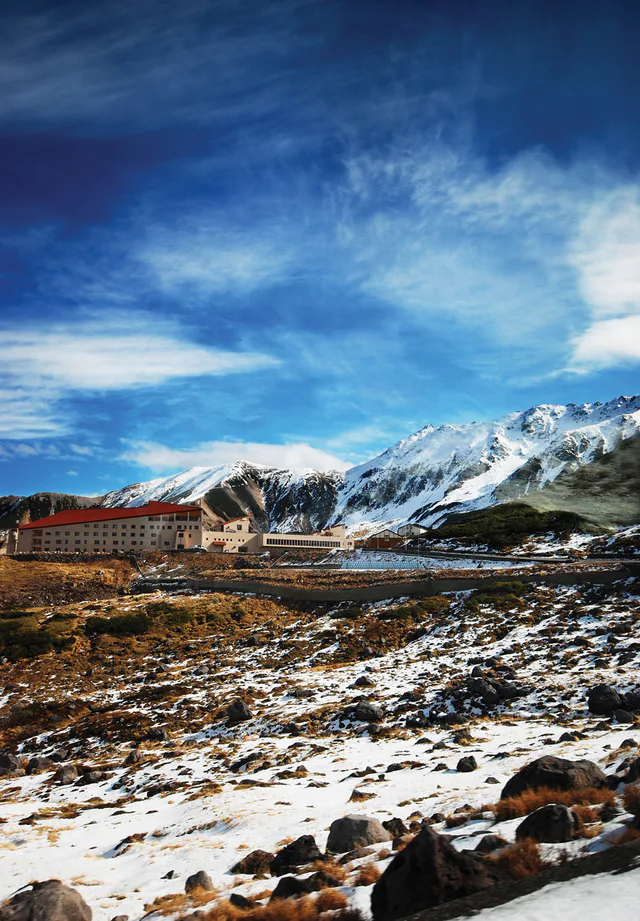
The mountain photograph is a Tateyama landscape in snow, with a long building below the peaks. It illustrates the kind of route where a seasonal luggage arrangement or a small carried bag may matter; the photograph itself does not establish a transfer service or its operating dates. Check the current season before designing a crossing around a special delivery service.
Keep the irreplaceable bag with you
For longer hotel stays, a room’s layout can also change what should remain accessible. The Fukuoka long-stay comparison separates laundry and room space from the courier question. Those are useful once the main case has reached a stable base; they do not help during a missed delivery night.
Passports, medication, cards and cash, keys, electronics, cameras, fragile valuables and irreplaceable documents belong in the carried bag. Add a change of clothes, charger, weather protection and what the next one or two days actually require. For a ryokan night, consider personal items the property may not supply. For families, keep child medication, bedtime essentials and a full change of clothes. For winter or mountain travel, the warm and waterproof layers should not be waiting in an unseen parcel.
Carrying the whole suitcase is the right choice when you need its contents that evening, have a simple direct transfer, face an unstaffed destination, are taking a very short trip or need specialist gear every day. A courier can remove lifting and transfers; it cannot remove elapsed delivery time. Do not create a new schedule dependency to save a short and manageable station walk.
Send when a staffed destination confirms acceptance and the bag can bypass difficult hand-offs. Store when the same city needs the bag again soon. Carry when the uncertainty of separation costs more than handling it. For the common one-night onsen or mountain stop, forwarding past that stop can be the strongest middle course. The practical next step is to ask the receiving hotel and sending counter about the exact bag, date and address before paying for the shipment.
If Tokyo is the luggage hand-off city, compare a room near the station where you will collect or forward bags before paying to move cases across town.