
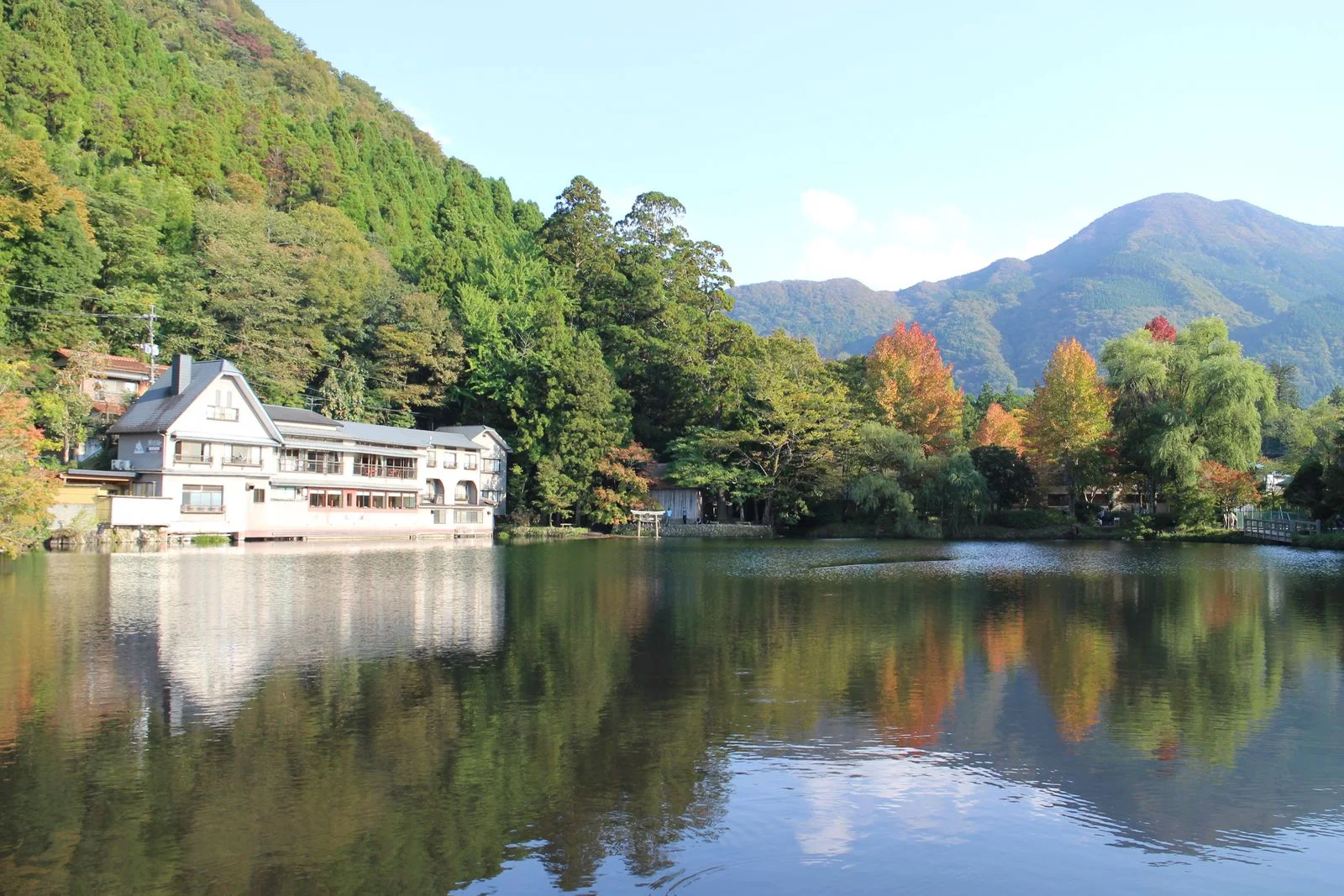
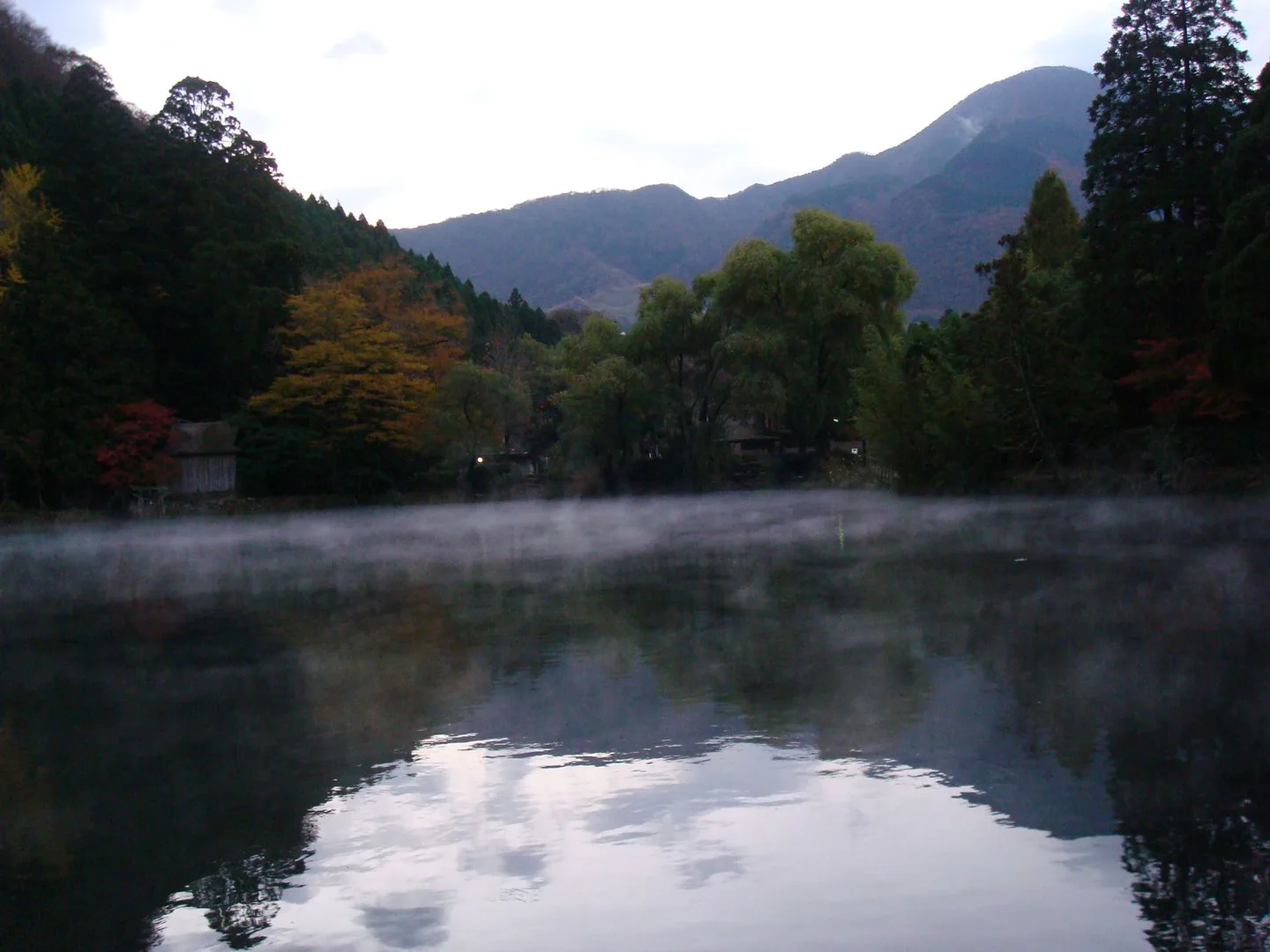
Lake Kinrin is compact enough for a day visit. Its appeal in autumn comes from the changing trees, the short waterside path and the possibility of mist on a cold early morning. That last image cannot be booked. A Yufuin overnight makes sense when the lake before the day-trip crowd, a ryokan dinner or bath, and the town after the shops quieten down are all valuable to you. If the trip is simply a lake circuit, lunch and Yunotsubo Kaido, the room can stay in Fukuoka or Beppu.
The local tourism office describes mist on cold early mornings from autumn into winter; Yufu City describes visible vapour when cold air meets water warmed by springs and hot-spring inflow. Neither account promises a particular November sunrise. Plan the night around what it still gives you if the water is clear. The Kyushu autumn timing map helps place Yufuin within a wider trip, while the lake’s own weather is a separate decision.
What an overnight purchases at the lake
| Purpose | Better starting plan | Reason |
|---|---|---|
| Lake, shops and lunch in daylight | Day trip | The circuit is short and daytime access is straightforward |
| Early lakeside walk plus a ryokan evening | One Yufuin night | The room opens a morning window and gives the evening another purpose |
| Only a hoped-for mist photograph | Day trip | Weather can remove the photograph without changing the hotel bill |
| Late arrival after the meal deadline | Rework the room or journey | Missing dinner and bath time erases much of the overnight value |
| Two Oita nights with different goals | Yufuin plus Beppu only if both jobs differ | Do not move rooms just to repeat an onsen night |
The current first Yufuin no Mori leaves Hakata at 09:17 and reaches Yufuin at 11:31 under JR Kyushu’s 14 March 2026 timetable. It is an all-reserved train, and the operating calendar varies by date. It makes a comfortable day trip possible, but cannot give you first light at Lake Kinrin. The Fukuoka-to-Yufuin train, bus and car comparison helps with the fare and route choice; whichever daytime mode you use, a normal Fukuoka departure does not reproduce a local dawn.
JR Kyushu publishes operating dates separately from the train timetable, and some dates use a different Yufu service at a comparable time. The Yufuin no Mori reservation guide is useful before treating the named sightseeing train as the only way to reach town. It is the arrival hour, rather than the train branding, that decides whether a Fukuoka day trip can include the dawn lake window.
An overnight is therefore a purchase of a time window rather than of extra kilometres of sightseeing. Imagine a still morning with no mist. You can walk around the lake before most day visitors, return for breakfast, then enjoy a bath or a quieter street. If those things would still satisfy you, one night can be justified. If the whole purchase rests on vapour above the water, use a day trip and keep the money for a stay with a result you can control.
A short lake walk inside a longer Yufuin day
Oita Tourism gives Lake Kinrin a circumference of roughly 400 metres and puts it around 25 minutes on foot from JR Yufuin Station. Those distances prevent two common errors. The lake itself is not a full-day hike, and a hotel need not sit at the water to make a daylight visit easy. Station-to-lake time, however, grows once you include photographs, shop stops, a crowded pedestrian street and the route back with luggage.
A day visitor can arrive, leave a bag, walk through town, circle the lake, eat and return without an overnight. A ryokan guest can use the same daytime hours but gains the evening and first light. Which product suits the trip depends on the part of Yufuin you want most. The Beppu-versus-Yufuin stay decision is useful when the wider Oita stay might be based in Beppu instead.
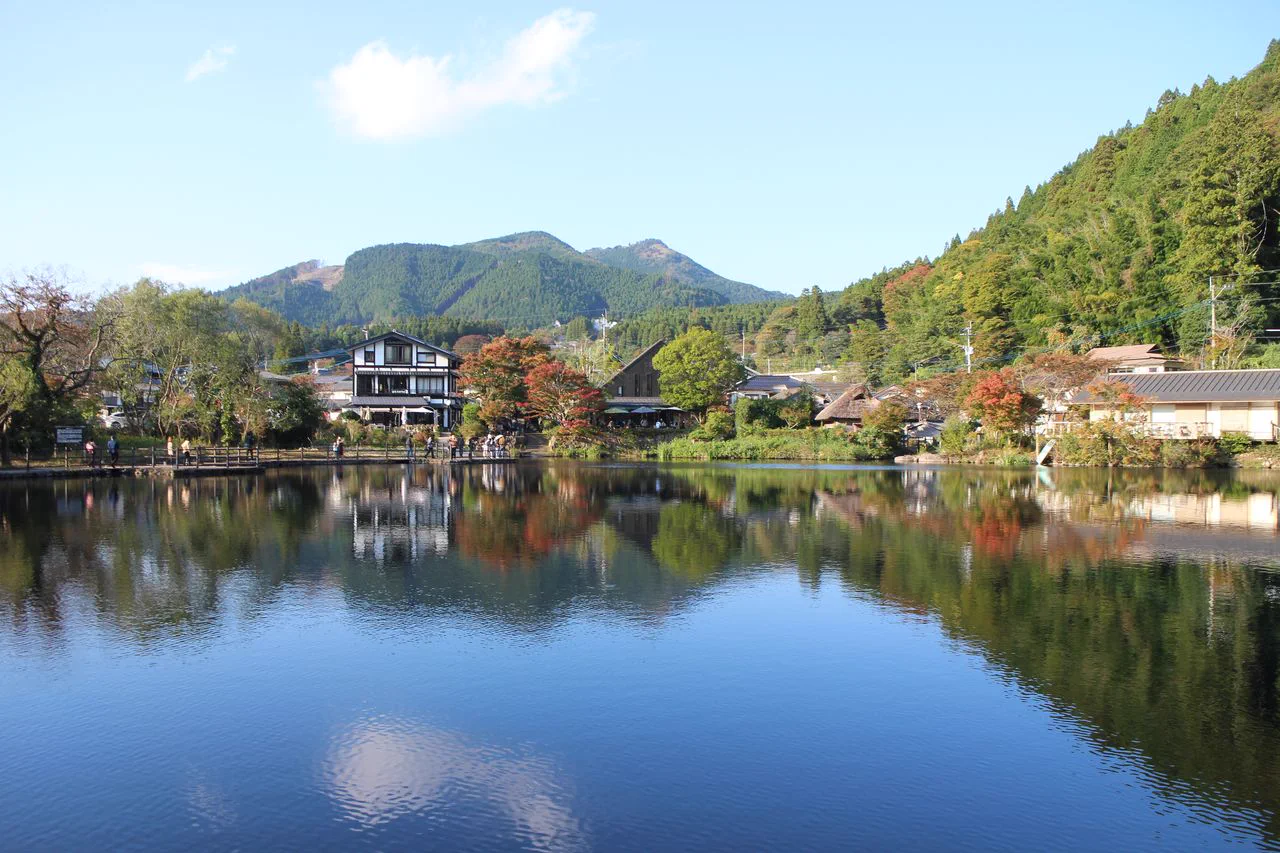
At the lake itself, the path is small enough that poor weather can shorten a visit without ruining an entire day. Do not confuse that with guaranteed photography. Wind, rain, humidity and the overnight temperature affect whether vapour forms and whether it lingers. A crisp forecast increases the possibility; it does not bind the water to perform. The Japan autumn hotel booking guide helps with flexible terms when leaf colour and weather are the reasons for travel.
A mist attempt should fit around breakfast
A sensible early walk can have two brief looks: once around first light and again a little later if conditions change. There is no reason to wait for hours beside a mist-free lake while the ryokan breakfast window closes. Confirm when breakfast starts and whether your group can comfortably walk from the hotel and return. A person with limited mobility may need a nearby room or an arranged taxi; someone on the station side may prefer an unhurried later walk.
The lake-side hotel is not always the best dawn hotel. A room near Yunotsubo may cut the approach but put you beside the busiest daytime street. A hillside property may be far from the lake yet have the private bath or view you came to Yufuin for. The Yufuin ryokan and private-onsen guide separates in-room baths, reservable private baths and public bathing, which booking thumbnails often blur.
Half-board ryokans also have dinner arrival rules. If the chosen train is likely to deliver you after the meal cutoff, a lake-area postcode cannot rescue the booking. Ask about the latest check-in, final dinner seating, breakfast time, the particular bath, and any pickup from the station. The Japanese ryokan selection guide covers those terms in detail. Yufuin’s calm evening is valuable only if the accommodation schedule permits you to enjoy it.
An autumn bath booking can carry several different costs: the room, meal plan, private bathing privilege and the transport needed to reach a secluded property. The autumn onsen ryokan guide helps separate those dimensions. A lake-side address earns a premium only when the early walk is genuinely a priority; a bath-focused traveller might get more from a room farther from the water.
Station, lake and hillside are different rooms to buy
The station side serves an arrival by train or highway bus, a large case and a quick onward departure. Reaching the lake before breakfast takes a longer walk or taxi, but the difficult luggage legs are shorter. The Yunotsubo and lake side is strongest for an independent early stroll. It can also be busier in the middle of the day, and a lake-front rate may buy little extra if the stay will be spent mostly inside the ryokan.
Hillside and outlying ryokans can offer a quieter room, a private bathing arrangement or a view of Mount Yufu. Their trade-off is reliance on a shuttle or taxi and the possibility that “Yufuin” in the booking address sits twenty or thirty minutes from both station and lake on foot. Check the exact property entrance, slope, shuttle hours and meal schedule. The Yufuin versus Beppu hotel-base guide helps judge whether that rural stay fits the next day’s travel.
The right area is the one that makes the night’s main benefit easy. A station hotel is excellent when the traveller arrives late and leaves early; it is less persuasive if every other minute is spent trying to reach the lake at dawn. A ryokan far up a lane can be perfect for bath and dinner time, but poor for someone who wants to walk alone to the water before breakfast. Compare the room plan and actual door-to-door path rather than sorting accommodation by distance to a map pin.
Bags and the temporary station change the arrival
Yufuin Chikki, inside the tourist information centre, stores bags from 09:00 to 17:00. Delivery to participating Yufuin Onsen Tourist Association lodgings is accepted from 09:00 to 15:00; the property-to-centre request window is 09:00 to 11:30, with collection later. This can remove a heavy suitcase from a daytime lake walk or let a guest head to the room with only essentials. The service is closed at dawn, so it does not replace a hotel bag arrangement for the early lakeside walk.
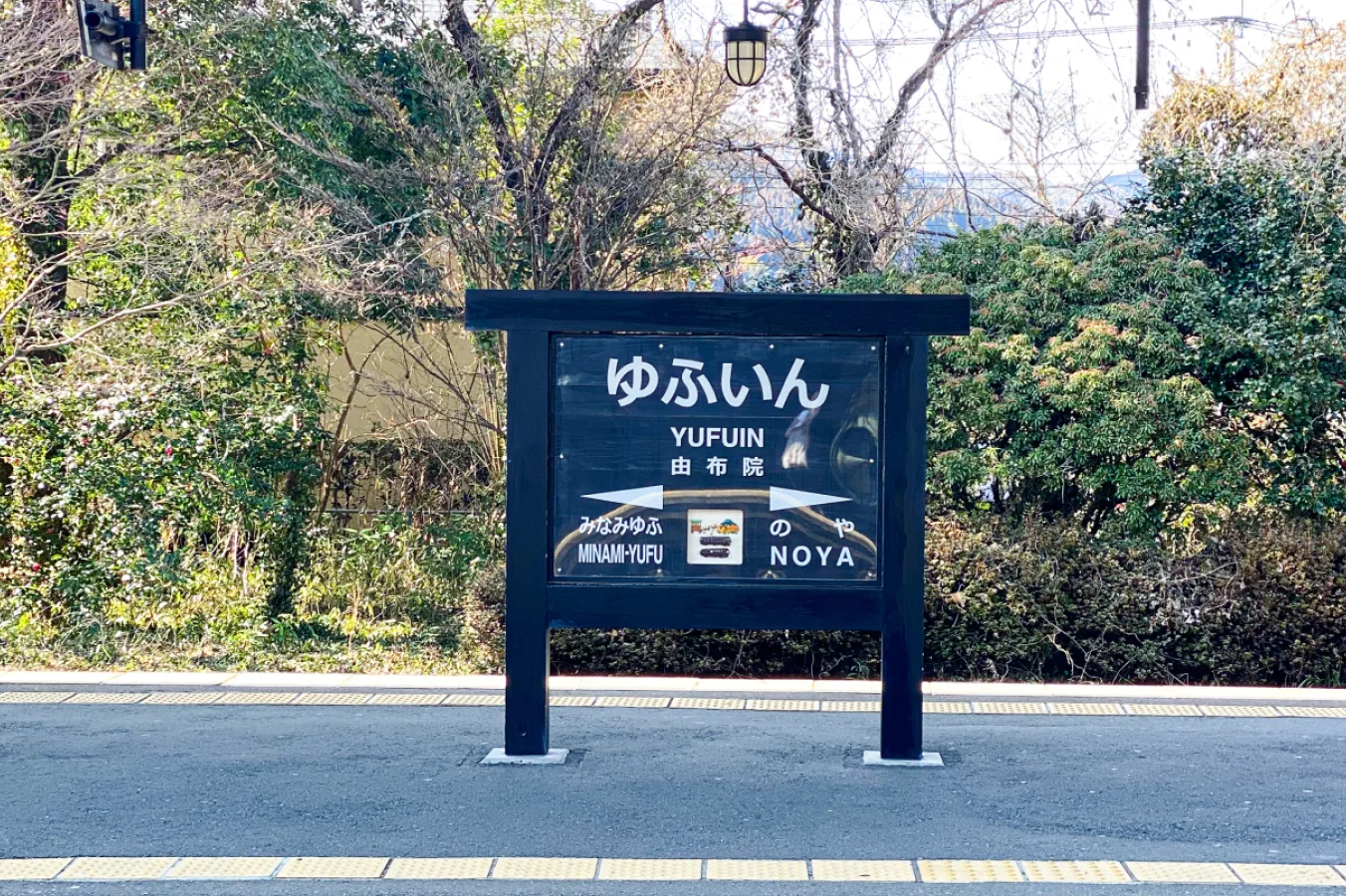
The 2026 station renovation also changes the scene at the rail exit. JR Kyushu began using a temporary Yufuin station building on 26 March and closed the old one during the work, planned into winter of the 2026 fiscal year. The platform footbath has been closed since 14 March. Ticketing remains in the temporary structure, but a traveller should not use an older station photograph to plan an open footbath or an unobstructed forecourt. The Hakata-to-Yufuin luggage plan is useful when the case needs to move beyond one Yufuin afternoon.
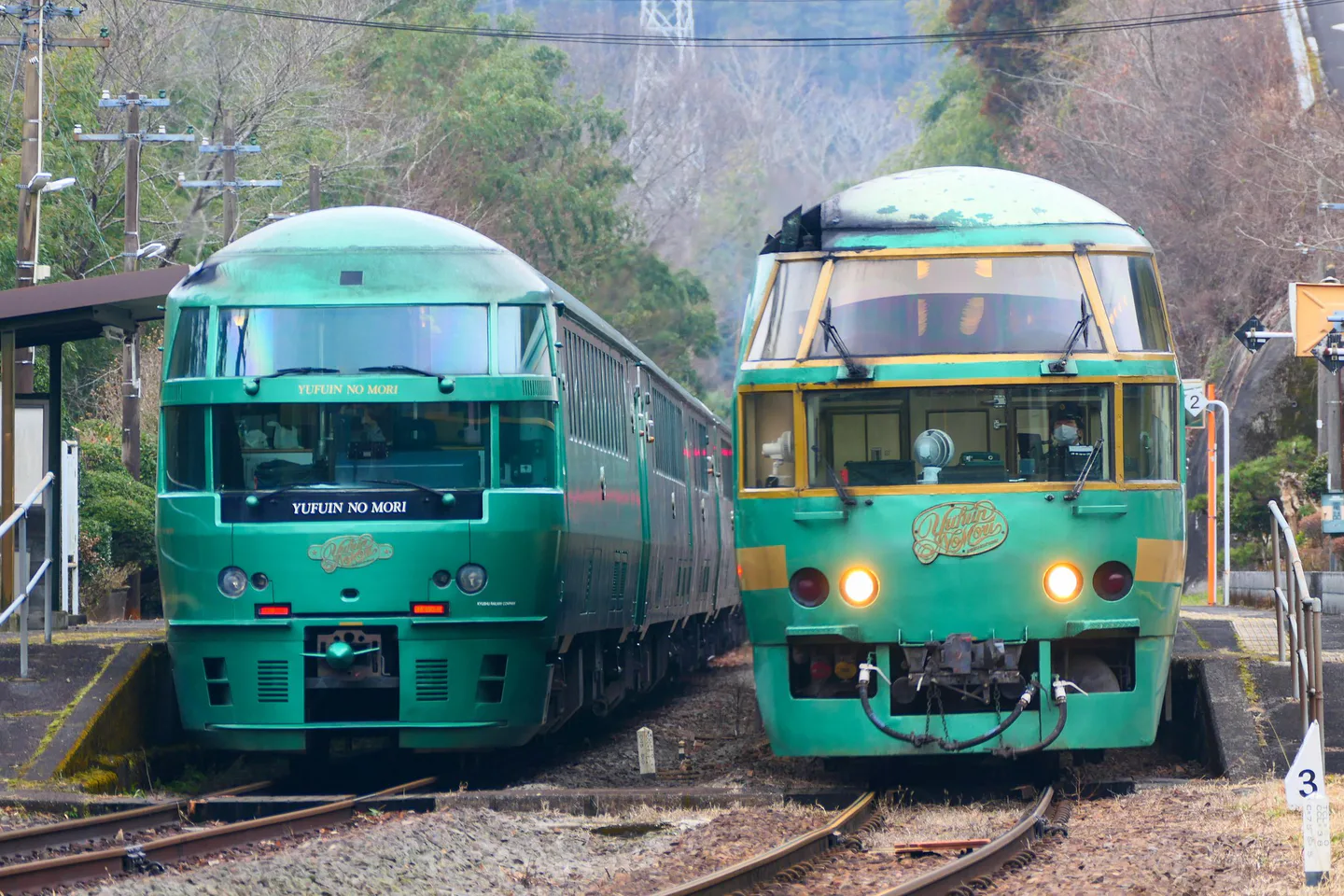
For a day trip, drop the bag before the town walk and retrieve it within the storage hours. For an overnight, a participating ryokan may receive it, but confirm the property is on the eligible list. An outlying hotel can still need a shuttle after delivery. If the next stop is Beppu or Hakata, plan the retrieval or forwarding on the actual departure route. The Japan luggage-forwarding guide distinguishes a local same-day handoff from an intercity shipment.
One night that does not turn into a mist vigil
Arrive with enough margin for the chosen ryokan’s dinner. Leave the case through the hotel or eligible bag service, then select either the lake or Yunotsubo for the afternoon rather than racing across both. The evening is for the meal, bath, room and quieter town that a day trip cannot deliver. At first light, make a short lake visit if walking conditions suit the group; then come back for breakfast and checkout. Weather should determine the length of the walk, not the value of the entire night.
If rain arrives, shorten the circuit and use the ryokan, cafés or an indoor stop. If the lake has no mist, look at the water and autumn trees without hunting another supposedly guaranteed site. If a train delay threatens dinner, protect the meal or discuss the property’s policy before protecting the lakeside stop. These are practical tests of the night’s value. The Yufuin private-bath accommodation guide can help choose a hotel whose indoor time has a clear purpose.
Daylight also changes the photographic choice. The lake can be attractive with a clear reflection and autumn slopes, while mist can conceal those details. If the wider trip is devoted to foliage, the Kyushu autumn route and timing map may reveal a better second leaf day than waiting beside one lake. The Kokonoe and Kuju autumn guide is a different mountain excursion with its own transport requirements, not an automatic add-on to a Yufuin morning.
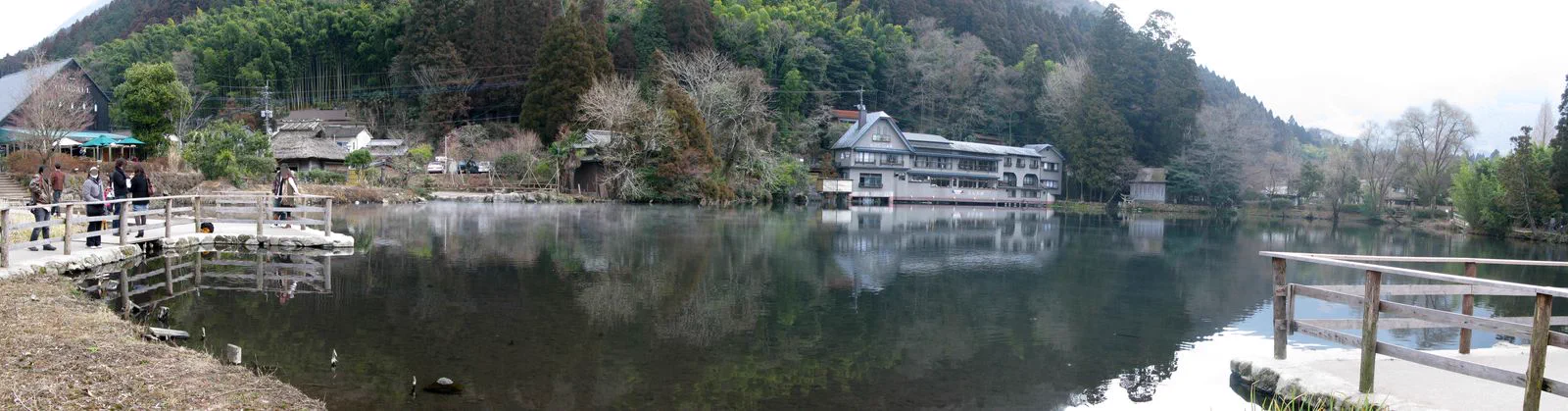
The wide lakeside view is also a reminder that the circuit does not need mist to be a useful stop. If a second foliage excursion is the purpose of the extra night, the Yabakei autumn route calls for a different road and hotel calculation. A Kyushu autumn car-versus-transit plan can show whether that additional landscape day is realistic from Yufuin without forcing another checkout.
Beppu is useful when the second night has another job
A Yufuin–Beppu split can work well for a two-night Oita visit, but two onsens do not automatically justify two checkouts. Yufuin can buy a quiet evening and dawn lake access. Beppu can buy a denser city onsen choice, Kannawa, a resort room or an onward rail position. If both stays are simply “one more bath after sightseeing,” the move may be less valuable than a second night in the better base. The Beppu-versus-Yufuin stay comparison puts those different hotel jobs alongside each other.
Let the onward direction decide the order. If the next leg leaves more comfortably from Beppu, put it second; if a Yufuin departure better serves the route, reverse the split. A traveller coming from Fukuoka via Hita has a different baggage and transport problem from someone driving toward the Kuju mountains. The Fukuoka-to-Yufuin mode comparison and Kyushu five-or-seven-day itinerary give the longer route context.
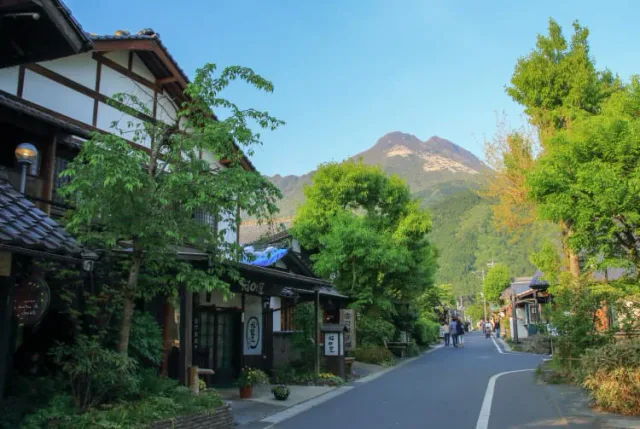
The town street and mountain view show another reason a Yufuin night can feel different from a lake-only excursion. It gives time to walk without turning every stop into a station-to-station calculation. Yet the most efficient bed may still be in Beppu if the traveller needs its transport and dining network. The Beppu two-day onsen itinerary can establish whether Beppu has enough distinct activity for the second hotel.
The booking decision in one sentence
Visit Lake Kinrin by day if the lake and nearby shops are the whole plan. Stay in Yufuin when the dawn walk, a specific ryokan experience and the quieter evening each add value even without mist. The lake’s roughly 400-metre path does not itself require a premium hotel; the current 11:31 arrival of the first Hakata Yufuin no Mori explains why a Fukuoka rail day trip cannot reach first light. Check the date’s train operation, the room’s dinner and bath terms, the luggage handoff and the location of the actual hotel door.
After deciding on the overnight area, compare Yufuin station-side rooms, Lake Kinrin stays or Beppu hotels. Judge a lake-area premium against the specific morning and room it buys, not against a promised mist photograph.
Related Oita and autumn routes
Other trip decisions: Fukuoka to Yufuin: Train, Bus or Rental Car, Hakata to Yufuin Luggage Forwarding, Yufuin Ryokan with Private Onsen, Beppu vs Yufuin: Where to Stay, Lake Kawaguchi vs Lake Yamanaka for Autumn Leaves: Views, Access and Hotels.
Other trip decisions: Koyasan Autumn Leaves Guide: Temple Lodging, Morning Prayers and Access from Osaka, Japan Autumn Leaves Without Changing Hotels: Tokyo, Sendai, Osaka and Fukuoka Bases, 5- or 7-Day Kyushu Autumn Leaves Itinerary: Fukuoka, Yufuin, Beppu and Mountain Routes, How Many Nights in Lake Kawaguchi? Fuji Weather, Autumn Leaves and Hotels, Shirakawa-go Autumn Leaves: Buses, Viewpoint, Luggage and Hotels.
Other trip decisions: Takayama Autumn Leaves: Old Town, Hida Folk Village, Transport and Hotels, Ginsendai Autumn Leaves Guide: Shuttle Buses, Access Restrictions and Hiking, When to Book Hotels for Japan Autumn Leaves: Cancellation, Prices and Backup Areas, Hakone Autumn Leaves Guide: Foliage Timing from Gora to Lake Ashi and Hakone-Yumoto, Japan Autumn Leaves Onsen Ryokan Guide: Foliage Views, Open-Air Baths and Access.
Other trip decisions: Kokonoe Dream Suspension Bridge Autumn Leaves and Kuju Mountains Guide: Access, Hiking and Onsen, Yabakei Autumn Leaves Guide: Hitome Hakkei, Ao-no-Domon, Driving and Hotels, Iya Valley Autumn Leaves Guide: Driving, Buses, Vine Bridges, Onsen and Hotels.
Local details: Yufu City Lake Kinrin, Yufuin lake description, Oita Tourism lakeside access, JR Kyushu train calendar, Yufuin Chikki bag service and the 2026 temporary station notice.