
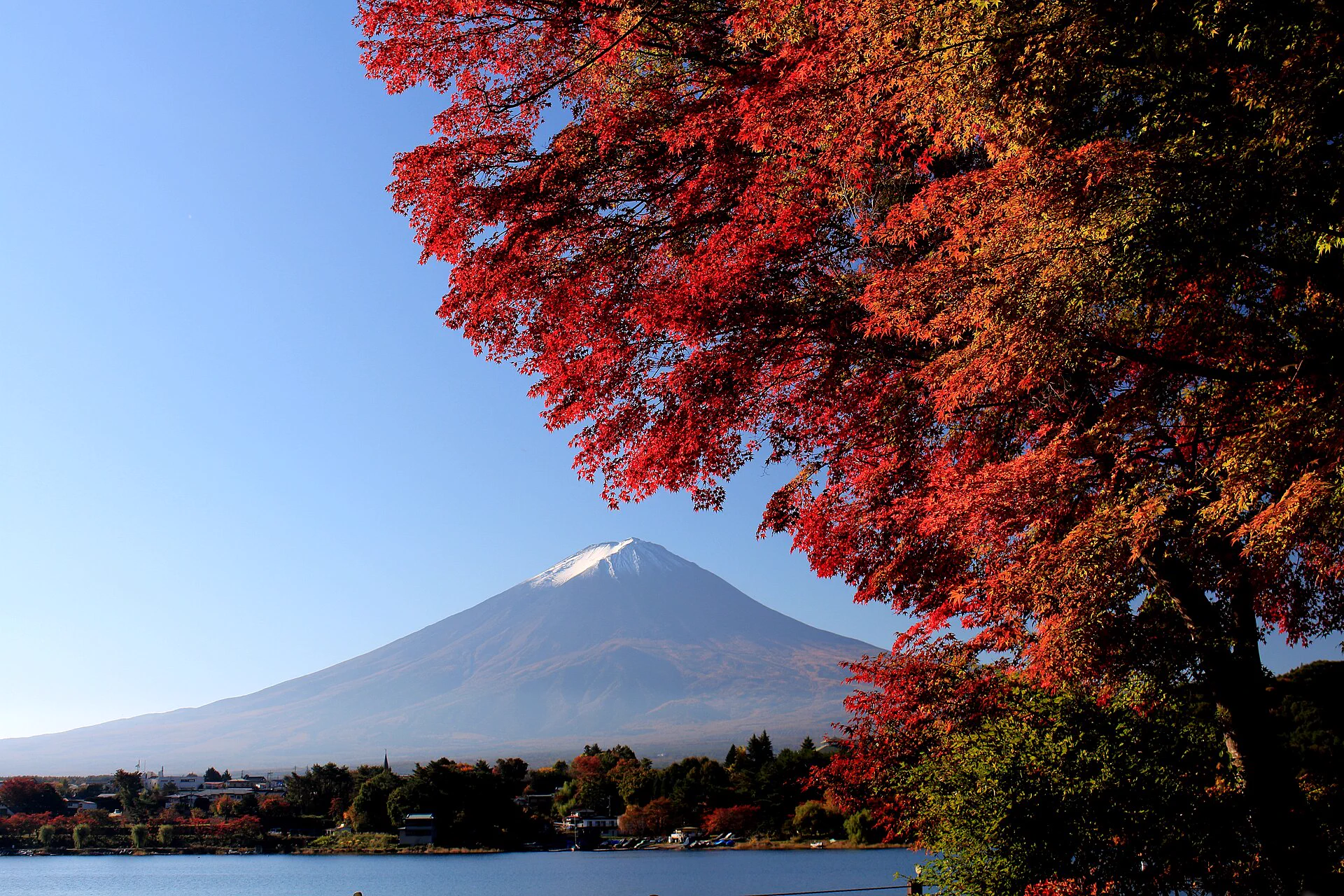
Lake Kawaguchi gives a first-time visitor a transport centre, several short sightseeing routes and the Maple Corridor evening. Lake Yamanaka gives more room to follow a shoreline, cycle and arrange a quiet dawn with Fuji in view. Both can be reached without a car. The difference is how much local movement you must organise after arrival, especially once the autumn lights go out.
The 2026 event windows differ. Fujikawaguchiko lists its Autumn Leaves Festival for 7–29 November, with Maple Corridor illumination from sunset to 21:00. Yamanakako lists the Sunset Shore festival at Asahigaoka for 30 October–15 November, lit daily from 16:30 to 20:30. If an evening event is the main reason to stay overnight, put the hotel near that event and let the daylight sightseeing fit around it. Event dates are a planning boundary; foliage and Mount Fuji visibility remain weather-dependent.
The night belongs to whichever lake uses more of your four free windows
On a one-night stay, the meaningful windows are arrival afternoon, evening, dawn and departure morning. Ask where you can spend each one without a long luggage transfer. A daylight view of Fuji might be possible from either shore. A 20:30 illumination finish near the Yamanakako hotel, an early photo stop at Nagaike, or a bus leaving from Kawaguchiko Station is harder to transfer. This is why a single hotel night should follow the hours you cannot easily reproduce from the other lake.
| Trip shape | Better initial base | Condition that could change it |
|---|---|---|
| First visit, one night, no car | Kawaguchiko | A direct bus and well-placed Yamanakako hotel make the lake’s outdoor plan easy |
| Autumn lights after sunset on 7–29 November | Kawaguchiko | Dates outside the festival or difficult return from the north shore |
| Asahigaoka lights from 30 October to 15 November | Yamanakako | Dinner or hotel is far from the illuminated shoreline |
| Cycling or several shoreline photos | Yamanakako | Wind and rain make outdoor time unusable |
| Tokyo in and Tokyo out, short stay | Kawaguchiko | Your direct Yamanakako arrival/departure matches a simple local plan |
| Continue toward Mishima or the Shizuoka side | Recalculate Yamanakako | A specific booked bus departure favours another stop |
The Lake Kawaguchi nights decision tests whether a second night is worth the luggage and room cost. For travellers considering a wider Fuji-area itinerary, the Fuji day-trip versus overnight guide explains what dawn and evening actually add. Neither lake should be chosen from a single perfect-weather photograph when your travel date cannot promise that weather.
Kawaguchiko Station makes a short first visit more resilient
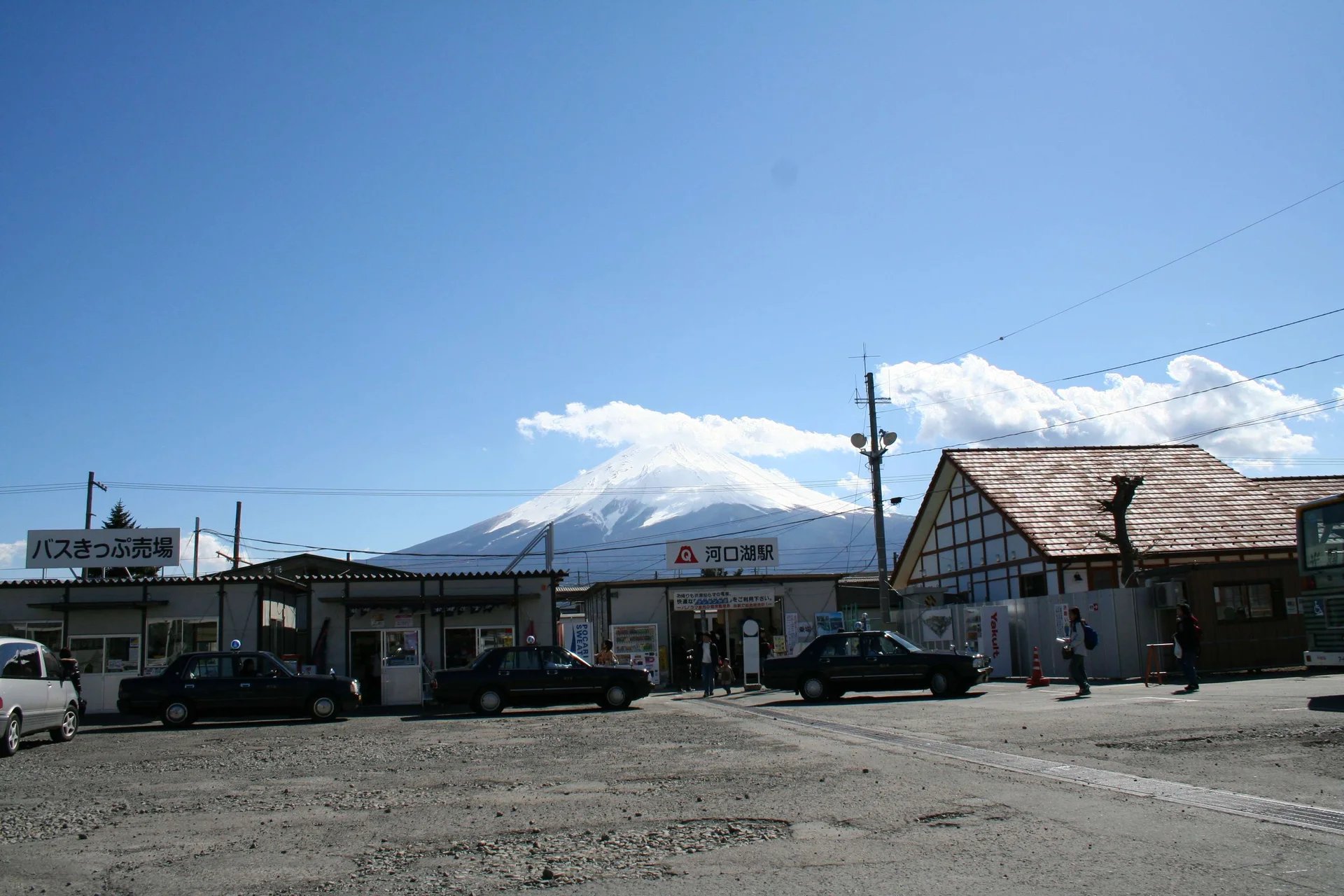
Kawaguchiko Station concentrates Tokyo arrivals, local bus departures, luggage handling and onward travel. That density helps when the trip has only one night: a missed bus or change in weather need not require a completely new base. The Red Line covers the north-shore route and Oishi Park; the Green and Blue Lines open other parts of the Fuji Five Lakes. This does not mean every attraction is near the station. It means the transfer choices are organised around a hub that is easier to understand than several dispersed lakeside stops.
The 2026 Maple Corridor event supplies a reason to remain after daylight. The tourism office gives 7–29 November for the festival and sunset to 21:00 for illumination. Plan the return to your hotel after the lights rather than assuming the same daytime bus pattern continues late. The Maple Corridor festival guide addresses the site in detail. A station-side room may simplify the following morning but add an evening transfer; a north-shore room may reverse those strengths. The Kawaguchiko accommodation-area comparison should therefore be used before choosing a hotel brand.
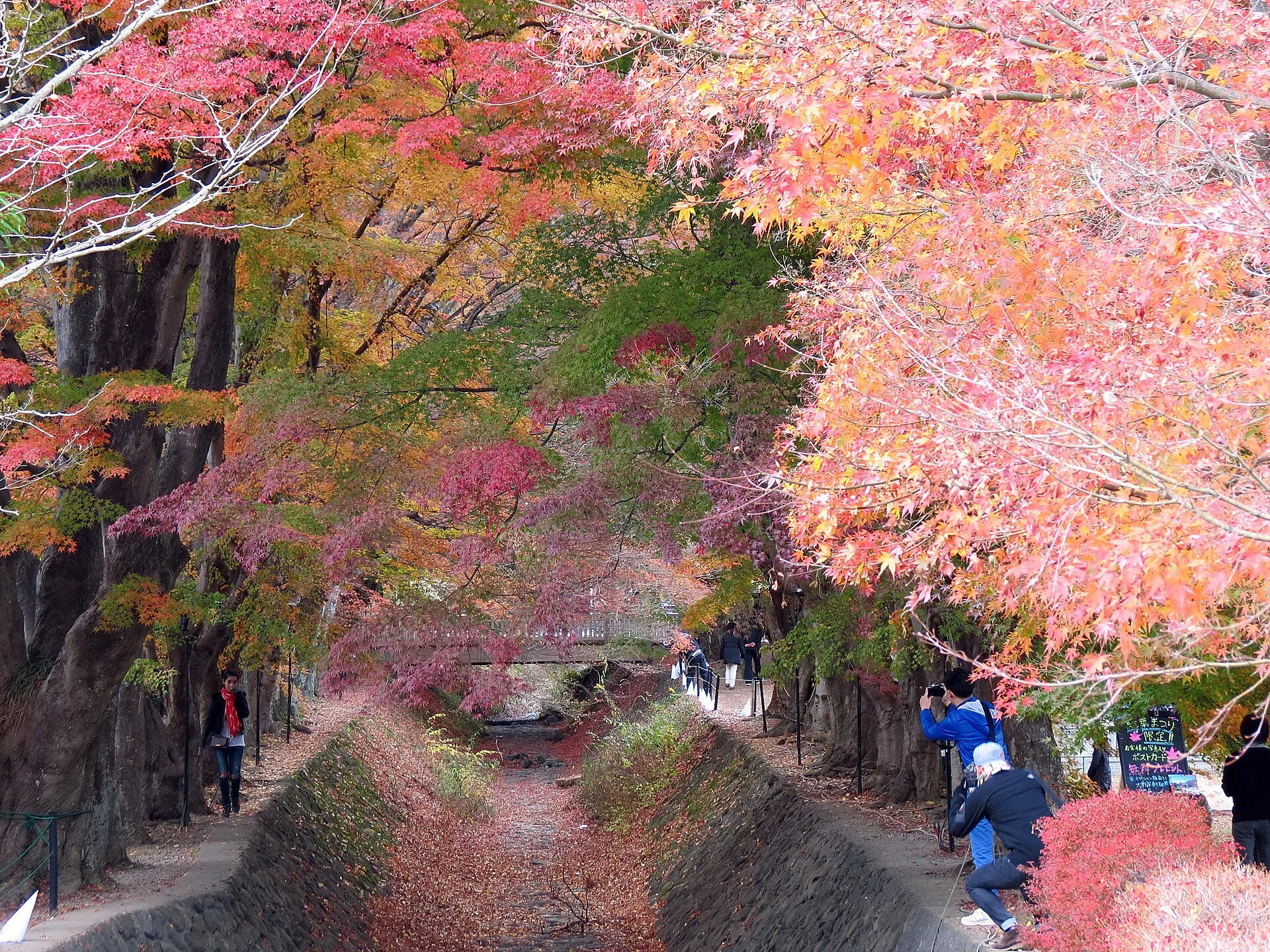
The same concentration has a cost. North-shore foliage sites, buses and restaurants can draw many people to a narrow part of the lake in peak season. A room that looks close on a regional map may still require a specific bus after dinner. Check whether the hotel shuttle serves the evening you are booking, not just your afternoon check-in. On a rainy or cloudy day, Kawaguchiko generally offers more indoor and semi-indoor alternatives in a manageable network, although no museum or bath can manufacture a Fuji view through cloud.
If reaching Kawaguchiko from Tokyo is the first constraint, compare the Fuji Excursion, highway bus and guided-tour routes before paying for an extra hotel night. The train or bus you choose sets arrival time, baggage handling and the amount of usable lake afternoon. A room near the station may be particularly valuable when the arrival is late.
An overnight near the station is particularly useful if you must leave early by bus or rail. A north-shore hotel can be more appealing when the illumination and dawn lake view are the trip’s centre. If the trip proceeds to Hakone, consult the Kawaguchiko–Hakone luggage guide and Tokyo–Kawaguchiko–Hakone three-day route before assuming you should carry a large case around the north shore. The hotel room should support the next transfer as well as the evening.
Yamanakako works without a car when the plan stays local
Lake Yamanaka has direct Tokyo access: its tourism site lists a Shinjuku highway-bus trip of about two hours fourteen minutes, along with rail-plus-bus alternatives. Calling the lake “car only” misses that practical route. The challenge begins after the arrival stop. Nagaike, Hirano and Asahigaoka are distinct shoreline areas; an easy hotel walk at one is not evidence that all three can be linked casually late in the day. With no car, choose one main zone and a hotel that makes the evening return credible.
The Sunset Shore Autumn Leaves Festival is centred on Asahigaoka Lakeside Green Park. The tourism association lists 30 October to 15 November 2026, with illumination 16:30–20:30. The event area is about five minutes on foot from Asahigaoka bus stop and about one minute from Keio Ripple Mae. Those short final approaches make an Asahigaoka-focused evening possible without a car. They do not guarantee a convenient post-20:30 ride to accommodation on another shore. If this event is your reason for staying, sleep in a zone you can actually return to after the lights.
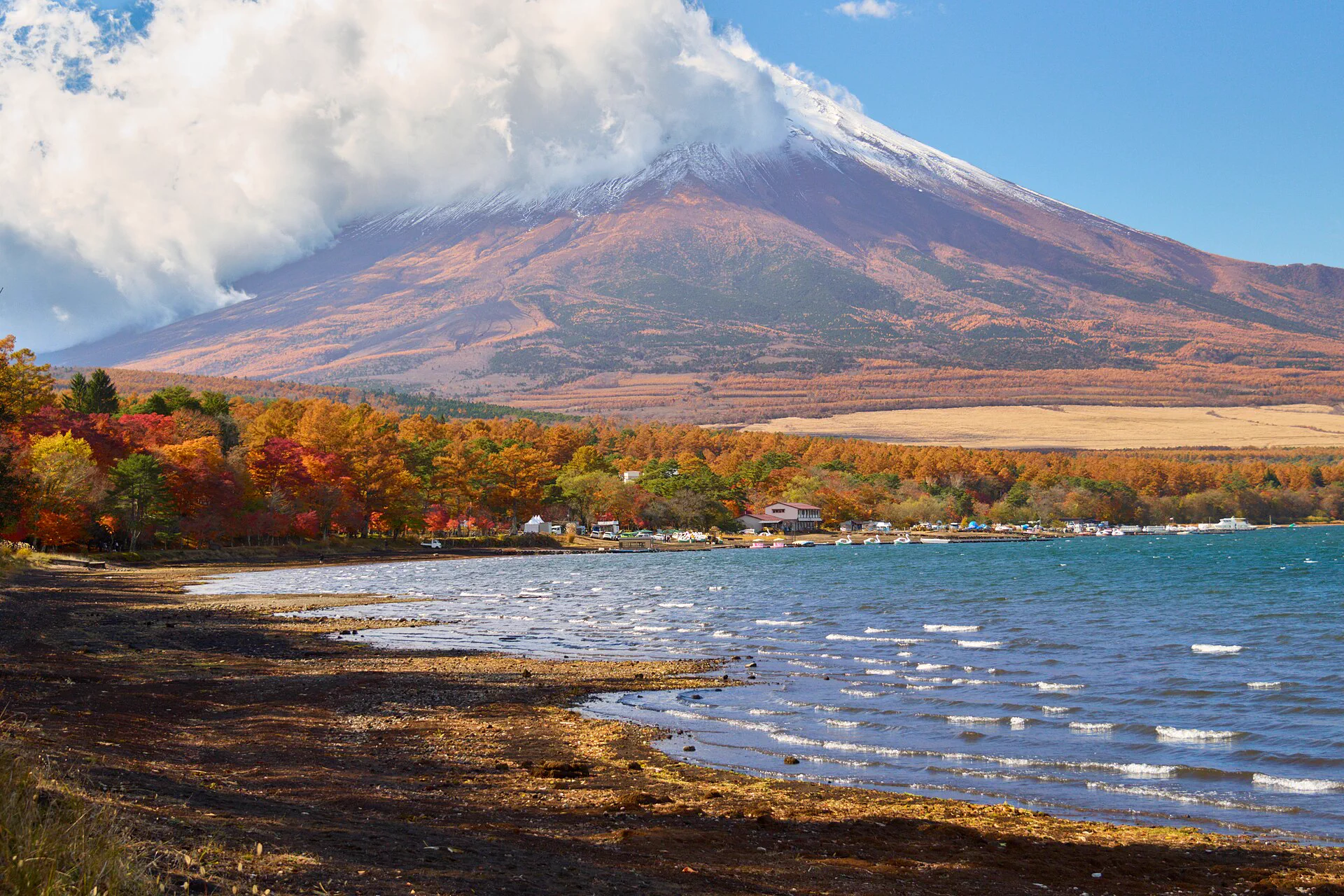
A car makes the Yamanakako decision easier for a different reason: it lets you switch among dispersed lake viewpoints and stop when the light is useful. It does not improve a rainy cycling day or guarantee Fuji visibility. When driving, a Yamanakako night can combine Asahigaoka’s evening with a separate dawn shoreline position. When using buses, resist turning that same idea into a timetable chase. The Hakone versus Kawaguchiko first-trip comparison may also reveal that neither lake belongs in a route whose priorities are elsewhere.
Cycling is a real reason to choose Yamanakako, with a weather limit
Yamanakako’s tourism guide suggests roughly ninety minutes for a circuit of its lakeside cycling route. That is a moving estimate. Autumn photo pauses, a café or a walk easily make it a half-day activity. Choose the lake for cycling only if you want to give the ride that space, rather than squeezing it between two cross-region bus transfers. A lakeside circuit can be the principal activity of the day, with the festival evening as a separate block.
Wind and persistent rain can remove much of the appeal of an exposed ride. A forecast that undermines cycling and long shoreline photography should be allowed to change the hotel decision if those were the two reasons Yamanakako won. This does not mean Kawaguchiko is immune to bad weather; Fuji can disappear there too. It has a denser collection of alternative outings, so a poor mountain-view day need not become an empty day. Keep your room cancellation terms in view if weather flexibility matters.
The shore is also a photography choice rather than a universal Fuji-view guarantee. Nagaike and Hirano serve different compositions and lighting; Asahigaoka is the event anchor. The first photograph you want may determine your dawn stop and thus the hotel area. A broad claim such as “lakefront room” says little about which direction the window faces, what interrupts the view or how you will get there after dark. Check the actual room view and walking route.
Bus passes describe two networks, not one universal lake ticket
Fujikyu’s current Kawaguchiko-area sightseeing-bus pass costs ¥1,500 for one day or ¥2,000 for two days for an adult. It covers the Red, Green and Blue circuits. The Fujikko-go pass for Fujiyoshida, Oshino and Yamanakako is separate: ¥1,800 for one day or ¥2,200 for two. Fujikko-go begins at Kawaguchiko Station and operates eleven departures a day. These are useful when the planned route makes repeated rides in the covered network. They do not by themselves make a forced two-lake day efficient.
| Current adult pass | One day | Two days | Where it helps |
|---|---|---|---|
| Kawaguchiko / Saiko / Motosuko sightseeing buses | ¥1,500 | ¥2,000 | Red, Green and Blue Lines from Kawaguchiko Station |
| Fujikko-go and linked Yamanakako area | ¥1,800 | ¥2,200 | Fujiyoshida, Oshino and Lake Yamanaka stops |
The ticket prices do not include your waiting time. Eleven departures across a whole day are not comparable to a city bus arriving every few minutes. A plan that needs separate pass networks, two lake transfers and short stops at both shores may consume the very daylight you came to see. Price a pass after drawing the route. If a single lake already fills the day, no pass combination creates extra useful hours.
By car, a two-lake day can work if you allow just one anchor at each. For example, start at a Yamanakako shoreline viewpoint and then spend the afternoon around one Kawaguchiko site, perhaps staying for the Maple Corridor event. Without a car, two lakes generally need two days or a much narrower ambition. The Oishi Park boat-versus-bus connection guide is a useful reminder that even movement within one lake may depend more on connections than distance.
Two event evenings are a poor single-night target
Kawaguchiko’s 2026 lighting runs to 21:00; Yamanakako’s ends at 20:30. Trying to finish one illumination and collect the other on the same night requires a regional transfer after dark, with thinner transport choices and colder conditions. If both are genuinely important, allocate separate evenings. The overlap in the published event windows is 7–15 November, yet overlapping dates do not make the two venues adjacent. A hotel near one event is a better way to use the night than a rushed cross-lake drive.
A two-night split earns its extra check-out and check-in only when both lakes provide distinct time windows. Yamanakako might deliver its Sunset Shore evening and an early shoreline ride; Kawaguchiko might deliver its own Maple Corridor evening and a simpler departure the next morning. If Yamanakako adds only a daytime view, keep one hotel and make the visit without moving your suitcase. The hotel-booking timing guide for autumn leaves helps when you need to hold a weather-sensitive plan without overcommitting.
For one night, choose the lake that owns your evening or dawn. If neither event matters and your travel is car-free, Kawaguchiko remains the more forgiving first base. If a direct Shinjuku bus reaches a Yamanakako hotel in the right area and the open-shore experience is the point of the trip, the simpler Kawaguchiko network may not be worth choosing. The autumn onsen and ryokan guide is relevant if the overnight itself, rather than maximum sightseeing, is the priority.
The onward journey can reverse the lake order
A Tokyo-in, Tokyo-out car-free journey usually points first to Kawaguchiko Station because many arrivals and local routes converge there. Southbound travel changes the geometry. The Fujikyu Mishima–Kawaguchiko highway bus serves the Fuji-san Yamanakako / Hotel Mt. Fuji Entrance stop as well as Kawaguchiko Station. The published Mishima-side adult fare starts at ¥2,700, with a listed ¥2,500 web discount, and the bus is reserved seating. Check the exact stop and departure before letting a generic map decide your final lake.
If your next overnight is toward Mishima, Gotemba or Shizuoka, Yamanakako can be a more logical final lake than a return to Kawaguchiko simply because you first arrived there. That is a route argument, not a promise that every coach serves your preferred hotel or that every fare is identical. If continuing toward Hakone, consult the Fuji-to-Hakone luggage logistics guide before assuming a two-lake hotel split is the best use of time.
Fuji visibility and leaf colour are independent decisions
Red leaves do not guarantee an unobstructed Fuji. A clear mountain morning can arrive before peak colour, and autumn trees can look excellent under a cloud-covered summit. Crossing from one lake to the other when Fuji disappears is often a weak response: broad cloud conditions may affect both, while the transfer certainly costs time. Keep a non-Fuji activity at the chosen lake so the day has a purpose even if the mountain stays hidden.
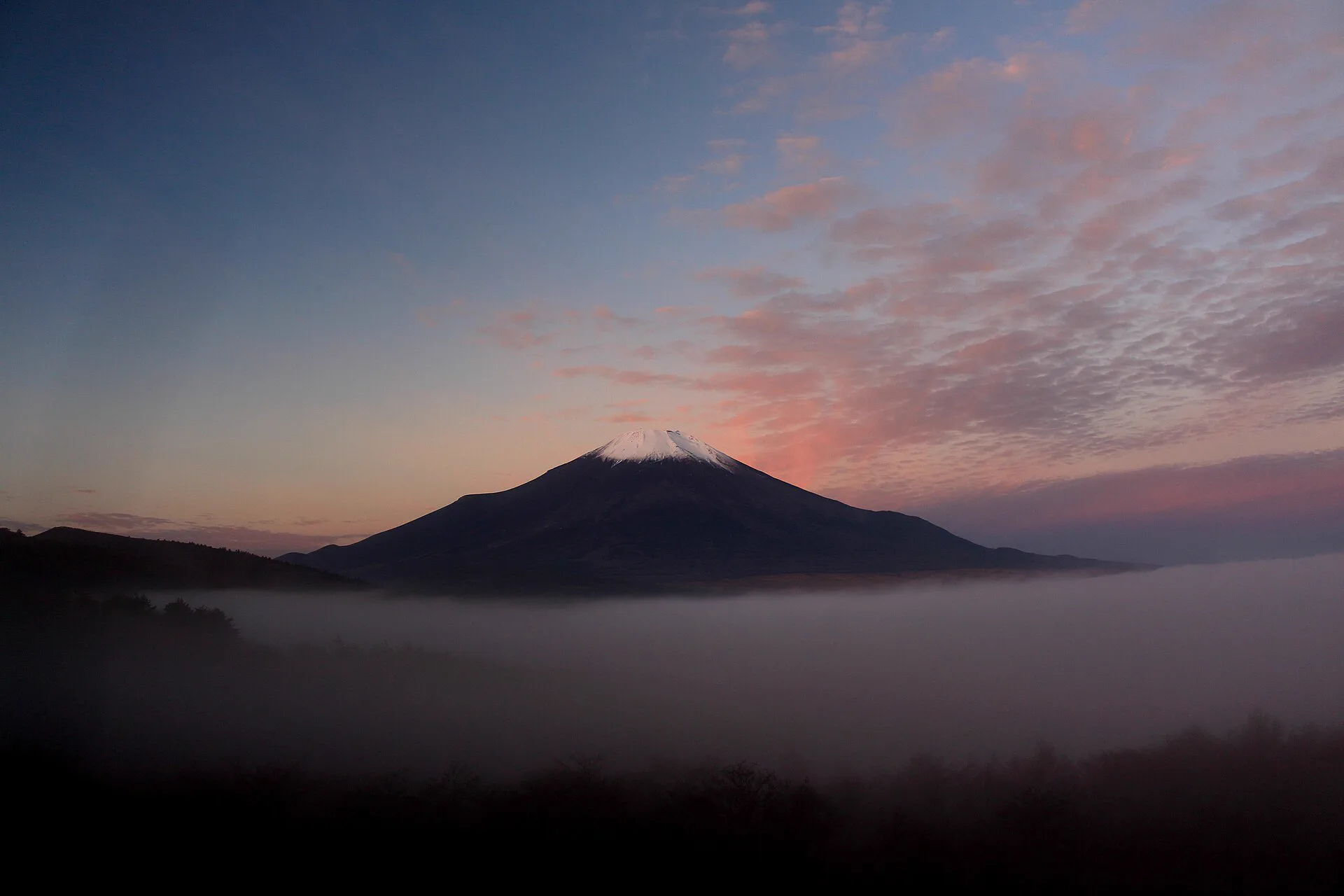
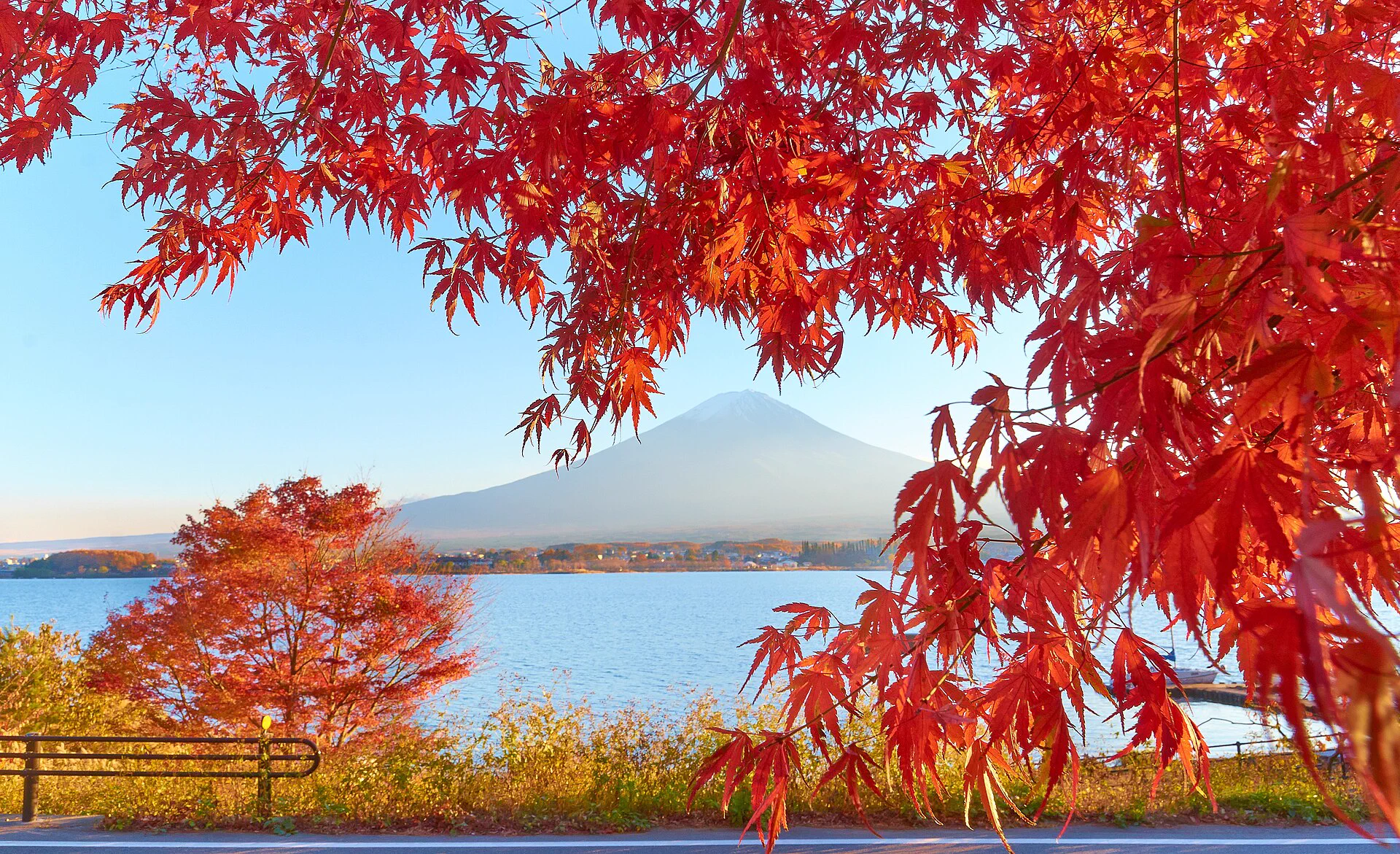
At Kawaguchiko, the festival path, local museums, food and baths can carry a cloudy day. At Yamanakako, a local foliage walk or a hotel stay can still work, but a trip built solely around cycling and long-range photography is more exposed to wind and low visibility. The Japan autumn leaves clothing guide is useful for cool evening events; the autumn routes for seniors and children helps if the group cannot simply add another long shoreline walk.
Place the hotel where the last activity ends
For Kawaguchiko, the basic hotel choice is station/logistics versus north-shore experience. Station-side stays simplify bus arrival, luggage and next-morning departure. North-shore stays may make Maple Corridor lighting and early lake views easier. Neither is automatically superior: a cheap station room is not a short walk from a north-shore event, while a celebrated Fuji-view room may create an awkward departure with heavy bags. Check the exact hotel shuttle, meals, room view and cancellation condition after choosing the zone.
For a room-led stay, the Kawaguchiko Fuji-view and private-bath hotel guide narrows the features that justify a premium. If the Maple Corridor night specifically is the purchase, the Konansou versus La Vista Fuji decision tests two hotel locations against that evening. Neither comparison removes the need to confirm which room faces Fuji or how the final event-to-hotel journey works.
For Yamanakako, start with the activity’s shore. Asahigaoka belongs to the 2026 event night; Nagaike and Hirano lend themselves to different shoreline photography and cycling plans. A hill or resort property can work when the room and grounds are themselves the purpose, but “lakefront” alone does not solve bus-stop location or dinner after dark. The Kawaguchiko lodging-area guide shows why the same area-first habit matters across the lakes.
Compare rooms around Lake Kawaguchi and Lake Yamanaka. Check the booked room view and the last kilometre between event, dinner and hotel. A search result with a lake name does not establish either.
Seven checks before committing to one shore
| Decision | Question for this trip |
|---|---|
| 1. Event | Which 2026 illumination evening falls on your date? |
| 2. Arrival | Where does your bus or train actually leave you with luggage? |
| 3. Dawn | Will you make a planned shoreline or Fuji-view outing? |
| 4. Local movement | One compact Red Line area or several Yamanakako stops? |
| 5. Weather | Can the day still work without cycling or a visible summit? |
| 6. Hotel zone | Can you return from the last activity without an uncertain transfer? |
| 7. Departure | Does the next leg leave toward Tokyo, Mishima, Hakone or somewhere else? |
The strongest default for a short car-free first visit is Lake Kawaguchi. Its hub and autumn evening are easier to connect. Lake Yamanaka is a deliberate choice when you will use its open shoreline, cycling route, Asahigaoka festival or south-side exit. A two-lake day should be modest, and a two-hotel trip needs two distinct evenings or dawns to earn the extra move. The Fuji weather and overnight guide can help decide whether the trip needs the second night at all.
Event and transport details
The 2026 dates and illumination windows are published by Fujikawaguchiko Tourism and the Yamanakako Tourism Association festival notice; the association also maintains an event listing. Yamanakako describes its cycling circuit and Tokyo access. Fujikyu lists the Fujikko-go service and pass, Kawaguchiko area buses and Mishima-bound highway route. Use the service for your travel date when fitting a hotel to an evening.
Further autumn planning: Lake Kinrin Autumn Leaves Guide: Morning, Hakkoda Autumn Leaves Guide: Ropeway, Sukayu, Kenrokuen Autumn Leaves 2026: Early Entry,, Shirakawa-go Autumn Leaves: Buses, Viewpoint, Luggage, Iya Valley Autumn Leaves Guide: Driving,.
Further autumn planning: Koyasan Autumn Leaves Guide: Temple Lodging,, Mt. Daisen Autumn Leaves: Driving, Buses,, Mifuneyama Rakuen Autumn Illumination 2026: Tickets,, Takayama Autumn Leaves: Old Town, Hida, Ginsendai Autumn Leaves Guide: Shuttle Buses,.
Further autumn planning: Hakone Autumn Leaves Guide: Foliage Timing.