
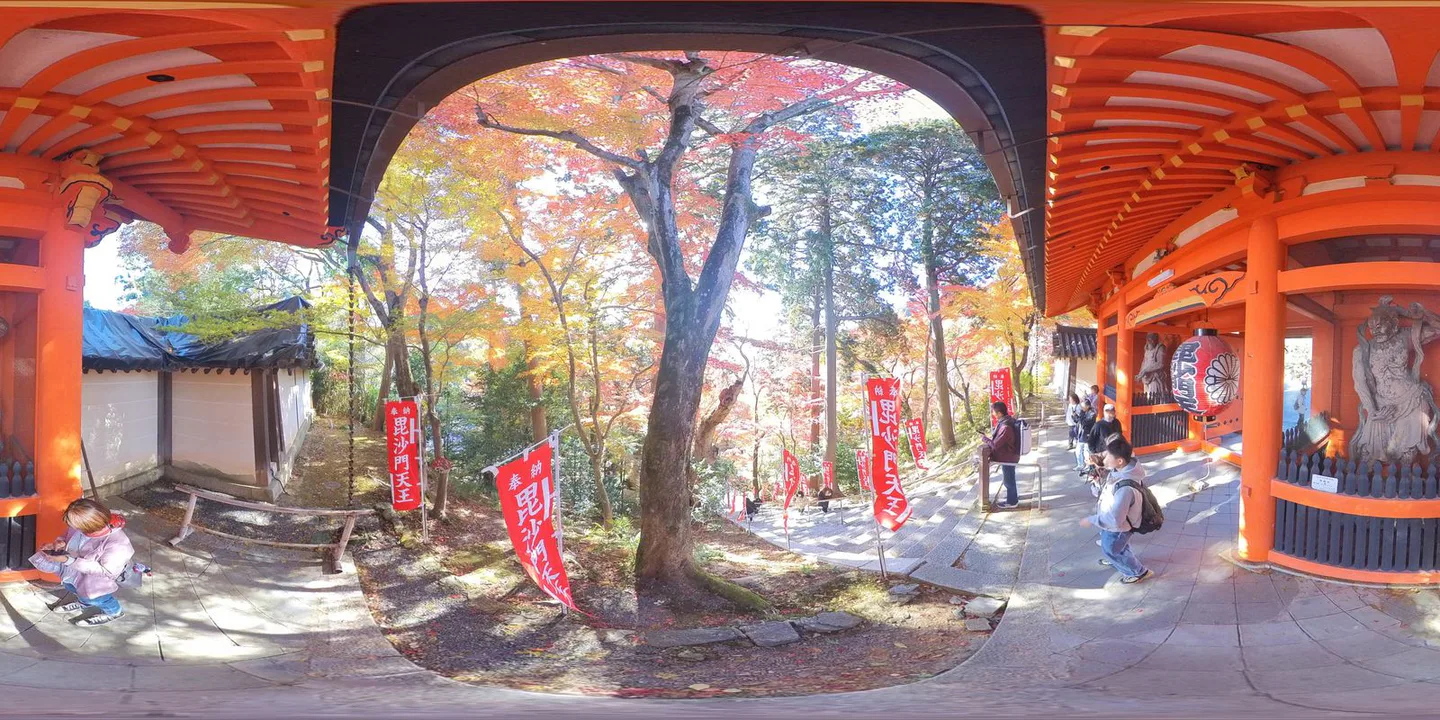
Japan's 2026 autumn colour now has a forecast rather than only a historical calendar. The Japan Weather Association issued its first national outlook on 1 October: most places are expected to reach their viewing period around the usual time or later. Some northern mountain areas coloured early after cooler conditions in the first half of September. The association expects further updates through November, and a regional forecast still cannot promise the state of a specific tree on your booked afternoon. Read the season in two layers: choose a sensible travel corridor from the broad pattern, then decide the exact excursion with recent site reports, weather and transport status.
That distinction matters more than the apparent precision of a peak-date map. A stay in Tokyo can serve gardens, Mt Takao, Kawaguchiko or a Nikko direction, but those are not equal in distance or weather exposure. An Osaka or Kyoto base can move between city streets and cooler foothills without changing every hotel. A mountain trip has harder edges: last buses, ropeway wind limits, snow, dinner deadlines and a luggage plan. The best itinerary lets the foliage day move while keeping those harder commitments realistic. Airport and route direction should be settled before chasing one predicted maple peak.
What the October forecast establishes
The JWA outlook says autumn warmth is likely to make many eastern and western lowland places reach peak around normal or later than normal. It also records early colour in a few northern and high-elevation places after a cooler early September. These statements can both be true because elevation, region and date differ. The published forecast does not say that every Kyoto temple will peak on the same weekend or that an early Hokkaido mountain remains at peak in late October. Use fresh photographs and the operating notice for the actual height you intend to visit.
↔ Scroll table left or right
| Evidence available on 24 October 2026 | How much it fixes | Useful booking or day choice |
|---|---|---|
| Published festival and attraction dates | The event may run, regardless of leaf stage | Reserve limited tickets and transport, without equating an event with peak colour |
| October JWA national outlook | Regional tendency, with updates expected through November | Choose a sensible region and a higher or lower alternative |
| Recent on-site image or colour report | One place and elevation at one recent time | Compare the reported height with the planned path |
| Weather and operating notice close to departure | The practical access and safety of that day | Swap the excursion, shorten it or use an indoor fallback |
Historical windows remain helpful as planning bands, but they no longer need to stand in for a missing 2026 forecast. A cool week can advance colour and a warm spell can delay it. Wind and rain can remove leaves after a promising report. The gradient remains a better route framework than a fixed spot date: high terrain generally colours before nearby lowlands, northern regions tend to start earlier than warmer southern ones, and different tree species may not match even within one city. Photography timing deserves its own weather and light check after the destination is chosen.
A month-by-month corridor map
↔ Scroll table left or right
| Travel window | First corridor to assess | Nearby fallback | Main operational risk |
|---|---|---|---|
| Middle or latter September | Daisetsuzan and the highest accessible alpine belts | A lower Hokkaido or mountain level | Wind, early snowfall or stopped lifts |
| Early and middle October | Hokkaido valleys, Hakkoda, Oirase and Hachimantai | Lower Tohoku or city-level sights | Seasonal buses and deteriorating mountain weather |
| Late October into early November | Nikko highlands, Fuji Five Lakes, Koyasan and lower Chubu mountains | Lower towns or Kansai foothills | Earlier high-zone leaf fall and road congestion |
| Middle and latter November | Tokyo, Kyoto, Nara, Miyajima and lower sites | Warmer western or Kyushu city areas | Weekend queues, booked rooms and illumination capacity |
| Late November into early December | Lower Kansai, western Japan and some Kyushu locations | Urban gardens and cultural days | Leaf drop and seasonal service endings |
This table is a routing guide, not an appointment with peak foliage. By 24 October, its September and early-October rows are history for a future departure; use them to understand why a mountain photograph can be past its best while a lowland journey is only beginning. A traveller choosing a late-November week should start with currently useful lower corridors and compare Kyoto's November stages with Tokyo's mountain-to-garden sequence. Neither city needs a cross-country change just because one park is still green.
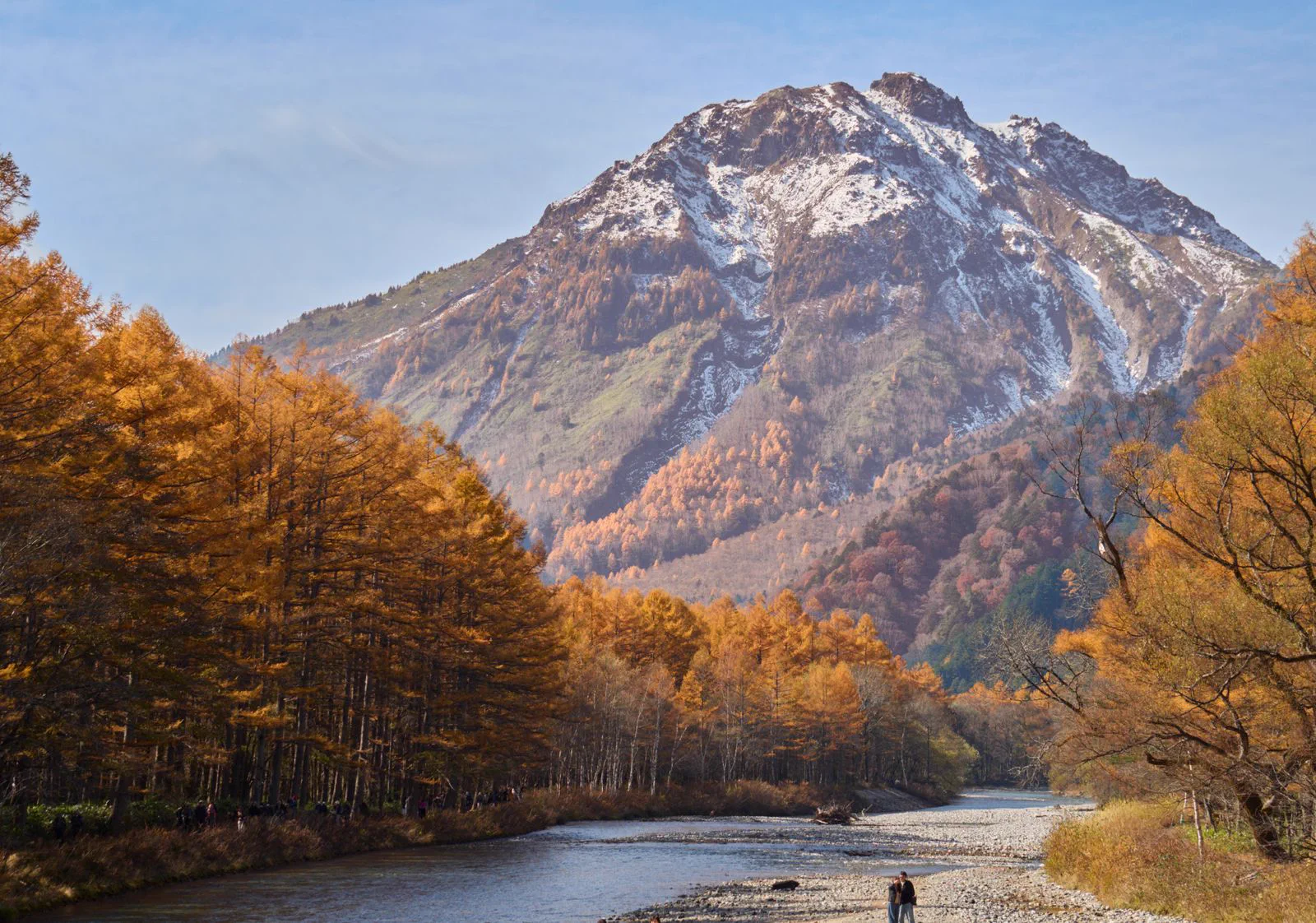
The Kamikochi mountain image illustrates an early, higher-altitude landscape. It should not be used as evidence for Kyoto streets or as a live condition report. Kamikochi's bus-only access and walk choices make it a more committed trip than a city-garden substitute.
Two fixed 2026 events that remain useful
Fujikawaguchiko lists its Autumn Leaves Festival for 7–29 November 2026 and Maple Corridor illumination from sunset until 21:00. Its tourism information describes the lakeside's usual strongest colour around early to middle November. The announced festival gives you an evening option; it neither guarantees peak maples on a chosen date nor clear Mount Fuji. A Kawaguchiko overnight can buy another light and weather window when the lake and Fuji view matter, but the number of nights at the lake should be judged against the rest of the route.
At Koyasan, Kongobuji's Autumn Special Viewing runs 24 October–10 November, from 09:00 to 16:30 with last reception at 16:00. The special access to Oku-den costs ¥500 on top of the ordinary temple admission. The event starts today, 24 October; it is a real appointment even if foliage changes independently. Wakayama's broad late-October to early-November colour window is useful context rather than a second promise. A Koyasan temple night adds dinner and an early sacred-site period; a same-day trip from Osaka buys a shorter visit with simpler luggage.
Gateway cities give you a useful elevation choice
For a short trip, choose a base city that can reach two plausible levels instead of keeping five distant backup regions. The route below is an operational ladder; annual colour can move and no row guarantees a strict high-middle-low sequence. What matters is whether the alternatives are reachable under the day's transport and weather, not whether they appear next to each other on a national map.
↔ Scroll table left or right
| Gateway | Cooler or higher option | Intermediate trip | Lower-area rescue |
|---|---|---|---|
| Tokyo | Okunikko or upper Fuji-area terrain | Central Nikko or Kawaguchiko | Tokyo gardens and Kanto lowlands |
| Aomori or Morioka | Hakkoda or Hachimantai | Oirase and lower mountain corridors | City museums and lowland cultural stops |
| Nagano or Matsumoto | High plateau or accessible alpine route | Lower slopes and onsen towns | Basin towns around Matsumoto or Komoro |
| Osaka or Kyoto | Koyasan or cooler northern Kyoto | Nara hills and northern Kyoto sites | Kyoto and Osaka city walks |
| Hiroshima or Fukuoka | Inland western mountain routes | Miyajima or regional valleys | Warmer city-level western and Kyushu options |
A nearby substitute is usually worth more than a nominally perfect colour report four hours away. If Tokyo's garden maples are still green, assess Mt Takao or a suitable Fuji/Nikko corridor with its own timetable. If Kyoto is late, the hills around Takao or Ohara may be further along, but rail access and crowd costs still count. If a ropeway or mountain bus is closed, dropping elevation may be better than seeking another summit.
How many regions can the trip absorb?
↔ Scroll table left or right
| Holiday length | Reasonable foliage reach | Why this boundary helps |
|---|---|---|
| Five to seven days | One gateway region with adjustable day trips | Weather flexibility is more valuable than an additional national transfer |
| Eight to ten days | Two adjacent regions in a linear route | A second seasonal band can be added without retracing the journey |
| Eleven to fourteen days | A north-to-south progression can work | There is enough time for the season and route to change together |
The Shinkansen reduces rail time but does not erase packing, hotel checkout, local buses and a bad-weather arrival. For a five-day visit, a Tokyo base with one larger excursion and city alternatives is usually more resilient than daily long-distance leaf chasing. A longer itinerary can follow colour south if the move also makes sense for the whole holiday. The luggage decision and refundable hotel timing often determine whether that second region is practical.
Change the right part of the trip at each deadline
↔ Scroll table left or right
| Time before the outing | Evidence to inspect | Change that still makes sense |
|---|---|---|
| About a month | Regional forecast, cancellation dates, mountain access and scarce rooms | Move or release a destination overnight while terms allow it |
| Two weeks | Colour trend by elevation, event inventory and road or lift notices | Move the planned target within its gateway corridor |
| One week | Recent photographs, weather and reservation options | Reorder day trips while retaining the national hotel sequence |
| Two days | Wind, rain, snow, closures and return transport | Choose a safe same-region substitute or shorten the outing |
These are decision points, not an obligation to alter a booking at each one. On 24 October, anyone leaving in early November is already in the 14- or 7-day stage for much of the trip. The published forecast is useful, but daily observations and confirmed access now deserve more weight. Do not turn a late colour adjustment into a new flight, several hotel cancellations and a fresh mountain bus problem without calculating what that change buys. A mixed-age foliage route needs even more buffer between fixed travel and weather-sensitive hills.
For an early-November Tokyo stay, keep the city hotel as the spine and choose either Nikko or Kawaguchiko from the stronger recent colour and weather combination; hold one cancellable local night only if it buys dawn or evening time. For an Osaka/Kyoto-based early-November stay, Koyasan can use the current special-viewing dates, but the temple lodging should be chosen for its meal and morning as well as leaves. A first-time Golden Route late in November need not add a distant mountain merely to chase a forecast: Tokyo, Kyoto, Nara and an existing Hiroshima stop may already supply several lower-level chances.
The early October mountain window has already moved on
Daisetsuzan's Asahidake, Kurodake and Ginsendai normally make high Hokkaido one of the earliest serious foliage choices. The upper Tateyama area can be relevant in a similar early window. For a 2026 trip beginning after 24 October, do not use an old early-October chart to sell those upper slopes as a current peak. Snow and operating limits can supersede the colour question. Asahidake versus Kurodake now needs its own lift and surface check; Hokkaido's regional progression offers lower and southern choices for a later departure.
The first ten days of October also opened mountain alternatives around Hakkoda, Hachimantai, Kurikoma and Kamikochi. Aomori can recover from a Hakkoda wind stoppage with Sukayu, lower roads or city time. Matsumoto is the workable gateway for Kamikochi, where authorised bus or taxi access replaces private-car entry. A complex Alpine crossing with full luggage and a fixed onward hotel has more failure points than a single ropeway day from an Aomori room. If colour has descended by mid-month, the useful move is toward Oirase, lower Sounkyo or a valley level within the same corridor, rather than another flight north.
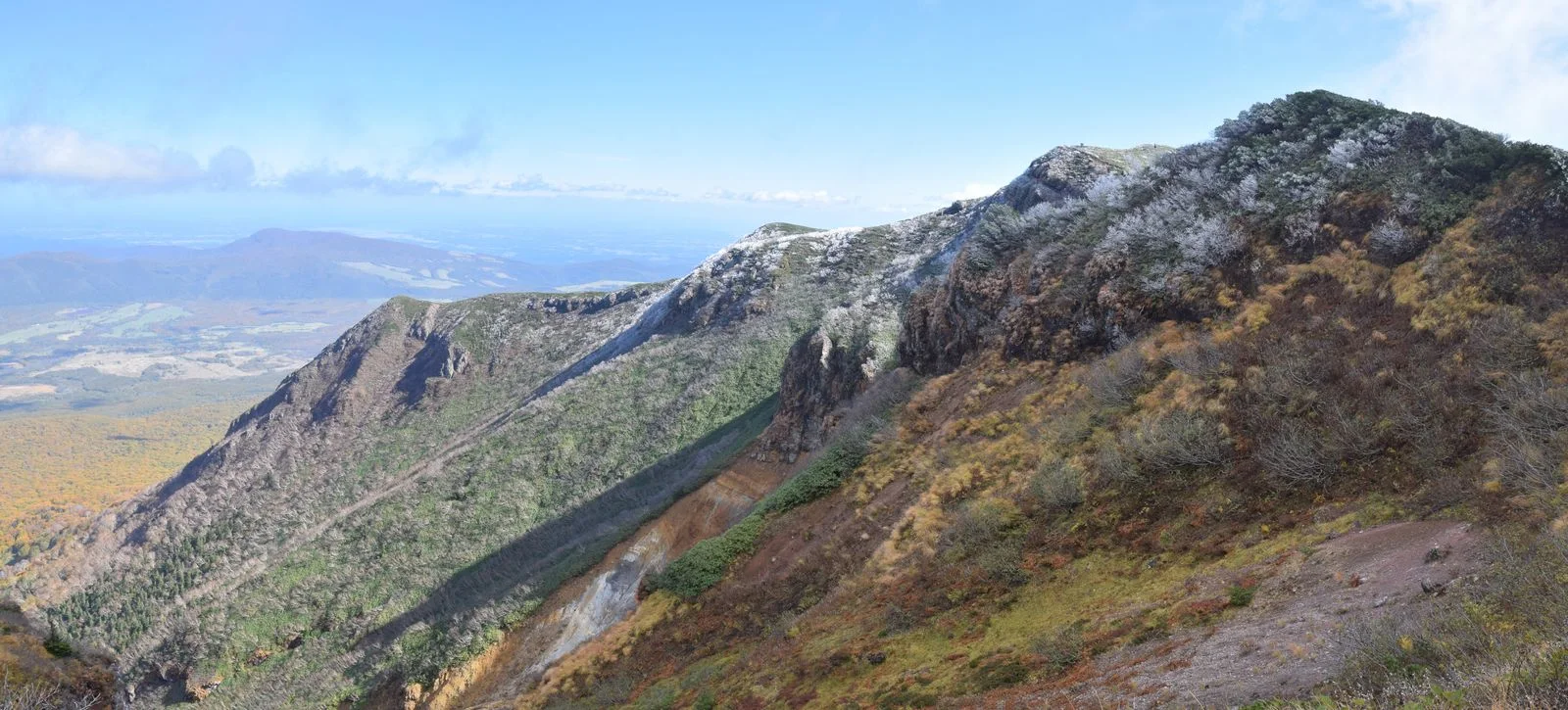
The Hakkoda image shows a partly snow-dusted ridgeline with sparse colour below it. That mix makes the upper-versus-lower terrain question tangible, but it does not establish the condition of a bus stop or summit today. Oirase and Lake Towada's two-day route gives an example of why lower scenery needs a transport plan of its own.
For historical context, Tateyama announced extra early cable-car capacity on 3–4 and 10–12 October, with 07:10 and 07:30 services added for 5–9 October. Those 2026 departures are now past. They demonstrated how a capacity release can secure an alpine day without predicting its leaves. Future travellers should check the new season's schedule, not use those dates as a live booking offer. This distinction is also important for mountain hotels: reserve a scarce night when it provides another weather or light window, while leaving an ordinary gateway room cancellable where possible.
The late-October and November choice is lower, with real local variation
In the current part of the season, Nikko, the Fuji Five Lakes, Koyasan and lower Chubu elevations are more relevant starting points than the first Hokkaido alpine band. A still-green Kyoto garden is no reason to assume all of Kansai is green. Cooler Kyoto locations such as Takao, Ohara, Kurama or Mount Hiei may be further along; they also require a route and return-time check. If the upper site is already bare or unsafe, turn toward a basin, river or city garden rather than automatically raising the target. Higashiyama's walkable temple corridor is one lower-area option once Kyoto's city colour builds.
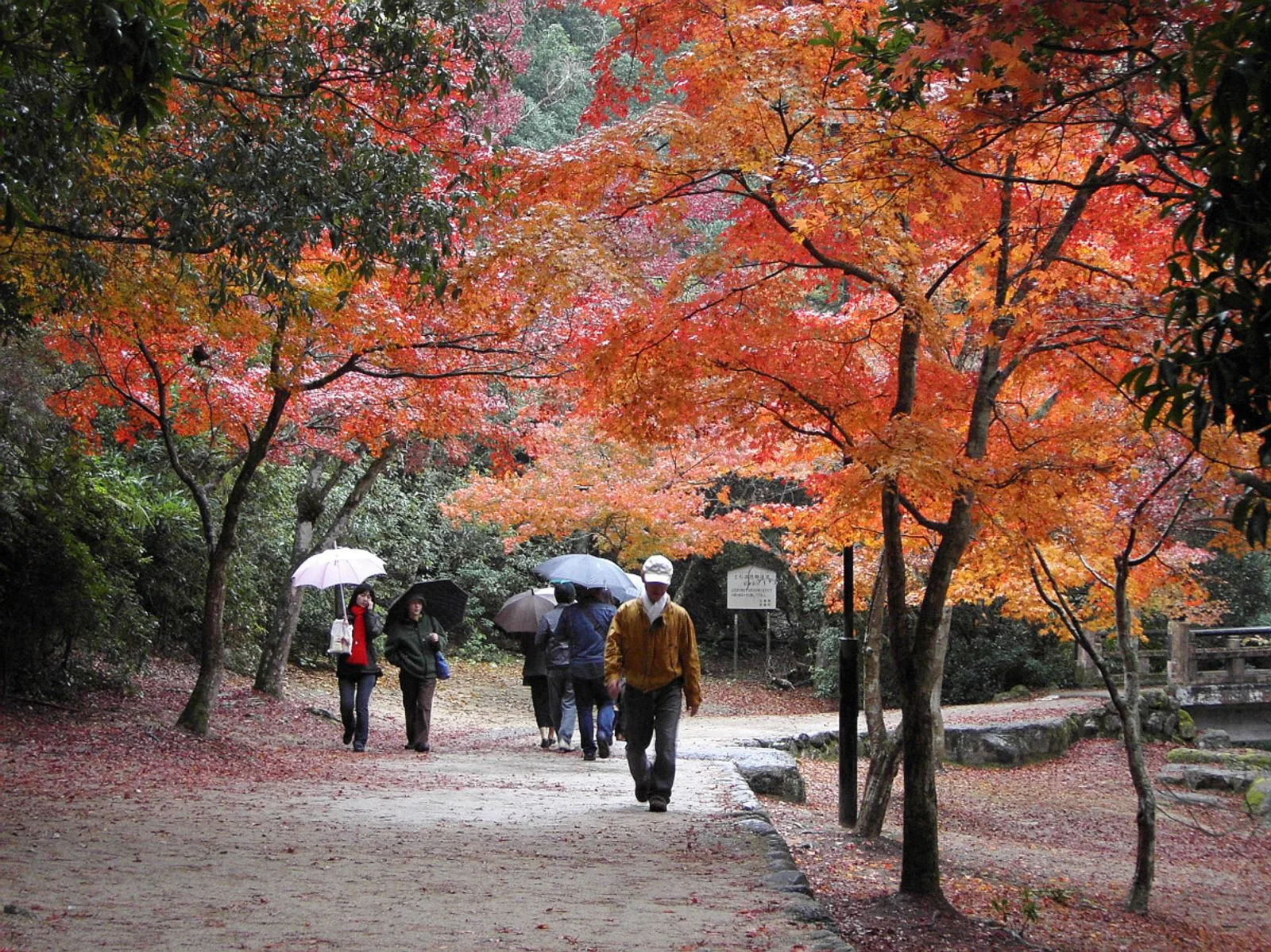
The Miyajima maple scene is a western-Japan illustration, not a same-week substitute for a poor mountain forecast in Tohoku. If Hiroshima is already on the national route, the island can provide another autumn session without creating a separate distant diversion. If it is not, add the train and ferry cost, accommodation change and remaining daylight before deciding to pursue it.
By late November, Tokyo streets, Kyoto and Nara temples, Miyajima and some lower western or Kyushu places may be competitive with one another. Use a city route with more than foliage value: food, museums, heritage, gardens and evening walks still work if one tree species lags. A warmer outlook is a reason to retain cancellation flexibility, not a licence to invent an exact number of delay days for Tokyo or Kyoto. The 1 October JWA outlook expects many eastern and western lowland sites around or later than normal; subsequent reports must decide the local day.
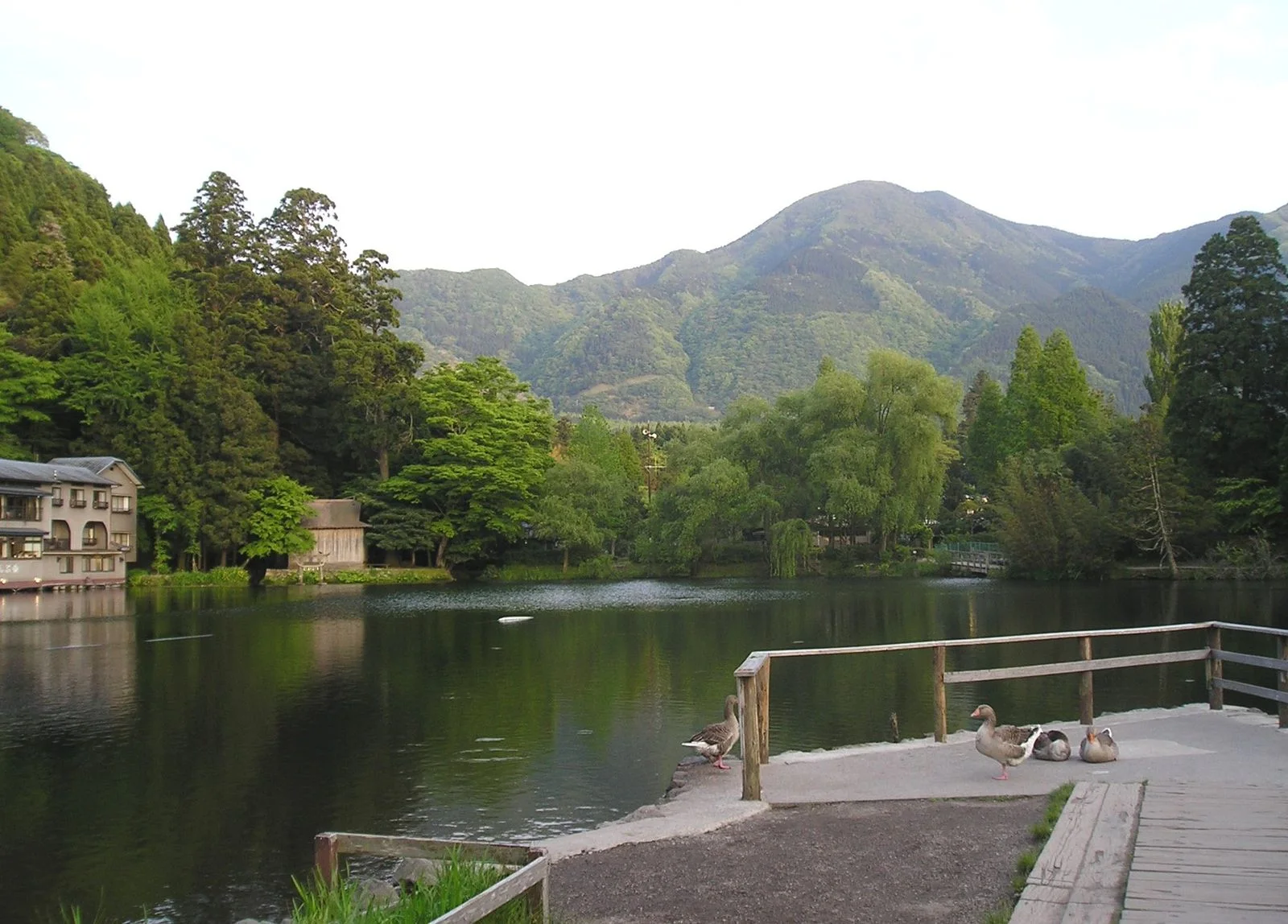
Lake Kinrin in the photograph is surrounded by green trees, so the image cannot be treated as a red-leaf report. A guest who wants dawn water and a ryokan dinner may need an overnight, while a daytime shopping-and-lake walk may fit a Fukuoka return. The Fukuoka–Yufuin transport comparison and Yufuin room choice decide whether the second viewing window is worth moving bags.
Secure the rare constraint before the precise leaf stop
For a seven-to-fourteen-day journey, set the international flights and route direction first. Next identify scarce mountain, island, ryokan, family-size or named-view rooms whose location makes an early or late viewing period possible. Reserve the seasonal bus, train seat, shuttle, boat or timed attraction that makes that night reachable. Hold city bases on terms that still allow a sensible change. The individual foliage site can often remain the most flexible layer. A sold-out ryokan or last mountain bus is harder to replace than the exact park selected for Tuesday.
A Kawaguchiko room can hold an evening festival and next-morning Fuji weather opportunity while the exact lakeside walk remains undecided. A Kyoto hotel can support Kiyomizu-dera, Tofukuji, Arashiyama or Nara without a new check-in for each colour report. A three-hour Arashiyama core can then be expanded or cut according to conditions. The value of a mountain or island overnight is similarly measured by a second usable session, not merely by a shorter rail ride.
A half-board ryokan adds a different set of hard edges: dinner start, check-in, shuttle and the last comfortable public transport. Before committing, find the latest arrival the property accepts for dinner and the alternative if a bus is cancelled. A small overnight bag can work if the main case is forwarded and the next hotel agrees to receive it. An expensive mountain dinner can be lost even when the room itself remains available, so a fragile same-day connection should be changed earlier in the route rather than justified by a pretty forecast.
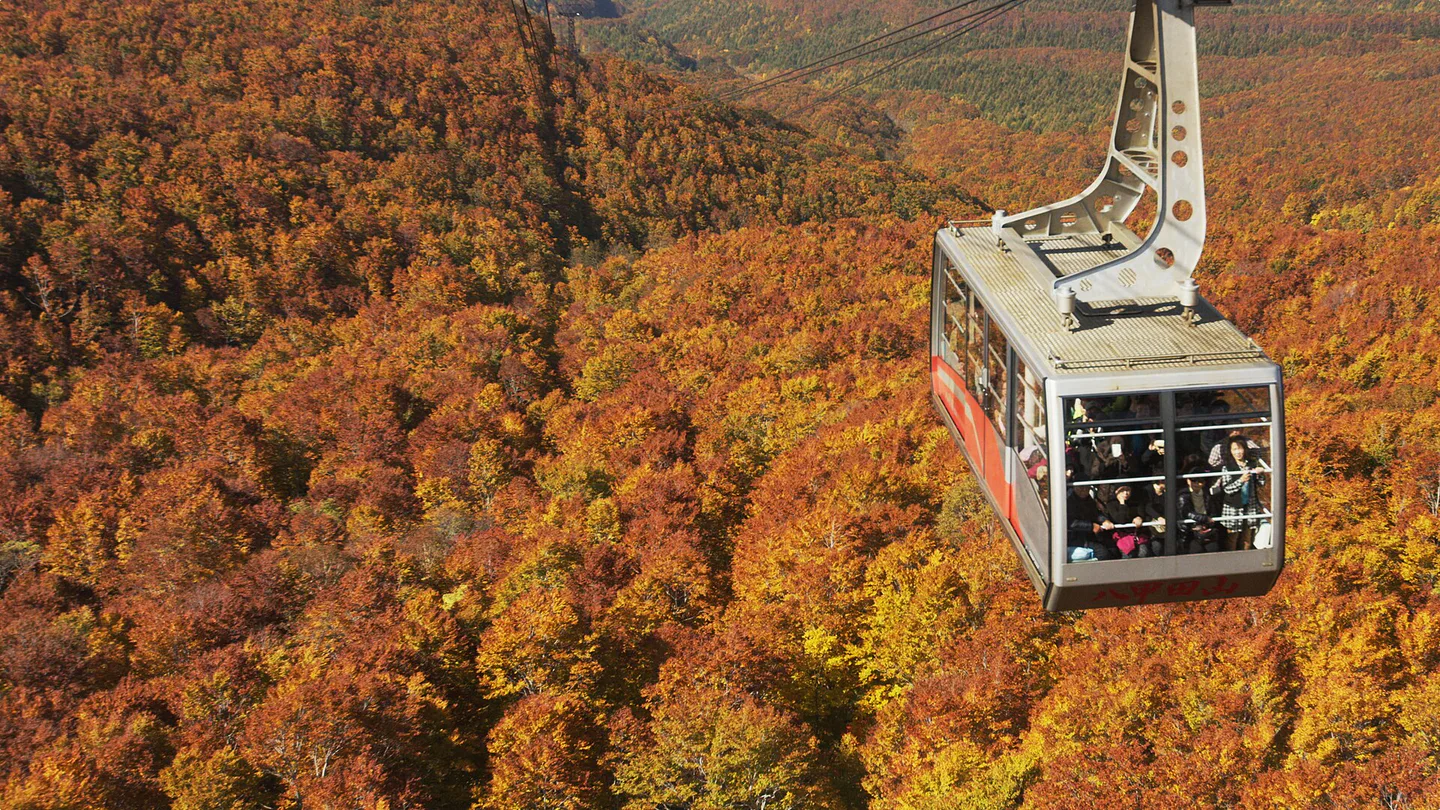
The Hakkoda ropeway landscape in the photograph depends on the lift actually operating. Strong wind or a weather closure can make its autumn view inaccessible. A five- or seven-day Tohoku plan should give the Aomori gateway a lower-elevation or indoor alternative rather than making every hotel night depend on one cable car.
Change a route only after pricing the entire change
A new room price minus the old one is not the full cost. Include an old hotel's non-refundable amount, the new ticket or seat, extra station and local-bus journeys, luggage handling, a lost dinner, and the hours removed from the rest of the trip. Then ask whether an excursion change from the existing base solves most of the problem. A traveller who can reach decent colour on a different Kyoto or Tokyo day rarely gains enough from moving a whole national itinerary at 48 hours.
Do not change for foliage when a family visit, festival, accessible room, fixed flight, child routine or once-in-a-trip ryokan matters more. Kyoto temples, Nikko heritage, onsen towns and museums retain value when leaves are imperfect. The more independent value a place has, the less it needs to win a peak-date contest. If a lowland site is green, look higher locally after checking the lift or bus and the last return. If a summit has shed its leaves, descend toward a lake shore, lower gorge, ginkgo street or garden; fallen leaves, wet stone and autumn river colour can still give the day a worthwhile subject.
When a road, ropeway or boat stops, protect accommodation and the return journey first. Stay near a staffed station or visitor gateway while deciding. A one-way rural bus is not a safe rescue if its final return is uncertain. A sold-out timed ticket calls for authorised cancellation inventory, another published departure or another sight, not an unverified resale. Same-day hotel moves are a last resort: the replacement room must be confirmed, the next two days should benefit from the same remote area, and cancellation, meal and luggage costs need to be acceptable.
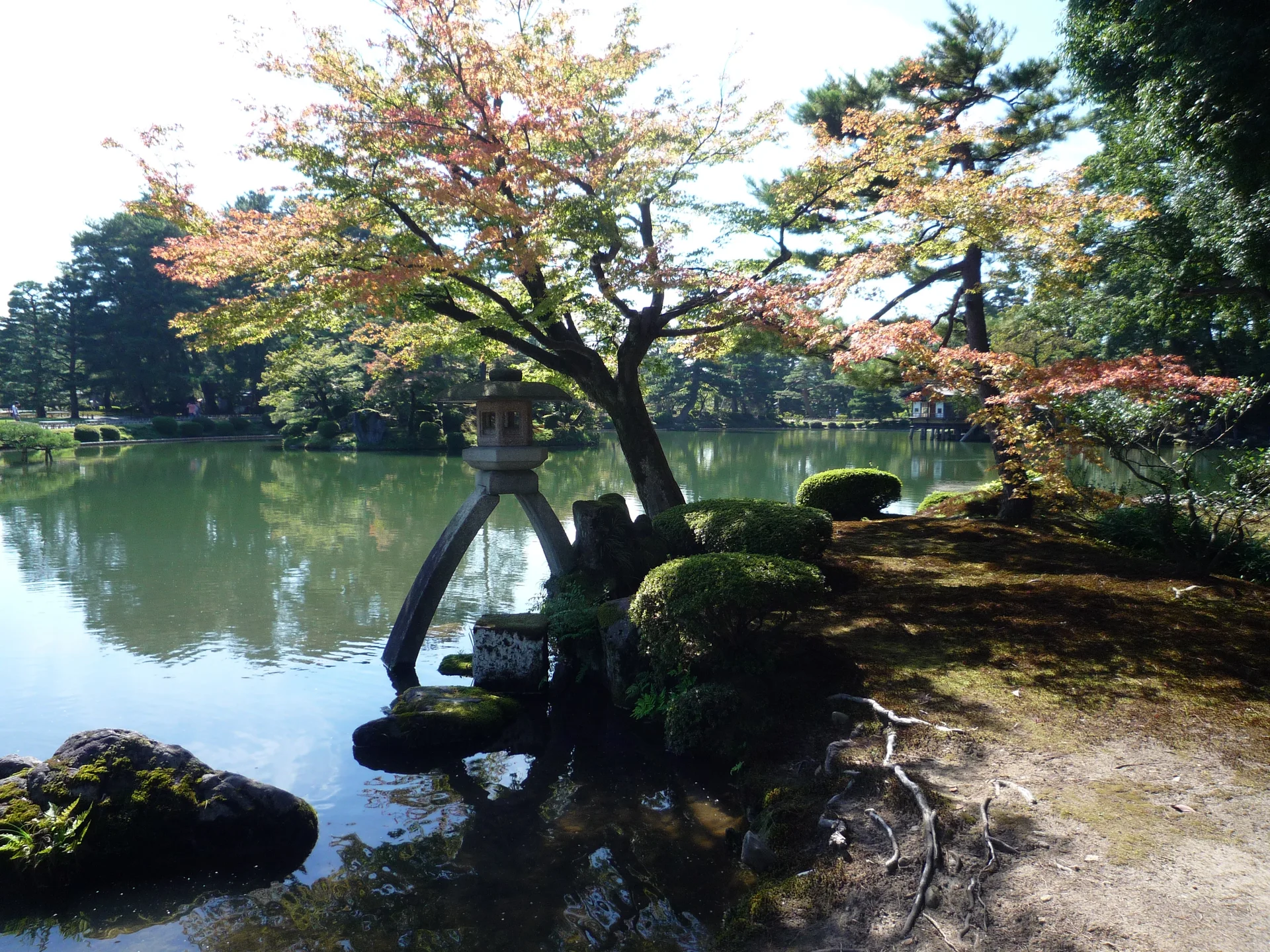
Kenrokuen's autumn garden illustrates a lower, city-accessible alternative around Kanazawa. A wet mountain outlook need not erase a Kanazawa stay when covered markets, museums and a garden remain reachable. Kenrokuen's seasonal opening choices need their own current-date check.
Practical substitutes from the same hotel
A Sapporo or Asahikawa base can exchange a closed alpine lift for city parks, a museum or a lower valley. Aomori, Hachinohe and Sendai can use Hirosaki, Matsushima, a city museum or a separately confirmed Yamadera day. Tokyo can move among gardens, Takao and a museum. Kyoto and Osaka have Uji, Nara, Otsu and sheltered temple districts. Fukuoka can turn to Dazaifu, covered shopping, city museums or a separately planned Beppu onsen day. None of these swaps means that every attraction is open in every storm; they keep the geographic problem manageable.
A station-oriented hotel that stores bags and offers both outdoor and indoor routes is valuable during uncertain foliage. Hotel Metropolitan Tokyo Marunouchi, Hotel Granvia Kyoto and Hotel Metropolitan Sendai East are examples of gateway positioning; Granvia Osaka and JR Kyushu Hotel Blossom Hakata Central offer other city bases. These names do not imply live room inventory or a particular rate. Compare the actual check-in time, cancellation terms, luggage acceptance and the platform you will use. Compare Kyoto stays near your chosen rail corridor if that is the centre of the trip, or check Tokyo rooms for a flexible city base when day-trip direction is still open.
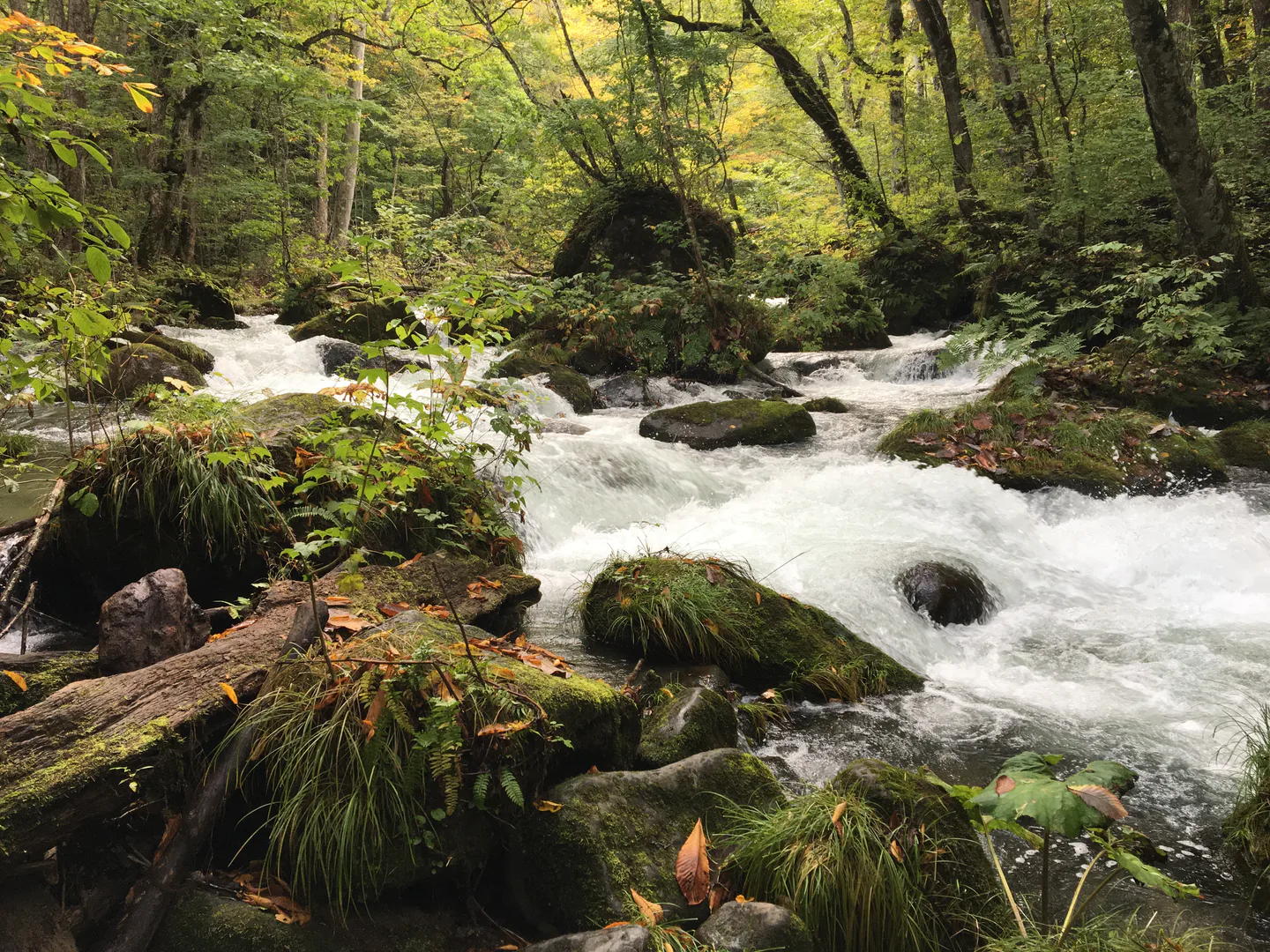
The Oirase stream photograph shows a place where the walk and its seasonal access must be considered together. Sleeping in Hachinohe or Aomori can be a reasonable response to sold-out lakeside rooms, but only if the bus or car plan still delivers time at the stream. Yamadera from Sendai is another Tohoku choice with very different physical demands.
Small-capacity activities run on their own booking clock
Takachiho Gorge boats are an example of why “reserve early” is insufficient advice. The tourism association's present rule opens advance online reservations at 09:00 Japan time two weeks before the ride and closes them at 09:00 two days before. There is no telephone reservation or waiting list. All November 2026 dates are designated advance-reservation-only; on eligible dates in other months, any same-day stock depends on remaining inventory and conditions. The older source article recorded sold-out advance inventory on 25 August 2026, a dated example rather than a current availability claim. A boat can also stop for weather or water conditions after a reservation is made.
Put the actual release time in a calendar if a boat is central to the Kyushu route, then leave the surrounding day light enough to survive a closure. Takachiho's boat and overnight choices are a different proposition from a flexible urban garden. The same principle applies to seasonal trains, shuttles and timed illumination entries: learn when each product opens and whether it can be moved. A Yufuin no Mori train requires its own reserved seat; a general rail pass or hotel booking does not silently assign one.
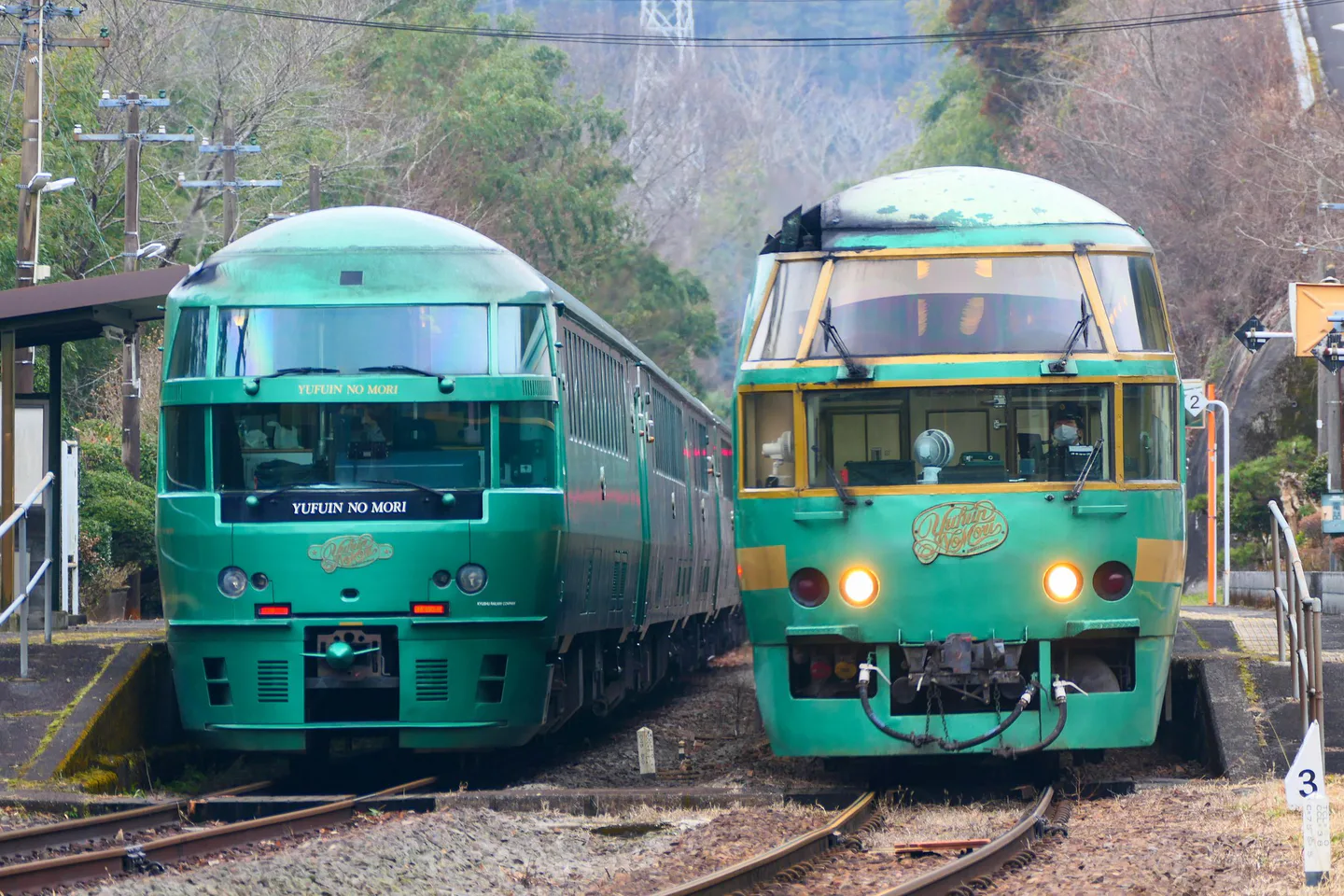
The pictured Yufuin no Mori train is a transport illustration. The seat you need is a specific service and departure, so check that before designing a same-day ryokan arrival. A ticket problem and a foliage-timing problem should be solved separately.
When one hotel is enough, and when a night changes the trip
↔ Scroll table left or right
| Trip pattern | Accommodation choice | Gain | Cost or limit |
|---|---|---|---|
| Three to five nights with several rail-accessible excursions | Retain one well-placed base | No repeated check-in, and weather swaps stay easy | Return to the same city each evening |
| Two consecutive days in one distant mountain area | Add a local overnight | Avoid two long return journeys | One room change and a smaller overnight bag |
| Dawn mist, ryokan dinner or late illumination is the main attraction | Sleep near the destination | Access outside the first and last day-trip services | Potentially pay for a city room left unused |
| Children, older relatives or substantial luggage on near-city routes | Usually favour one base | Less packing and easier recovery | Day-trip distance must stay modest |
| Different excursions radiate from one major station | Use a station-oriented base | More day-to-day route options | Station-side rooms may cost more |
| Mountain day before a flight, train or fixed dinner | Shorten the outing or reposition the night | More room for a disruption | Less sightseeing on that day |
A lake, mountain or island room earns its price when it produces a second usable session: Kawaguchiko's evening illumination and next-morning Fuji visibility, a Nikko early start, a Koyasan temple dinner and morning prayer, or Miyajima after day trippers leave and before they return. If the stay saves only a modest train ride but forces a suitcase move and immediate departure, keep the existing base. A sold-out Oirase or Lake Towada property can sometimes be replaced by Hachinohe or Aomori with a verified seasonal bus. A full central-Kyoto hotel market may justify testing Otsu, Uji, Nara or Osaka based on the planned rail corridor, while a sold-out Kawaguchiko view room should trigger a reassessment of the overnight rather than any expensive substitute.
Compare bases by the route they can rescue
The source comparison used five numerical ratings for Tokyo, Sendai, Osaka and Fukuoka without a reproducible measurement basis. Keep those five decision dimensions but judge them qualitatively from transport geography and the intended excursions. Route optionality means there is another sensible direction when one forecast fails; day-trip depth asks how many worthwhile trips remain within a reasonable day; a weather fallback is a worthwhile non-mountain day; luggage advantage is the ability to hold one room; overnight pressure is how often the best experience requires sleeping elsewhere.
↔ Scroll table left or right
| Base | Route choice | Day-trip reach | Wet-weather option | Luggage convenience | Pressure to overnight elsewhere |
|---|---|---|---|---|---|
| Tokyo | Many independent rail directions | Strong city and regional mix | Gardens, museums and districts | One room can anchor varied days | Higher when Fuji dawn or deep Nikko is essential |
| Sendai | Good rail spokes near the city | Strong until a remote Tohoku bus becomes part of every day | City and nearby cultural trips | Useful station base | Rises for Oirase or Lake Towada |
| Osaka | Several rail corridors to Kyoto and Nara | Broad but dependent on hotel-side line choice | City, museums and covered streets | Very useful for a Kansai circuit | Rises for repeated early Kyoto or Koyasan experiences |
| Fukuoka | Convenient city and airport gateway | Good nearby trips, weaker for distant Kyushu | Food, museums and covered city routes | Excellent Hakata storage base | Rises for Yufuin dawn, Takachiho, Unzen or Kuju |
No city's rating is universal. An Osaka hotel in Namba is useful for Kintetsu and Nankai but may require another cross-city positioning step before a JR-heavy Kyoto day. Fukuoka's airport access does not make all of Kyushu a day trip. The station entrance you will actually use and the final rural connection deserve more attention than a general claim that a city is “central.” Kanazawa and Noto access likewise depends on what lies beyond the trunk rail station.
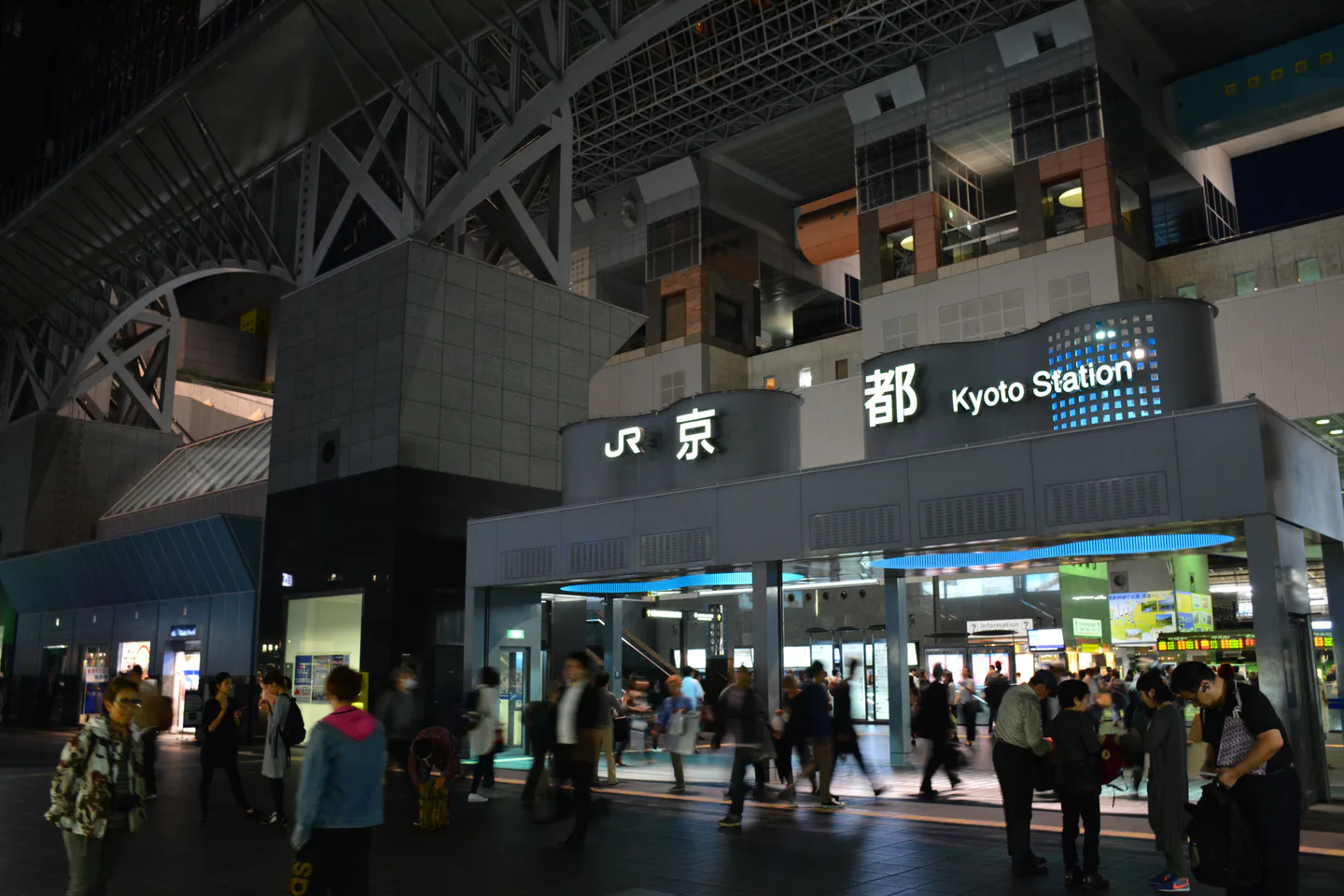
Kyoto Station after dark is a base illustration, not evidence that an autumn illumination has a ticket on your date. A Kyoto room becomes more valuable when early temple light and late openings are essential; a daytime city visit may work from Osaka without a room move.
Tokyo can keep a foliage day movable
Tokyo's strength is replacement. A poor highland outlook can become a lower city garden, a ginkgo street, an indoor museum, Takao or another western day without moving the main hotel. Shinjuku suits western-Tokyo, Mt Takao and highway-bus-heavy plans; Tokyo Station suits Shinkansen and airport movements; Ueno may suit northbound rail and a tighter room budget. The exact hotel-to-platform walk still matters. A three-day autumn stay might hold one larger excursion, one city garden day and another movable outing, rather than consecutive early returns to Kawaguchiko, Hakone and Okunikko.
There are limits. A dawn Fuji view, lake mist, onsen dinner or night illumination can require the local night to capture the experience. If the Tokyo room is prepaid, compare its sunk cost with the morning gained; keeping two rooms can be acceptable for a rare experience, but it should be a decision rather than a reflex. The Kawaguchiko weather-window calculation helps make that trade explicit.
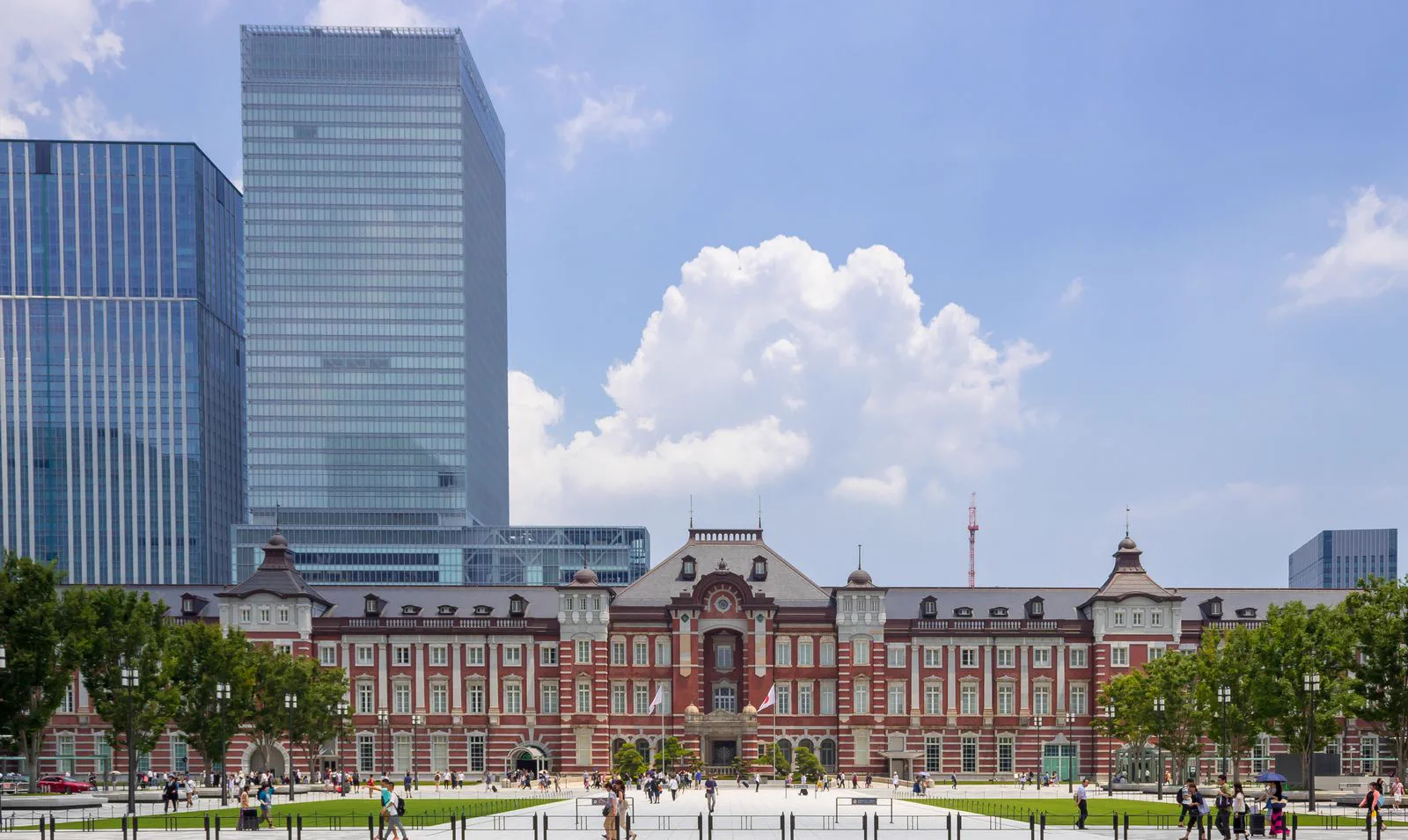
The Tokyo Station image shows the gateway that can support a fixed hotel and several rail directions. It does not make a distant rural bus frequent; door-to-door time still includes the transfer after the fast train.
Sendai's rail spokes have a clear outer limit
Three to five nights near Sendai Station can work for Yamadera, Matsushima, nearby Miyagi and selected Naruko directions. The two-day Sendai Marugoto Pass has been listed at ¥2,930 with defined JR, subway, bus, airport-line and other local coverage. Check the actual free area against the intended service; a pass does not bring Hakkoda, Oirase or Lake Towada into an easy Sendai day. The line-haul Shinkansen can be fast while the final mountain bus is infrequent.
If two days in the plan require Hachinohe, Aomori, Morioka or a seasonal bus after a substantial train ride, reposition the hotel instead of repeating the entire commute. A nearer night can turn the next morning into sightseeing rather than another connection. Yamadera's stairs and trains illustrate a manageable Sendai spoke with a clear physical demand; Oirase is a different lodging and transport decision.
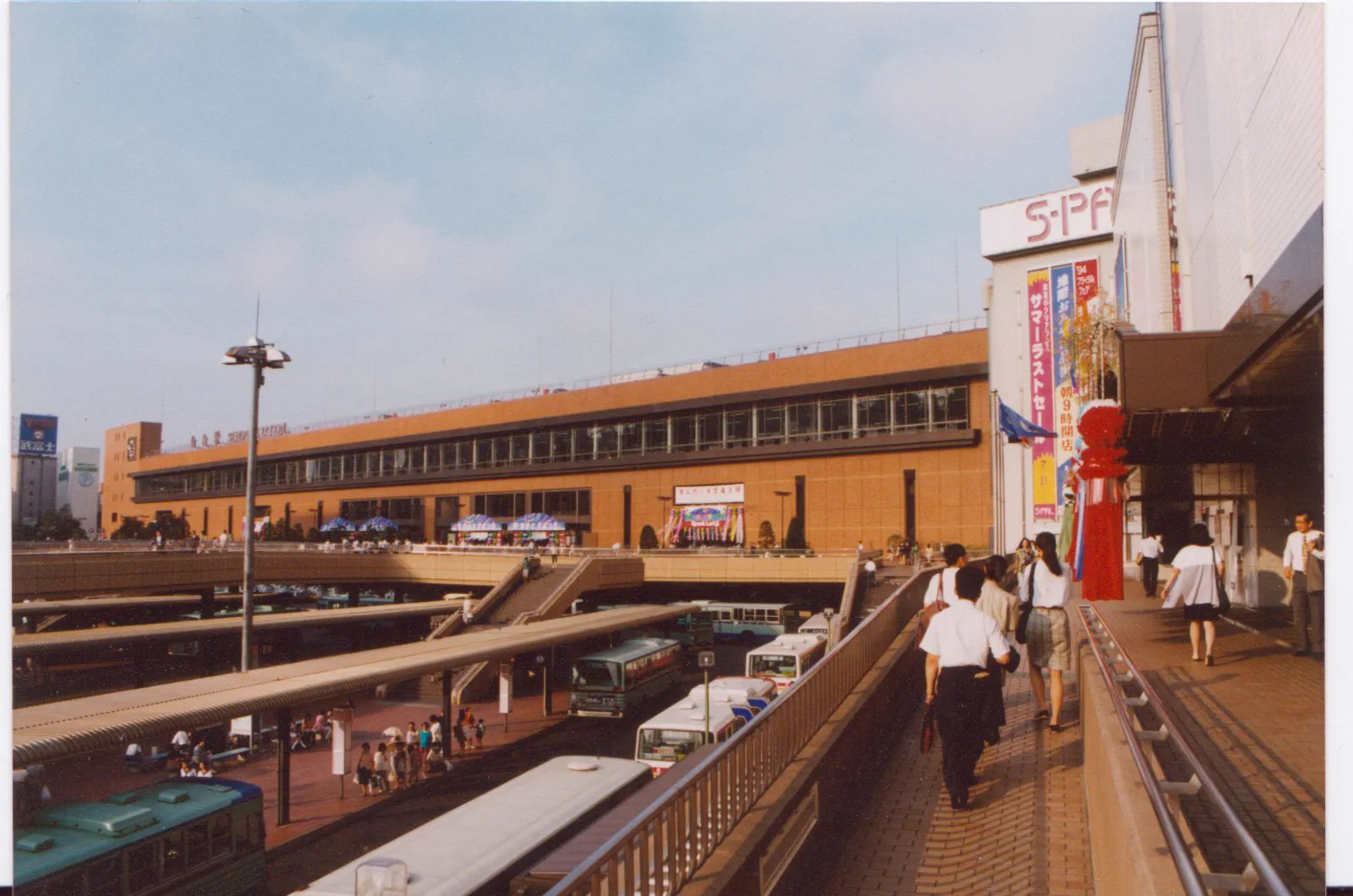
Sendai Station's frontage in this image helps locate the gateway, but no station hotel removes a rural last-mile timetable. Keep the day after two very early Tohoku outings locally recoverable.
Osaka works until Kyoto becomes the centre
Osaka offers JR and Hankyu approaches toward Kyoto, Keihan on its own corridor, and Kintetsu for Nara. A Umeda room fits JR/Hankyu-heavy days; Yodoyabashi or Kyobashi can suit Keihan; Namba can favour Kintetsu, Nankai and southern-city evenings. A cheap room far from the needed line adds a city crossing twice per excursion. The right fixed-base choice therefore depends on the day-trip railway, not Osaka's reputation as a single convenient point.
Keep an Osaka room for ordinary daytime Kyoto trips. Consider Kyoto nights when two consecutive days centre on its eastern or western districts, when Arashiyama needs a scarce early start, or when late seasonal illuminations matter. The goal is to recover useful morning or evening time, not to collect hotel names. One good rail corridor cannot repair a day that tries to combine Nara, Arashiyama and Higashiyama.
Fukuoka holds bags well; distant Kyushu still costs time
For a three-to-five-night city stay, Hakata is useful for airport, JR and intercity buses. Tenjin grows stronger for Nishitetsu and evening dining. Dazaifu, Kitakyushu, Akizuki and selected Hita outings can sit around that base. Yabakei, Unzen, Takachiho and Kuju need separate road, bus or overnight analysis; a convenient Fukuoka hotel does not erase their last mile.
Yufuin is the clean example of purpose changing the answer. A daytime stroll, shopping and Lake Kinrin can sometimes justify a return to Fukuoka. A dawn lake visit, fixed ryokan meal or private-bath evening calls for a local night. Beppu can be chosen for a specific onsen experience, rather than as a generic replacement for a failed foliage sight. Treat Fukuoka as a base for one Kyushu direction at a time.
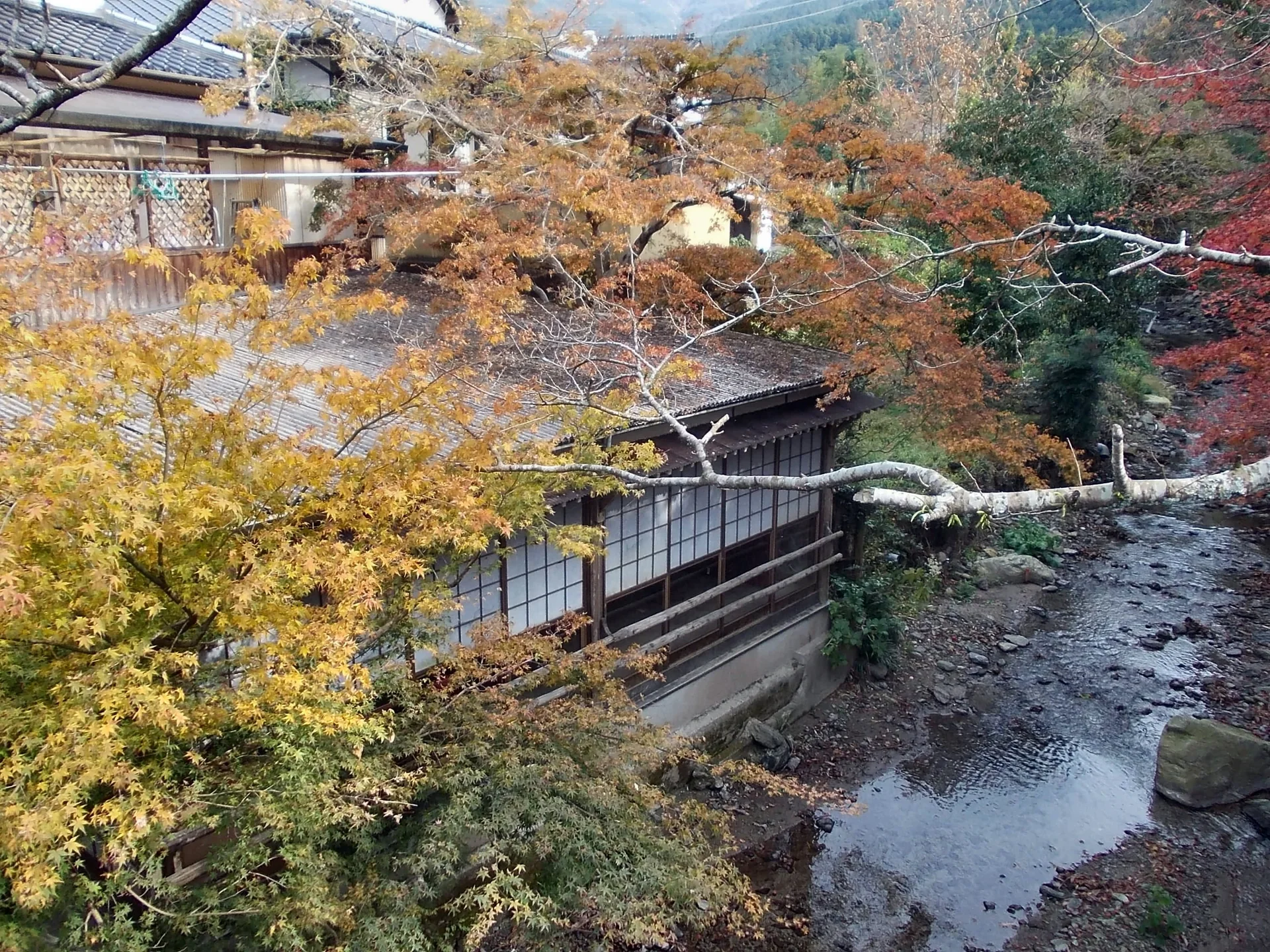
The Akizuki photograph gives a near-Fukuoka autumn example. Its trees and access still need a date-specific check, but the trip avoids assuming that every Kyushu highlight lies within a simple Hakata return.
Fixed-base failures to catch before booking
↔ Scroll table left or right
| Plan that looks efficient | Hidden cost | Better test |
|---|---|---|
| Cheapest room far from the useful platform | Extra cross-city movement at both ends of every outing | Price the room against the actual station entrance and line |
| Long day trips because a rail pass is prepaid | Transport value displaces time at the destination | Would you still take the day if every fare were separate? |
| Returning to the same city after every illumination | The last connection controls the best evening hour | Test whether one local night recovers the experience |
| Repeating a distant corridor on consecutive days | Two long commutes saved only one hotel move | Compare a compact overnight bag with the repeated travel |
| Counting only train time | Local bus, queue, walking and final return disappear | Calculate the whole door-to-door route and a second return option |
| Keeping a prepaid city room as the only reason for tomorrow's route | A sunk purchase may govern a more valuable day | Compare the lost room cost with time and access recovered |
Two demanding early starts in a row are usually enough before the route needs a more recoverable day. This does not require inactivity; choose a nearby area that can be shortened, moved indoors or reached without a fragile last bus. With children or older travellers, one main sight before lunch and a cancellable second activity leave more resilience than a chain of paid appointments. A fixed base should reduce packing and create options. If it merely produces repeated 05:30 alarms, it has stopped serving that purpose.
Use the forecast to choose a corridor and the recent conditions to choose a day. Flights, scarce beds and essential transport form the route's skeleton. Green leaves suggest a local higher option only if access is safe; fallen leaves suggest a lower one; closures outrank colour. The 2026 JWA outlook gives a real national starting point as of 24 October, while the two event calendars protect specific evenings. Neither requires changing the whole holiday each time a new spot photograph appears.
Other route details
luggage · Hakata · Takachiho · Japan Weather Association — · Fujikawaguchiko — 2026 Autumn · Kongobuji — 2026 Autumn · Visit Wakayama — Koyasan · Karuizawa Autumn Leaves 2026: · Free Autumn Leaves in · Sapporo Autumn Fest 2026: · Shirakawa-go Autumn Leaves: Buses,