
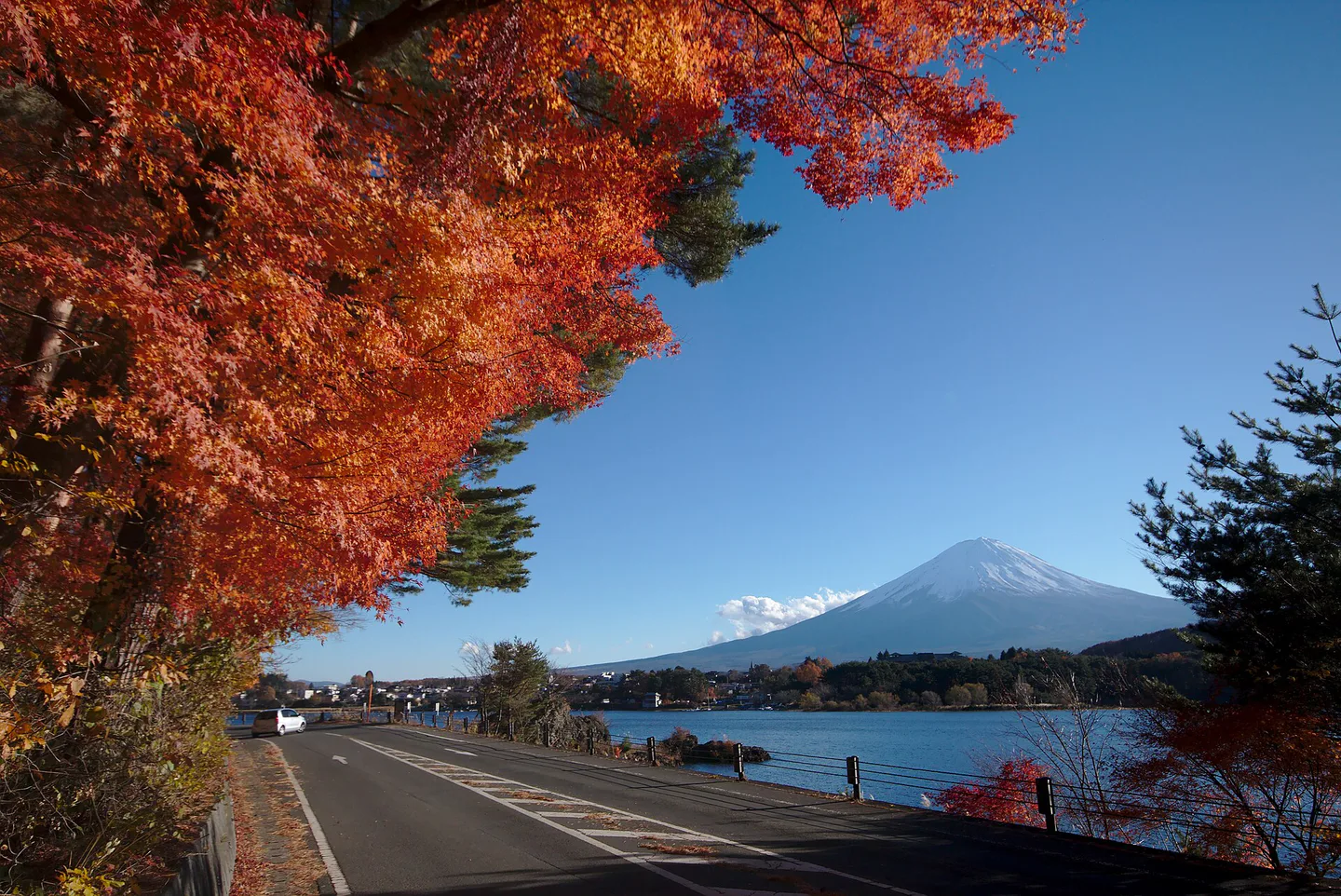
The 2026 Fujikawaguchiko Autumn Leaves Festival runs from November 7 through November 29. The Maple Corridor lights are scheduled from sunset until 9 p.m. Those dates tell you when the event operates; they do not tell you which day the leaves will look best, whether Mount Fuji will be visible, or whether a late trip back to Tokyo will feel easy. Decide first whether you want a daylight foliage walk, a night scene, or two chances to see Fuji. The answer changes your route and, often, your hotel.
For a first visit based in Tokyo, a daylight trip is the least complicated choice. Spend your best visibility window on Fuji, reach the north shore while you can still see the colour of the trees, and return with a transport buffer. If the illuminated corridor is the reason for travelling, a night around Lake Kawaguchi can be better value than trying to stretch one day through the final lights and a crowded transfer. The extra night buys a second morning for Fuji, but a fixed ryokan dinner can take away exactly the dusk hour you came to see.
Choose the trip before choosing a departure time
| Plan | What it protects | What can undo it | Best hotel decision |
|---|---|---|---|
| Tokyo daylight trip | Autumn colour, a Fuji view if the sky cooperates, and an easier journey home | Only one weather window for Fuji; north-shore buses can still be crowded | Keep the Tokyo base |
| Illumination followed by Tokyo | The change from daylight colour to lit trees | A missed local bus can break the connection to a reserved intercity service | Keep the Tokyo base only with a workable later return |
| One Lake Kawaguchi night | Evening lights, an onsen or dinner, and another morning for Fuji | Hotel check-in, dinner and shuttle times may collide with dusk | Choose the shore by your evening route, not by a generic lake label |
The middle row needs the most care. It is possible to see the lights and return to Tokyo on the same day, but the relevant deadline is not 9 p.m. It is the time you must leave the corridor to reach Kawaguchiko Station before your train or highway bus. An attraction closing time does not create another transport departure.
What the November 7–29 calendar can and cannot promise
The town’s 2026 event announcement specifies the November 7–29 run and lighting from sunset to 21:00. It describes roughly 400–500 maples around the lakeside and a usual strongest colour period in early to mid-November. These are useful planning facts, but neither the first festival weekend nor its final Sunday is a forecast of peak red leaves. Different trees around the corridor, lakeside, hotel gardens and Oishi Park can change at different rates.
Keep the date if the lake, Fuji view and an onsen would still justify the trip with mixed green and yellow leaves. If red foliage is the sole purpose, wait for recent photographs taken at the corridor itself before treating a booking as fixed. A cold spell can bring colour forward, while wind after a good week can remove the leaves before the scheduled festival ends. The latest daily conditions matter more than a forecast made months earlier. The broader Japan foliage timing guide helps place Kawaguchiko alongside regions that colour earlier or later, but it cannot replace a local photograph close to departure.
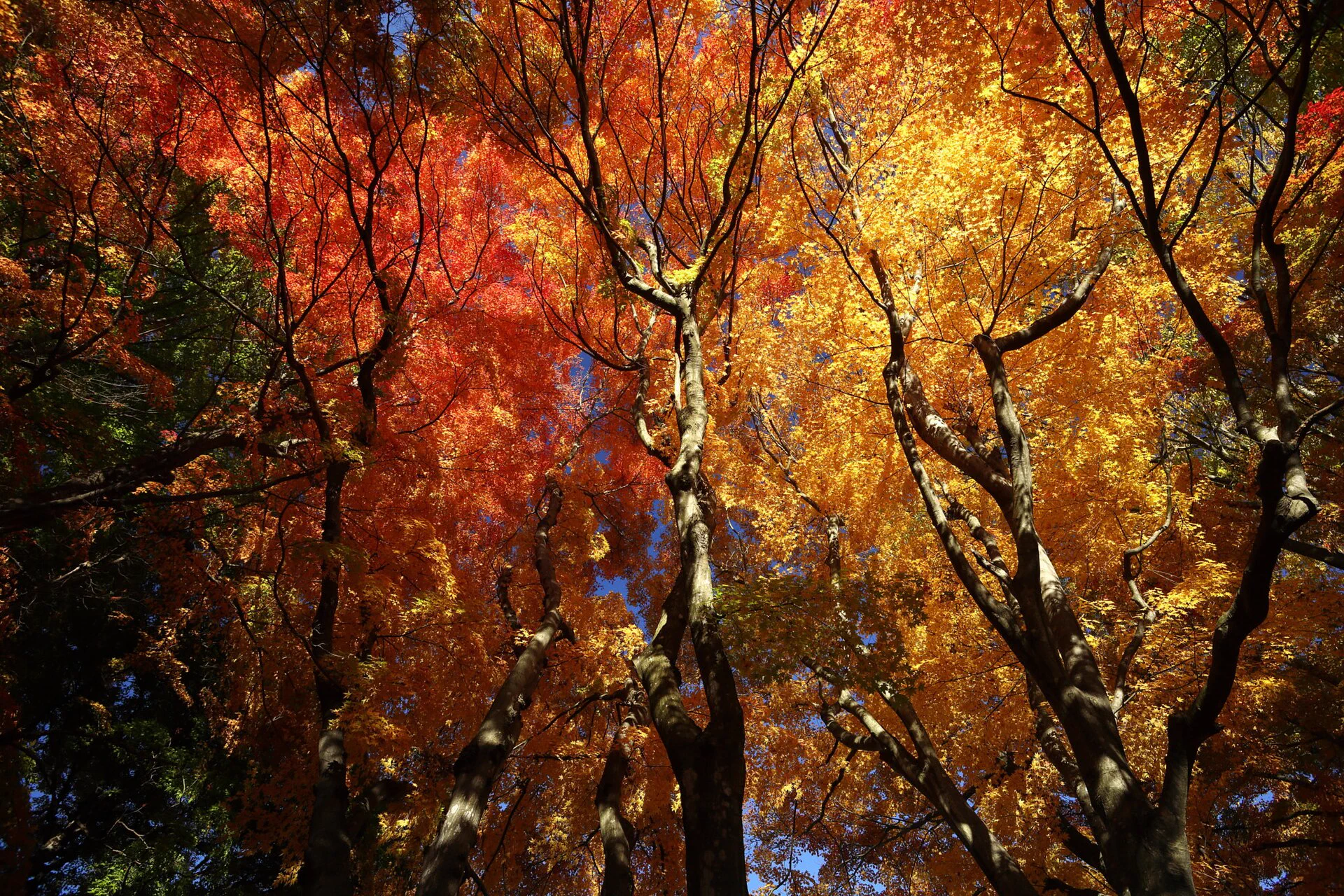
There is another distinction that matters on a short trip: the lights change the look of leaves that are present; they cannot restore leaves already lost to rain or wind. In daylight you can see both colour and the condition of the branches. After dark, crowding and lighting can make the same walk feel different. If foliage quality matters more than atmosphere, visit before sunset rather than making the lit tunnel your only look.
Start with the morning sky, then cross to the north shore
A clear Fuji view is often a more time-sensitive opportunity than a corridor walk. On a promising morning, use the light for a lake or mountain viewpoint before making the north-shore transfer. Clouds can build later; the festival lights will still wait until evening. If Fuji is hidden from the start, there is little reason to rush between every viewpoint. Give the trees a proper walk and adjust the rest of the day around current weather.
Allow roughly 45–90 minutes around the corridor for the walk, photographs and stalls, then add more time on a busy weekend. That is a planning allowance, not an admission slot. Do not treat the ropeway, the corridor, Oishi Park and Lake Yamanaka as a compact group. Each added stop asks for another transfer or road segment. Our Kawaguchiko versus Yamanaka foliage comparison is useful if you are deciding between lakes; it is a weaker plan to collect both on the same late-autumn afternoon.
The corridor follows the Nashigawa stream on Lake Kawaguchi’s north shore. From Kawaguchiko Station, the sightseeing Red Line is the normal public transport approach; the local tourism listing gives about 20 minutes under ordinary conditions. That estimate is a route description, not a festival-weekend promise. Check the current return stop and timetable before walking away from the bus, particularly if you intend to see the first lights. Driving does not erase the crowd problem: approach roads and parking can also slow as daylight visitors meet evening arrivals.
If Oishi Park fits the direction you are already travelling and the bus load is manageable, add it while you still have daylight. Otherwise, preserve the station transfer. The Oishi Park connection guide shows why an apparently small detour can consume the margin you need for the return journey. For a larger trip that includes Hakone, compare the two corridors in the Tokyo–Kawaguchiko–Hakone transport guide before putting both destinations on one day.
For a night visit, work backwards from your booked return
The return has four parts: leave the Maple Corridor, reach the local stop, travel to Kawaguchiko Station, and board the Tokyo-bound service. The point most easily overlooked is the first local movement. A reserved highway-bus or Fuji Excursion seat is not enough if the north-shore transfer arrives too late. Work backwards from the intercity check-in or departure time, then add a margin for crowds and road delays. A taxi can be a fallback only if one is available; do not make it the only way the plan works.
If you want both daylight colour and illumination, arrive before sunset and watch the scene change rather than appearing at the corridor just before closing. Once it is properly dark, leave while a later viable Tokyo departure still exists after the one you booked. That later option may be sold out or unsuitable on a given date, so inspect the actual timetable and seat situation. The principle is to avoid staking the entire day on a single local-to-intercity connection.
Compare a direct Fuji Excursion train, a highway bus and a transfer-based rail route on the date you will travel. Direct rail is reserved; a highway bus may offer a more convenient Tokyo departure point but shares the road with autumn traffic. Transfer-based rail can be useful when direct inventory is gone, though it makes the journey longer and more sensitive to connection times. The Tokyo to Kawaguchiko transport comparison explains which trade-off matters for each starting point. If direct seats disappear, use the Fuji Excursion booking fallback before assuming you must cancel the lake day.
Large bags make that chain more awkward. A bag left at the station requires you to return there before continuing; a bag carried to the north shore makes crowded buses less comfortable. Solve storage at the start of the day. For a wider Japan route, Kawaguchiko and Hakone luggage forwarding may let you take a small overnight bag to the lake instead of moving a full suitcase for one night. Families should also be realistic about a child’s appetite for a dark, crowded transfer after a full day. A shorter daylight visit can be a better memory than a forced final photograph at closing time.
One night is useful only if the hotel protects the evening you want
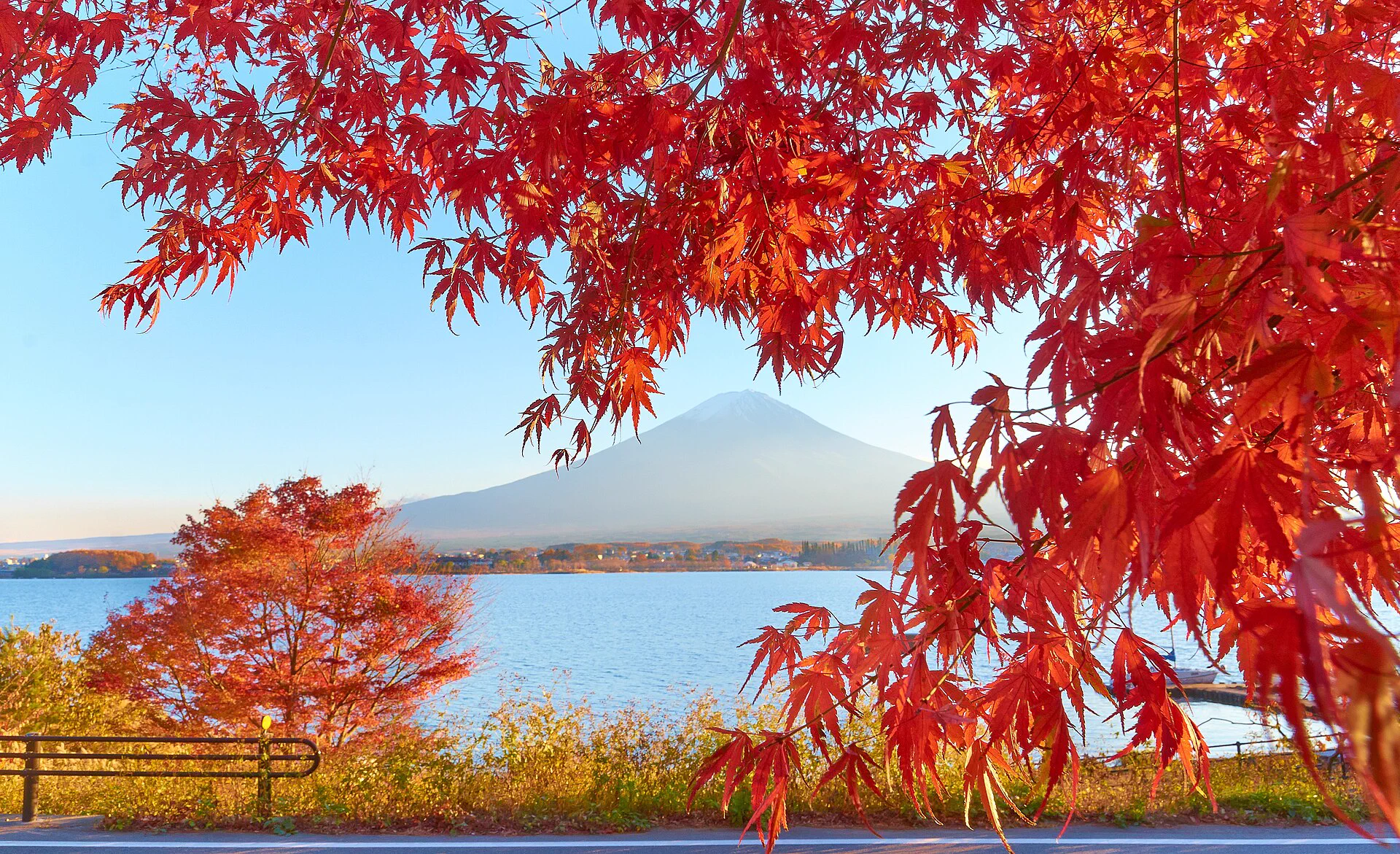
Sleeping locally removes the Tokyo deadline and creates a second Fuji weather window. It does not automatically make the schedule relaxed. A ryokan with dinner at a fixed hour may require you to leave the corridor as the lights come on. A shuttle may stop before your preferred return from the north shore. A hotel that looks close on a lake map may still be inconvenient with bags or after dark. Check the exact room, check-in limit, meal service time and shuttle arrangement before paying for the stay.
| Base | Practical advantage | Question to settle before booking |
|---|---|---|
| Kawaguchiko Station or south shore | Simple arrival and departure by train or bus; easier luggage handling | How will you get to and from the corridor after dark? |
| North shore near the corridor | Shorter trip after the illumination and a slower evening | Can dinner, final check-in and any shuttle fit your preferred viewing time? |
| Oishi side | Good position for a second morning focused on Fuji and lake photographs | Will you have a car or an evening transfer that works? |
A room sold with a “Fuji view” still needs inspection at room-type level: orientation, floor and weather all affect what you will actually see. A private bath is a separate room feature, not an automatic result of staying at an onsen hotel. Compare the cancellation deadline and time zone as carefully as the photograph if you are booking for foliage timing. The Kawaguchiko area comparison goes deeper into the station, north shore and Fujiyoshida trade-offs; Konansou versus La Vista Fuji-Kawaguchiko tests the same evening decision at hotel level.
One night works especially well when you divide the trip into two different jobs. Use the first afternoon for lakeside colour and the lit corridor; reserve the next morning for Fuji if the weather gives you a chance. That does not guarantee a clear view, but it removes the need for one afternoon to satisfy both the mountain and the illumination. If you are unsure whether the extra hotel is justified, compare one versus two Kawaguchiko nights and the broader Fuji day-trip versus overnight decision.
Compare stays around Lake Kawaguchi for your festival night once you know whether you need station access, a north-shore walk or a second morning near Oishi. Use the map to inspect the actual address and room conditions; the lake name alone is too broad for an evening plan.
Three checks to make 72 hours before travelling
First, look at recent photographs from the place you intend to visit. A general regional colour forecast can be right while the corridor’s particular trees are still green, already bare or a mix. If foliage is ahead of schedule, the lake, Fuji and onsen may still make the trip worthwhile. If it is past peak, check whether a windy or wet day has stripped the branches. The festival can continue after the most photogenic period.
Second, check Fuji visibility and the local forecast separately. A cloudy mountain does not cancel a good foliage day, but it weakens the case for a long Tokyo return journey if Fuji was your main reason to go. Rain and strong wind make exposed viewpoints and late transfers less appealing. For an overnight, the second morning may still justify the room; for a same-day trip, decide in advance which parts you would drop rather than adding them back as the weather worsens.
Third, inspect each transport leg in the direction you will actually ride. Note your Tokyo-bound departure, the preceding local connection, the walking time from the corridor, and the last workable alternative. If the plan only functions under an exact, unbroken chain, shorten the north-shore visit. A busy Saturday is a poor time to discover that “around 20 minutes by bus” never meant a guaranteed 20-minute journey home. This is also the moment to check any hotel meal and shuttle times, because changing the room after arrival may be impossible.
Do not use the 21:00 light switch-off as a departure target unless you are sleeping nearby. It describes the display, not a return service. If illumination is merely a bonus, a daylight-focused Tokyo trip avoids an unnecessary late-night gamble. If the lights, onsen and Fuji are all important, an overnight is the more coherent itinerary.
Where this festival fits in a wider autumn trip
Lake Kawaguchi makes most sense as a Fuji-area decision, not as one more interchangeable red-leaf stop. If you are already planning a Nikko lake overnight, compare the travel corridors and weather exposure rather than booking two long day trips from Tokyo. Rikugien’s Tokyo illumination serves a very different evening: it requires no mountain transfer. That may be the more sensible lit-garden choice when Kawaguchiko’s foliage is weak or transport is tight.
For travellers arranging several regions, the 10-day autumn route and seven-day regional choice help decide whether a Fuji detour deserves a night at all. Do not add it to an already full Tokyo-to-Kyoto transfer day simply because the festival dates overlap your stay. The fixed intercity movement reduces the daylight and weather flexibility that make the corridor appealing.
The 2026 date range is clear. Your practical decision is whether you can enjoy the visit if the leaves or mountain are uncooperative. Choose a daylight return if foliage and simple logistics lead; protect a genuinely workable late connection if you want the first lights; choose a local hotel if the evening and a second Fuji chance are the point of coming.