
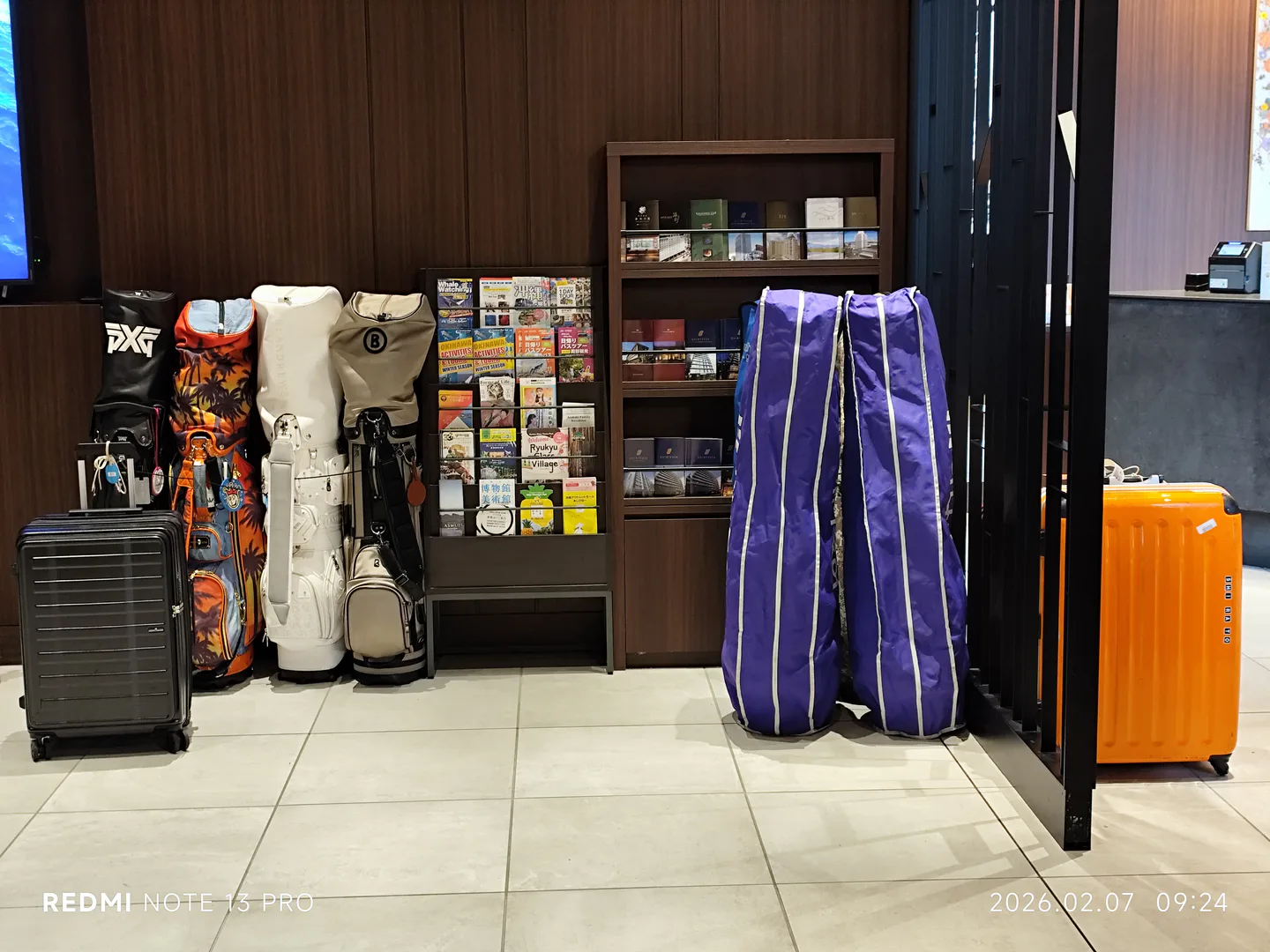
A large suitcase can make a short Fuji and Hakone detour feel like a series of luggage appointments. The easiest route is often to send that case from your Tokyo hotel to the next hotel where you will spend several nights, then take a smaller bag through Kawaguchiko and Hakone. A local delivery service can still help on a day when the suitcase must come with you, but neither the Kawaguchiko nor Hakone service carries bags between the two areas. Work out where you will sleep after the mountain section before paying to move the case.
The hotel after the detour decides where the suitcase goes
On a Tokyo–Kawaguchiko–Hakone–Kyoto route, sending the main case directly from Tokyo to Kyoto removes two hotel handovers. You carry what you need for the Fuji and Hakone nights. On a return-to-Tokyo route, ask the hotel whether it can hold the case until you come back; if you change Tokyo properties, ask the second property whether it will accept a delivery. This is particularly useful with a full-size international suitcase and a one- or two-night detour, when the bag would otherwise ride buses, trains, stairs and hotel shuttles for very little benefit. The Tokyo, Kawaguchiko and Hakone three-day route helps fix the hotel sequence first, while the Hakone or Kawaguchiko comparison helps if the number of mountain nights is still open.
↔ Scroll table left or right
Route | Where the large case usually belongs | Bag for the detour | Mistake this avoids |
Tokyo → Kawaguchiko → Tokyo | At the same Tokyo hotel, or sent to the next Tokyo hotel after checking it will receive parcels | One-night bag | Carrying the case to Fuji only to bring it straight back |
Tokyo → Hakone → Tokyo | In Tokyo; use the Hakone local transfer only if the ryokan needs the case | One-night bag | Taking a full-size case around the sightseeing loop |
Tokyo → Kawaguchiko → Hakone → Tokyo | At the return hotel in Tokyo | Two-night bag | Treating two local delivery schemes as one through-service |
Tokyo → Kawaguchiko → Hakone → Kyoto or Osaka | Sent straight to the confirmed Kansai hotel | Two-night bag and essential items for a delay | Readdressing the case at each one-night stop |
Mount Fuji climb or fifth-station excursion | At a stable hotel or staffed storage that permits your planned collection time | Climbing pack | Depending on an uncertain descent time to collect the main case |
The Kyoto or Osaka endpoint is especially forgiving when you will stay there longer. For example, a case that skips two mountain nights may be ready when you reach your Kansai hotel, provided you book the delivery with a suitable buffer. If the next hotel is not yet booked, keep the suitcase with you or arrange legitimate staffed storage. A vague reservation or a property with no receiving desk is a poor delivery address. The Osaka base for Kyoto and Kobe trips and Osaka activities by district can help settle that Kansai endpoint before you fill in a shipping label.
Hotel-to-hotel forwarding needs a receiving hotel and time buffer
Yamato accepts hotel-to-hotel luggage when the sending hotel works with the carrier and the destination has a front desk able to receive it. Confirm the exact property name, your reservation name, check-in date, and its acceptance policy at both ends. Similar hotel names in one city create an avoidable delivery error. Yamato advises arranging for the parcel to arrive at least a day before the stay; its hotel delivery guidance also says to dispatch at least two days before check-in, or allow three depending on distance. Ask the sending desk for the delivery date it can actually quote rather than assuming that every Tokyo-to-Kansai shipment has the same transit time. See the hotel-to-hotel conditions and hotel delivery lead-time guidance when fixing the handover date.
That arrangement makes sense for a Tokyo–Fuji–Hakone–Kansai trip because the forwarding leg follows your longer hotel chain, while the small bag follows the sightseeing. It does mean living without the case for a couple of nights. Pack the bag before you hand over the main case, and check that you could finish both nights even if the shipment arrived one day late. The broader Japan luggage forwarding guide explains the trade-off between sending, storing and carrying; the Hakata to Yufuin luggage comparison shows why local services should be treated as local rather than assumed to connect across regions.
↔ Scroll table left or right
Handling choice | Direct fee | Time and handling cost | Where it fits |
Take the case on every leg | No forwarding charge | More transfers, stairs, luggage-space uncertainty and possible storage stops | Few moves and one manageable case |
Forward to each hotel | Repeated delivery charges | New label, receiving confirmation and delivery window at each property | Longer stays with reliable gaps between check-ins |
Send it past the Fuji/Hakone section | One longer shipment | You must carry a properly packed short-stay bag | One- or two-night mountain detours between stable hotels |
Use a local same-day service | Per-piece local charge | Morning handover and a participating accommodation are essential | Early arrival followed by sightseeing in the same area |
Price alone does not decide this. A supposedly free suitcase on a bus may cost you the flexibility to break a journey, leave a station quickly or walk a scenic section. Conversely, paying for repeated hotel forwarding can buy little if the next hotel cannot receive the case before you need it. The Tokyo to Hakone transport guide matters here because the rail or bus choice changes how awkward a case will feel; a Hakone loop before check-in is easier with a small bag.
Kawaguchiko's service is for a Kawaguchiko hotel
Fujiyama Luggage Delivery connects Kawaguchiko Station with participating accommodation in the local area. The published one-way charge is ¥2,000 per piece. On a station-to-hotel day, hand the bag over between 10:00 and 13:00 and collect it at the lodging from around 16:00. In the other direction, the hotel handover is by 10:00 and station collection runs 13:30–17:00. These times matter if you expect to take an early onward train or arrive after lunch. The service details describe the hotel list and current handover arrangement.
Use it when the large case is already travelling to Lake Kawaguchi with you and you want the hours between station arrival and check-in free for sightseeing. It is a poor solution if the actual aim is to make the case appear at a Hakone ryokan the same evening. Plan Fuji and Hakone as two distinct lodging and transport areas. The Kawaguchiko sights worth fitting into a short stay and station versus north-shore accommodation comparison make the local delivery's value clearer: a remote lakeside hotel creates a different luggage problem from one beside the station. If you are deciding between Lake Kawaguchi and Lake Yamanaka, check the access and hotel differences before assuming a Kawaguchiko Station service covers both.
On a Tokyo–Kawaguchiko–Tokyo overnight, the simpler arrangement is often to leave the main case in Tokyo. Fujiyama delivery becomes valuable only when the suitcase actually needs to reach your Fuji-area room. If you are taking a Fuji-view hotel with a private bath, the Kawaguchiko hotel locations and bath choices help identify the exact property to check for participation. Do not write “Kawaguchiko hotel” on a label without confirming the address and that property's reception arrangements.
Hakone-Yumoto transfer has a firm morning window
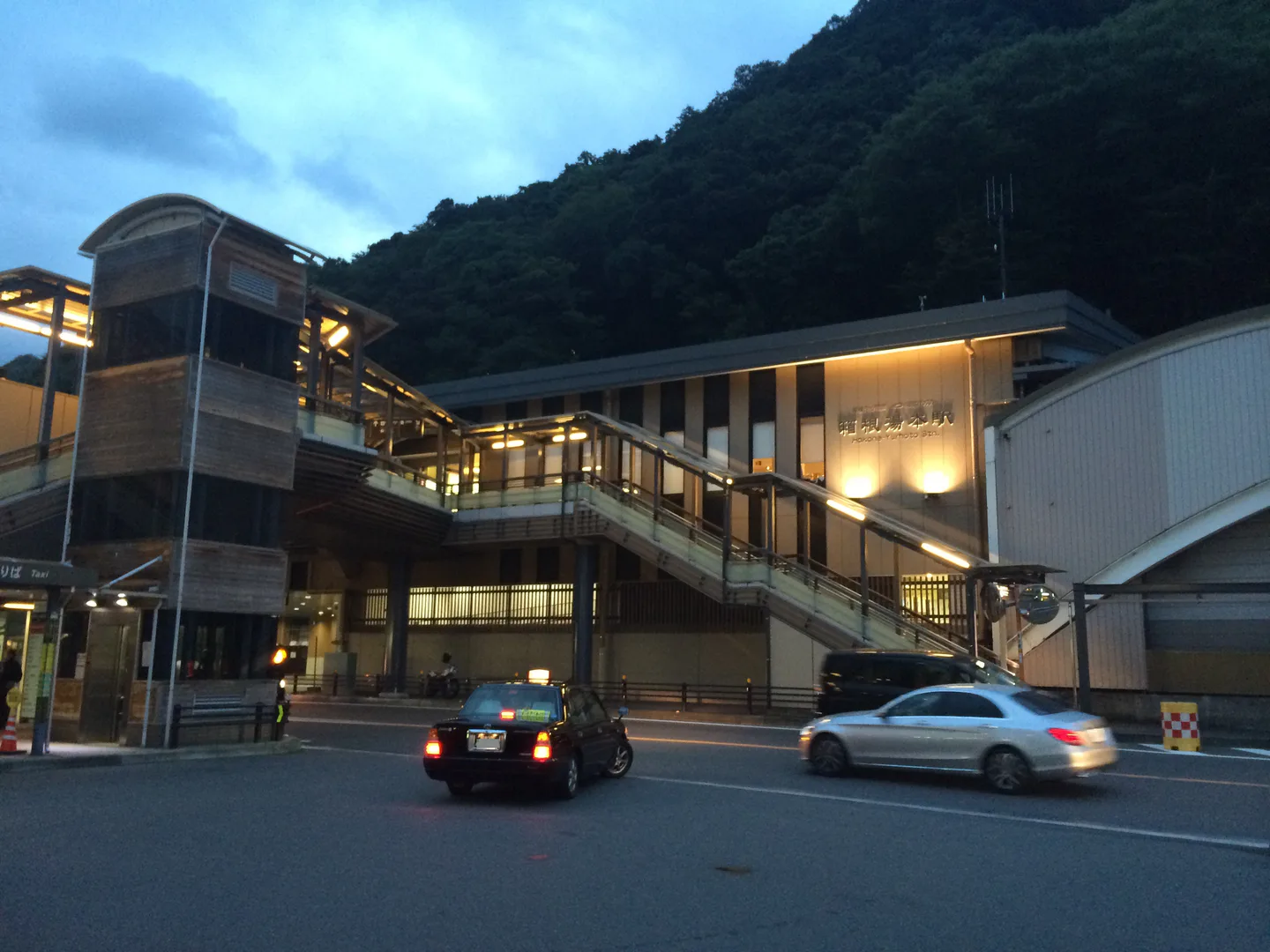
At Hakone-Yumoto, the local luggage transport counter accepts bags for participating accommodation from 08:30 to 12:00, with delivery to the hotel after 15:00. Same-day online reservations close at 11:30, but an online reservation does not extend the physical noon handover. The current one-way charge is ¥1,500 for a regular piece with total dimensions up to 140 cm and weight up to 15 kg. A larger item within 200 cm and 30 kg costs ¥2,500. On your departure day, participating lodgings take the bag by 10:00 for station collection between 13:30 and 18:30. Check the Hakone service page against your exact accommodation and bag dimensions.
This works well when you reach Yumoto in the morning, want to see the loop, and do not need the case until after ryokan check-in. The one-night Hakone loop order is relevant because sending the case ahead changes what you can do before the room is ready. If you reach Yumoto after noon, choose storage, a direct hotel transfer or a sightseeing plan after checkout instead. Building the first afternoon around a counter that has already closed will not improve the trip. For travelers still comparing Fuji and Hakone, the first-visit choice also covers how their routes and accommodation patterns differ.
Neither this service nor the Kawaguchiko station scheme is an inter-area same-day carrier. The Fuji–Hakone transition needs its own transport plan; the case should usually already be in Tokyo or on its way to your longer-stay hotel. Hakone's counter also excludes valuables and certain fragile or precision items, so put passports, electronics and other irreplaceable belongings in your carry bag. A rail arrival time, hotel participation and the published cut-off are all conditions, not details to sort out after boarding.
A train allowance is not a luggage-storage plan
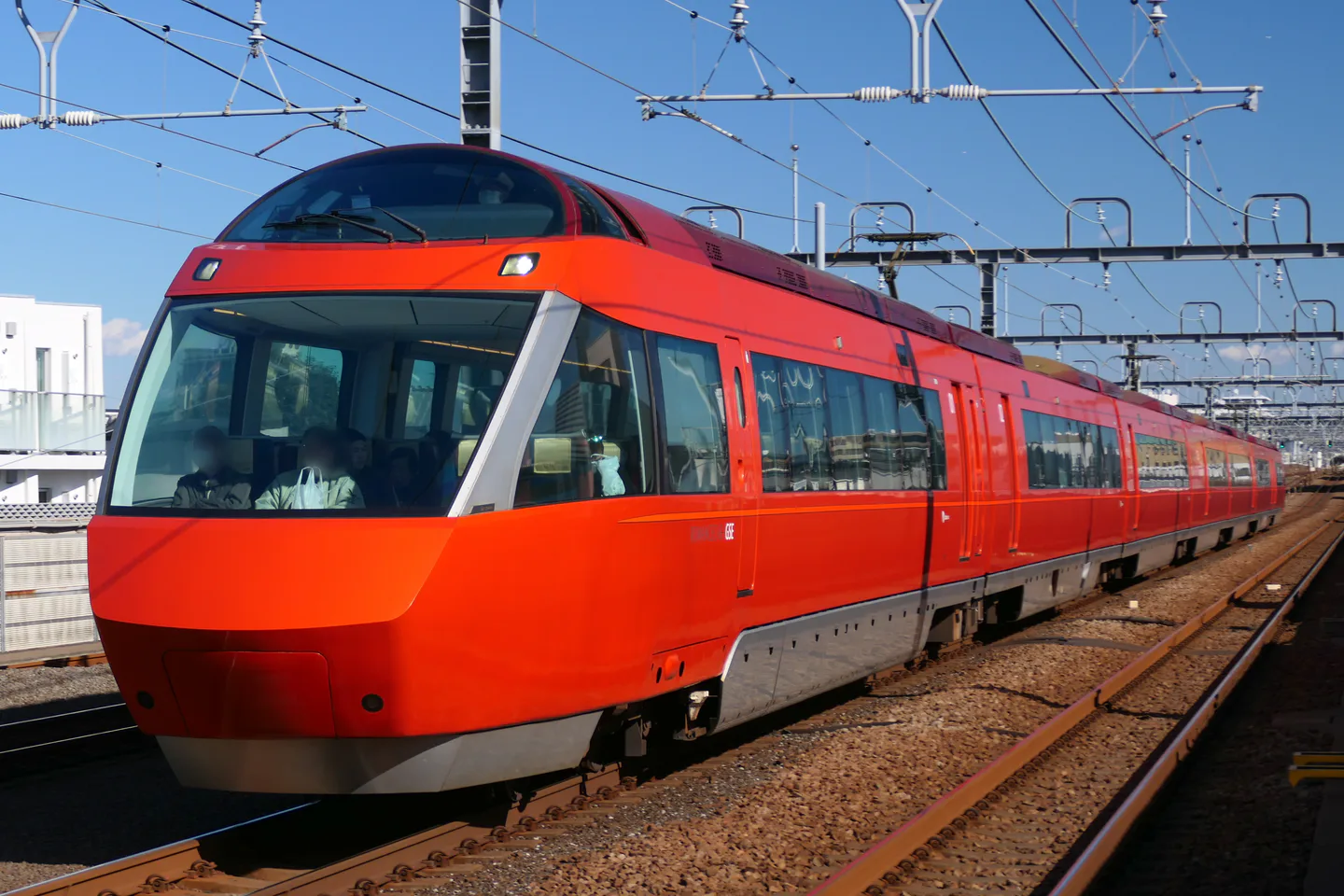
JR East's general allowance is two pieces per passenger without an extra charge, with each piece no more than 250 cm across its three dimensions, 2 m in length and 30 kg. That is the general rail rule relevant to a Fuji Excursion trip; it is separate from the reserved oversized-baggage-seat arrangements associated with the Tokaido Shinkansen. A case within the allowance still has to be stored safely without obstructing seats, aisles or doors. The JR East luggage guidance sets out the dimensions; it cannot tell you how crowded your departure will be.
Fujikyu's present bus FAQ distinguishes a small bag carried aboard, which must fit in the rack or under a seat, from large suitcases and travel bags placed in the underfloor trunk. It does not promise a fixed suitcase-size trunk allocation for every passenger. Oversized or unusual gear such as skis, snowboards, golf clubs and folding bicycles may be turned away depending on vehicle space. Read the operator's baggage FAQ before bringing bulky equipment. A family with several hard-shell cases should avoid treating a luggage hold as unlimited reserved capacity. This is an operational reason to forward a main suitcase past the detour even where bringing it would be permitted.
If your itinerary adds a Mount Fuji climb or fifth-station visit, the collecting point is as important as the baggage allowance. A descent, weather change or altered bus connection can move your arrival time. Leave the main case at a stable hotel or staffed storage that suits the actual collection window, and carry only the climbing equipment and personal essentials you need. The autumn mountain clothing guide is useful when the small bag has to cover a colder altitude than your city clothes.
The two-night bag must survive a late delivery
Keep passports, cash and cards, transport tickets, medication, glasses or contact-lens supplies, phones, chargers, power banks and camera essentials with you. Add weather protection, underwear, socks, sleepwear and at least one complete change of clothes. Parents need child-specific items that cannot wait for the next hotel. An onsen ryokan may also call for personal toiletries or clothes you expect to use before the suitcase rejoins you. Put anything difficult to replace in the bag you control, rather than treating the large case as tomorrow's guaranteed supply.
The useful packing test is whether you can finish both mountain nights if your main suitcase is a day late. You may decide you need two changes of clothes, or a medication supply with more margin than the itinerary itself. On a short route, this is more important than shaving a few kilograms from the overnight bag. The Takayama room choice for two suitcases illustrates when room space can matter for a longer stop; Sapporo hotels with snow and large luggage show another trip where access changes the carry-versus-send calculation.
↔ Scroll table left or right
Failure point | Practical check before you travel | Consequence if missed |
Destination desk cannot receive the case | Confirm property, booking name, arrival date and acceptance rules | The parcel has nowhere reliable to go |
Fuji and Hakone local schemes are treated as a through-service | Book each only for its published local station-and-hotel pair | The bag cannot meet you at the second area |
Hakone arrival misses noon | Compare train arrival with the actual counter handover, allowing for delays | No station-to-hotel same-day transfer |
Bus plan relies on unlimited luggage space | Check the operator's current baggage conditions and your group's case count | Bulky bags may not fit or travel as planned |
Essentials are in the forwarded case | Pack a two-night continuity bag before sending | Delivery may succeed yet your first night still fails |
Routes where bypass forwarding is the wrong answer
If you will spend three or four nights in one mountain area, use much of the big case every day, or cannot confirm a receiving hotel farther along the route, sending it past the stop can create more inconvenience than it solves. Carrying the case, using a participating local same-day service, or arranging storage may fit better. Likewise, a single Tokyo hotel that willingly stores your suitcase makes a Tokyo–Hakone–Tokyo overnight a storage decision rather than a shipping decision. The point is to reduce handovers that serve no useful purpose, not to send a bag merely because forwarding exists.
For Tokyo–Kawaguchiko–Hakone–Kyoto, the strongest default remains direct Tokyo-to-Kyoto forwarding with a two-night bag. For Tokyo–Hakone–Tokyo, leave the case at the return hotel if it agrees; if the hotel needs your bag that evening and you arrive early, Hakone-Yumoto's local counter may be worth its fee. For Tokyo–Kawaguchiko–Tokyo, a Tokyo-held case usually beats taking it to Fuji and back. Where the route and hotels are still fluid, settle those decisions first and then book the appropriate handover. The early Tokyo activities guide may help time a morning departure without giving the suitcase an unnecessary extra journey.
If the next stop is a hotel in Kyoto or Osaka, compare accommodation around that confirmed address before sending anything. Check stays near the next hotel in Kyoto once you know which property can receive the case. If your destination is Osaka, compare hotels in Osaka before writing the delivery label. The shipping address should always be the hotel you actually booked, not a neighborhood search result.