
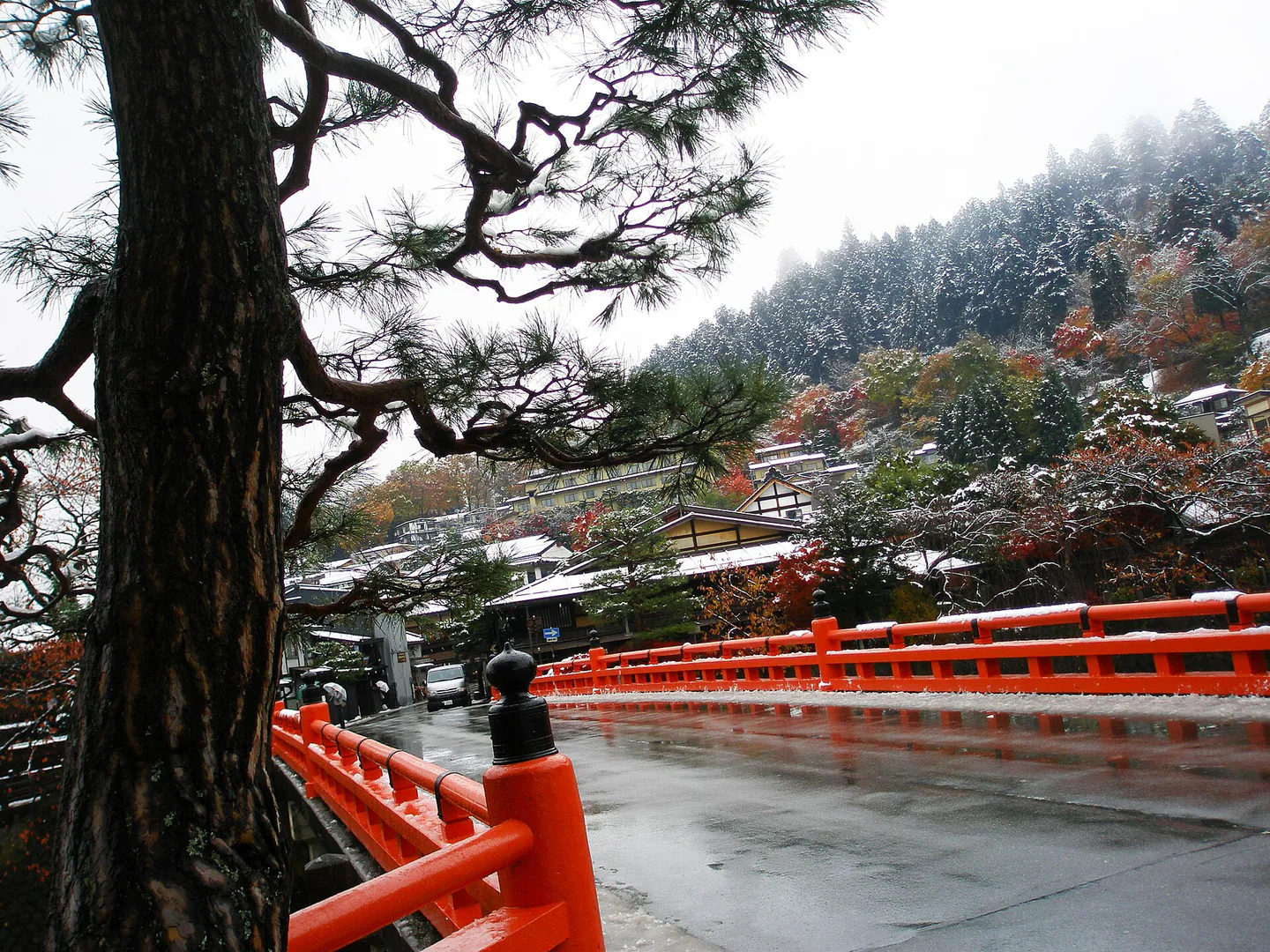
Takayama has several autumn clocks. Shin-Hotaka’s higher slopes tend to colour around mid-October; Nakabashi and Takayama Jinya commonly reach their stronger city colour from late October into early November. Higashiyama, Shiroyama and Hida Folk Village often begin between those windows. The date on your ticket therefore points to a different place depending on altitude, rather than to one Takayama-wide peak.
One night is enough for a city-focused first stay: old streets, a Takayama evening and the next morning’s market. Two nights make room for one separate foliage branch. Choose Hida Folk Village, Shin-Hotaka or an onward Shirakawa-go route by the actual date; trying to fit all three turns the hotel into a transfer depot.
The city tourism colour report dated 22 October 2026 listed Hida Folk Village as nearly at its best and Shiroyama Park as beginning to change; Shin-Hotaka Ropeway was at its best. These are dated observations, not a promise for a later trip. Use the live colour report near departure and keep mountain operation separate from foliage status.
↔ Scroll table left or right
| When you travel | First area to investigate | Avoid assuming |
|---|---|---|
| Early October | Shin-Hotaka and other higher slopes | Central old-town colour has already peaked. |
| Middle of October | Shin-Hotaka, Higashiyama or Hida Folk Village | The alpine summit and city streets share one status. |
| Late October to early November | Old town, Jinya, Nakabashi and the folk village | A distant mountain trip is necessary for autumn colour. |
| Middle of November | Look at current town and village reports | High-level colour will still match the lower town. |
| Late November | Hida Kokubunji ginkgo if it has turned | The normal town-wide maple route is still at peak. |
Mountain colour is earlier than the red bridge and old town
Takayama tourism places the suburban highlands at the start of the October sequence and the town’s stronger reds later. Its 2026 walking guide lists Nakabashi and the Jinya around late October to early November. Higashiyama, Shiroyama and Hida Folk Village generally become useful from mid-October, giving a visitor several city or near-city alternatives as the season advances.
Shin-Hotaka runs on a different clock. The ropeway normally reaches its autumn colour around mid-October, well before a visitor should assume the old-town trees have peaked. Nishihotakaguchi observation area is at 2,156 metres, and the operator’s access guide gives roughly 100 minutes by bus from Takayama Bus Center. Those two numbers turn a casual excursion into a full mountain commitment.
A traveller arriving around 10–18 October should investigate high-elevation colour first, while someone visiting from about 28 October to 5 November can give the town and Hida Folk Village priority. These are planning bands, not fixed forecasts. A Shin-Hotaka round trip consumes roughly three hours and twenty minutes of bus time before ropeway, waits or walking are counted.
The 22 October 2026 status report showed the divergence in practice: Shin-Hotaka at its best, Hida Folk Village almost there, and Shiroyama just beginning. Wind or early snow can still remove a high-level view on a colourful day; check both the colour status and the ropeway operation before committing the branch.
Late October gives a first visitor more options within town
A late-October or early-November Takayama stay can draw from several overlapping typical windows. Nakabashi, Jinya and Enakogawa sit close to the old streets; Higashiyama and Shiroyama offer longer walks; Hida Folk Village adds a rural setting. This spread is more forgiving than a trip built around the exact peak of one distant slope.
Use weather to decide the day’s shape. Clear conditions make a temple-and-woodland walk at Higashiyama or Shiroyama appealing. Rain favours a shorter route through the old town, Jinya and indoor stops. If the folk village is further along than the central trees, make it the main afternoon rather than adding an alpine bus ride merely because the trip is in autumn.
That flexibility has a time value. If a storm damages colour in one area or a city walk is wet, a nearby second zone can still occupy the day. A remote mountain target leaves less room to recover once the bus journey and ropeway schedule are underway.
Higashiyama takes an afternoon if walked in full
The Takayama 2026 walking guide describes a Higashiyama circuit of about five kilometres and two hours. The older general attraction page gives a shorter four-kilometre temple promenade, so the length depends on whether Shiroyama and connecting streets are included. Mid-October to early November is the typical foliage window. Temples and trees are the reason to go; finishing every mapped segment is optional.
An arrival day from Nagoya can already include station transfer, old streets and dinner. Put the entire Higashiyama circuit on that day only if the group actually wants a long walk and has daylight left. For a one-night stay, a shorter temple stretch may fit better with the evening illumination and the next morning’s market.
Families and older travellers can turn back after the section they enjoy. The loop distance is a route description, not an admission requirement. A photograph at the right light and an unhurried temple stop can be worth more than completing the full five kilometres when knees or daylight are limited.
Hida Folk Village gives a rural autumn scene close to town
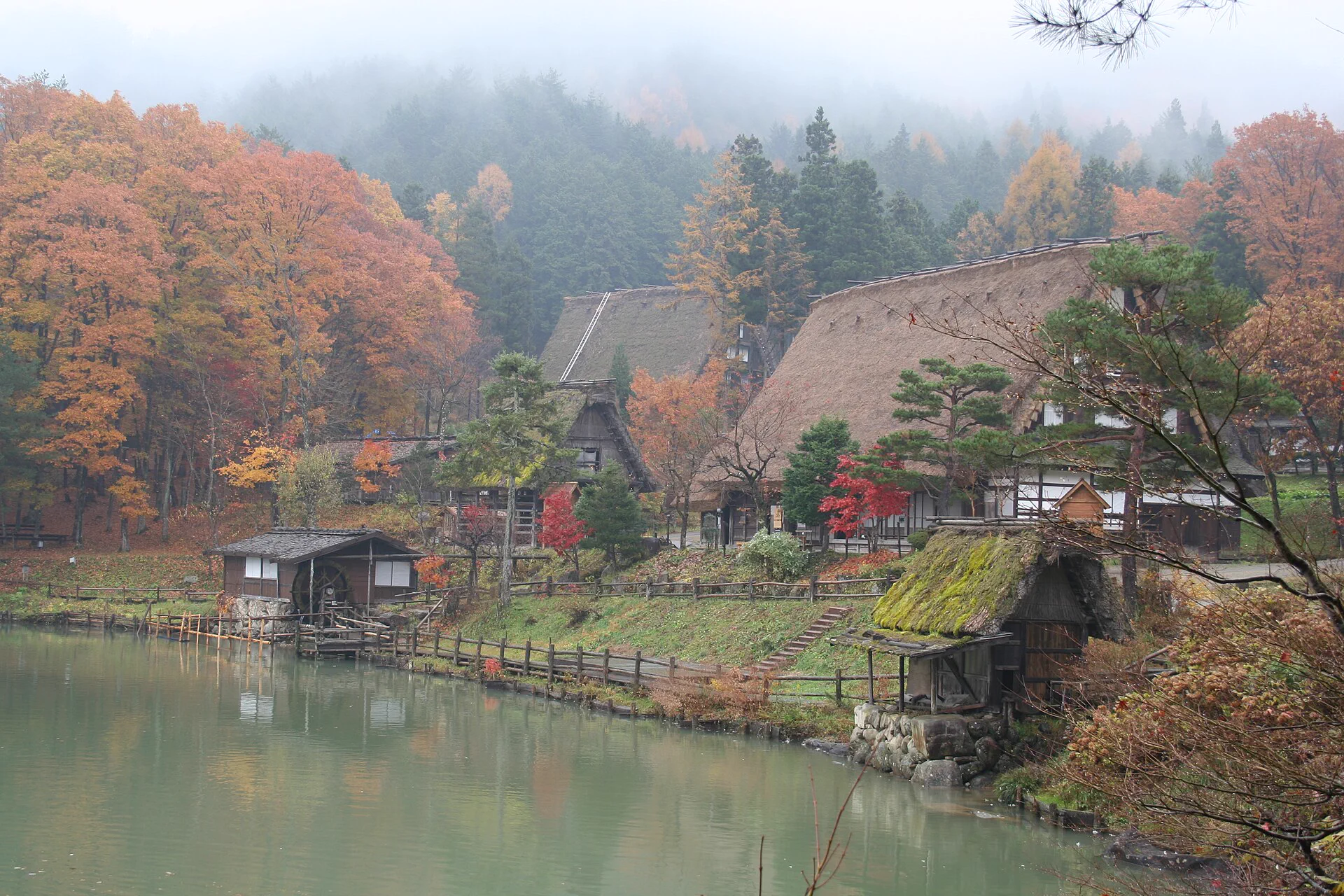
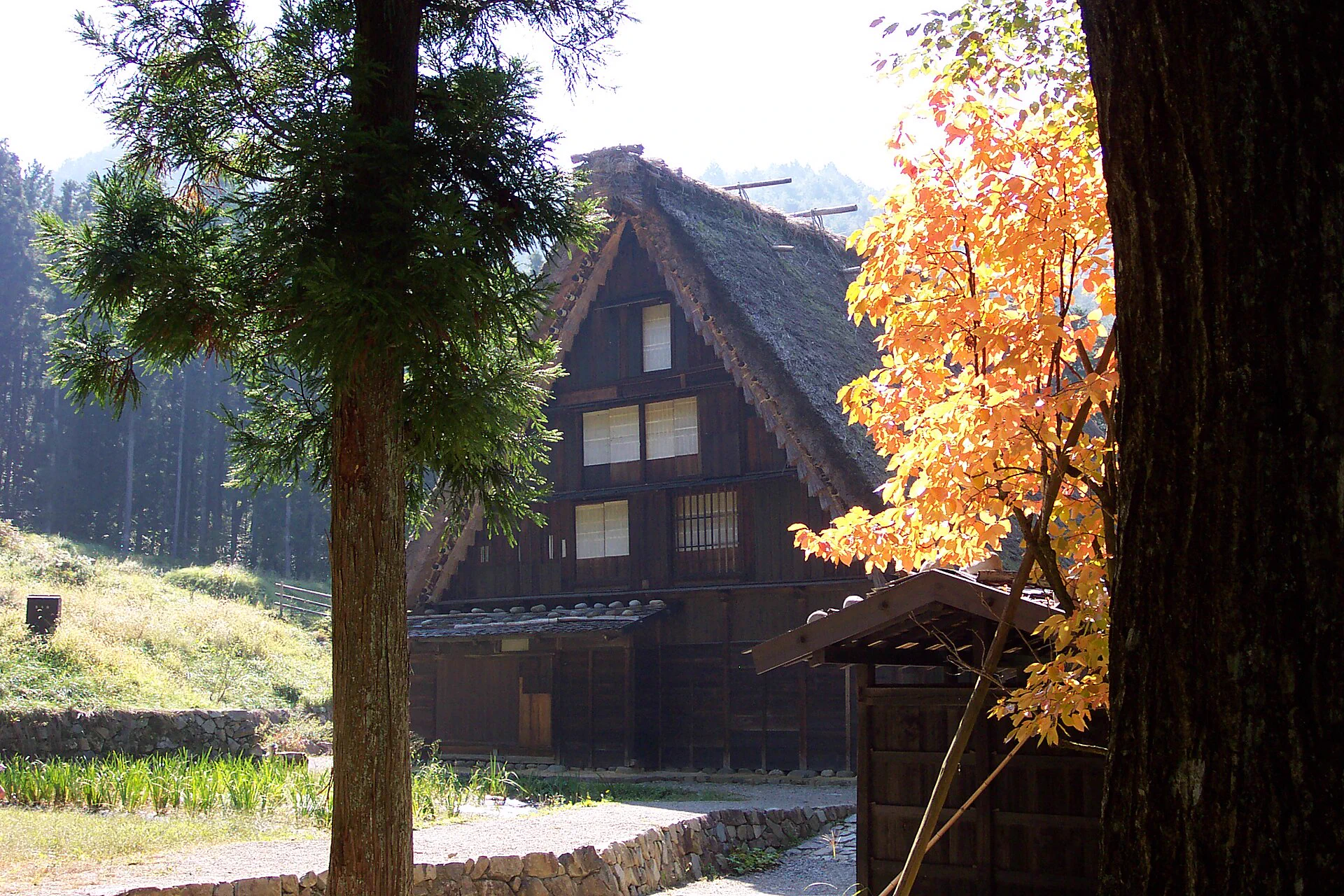
Hida Folk Village brings relocated thatched houses, a pond, trees and craft displays into a large open-air setting west of the station. Takayama’s 2026 guide puts its usual colour from mid-October to early November. It is a different visual environment from the merchant streets without requiring the longer Shin-Hotaka bus journey or a Shirakawa-go transfer.
For two nights with a city-focused first day, the village is an efficient second-day branch. Keep the same Takayama hotel and leave large bags there, then spend the afternoon around the houses and water. It suits a visit that wants a second autumn setting while keeping the rest of the day available for town.
The 2026 autumn illumination is scheduled for Saturdays, Sundays and public holidays from 10 October through 8 November, 17:30–20:30. Night admission is listed at ¥300 for adults and ¥100 for elementary and junior-high-school students. Those are event conditions, distinct from the normal daytime visit and its admission price.
The ordinary Sarubobo Bus serves the village in the day but does not cover the light-up hours. Arrange a taxi or another confirmed return before staying until 20:30. A station-side room can help with an early train next day, yet it does not solve this evening last mile on its own.
Shin-Hotaka needs a forecast and a full transport block
Use Shin-Hotaka as the separate foliage day when the date suits the earlier alpine season, the panorama is likely to be visible, and the group accepts the long return bus journey. It is a strong choice for mountain scenery; it is not a minor extension of a stroll through central Takayama.
The operator puts the bus ride from Takayama Bus Center at around 100 minutes and Nishihotakaguchi at 2,156 metres. From April to November the usual first ropeway departure is 08:30, while October weekends and holidays can start at 08:00. Adverse weather can suspend ropeway service even if town streets feel manageable.
Decide before the trip whether a clouded upper panorama would still make the day worthwhile. If the answer is no, keep the mountain outing flexible and retain a Takayama or folk-village alternative. A non-refundable sequence of bus, ropeway and hotel commitments gives little room to act on the actual visibility.
If Kamikochi is also being considered, choose the mountain corridor that best fits the trip rather than scheduling two alpine excursions back-to-back. Two Takayama nights do not leave an unallocated day after a Shin-Hotaka outing and a proper town visit.
Lights after dusk are separate from leaf colour
Nakabashi’s 2026 autumn illumination runs from 1 October to 30 November, 17:30–21:00. Enakogawa has the same broad season and hours except 9 October. Neither programme means the nearby maples will be at their best across all sixty-one dates. The bridge can be lit before the trees colour and after their peak has passed.
Take the illumination as a reason to use a Takayama evening, not as a foliage forecast. The 2026 city walking guide gives the bridge’s usual red-leaf window as late October to early November. On an early-October night, a lit bridge is still a pleasant city sight, but the mountain may be the more reliable daytime foliage target.
A one-night visitor can choose either the Nakabashi and old-town corridor or Enakogawa after dinner. Walking both just because they are free adds distance before an early market or onward bus. If a particular photograph is the goal, choose its light and route deliberately.
One night is for the city, market and one evening route
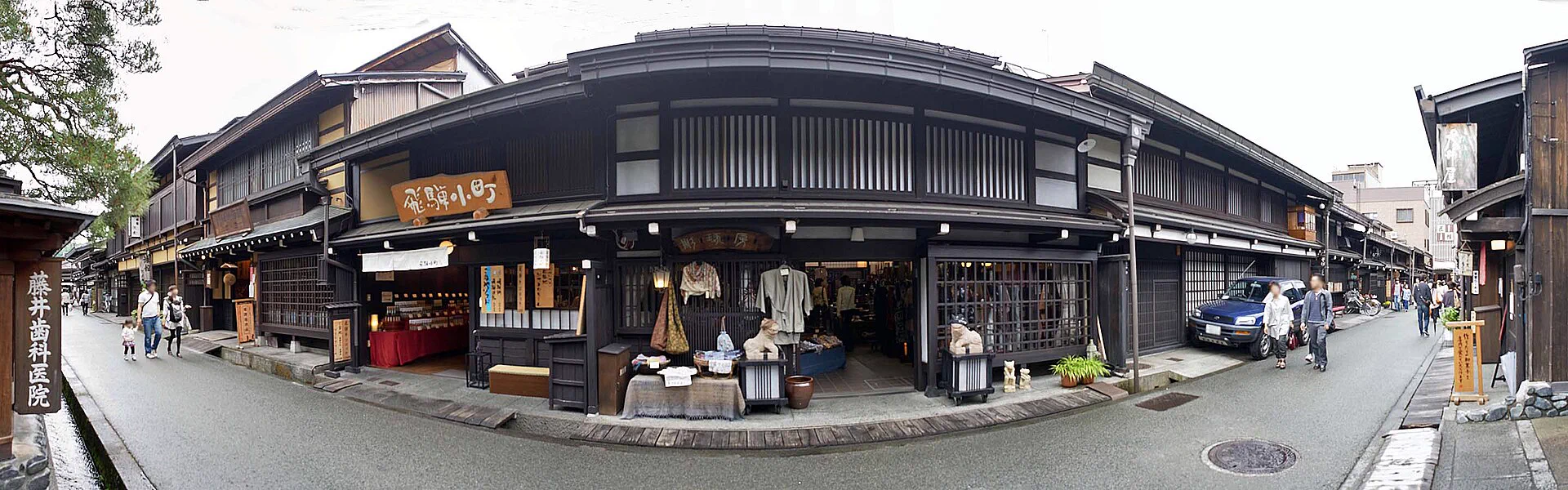
Arrive and leave luggage at the hotel or a station facility, then use the old town with a compact foliage walk. Dinner and one illuminated stretch give the night a purpose. The next morning can start at Miyagawa Market before departure. This keeps a one-night stay centred on Takayama rather than turning it into a bus interchange.
Takayama’s tourism information gives Miyagawa Morning Market hours of 07:00 to noon from April through November. A night in town makes that early start easy. A day visitor coming from Nagoya later in the morning cannot have the same market-and-evening sequence without a much longer day.
A Shin-Hotaka excursion, Kamikochi day or full Shirakawa-go return on the second day would consume most of a one-night trip. Choose such a branch only if the town itself is a stopover rather than the reason for the hotel night.
Two nights can hold one separate autumn branch
With two nights, the first evening belongs to Takayama and the middle day can be assigned after looking at weather and current colour. One night secures the market and old streets; the other provides room to travel out and still return without packing again.
Early to mid-October: inspect Shin-Hotaka’s current colour and visibility; the central streets may still be green.
Mid-October to early November: Hida Folk Village offers an easier second setting, while Higashiyama suits walkers.
Late October to early November: make town colour the core and add farmhouses only if their scenery appeals.
Onward via Shirakawa-go to Kanazawa: use the village as part of the transfer rather than returning to the Takayama hotel. The Takayama–Shirakawa-go–Kanazawa route sets out that direction.
The value of that second night is decision time, not a licence to add both Shin-Hotaka and Hida Folk Village. Choose the branch that currently has the better conditions and the setting the group most wants. Keep one clear reason for each day.
Three nights need a real base strategy
Three nights can work when Takayama serves as a stable centre for a city day, one nearby foliage day and one longer regional outing. The room then reduces luggage transfers between the Northern Alps and central Gifu. It is especially useful when weather may change the order of those days.
If every morning departs before breakfast and every evening returns late, that base creates unnecessary backtracking. A trip already committed to Shirakawa-go and Kanazawa may be better served by moving forward. When Okuhida and Shin-Hotaka are the main draw, an onsen night there can remove a long return bus leg.
The hotel location should follow tomorrow’s departure
An old-town room makes Nakabashi, Enakogawa and dinner walkable at night. A station or bus-centre room earns its price when luggage is heavy or a morning bus or rail departure is fixed. Neither area is universally best in autumn; the next morning determines how much the evening walk should cost in luggage handling.
A station-side base is especially useful when any of these apply:
Large suitcases make the station and bus-centre storage options more useful.
A morning Shirakawa-go or Shin-Hotaka departure rewards a room near the bus terminal.
Late arrival can make a fixed ryokan dinner or pickup schedule fragile.
A one-night transfer through Central Japan benefits from a quick rail or bus exit.
An old-town inn or ryokan can be worth a higher rate when dinner, bathing and the evening streets are central to the stay, and the next morning is slow. The ryokan selection guide helps separate meal plans, baths and room features before paying for atmosphere alone.
JR Takayama Station and the Nohi Bus Center list lockers and staffed bag storage. That makes a pre-check-in arrival workable, but a large case or crowded autumn weekend still needs a backup such as asking the booked hotel to hold it. Check dimensions and opening hours rather than assuming any empty locker will fit.
Late November favours one ginkgo, not a town-wide red-leaf route
Hida Kokubunji’s large ginkgo follows a later clock than the town’s main maple areas: Takayama’s 2026 guide places it from late November into early December. A visitor at that time should not expect Nakabashi, Higashiyama and Shiroyama to repeat a late-October scene.
That can still be a worthwhile late-season trip if the yellow tree, colder streets and the approach to winter are the actual goal. When broad red and gold colour is essential, the later date is uncertain. Search the status of the named tree instead of treating “Takayama foliage” as one uniform product.
City rain and alpine wind need different substitutes
Rain in town normally calls for a shorter outdoor circuit with Jinya, shops or other indoor stops between it. Wind at Shin-Hotaka can stop a ropeway for safety; early snow changes footwear and road conditions in the high area before Takayama’s old streets feel wintry. A city-weather backup should therefore not be the same as a mountain-operation backup.
Keep two fallback routes ready:
For city rain, shorten the Nakabashi and old-town circuit and mix in indoor stops.
For ropeway wind or high-level snow, stay in Takayama or choose Hida Folk Village instead of another exposed mountain trip.
The Japan rainy-day planning guide sets out the broader logic of shortening or swapping a rain-affected day. In Takayama the choice is usually a compact town circuit; at Shin-Hotaka the first check is whether the ropeway runs at all.
Choose the foliage zone before fixing the second-day bus
For a first Takayama autumn stay, late October to early November gives the town and Hida Folk Village the broadest usual overlap. Two nights allow one distinct second-day outing chosen with current colour and weather. Earlier in October, the mountain can lead while central trees lag; by late October the city becomes the easier starting point.
One night works best as a Takayama-only visit. Two nights add one folk-village, mountain or onward Shirakawa-go branch. A third night needs enough local use to justify returning to the same hotel rather than moving through the region. The choice is about route shape as much as leaf timing.
If the date overlaps the Takayama Autumn Festival on 9–10 October, treat it as a different trip constraint: accommodation demand, crowds and transport can dominate a foliage-first route. The festival timing should be fixed before choosing the quieter autumn branches.
Use the old-town and Hida Folk Village route to compare Takayama stays by the bus stop and your arrival time.
Places, event times and transport
The Takayama walking and foliage areas lists usual local colour windows and the live-status entry point; Nakabashi light-up and Enakogawa light-up carry the 2026 evening dates; Hida Folk Village light-up sets the village light-up; Shin-Hotaka seasonal colour describes alpine colour; and Shin-Hotaka operating times lists departures and weather-related suspensions.
Related guides: Kenrokuen Autumn Leaves 2026: Early Entry, Illumination, Transport and Hotels · How Many Nights in Lake Kawaguchi? Fuji Weather, Autumn Leaves and Hotels · Hakodate and Onuma Autumn Leaves: Late Foliage Timing, Transport and Where to Stay · When to Book Hotels for Japan Autumn Leaves: Cancellation, Prices and Backup Areas · Tohoku Autumn Leaves Itinerary: 5 or 7 Days, JR EAST PASS and Hotels · Yabakei Autumn Leaves Guide: Hitome Hakkei, Ao-no-Domon, Driving and Hotels · 5-Day Hokkaido Autumn Leaves Itinerary: Driving, Public Transport and Where to Stay · Kyushu Autumn Leaves by Car or Public Transport: Costs, Mountain Roads and Travel Bases · 14-Day Japan Autumn Leaves Itinerary: Six Routes, Flights and Hotels · 10-Day Japan Autumn Leaves Itinerary: Regional Routes, Transport and Where to Stay
More Central Japan journeys
Lake Kawaguchi vs Lake Yamanaka for Autumn Leaves: Views, Access and Hotels
Lake Kinrin Autumn Leaves Guide: Morning Mist, Fukuoka Access and Yufuin Hotels
Yamadera Autumn Leaves Day Trip: Sendai Trains, 1,015 Steps and Hotels
Japan Autumn Leaves with Seniors and Children: Easy Routes and Hotels
Iya Valley Autumn Leaves Guide: Driving, Buses, Vine Bridges, Onsen and Hotels