
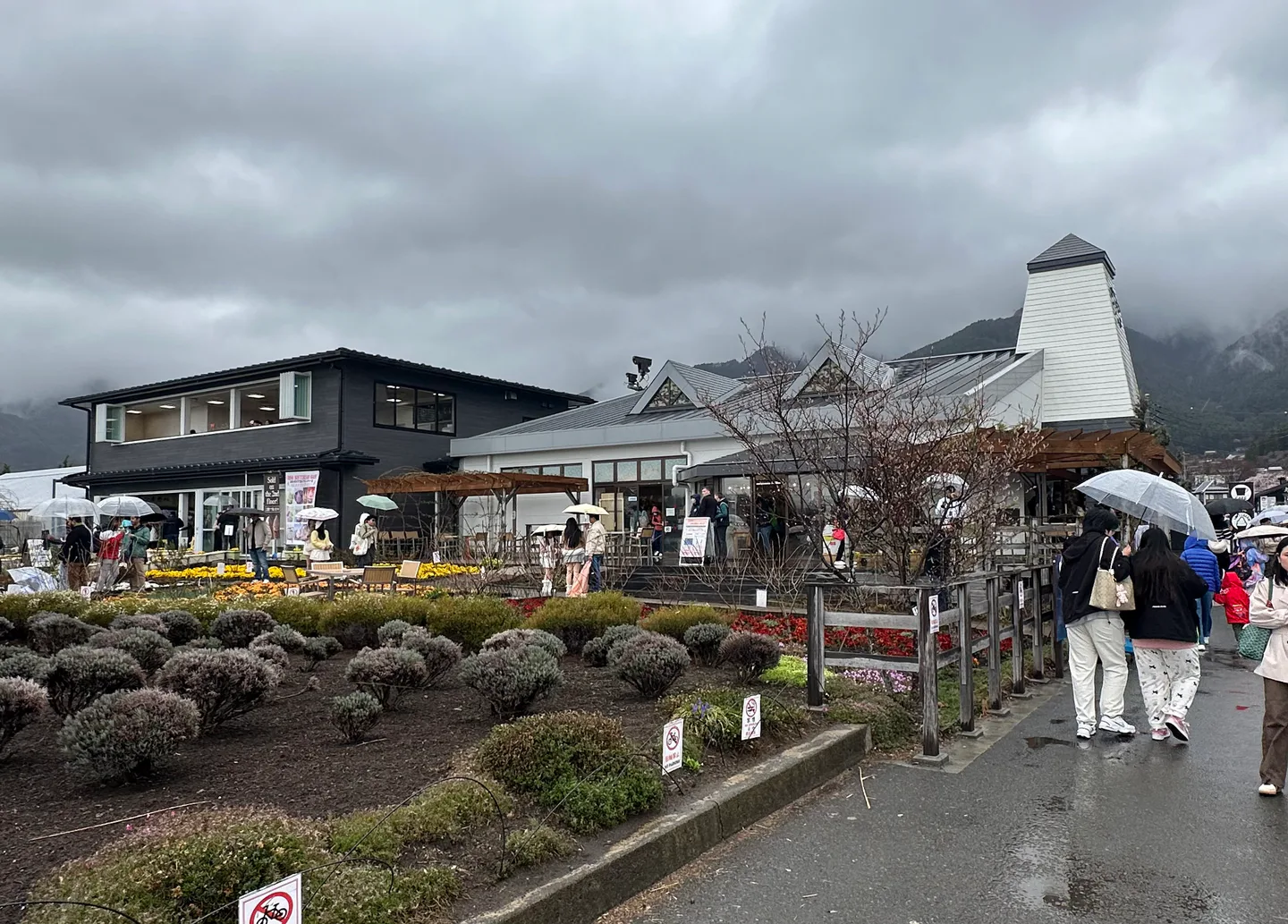
From Kawaguchiko Station, the Red Line is usually the simplest first move to Oishi Park. The bus boards at the station and its published trip to the Kawaguchiko Natural Living Center stop is about 27 minutes before traffic delays. The Oishi Park Line boat crosses the lake in about 15 minutes, but its Funatsu Pier is roughly a ten-minute walk from the station. Add the walk and the wait for the next sailing before calling the boat faster. If you are already at the ropeway and waterfront, that walk disappears and the calculation can reverse.
The more urgent distinction in late 2026 is the return. Through 31 October, the last Oishi-to-Funatsu sailing is 15:50; from 1 November 2026 to 31 March 2027, it is 14:50. The winter Funatsu-to-Oishi final also moves earlier, from 16:15 to 15:15. A boat ticket can give a scenic outward journey, but a late afternoon at the park needs a bus, hotel shuttle or another deliberate way back. The Kawaguchiko attractions and timing guide helps decide whether Oishi is the day’s destination or only one north-shore stop.
Where you start matters more than the vehicle’s top-line minutes
| Starting point or priority | Default choice | Main reason |
|---|---|---|
| Just arrived at Kawaguchiko Station | Red Line | Board without a station-to-pier luggage walk |
| Already beside Funatsu Pier or the ropeway | Boat if boarding is near | The lake crossing becomes the next leg rather than an extra transfer |
| Only Oishi Park and back | Compare two bus singles with boat options | A sightseeing pass may cost more than two ordinary rides |
| Museums, hotels and several north-shore stops | Red Line, with pass only if rides justify it | The bus is a network rather than only a direct crossing |
| Congested road and boat boarding soon | Boat outward, bus return | Avoid traffic on the outward leg without trusting the last boat home |
| Wind, poor visibility or service suspension | Red Line or a shorter day | The boat can be unavailable or lose its scenic purpose |
Neither service is a universal winner. The water route was introduced in July 2026 partly to diversify access to the busy north shore. It is a point-to-point shuttle between Funatsu and Oishi, not the older sightseeing cruise that returns to its starting pier. The Red Line links the station with the park and intermediate attractions. The Tokyo-to-Kawaguchiko train, highway bus and tour comparison should be settled first for day visitors: your arrival mode determines whether you begin at the station with bags or at a hotel and waterfront.
Two seasons, two last-boat rules
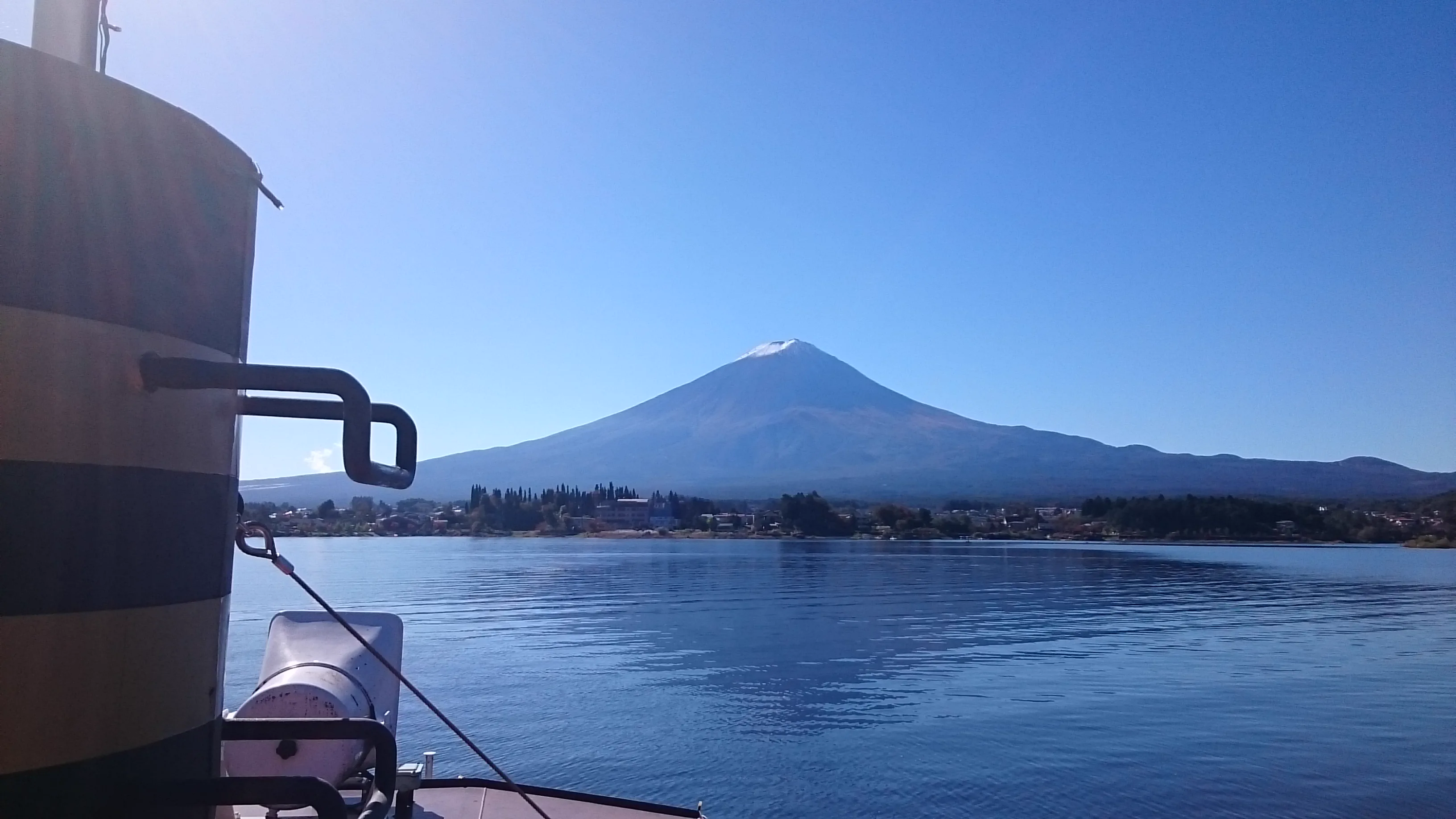
For 1 September through 31 October 2026, the operator lists the first Oishi departure at 09:20 and last at 15:50, with Funatsu departures from 09:45 through 16:15. Its 17 October winter notice changes the range from 1 November 2026 through 31 March 2027: Oishi 09:20 to 14:50 and Funatsu 09:45 to 15:15. The autumn-to-winter change takes a full hour from both last departures. A November foliage plan copied from an October timetable can therefore strand a boat-only return.
| Operating period | Oishi Pier to Funatsu Pier | Funatsu Pier to Oishi Pier |
|---|---|---|
| 1 Sep–31 Oct 2026 | First 09:20; last 15:50 | First 09:45; last 16:15 |
| 1 Nov 2026–31 Mar 2027 | First 09:20; last 14:50 | First 09:45; last 15:15 |
A sailing is a departure, not a promise that every visitor can arrive at its stated minute and board. Allow time for the pier and ticket process, and note that weather or operations can stop the service. The operator’s published route is approximately 15 minutes one way. That is useful for the lake crossing, but it is not the duration from Kawaguchiko Station to Oishi Park. For a Tokyo day trip, the Fuji day trip versus overnight comparison can show whether the real problem is trying to force too many lake stops inside one return deadline.
The station-to-pier walk is about ten minutes under a normal walking estimate. A passenger coming from Tokyo must add it to the next boat departure and 15-minute crossing. The Fuji Excursion ticket and sold-out alternatives matter if the train arrival is uncertain. Missing a scheduled sailing can dominate that equation. By contrast, the Red Line starts at the station, though queues and north-shore traffic may add time to its roughly 27-minute scheduled journey. On a quiet day with a bus boarding, the bus can reach the park sooner. On a congested weekend with a boat about to leave, water may win decisively.
Use a live comparison: time to reach Funatsu Pier plus next-boat wait plus crossing, versus bus queue plus its current road journey. Count arrival at the park, not departure from different points. This is particularly valuable after checking into a lakefront hotel, because the hotel may put you near Funatsu rather than the station. The Kawaguchiko hotel view and bath guide helps distinguish an actual waterfront base from a room whose address merely contains “Kawaguchiko”.
Fare arithmetic starts with the day, not a pass brochure
The boat operator currently lists a standard single fare of ¥1,000 per adult and ¥500 per elementary-school child. Its standard return fare is ¥1,800 adult or ¥900 child, less than buying two standard singles. Fujikyu Travel sells an advance one-way web ticket at ¥900 adult or ¥450 child for a specified day; the product can be used in either direction. Two advance singles total ¥1,800 adult, which matches the standard return fare. Do not call a discounted single ticket a discounted round trip without making that comparison.
The earlier route information placed a single Red Line station-to-Natural-Living-Center journey at ¥570 adult, making two rides ¥1,140. That is the useful price relationship to test at the bus stop; the current operator overview publishes the one-day pass at ¥1,500 and two-day pass at ¥2,000 but does not state every segment fare on its overview page. If the ¥570 sector fare applies on your travel date, two singles beat a ¥1,500 pass by ¥360. An additional bus ride can change that result. The Hakone versus Kawaguchiko first-trip comparison helps decide if the two-region route belongs in your trip. The Kawaguchiko and Hakone transport-pass comparison is relevant if the bus day is part of a wider two-region route.
| Adult transport pattern | Fare using listed amounts | Why it may fit |
|---|---|---|
| Bus station → Oishi → station, at ¥570 per sector | ¥1,140 | Lowest illustrated fare for only two bus rides, subject to date fare |
| One-day Red/Green/Blue bus pass | ¥1,500 | Additional eligible bus trips can overcome the ¥360 gap |
| Two-day Red/Green/Blue bus pass | ¥2,000 | Useful when both days really use the network |
| Boat standard return ticket | ¥1,800 | Pay for two scenic crossings without separate single tickets |
| Boat advance one-way + bus return at ¥570 | ¥1,470 | Water outward and flexible road return, subject to bus segment fare |
The hybrid example is striking: a ¥900 advance boat ticket and a ¥570 bus single total ¥1,470, close to the one-day bus pass. It gives two different routes rather than unlimited bus use, so its value depends on the day’s other stops. The boat is not automatically a cheap substitute for the bus. Its extra cost buys a lake crossing, a Fuji view when weather permits, and freedom from road congestion on that leg. A person moving among museums or north-shore hotels may gain more from the bus pass.
A water-out, road-back day is often the least fragile
If you are near Funatsu and the next sailing is convenient, take the boat to Oishi while there is daylight and time. Once at the park, do not let a return ticket pressure you to leave before the walk, flowers or mountain light you came to see. The Red Line can be the return plan after the last Oishi sailing, though its own final service and the queue must still be checked. A hotel shuttle may provide a different return if your room is on the north shore. The Kawaguchiko one-night-versus-two-night guide helps when you are trying to combine the park with a ropeway, museum and ryokan evening.
Bus out and boat back is possible, but it makes the closing hours central to the day. Through October, the Oishi final is 15:50; in winter, 14:50. If you wanted the Maple Corridor, late Fuji visibility or a lingering café stop, the boat return can remove those options. Only choose it when that exact sailing is already a deliberate part of the route. A Konansou versus La Vista Kawaguchiko autumn-night comparison may shift the return decision further if the hotel itself lies on a different shore or has a dinner deadline.
A Tokyo day trip needs an additional buffer. The question is not the last local Red Line alone; it is Oishi departure, possible road delay or bus queue, arrival at Kawaguchiko Station and the boarding margin for a reserved Tokyo-bound train or bus. If one museum threatens that chain, remove the museum rather than the return margin. The Tokyo-to-Kawaguchiko connection comparison and Tokyo–Kawaguchiko–Hakone three-day itinerary give different answers depending on whether you must leave the lake that evening.
The Red Line is a route, not merely a slower crossing
The bus serves Kawaguchiko Station and Oishi Park via north-shore places such as the Kawaguchiko Museum of Art and other hotel and museum stops. That network matters if Oishi is one of several stops. The station, north shore and Fuji-Yoshida lodging comparison explains why a hotel address changes which stops you use. A boat lands you at Oishi but does not give access to the intervening sites without another mode. Conversely, the water route bypasses traffic on its own crossing. The operator launched it partly to diversify access during periods when route buses are crowded; no fixed timetable can guarantee it will always board faster than a bus already in front of you.
With luggage, direct boarding at the station usually beats walking to Funatsu Pier and later reacquiring a bus. A crowded sightseeing bus is not a perfect place for large suitcases either, so confirmed hotel storage or bag delivery can make both options easier. The Kawaguchiko and Hakone luggage-transfer guide deals with this route specifically, while the Japan-wide luggage forwarding guide explains the wider storage and shipping choices. Decide where the bag sleeps before fine-tuning a 12-minute vehicle-time difference.
The Red, Green and Blue sightseeing bus lines cover different parts of the wider Fuji Five Lakes area under the current pass structure. That does not mean a one-day pass is required for a single Oishi return; it means a pass becomes more interesting when the same day includes several eligible movements. The things-to-do-in-Kawaguchiko guide helps select those stops. Count the journeys you would willingly take without a pass, then price the pass.
Peak foliage, families and weather change the connection
On a busy leaf weekend, use the next boardable service rather than comparing a nominal 15-minute crossing with a nominal 27-minute bus. The boat has finite departures and capacity; missing one can create a substantial wait. Buses can queue and road traffic can slow. If the boat is boarding now, it can bypass the road; if the bus is ready and the boat is an hour away, the bus may still be the quicker door-to-door choice. No advance preference should override the conditions directly in front of you.
Families, older travellers and wheelchair users need to count transfers and accessible routes, not only scenery. From the station, a direct bus can reduce the number of times a group regroups and moves bags. From the ropeway waterfront, a conveniently timed boat may be the simpler continuation because the pier approach is already complete. The specific pier, vessel and bus accessibility arrangements should be confirmed for the traveller’s mobility needs; this article’s walking estimates do not establish an accessible route.
Wind or poor conditions can suspend the boat, while cloud can remove the mountain view that made a water crossing attractive. Switch to the Red Line, shorten the north-shore plan or spend more time at a museum or onsen rather than waiting indefinitely. The Japan rainy-day itinerary choices are useful when the whole Fuji day is compromised. The Fuji overnight decision is the more important change if weather flexibility, not a different vehicle, is what the trip lacks. The Tokyo Fuji day-trip reality check addresses the same constraint if you cannot move your hotel night.
What about a ropeway, boat and bus bundle?
An older combination discussed an R Coupon covering a ropeway return, one lake cruise or Oishi Park Line journey, and a two-day sightseeing-bus pass. Its saving depended on using all three components; buying it only because the discount sounded attractive would have added an unwanted ropeway visit. The current bus overview prominently publishes the ¥1,500 and ¥2,000 bus passes but does not display that earlier R Coupon price or current availability. Treat any bundle offered at the counter as a new calculation: compare its live cost with the separate tickets you actually intend to use.
The arithmetic remains useful. A ropeway you would not otherwise take has zero itinerary value even if a bundle calls it “included”. A two-day pass has little value for a one-day station-to-Oishi return. If the ropeway, one water journey and a full two-day bus network are all independently in the plan, a package may save money. The Kawaguchiko attraction priorities can help determine those components before a ticket seller’s bundle defines the day.
Choose the connection you can make
At Kawaguchiko Station, start with the Red Line unless a nearby boat sailing makes the station-to-pier walk and wait worthwhile. At Funatsu Pier, the Oishi shuttle can turn transport into a useful lake view, provided it is operating and the next departure fits the day. For a late Oishi visit, especially from November through March, make the road return explicit: the winter last Oishi boat is 14:50, not the autumn 15:50.
The cheapest illustrated two-ride bus return is different from the most scenic route, and neither is automatically the best once other north-shore stops or a hotel are involved. Compare the fare that applies on your date, the next boardable service, luggage and the return deadline. If staying near the lake makes the plan easier, compare Kawaguchiko Station hotels with Oishi Park area rooms. The right bed can remove a final transfer more effectively than a different ticket.
Related Lake Kawaguchi reading
More destinations: Art Aquarium Nagoya, Yame Tea Experience:, Okinawa Private Boat, Otsuka Museum of, Haneda Airport Hotel.
More destinations: Four Adults in, NIFREL Isn’t a, Ghibli Park Tickets, Suzuka Circuit Park, Fukuoka Budget Hotels:.
More destinations: The Park Front, Fukuoka Tower: Is, Yamagata Castle Guide, Sapporo Summer Festival, Lake Kawaguchiko Bass.
Route and fare details: Oishi Park Line seasonal notices, boat fares and timetable, advance one-way boat ticket, Red, Green and Blue bus passes, bus operator route overview, the water route’s introduction and Fujikyu Travel ticket listings.