
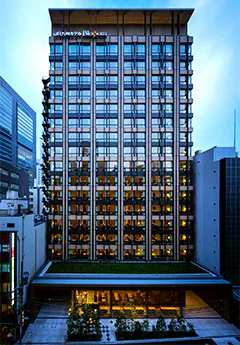
Shinjuku South Exit access is the hotel’s most useful feature.
JR Kyushu Hotel Blossom Shinjuku sits about three minutes on foot from JR Shinjuku South Exit and Busta Shinjuku, and about two minutes from Toei Shinjuku Station Exit 4. Those short final walks count when a late arrival, an early highway bus and repeated west-Tokyo returns all appear in one stay. Someone spending most days around Ueno, Asakusa or Tokyo Station may use the location much less often. See Shinjuku versus Ueno as a Tokyo base.
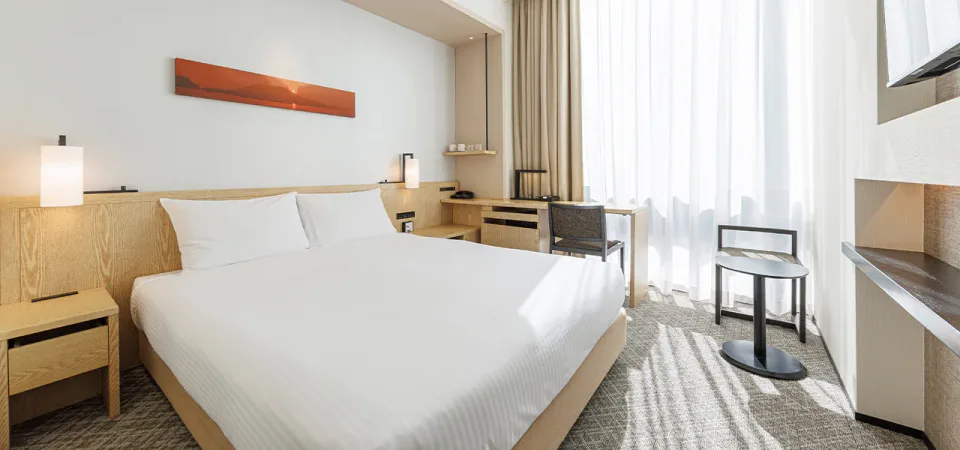
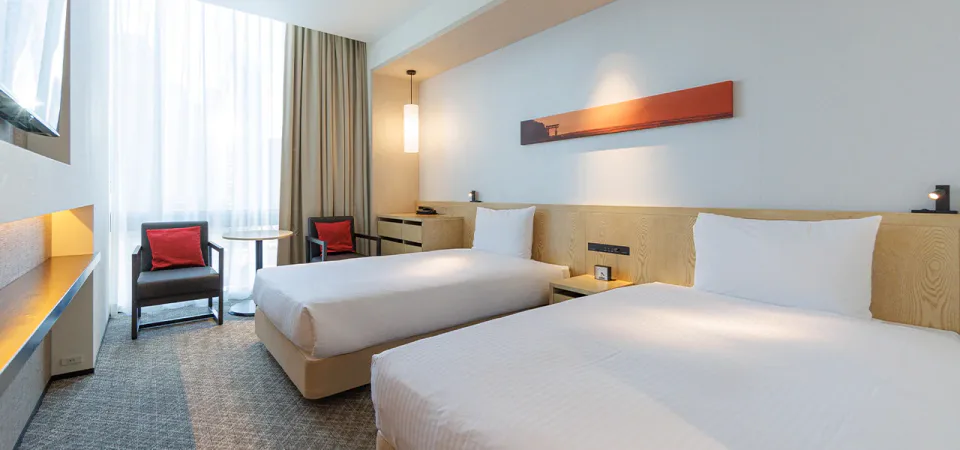
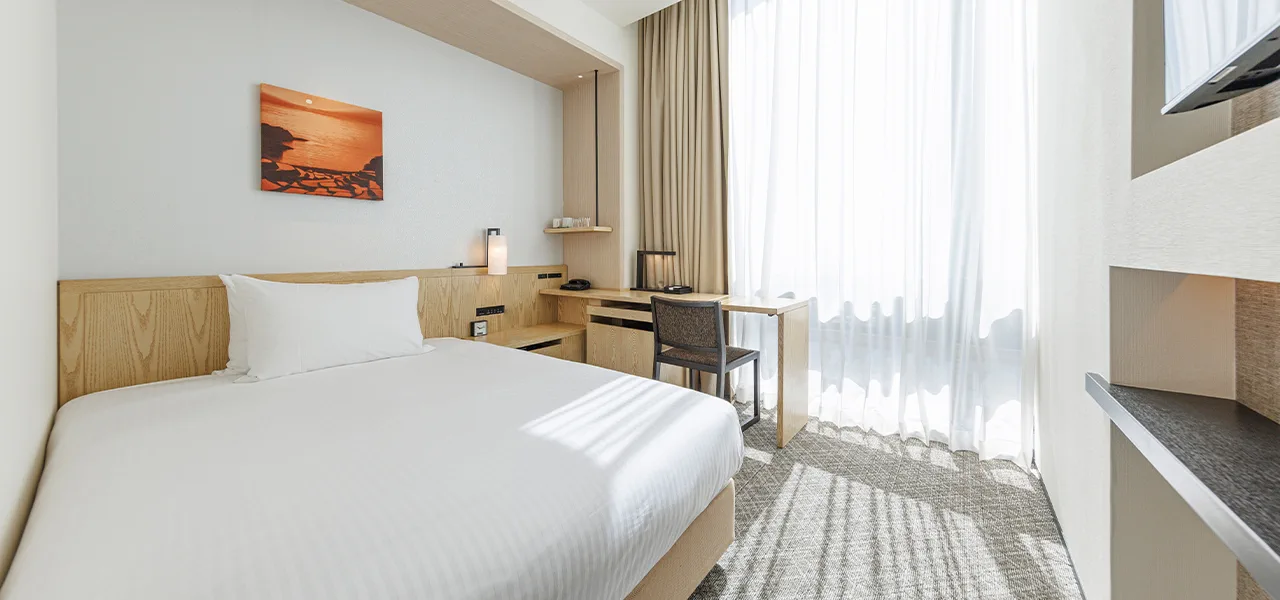
The room decision is separate. A Standard Double has 18 m² and a 140 cm bed; the Queen offers 19 m² and a 160 cm bed. Both sleep two, but the 25 m² Superior Twin offers a much larger area buffer and separate beds. For a couple with two large suitcases over several nights, compare the actual Twin premium before paying for the address in a smaller room.
When the South Exit address pays for itself
This hotel has a strong job on a bus-led Fuji or Hakone trip, or on a Tokyo stay that repeatedly ends at Shinjuku. It has a weaker job when the stay is mainly an east-Tokyo sightseeing base. Room area then becomes the more important comparison, particularly if two people expect to open cases and return with shopping each day. See Shinjuku or Tokyo Station for daily routes.
↔ Scroll table left or right
Choice | Travel pattern | Why |
Book | Solo or lightly packed pair; late arrival; repeated Busta use | The short South Exit street walk is useful more than once |
Compare room | Two people with large cases over at least three nights | Price 25 m² Twin against 18–19 m² entry rooms on identical terms |
Compare area | Mostly Ueno, Asakusa or Tokyo Station days | The Shinjuku advantage may seldom be used |
The six details most likely to affect a booking
Check-in begins at 14:00 and checkout is by 11:00. Published rooms span 18 to 38 m². Laundry runs around the clock on floors 6, 10 and 14; Akasaka Umaya Shinjuku serves breakfast 06:30–10:30, last entry 10:00, at ¥3,850 per adult. Those details have different value for a one-night bus departure and a five-night Tokyo base. See the hotel detail page.
↔ Scroll table left or right
Feature | Published detail | Travel consequence |
JR and bus | About three minutes from South Exit and Busta | Less street walking on late arrivals and early bus mornings |
Toei subway | About two minutes from Exit 4 | Useful for Shinjuku and Oedo line approaches |
Small rooms | Double 18 m²; Queen 19 m² | Efficient for one; test luggage needs for two |
Twin step | Superior Twin 25 m² | Seven square metres more than the Double |
Laundry | 24 hours on floors 6, 10 and 14 | A late wash can lighten a longer trip’s packing |
Breakfast | 06:30–10:30; ¥3,850 adult | Worth comparing with the morning’s actual departure |
Three minutes begins at the station exit
The advertised walk runs from JR Shinjuku South Exit or Busta Shinjuku to the hotel. It is not the time from a platform through the station. Large concourses, lift choices, crowds and the road crossing all come before the last outdoor stretch. Travellers new to Shinjuku should budget for those parts rather than use three minutes as a train-to-room estimate. See the hotel detail page.
An arrival around 22:30 followed by an early bus makes the final walk valuable twice, with luggage both times. An afternoon arrival and no fixed departure may not create the same return. A location premium should be supported by repeated movements on the route, not the map distance alone. See the Haneda late-arrival hotel choice.
For Lake Kawaguchiko or Hakone, compare the actual highway-bus and rail departure you intend to use. Hakone may mean a direct Romancecar to Hakone-Yumoto or a rail change at Odawara; the route and ticket you choose determine the departure point. A Shinjuku hotel helps most when that service really starts from the station or bus terminal nearest this address. See the related guide. See Tokyo to Kawaguchiko and Hakone routes.
A Fuji-facing itinerary also depends on the number of nights at Lake Kawaguchiko and the weather margin you allow there. Booking Shinjuku solely as a transit point can be unnecessary if the stay by the lake already handles that part of the trip.
Nikko is a different routing question. Asakusa, JR and Tobu services can change the better Tokyo base; a convenient Fuji bus departure does not settle the Nikko journey. See the related guide. See Nikko travel from Tokyo.
Fuji and luggage routes to compare
Lake Kawaguchi vs Hakone for Fuji views, onsen and transport
Luggage forwarding for Kawaguchiko and Hakone
The extra floor area of the Superior Twin has a job
The Standard Double pairs 18 m² with a 140 × 200 cm bed. The Standard Queen gains only one square metre but widens the bed to 160 × 200 cm. A 25 m² Superior Twin has two 120 × 200 cm beds, a larger table and a sofa. Those figures do not guarantee that any particular pair of 28-inch cases will lie open neatly, but the seven-metre gain over the Double is substantial. See the hotel detail page. See Hotel Gracery and this South Exit hotel.
The room images show layout and furniture; measure your own luggage rather than assuming a photographed clear floor can hold two open cases.
↔ Scroll table left or right
Room | Area and beds | Likely use | Key condition |
Standard Double | 18 m²; one 140 cm bed | Solo or light-packing short stay | Few floor-space demands |
Standard Queen | 19 m²; one 160 cm bed | Pair preferring one wider bed | Only 1 m² beyond the Double |
Superior Twin | 25 m²; two 120 cm beds | Two people with bags over several nights | Larger table, sofa and washing area |
Deluxe Twin | 30 m²; two 120 cm beds, paid extra bed available | Three travellers or a definite need for space | Confirm extra-bed setup and price |
Deluxe Hollywood Twin | 38 m²; two 120 cm beds, paid extra bed available | Two or three prioritising area | A larger-category purchase, not simply bed width |
Twin rooms have bathrooms with a separate washing area outside the tub. For two people who use the room between outings, that can matter along with the extra floor area. The 30 m² Deluxe Twin takes an added paid bed for a third guest; the 38 m² Deluxe Hollywood Twin also permits three with an extra bed. These larger categories solve specific sleeping or space needs rather than merely offering a nicer name.
A Fuji or Hakone side trip can sometimes be handled by forwarding the main suitcase and travelling with a smaller overnight bag. That may change whether an 18 m² Tokyo room is workable. See luggage on a Kawaguchiko–Hakone trip.
For a longer itinerary, decide where luggage will be collected before choosing a small room. Hotel-to-hotel forwarding can remove the biggest case from a portion of the stay, but its delivery schedule still needs to match the next hotel. See Japan hotel-to-hotel forwarding.
If room area is the main objective, compare an east-Tokyo apartment-style room such as KOKO HOTEL Residence Oshiage. Its 42 m²-plus accommodation is a different purchase from this hotel’s short South Exit walk. See KOKO Oshiage’s larger rooms.
Laundry and breakfast should earn their place in the rate
Three guest-floor laundry points are available 24 hours a day. On four or five Tokyo nights, a late wash may reduce the clothes that need packing and keep daylight hours free. On a single overnight, it should have little influence on the rate you accept. The lobby also has a self-service baggage space for hotel guests, useful when the room is not yet ready or after checkout. See the hotel detail page.
Breakfast costs ¥3,850 per adult under the April 2026 rate and runs from 06:30 until 10:30, with 10:00 last entry. It can simplify a departure after 08:00. If the highway bus leaves around 06:45 or you prefer a quick convenience-store stop, compare a room-only rate rather than paying for a buffet you will rush or miss. See the hotel detail page.
The 06:30 restaurant opening and all-day laundry serve very different schedules; check which one your stay can actually use.
A stay that repeatedly uses the terminal
Imagine an evening arrival, a hotel check-in around 18:30, dinner outside and a return around 22:00. On a four-night stay, washing clothes late avoids a sightseeing-hour chore. If the next morning also starts at Busta Shinjuku, the short street segment saves another luggage walk. This is the pattern where several modest hotel conveniences compound.
Change the itinerary to daily departures for Ueno and Asakusa with returns near 23:00. The guest now spends little time at the hotel and repeatedly crosses Tokyo. The short walk from the South Exit remains pleasant, but a better room or a base on the eastern side may return more value across the whole stay. See a five-to-seven-night Tokyo base decision.
Which Tokyo routes make this address useful?
↔ Scroll table left or right
Itinerary pattern | Hotel advantage | Remaining friction | Fit |
Fuji highway bus | Short Busta street walk | Locate the correct departure platform | Strong |
Hakone via Shinjuku | Odakyu and bus choices begin nearby | Specific service may require a change | Strong when that route is used |
West/central Tokyo days | Quick final walk on repeated returns | Shinjuku concourse can still be busy | Strong |
Ueno and Asakusa | Rail and subway links exist | Cross-city journeys repeat | Conditional |
Early Tokyo Station Shinkansen | JR connection available | A Tokyo Station base may simplify dawn travel | Conditional |
For an autumn stay, the position of Shinjuku Gyoen, Meiji Jingu Gaien and Rikugien on your actual sightseeing days is more revealing than the neighbourhood label. Several late east-side finishes weaken the repeated-South-Exit argument. See Shinjuku Gyoen and other autumn gardens.
An evening at Rikugien can finish near Komagome; the journey back to this hotel is different from a west-Tokyo dinner. Count those late returns when selecting a room and base. See the related guide. See Rikugien’s evening entry.
What the convenient address cannot supply
The entry rooms exchange floor area for station proximity. A lightly packed solo traveller may barely notice 18 m²; two people spreading open large cases each night may. If the 25 m² Twin costs only modestly more on the same dates and terms, its extra seven square metres can be a practical purchase rather than a luxury upgrade. See a similarly compact Akihabara room.
The address is on the Yoyogi side of Shinjuku. It serves the South Exit, Busta and Toei approaches particularly well, but it is not the closest side for every Kabukicho evening. A Narita-oriented Ueno stay or an early Shinkansen from Tokyo Station also creates a different station problem. Match the hotel to the exit used most often. See Gracery Shinjuku’s Kabukicho walk.
KOKO Residence Oshiage is a useful contrast if the comparison is compact Shinjuku room versus much larger accommodation on the eastern side. The trade is a longer journey to west-Tokyo departures for more living space.
Autumn peak dates can narrow the available room categories. A cancellable early hold makes sense only when its deadline and final room type remain suitable; do not let scarcity turn the 18 m² room into an automatic default. See the related guide. See autumn hotel cancellation decisions.
Price the same room and the same cancellation terms
Hold the dates, room category, bed arrangement, breakfast inclusion, tax treatment and cancellation deadline constant across sellers. A cheap Standard Double on one site and a 25 m² Superior Twin on another are not a platform price comparison. First decide which room you need, then compare the payable rate for that room. See Shinjuku versus Shibuya over five nights.
Compare rooms near Shinjuku South Exit See Compare stays by Shinjuku South Exit.
The 18 m² Double, 19 m² Queen and 25 m² Twin should be checked as separate products on the same travel dates.
A room-only rate deserves separate comparison when an early bus makes the hotel buffet unusable.
Seven site scores for the South Exit stay
These ratings out of ten assess this hotel as a base for repeated Shinjuku rail and bus days. Room, food and value depend on the category and travel times described here; cleanliness and service reflect current aggregated guest categories.
Dimension | Site score | Why this score fits Blossom Shinjuku |
|---|---|---|
Location | JR South Exit and Busta are roughly three minutes away once the correct station exit is reached. | |
Room | The 18–19 m² entry rooms save on the category price; the 25 m² Superior Twin gives two bags and two beds more workable space. | |
Cleanliness | The current aggregated guest cleanliness category sits around 9.2/10. | |
Service | Aggregated guest service is around 9.1/10; front-desk luggage storage supports transfer days. | |
Facilities | Coin laundry on three guest floors helps longer stays; the hotel has no guest public bath. | |
Food | The adult buffet is ¥3,850 from 06:30; early bus departures can erase its usefulness. | |
Value | The South Exit premium is easiest to defend when rail or highway-bus journeys recur and the chosen room suits the bags. | |
Overall | A strong transport-led Shinjuku base; quote the 25 m² Twin before committing two travellers to an entry room. |
The decision turns on repeated journeys and room use
For solo travellers, a light-packing couple or a trip built around Busta and west-side Tokyo departures, the South Exit location can do repeated work. For two guests staying longer with larger bags, the 25 m² Superior Twin should be priced before accepting the smaller categories. If most days begin and end in eastern Tokyo, this address may have little chance to earn its premium. See a larger south-Shinjuku alternative.
↔ Scroll table left or right
Stay factor | Assessment with evidence |
Station approach | Strong for JR South Exit and Busta: both are about three minutes from the exit or terminal. |
Itinerary fit | Strong on repeated west-side or highway-bus days; conditional for Ueno, Asakusa and Tokyo Station. |
Entry-room space | Limited for two large cases: the Double is 18 m² and the Queen 19 m². |
Twin upgrade | Meaningful: 25 m², two 120 cm beds, larger table, sofa and separate washing area. |
Family or triple fit | Conditional: Deluxe Twin or Hollywood Twin takes a paid extra bed for a third guest. |
Long-stay facilities | Useful: coin laundry runs 24 hours on three guest floors, with lobby baggage space. |
Breakfast value | Schedule-dependent: ¥3,850 adult buffet from 06:30, last entry at 10:00. |
Practical booking questions
How long is the walk from the right Shinjuku exit?
The stated three-minute walk begins at the JR South Exit or Busta Shinjuku. Moving from the rail platform, finding lifts or escalators and crossing the busy interchange take additional time. The Toei Exit 4 approach is stated at roughly two minutes from that exit.
What changes between the Double, Queen and Twin?
One extra square metre and a wider bed distinguish the 19 m² Queen from the 18 m² Double. The 25 m² Twin offers separate 120 cm beds, more area and a bathroom washing space. Two large cases may still require careful placement; the hotel does not publish a suitcase-clearance guarantee. See a Shinjuku room with laundry.
Can laundry be done after sightseeing?
Laundry machines are available on three guest floors. Breakfast at Akasaka Umaya Shinjuku is a separate morning choice; a 06:30 opening cannot serve a guest who must already be at the bus terminal.
Yes. Coin-operated machines on floors 6, 10 and 14 are available 24 hours. This is most useful for a multi-night stay when carrying fewer clothes actually reduces luggage. The separate first-floor guest baggage space can hold belongings outside the room, subject to the hotel’s use rules.
Will breakfast fit an early departure?
Service starts at 06:30 and ends at 10:30; entry stops at 10:00. The adult buffet price is ¥3,850. A breakfast-inclusive rate needs to be compared with the departure time, especially for a bus that leaves soon after the restaurant opens.
When can the room be used?
Check-in begins at 14:00 and checkout is 11:00. For an arrival well after the normal reception period, use the late-arrival instructions on your reservation or contact the hotel. The published times alone do not describe every booking condition.
Related transport and hotel comparisons
Tokyo to Lake Kawaguchi and Hakone: trains, buses and travel passes compared
KOKO HOTEL Residence Tokyo Oshiage: 42m²+ rooms and the east-Tokyo trade-off
Shinjuku Gyoen vs Meiji Jingu Gaien vs Rikugien for Tokyo autumn colors
More Tokyo base choices
Japan autumn luggage forwarding: hotels, lockers and mountain overnight bags
Tokyo to Nikko autumn leaves: trains, passes, day trips and overnight
Lake Kawaguchi vs Hakone for autumn leaves, Fuji views and transport
Room rates and cancellation deadlines depend on the selected date and product. Compare them after fixing the room category.
Further JapanLayer hotel comparisons are listed below. See the related guide. See the related guide. See the related guide. See the related guide. See the related guide. See the related guide. See the related guide. See the related guide. See the related guide.
Other hotel and rail guides
MUWA Niseko Review: When Is Ski-in/Ski-out Worth the Premium?
Mitsui Garden Hotel Osaka Premier Review: Is Nakanoshima Worth the Trade-off?
Keio Plaza Hotel Sapporo: Is a 33.2 m² Twin Worth the Winter Walk?
JR Kyushu Rail Pass 2026: Is the Northern Kyushu Pass Worth It?
Hotel Gracery Shinjuku vs JR Kyushu Blossom Shinjuku: Kabukicho or South Exit?