
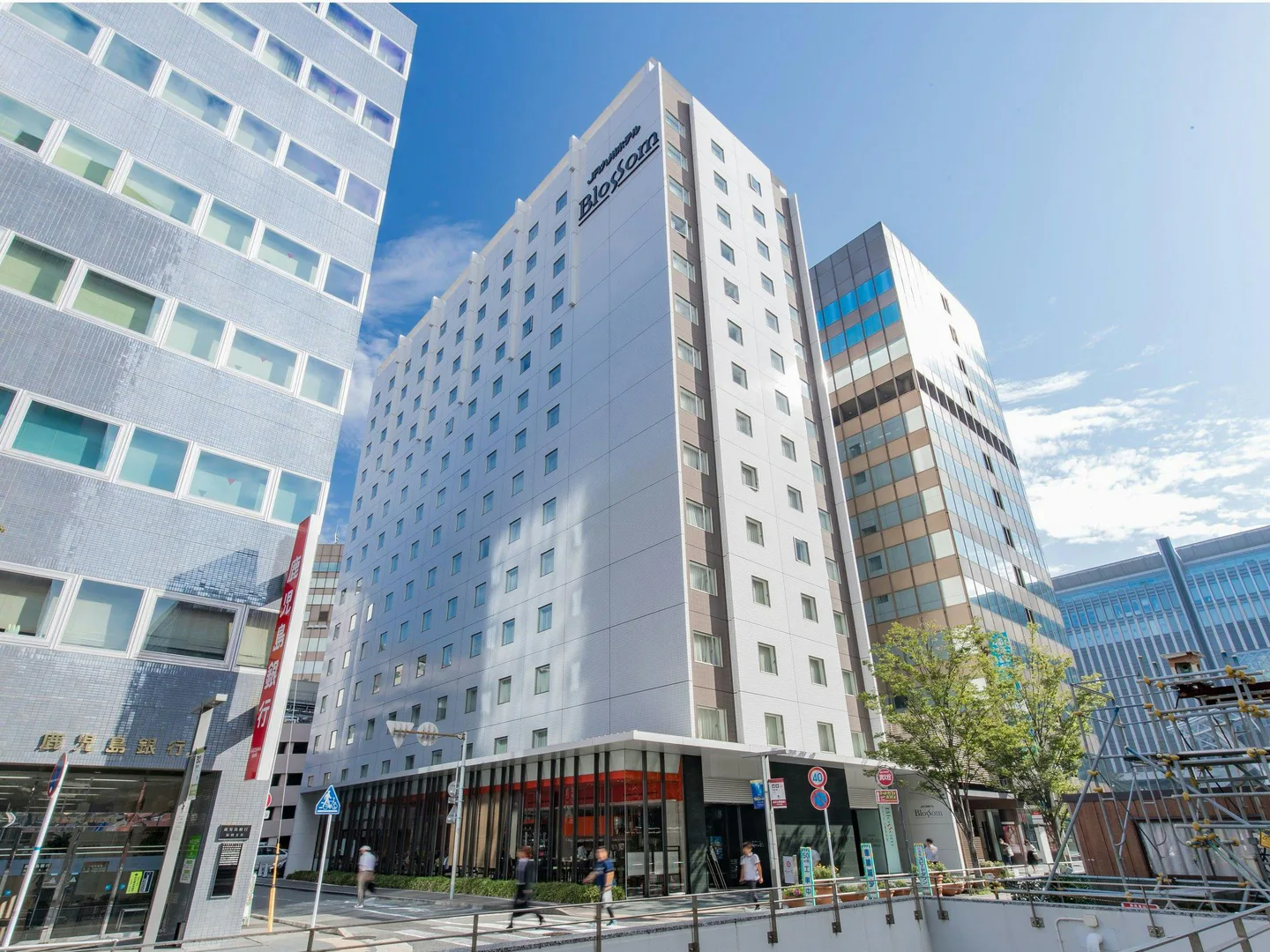
Miyako Hotel Hakata and JR KYUSHU HOTEL Blossom Hakata Chuo are both close enough to Hakata Station that a map can make the difference look trivial. The actual distinction appears when you reach the right side of the station. Miyako connects to the subway concourse through East Exit 7 on the Chikushi side; Blossom is across the station on the Hakata Exit side, about two minutes on foot from that exit. One removes much of the last outdoor stretch. The other gives you an easy station walk without making you pay for a spa hotel.
For a single rail night, I would start the comparison with Blossom's 25 m² Superior Twin. It has room for two proper beds and luggage, a 14:00 check-in, breakfast from 06:30 and laundry available around the clock. Miyako earns its premium when several of its advantages will be used on the same stay: the sheltered arrival, a 30–31 m² Superior Twin, Spa Lucida and a 12:00 checkout. The gap between the actual refundable, like-for-like rates matters more than a permanent rule about which hotel is “better.”
↔ Scroll table left or right
What your stay looks like | Likely stronger fit | Why the answer could change |
One night before an early train | Blossom Hakata Chuo | A close Hakata Exit walk, earlier breakfast and 14:00 room access do the work; a small Miyako rate gap or difficult arrival may reverse it |
Rain, two large cases and repeated station use | Miyako Hotel Hakata | Subway East Exit 7 joins the B1 entrance, but the JR platform-to-concourse walk remains |
Four nights with time in the room and two planned spa visits | Miyako Hotel Hakata | Its extra floor area, spa and later checkout have several chances to matter; Blossom can still win if laundry is the recurring need |
Multi-city Kyushu trip with washing to do | Blossom Hakata Chuo | Coin laundries run 24 hours on three floors; confirm machine availability when you need it |
Family returning after 19:00 for the outdoor spa | Recheck Miyako's value | The outdoor area is adults-only from 19:00; the indoor bath has different rules and later hours |
The station has two sides, and each hotel uses a different one
Miyako is on the Chikushi side. From the subway, follow East Exit 7 to the hotel's B1 entrance without emerging on the street. From the JR or Shinkansen Chikushi Exit, the hotel's train access diagram shows a walk of about one minute. These are different starting points: “direct” refers to the subway link, not a private corridor from every train platform. You still have to navigate the station and reach the correct exit with your bags. The Fukuoka rainy-day hotel comparison puts that last segment in context.
Blossom Hakata Chuo is on the Hakata Exit side. Its station route describes a roughly two-minute surface walk from the Hakata Exit. For airport subway arrivals it also points to West Exit 19, which has an elevator, and West Exit 18, a stairs-only exit adjacent to the hotel that operates from 07:00 to 22:00. This is a useful correction to the simple image of “Miyako indoors, Blossom outdoors”: the appropriate subway exit and whether you need an elevator change the last few minutes. It is still sensible to expect some street exposure at Blossom, especially with luggage. The late-arrival hotel guide deals with the airport-to-room sequence before you choose a restaurant.
One light bag on a dry afternoon makes the difference small. Two cases in heavy rain after a flight make Miyako's sheltered final approach more valuable. A stay with several Shinkansen days can multiply that value, but Blossom remains exceptionally close to the station; the comparison is between a sheltered connection and a short walk, not between a station hotel and a remote property. If this is your last night before a flight rather than a rail-focused stay, the Hakata or Tenjin last-night comparison should come before a room upgrade.
Two twin rooms that should set the price comparison
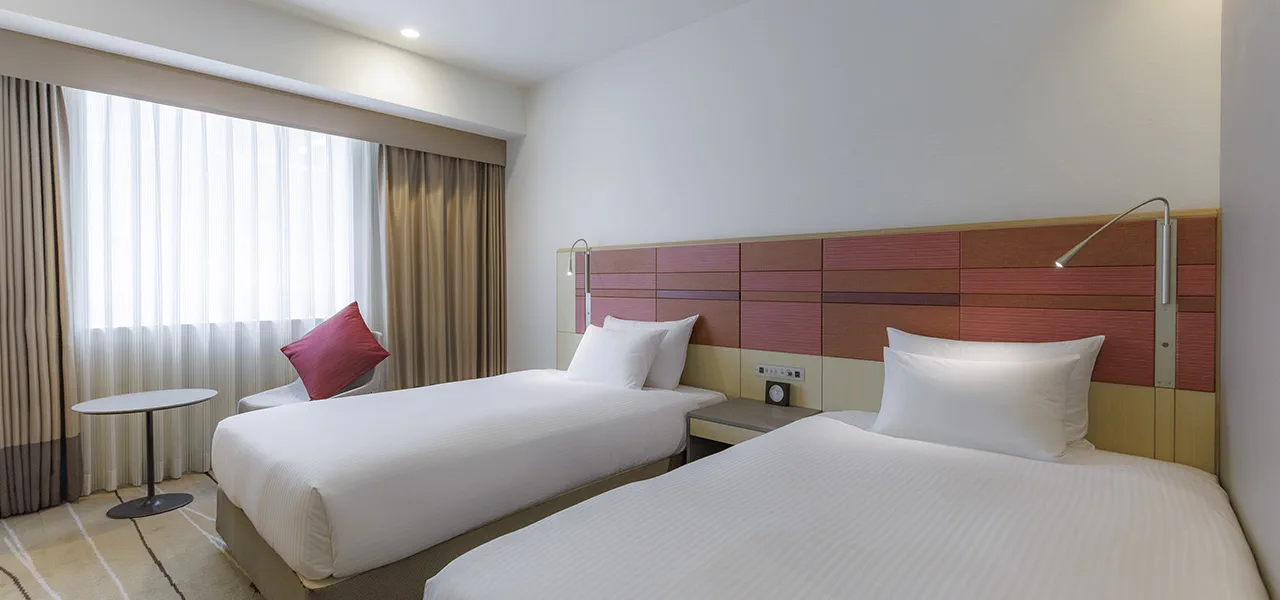
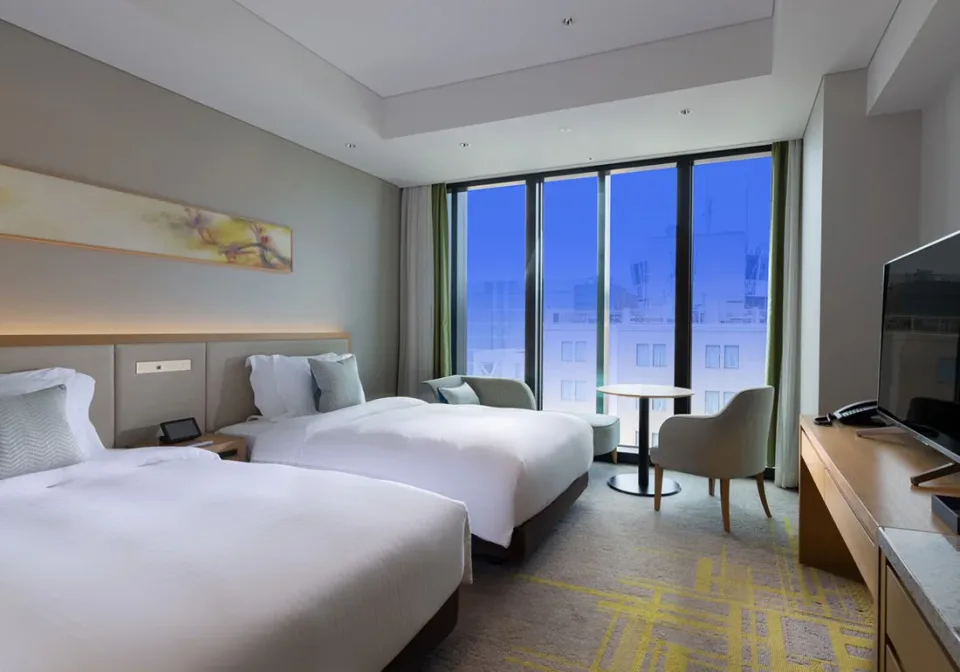
Miyako's Superior Twin measures 30–31 m². Blossom's Superior Twin is 25 m² with two 120 cm beds. That published difference of 5–6 m² amounts to roughly 20–24% more floor area at Miyako. You will feel it most if both travellers keep large cases open, accumulate shopping or return to the room between trips. For a late check-in followed by an early departure, the extra area has few useful hours. Room photographs help with layout, but square metres alone do not prove how easily two bags can be opened in a particular room.
Blossom's 25 m² twin should not be treated as a tiny compromise. Its room specifications describe a genuine two-bed room. The 29 m² Deluxe Twin is an important third quote: it can take up to three guests with a pull-out bed. Compare that room with Miyako's Superior Twin if the main reason for paying more is floor space. Three adults should check the actual bedding and rate, rather than assuming a larger two-person Miyako category solves occupancy. The dedicated Blossom Hakata Chuo room guide deals with that hotel's room choice in more detail, while the three-or-four-adult Fukuoka hotel guide compares the one-room decision.
↔ Scroll table left or right
Room or room feature | Miyako Hotel Hakata | Blossom Hakata Chuo | Booking consequence |
Comparable two-person twin | Superior Twin, 30–31 m² | Superior Twin, 25 m², two 120 cm beds | Compare these before looking at entry-level headline rates |
Larger Blossom alternative | Miyako's Superior remains 30–31 m² | Deluxe Twin, 29 m², up to three guests with pull-out bed | Check the real rate and bedding when space is the reason for switching hotels |
Long-stay utility | More room area for cases and shopping | 24-hour coin laundries on floors 5, 11 and 12 | Decide whether floor space or washing will be used more often |
Room time | Later 12:00 checkout | Earlier 14:00 check-in | Arrival and departure dates can matter more than average room size |
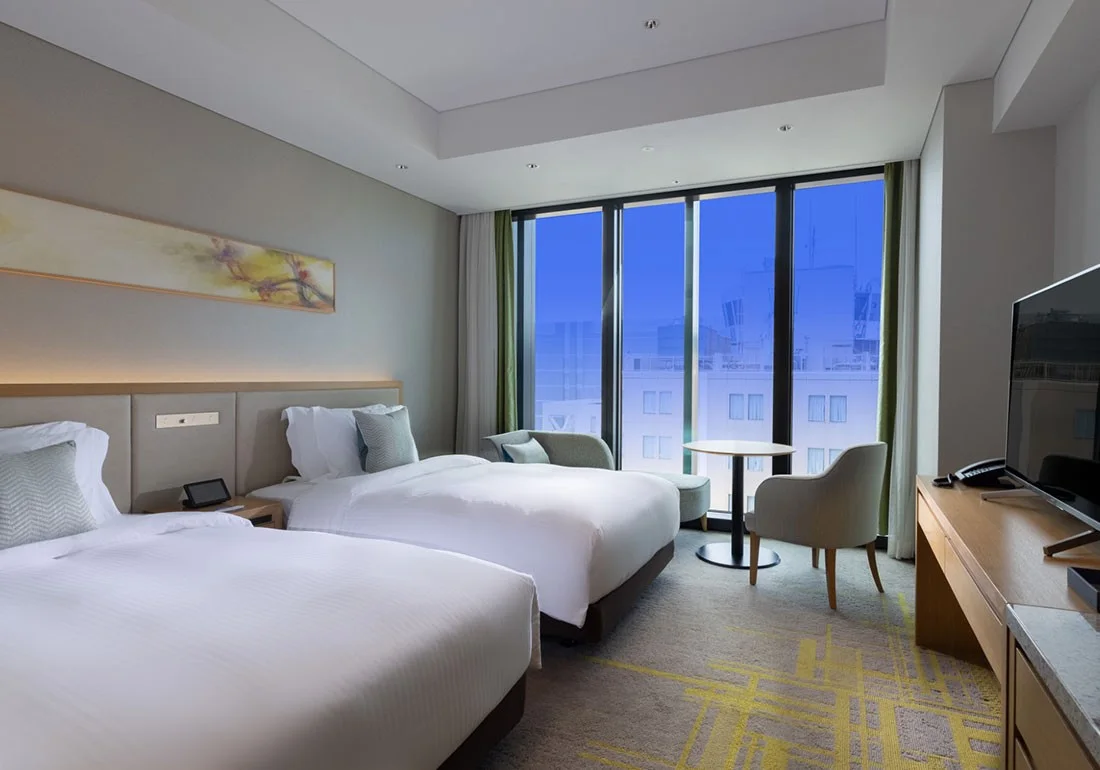
Miyako also publishes larger Deluxe and Luxury tiers. Buy one only for a named use, such as a longer stay with luggage open or substantial daytime room time. A larger floor plan does little for a pair who leave at 08:00 and return late every day. The Fukuoka shopping hotel guide offers another way to value room access when the bags, rather than sleep, dominate the afternoon. If laundry is the recurring constraint, Fukuoka's long-stay hotel guide gives that question its own weight.
Spa Lucida has a clock and an age rule
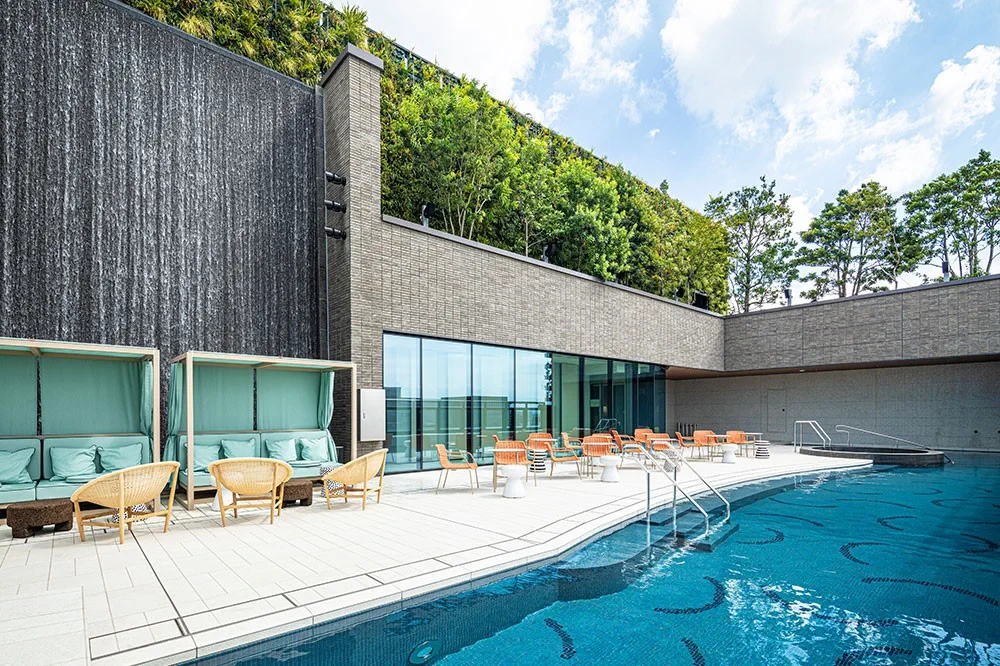
Miyako's 13th-floor Spa Lucida is the clearest feature Blossom does not match. The outdoor spa hours are 06:30–12:00 and 14:00–23:00; the indoor bath runs 06:30–12:00 and 14:00–24:00. Guests can use the facilities without an extra admission charge under the hotel's current terms. A realistic evening-and-next-morning pair of visits can make the hotel feel different from an ordinary station base. A traveller who is out until midnight each night has paid for a feature they are unlikely to use.
The outdoor area admits adults aged 18 or older from 19:00. Earlier outdoor use by children is subject to the hotel's height and supervision rules: the main pool requires 120 cm height, while the smaller pool has different conditions. The indoor bath has its own child rules. This matters for a family planning to return from sightseeing after dinner. Miyako can still suit the adults, but do not count a late outdoor family swim as part of the room's value. The Fukuoka family hotel guide and parents' hotel guide help separate facility appeal from daily movement and bathroom needs.
The spa closes between its morning and afternoon sessions. A mid-afternoon check-in does not necessarily turn into an immediate swim. Build any spa visit around the operating windows, dinner and who in the group may enter. If it contributes nothing to the actual schedule, strip it out of Miyako's price case. A Miyako versus THE BLOSSOM HAKATA Premier comparison is more useful if a public bath is desirable but direct subway access is optional.
Blossom owns the arrival; Miyako owns the departure
Blossom's published check-in is 14:00 and checkout 11:00. Miyako checks guests in from 15:00 and checks them out at 12:00. An arrival around lunchtime with bags and an afternoon appointment favours Blossom's extra hour of room access. A late train on the final day, or a slow morning after a long evening, makes Miyako's noon checkout more useful. Neither published hour is a promise that an early arrival can enter a room before the stated time.
At Blossom, the coin laundries on floors 5, 11 and 12 operate 24 hours. That is a concrete long-stay advantage after several cities or a rainy day. Machine availability at a particular moment is still a practical constraint. Miyako's extra room space may ease unpacking, but it does not replace a washing machine. On a Kyushu rail circuit, count how many days you will actually wash clothing; the five-or-seven-day Kyushu route shows why some visitors barely pause in Fukuoka while others use it as a recurring base.
Breakfast has a similarly clear timetable. Blossom's buffet runs 06:30–10:00, last entry 09:30, with the current hotel-guest adult price ¥2,200. Miyako's buffet runs 07:00–10:30, last entry 10:00, at ¥3,500 per adult. The earlier, cheaper Blossom meal is more workable before a morning train. Miyako pairs a later start with its noon checkout when breakfast can be part of a relaxed hotel morning. A genuinely early departure may make either buffet poor value; the Fukuoka breakfast choices show alternatives to booking breakfast every day. A Yufuin transfer or a Northern Kyushu rail pass itinerary can make the 30-minute start difference meaningful.
↔ Scroll table left or right
Daily friction | Miyako | Blossom Hakata Chuo | Which traveller benefits |
Check-in | 15:00 | 14:00 | Blossom helps a mid-afternoon arrival unpack sooner |
Checkout | 12:00 | 11:00 | Miyako gives a slow final morning one more room hour |
Breakfast | 07:00–10:30, last entry 10:00, ¥3,500 adult | 06:30–10:00, last entry 09:30, ¥2,200 hotel-guest adult | Blossom fits an earlier train and lower breakfast spend |
Laundry | Check the room and service terms for your rate | Coin laundries 24 hours on floors 5, 11 and 12 | Blossom is simpler when washing is part of the route |
Seven site scores for the Hakata station pair
The comparison assumes two adults pricing named twin rooms on the same dates. Miyako's 30–31 m² room and Spa Lucida serve a different stay from Blossom's 25 m² Twin, earlier check-in and shared laundry. Family occupancy or an accessible-route need may change the marks.
Dimension | Miyako /10 | Blossom Chuo /10 | Why the scores differ |
|---|---|---|---|
Location | Miyako links to the Chikushi-side station exit, while Blossom has a short Hakata Exit surface walk and an elevator route at West Exit 19. | ||
Room | Miyako's 30–31 m² standard twin gives more unpacking space than Blossom's 25 m² Superior Twin; Blossom also has a 29 m² Deluxe option. | ||
Cleanliness | Current aggregated cleanliness categories are about 9.5/10 at Miyako and 8.9/10 at Blossom. | ||
Service | Current aggregated staff categories are about 9.5/10 at Miyako and 9.1/10 at Blossom. | ||
Facilities | Spa Lucida is Miyako's distinguishing hotel facility, while Blossom supplies practical 24-hour shared laundry on three floors. | ||
Food | Blossom's breakfast opens at 06:30 and costs ¥2,200 for hotel guests; Miyako opens at 07:00 at ¥3,500 per adult. | ||
Value | Miyako's premium needs the larger room, bath or later noon checkout; Blossom can win a rail-focused bed-and-breakfast stay. | ||
Overall | Both can work beside Hakata Station; the deciding cost is whether the larger room and spa will be used repeatedly. |
The /10 marks use published access, room, spa, meal and checkout conditions. Cleanliness and Service refer to aggregated guest categories. A spa visit is only value if the chosen rate and the party's ages and hours permit it. The Hakata Station hotel comparison broadens the shortlist if neither room price is convincing; Hotel Forza near the Chikushi side is a smaller-room alternative when station convenience is the main purchase.

One night and four nights lead to different answers
For one transit night, Blossom has the simpler case. A two-minute walk from Hakata Exit, earlier access to the room, an early buffet if wanted and a 25 m² twin cover the main jobs. Miyako can still win if the rate gap is small, the weather or mobility makes the outdoor segment costly, or the pair will use Spa Lucida on both sides of the night. Booking Miyako solely because the map says “direct” is weaker when you arrive once, sleep and leave.
For two or three nights, count station crossings and actual hotel time. A day trip out and back through Hakata, a Shinkansen movement and an airport transfer can make the Miyako approach useful repeatedly. If most days instead start in the city and end around Tenjin or Nakasu, the connection is used much less. The Fukuoka three-day itinerary helps locate those movements, while the transport-pass guide helps count which journeys really use Hakata. If you return from Nakasu dinner and a riverfront evening rather than a train, the hotel district itself may deserve a second look. A smaller room at THE LIVELY near Nakasu-Kawabata or a larger room at HOTEL RESOL TRINITY HAKATA then solves a different problem: walking home after dinner instead of reaching a morning train.
For four or five nights, Miyako's extra floor area can change how the room functions as suitcases and shopping accumulate. Blossom's laundry becomes more useful over the same period. An afternoon room break adds weight to space and checkout; a schedule of early starts and late returns gives those luxuries fewer usable hours. The Fukuoka food-trip base guide asks where your evenings finish, which can matter more than either hotel's station proximity.
The three-use test can keep a moving nightly price from dominating the reasoning. Count a sheltered arrival with difficult luggage, repeated station passes, genuine use of the extra room space, a feasible spa session and a meaningful noon checkout. Three separate uses make Miyako's premium easier to explain. One or none usually favours Blossom if its room standard works. This is a planning judgment, not a hotel policy or a promise about the rate you will find.
Book the room and rate you will actually use
Compare Miyako Superior Twin with Blossom Superior Twin first, then add Blossom's 29 m² Deluxe Twin if area is the decisive factor. Hold the dates, number of guests, taxes, breakfast and cancellation flexibility constant. A cheaper non-refundable room does not answer the same question as a flexible rate; a breakfast-inclusive price should not be compared with room-only. Avoid a fixed “Miyako is worth 20% more” rule, because demand and the usefulness of each feature change by trip.
If the group includes a child, check the spa's 19:00 adult rule and the room occupancy before treating Miyako as a family-pool purchase. If a parent needs fewer outdoor steps, compare the actual station exit and elevator route, not just the hotel's straight-line distance. For a station stay driven by rain and access, Fukuoka's hotel-area decision guide can prevent an expensive room from solving the wrong problem.
Compare Hakata Station rooms for your dates. The available rate and the precise bed configuration may settle a close choice. If both stationside prices look excessive, compare THE BLOSSOM HAKATA Premier's larger twin and public bath or decide first whether the Hakata versus Tenjin base fits your evenings.
Miyako is easiest to justify when the station link, larger room, spa and later checkout all have work to do on the same trip. Blossom is a strong default for an early-moving rail stay, with a capable 25 m² twin and better breakfast and laundry timing. The booking decision should follow the route and room you will use, not the prestige of a facility you may never enter.