
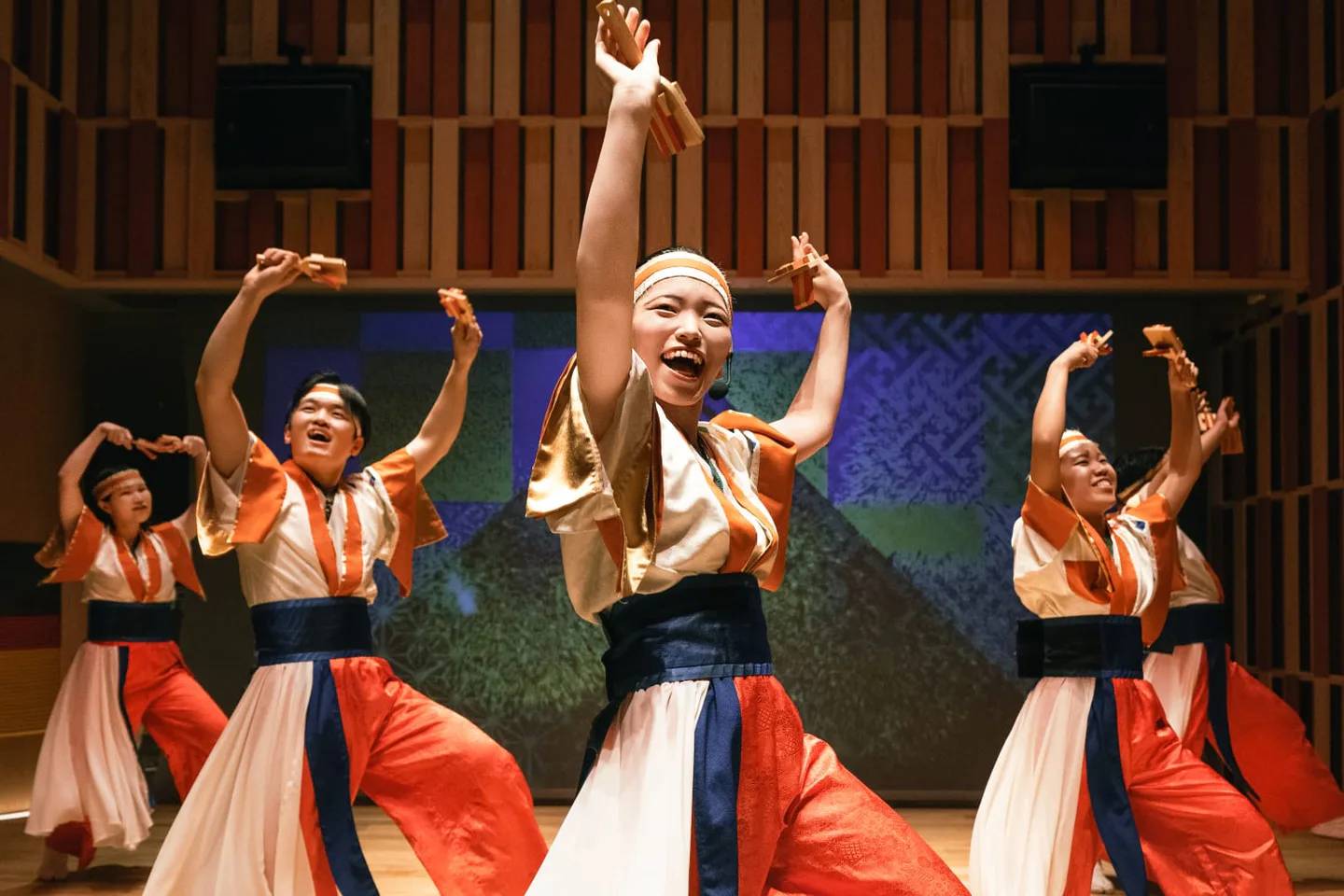
OMO7 Kochi earns its room rate during the hours after sightseeing. The nightly Yosakoi performance starts at 21:00, the hotel's Okyaku introduction begins around 17:00, and the guest bath can be used late or early the next morning. Those are useful reasons to stay only if your own timetable brings you back to the building. A one-night rail traveller arriving late and leaving early may get little beyond a bed that is not next to JR Kochi Station.
The five usable windows to count are Okyaku, hotel dinner, the Yosakoi show, bath time and breakfast. If three fit, there is a strong reason to compare OMO7 seriously. If only one fits, put a station hotel back into the comparison. This is a planning rule for the room premium, not a claim that a guest must buy every hotel meal.
The comparison is therefore about the shape of the evening. If you want to eat at Hirome Market, follow the real August Yosakoi Festival or continue to a bar, the hotel show and dinner will be competing with that city time. If you want a structured introduction to Kochi culture outside festival week, the scheduled performance can give a city night an ending that a station hotel does not. Count the experiences you can actually attend before paying more for the brand.
↔ Scroll table left or right
Your Kochi stay | OMO7 is stronger when… | A station-side hotel is stronger when… |
One rail-connected night | You will be back by 21:00 and use the show or bath | You arrive late or need an early train with large luggage |
First visit outside festival dates | A short Yosakoi encounter matters to you | You intend to spend the whole evening outside |
Three or four travellers | The 40 m² or 52 m² shared room fits the group | Separate bathrooms and sleep privacy matter more than common space |
Festival week | You want a predictable indoor hotel performance too | The actual city festival keeps you out past 21:00 |
Self-drive stop | The car can remain parked overnight | You need access to the garage between 22:00 and 07:00 |
The station transfer is the cost paid before any hotel experience
OMO7 Kochi is around four minutes on foot from Saenbacho tram stop. From JR Kochi Station, the hotel's route information shows about ten minutes on the tram via Harimaya Bridge plus that walk, or about five minutes by taxi. The Kochi Ryoma Airport bus can stop near Saenbacho, followed by roughly three minutes on foot. These are workable connections for a city stay, but the hotel currently lists no shuttle. It should never be described as a station hotel with a free pickup.
A carry-on bag and dry weather make the tram transfer feel minor. Several large cases, a stroller or an older companion can make a short taxi the more sensible last leg. That taxi does not erase the issue for an early JR departure: you still need to arrange and time the extra move. If Kochi is one leg of a longer route, work through the four-day Shikoku no-car itinerary before choosing the room. A good hotel cannot compensate for repeatedly returning to the wrong rail hub.
The location is more attractive if you will use the tram and explore central Kochi rather than treat the building as an overnight interchange. The Kochi Yosakoi hotel-area guide separates station access, city evenings and the Saenbacho position. If your dinner will be at Hirome Market, the lunch-versus-dinner market guide helps decide which night should belong to the city. An OMO7 booking can work with either plan, but the hotel’s scheduled value falls when most of the evening is spent elsewhere.
The 21:00 performance is a real benefit with a hard time
Yosakoi Rakuen LIVE begins at 21:00 in the OMO Base grand staircase area. The current hotel activity description presents it as a roughly 30-minute guest-only performance, free to attend and without a required reservation. Staff dance with naruko clappers, and guests can join rather than simply watching a lobby screen. Seasonal music or presentation details can change, so do not build the trip around a particular choreography.
Outside the August festival, the show is OMO7's clearest differentiator. A visitor can see Kochi Castle, eat dinner, return and still encounter a compact Yosakoi performance before bed. The hotel also introduces Okyaku hospitality culture around 17:00, a separate earlier commitment. It is easy to list both as amenities; it is harder to use both if the day trip or restaurant runs late. The Kochi katsuo tataki comparison is useful when dinner or a cooking experience is competing for that afternoon slot.
The hotel show is not a substitute for the real Yosakoi Festival. The 2026 festival ran August 9–12, with the main competition August 10–11 and many city venues active into the evening. During those dates, a guest who came for the large outdoor event may be away at 21:00. The festival-day comparison and venue guide are the better planning tools for that trip. A hotel show can still be welcome during festival week, but count it only if the real schedule puts you in the building.
Travellers comparing festivals across Japan should distinguish this hotel-scale show from the crowd logistics of a street event. The summer-festival comparison explains where Yosakoi fits alongside Nebuta and Awa Odori. If the trip also includes Tokushima, the Awa Odori hotel-area choices matter independently of where you sleep in Kochi; a room near one festival will not simplify the other city's late-night exit.
The room solves group space, but not every group problem
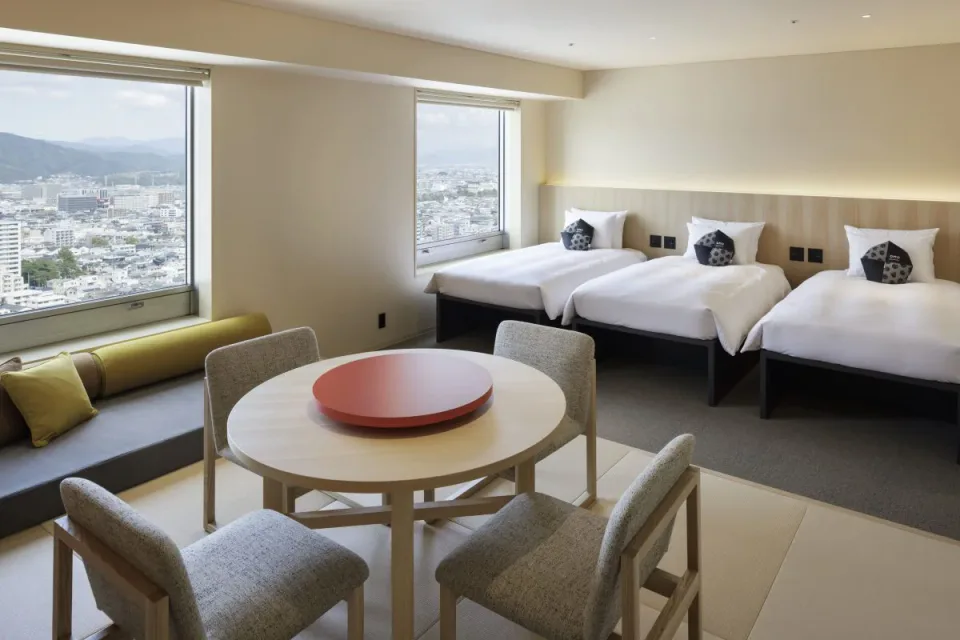
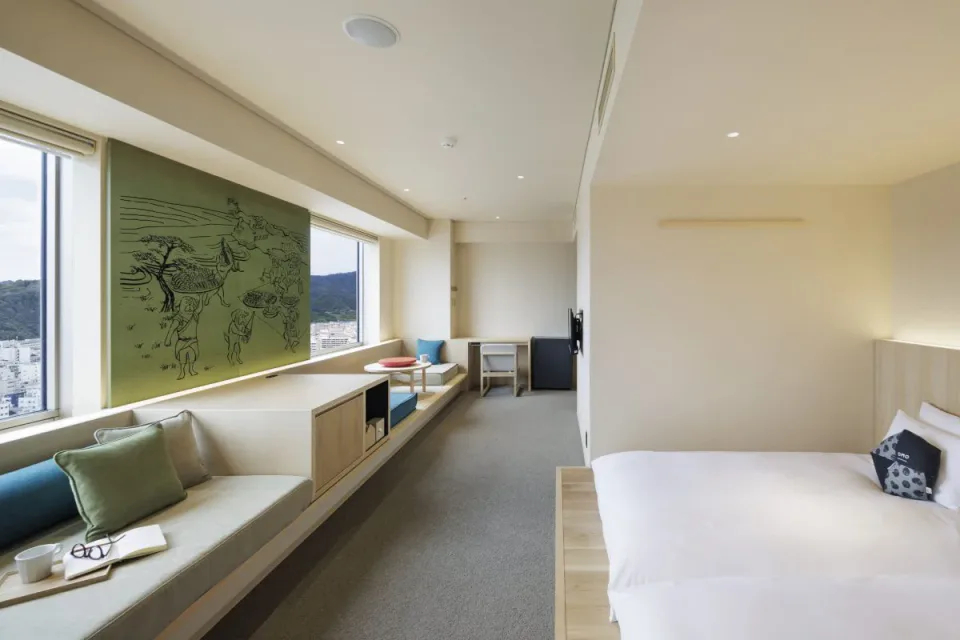
Current OMO7 Kochi room inventory reaches four guests. The Utage Semi-Suite is listed at 40 m² for up to three; the Utage Suite is 52 m² for up to four. Hoshino's property information highlights a shared living area and sofa arrangement in the Semi-Suite, while the larger Suite has a raised tatami-style living space and storage under the beds. Those features are functional when several people need a place to sit, open cases and regroup after a day out. The 52 m² figure should not be read as permission to put five or six people in one room.
For four adults, price the 52 m² Suite against two two-person rooms on the same date, with the same meal and cancellation terms. One larger room may be attractive for friends who want common space; two rooms offer more privacy and independent bathroom use. A family with children has a different calculation again, including bed sharing and sleep times. The four-to-six-person hotel-room comparison is from another city but clarifies why floor area alone does not settle the one-room-versus-two question. For a Shikoku itinerary with a late arrival, the larger room's living space may be barely used at all.
The original article challenged older descriptions of five- or six-person OMO7 Kochi rooms. That caution still matters: do not rely on a legacy room label or a photo to exceed current published occupancy. Search the actual dates and guest ages. If no valid single room appears for the party, plan two rooms rather than assuming staff can override the live capacity. The Shikoku autumn route can also determine whether the party needs one long Kochi stay or only a short transfer night.
Tosa-no-Yu is a public bath, not hot-spring water
The guest-only Tosa-no-Yu has indoor and open-air baths, cold bath, sauna and a relaxation area. The bath information is clear that it is not a natural onsen. If mineral spring water is the reason for paying more, OMO7 cannot satisfy that particular requirement. If what you want is a large bathing and sauna session after walking around Kochi, the facility can still have practical value.
Hours are currently 15:00–01:00 and 05:00–10:00. A guest could use the bath after the 21:00 performance or before breakfast, giving one night two possible windows. Do not automatically count both as value: a traveller who dislikes communal bathing or must be on an early train may use neither. Families should also read the rules. Children in nappies use a baby bath rather than the main tubs, and the hotel limits opposite-sex parent-child bathing by age.
This is one of the seven dimensions in the hotel judgment below. The bath is strong as a facility and weaker as a reason to pay an onsen premium. The distinction matters when comparing this room with a simpler Kochi hotel or with an actual hot-spring night elsewhere in Shikoku. The Takamatsu versus Matsuyama base guide helps if the larger itinerary, rather than this one Kochi night, is where a bath-focused stay belongs.
Breakfast only helps a morning that is still free
OMO Dining currently serves breakfast from 07:00 to 10:00. The walk-in reference is ¥3,300 for adults and children aged seven or older, ¥1,500 for ages four to six, and free for ages zero to three. The hotel's dining information lists ¥3,000 for adults and children seven or older when breakfast is included in the applicable room plan. Check the actual package before assuming that price difference applies to an add-on made later.
Breakfast is useful when it makes a family or driving morning predictable. It has less value if the Sunday Market or a local café is your reason to leave early, or if the train forces departure before the room's meal window is usable. The menu draws on Kochi food, including bonito and yuzu elements, but an included buffet is not automatically the best food experience of a Kochi trip. The Hirome timing guide can help avoid paying for two meals that compete for the same appetite.
Dinner is a separate decision. The buffet currently runs 18:00–20:30 with reservations required and an adult reference price of ¥6,000. It can make a coherent sequence: hotel dinner, 21:00 Yosakoi and bath. It can also displace the restaurants and drinking culture that brought you to Kochi in the first place. A one-night stay should not pay for the hotel restaurant and then rush out to duplicate it. The straw-grilled katsuo guide helps decide whether a city food evening has stronger value for you.
The car park has an overnight lockout
The hotel lists 103 parking spaces at ¥1,000 per night, allocated first come, first served without a reservation. The decisive rule is that cars cannot enter or leave the garage from 22:00 to 07:00. A driver returning after a night outside or leaving before seven must solve that restriction before booking, rather than treating “parking available” as the end of the question. The access page says that full capacity may mean a nearby paid lot, which is a different arrangement to verify.
If the vehicle will simply sit while you explore Kochi by tram, the lockout may not matter. If an early scenic drive or a late festival pickup is part of the plan, it can be a hard veto unless another parking option with suitable access is confirmed. The Shikoku no-car route is useful for testing whether a car is needed on the Kochi segment at all. A hotel should fit the route you actually drive, not the route implied by an amenity icon.
One night versus two changes what you can use
On one night, OMO7 works best when the hotel gets a meaningful evening. A possible sequence is arrival by late afternoon, the Okyaku session or bath, a chosen dinner, the 21:00 show, then sleep and either bath or breakfast before departure. Each activity must be optional rather than a compulsory checklist. If arrival is after 21:00 and the next train is at dawn, the room's distinctive facilities contribute very little while the Saenbacho-to-station transfer remains.
Two nights allow one evening for Hirome Market, bars or the city and another for the hotel programme. The bath, OMO Base and larger room also have more usable hours across the stay. Festival week is the exception to easy hotel-time logic: two nights may be essential for the real Yosakoi, yet its long outdoor evenings can still keep the guest away from the hotel performance. The Kochi accessibility and low-walking festival plan helps a group decide where its scarce evening energy should go.
Luggage can be made easier without pretending a shuttle exists. The hotel's itinerary information describes self-service lockers for pre-check-in and post-checkout city time, and it accepts certain luggage sent ahead under its conditions. A traveller changing cities can send a large bag and use a small one on the rail leg, but must check exclusions and labelling. If the next morning is a hard rail connection, work back from JR Kochi Station. The Shikoku four-day route makes that sequence visible.
For a longer Shikoku holiday, the next base can alter how much Kochi hotel time you can use. A ferry morning out of Takamatsu makes the Takamatsu Station versus Kawaramachi stay decision more relevant than a second Kochi night. The Naoshima day-trip timing also shows why a remote island segment should not be squeezed after a late hotel show. If festival evenings are the main goal, Koenji Awa Odori's route and exit guide offers a useful contrast in how much crowd movement an outdoor dance event demands.
Seven grounded dimensions for the booking decision
↔ Scroll table left or right
Dimension | OMO7 Kochi's actual strength | What reduces its value |
Access | Saenbacho tram and airport-bus stops are a short walk | JR Kochi Station still needs tram or taxi, with no hotel shuttle |
Evening location | City tram position supports a Kochi stay | A guest spending the whole evening at Hirome or festival venues may miss hotel programming |
Room practicality | 40 m² three-person and 52 m² four-person suites offer common space | One bathroom, privacy and current four-person ceiling can favour two rooms |
Family fit | Shared suite and a free guest performance may appeal | Bath rules, late 21:00 show and transport with bags still need checking |
Bath | Guest-only indoor/outdoor baths and sauna with late and early sessions | The water is not a natural onsen and some groups will not use communal bathing |
Dining | Buffet dinner and breakfast can simplify a hotel-focused night | ¥6,000 adult dinner and ¥3,300 walk-in adult breakfast compete with city food |
Value for the stay | Strong when at least two timed hotel experiences fit | Weak on a late-arrival, early-departure one-night rail stop |
Seven site scores for a Kochi evening at the hotel
Dimension | Site score | Basis for the mark |
|---|---|---|
Location | Saenbacho tram and airport-bus stops help city access, but JR Kochi Station still needs another leg. | |
Room | The 40 m² three-person and 52 m² four-person choices add common space; one bathroom may still constrain a group. | |
Cleanliness | The current aggregated guest cleanliness category is around 9.0/10. | |
Service | The aggregated staff category is around 8.9/10, and the hotel runs a nightly guest performance. | |
Facilities | Tosa-no-Yu has indoor and outdoor baths plus sauna, while the 21:00 show adds a timed reason to return. | |
Food | Breakfast and dinner buffets are substantial options, though the published adult meal charges need adding to the room rate. | |
Value | The rate makes more sense when a group room and at least two hotel sessions are used, less on a rail stopover. | |
Overall | Strong for a Kochi night deliberately spent at the hotel; weaker when the station or festival owns the schedule. |
These /10 site scores describe an itinerary that leaves time for the show, bath or breakfast. Cleanliness and Service draw on aggregated guest categories; the other dimensions use the hotel’s room, transport, meal and facility terms. The price premium should be assessed against a station hotel's total cost on the same dates. For a city itinerary with a short hotel stay, Kochi hotel-area comparison can be more consequential than another amenity list.
Choose OMO7 when the evening and part of the morning belong to the hotel, or when its current suite inventory solves a real three- or four-person room problem. Start with a station hotel when Kochi is only a transport stop, the outdoor festival will keep you away until late, the bath is irrelevant or the parking lockout conflicts with the drive. To compare the Saenbacho area with station-side rooms for your dates, use the Kochi accommodation map. Put the 21:00 show, the chosen meal and the next departure on the calendar before treating any of them as room value.