
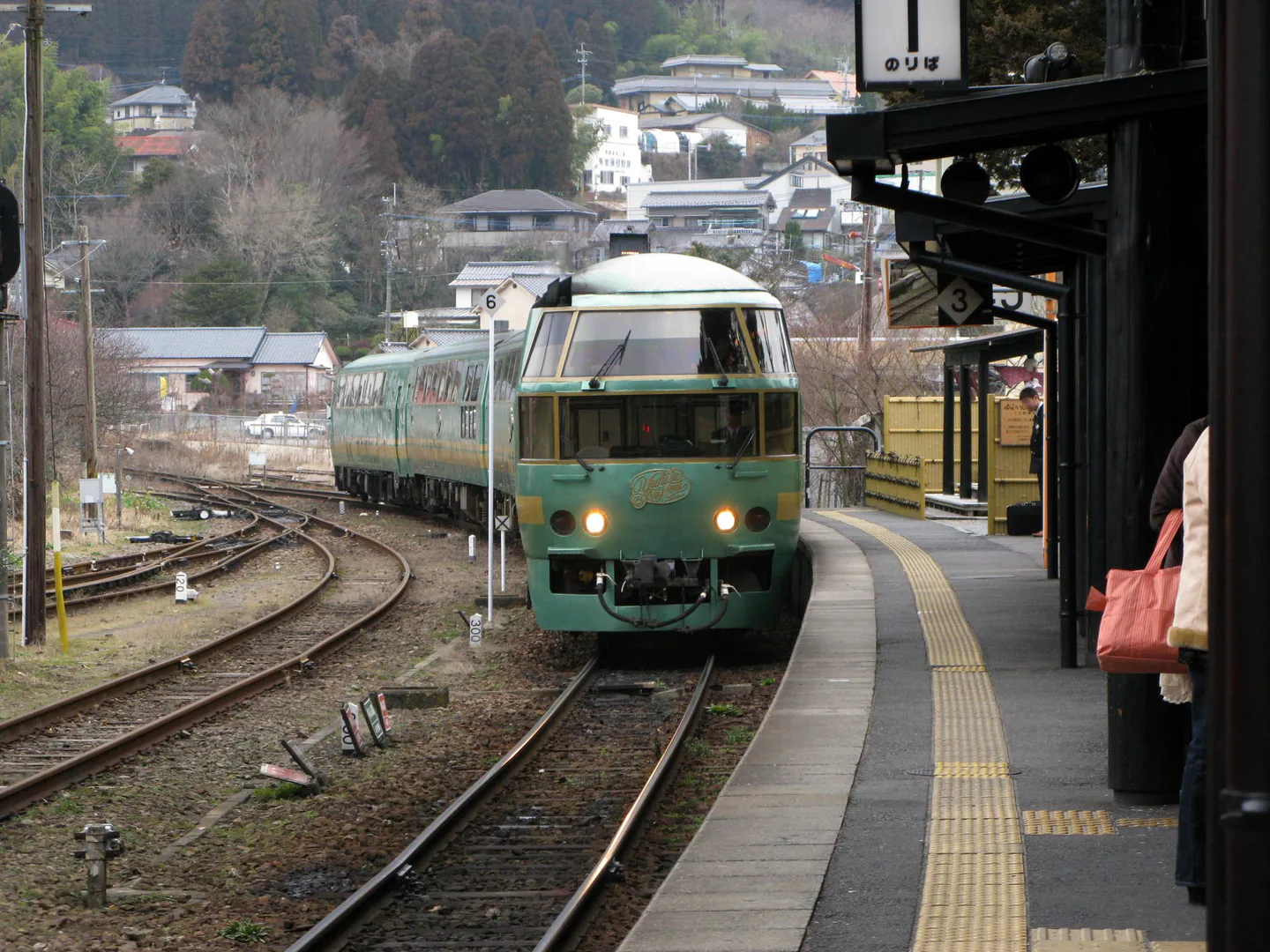
A Northern Kyushu Rail Pass can look cheap beside full walk-up train fares. It often looks expensive beside the discounted tickets a traveller can actually buy. A single return from Hakata to Yufuin, Beppu, Nagasaki or Kumamoto rarely recovers the ¥14,000 online three-day price. Two substantial JR journeys inside the same three calendar days are a different calculation.
The first step is to write down the journeys you already intend to make, with travel dates and trains. Price those as individual tickets under conditions you can meet, including advance-purchase deadlines. Then compare the total with the pass purchase channel you would use. Do not add a destination merely to make the pass appear profitable; that changes the holiday, not the ticket arithmetic.
↔ Scroll table left or right
Route from Hakata | Current individual-ticket benchmark for an adult | What a return suggests against a ¥14,000 pass |
Yufuin by Sonic to Oita, then local train | ¥4,300 each way on the Yufuin discount ticket; ¥8,600 return | Tickets usually win by ¥5,400 |
Yufuin on Yufuin no Mori | ¥5,600 each way on the listed online ticket; ¥11,200 return | Tickets still undercut the pass by ¥2,800 |
Beppu or Oita | ¥3,500 each way on a listed net fare; Early 3 can be ¥2,950 | Approximately ¥5,900–7,000 return when qualifying seats exist |
Nagasaki | ¥4,500 each way on the Kamome net ticket; ¥9,000 return | One return remains below the pass |
Kumamoto | ¥3,900–4,800 each way on the dynamic Early 7 product | A return is roughly ¥7,800–9,600 when the product is available |
Nagasaki return plus Kumamoto return | About ¥16,800–18,600 at those examples | The three-day pass can save about ¥2,800–4,600 |
These are listed products and a worked comparison, not a promise of inventory for every train. The Kumamoto Early 7 requires purchase within its seven-day deadline and has limited availability. The Beppu Early 3 has a three-day deadline and tighter change terms. If those products cannot be bought for your date, replace them with the fare you can buy; if they are available, ignoring them gives the pass an artificial advantage. A five- or seven-day Kyushu route is useful for establishing which long sectors belong in the trip before assigning a pass.
The ticket price has two versions
The Northern Kyushu product page lists ¥14,000 for three days and ¥16,000 for five days through JR Kyushu Rail Pass Online Booking. A station or travel-agency purchase is ¥15,000 or ¥17,000. Children aged 6–11 pay half the corresponding adult price. The ¥1,000 sales-channel difference matters near the break-even line: the same journey total can support an online pass but not a station purchase.
Both passes run on consecutive calendar days. They are not 72 or 120 hours from first use. An evening arrival followed only by a Fukuoka City Subway ride to the hotel is a weak reason to start a three-day pass. The subway is outside the pass anyway. Fukuoka's subway, JR and Nishitetsu comparison separates those networks before you begin adding fares.
The pass is intended for eligible international visitors on short-stay sightseeing trips. It covers qualifying JR Kyushu local, rapid, limited-express, sightseeing and Shinkansen services within its northern area. It does not turn every line on a Kyushu map into a JR journey. Eligibility and the actual station or train matter as much as the broad geography. If your route is mostly Hakata, Tenjin and Dazaifu, the Dazaifu versus Itoshima day-trip choice may be useful, but neither day becomes a strong Northern Kyushu Pass argument just by being outside central Fukuoka.
Four single-destination returns fail the fare test
The renewed Yufuin ticket is ¥4,300 one way for travel from July 2026 through March 2027. It uses a limited express such as Sonic between Hakata and Oita, then a local train to Yufuin. A return at that published price is ¥8,600, leaving ¥5,400 between the journey and a three-day online pass. The route through Oita differs from riding Yufuin no Mori, so it is a price alternative only when arriving in Yufuin matters more than that particular train. Fukuoka to Yufuin by train, bus or car helps settle the mode before comparing pass prices.
For Yufuin no Mori itself, the train's listed Hakata–Yufuin net ticket is ¥5,600 one way. Two seats at that rate are ¥11,200 for one adult making a return, still ¥2,800 below the online pass. The pass starts to matter if other eligible rail journeys fit the same dates. A choice between an extra Fukuoka or Yufuin night should therefore be made for the stay, not to manufacture a second rail journey.
For Beppu and Oita, the revised online fare table gives a benchmark that is ¥3,500 one way. The Early 3 fare can reach ¥2,950 under its conditions. Even the higher of those examples makes a ¥7,000 return. Beppu's two-day route may justify an overnight and extra sightseeing; the attraction days themselves do not spend a JR pass. If the question is whether the nights belong in Beppu or Yufuin, decide it before trying to fill pass-validity days.
Nagasaki is a longer rail journey, yet the Kamome net ticket is ¥4,500 from Hakata in each direction. One return therefore totals ¥9,000 at that rate. The Hakata–Kumamoto Early 7 ranges from ¥3,900 to ¥4,800 one way and changes by train, demand and booking time, making an example return ¥7,800–9,600. Neither single return clears ¥14,000. Nagasaki as a day trip or overnight and a Kumamoto/Aso overnight choice may change where you sleep, but one distant city is still only one return in this fare test.
Two long returns can cross the threshold
Put Nagasaki and Kumamoto returns into the same three consecutive days from a Fukuoka base. At the published examples above, the individual fares total roughly ¥16,800–18,600. A ¥14,000 online pass then leads by approximately ¥2,800–4,600, before any other eligible JR rides. That is a meaningful margin; it is not a pile of cheap local hops added to force the answer.
The arithmetic remains conditional. The Kumamoto Early 7 is dynamic and must still be available for the chosen trains. If its lower end has sold out, the ticket total rises and the pass may strengthen. If your Nagasaki journey is a bus or you skip Kumamoto, the pass case collapses. A Fukuoka, Hita, Yufuin and Beppu three-day plan offers another test of how much of a multi-stop route is actually on JR, rather than assumed to be.
The same discipline applies to travel across more than one city. Write each eligible JR sector once, on its travel day. Leave out subway rides, Nishitetsu services, highway buses, ferries and rental-car days. Kyushu autumn by road or public transport can expose the mountain sections where a pass will not carry you. The Kyushu Odan Bus route is a specific example: a geographic line across the region is not automatically an eligible JR line.
Five days cost ¥2,000 more, but may contain no extra trains
The online five-day pass is ¥16,000. Once three days of rail already justify ¥14,000, extending the pass is sensible if days four and five contain more than ¥2,000 of JR travel you would otherwise buy, or enough useful flexibility to warrant the difference. JR Kyushu has listed Hakata–Saga around ¥1,300 each way on a net-ticket example; a Saga return can be approximately ¥2,600, clearing the ¥2,000 extension price by about ¥600. Confirm that fare for the actual train before using it in a budget.
A Fukuoka shopping day contributes no such fare. A Dazaifu day on Nishitetsu, a Kurokawa Onsen bus, or a day in a hired car contributes none either. Five holiday days do not imply five JR days. Fukuoka's three-day first-visit route is useful precisely because its city and day-trip blocks are not interchangeable with rail-pass-valid intercity journeys. On a longer trip, Kyushu lodging and transport choices should set the order before you select three or five consecutive pass dates.
↔ Scroll table left or right
Pass decision after you price actual tickets | What to compare |
Three days versus separate fares | Sum only the eligible JR rides within those three calendar dates |
Five days versus three days | Add the JR travel you would buy on days four and five; compare with ¥2,000 |
Online versus station purchase | Add ¥1,000 if you cannot use the lower online channel |
Flexibility premium | State which alternate train, return time or extra eligible ride is realistically valuable |
Sightseeing train with a fixed seat | Verify date and seat inventory independently of pass cost |
A pass is no substitute for a reserved Yufuin no Mori seat
Yufuin no Mori is an all-reserved sightseeing train. Holding a pass does not produce a seat on a sold-out departure. The train's operating calendar now carries dates into winter 2026–27, with some days operating only services 1, 2, 5 and 6 while Yufu substitutes for 3 and 4. The older September 2026 vehicle-substitution story is past; for an upcoming journey, check the current date and train number rather than pricing a vanished disruption. Timetables can change after the calendar is published, and weather can disrupt a booked departure. JR Kyushu service notices cover that separate day-of-travel risk.
Once you have received the pass in Japan, the Northern Kyushu reserved-seat terms allow six no-extra-charge seat reservations for eligible services. Reserving before pass collection through its online booking channel is a paid option and does not consume one of those six uses. JR Kyushu has listed ¥1,500 for an advance Yufuin no Mori seat. That can be a rational price for certainty when a ryokan dinner or pickup depends on one departure; waiting until arrival avoids the extra charge but risks a full train. The Yufuin no Mori seat guide explains this timing before you anchor a hotel night to it.
Count reserved journeys, not travel days. A Hakata–Nagasaki journey that changes from limited express to the Nishi Kyushu Shinkansen at Takeo-Onsen, without leaving the gate, is counted as one reservation. A Nagasaki return plus a Kumamoto return normally uses four. Add a reserved Yufuin no Mori return and all six may be used. A seventh reservation requires a separate limited-express ticket. The pass covers eligible rides more widely than it grants unlimited reserved-seat bookings.
The advance-reservation train list has service-specific limits; some seats are not available through the pass's pre-arrival online tool. A train and seat that matter to the itinerary should be checked against the applicable reservation channel, rather than assumed bookable with any pass. If a particular Yufuin train is essential, Hakata–Yufuin luggage and Hita options also help protect the arrival time after the seat is secured. A pass cannot move a suitcase to the ryokan or extend its dinner check-in.
The pass stops at the network boundary
The Northern Kyushu area includes eligible JR Kyushu trains in Fukuoka, Saga, Nagasaki, Kumamoto and northern Oita. It does not cover Fukuoka City Subway, Nishitetsu, ordinary highway buses or other private railways. The Sanyo Shinkansen from Hakata to Kokura is also outside it even though both stations are in Kyushu; do not count that fare as a pass saving. Use an eligible conventional JR service within the area if it fits, or buy the Shinkansen ticket separately.
A Fukuoka–Yufuin–Beppu plan can mix a reserved JR sightseeing train, a local train and a non-JR road leg. A Kumamoto-to-Aso-and-Kurokawa plan may have a large bus component. Fukuoka to Aso as a day trip or overnight and a private-car charter comparison are useful when the timetable, not the fare, decides the mode. Remove those non-JR expenses from the pass worksheet.
The pass also cannot turn a sparse connection into a convenient one. A hotel pickup, a Yufuin dinner deadline or large cases on a transfer may justify a different departure or an overnight. Price Beppu versus Yufuin accommodation and the transport together before purchasing a pass that pushes you onto inconvenient trains.
Buying online still requires a collection plan
The lower online price does not make this a phone-only pass. JR Kyushu requires pass collection at a designated location with the travellers' passports. Hakata's listed reception hours are 07:00–22:00. The Fukuoka Airport counter is listed at 09:00–17:00 and serves redemption of already purchased vouchers and seat-ticket pickup, rather than being an all-hours place to buy a new pass. A late arrival should not depend on activating it at that airport desk.
If your first expensive JR departure is early the next morning, make room to collect the pass the preceding day when possible. A pass that saves a few hundred yen but forces a stressful station-counter queue can still be the wrong purchase. Hakata or Tenjin for the final flight night is a separate airport-location question; the pass exchange step belongs at the beginning of its usable dates.
The pass is worth a small convenience premium when it buys flexibility you can name: another eligible JR excursion, an earlier return on a JR service, or uncertainty around one day's rail route. ¥500 over available tickets may be acceptable for that freedom; ¥5,400 over a simple Yufuin return is a harder claim. If the trip mainly uses one train out and back, buy that journey. If it stacks Nagasaki and Kumamoto or another pair of long eligible journeys within three days, run the fare calculation and then confirm seats, collection and the boundaries of the pass.
For a Fukuoka base that keeps your rail departures near Hakata, compare Hakata-area stays. The hotel location will not change pass validity, but it can make two early intercity departures much easier to use.