
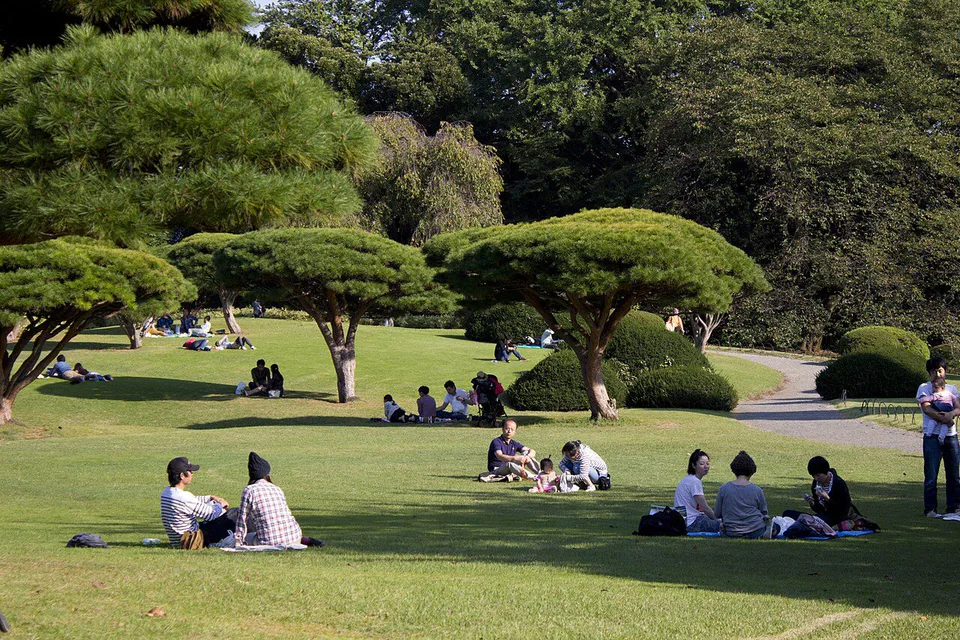
Tokyo's three familiar autumn stops solve different trips. Shinjuku Gyoen spreads colour across several garden styles and gives a mixed-age group room to shorten the route. Meiji Jingu Gaien is a short, concentrated ginkgo-avenue visit; its value rises and falls with that one view. Rikugien puts maple colour around a pond and has a separately ticketed 2026 evening programme. The best choice depends on the trees on your date, how much walking the group wants and whether the garden or the city image is the actual attraction.
For 2026, the night question is now settled: Rikugien has announced special evening viewing from 25 November to 6 December, 18:00–20:30, with last entry at 19:30. That is separate from its ordinary daytime admission. Gaien's ginkgo colour and Shinjuku Gyoen's mixed leaves still need a date-specific check close to the visit. Use Tokyo autumn timing by area and tree type to place the park choice inside the wider season rather than picking one generic peak date.
↔ Scroll table left or right
Main priority | Best first choice | Why it works | Main condition |
First Tokyo foliage half-day or mixed-age group | Shinjuku Gyoen | Multiple garden styles, broad paths and indoor breaks | Choose a short route; final entry is 16:00 in autumn. |
One strong golden city photograph | Meiji Jingu Gaien | Ginkgo perspective suits a brief Aoyama stop | Green, bare or crowded trees reduce the whole payoff. |
Traditional pond-and-maple atmosphere | Rikugien | Composed garden views reward a slower walk | Narrower paths and viewpoint crowds need more time. |
Light rain or uneven walking stamina | Shinjuku Gyoen | Route shortening and the greenhouse give alternatives | Heavy rain still calls for an indoor Tokyo plan. |
2026 evening illumination | Rikugien | Special viewing runs 25 Nov–6 Dec, 18:00–20:30 | Separate night ticket; 19:30 last entry. |
Shinjuku Gyoen gives you more than one kind of colour
The lawns, formal garden and Japanese garden distribute the visit across very different spaces. A single green stand of ginkgo does not decide whether the whole garden works. On a first Tokyo foliage day, this variety is useful: you can start with the strongest trees you have seen in recent dated photos, then spend the remaining time in a different landscape. Tokyo in mid-November helps if the trip crosses the transition between early and later sites.
The garden's greenhouse and indoor information spaces can give a brief break from light rain or fatigue, and wide paths allow a shorter circuit. They are not reasons to cross Tokyo in a downpour, but they make a less certain foliage day less brittle than a single avenue photograph. A mixed-age party can still have a good two-hour visit without forcing every corner of the grounds. For broader first-trip trade-offs, compare Tokyo with Kyoto and northern autumn regions.
From 1 October through 14 March, Shinjuku Gyoen opens 09:00–16:30 and last admission is 16:00. Adult entry is ¥500; students aged 16 and over and visitors aged 65 or over pay ¥250, while children aged 15 or under enter free. Some facilities, including the greenhouse, close earlier than the garden paths, so place an indoor stop before the end of the afternoon. The garden admission page lists the detailed category rules.
Its usual closure is Monday, or the next weekday when Monday is a public holiday, plus 29 December to 3 January. There is an autumn exception worth knowing: the garden remains open every day during the 1–15 November chrysanthemum exhibition. The 2026 exhibition runs 09:00–16:30 within the garden, with the same adult ¥500 admission. That offers a second seasonal subject if maple colour is not yet where you hoped. The 2026 chrysanthemum programme sets the dates.
A two- to three-hour circuit is enough for a first visit
The grounds are large; walking their entire edge does not improve a foliage visit merely because you paid admission. Decide which part has the best colour, use one garden area with a different character, and leave time to sit. A short route works especially well if this is one stop in a broader Shinjuku day. Tokyo shopping hotel bases can help if you want the evening nearby instead of crossing back to another district.
A useful core route contains four optional pieces rather than a compulsory perimeter:
The strongest dated foliage area on your visit rather than a fixed peak-week route.
The Japanese garden for a different scale and composed landscape.
A lawn or ginkgo area if colour and group energy still justify the extra walk.
The greenhouse only when the weather, fatigue or plant interest makes it useful.
With children or an older companion, choose the entrance and exit gates that reduce backtracking. The broad-path benefit disappears if you keep adding distant colour pockets after the weakest walker is ready to stop. A garden visit should fit the rest of the day; when to book hotels for autumn leaves also argues for keeping local flexibility rather than locking every hour around a forecast.
Shinjuku Gyoen is the default for variety, not a four-hour assignment. When a short circuit and the Japanese garden already deliver the view the group wanted, leave. If recent colour clearly favours Gaien's ginkgo, spend the saved time there only if the two places lie naturally in the day's route.
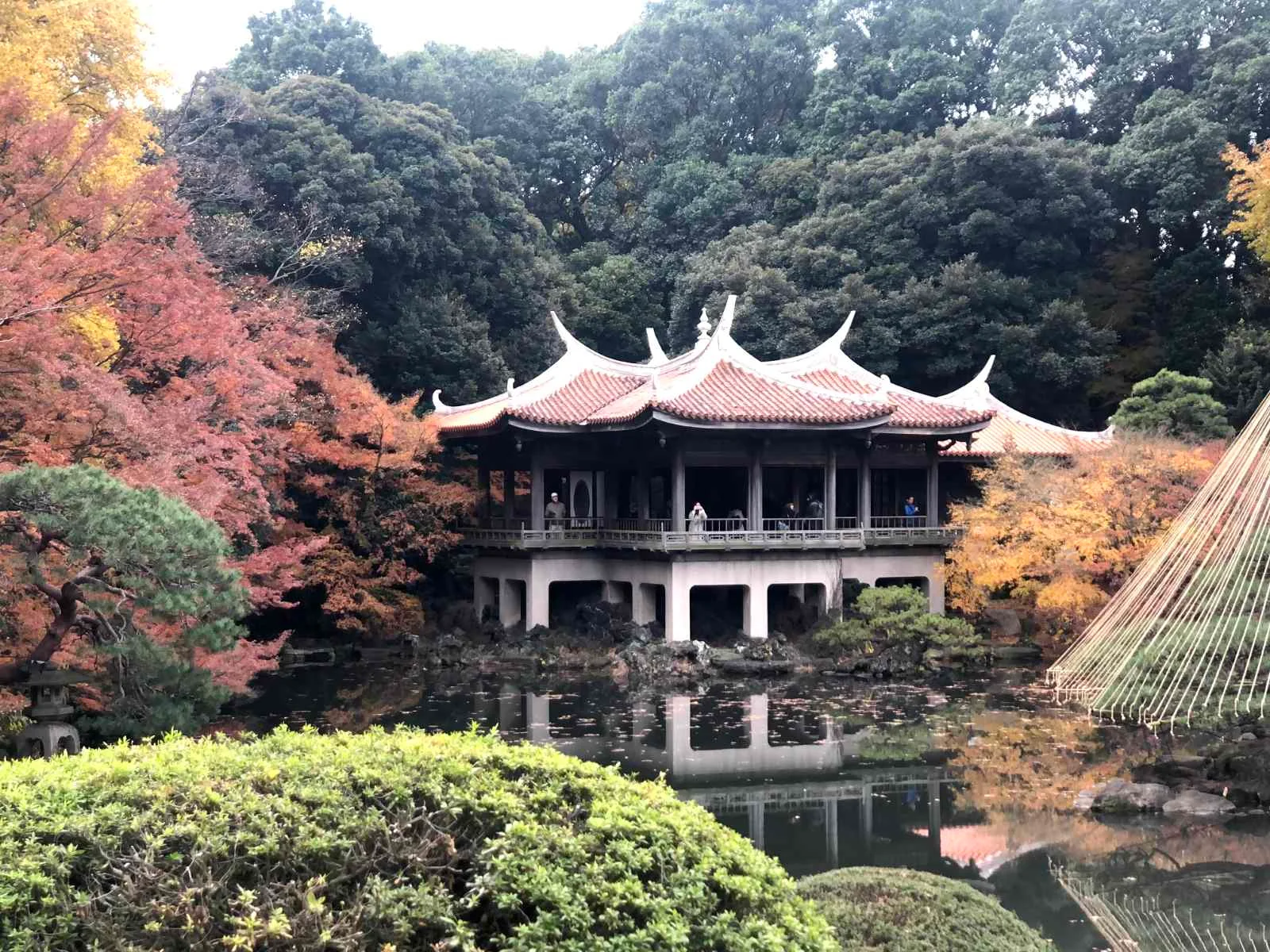
Gaien is a short bet on one urban ginkgo view
Meiji Jingu Gaien is not a second large garden equivalent to Shinjuku Gyoen. The tree-lined avenue produces a long, symmetrical city perspective toward the Meiji Memorial Picture Gallery. That geometry is the reason to go. Its payoff is concentrated, which is ideal for a 45–90 minute stop when the ginkgo canopy is yellow and much less satisfying when it is still green or already bare.
Recent colour matters more here than an average late-November estimate. Wind can remove the leaves quickly, and crowding can alter a hoped-for clean photograph even at peak yellow. If the avenue is strong, take the walk and continue with Aoyama or Omotesando. If conditions are weak, extending the same avenue to two hours does not create another foliage product. Tokyo autumn day-trip alternatives make more sense than forcing a weak single-view stop.
Aoyama-itchome and Gaienmae on the metro, JR Shinanomachi and Sendagaya, and National Stadium Station can all approach the broader Gaien area. Choose the arrival station for your actual avenue end and the next destination, rather than assuming one station serves every Gaien facility equally. The site's Gaien access information gives the local layout; allow a station walk in addition to the time spent under the trees.
An Aoyama or National Stadium day accommodates this stop naturally. It is too small a reason to move a Tokyo hotel, especially when the leaves may change during the stay. If you are choosing an accommodation base around several unrelated Tokyo activities, Tokyo event hotel locations is a more useful decision than chasing one seasonal photograph.
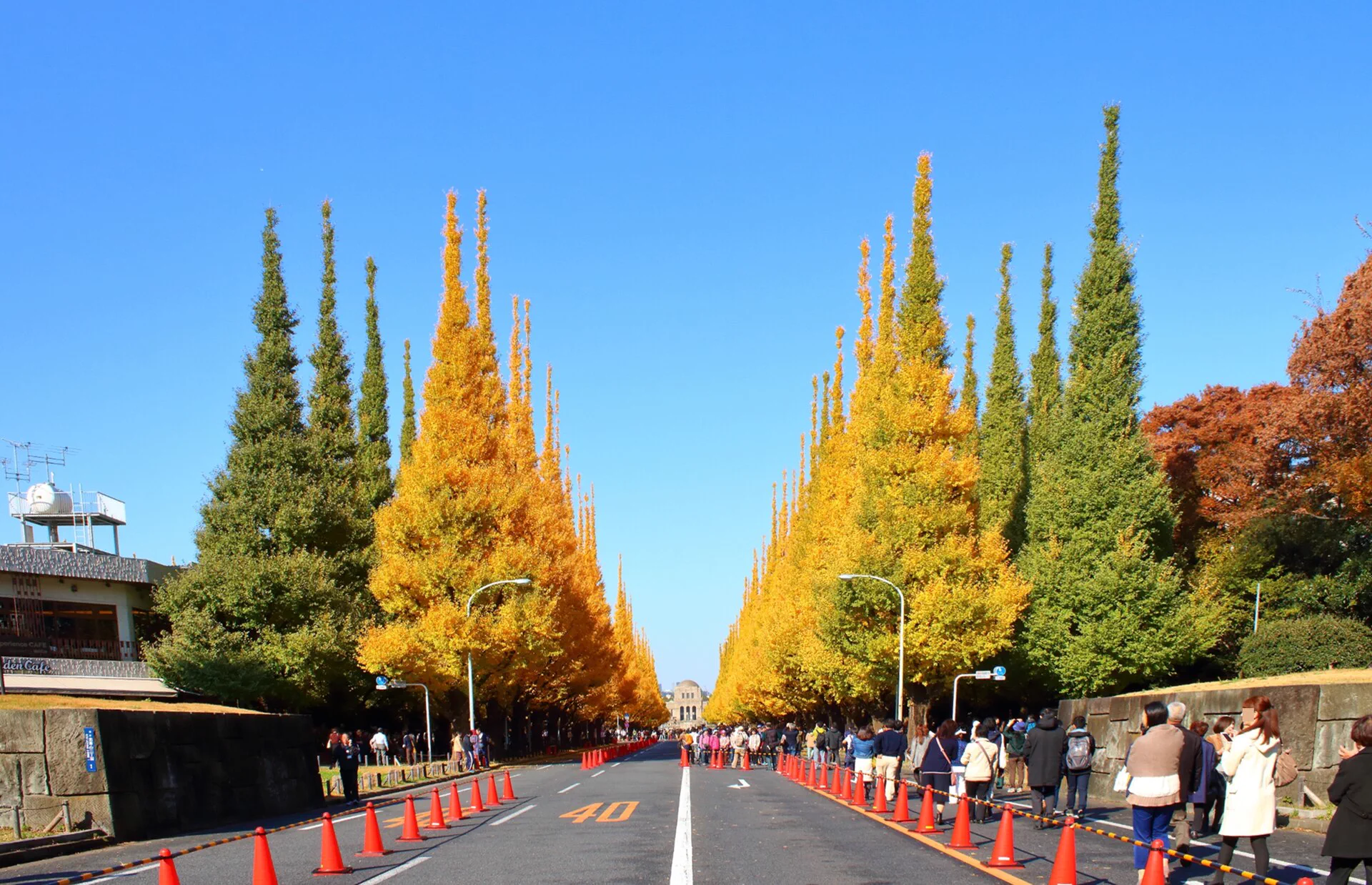
Rikugien is about pond, maples and garden composition
At Rikugien, the tree colour sits around a designed pond, bridge views and small hills. That gives an autumn visit a different rhythm from Gaien's direct perspective or Shinjuku Gyoen's spacious mix. It is a Special Place of Scenic Beauty, and the atmosphere improves when you can pause at the viewpoints rather than race through them. Tokyo to Nikko for a larger autumn landscape is a separate day-scale choice if the garden alone seems too small.
Ordinary Rikugien hours are 09:00–17:00, with last daytime entry at 16:30. Adult admission is ¥300 and the 65-plus category ¥150. Elementary-age children enter free, as do eligible Tokyo middle-school students. The usual year-end closure is 29 December to 1 January. The 2026 evening event needs its own ticket; a daytime ¥300 admission does not carry you into the separate 18:00 opening. The garden's visitor page gives daytime terms.
Allow roughly ninety minutes to two hours for a first daytime visit. The garden is smaller than Shinjuku Gyoen, but the narrower routes and popular pond viewpoints slow people in a useful way. A 45-minute dash can record that you visited without giving the garden's composed views time to work. In late November, place this with a Komagome, Ueno or Yanaka day instead of adding it as an afterthought to western Tokyo.
Couples, photographers and travellers who actively want a traditional garden may prefer Rikugien even though its routes are less flexible than Shinjuku Gyoen's. A party needing wide paths, frequent breaks and the option to change course easily should weigh that cost. The choice is about the landscape and walking experience, not simply the ¥300 ticket compared with ¥500 at Shinjuku Gyoen. Autumn hotel booking flexibility can help when the dates are not fixed.
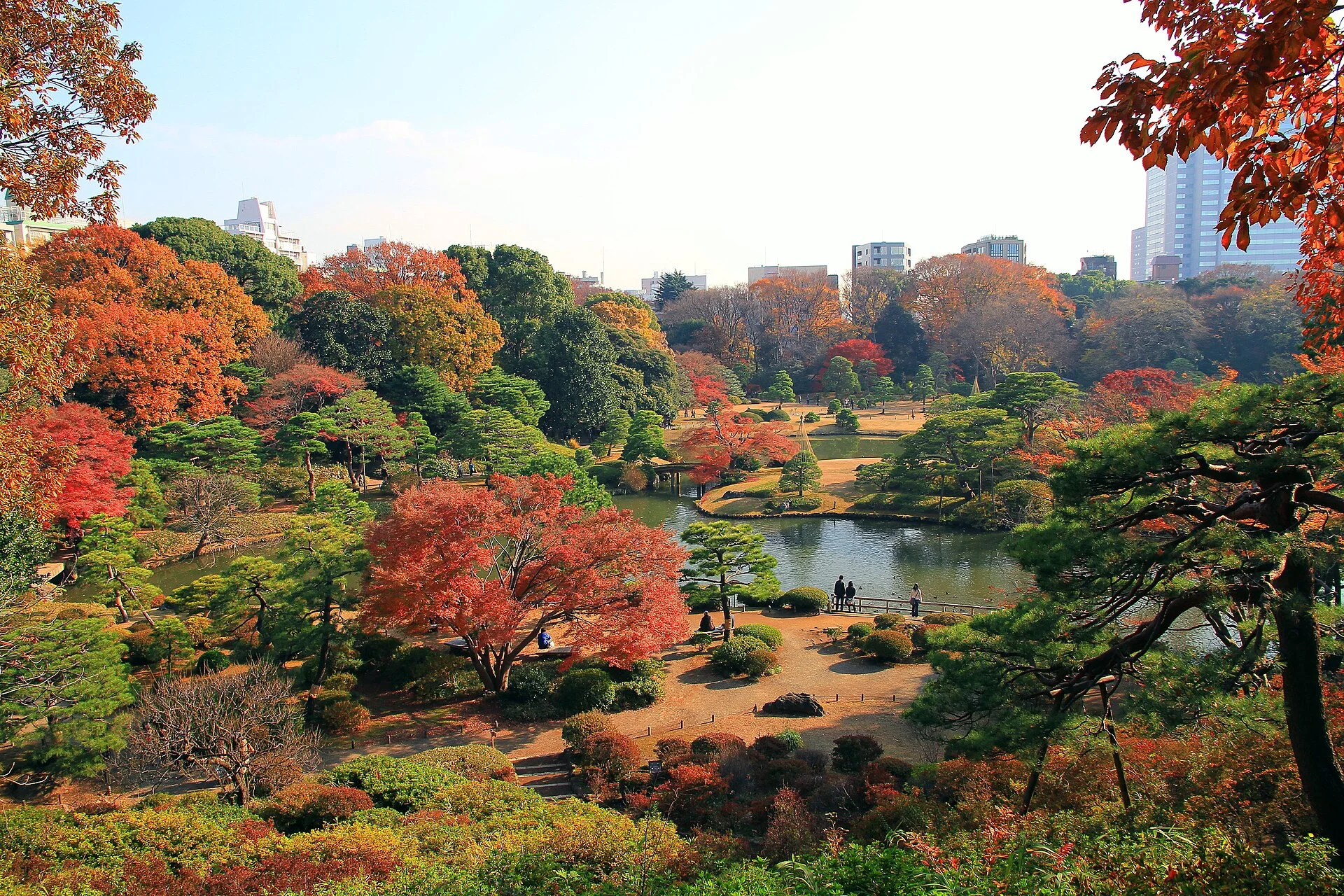
Rikugien's 2026 evening dates and tickets are published
The previous 2025 night-viewing dates should no longer be used to plan this season. For 2026, the garden operator has announced 25 November through 6 December, with the special route open 18:00–20:30 and admission closing at 19:30. The garden closes its ordinary daytime session first, at 17:00, before reopening for the evening. Choose a daytime visit for pond-and-maple detail or the night programme for lighting and projections; they are not interchangeable time slots.
The 2026 night ticket is ¥1,000 in online presale or ¥1,200 on the day, online or at the main gate. Children of elementary age and younger enter free. Online booking gets a priority entrance lane, and the operator says daily ticket quantities are limited; the notice also says final release details will be posted separately. The event includes lit foliage, a storehouse and bamboo projection, tea-house offerings and food stalls. Rikugien's 2026 evening announcement states these conditions.
If illumination is the reason for choosing Rikugien, use the actual 2026 date and night-ticket category rather than a daytime garden pass. A non-refundable day trip tied to last year's event dates is unnecessary now that this year's window is known. Check the final ticket-release notice and entrance arrangements when booking, and remember that the garden is closed between 17:00 and 18:00. Tokyo's wider mid-November foliage choices may fit an earlier visit better.
For one half-day, choose the experience you want most
Shinjuku Gyoen is the safest first answer for a mixed-age party or a traveller who is unsure which tree type will be strongest. It offers gardens, lawns, ginkgo and maple areas, plus places to rest. That breadth matters most when a half-day must succeed without a second park. Tokyo foliage timing can narrow the likely date before you commit.
Gaien is the small, direct choice for a golden ginkgo avenue and a day already crossing Aoyama. Give it less time than either garden, especially when the trees are not at their best. One strong avenue image can be enough; making it an all-afternoon visit does not add variety. A Tokyo rainy-day alternative is more useful if heavy rain ruins the photograph premise.
Rikugien is the choice when a composed Japanese pond garden, and perhaps its 2026 evening lighting, is the purpose of going. The daylight and evening products have different admissions and atmosphere. A traveller who simply wants any red leaves should compare current conditions before making the longer cross-city journey. Japan's autumn calendar is a broader guide, not a substitute for recent park images.
With just one morning, pick one site instead of visiting all three as insurance against poor colour. If weather and dated tree photos are uncertain, Shinjuku Gyoen's range is the most forgiving. If Gaien is visibly yellow and the itinerary already goes through Aoyama, its short stop may be better. An evening-only Rikugien plan requires the announced night window and ticket, so it answers a different schedule.
Shinjuku Gyoen and Gaien form the natural two-stop day
Their western Tokyo locations make a same-day pairing possible without turning the route into a transport exercise. Start in Shinjuku Gyoen for mixed landscapes, take lunch, then see the ginkgo avenue and continue through Aoyama. The two stops reward different things, so a good condition at both can justify the extra walk. If Gaien is still green, stop after the garden and use the afternoon elsewhere rather than collecting a weak second site.
Entering Shinjuku Gyoen soon after 09:00 also protects its 16:00 final admission from a slow morning. Gaien is an outdoor avenue with no garden ticket to align, though daylight and crowds still matter. If the ginkgo fails on the day, an indoor museum, shops or Omotesando is a cleaner replacement. Tokyo shopping bases can connect that revised afternoon with the hotel's return route.
Rikugien belongs more naturally with Komagome, Yanaka, Ueno or Kyu-Furukawa Gardens. Pulling it across town after Shinjuku Gyoen and Gaien changes the day from looking at landscapes to riding between stations. The evening programme can be its own later outing if you have a ticket. A Ueno-side hotel comparison can make that geographic trade more concrete for a longer Tokyo stay.
Three sites in one day usually take away the best part
It is possible to tick off all three with early trains and short visits, but each station approach and transfer consumes time. The rushed version gives Rikugien too little time at the pond and turns Shinjuku Gyoen into a route across the grass. A photographic checklist may justify it for a particular assignment; most travellers will get more from one or two sites whose leaves are actually strong.
The loss is not only minutes. Rikugien's narrow viewpoints and Shinjuku Gyoen's contrasting areas need a little time to notice; Gaien depends on the quality of one concentrated view. If a third site requires shortening both gardens, drop it. Other Tokyo autumn day-trip choices are better saved for another day.
A current tree report is a better hedge than an extra train ride. Check the status close to departure and let the less promising site fall away. Japan's autumn leaf calendar helps compare regions, while dated images from these three places answer the local question.
Rain and wind affect the three choices differently
Light rain leaves Shinjuku Gyoen the most adaptable: broad paths, rest spaces and the greenhouse permit a shorter visit with pauses. Rikugien's wet stones and narrower garden paths may be harder for a slower walker, although rain can suit the pond scenery. Gaien loses much of its value if the goal was a clear avenue photograph. Tokyo's rain alternatives offer a route that does not depend on wet leaves.
Strong wind can change colour overnight at any of them, but a single ginkgo avenue has less to fall back on than Shinjuku Gyoen's mixed trees. Check photos close to the date and avoid treating an old peak-week forecast as proof that branches still hold leaves. Rikugien's night programme has a defined ticket window, yet lighting cannot restore foliage that a storm has removed.
In heavy rain, a cross-city three-site plan has little reward. Stay near the hotel base for a museum, department store or another indoor visit and return to the leaves when conditions improve. Tokyo when it rains sorts options by how hard the rain is; it is more useful than forcing an outdoor checklist.
The easiest walk is not always the cheapest ticket
Shinjuku Gyoen's broad paths, seating and option to shorten the route make it a strong default for families or older visitors. Adult admission of ¥500 is a small part of the decision if it avoids an exhausting circuit. Pick one accessible colour area near the chosen gate, then add another only if the group is still comfortable. A first Japan autumn route can help avoid overloading the larger trip too.
Gaien's avenue is comparatively flat, but crowds and road crossings can be the difficulty at peak colour. Rikugien is smaller, yet some paths are narrower and people may bunch at pond viewpoints. The best choice for a slower walker is the one that lets them reach the current strong colour without fighting through the whole site. The nominal entrance price does not measure that effort.
At Rikugien, budget time for a deliberate route and any queue for the 2026 night opening. At Gaien, shorten the stop rather than forcing a crowded photograph. Shinjuku Gyoen gives the most ways to alter the loop. These are practical differences for a multigenerational day, and they can reverse a decision made on the basis of free child admission or a ¥300 adult ticket alone.
Let the current colour decide between three different trips
For a first autumn garden, Shinjuku Gyoen has the broadest mix and the simplest short-route fallback. Gaien is the strongest brief ginkgo-avenue stop when the trees are yellow. Rikugien is for a slower pond-and-maple garden or its confirmed 2026 evening event. The admission, walking pattern and location differ enough that 'Tokyo autumn leaves' is not one interchangeable ticket.
If recent Gaien images show a glowing avenue while Shinjuku Gyoen is still early, choose Gaien. If wind has stripped the ginkgo and Rikugien maples are strong, go east to the garden. A mixed group or uncertain reports still favour Shinjuku Gyoen. Where to stay for Tokyo autumn colour can preserve booking flexibility while these conditions change.
The Rikugien night plan is now concrete: 25 November–6 December 2026, 18:00–20:30, with a separately priced night ticket. No one needs to infer this year's programme from 2025 dates. If your Tokyo visit ends before that window, choose the daytime garden or another current evening activity. Tokyo autumn timing by garden and ginkgo helps keep those dates in context.
Compare Tokyo stays for this autumn route after choosing which garden or avenue your days will actually use.
Related autumn planning
Tokyo colour timing across gardens and ginkgo; Japan's regional foliage calendar; Tokyo autumn outings beyond these gardens.
Garden hours and evening admission
Shinjuku Gyoen admission and closures; Shinjuku Gyoen facilities; Meiji Jingu Gaien access and grounds; Rikugien daytime visitor details; Rikugien 2026 evening dates and tickets.
Related guides: Best Place for a First Japan Autumn Trip: Tokyo, Kyoto, Hokkaido or Tohoku? · Grand Nikko Tokyo Bay Maihama vs Hilton Tokyo Bay for Families · Sapporo Autumn Fest 2026: The One-Kilometre Food Route That Leaves Room for Dessert · When to Book Hotels for Japan Autumn Leaves: Cancellation, Prices and Backup Areas · Tokyo Shopping Hotels: Shibuya, Shinjuku, Ginza or Akihabara? · Toy Story Hotel vs Grand Nikko Tokyo Bay Maihama: Which Is Better for Families? · Tokyo to Nikko Autumn Leaves: Trains, Passes, Day Trips and Overnight · NOHGA HOTEL UENO TOKYO vs HOTEL GROOVE SHINJUKU: Which Base Saves More Friction? · Japan Autumn Leaves in Mid-November: Kyoto, Tokyo, Fuji, Miyajima and Kyushu · Best Airport for Japan Autumn Leaves: Choose by Foliage Window and Open-Jaw Route