
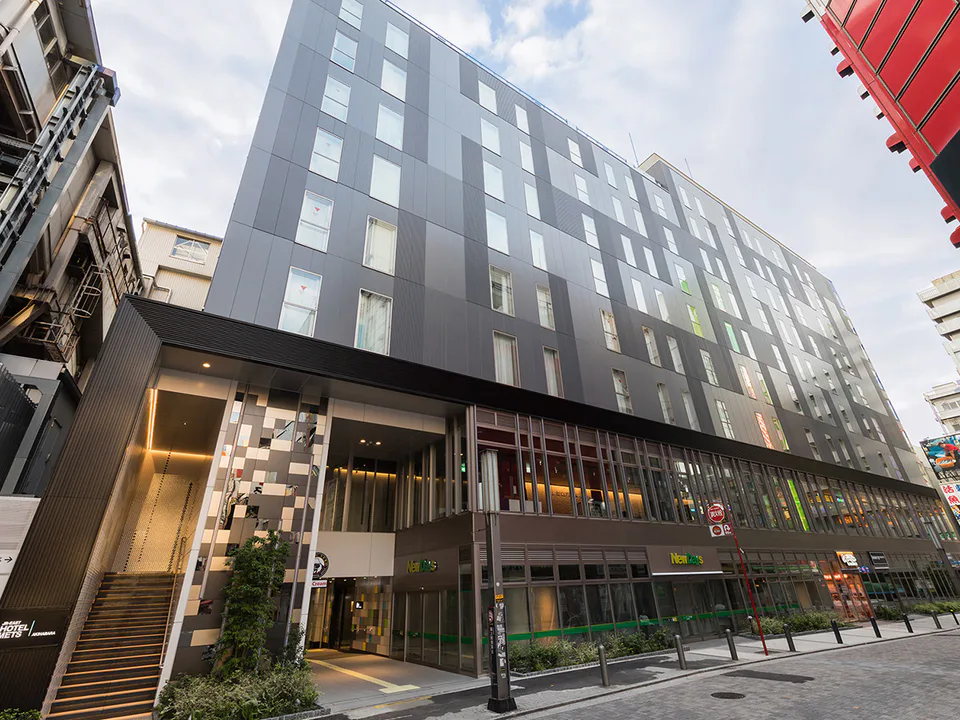
The hotel sits just beyond Akihabara’s JR Electric Town South Exit. That short final walk is most valuable when you expect to come through the station repeatedly: a return from Tokyo Station, another from Ueno, perhaps a midday stop before dinner. The published Superior Double is only 17 m², so the real question is how often the location will compensate for a smaller room. Compare a Tokyo neighbourhood comparison.
A flight arrival alone makes a weaker case. Haneda requires a Keikyu-to-JR change and Narita passengers using the Skyliner switch to JR at Nippori. If those are the only two awkward journeys in a five-night stay, test the other daily routes before rejecting Akihabara. For a single night between Narita flights, the calculation may point towards Ueno or Nippori. Compare Ueno or Shinjuku for Narita and nightlife.
Which itineraries make the room trade sensible?
↔ Scroll table left or right
Trip pattern | Room or base to compare | Reason |
Several Tokyo Station, Ueno or Suidobashi trips | Akihabara with the 17 m² Double or 21 m² Twin | The one-minute JR-side walk saves effort more than once |
Narita transfer is the main journey | Ueno or Nippori before booking here | The Skyliner-to-JR change at Nippori adds a handover |
Haneda arrival, then east/central Tokyo days | Akihabara remains plausible | Airport change is one trip; useful JR rides can recur |
Solo guest or lightly packed couple, one or two nights | Compare the Superior Double | One 160 cm bed in 17 m² may be enough for a short stay |
Two adults, large bags, three to five nights | Price the Superior Twin | The 21 m² layout and separate beds address repeated room use |
Mostly Shibuya or Shinjuku evenings | Compare a west-side base | The nearest JR exit will not shorten those later returns |
The advertised minute begins at a particular JR exit
From the South Exit of JR Akihabara’s Electric Town side, the hotel quotes a one-minute walk. Other starting points change that number: Tsukuba Express A1 is about two minutes, Hibiya Line Exit 3 three minutes, and Iwamotocho A3 on the Toei Shinjuku Line six minutes. Platform corridors and lifts add their own time, especially with luggage. Details are on the hotel access map.
A traveller using JR on most days gets a different last mile from one repeatedly taking the Hibiya Line. Locate the actual station exit on the route from the platform, then consider which side of Akihabara you will approach at night. The headline walking time belongs to the Electric Town South Exit, not the whole interchange. Compare Tokyo Station versus Shinjuku.
Airport changes versus the journeys made every day
The hotel gives an approximate 30-minute Haneda journey using Keikyu and JR, and roughly 80 minutes from Narita using Skyliner and JR. Neither is a through train to the hotel. For Narita, the published ordinary adult Skyliner-plus-JR ticket to Akihabara is ¥2,630 and the rail change is at Nippori. Those figures describe the transport route; immigration, waiting, platform transfers and the walk to the room sit outside the headline train time. Details are on Keisei’s Narita–Akihabara fare. Compare Haneda late-arrival lodging.
The comparison is easier when the airport is treated as two journeys in the stay:
Airport transfers occur at the start and end of the stay; note the actual rail change and luggage you carry.
Station returns may recur each day; count the late-night and midday walks as well as morning departures.
Tokyo Station twice, Ueno twice and Suidobashi once would make the nearby JR access useful on several separate days. Someone sleeping here only to catch another Narita flight instead repeats the airport handover and gets little benefit from those short Tokyo rail hops. Base choice follows the actual trip pattern. Compare Narita or Haneda’s last transfer.
If luggage after a long flight dominates your decision, compare a Nippori or Ueno room before paying for Akihabara. If the days ahead repeatedly cross central and eastern Tokyo, count those trips as carefully as the arrival.
The rail map explains the location premium
The hotel lists approximate JR train times of four minutes to Tokyo Station, three to Ueno, four to Suidobashi, fifteen to Shinjuku and sixteen to Shinagawa. Those are station-to-station train estimates, so they cannot be used as door-to-door promises. Still, they explain why a guest who never shops for electronics might choose this address. Compare a Tokyo Station hotel comparison.
Try removing Akihabara sightseeing from the plan. If Tokyo Station, Ueno and Suidobashi remain recurring destinations, this base retains a clear job. If most evenings end in Shibuya or Shinjuku and there is little east-side travel, a western hotel may avoid paying for access you seldom use.
Make the comparison with the six movements that create the most friction: airport arrival and departure, plus four repeated or difficult trips. A compact hotel room has a stronger argument when Akihabara shortens several of those trips; one convenient journey alone rarely tells the whole story. Compare a Ueno hotel near the Skyliner.
What the four extra square metres buy
A Superior Double combines 17 m² with a 160 × 195 cm bed. The 21 m² Superior Twin has two 120 × 206 cm beds. In the 23 m² Deluxe Twin, two 120 cm beds can be joined by a 90 cm extra bed for a third guest. The hotel lists a separate washing space in the bathroom across the room range.
The step from 17 to 21 m² is four published square metres, or roughly 23.5% more area. Furniture and layout decide how much of that can hold open cases. Even so, two adults bringing large suitcases should compare the Twin quote rather than assume the cheapest Double is adequate for several nights. Compare a larger Oshiage apartment-style hotel. Compare Mets Premier or remm Akihabara by room and bath.
↔ Scroll table left or right
Room | Published area and beds | Booking implication |
Superior Double | 17 m²; one 160 × 195 cm bed | Short stay or lightly packed two-person booking |
Superior Twin | 21 m²; two 120 × 206 cm beds | Separate beds, more published area and up to two preschool bed-sharers |
Deluxe Queen / Balcony | 22 m² inside plus 10 m² balcony; one 180 cm bed | Wider shared bed and outside space, not twin sleeping |
Deluxe Twin | 23 m²; two 120 cm beds, with a 90 cm extra bed for three | Confirm the triple configuration when booking three adults |
Do not compare room categories in isolation. If the Twin or Deluxe rate approaches a larger room in an equally useful neighbourhood, reopen the location decision. The balcony category adds outdoor space and a wider bed, but does not replace a two-bed room for travellers who need separate sleeping surfaces. Compare Shinjuku location and room trade-offs.
A family booking depends on the number of regular beds
The hotel allows one child below elementary-school age to share each standard bed without an extra room charge. Thus a one-bed Double can take one preschool bed-sharer, while a two-bed Twin can take two. Children of elementary-school age and above are priced as adults under the hotel policy. Details are on the hotel’s room and child policy.
Two adults travelling with two preschoolers should start the search with a Twin, then check whether its 21 m² works with their luggage. A group of three adults needs an actual triple configuration such as the Deluxe Twin with its extra bed; occupancy cannot be inferred from the room name alone. Compare a Ueno versus Shinjuku family base.
A baby cot and bed guard can be requested, but both are limited loan items requiring reservation. For a family that cannot stay without one, ask the hotel to confirm it before the free-cancellation deadline on the chosen rate; a change of room may be necessary if the item is unavailable.
The bath matters when the room is used during the day
The separate bathroom washing area is a useful counterweight to the compact bedroom. It is particularly relevant if the party returns from sightseeing to wash before going out again, or if children and adults need a less cramped evening routine. It does not create more suitcase space, so judge the two benefits separately. Details are on the hotel facilities page. Compare another compact Shibuya room.
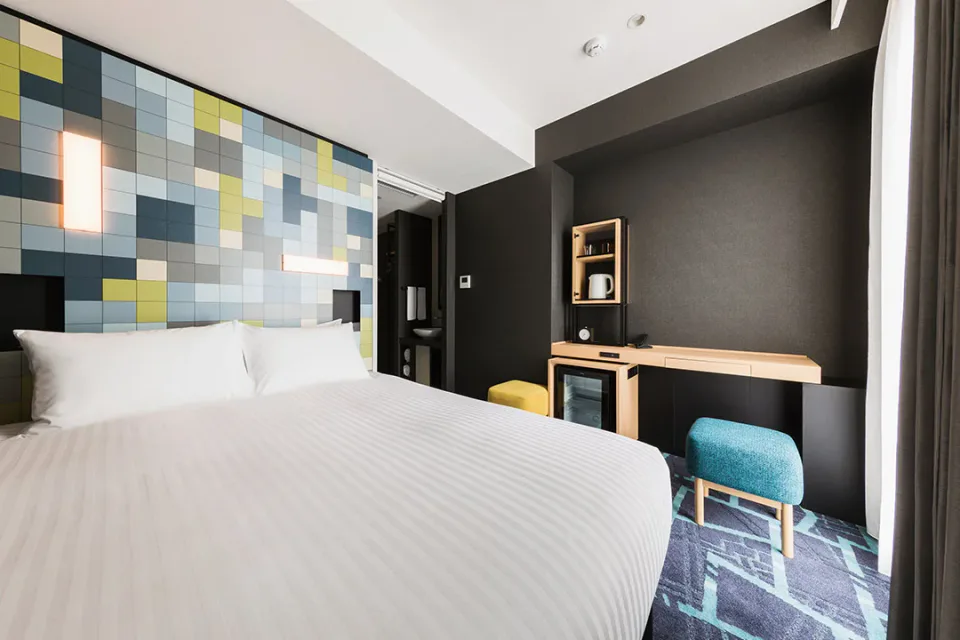
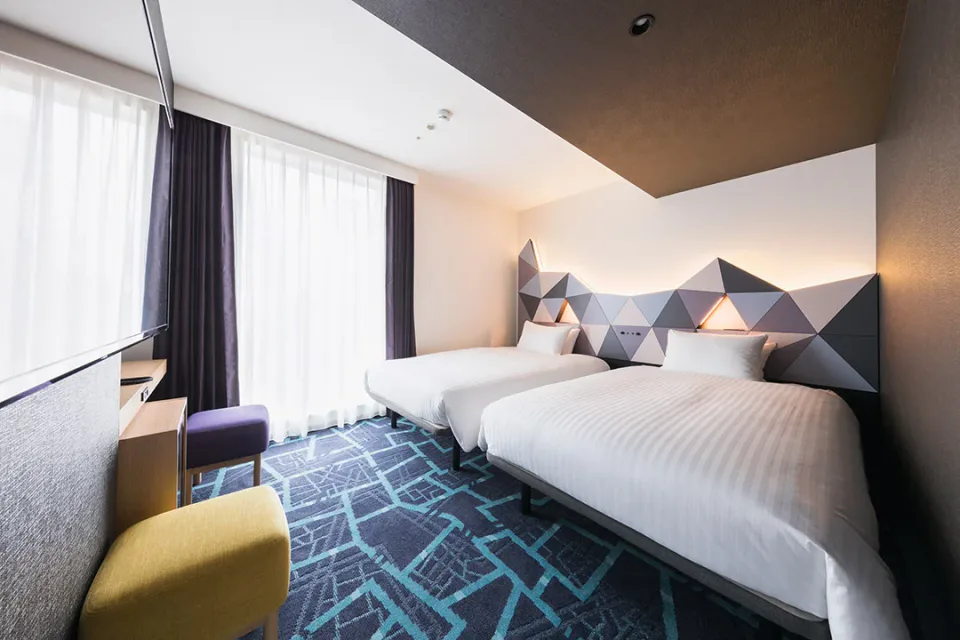
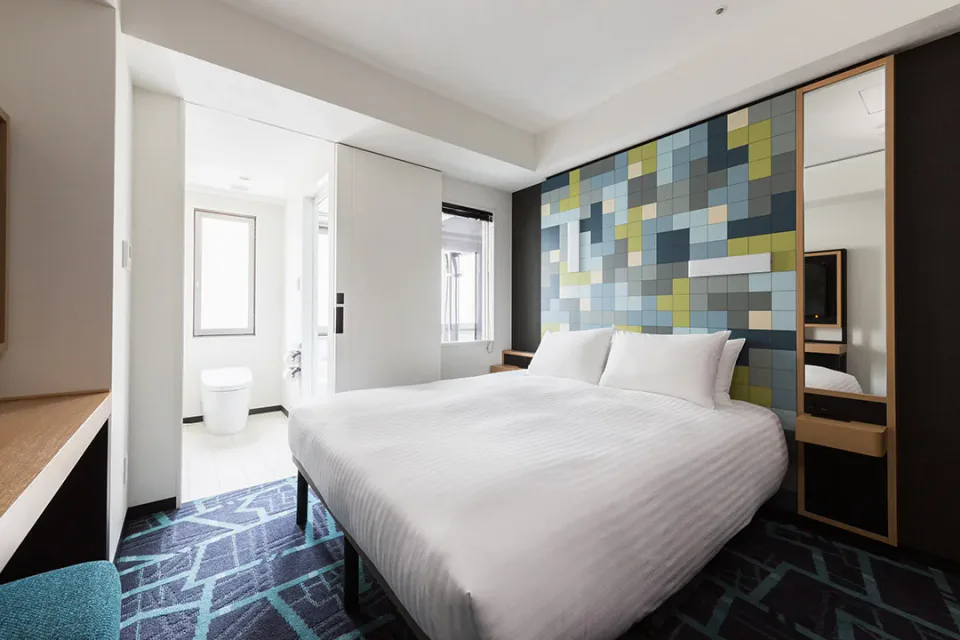
A guest leaving early and returning only to sleep may get less use from this room arrangement. The station frontage then needs to carry more of the value. A traveller making midday stops can use both the short walk and the separate bathing space repeatedly.
Bags can stay after checkout until midnight
The hotel provides free luggage storage on the check-in day and holds bags after checkout until 24:00 that day. This is unusually helpful for an evening departure, when paying for another room night or repeatedly carrying a case across Tokyo would otherwise consume time.
For a Shinkansen departure, one workable sequence is checkout, leave the bags, spend the day in town, collect them and take JR towards Tokyo Station. Its published four-minute train time is one part of that chain; allow for the station walk and waiting before choosing a train. Compare a hotel near Tokyo Station for an early Shinkansen.
If the next hotel is already known, sending a suitcase ahead may be better than returning to Akihabara just to collect it. Use the departure time and next address to decide between storage and forwarding. Compare luggage forwarding versus carrying.
Parking comes with an overnight lockout
The partner garage is ¥1,500 per night and requires a reservation by 21:00 the previous day. Its published restriction is consequential: entry and exit are unavailable from 22:00 to 07:00. Height and other vehicle limits also apply, so a rental-car booking needs to fit the parking rules before the hotel is selected. Compare a Tokyo base without a city-centre parking requirement.
A vehicle left in the garage overnight may be fine. A planned pre-07:00 drive or return after 22:00 is incompatible with the stated access hours. The rail links are the stronger reason to pay for this address; drivers with rigid early or late movements should choose the room around their car schedule.
Where the hotel earns its rate
For a solo guest or a lightly packed couple staying briefly, the 17 m² Double can work when several journeys start at JR Akihabara. Two adults with bigger bags should benchmark the 21 m² Twin. The separate washing area, child bed-sharing rule and free checkout-day storage then affect which room and stay length make sense. Compare a Shinagawa-based Tokyo trip.
A Narita-focused overnight is a different purchase from a five-night Tokyo base. Nippori or Ueno can spare a Skyliner passenger the JR change, while Akihabara may save small stretches of travel on repeated Tokyo Station, Ueno and Suidobashi days. Haneda still involves a change; it should not be described as direct access. Compare remm Akihabara or NOHGA Ueno for a Narita departure.
Check the exact exit, chosen room category and the journeys your group will actually make. If most nights end in western Tokyo or the Twin price erases the compact-room saving, compare another base. If several days use the nearby JR lines, the short final walk has a practical return. See rooms near JR Akihabara Station.
Compare nearby Tokyo bases
Where to Stay in Tokyo for First-Time Visitors · Ueno vs Shinjuku · Tokyo Station vs Shinjuku · Haneda Late Arrival
Transport and room details
The station walking routes, room categories, family occupancy, luggage policy and parking hours are published on the hotel’s own pages. Keisei lists the Narita–Akihabara Skyliner and JR fare. Check the train and room you intend to book for your travel date.
Related guides: Hotel Sonia Otaru: Is a Canal-View Room and Rooftop Onsen Worth the 8-Minute Station Walk? · lyf Tenjin Fukuoka Review: Is a 12m² Room Worth the Shared Kitchen and 24-Hour Lounge? · Hotel Sosei Sapporo Review: Is a 39 m² Twin-Queen Room Worth a 15-Minute Walk from Sapporo Station? · KOKO HOTEL Residence Tokyo Oshiage Review: Is 42 m²+ Space Worth the East Tokyo Base? · lyf Shibuya Tokyo: Is the PARCO Location Worth a 12m² Room? · Premier Hotel -CABIN- Asahikawa: Is the Overnight Hot Spring Worth a 14m² Room? · Oriental Hotel Okinawa Resort & Spa Review: Is the 170m Pool Worth a 7-Minute Beach Walk? · Mitsui Garden Hotel Osaka Premier Review: Is Nakanoshima Worth the Trade-off? · Hotel Gracery Shinjuku: Is the 5-Minute East Exit Walk Worth Staying in Kabukicho? · THE BLOSSOM HAKATA Premier: Is the 7-Minute Walk Worth a 30m² Twin and Public Bath?
Seven site scores for an Akihabara rail base
Dimension | Site score | Reason at this address |
|---|---|---|
Location | One minute from the specified JR Electric Town South Exit, while other rail exits are farther away. | |
Room | The 17 m² Double is compact; 21 m² and 23 m² twin options and separate bathroom washing space broaden the choice. | |
Cleanliness | The aggregated guest cleanliness category is currently 9.4/10. | |
Service | The aggregated service category is currently 9.3/10; check the actual baggage and cot terms for your booking. | |
Facilities | In-room bath space, laundry-status display and bag storage help a station-based stay, without a large-hotel leisure complex. | |
Food | A buffet or café breakfast can be added, though an early train may give it little usable time. | |
Value | Strong when several Tokyo trips use JR Akihabara; less compelling for an airport-only overnight or a luggage-heavy 17 m² stay. | |
Overall | The room trade works best when the station walk is repeated across several days. |
The scores are out of ten for a guest using the nearby JR platforms regularly. Cleanliness and service use aggregated guest categories; the other dimensions weigh the published room, breakfast and station details against the actual itinerary.