
For a five-night Tokyo stay, the difference between Shibuya Excel Hotel Tokyu and JR Kyushu Hotel Blossom Shinjuku is not a contest between two famous neighbourhoods. It is a decision about the final walk to your room, which trains you expect to board repeatedly, and the room category you can actually afford for five consecutive nights. Excel sits inside Shibuya Mark City with a connection to Shibuya Station. Blossom is a short walk from the south side of Shinjuku Station. Both can support a first Tokyo trip. Neither turns every Tokyo destination into a direct journey.
JapanLayer hotel assessment by dimension
↔ Scroll table left or right
| Hotel | Access | Space | Comfort | Cleanliness | Neighbourhood | Service | Value |
|---|---|---|---|---|---|---|---|
| Shibuya Excel Hotel Tokyu | 9.7/10 | Insufficient evidence | Insufficient evidence | 9.1/10 | Insufficient evidence | 9.1/10 | Insufficient evidence |
| Blossom Shinjuku | 9.6/10 | Insufficient evidence | Insufficient evidence | 9.1/10 | Insufficient evidence | 9.2/10 | Insufficient evidence |
Five-night costs that repeat
↔ Scroll table left or right
| Item | Excel Shibuya | Blossom Shinjuku |
|---|---|---|
| Twin room example | Excel Twin 30.0–32.8 m² | Superior Twin 25 m² |
| Final walk | Station-linked via Mark City; exit matters | Outdoor walk from Shinjuku South Exit |
| October 2026 breakfast | Temporary fifth-floor venue during top-floor work | Check the booked breakfast plan |
Swipe to compare the hotels
Start with the itinerary, not a map pin. If your days concentrate on Shibuya, Harajuku, Omotesando and evenings in the southwest of the city, Excel's location saves repeated returns across town. If you expect several departures from Shinjuku, including a Hakone or Fuji-area leg, Blossom may save the trip you make while tired or carrying luggage. The broader Shinjuku versus Shibuya guide deals with the districts. Here the purchase is narrower: one room in each hotel for five nights, with a named bed layout and a real arrival route.
Shibuya's station connection is useful, but identify your railway exit
Excel's own access guide distinguishes a three-minute walk from the JR central ticket gate, two minutes from the Keio Inokashira central gate, one minute from Tokyu and Tokyo Metro exit A5, and five minutes from the Ginza Line gate toward Scramble Square. Those are starting points, not a universal station-to-bed time. A person arriving at a distant platform still has to navigate Shibuya Station and reach the Mark City entrance. This is especially relevant on the first evening with bags. The connection reduces exposure to street crossings and weather on some routes, but it does not remove the station's internal walking.
Blossom gives a different sort of simplicity: a short, identifiable outdoor walk from Shinjuku's south side. The hotel describes approximately three minutes from the JR South Exit. The time from the platform depends on your line and which exit you reach. Shinjuku Station is also large; a hotel just outside it cannot promise a three-minute transfer from every train. The sensible test is to look up your actual airport or intercity service and mark its arrival platform, station exit and luggage-friendly path. The Tokyo airport-to-city route guide provides the wider transport choice, while the first and last day plan helps avoid loading the arrival evening with a cross-city errand.
If your five nights end with an early Shinkansen from Tokyo Station, neither hotel is at that station. Leaving either room before dawn may erase the appeal of a lively local evening. Price a final-night move against the inconvenience of repacking. The Tokyo Station versus Shinjuku base comparison and Tokyo Station hotel decision are more relevant to that departure than a generic claim that either Shibuya or Shinjuku is "central." A late Haneda arrival creates another question: whether to travel into town at all that night. The Haneda late-arrival comparison covers that boundary.
A five-night price comparison must use the room you intend to live in
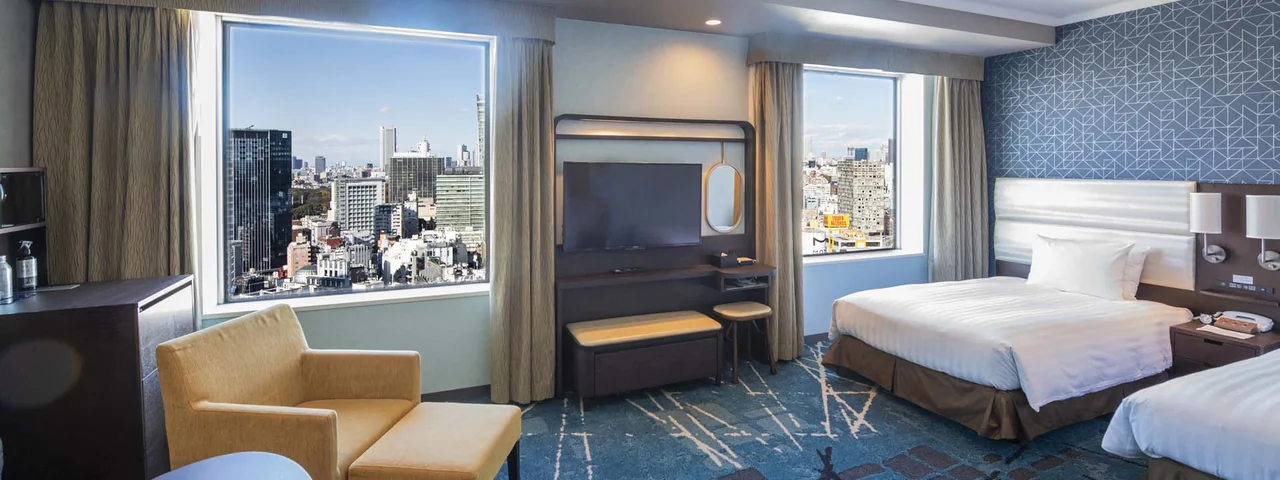
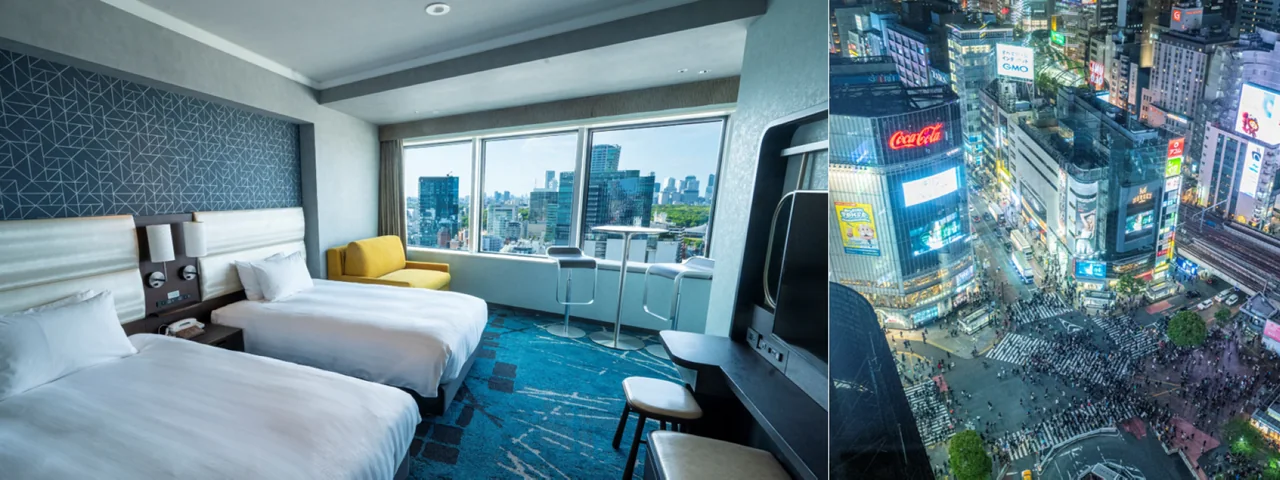
Excel offers many categories; its lowest rate is not automatically the high-floor crossing-view twin in the photographs. The hotel's current room list includes an Excel Semi-Double of about 20.5–20.6 square metres, Excel Twin rooms of 30.0–32.8 square metres, and a Crossing View Excel Twin at 29.3 square metres. It also lists larger rooms, including a 38.4-square-metre Superior Deluxe Twin and a four-bed category. Floor, view and layout therefore affect the price. A booking labelled simply "Shibuya Excel" tells you little about how two people and their luggage will function for five nights.
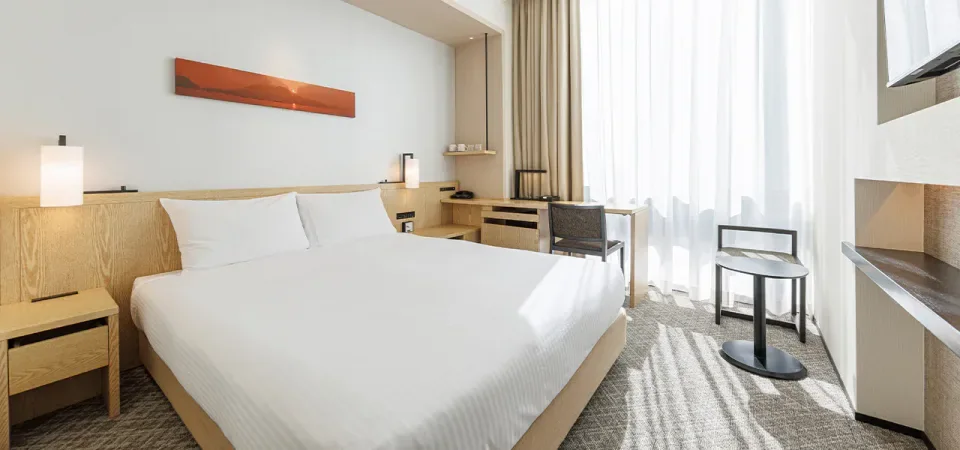
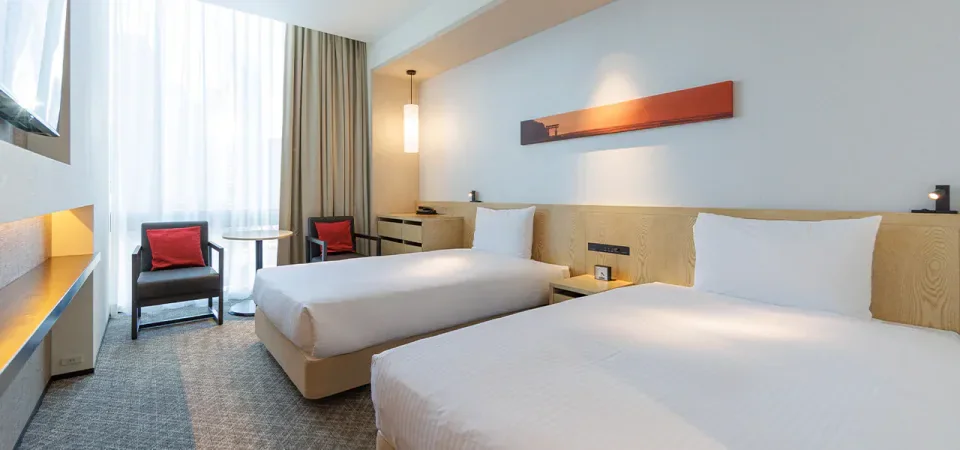
At Blossom, the 25-square-metre Superior Twin has two 120-centimetre-wide beds, a table and a sofa. Its smaller Standard Double is 18 square metres, and its queen double is 19 square metres. Compare a Blossom Superior Twin with an Excel twin if two travellers need separate beds. For a couple sharing one bed, compare the named doubles and check their bed widths rather than using either hotel's lowest headline rate. The Blossom Superior Twin review explains the table and floor-space trade-off in more detail.
Five nights magnify room discomfort. A table can matter if one person wakes early and needs somewhere other than the bed to sit. A third bag can block a narrow circulation path even when the stated area sounds adequate. If you will be out until midnight and sleep only, room space may deserve less of the budget. If you plan afternoon rests or remote work, check photographs and a floor plan for the exact room category. The Tokyo five-to-seven-night hotel checklist treats storage, laundry and daily movement as costs over the full stay, rather than as attractive icons in a search result.
Avoid paying a crossing-view supplement by assumption. A specific view can make sense if you plan to spend time at the window and the booking confirms it. If your day is almost entirely outside, the money may buy more usable room area, a more flexible cancellation policy or a better last-night location. Excel's 2025 renovation of the high-floor Excel category also means photographs from older reviews need to be matched to the room currently for sale. The hotel's own room catalogue is the better starting point; inspect the named category and dates before judging a picture.
Test your longest and shortest days, not an average "Tokyo location"
For many visitors, the meaningful difference appears on just two or three days. A morning in Harajuku followed by Shibuya shopping and dinner makes Excel an easy return point. A day ending in Shinjuku entertainment makes Blossom more convenient for the final leg. A trip to Shibuya Sky does not by itself justify moving the whole stay to Shibuya; one ticketed evening is a small part of five nights. Conversely, if you plan repeated Shibuya evenings and early starts nearby, the convenience repeats enough to matter.
Hakone is a useful stress test. If you plan to use a service departing from Shinjuku, Blossom may shorten the early-morning journey to the departure point. But the transport choice and Hakone destination should be settled first. The Tokyo-to-Hakone guide and Hakone one-night versus two-night decision show why a ryokan night may change the value of keeping one city hotel for all five nights. A Kawaguchiko day or overnight has its own departure pattern; the Tokyo, Kawaguchiko and Hakone itinerary is a better basis for that specific route than an assumption that Shinjuku always wins for Mount Fuji.
Disney is different again. Both hotels are urban bases, and a park opening or late return adds a cross-city journey. If you intend two early park days, compare the cost and disruption of a split stay with the Tokyo versus Disney-area hotel guide. If you only want one park day in a five-night city trip, changing hotels may waste more time than the commute saves. Use the Disneyland versus DisneySea decision to decide which park you are even routing to before a hotel choice is allowed to drive the itinerary.
For travellers combining Tokyo with Yokohama or Kamakura, train access differs by route and station area. Do not treat a line shown on a rail map as a platform-free direct door-to-door trip. Check the day and departure time, especially if you need an early attraction booking or will return after dinner. The Yokohama versus Tokyo overnight guide and Kamakura or Fujisawa base comparison help decide whether the side trip deserves its own night. One day trip rarely determines all five city nights; several trips on the same side of Tokyo might.
Food, breakfast and the evening you will actually have
Shibuya Excel places you at a station-linked hotel above one of Tokyo's busiest evening districts. This is attractive if you want to finish in Shibuya and go straight upstairs. It can be less useful if your preferred dinner area is elsewhere every night. Blossom's Shinjuku position similarly earns its value through repeated returns, not the number of restaurants within an arbitrary radius. Before assigning a location premium, list where you expect to be at 21:00 on three of the five nights. A hotel beside the first day's attraction is often less valuable than one beside the place you reach after several long days.
Breakfast needs a current-date check. As of October 2026, Excel says its breakfast venue moved from the 25th floor to Estacion Café on the fifth floor from August 1, while the top floor is being renovated. Its stated plan was to reopen the renewed top floor around mid-November, with venue variations on some operating days. Do not pay for a "25th-floor breakfast view" based on an old photograph for an October booking. The exact breakfast-included rate, service venue and opening time belong on the current booking confirmation. If you need to leave at 06:00, even a very good buffet may be irrelevant.
Blossom's breakfast and room-only rates should also be separated. A city hotel breakfast can save a morning decision, but Tokyo has abundant options near transport hubs. Compare the added breakfast charge for two people over all five nights with the mornings you are actually available to eat. Some itineraries start with a train or timed museum entry; an included meal only has value if it fits. This is the same arithmetic that appears in the Tokyo solo hotel guide and Tokyo shopping hotel guide: spend on the parts of the room and neighbourhood you will use rather than benefits that disappear into a busy schedule.
Luggage policy can change a split-stay plan
Excel states that it can hold up to two suitcases per person without charge from five days before check-in; earlier storage has a per-item daily fee. Its after-checkout storage terms are narrower: free storage for up to five days applies to guests who have another reservation, with charges after that window. Valuable and fragile items are excluded. That policy can be useful if you plan a short excursion and return to Excel, but do not assume it offers unlimited free storage after your final departure. Confirm the details for your booking, especially for large or unusual luggage.
Blossom and any intermediate hotel need their own checks for storage or forwarding. A split stay with Hakone, Disney or another city can work well if bags move directly to the next hotel; it can also introduce a collection deadline you cannot meet. The Tokyo luggage storage guide, Tokyo split-stay guide and same-day Tokyo–Kyoto–Osaka delivery guide cover different use cases. None replaces checking the receiving hotel's name, date and acceptance policy before shipping a bag.
If you are choosing Excel because it is connected to Shibuya Station, picture the bag route on the actual day. The hotel's directions from JR involve going toward the Inokashira Line and through Shibuya Mark City. It provides a barrier-free route in its access guide. Follow that route if stairs are an obstacle rather than assuming every shorter-looking entrance has a lift. Blossom's outdoor final walk is easier to understand on a simple map, but rain and heavy luggage can make that exposed section matter. The right answer depends on the line used and the traveller's mobility, not a universal claim that indoor always beats outdoor.
What to compare on the booking screens
Set the same five dates, adult count and children's ages on both bookings. Select a comparable bed arrangement and record the total price including tax, breakfast and any service charges shown. Keep the cancellation cutoff visible. Excel's 30-square-metre twin should not be compared with Blossom's 18-square-metre double simply because both appear near the top of a hotel's search result. Nor should a prepaid rate be treated as equal to a cancellable rate while flights or side trips remain unsettled.
Then price the five-night difference against actual time saved. If Excel costs more, identify how many evenings you will finish in Shibuya and whether its station connection or room category improves those days. If Blossom costs more, identify the Shinjuku departures and returns it simplifies. There is no dependable fixed yen threshold: Tokyo room prices move with dates, occupancy and events, while a traveller with mobility needs values a short final walk differently from a backpacker. The first-time Tokyo hotel guide is useful if you remain undecided about the city area, but the two live quotes should determine this particular purchase.
For a Shibuya-heavy five nights, choose Excel when the exact room and rate are satisfactory and you will repeatedly use the Mark City connection. For Shinjuku departures, a Hakone leg or evenings around the south side of the station, choose Blossom when its named room fits your group. If the itinerary spans both sides evenly, let the bed layout, total price and cancellation terms decide. The best-looking station on a map cannot compensate for booking the wrong room for five nights. Check the final reservation for room name, view promise if any, breakfast venue, luggage arrangements and the route from your arrival platform.
Updated 3 October 2026. Confirm room categories, breakfast location, train routes and booking terms for your travel dates.