
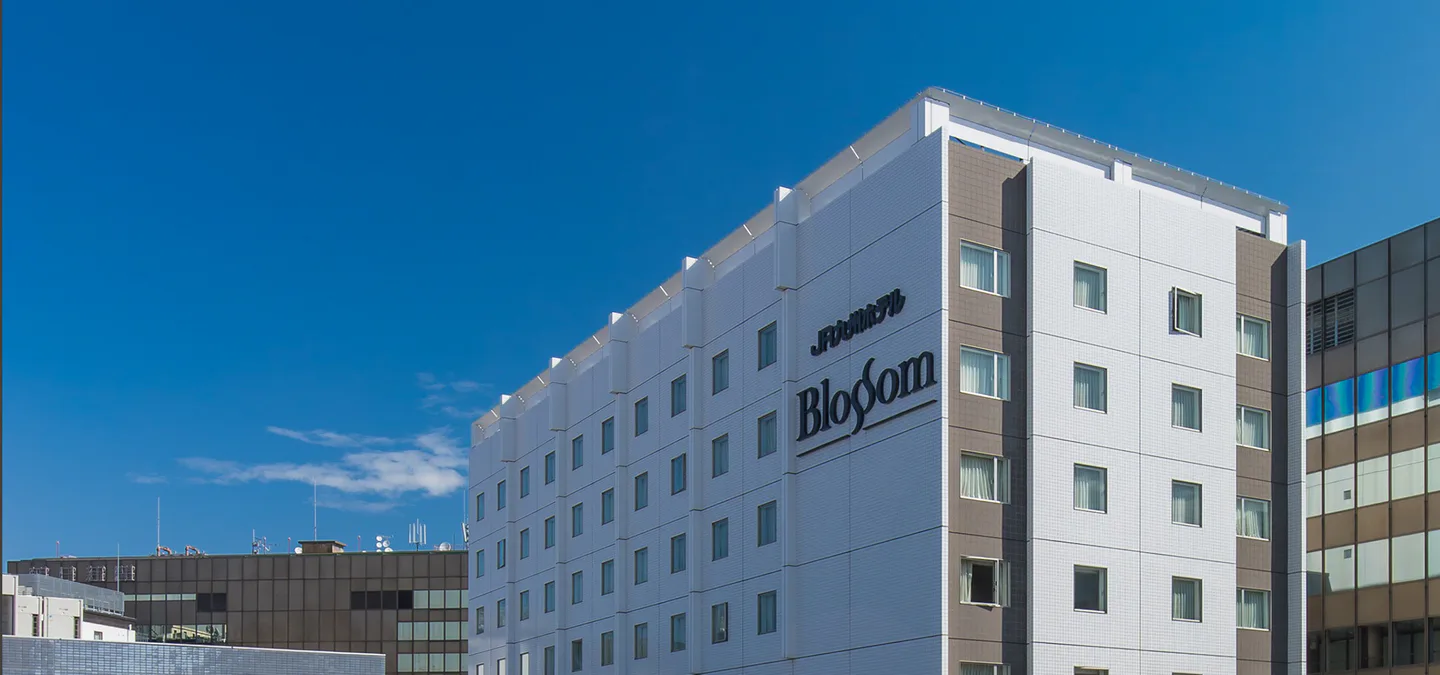
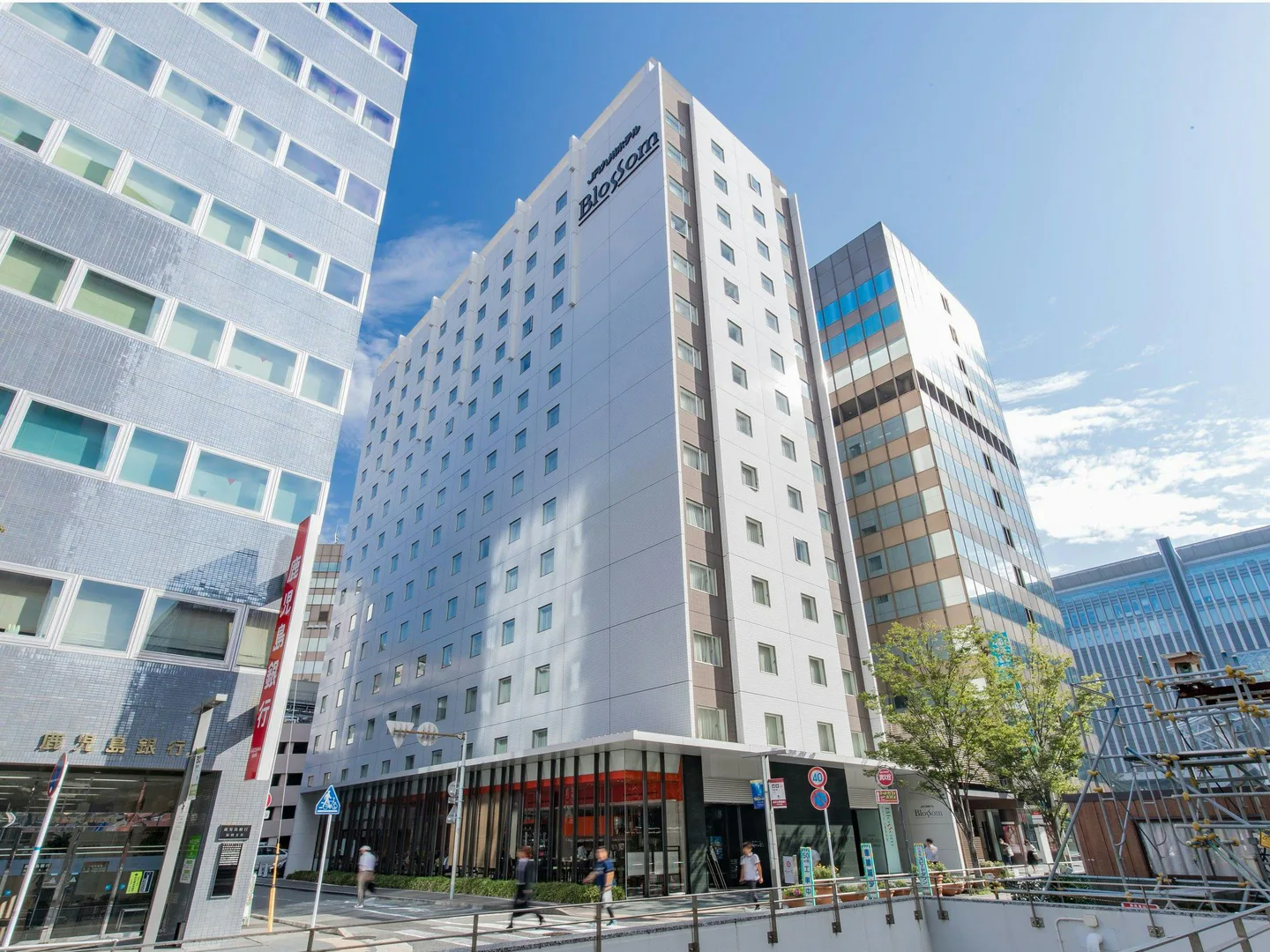
JR KYUSHU HOTEL Blossom Hakata Chuo is a strong fit when Hakata Station is doing real work in the itinerary. Its advertised two-minute walk is the final stretch from the Hakata Exit, not a two-minute journey from a Shinkansen platform to the room. That distinction matters with luggage: station corridors, elevators, crowds and check-in still take time. After a late arrival or before an early train, though, a short last walk can remove the part of the journey that feels longest when everyone is tired.
For two people carrying large suitcases, begin with the 25 m² Superior Twin. It has two 120 × 200 cm beds, and the room description explicitly mentions space to spread out luggage. The 19–20 m² Standard Double is a reasonable price test for a light-bag, short stay; the 29 m² Deluxe Twin is the next step when a third guest or a real need for extra room changes the booking. The location claim only becomes valuable when the named room fits the people and bags. If the broader base is unresolved, compare Hakata and Tenjin as places to sleep first.
Who gets paid back for the two-minute final walk?
A traveller landing in the afternoon with one cabin bag may find many Hakata hotels close enough. The stronger Blossom Hakata Chuo case is a late flight, two large cases, rain, children or an early JR, Shinkansen or highway-bus departure. The last segment then gets used twice: once on arrival and again after checkout. The hotel stands on the Hakata Exit side, so your platform and subway exit still determine how much walking comes before that advertised segment.
From Fukuoka Airport's domestic-terminal subway station, Hakata is two stops away in about five minutes of train time. The train ride is only one part of the journey: airport arrival procedures, the platform, the correct station exit and the walk to the property still need a buffer. The access route points to West Exit 19 as a lift option, while Exit 18 is stairs-only and has limited opening hours. Do not choose a stairs exit with two heavy cases solely because a map shows it nearest to the hotel door.
A useful test is to write down the actual arrival and departure times. Arriving near 22:00 and leaving near 07:30 gives a short night in which the final walk matters more than an extra hotel amenity you cannot use. Arriving at 15:00 and spending the next three days around Daimyo and Tenjin gives the same room a different value. The Fukuoka late-arrival hotel decision handles the first pattern; the three-day city itinerary helps expose the second.
For a longer Fukuoka visit, the station-side premium need not apply to every night. If the first two days are mainly in Tenjin but the final morning starts with an early train, compare a Tenjin stay followed by one Hakata night with keeping Blossom Hakata Chuo throughout. A hotel change has its own cost: checking out, carrying or forwarding bags, and returning for check-in. It is only useful when the saved cross-city trips or room-price difference outweigh that disruption. Keep the final train time in view when making this calculation.
| Trip pattern | What Blossom Hakata Chuo solves | What it does not solve |
|---|---|---|
| Late airport arrival with cases | Short final walk once on the Hakata Exit side | Flight, airport and station navigation time |
| Early JR or Shinkansen departure | Less street walking with luggage after checkout | Platform-finding and boarding buffer |
| Several Kyushu day trips from Hakata | Repeated easy returns to a rail base | Each destination's actual timetable and connection |
| Tenjin and Daimyo every night | A workable station base | Repeated cross-city return compared with a Tenjin hotel |
| One light-bag night | Simple station-side sleep | A premium may buy more convenience than you need |

Choose among the 19–20, 25 and 29 m² rooms
The Standard Double is 19–20 m², has a 160 cm bed and sleeps two. It should not be rejected simply because a larger category exists. One or two nights with compact luggage may give you little reason to pay more. Its smaller floor area becomes a bigger issue when two guests intend to keep large cases open, sort purchases or repack for several trains. A lowest-price comparison that quietly switches from Superior Twin to Standard Double is not comparing the same stay.
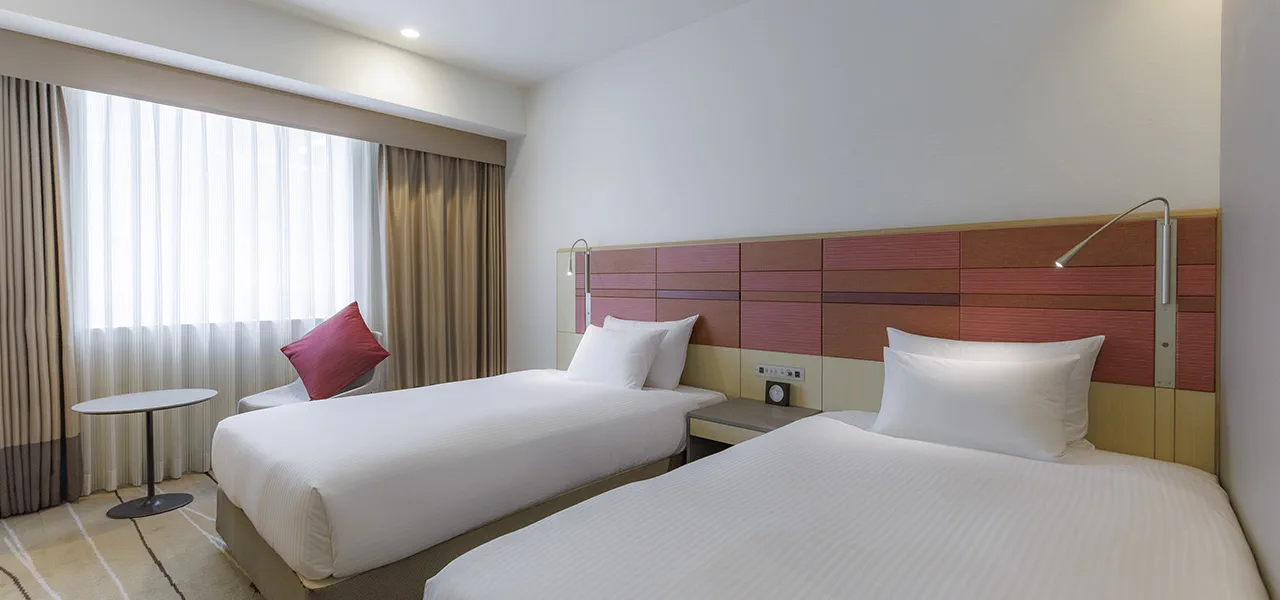
At 25 m², the Superior Twin is the first room we would price for two large cases. The two 120 cm beds separate sleeping space, and the hotel's description specifically addresses luggage-opening room. That is better evidence than using area alone, though it still does not promise that every pair of particular 28-inch suitcases can remain open in any position. Bed placement, furniture and the bathroom consume some of the quoted floor area. The practical question is whether the room lets your group live with its luggage without moving it repeatedly.
The Deluxe Twin is 29 m² and permits two or three guests. For a third person it uses a pull-out extra bed, so confirm the sleeping arrangement rather than assuming three identical permanent beds. Two guests should not upgrade automatically. Four more square metres above the Superior Twin matter when the price gap is modest and the group genuinely uses the buffer; otherwise the 25 m² room already addresses the original luggage problem. The Premium Twin is also 29 m², but it is a different high-floor product. An attractive category name is not a room-area argument.
| Named room | Published area and beds | Best reason to choose it | Check before booking |
|---|---|---|---|
| Standard Double | 19–20 m²; one 160 × 200 cm bed; two guests | Short stay, light luggage and a meaningful price saving | Whether two bags will need to be opened at once |
| Superior Twin | 25 m²; two 120 × 200 cm beds; two guests | Two travellers and large luggage | The same named room on every rate screen |
| Deluxe Twin | 29 m²; two 120 cm beds, trundle for third; two or three guests | Third guest or a fairly priced space upgrade | The third bed and final three-person total |
| Premium Twin | 29 m²; two 120 cm beds; two guests | Upper-floor product when its extras will be used | Do not mistake it for a larger-than-Deluxe room |
For a family, the sleeping question belongs before a station-walk ranking. A room listed for three is not automatically three equivalent beds, and a twin for two is not a family room merely because the building is convenient. The Fukuoka family-hotel guide tests beds, washing and daily return routes together. If your party is four, compare one legal four-person room with two rooms rather than stretching this hotel's twin categories beyond their stated capacity.
Breakfast starts at 06:30; your train decides whether that helps
Breakfast is currently listed from 06:30 to 10:00 with 09:30 as the last-entry time. The hotel guest adult price is ¥2,200; children's pricing and inclusions need to be checked against the booked plan. That opening time sounds early, but it can still be wrong for a traveller who must reach a platform close to 07:00. Allow time to eat, return to the room, collect cases, check out, walk back through Hakata Station and find the correct train. A two-minute street walk cannot remove those other steps.
For a 09:00 or later start, the meal is easier to use. Its main advantage is completing breakfast without a separate search before departing. It is not automatically cheaper than nearby options. Compare the room-only rate with the breakfast-inclusive rate on the same cancellation terms, then decide whether the difference matches the morning you will actually have. The Hakata breakfast choices offer a more flexible alternative when you have time to leave the hotel before eating.
Timing also changes on day trips. The Fukuoka–Yufuin transport comparison and Aso day-trip or overnight decision both start with real departures. If a reserved service leaves early, breakfast should be worked backward from its platform time. A later bus or a city morning may make the buffet a better fit. Do not award the hotel a breakfast benefit merely because a buffet exists.
Twenty-four-hour laundry is more useful after the first night
Coin-operated laundry is available around the clock on floors five, eleven and twelve. For a one-night stop, it is mostly backup. For three to five nights in warm weather, or after several Kyushu cities, it can let you pack less and remove a separate laundromat visit. The hotel does not promise that a machine will be free at the exact time you return. The reliable point is 24-hour access across three floors, not zero waiting.
A multi-city trip often makes this practical. If you return late from Yufuin or Beppu with damp clothes, you may still be able to wash while repacking for the next train. If the trip has no expected load, treat laundry as an incidental facility instead of paying a premium for it. The Japan luggage-forwarding decision helps with another part of the same journey: whether a large case should accompany every rail leg at all.
The rest of the property's facilities support a station-base stay: a restaurant, vending and ice machines, a microwave on the fifth floor and a smoking booth outside the guest rooms. Check-in is currently 14:00 and checkout 11:00. These details are useful when planning a late arrival or a split day, but they do not turn the hotel into a spa resort. If a bath and hotel-based evening are central to the trip, compare Miyako Hotel Hakata against Blossom Hakata Chuo rather than pretending the two sell the same kind of night.
| Facility or time | Current hotel detail | When it changes the booking |
|---|---|---|
| Breakfast | 06:30–10:00; last entry 09:30; adult hotel-guest price ¥2,200 | Check the first departure before adding a meal plan |
| Coin laundry | 24-hour shared machines on floors 5, 11 and 12 | Useful on a longer rail trip when washing avoids extra packing |
| Microwave | Fifth floor | Useful when a late return makes a simple meal more practical |
| Room access | Check-in 14:00; checkout 11:00 | Measure a short overnight stay against the actual usable room hours |
Hakata is a useful Kyushu hub, but not everyone's Fukuoka base
Yufuin, Beppu and Aso travel uses station or bus connections that can make Hakata a sensible anchor. A route linking Fukuoka, Hita, Yufuin and Beppu can make the station-side room earn its price on more than one morning; see the three-day Kyushu overnight route. The same applies when the stay sits at the beginning or end of a longer Shinkansen journey. It is less persuasive if the rail connection is only on arrival and the remaining evenings all belong elsewhere.
Tenjin-focused days change the map. If shopping, Daimyo, Nakasu and late food stops dominate, compare a Tenjin hotel with real hotel time before paying to stay by Hakata Station. The THE BASICS FUKUOKA room decision offers a different test: a longer transfer can make sense if the room and lounge are the point of the stay. A traveller moving between hotels should count the cost and lost hours of that move, not only the nightly rate.
Hakata can still work for food-led nights, but late plans should be deliberate. Use the Fukuoka yatai guide to decide where the evening finishes. For a quieter morning, the coffee and dessert walk or mentaiko guide can be better anchors than a hotel breakfast you bought without looking at the departure time. On a wet day, the rainy-day route may redirect the city hours while the Hakata base stays useful for the next rail leg.
The local network matters more than an attractive pass slogan. The Fukuoka transport-pass comparison separates subway, JR and Nishitetsu journeys. If you will cross to Tenjin repeatedly, a Hakata hotel adds those trips. If most days start on intercity rail, it may remove trips. Count the real journeys before declaring either district universally more convenient.
The closest alternative is not automatically the right comparison. If the main doubt is whether to trade the two-minute finish for a larger room or a bath, first compare the Hakata station hotel shortlist. The price should then be tested against the named room category and the facility you would actually use.
| If Blossom Hakata Chuo is nearly booked | Useful next comparison | Question to settle |
|---|---|---|
| One short night beside the station | Hotel Forza Hakata Station Chikushi-Guchi I | Does the smaller room make sense for the luggage you carry? |
| Public bath matters after the train | THE BLOSSOM HAKATA Premier or Hotel Torifito Hakata Gion | Will you use the bath enough to justify the longer station walk? |
| The bus terminal is the morning anchor | Nishitetsu Hotel Croom Hakata | Which departure point and room size fit the actual itinerary? |
| Evenings end around Nakasu or Tenjin | Hotel Resol Trinity Hakata or Hotel Mei Fukuoka Tenjin | Are evening returns more frequent than early rail departures? |
Our seven Blossom Hakata Chuo ratings
These marks use a two-person rail stay in the 25 m² Superior Twin, with luggage and at least one early departure. A compact double or a Tenjin-led trip changes the room and location trade-off.
Dimension | Our rating | What affects the stay |
|---|---|---|
Location | The Hakata Exit-side finish is short after the airport subway and repeats its value on JR departure mornings. | |
Room | The 25 m² Superior Twin handles two bags better than the 19–20 m² double; the 29 m² Deluxe adds another step. | |
Cleanliness | Room upkeep is consistently strong across large stay samples, with little reason to discount the station position. | |
Service | Front-desk response is strong overall; allow a normal arrival buffer rather than counting on instant check-in. | |
Facilities | Laundry on three floors and the fifth-floor microwave help a rail trip, though there is no large spa. | |
Food | The 06:30 buffet fits some departures; a very early train makes the breakfast supplement unnecessary. | |
Value | The short repeated walk and larger twin can repay a modest premium, provided the rate includes the same meal terms. | |
Overall | Our rail-base choice when the Superior Twin and Hakata departures are both used. |
For one light traveller, the Standard Double may be enough. Two adults carrying larger cases should price the Superior Twin first. A bath-led stay should be compared with Miyako or another Hakata property on the same dates.
Compare prices only after fixing the room and departure morning
Start with the Superior Twin if the pair has two large cases. Compare the same dates, two guests, 25 m² Twin, tax-inclusive amount, breakfast basis, payment currency and cancellation deadline across available booking options. Then compare the Standard Double as a conscious downgrade and Deluxe Twin as a conscious upgrade. A lower headline price for the 19–20 m² Double does not prove the 25 m² Twin has become expensive.
If breakfast is added, test it against the first morning's train. If laundry is a reason for choosing the hotel, name the night you expect to use it. If the entire stay is near Tenjin, include the cost and time of each nightly return. The Hakata Station hotel map lets you check available rooms against the station exits and nearby alternatives for your exact dates.
We would choose Blossom Hakata Chuo for late arrival or early departure with cases, several rail-led Kyushu days, and a competitively priced Superior Twin. We would compare again for one light-bag night, or when the Deluxe upgrade costs nearly as much as a different hotel with facilities you will use. We would leave this shortlist if the defining wish is a public bath, sauna or a Tenjin-first nightlife base. The best use of its two-minute claim is precise: it shortens the final outside walk while the 25 m² room gives two travellers a workable place to put their bags.