
A Fukuoka hotel can be excellent on paper and still force the wrong journey every morning. Hakata is valuable when rail departures, the airport and luggage keep pulling you back to the station. Tenjin can be better when your days break into shopping, coffee, a room stop and another evening out. Nakasu or Gion earns its place only when the particular streets and transport connections help your trip. The useful shortlist begins with the trips you will actually repeat, then checks room and guest constraints.
Think about a three-night stay with two JR day trips. The morning departures are more important than a one-off dinner in Tenjin, so a Hakata base has an obvious case. Change the plan to one sightseeing morning and three evenings near Tenjin; the same station premium may now buy very little. A family of four may have to reject both locations' attractive small rooms if the bed configuration is wrong. This page is a routing tool: use the relevant traveller guide, area decision and hotel comparison without reopening an endless citywide list.
Your party and daily rhythm narrow the search first
Pick the row that describes the friction you cannot easily change. The links go to focused hotel decisions with enough room detail to test the area's promise. A guide for parents emphasises stairs and repeated walks; a guide for four adults starts with proper beds. They are different hotel searches even if both parties fly into the same airport.
| Trip or party | Best first question | Focused route |
|---|---|---|
| First visit | How do arrival, full days and departure split? | Hakata or Tenjin area decision |
| Family | Are beds, bathroom and nap returns workable? | Family hotel guide |
| With parents | Which walk or transfer repeats most? | Hotels with parents |
| Couple | Where will the evenings end? | Couple hotel choice |
| Friends, twin-bed priority | Will mirrors, bathroom and bag space be shared? | Friends’ room and late-return guide |
| Four adults and late nights | Are there four real beds and a usable return route? | Four-adult room guide |
| Solo | How much room time will a compact room absorb? | Solo room trade-offs |
| Budget | Do transfers and add-ons erase the room saving? | Budget hotel cost check |
| Shopping | How many bag drops will you make? | Shopping-area hotels |
| Food evenings | Which district will you leave after dinner? | Food-trip base |
| Late flight arrival | What is the last transfer with luggage? | Late-arrival stay |
| Rain-sensitive transfer | How exposed are the final 300 metres? | Rainy-day hotel routes |
| Four or more nights | Where will laundry, luggage and room work happen? | Long-stay hotel friction |
| Concert | How will you get back after the encore? | Dome and Marine Messe exits |
| Rental car | Which nights really require the vehicle? | Car-day hotel planning |
| Several day trips | Which rail or bus node starts each morning? | Yufuin train, bus or car |
| Public-bath priority | Which bath windows can you actually use? | Miyako versus CROOM bath choice |
| Three or four adults | Is one room cheaper only because its beds are inadequate? | One room or two |
There is no benefit in reading all eighteen routes before making a decision. Select the two that describe your hard constraints, then decide whether their surviving hotels lie in Hakata, Tenjin or the Nakasu/Gion middle. If a group contains both parents and children, the bed rule can eliminate a room before the area's five-minute advantage matters. Conversely, if two adults travel light and stay only one night, a room-size argument may be much less important than the final airport connection.
Hakata, Tenjin, Nakasu and Gion solve different repetitions
Hakata is the most defensible default when JR travel is frequent. A Yufuin train, Kitakyushu connection or early onward rail departure gives its station position repeated value. Fukuoka Airport's subway line also connects the airport, Hakata and Tenjin, so Tenjin is not cut off from an airport arrival; the city subway lists the airport–Tenjin ride at about 11 minutes. The relevant difference is the last station-to-hotel walk with cases, not a claim that one district has airport access and the other does not.
Tenjin is the stronger candidate when several evenings or midday breaks return to the same district. The room can serve as a bag drop after shopping, a pause before dinner or a place to change for a later outing. Nakasu and Haruyoshi shorten the walk from a late meal or yatai, but their central-on-map position does not guarantee the least travel time for every morning train. Gion can balance Hakata proximity with a different neighbourhood feel; check the exact final walk before assuming it is station-direct.
| Area to test | What makes it pay back | Common mistake |
|---|---|---|
| Hakata | JR departures, airport arrival, bus-terminal use, early onward travel | Paying for the nearest exit while spending almost every full day around Tenjin |
| Tenjin | Shopping returns, evening meals, Nishitetsu departures and city-centre breaks | Ignoring the luggage journey on a late first night or early final morning |
| Nakasu / Haruyoshi | Walking back after dinner, yatai or a late outing | Treating an in-between address as equally close to every transport node |
| Gion | Hakata access with a quieter room-location trade | Counting map distance without the last outdoor block in rain |
For the broad location question, Hakata versus Tenjin remains the starting comparison. Add the actual departure node before choosing a hotel. A Dazaifu outing can begin by Nishitetsu from Fukuoka (Tenjin), while a JR excursion uses Hakata; the operator's network changes the hotel calculation. Fukuoka transport tickets and lines prevents treating every day trip as a subway journey. Dazaifu versus Itoshima helps distinguish two very different morning routes.
A useful way to count repetition is to mark the first and last hotel movement of every day. A ten-minute approach once on arrival may be harmless; repeated in rain with luggage, after a long excursion and again for an early departure, it becomes a real cost. The reverse is equally true. Paying a station-direct premium may be wasteful when the room is used as a Tenjin shopping base and the train station is visited only twice in the entire stay.
The Hakata shortlist is a ladder of access, not a ranking
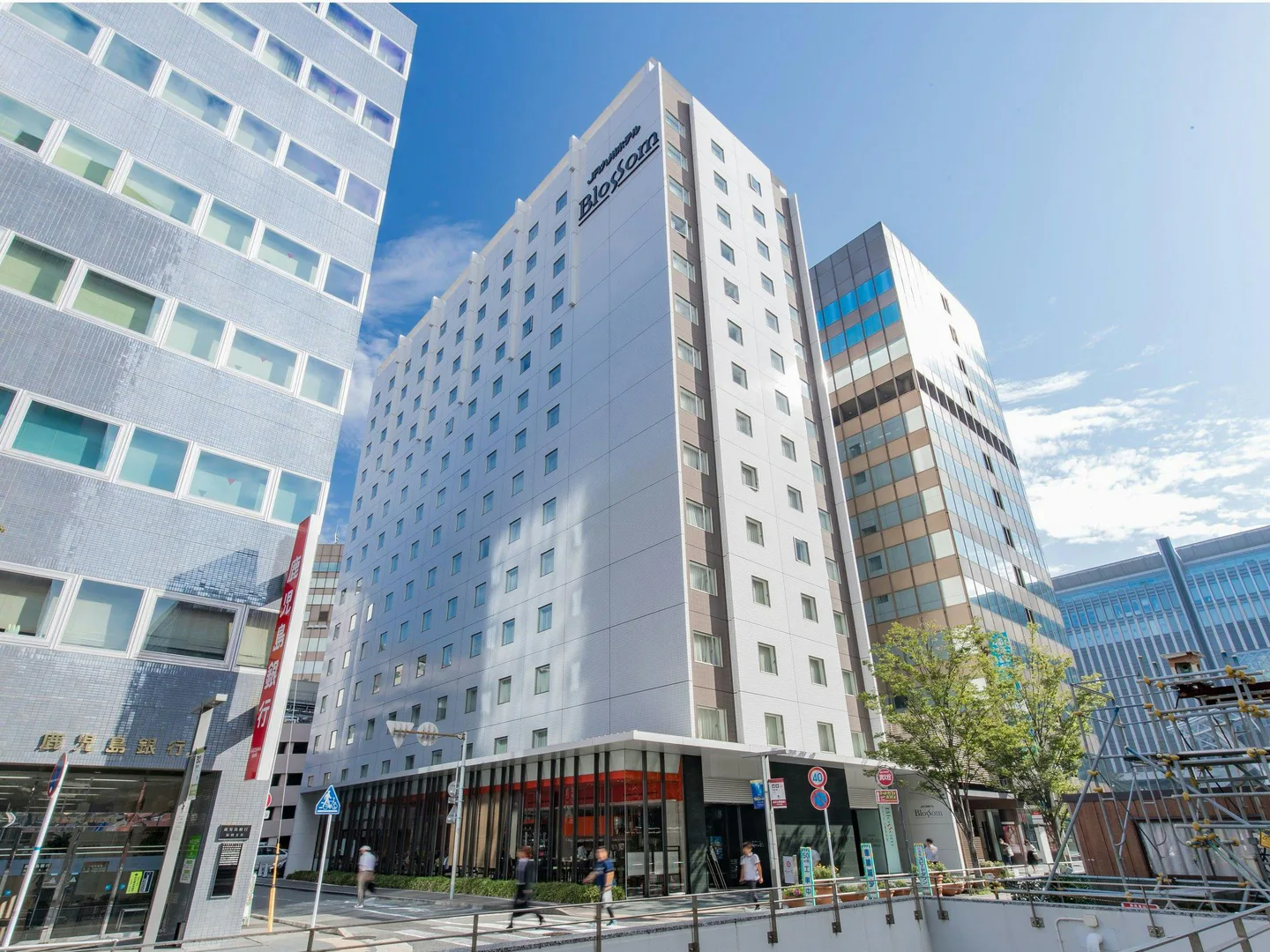
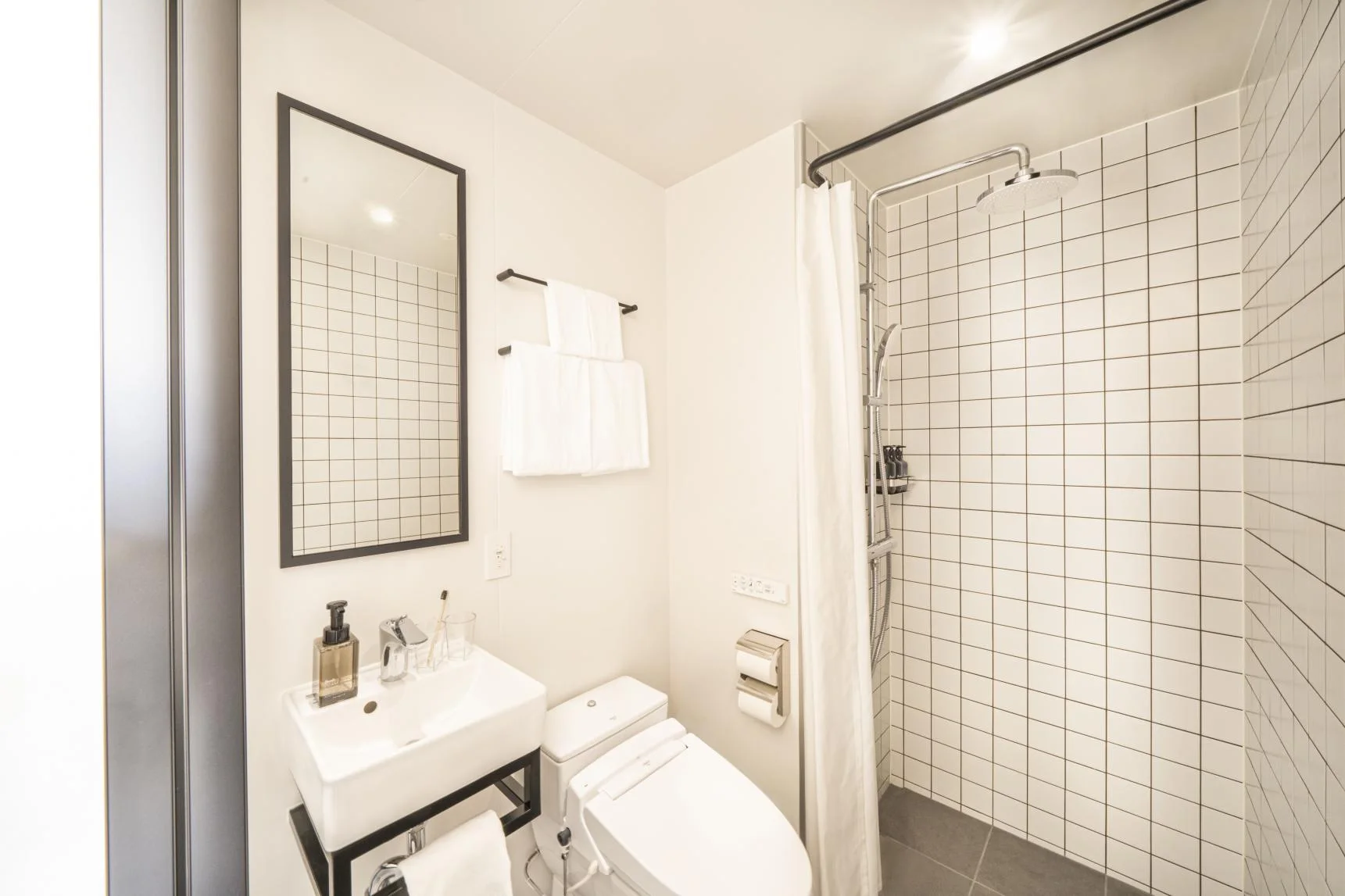
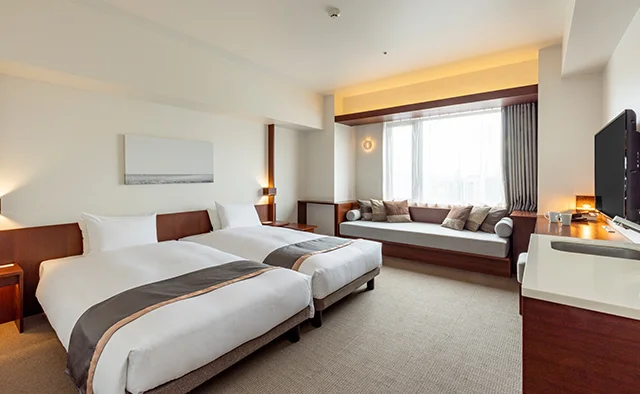
Miyako Hotel Hakata versus Blossom Hakata Chuo isolates the premium for station-direct access. Miyako's direct station relationship can be valuable with parents, large luggage or repeated early trains. Blossom Hakata Chuo tests whether a short station walk and a 25 m² twin are enough without paying for that direct link. HOTEL FORZA Hakata Station gives another very short approach but a smaller 18 m² room example. A traveller who spends most waking hours outside might accept that; two people with open cases for five nights may not.
THE BLOSSOM HAKATA Premier deliberately moves farther from the station in return for a 30 m² twin and public-bath option. The FORZA, Blossom Chuo and BLOSSOM Premier comparison tests those three propositions on a single trip. Do not call the seven-minute hotel inferior simply because its number is larger: a long stay or two adults sharing a room may use its extra space and bath every evening. Equally, a 06:30 train can make the shorter route more valuable than those features.
Nishitetsu Hotel CROOM Hakata sets a different threshold: approximately one-minute bus-terminal access, a compact 14.6 m² room example and a late-use bath. The Miyako versus CROOM comparison is useful when bath timing and station convenience both matter. Miyako versus BLOSSOM Premier asks whether the direct connection outranks a different room-and-bath package. These are room-and-route decisions, not a contest to collect the most amenities.
Some itineraries should bypass the Hakata ladder entirely. Three Tenjin evenings plus flexible morning sightseeing may make an extra Hakata train return a daily burden. But a party arriving late and departing early with two suitcases can rationally pay for the closest usable station access even if the city centre is visited between those movements. The late-arrival hotel guide and last-night airport choice isolate those two ends of the itinerary.
Tenjin and the middle districts need their own room logic
Solaria Nishitetsu Hotel Fukuoka is a central Tenjin candidate when the district itself is the repeated destination. Tokyu Stay Fukuoka Tenjin changes the decision for a longer stay with in-room washer-dryer use. Hotel JAL City Fukuoka Tenjin tests a one-minute Akasaka station approach against a less central Tenjin address. ONE FUKUOKA HOTEL belongs on a shortlist only when the room and hotel time justify the higher-budget product, not as an automatic upgrade because it sits in Tenjin.
The middle districts are more specific. HOTEL RESOL TRINITY HAKATA tests the Nakasu return route against a compact 16–19 m² room. HOTEL IL PALAZZO is a Haruyoshi/Nakasu stay whose design and evening location should be used, not merely admired in photographs. For Gion, Hotel Torifito Hakata Gion weighs a 23 m² twin and bath against leaving the station doorstep. Mitsui Garden Hotel Fukuoka Gion asks whether a 26.6 m² triple really fits three adults and their luggage.
For a higher-budget area comparison, Miyako versus Solaria tests Hakata and Tenjin at hotel level. The Tenjin and Nakasu three-way comparison puts bath, washer-dryer and late-night shared space into the same choice. For three adults, Mitsui Garden Gion versus BLOSSOM Premier is a better starting point than a generic couple-room list.
Trip length changes the value of a hotel move
With only two nights, the middle day is the only full day. Switching from Hakata to Tenjin consumes check-out, luggage handling, the journey between hotels and another check-in. A split stay should therefore solve a hard schedule problem before it is considered. One base is usually the better use of time for a two-night city visit. A late arrival can make Hakata especially attractive on night one, but the answer may still be one Hakata base for the whole trip rather than a transfer for the final night.
Four or five nights create different pressures. Laundry, an open suitcase, desk use, supermarket trips and repeat walks may matter more than a dramatic lobby. The Fukuoka long-stay room guide focuses on those repeated inconveniences. Tokyu Stay's washer-dryer is a meaningful advantage only if you intend to use it; the larger room in a different hotel can be more useful for a traveller who does no washing. In both cases, make the comparison using the actual category and cancellation terms on your dates.
A single night outside the city can make sense when it offers a genuinely different coastal or resort day. THE LUIGANS Spa & Resort addresses whether leaving the city for a 33 m² sea-view room justifies the movement. That is a different argument from changing one central Fukuoka address to another. For a standard short city stay, a split is more likely to spend time than save it.
Departure mornings, dinner returns and room constraints
JR-heavy mornings usually raise Hakata's value, but “day trip” is not one transport category. A Nishitetsu Dazaifu plan can favour Tenjin; a booked bus tour depends on its meeting point. The current JR Kyushu Yufuin no Mori route begins at Hakata, while Nishitetsu's network begins its Dazaifu approach from Fukuoka (Tenjin) with a change or selected direct service. The Yufuin train/bus/car comparison and the Fukuoka operator guide are better evidence than calling every outward excursion “a Hakata day trip.”
Shopping and food plans reverse the day. Shopping-hotel choices count bag drops and second outings. Food-trip hotels place the hotel where the evening ends, while the yatai area guide helps distinguish Nakasu, Tenjin and Nagahama. If breakfast shapes the morning, use the breakfast guide before assuming a hotel buffet is necessary. Paying for breakfast that starts after a fixed departure adds no usable value.
Room fit can overrule all district arguments. Families need usable beds and a bathroom routine; friends may need separate adult beds rather than a nominal “sleeps four” label. For a group with parents, stairs and repeated evening returns can matter more than one stated walk time. Bath lovers need the opening windows and guest restrictions, not only a photograph of steam. The three-or-four-adult room guide and the family bed-and-laundry guide remove options that a location map cannot evaluate.
Rain magnifies the final block from an exit. A station-adjacent address does not necessarily have a protected route; a “direct” connection has a different meaning from a seven-minute uncovered walk. Rainy-day hotel approaches tests that distinction. The concert question is similarly about the journey back when everyone leaves at once; PayPay Dome and Marine Messe hotel bases should be read from the post-event journey, not a straight-line venue distance. A rental-car trip needs its own parking and pickup nights, as the self-drive hotel guide explains.
A concise hotel shortlist with different reasons to survive
Keeping six hotels for the same reason is not a shortlist. Keep one that minimizes transport, one that protects the evenings, and one that solves a real room or facility need. If two candidates both have the same station approach and the same compact room limitation, eliminate one before another round of browsing. The current room offer may alter which one survives, but the comparison should be among distinct benefits.
| Need that survives elimination | Hotel or comparison to test | Question to settle |
|---|---|---|
| Direct Hakata access | Miyako versus Blossom Chuo | Is the shorter protected approach used often enough? |
| Compact, very close Hakata room | FORZA Hakata Station | Can the party live with an 18 m² category? |
| More twin space near Hakata | BLOSSOM HAKATA Premier | Will 30 m² and the bath repay the walk? |
| Central Tenjin returns | Solaria Nishitetsu | Are evening walks and room returns frequent? |
| In-room laundry | Tokyu Stay Tenjin | Will it replace a repeated laundry chore? |
| Akasaka station access | Hotel JAL City Fukuoka Tenjin | Does Akasaka fit the daily route better than Tenjin centre? |
| Nakasu evenings | RESOL TRINITY HAKATA | Is late access worth a 16–19 m² room? |
| Three-adult room and bath | Mitsui Garden Gion versus BLOSSOM Premier | Are three formal beds and bathroom flow right? |
| Tenjin versus Nakasu hotel function | Three-way function comparison | Will bath, laundry or late shared space be used? |
After selecting two to four survivors, check the real room inventory for your dates. Search results can show a premium suite photograph against a standard-rate Double or treat a sofa bed as though it were an ordinary bed. Keep guest age, formal bed count, breakfast, taxes, payment timing and cancellation terms aligned. With a group of three or four adults, compare the one-room total against two actual rooms, not against a single room whose capacity does not match the people booking it.
Seven area-fit ratings for a typical first visit
These are our /10 assessments for two adults staying three nights, taking one JR excursion and spending two city evenings out. They are area-fit judgements based on the route described here, not guest scores for individual properties. A couple with three JR departures or a family with room constraints should change the weights rather than accept one column as a universal winner.
| Dimension | Hakata | Tenjin | Nakasu / Gion | Why |
|---|---|---|---|---|
| JR day-trip departure | Hakata is the rail hub; the other areas add an approach. | |||
| Airport arrival with luggage | All have airport connections, but the last walk and exit change the effort. | |||
| Shopping room returns | Tenjin makes repeated bag drops more natural. | |||
| Late dinner on foot | Nakasu/Haruyoshi can shorten the last food-focused walk. | |||
| Range of room products | Hakata has several documented station, larger-twin and bath trade-offs. | |||
| Bath/laundry use | Miyako/CROOM and Tokyu Stay/Gion examples solve different routines. | |||
| Two-night single-base simplicity | Hakata reduces luggage and rail changes in this stated sample itinerary. |
The ratings are not additive. A public-bath preference cannot make an undersized triple room fit three adults. A concert after midnight may make the journey back more important than the morning rail score. Use the seven lines to locate the actual disagreement, then compare hotel rooms that satisfy the hard requirements. A citywide “best hotel” list misses that order of operations.
| Before opening live rates | Question that removes wrong candidates | What can wait |
|---|---|---|
| Map the trip | Where do mornings begin and evenings end? | Hotel star labels and rankings |
| Pick the area | Which station or dinner return repeats most? | A small nightly price difference |
| Check hard room rules | Do all guests have real beds, room and a workable bathroom? | Lobby design and view upgrades |
| Check trip-specific function | Will laundry, bath, breakfast or a lounge actually be used? | Benefits outside your hours |
| Compare two to four survivors | What unique problem does each remaining hotel solve? | Another broad citywide hotel list |
| Price the exact stay | Are beds, meals, tax, payment and cancellation alike? | Unmatched headline room rates |
Three trips that produce different shortlists
Two nights, first visit, late arrival. Remove a split stay immediately unless an onward train forces one. On the first night, few transfers and a clear final hotel walk matter more than a rooftop feature you will not have time to use. Hakata's station-side Miyako, Blossom Chuo or FORZA are credible candidates, but their actual room sizes differ. If the one full day and both evenings are strongly Tenjin-focused, a clear Tenjin airport-subway route can still win. The decision is the cost of the late first leg against the number of city-centre returns, not the district's reputation.
Four nights, two excursions and three Tenjin evenings. Draw four mornings and four evenings. If both excursions require fixed early JR departures, Hakata may be the safer base even with three Tenjin nights. If they are flexible and the evenings include shopping, a room drop and another outing, Tenjin can create more repeated value. Tokyu Stay's washer may enter the shortlist if clothes will be washed; Solaria may enter for a central evening base. Neither should be chosen merely because an article calls it a top-rated property.
Three adults who want a bath. Begin with the sleeping arrangement. A proper triple can solve a problem repeated every night; a shared bath might be used only once. Mitsui Garden Gion's 26.6 m² triple and the Gion-versus-BLOSSOM comparison are more relevant than a bath-only list until all three beds are clear. If the group instead books two rooms, compare the combined total and two bathrooms. Only then weigh bath hours, station access and dinner location.
A fourth itinerary may make central Fukuoka the wrong base for one night: a dedicated coast day where the room view and resort facilities will actually be used. The LUIGANS one-night assessment handles that distinct purpose. Do not turn an ordinary two-night city visit into an awkward split merely to sample two hotel brands.
The final booking check is about the actual room
Once two or three candidates remain, enter the real number of guests and any children's ages. Match formal beds, room floor area, bathroom layout, breakfast, cancellation deadline and payment conditions. A nominally cheaper hotel can cost more after extra transfers, paid laundry or a second room; an expensive hotel can be rational when a direct route saves movement several times. The comparison has to use final yen totals on the exact stay dates rather than a stale headline rate.
Do not restart the citywide search because a new advertisement shows a fourth hotel. Keep one candidate for rail convenience, another for the repeated evening route and perhaps one for a specific room or facility need. If none fails your hard constraints, the remaining difference can be decided by live price. If one fails the bed or late-arrival requirement, no discount makes that room the right product.
The couple guide helps if the hotel itself will be part of the trip; the parents guide gives repeated walking more weight. A solo visitor can instead use the solo-room trade-off. These are final refinements to a small shortlist, not reasons to reopen every hotel in Fukuoka.
For a three-night first visit with one JR excursion, I would begin in Hakata, then move the search to Tenjin only if evenings and room returns truly dominate. Someone whose trip is largely food-focused should test Nakasu/Haruyoshi as a specific night route. Compare stays around Hakata Station on your exact dates; change the address to Tenjin or Nakasu when the daily-route test points there. Keep the room, bed and cancellation rules the same in every comparison.