
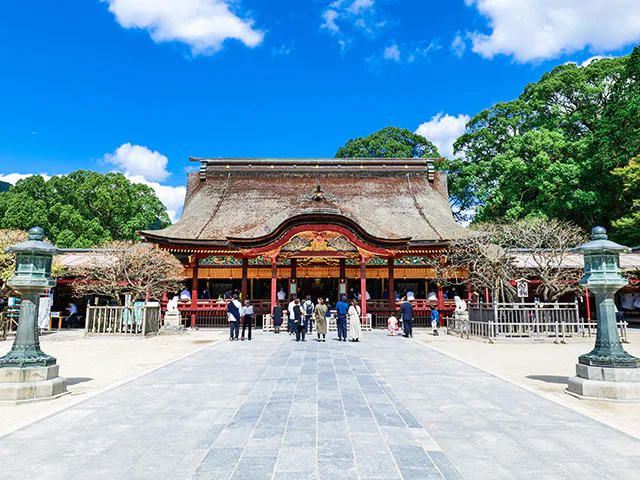
Dazaifu and Itoshima compete for the same spare day on many Fukuoka itineraries, but they ask for different amounts of time. Dazaifu puts the shrine approach, Dazaifu Tenmangu and Kyushu National Museum into a compact area. Itoshima rewards a longer day along the coast, especially if you can choose your own stops and return time. For a half-day with no car, Dazaifu is usually easier to finish well. Choose Itoshima when the sea, cafés or sunset are a deliberate priority and you have solved the journey home.
The date of travel matters. Kyushu National Museum normally closes on Mondays, with the following working day used when Monday is a public holiday. The old warning about the shrine's August–September 2026 frontal-access restriction has expired: Dazaifu Tenmangu announced that worship from directly in front of its Main Sanctuary resumed on 19 September 2026. On the coast, the last direct West Coast Liner from Futamigaura can leave before a summer sunset. Check the relevant day of the week before deciding that the shore will be your evening plan.
A spare afternoon and a free day produce different answers
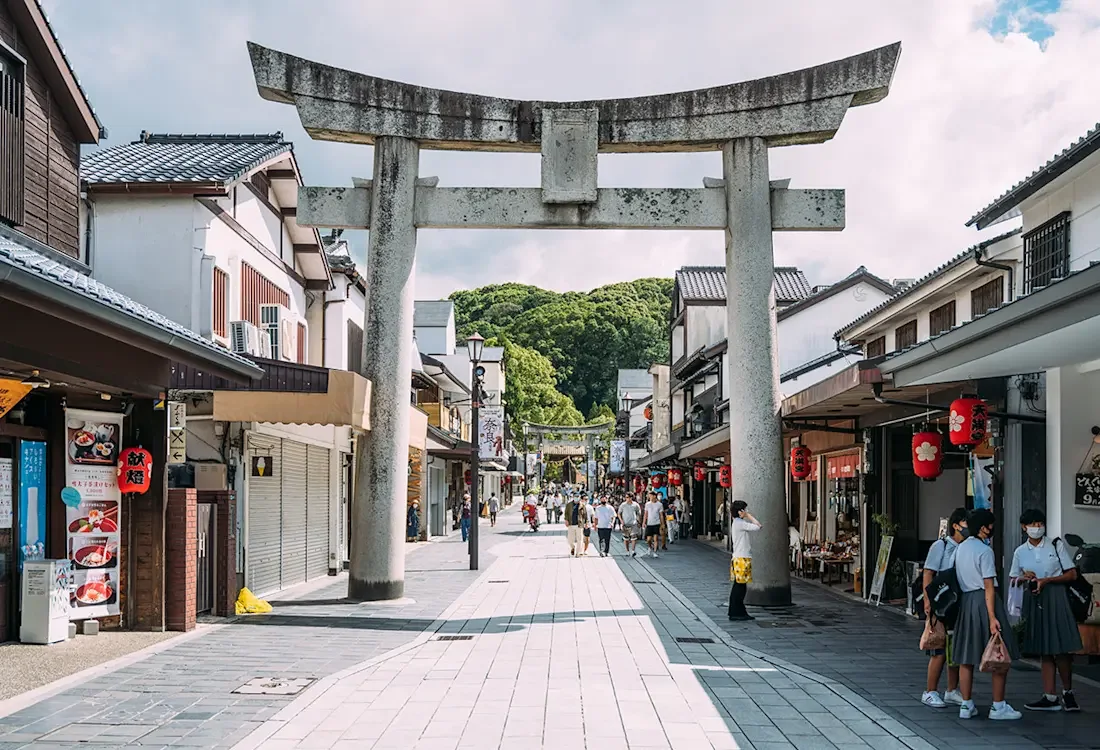
Count usable time after breakfast, the journey out and your fixed evening plans. Dazaifu can form a genuine four- to six-hour excursion because the shrine town and museum are adjacent. From Hakata Bus Terminal, Nishitetsu estimates about 40 minutes on its Dazaifu Liner in normal traffic; the bus can take longer in congestion and boarding is subject to capacity. Tenjin-based travellers can use Nishitetsu rail via Futsukaichi. Once in Dazaifu, the main experiences are within one walkable district rather than scattered across a peninsula.
Itoshima's appeal expands as you give it time. Sakurai Futamigaura can be the sole destination, but adding lunch, a café, another stretch of coastline or late light makes the day more satisfying for travellers who came specifically for the sea. Each extra stop adds transport decisions without a car. The coast is not one station plaza that you can roam at will and return from at any minute. The day-trip-or-overnight decision becomes relevant as soon as sunset or a slow morning matters more than returning to Fukuoka the same night.
The table turns the comparison into a choice under specific conditions. It keeps the old article's time, weather, transport and wider-trip dimensions while updating the shrine access status.
↔ Scroll table left or right
| Your actual day | Stronger choice | Reason | What could change it |
|---|---|---|---|
| Four to six usable hours | Dazaifu | Shrine town and museum sit close together | Closed museum and little interest in the shrine itself |
| Clear full day for the shore and cafés | Itoshima | Time makes separate coastal stops worthwhile | Return buses or poor visibility restrict the route |
| Futamigaura sunset without a car | Conditional Itoshima | Evening light can be the reason for going | Sunset is after the last useful bus; arrange a car, taxi or overnight |
| Museum closure day or wet weather | Reassess | Dazaifu's indoor advantage depends on the museum being open | Shrine-town interest may still justify it |
| Rental car already part of the trip | Itoshima gains ground | Coastal stops can be reordered around weather and energy | Weekend traffic, parking or bad coastal weather |
| Wider Japan route already full of temples and shrines | Often Itoshima | Coastline may add more variety | Specific interest in Kyushu National Museum or Dazaifu Tenmangu |
What a rainy Dazaifu day really contains
Kyushu National Museum gives Dazaifu an indoor anchor when the forecast is mixed. Its current visitor information shows normal opening from 09:30 to 17:00, with later Saturday closing during specified special-exhibition periods; admission ends before closing. Monday is normally the closed day, shifted after a Monday public holiday. Exhibition schedules and special opening days can alter that pattern, so check the calendar for the precise travel date. A closed museum does not close the shrine or its approach street; it changes the amount of sheltered time available.
If you enjoy the museum collection, Dazaifu can occupy far more than a quick photograph of the shrine. Give the gallery enough of the day's budget to matter. If the exhibit has little appeal and the forecast promises a prolonged downpour, Dazaifu is no longer automatically an all-weather winner. The approach shops and shrine paths are partly outdoors, and a wet visit may be short. A Fukuoka three-day route shows how a Dazaifu half-day can leave room for a city evening.
Earlier 2026 guidance about the Main Sanctuary needs its own date correction. Restoration and temporary-sanctuary dismantling had limited the normal frontal approach. The shrine's announcement dated 19 September says visitors can again worship directly from the front. That makes the prior late-summer construction exception historical, not a reason to redirect an October or later trip. Onsite work or ceremonies may still affect a particular day, but do not assume the old frontal barrier remains. The hero photograph shows a shrine building; it is an image of architecture, not proof of today's exact construction layout.
Nishitetsu's Tabito bus is convenient from Hakata and the airport international terminal, and its published service does not require a reservation. That also means a full bus may refuse boarding, and road traffic can alter the estimated 40-minute Hakata journey. Tenjin travellers may prefer rail through Futsukaichi rather than moving across the city to catch the bus at Hakata. When the return evening is fixed, take the route whose realistic travel buffer you understand, not simply the route with the smallest advertised number. Hakata versus Tenjin accommodation also changes which departure point is already close.
Futamigaura's sunset has a bus deadline
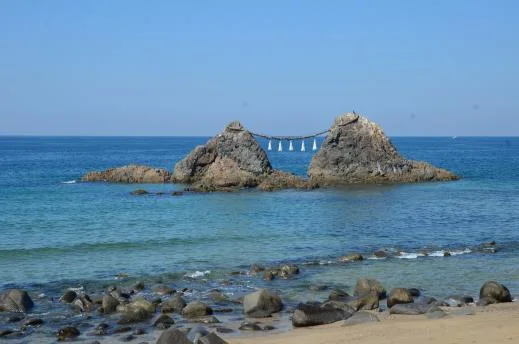
The Sakurai Futamigaura sea rocks and rope between them are a clear visual reason to travel to Itoshima. Yet the day's strongest light can occur after the most convenient direct return. Showa Bus's timetable revised in April 2026 lists the last West Coast Liner departure toward central Fukuoka from the Futamigaura/Tsuki to Taiyo stop at 17:31 on weekdays and 18:36 on weekends and public holidays. These are timetable observations, not promises that every future date or temporary service pattern is identical. Compare the actual sunset time for your date with the bus you intend to catch, including the walk to its stop.
There is also a local-bus route toward Kyudai-Gakkentoshi Station, followed by rail, but that is a different return journey. Under the same revised timetable, the last relevant Futamigaura local departure is about 18:21 on weekdays and 19:36 on weekends and holidays. Verify the direction, stop and service date: some late services shown in a timetable run away from the station toward Ito Sales Office and cannot take you back to Fukuoka. A rental car, prearranged taxi or Itoshima overnight is the honest alternative when a bus cannot preserve the sunset.
The direct West Coast Liner works best for a simple Fukuoka–Futamigaura–Fukuoka shape. It is not a frequent hop-on sightseeing loop along the entire peninsula; boarding and alighting restrictions also apply on part of its coastal route. Use the local Nishinoura services for a more complicated no-car day, checking each link before leaving. Missing a low-frequency coastal bus can erase a café reservation or the last light, which is a higher cost than simply returning from Dazaifu a little later. Itoshima activity choices helps build the day from the real bus network.
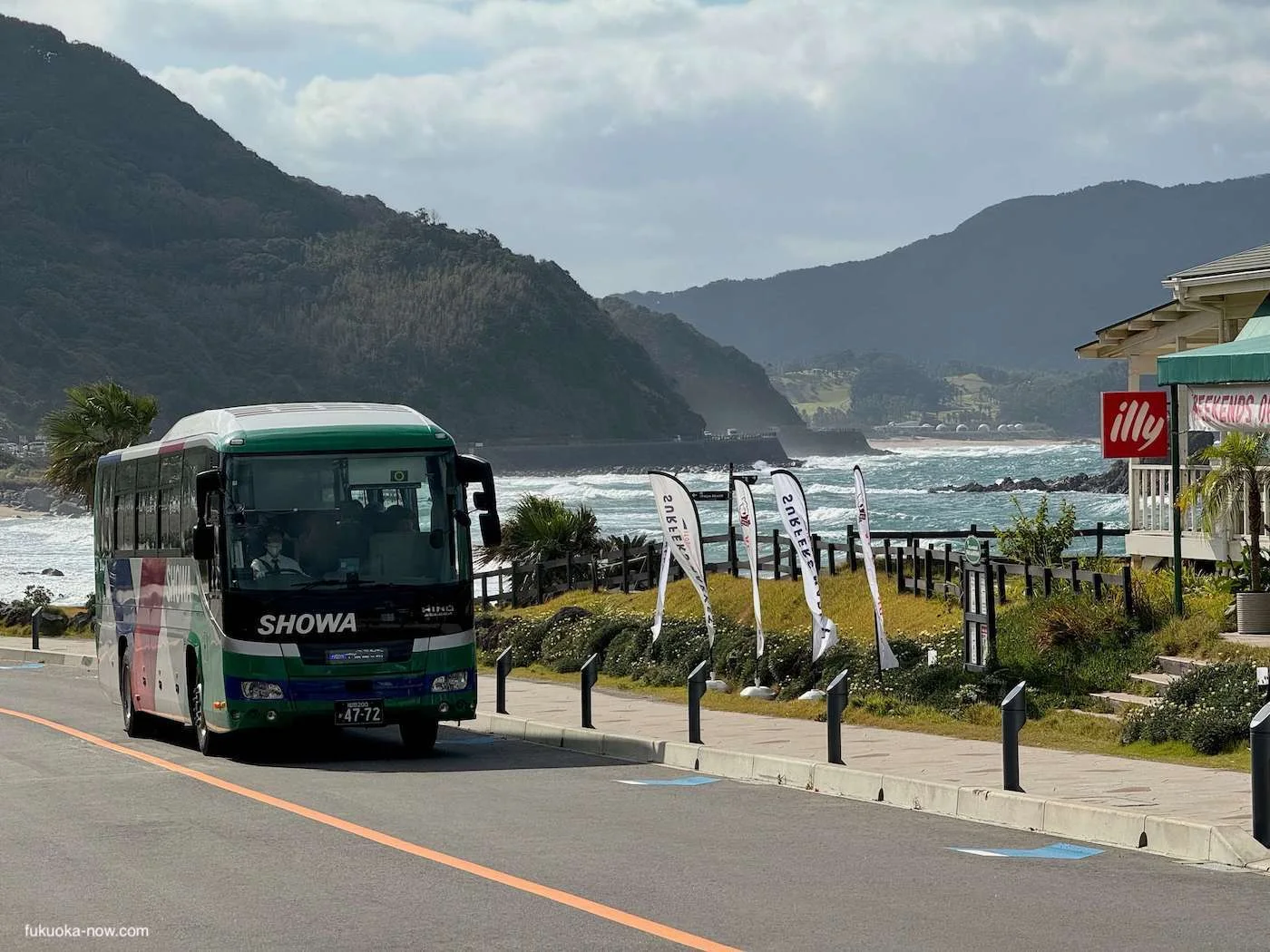
A public-transport Itoshima day can still work beautifully if the goal is one coastal anchor and lunch rather than a dozen pinned places. Arrive early enough for unhurried shore time, choose one nearby café and take a return that is comfortably before the last bus. If sunset is essential, build the transport around it before paying for other reservations. Comparing the West Coast Liner with rail and local bus is more useful than treating the coast as one generic excursion.
Driving changes Itoshima's shape, not Dazaifu's core
Itoshima's scattered places are much easier to connect with a car. The Shima Sunset Road runs along a substantial stretch of coast, and driving lets a group change the order of shore, lunch and café stops around weather. It also lets a family store extra clothes, shorten a stop when someone is tired and wait for the light without a bus cutoff. Those are meaningful advantages, even if the ultimate goal is simply a relaxed day rather than a long checklist.
Driving brings its own constraints: parking near a popular shore, traffic on fine-weather weekends, and a designated driver if lunch includes alcohol. Do not assume every quiet-looking beach has a convenient public parking area. By contrast, Dazaifu's main sights remain a walking cluster after you park, so a car adds less to the central experience. A visitor who already has a rental for a Kyushu road trip should reassess Itoshima upward; somebody who would rent only to fill a four-hour spare block may not gain enough to justify the pickup and return.
For travellers cautious about driving in Japan, it is reasonable to choose Dazaifu rather than make a first rental day out of a coastline whose value depends on relaxed stops. Itoshima becomes a better choice when the car is already part of an Aso, Nagasaki or wider Kyushu plan and the group understands its driving responsibilities. The Fukuoka-to-Aso comparison is one example of a larger itinerary in which rental-car decisions affect more than this single coast day.
The rest of Japan can break the tie
A first-time route already visiting Kyoto, Nara and Miyajima may be rich in shrines, temples and historic streets. Itoshima can change the rhythm with open sea, a slow lunch and less formal sightseeing. If most other days are urban shopping and transport, Dazaifu may supply the cultural contrast the trip lacks. Neither option wins by category alone: someone genuinely interested in Kyushu National Museum should not skip it merely because a generic itinerary contains another museum elsewhere.
Count the nights available in Fukuoka before giving one away. On a two-night stop, a full Itoshima day can leave little city time; a Dazaifu half-day may preserve an evening for food. With four nights, the coast can have an entire day without forcing Fukuoka's core sights into transfer hours. The two-, three- or four-day Fukuoka decision is therefore upstream of this comparison. Fukuoka's place in a first Japan trip clarifies whether either side excursion deserves one of the remaining days.
Families and older travellers should count exit options rather than comparing only advertised walk lengths. In Dazaifu, a tired visitor can shorten museum or shrine time and head toward a frequent transport corridor. On an Itoshima public-bus route, finishing a café twenty-five minutes late can mean a long wait or a lost connection. With a car, the answer may reverse because rests and departure time are under the group's control. Dazaifu still has walking, stairs and crowds; a compact map does not guarantee a physically effortless outing.
One excursion day is usually one of these places
Dazaifu and Itoshima begin in different directions from Fukuoka. Combining them in one day can reduce Dazaifu to a hurried shrine photograph and bring you to the coast just as the return deadline becomes urgent. The itinerary may look efficient on a map of Kyushu but use most of its useful hours moving between transport systems. If you have two open days and enjoy both subjects, give each its own day. If you have one, choose the place whose experience your wider route cannot provide elsewhere.
Dazaifu half-day with Fukuoka evening: Leave after breakfast, walk the shrine approach, visit Tenmangu and use the museum if it is open and its collection interests you. Return to the city with enough time for a meal, shopping or a yatai evening. The route is resilient because the museum can expand or contract the time. Fukuoka yatai guide may make that saved evening more valuable than an additional roadside stop.
Itoshima by bus without depending on sunset: Use the West Coast Liner or rail plus local bus, make Futamigaura your main shore stop, add lunch or one café and take an agreed return well before the last service. This version gives a genuine coast day without pretending the bus is frequent. It is the best public-transport version for someone who values low stress more than evening light.
Itoshima full coastal day through sunset: Use a rental car, a taxi budget or an overnight. If you do rely on buses, demonstrate the exact connection from the actual stop against the sunset date before deciding to stay late. The local rail connection can extend the day on some dates, but it is not an infinitely flexible safety net. One coastal night can be a more coherent purchase than forcing a late return to a Fukuoka hotel.
For an undecided visitor with limited time and no car, Dazaifu is the robust choice, especially when the museum is open. Itoshima should win because you want a coast day enough to plan its shape. As of October 2026, the shrine's old frontage restriction has ended; the live variables are museum hours, weather and transport. The last useful Itoshima departure deserves the same attention as the view you hope to photograph.
If both outings start from one Fukuoka base, compare Fukuoka rooms for the full stay before shifting hotels toward a single day trip.