
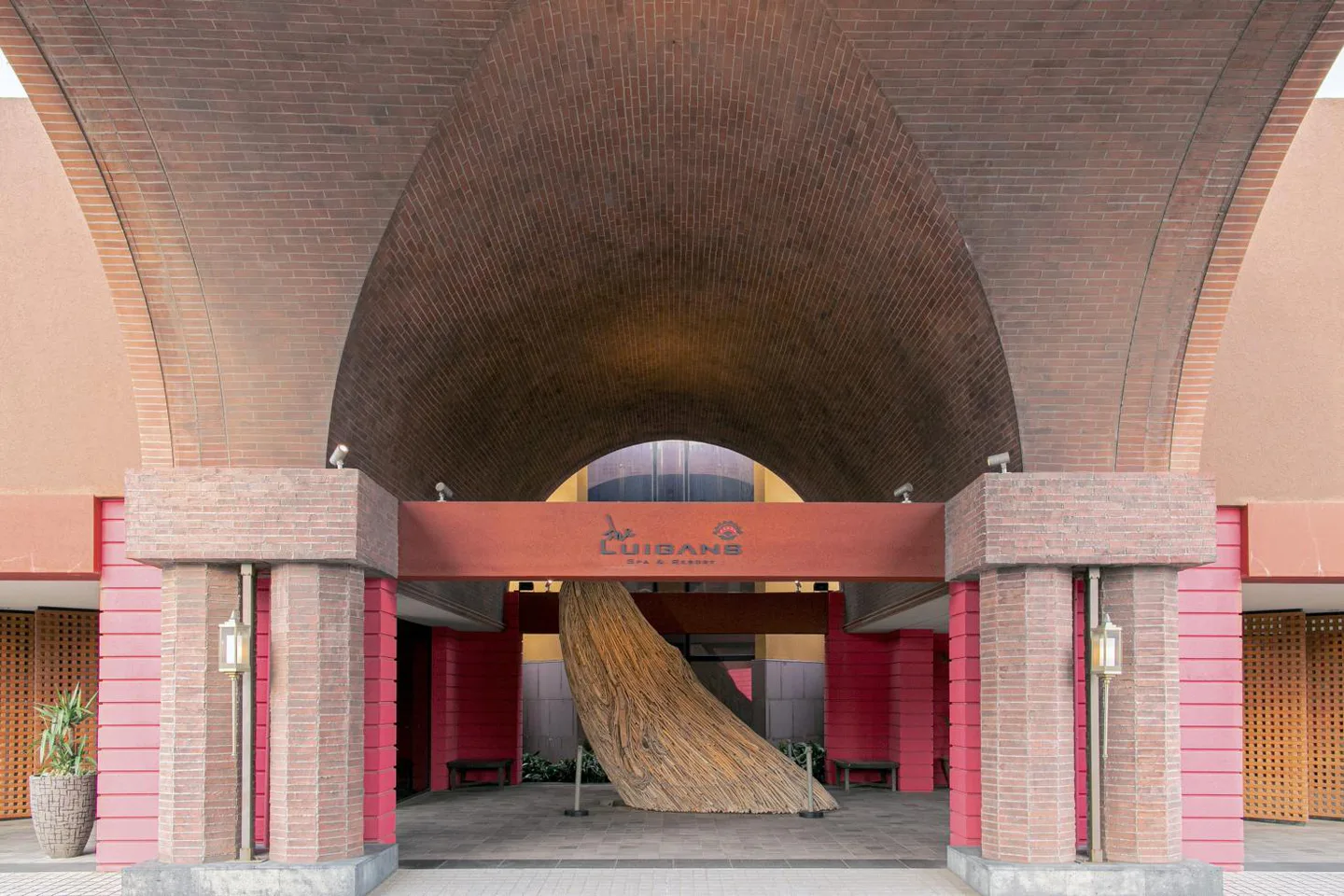
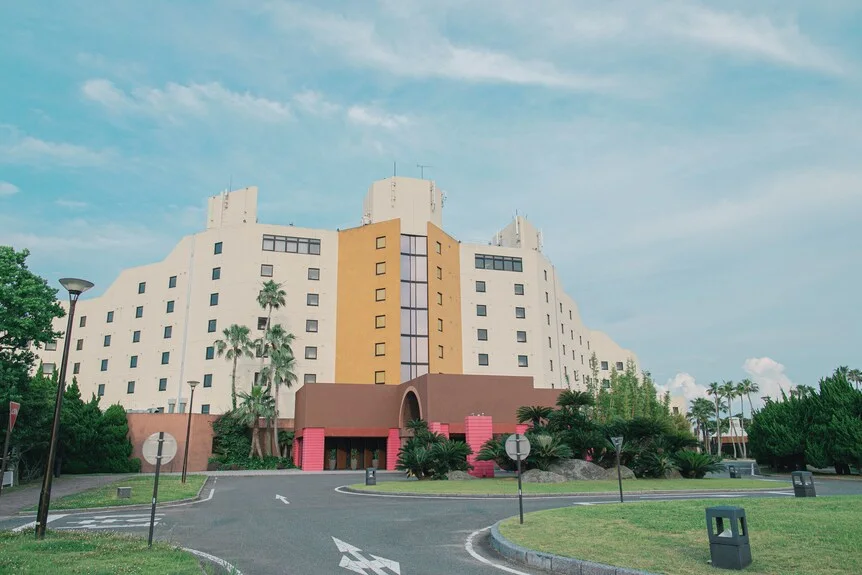
THE LUIGANS Spa & Resort sits beside Uminonakamichi rather than in the Hakata or Tenjin hotel grid. A single night there can work when a day at the coast continues into an unhurried room and dinner evening. Moving an entire four-night Fukuoka stay out to the resort usually creates repeated travel back to the city for food, trains and shopping. The useful choice is whether one city night can be dedicated to Uminonakamichi without making the rest of the trip harder.
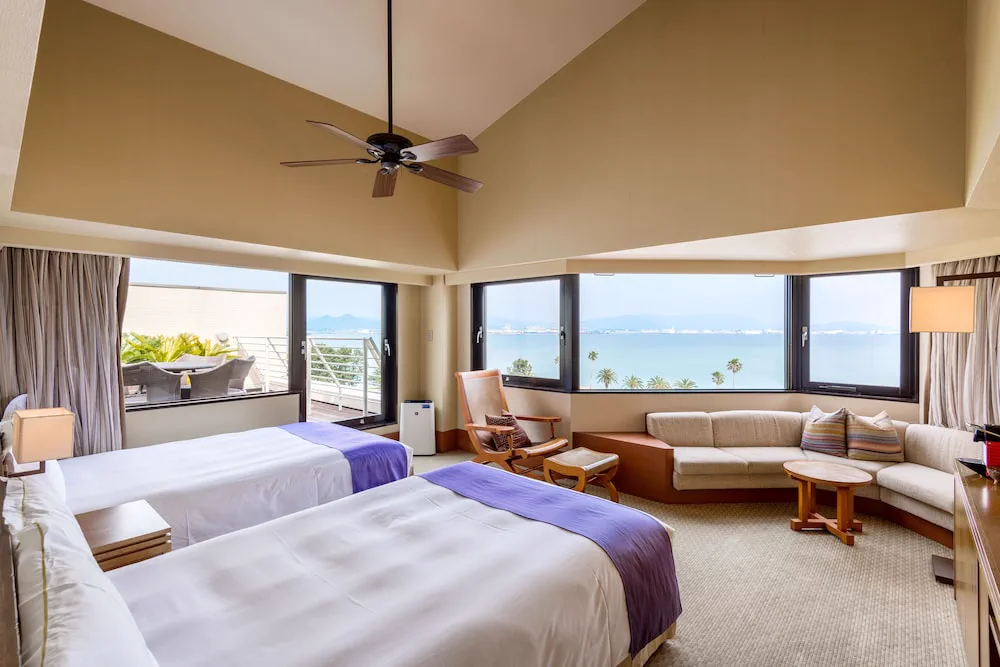
The Grand Twin's published 33 m² gives a pair more space than many central-city rooms, and the hotel describes its rooms as facing the bay. The location also means committing to a transport plan. Its free bus leaves from HEARTS Bus Station Hakata, about five minutes on foot from JR Hakata; seats are unreserved and can fill. JR Uminonakamichi Station is another approach, followed by about six minutes on foot. Neither route makes the property a casual late-night Hakata base.
When one coastal night fits the trip
↔ Scroll table left or right
Decision | Conditions that support it |
Book | At least three or four Fukuoka nights; one dedicated Uminonakamichi afternoon and night; next morning not rushed. |
Compare again | You want a larger room but still prioritise late city food, or shuttle and onward timing are uncertain. |
Keep the city hotel | Every morning begins early at Hakata or every evening ends late in central Fukuoka. |
The stay is strongest when its location changes the itinerary for the better: spend the day around Uminonakamichi, arrive with daylight left, eat in or around the resort and wake without an early Hakata departure. A room move done only to collect a larger floor area or a sea-facing photograph has a weaker case. The lost city evening, luggage move and return trip need to be counted alongside the accommodation price.
Begin with Hakata versus Tenjin as a Fukuoka base and three days in Fukuoka. If those city days are already squeezed, shifting hotels for one night may remove more usable hours than it adds. If one day is already meant for Uminonakamichi, the overnight can eliminate a same-day return.
The conditions that change the value
↔ Scroll table left or right
Factor | Published arrangement | Effect on the stay |
Location | Saitozaki/Uminonakamichi on Fukuoka coast | Works best with a local activity day, not repeated city returns. |
Hakata shuttle | HEARTS Bus Station; unreserved; may fill | Free ride needs a timetable and fallback. |
Rail | About six minutes on foot from Uminonakamichi Station | Useful backup with changes at Kashii and a final luggage walk. |
Rooms | Coast-facing product; Grand Twin 33 m² | Daylight in the room makes the outlook more valuable. |
Supplies | No general shop in easy walking distance | Hotel shop covers basics; specific needs bought before arrival. |
2026 day pool | 1 Jul–30 Sep; 09:00–17:00; midday cleaning | That season is over as of late October; future dates need a new notice. |
The free bus saves a transfer, not a reservation
The bus collects guests at HEARTS Bus Station Hakata, a different place from the Hakata Bus Terminal attached to JR Hakata Station. A traveller should allow the roughly five-minute walk and locate the correct first-floor platform. The hotel does not take seat reservations: boarding follows arrival order and a full bus can leave guests to make another plan. The free fare is useful, but it does not create a guaranteed pickup at the station door.
Check the departure list close to the stay because the hotel publishes seasonal and additional services. A fixed flight arrival or last shopping stop can miss the preferred departure. If the bus is critical, reach its stop early and also map the rail fallback. The property's access information directs guests to another mode when the bus is delayed, cancelled or full, so the contingency belongs in the itinerary before travel.
By rail, ride via Kashii to JR Uminonakamichi and finish with a walk of about six minutes. That street leg is short on a diagram, but heat, rain, a stroller and multiple cases can make it the harder part of the transfer. A taxi or car may be simpler for a party carrying more than one overnight bag. The real comparison is an unreserved direct bus versus rail changes and a final walk, not free versus paid travel in isolation.
The wider Fukuoka subway, JR and Nishitetsu guide helps with city days. A traveller repeatedly leaving Hakata by regional train should keep those mornings central, even if the resort night itself is appealing. Place Uminonakamichi between flexible days, not directly before a fixed rail departure.
Settle the city portion before adding the resort
A hotel split is more coherent after the Hakata or Tenjin choice and the main city-food evenings are decided. A three-day first Fukuoka plan reveals whether there is already an open coastal day. If not, a resort room may become one more check-in on a trip that needed fewer moves.
Evening supplies and dinner need earlier decisions
There is no normal convenience store, drugstore or general shop within an easy walk of the hotel. The nearest convenience store is described as about ten minutes away by car, while The Shop on the first floor sells drinks, confectionery and basic necessities. Buy any medication, contact-lens products or specific snacks before leaving Hakata or Tenjin; the hotel shop is a useful fallback, not a replacement for a full neighbourhood of stores.
The resort has dining, so isolation does not mean missing dinner. It does mean a guest cannot casually walk among several Nakasu or Tenjin restaurants at 20:00. Decide whether the evening is for hotel food, a planned restaurant or city exploration before making the move. A traveller whose Fukuoka trip is built around spontaneous evening meals should keep that night downtown.
Fukuoka yatai areas and mentaiko places illustrate what one central-city night might otherwise contain. A quiet coastal evening is a real gain when you want a pause after sightseeing. It is a cost when the city's food streets are still the primary reason for the visit.
The room decision is more than a 33 m² headline
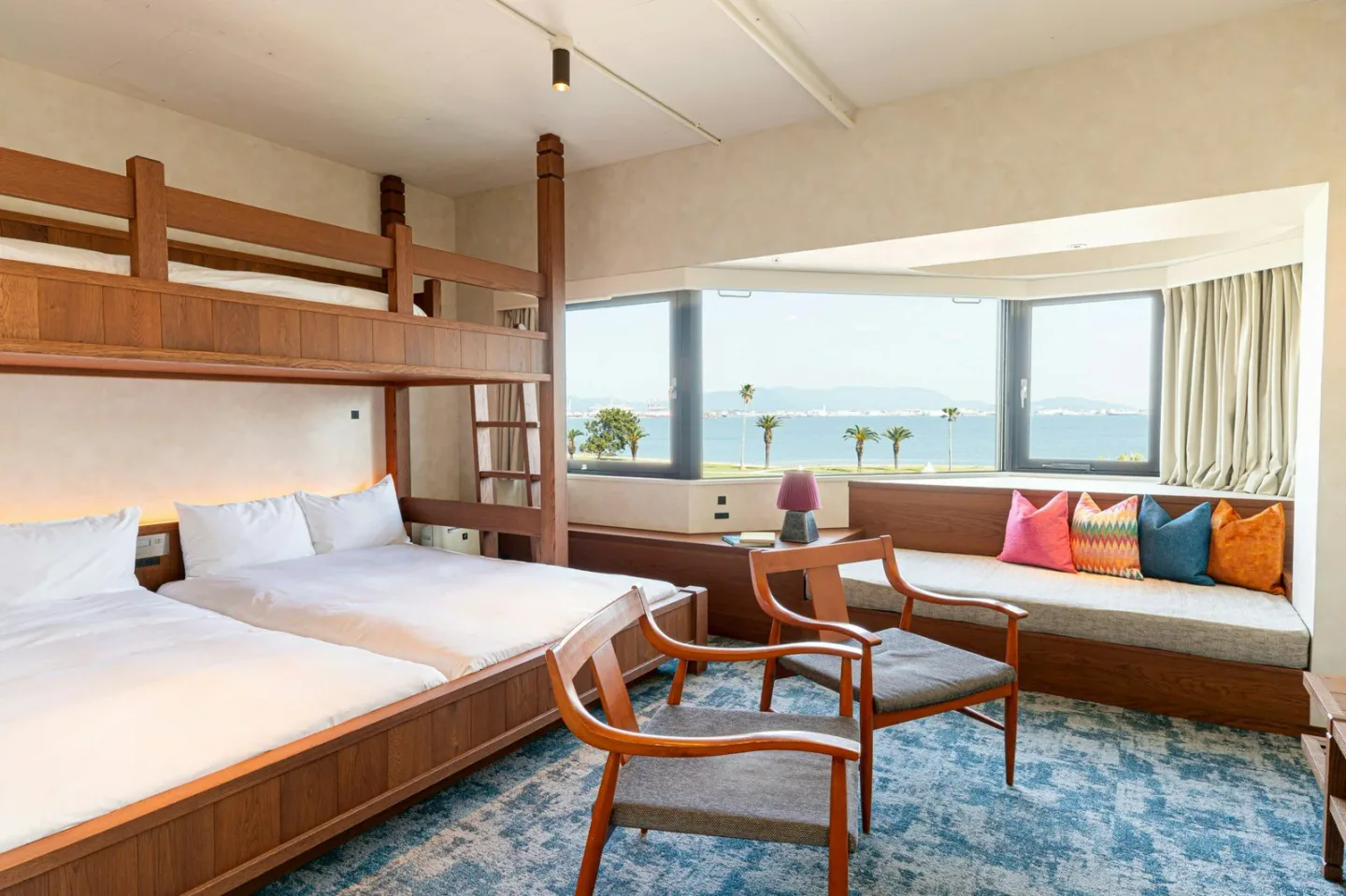
The Grand Twin is published at 33 m² for up to three guests. Grand Balcony Twin is 34 m² for two; Grand Deluxe Twin is 44 m² for up to five. The Cabin series introduced in 2025 includes a 33 m² Grand Cabin listed for up to five and a 42 m² Grand Superior Cabin listed for up to six. Published occupancy is a legal and booking maximum, not evidence that five or six people will all have equally comfortable mattresses or room for open cases.
↔ Scroll table left or right
Room | Published area and maximum | Decision to make |
Grand Twin | 33 m²; three guests | Two-person baseline; third guest must check actual bedding. |
Grand Deluxe Twin | 44 m²; five guests | A group-space case, not an automatic couple upgrade. |
Grand Balcony Twin | 34 m²; two guests | Balcony matters when there is daylight room time. |
Grand Cabin | 33 m²; five guests | Family layout must be checked before dividing price by five. |
Grand Superior Cabin | 42 m²; six guests | More group area, still requires bed and luggage assessment. |
For two adults staying one night, begin with the named Grand Twin rather than assuming the 44 m² Grand Deluxe Twin will change the experience. The balcony category earns more if you will spend a daytime hour outside the room. The bigger group categories may solve an entirely different job: keeping a family or friends together. Ask for the exact bedding diagram, child rules and meal price for the chosen party. Fukuoka rooms for three or four adults gives a useful city comparison.
The sea view needs daylight and room time
The hotel describes ocean outlooks across its accommodation, and the Grand Floor information specifically positions its rooms toward the water. That does not make every window identical: floor, direction, vegetation, weather and room category still influence what a guest sees. Compare the exact photograph and named room, then consider whether you will be there while the bay is visible.
A guest who reaches the room late and leaves early may have paid for a coastal address without experiencing much of it. An afternoon arrival, a pause beside the window or on the balcony, and an unhurried morning give the outlook a role. This is why a fast onward Kyushu itinerary can weaken the room premium even when the published floor area is generous.
Before placing the stay ahead of Yufuin or Beppu, work out the next transfer. Fukuoka to Yufuin transport and a Fukuoka–Hita–Yufuin–Beppu sequence show when returning to Hakata adds an avoidable leg. A route through Aso raises a similar question: day trip or overnight in Aso may be a better use of the spare night.
Summer swimming is date-specific
The published 2026 day-pool season ran from 1 July to 30 September, 09:00–17:00, with a 12:00–12:30 maintenance closure. Staying guests could use it without a separate day-pool charge from 09:00 on check-in day until checkout, subject to capacity, weather and pool rules. That allowed a pool visit before the normal 15:00 room check-in. It is a useful model for a future summer stay, but next season's dates and terms must come from a new hotel schedule.
As of late October 2026, that day-pool season is over. A non-summer booking should stand on the room, bay setting, local itinerary and food rather than an unavailable swim. Even in season, arriving at 16:30 would leave little of a 17:00 pool closing. Travellers for whom swimming is decisive should fix the dates and arrival mode first, then choose the room.
A one-night rhythm that uses the move
Move toward Uminonakamichi while the afternoon is still available. In a published summer season, the pool can start the stay before check-in; at other times, a park, aquarium or coastal walk can lead into a quieter hotel evening. The central point is to complete the city-to-resort journey once, rather than finishing a whole Tenjin day and transferring after dark merely to sleep.
↔ Scroll table left or right
Stay block | Possible use | Why the move makes sense |
Arrival afternoon | Travel toward Uminonakamichi; seasonal pool or local outing | Do the city-to-coast transfer once, with useful daylight left. |
Evening | Room view, planned dinner and resort time | This replaces a spontaneous central-city food night. |
Following morning | Breakfast and time by the coast | A fixed early Hakata departure would compress the benefit. |
After checkout | Continue locally or return by confirmed bus/JR route | Avoid another move done only for a bed. |
The schedule is a rejection test as much as a suggestion. Dazaifu in the morning, Tenjin shopping in the afternoon and a late Nakasu dinner make the resort room a remote bed at the end of an otherwise city-centred day. A full Uminonakamichi outing, by contrast, can flow into dinner and a morning without doubling back. If more than one seasonal day trip is planned, autumn excursions from Fukuoka may make a city base more efficient.
Longer foliage routes can be even more sensitive to the extra move. Kyushu's autumn colour timing and bases helps place the nights geographically. A night at the coast should be added because it fits a coast-led day, not because it happens to appear between two train departures on the calendar.
Which routes make the move worthwhile?
↔ Scroll table left or right
Travel pattern | Friction | Fit | Reason |
Full Uminonakamichi day | Low | Strong | Attraction and hotel share the same part of Fukuoka. |
Pool as main activity | Date-specific | Strong in a published season | Hours must match arrival and next-day plan. |
Tenjin shops plus late Nakasu dinner | High | Weak | A city-centred evening creates a difficult return. |
Early JR departure at Hakata | Medium to high | Weak | The night ends with a transfer back to the rail hub. |
Self-drive coastal day | Low to medium | Conditional | Guest parking is free, but onward road geography still matters. |
A first-time two-night Fukuoka visit has little spare time for a second check-in. At three or four city nights, a distinct Uminonakamichi night becomes more plausible if the coast is already an attraction day. A driver gains flexibility and free guest parking, but still has to price the next day's return to the city or onward road. Anyone continuing toward Aso or Yufuin should test the full route instead of judging the hotel as an isolated night.
The city evening you exchange
Staying here spends one night that could have been used for Hakata, Tenjin or Nakasu restaurants and late browsing. Some travellers will welcome the settled pace after a full Uminonakamichi day; others will miss being able to decide dinner by walking out of the hotel. The trade depends on how much city food remains on the trip, not on whether the resort has an attractive lobby.
Transport has a similar exchange. The bus can save a fare and a change but has no reserved seat; a delayed flight or an extra shopping stop can force a later departure or JR alternative. An accommodation immediately beside Hakata Station does not create the same uncertainty. Hakata or Tenjin before an early flight is a better check for a final night with a fixed airport departure.
Seasonal facilities should be counted only for a date when they operate. The 2026 pool closed at September's end, while the permanent reasons to stay are the coastal position, room sizes and access to an Uminonakamichi day. That distinction can reverse the result for an October or winter rate even if the booking page still uses a summer photograph.
If a city food itinerary remains unfinished, compare breakfast in Fukuoka, the yatai districts and mentaiko stops before giving up another downtown night. A planned evening at Fukuoka Tower is another reason to avoid moving toward the coast too early. For couples choosing between a room view and an evening neighbourhood, Fukuoka hotels for couples makes the same trade more explicit.
Compare a named room with the same meal terms
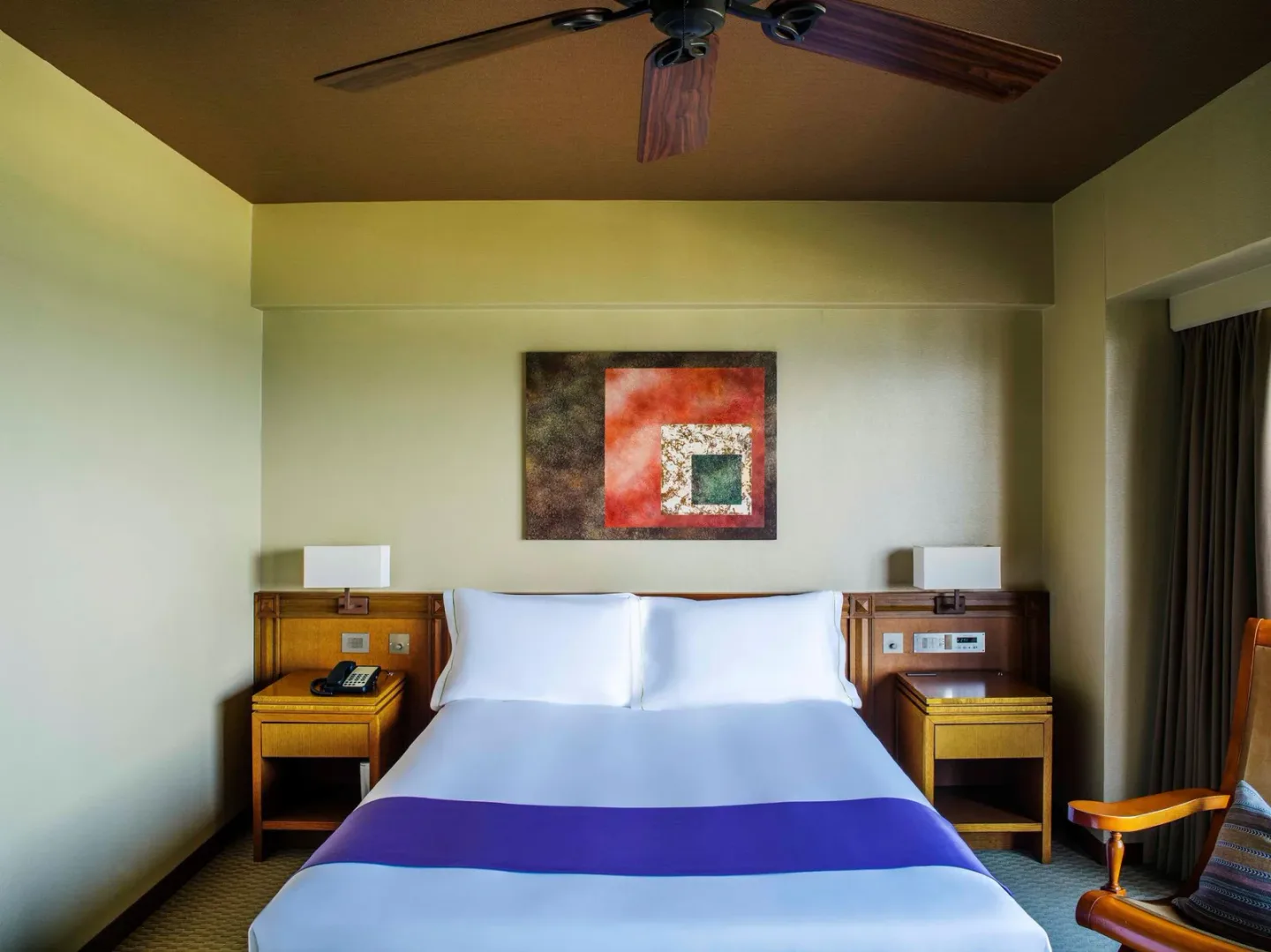
A Grand Twin, Balcony Twin, Deluxe Twin and Cabin room can differ in occupancy and sleep setup even when the area figures are close. Compare the same stay date, exact room, guest count, meals, taxes, cancellation deadline and payment conditions across offers. A flexible breakfast package and a non-refundable room-only price do not represent the same product. The 33 m² baseline is useful only after the actual category is fixed.
Large parties should check bedding positions, extra-bed availability and any child fee. The hotel states that children below elementary-school age may share an existing bed without a room charge, while an elementary-school child generally needs their own bed; room packages can set particular meal terms. A five-person maximum in 33 m² does not promise five equal sleeping surfaces. Nishitetsu Hotel Croom Hakata Gion for six is another reminder to inspect the layout instead of the occupancy number.
Compare THE LUIGANS rooms for your dates
Before paying, read the rate's exact room name, meal inclusion, cancellation deadline and arrival conditions. The hotel's direct room list is useful for identifying a category; a booking search should then be run with the real party size.
A lower displayed total can reflect a different cancellation rule or no breakfast. Hold those terms steady if comparing booking channels, then decide whether the one coastal night is worth the remaining price difference.
The one-night decision
↔ Scroll table left or right
Assessment | When it applies |
Book | One coast-led afternoon and night, practical arrival, no early Hakata morning; pool only during a published season. |
Recheck | Most attractions remain central or the room, bedding, shuttle and meal terms are unclear. |
Keep Hakata/Tenjin | Hotel would be used only for sleep or the desired seasonal facility is unavailable. |
THE LUIGANS can justify one night when Uminonakamichi is already the destination and you can keep the afternoon, evening and next morning near the coast. The move is harder to defend when it interrupts a compact Fukuoka city visit, relies on a guaranteed shuttle seat that does not exist, or buys a seasonal pool outside its operating dates. A 33 m² sea-facing room has value only if there is time to use it.
Practical questions before booking
What is the easiest route from Hakata?
The hotel bus leaves from HEARTS Bus Station Hakata, around five minutes' walk from JR Hakata; it is not at the attached Hakata Bus Terminal. Seats cannot be booked and a full bus can leave you waiting. JR is the alternative via Kashii to Uminonakamichi Station, followed by a walk of about six minutes. Choose the route against your arrival time and luggage rather than assuming the free bus will always be easiest.
Can a shuttle seat be booked?
No. The hotel boards in arrival order and advises another mode if a run is full, delayed or cancelled. Look up the timetable for the actual travel date and build enough margin around a flight or fixed dinner. A taxi or car can remove the seat uncertainty, but it changes the cost calculation.
What can be bought near the property?
A normal convenience store is about ten minutes away by car, not a short walk. The hotel's first-floor shop sells drinks, sweets and basic daily items. Buy any specific medication, contact-lens supplies or preferred snacks before the transfer from the city.
Which rooms are larger than a compact city room?
Grand Twin lists 33 m², Balcony Twin 34 m² and Grand Deluxe Twin 44 m²; the Cabin range includes 33 and 42 m² options. Their occupancy ceilings vary from two to six. A two-person stay may need little more than the Grand Twin, while a group should compare beds, luggage clearance and meal price by named category.
Is there year-round outdoor swimming?
No. The published 2026 day-pool programme ran 1 July–30 September from 09:00–17:00, closing 12:00–12:30 for maintenance. It was free to staying guests and could begin at 09:00 on check-in day. Future seasons need their own operating notice; the resort room should stand on other benefits outside summer.
What if arrival slips past dinner?
Normal check-in starts at 15:00, subject to the package. The hotel asks for contact if arrival will be after 20:00. A late arrival also removes the daylight room value and, in season, most of the pool, so a city hotel may be a better match for a severely delayed travel day.
Does a staying guest pay to park?
The hotel lists parking as free for overnight guests. That makes a self-drive coastal night less dependent on the shuttle, but the next morning's road route still matters. Returning to Hakata only to collect a train, or paying for another city car park, may consume the apparent saving.
The Luigans as a one-night detour: seven scores
| Dimension | JapanLayer score | What matters for this booking |
|---|---|---|
| Location | The Uminonakamichi coast is useful for its park and aquarium, but reaching Hakata again takes a bus or JR connection. | |
| Room | The 33 m² Grand Twin gives two guests breathing room and a bay outlook; the view needs daylight to matter. | |
| Cleanliness | Room upkeep is sound, with a less uniform record than the strongest newer city hotels. | |
| Service | Staff performance stands above the property's overall stay score, although the free bus does not reserve a seat. | |
| Facilities | Spa and coastal grounds add a resort evening; the outdoor pool is seasonal rather than a year-round reason to book. | |
| Food | On-site dinner and breakfast solve the remote-evening problem if the meal terms are booked in advance. | |
| Value | One coastal night pays when it replaces a city day rather than adding repeated transport to a Hakata itinerary. |
JapanLayer score: 8.0/10 for one Uminonakamichi afternoon followed by dinner and a sea-facing room. Repeated returns to Hakata, a rushed last train or a winter booking made for the outdoor pool reduce the benefit of moving hotels.
Other Fukuoka route decisions
Hakata or Tenjin as a base covers the city nights; a first Fukuoka three-day route tests whether the coast fits at all. Rail and bus choices help plan the transfer.
Onward travel and seasonal alternatives
Fukuoka to Yufuin and Fukuoka to Aso can decide the next morning. Autumn leaves trips near Fukuoka may justify keeping all nights in town.
Rooms, access and seasonal facilities
The hotel property page leads to current accommodation options and guest services.
Crossroad Fukuoka's Luigans listing locates the stay within the Uminonakamichi area.
When comparing rates, match the room category and cancellation deadline before treating a lower total as a saving.
The Grand Floor room details give the sizes and guest limits behind the named room choices.
A Luigans room listing on Agoda is only comparable after bed, meal and change rules match.
Room inventory and packages change by date. Compare the cancellation deadline and total charge shown on the offer you are ready to book, especially if a flight arrival or the season's pool schedule is still uncertain.
Nearby coastal-night alternatives include seven x seven Itoshima, Nashiro Beach in Okinawa and Hotel Sonia Otaru by the canal. For a city room, compare THE LIVELY FUKUOKA HAKATA, Tokyu Stay Fukuoka Tenjin or Mitsui Garden Hotel Fukuoka Gion for three adults. Other reading routes: La Vista Furano Hills, MiraCosta balcony rooms, Osaka for couples and Zentis versus voco Osaka.