
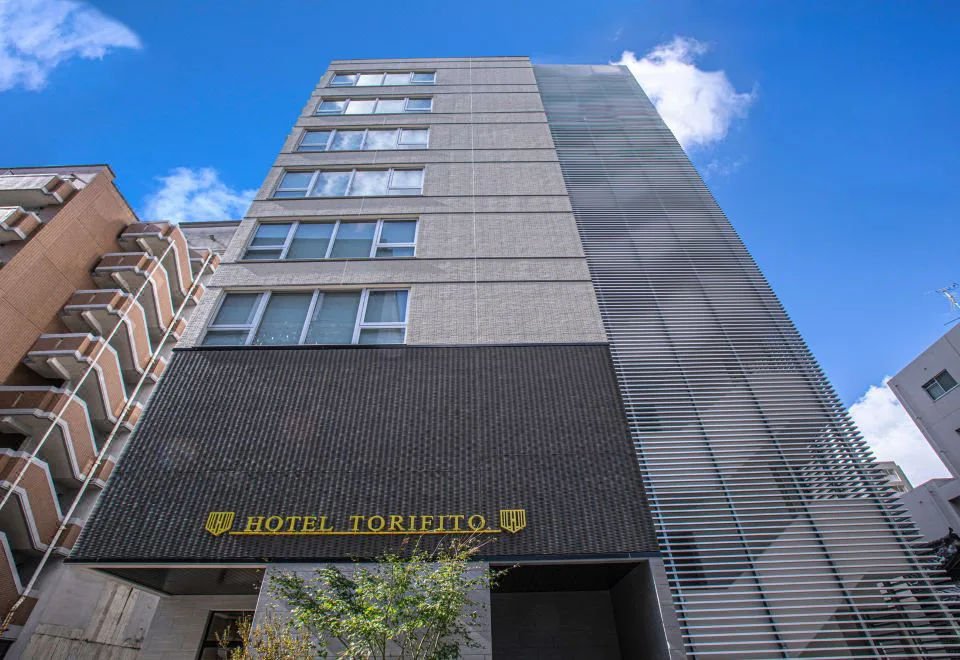
Hotel Torifito Hakata Gion places a room and public bath in Reisenmachi, close to the older streets around Gion, Kushida Shrine, Kawabata and Nakasu. Its useful comparison is with a hotel directly beside Hakata Station: would you trade a shorter JR-platform approach for a 23 m² Twin or Tatami Twin, a separated bathroom and an evening bath? For a trip spent largely in central Fukuoka, the Gion location can be a good fit. Repeated early Shinkansen departures change the calculation.
The hotel is about five minutes from Gion subway station, rather than at Hakata's JR gates. The Double is 16 m² with a unit bath; Twin and Tatami Twin are 23 m² with separate bath and toilet. Reisen no Yu opens 15:00–01:00 and 05:30–09:00. Those details matter only when your actual itinerary uses them. Hakata or Tenjin as a Fukuoka base is the broader choice if you have not yet placed most dinners and morning departures.
↔ Scroll table left or right
| Trip pattern | Torifito advantage | What may pull you toward Hakata Station |
|---|---|---|
| Several evenings around Gion, Kawabata or Nakasu | Walk back through the central-Hakata district and use the bath before 01:00. | Only a small benefit if every night ends elsewhere. |
| Two adults staying three or four nights | 23 m² Twin options and separated bathroom are useful repeatedly. | A station-front room with similar usable space at the same total rate. |
| Two or more early long-distance rail mornings | Early breakfast and morning bath may still fit some days. | Each trip starts with a move to the JR station. |
| One-night transit stay, late return after 01:00 | Few property benefits have time to matter. | Immediate access to the next train may dominate. |
Gion is simple from the airport; Hakata rail takes another step
From Fukuoka Airport, the hotel's route uses the Airport Line to Gion and a walk from Exit 2. The hotel describes about seven minutes on the train plus roughly five minutes on foot, before allowing for the platform, exit and bags. This is a clear public-transport arrival, but the five-minute figure is a street walk, not the whole airport-to-room journey. The Fukuoka rail and subway guide helps when deciding how often your days will use the subway rather than JR.
Hakata Station is a different destination from Gion. If the first fixed event each morning is a Shinkansen or limited express, allow for the trip back to Hakata and the walk to the correct platform. If the day is built around Kushida Shrine, Kawabata shopping and an evening in Nakasu, you may spend less time retracing the route through Hakata. A three-day Fukuoka itinerary is a useful way to mark those city-focused days before deciding which address saves more repeated travel.
The difference becomes sharper on regional journeys. A Hita–Yufuin–Beppu route has departures and accommodation moves beyond Fukuoka city; the morning rail or bus starting point deserves more weight than a bath you might not use. A guest making only one such excursion has a different balance from someone leaving Hakata early on three of four mornings.
What seven extra square metres change in the room
The 16 m² Double has one 1,610 mm bed and a unit bathroom. It takes up to two guests, which confirms allowed occupancy but does not establish how easily two large suitcases can stay open. For a short stay with light luggage, the lower-rate Double may be sufficient. Over three or four nights, the cases, daily clothes and shopping bags give the 23 m² rooms more practical value.
The Twin lists two 1,200 mm beds and a 900 mm sofa bed for a third guest. With two guests, that sofa bed serves as seating; three-person capacity does not mean every bed is identical. The 23 m² Tatami Twin has two 1,200 mm beds for up to two guests. Both room types separate bath and toilet, allowing one person to use the toilet while another is bathing. The 23 m² Universal Single has one 1,200 mm bed and a unit bathroom; a guest with specific accessibility requirements should confirm its current layout and facilities for their needs rather than infer them from the name alone.
↔ Scroll table left or right
| Room | Area and bed arrangement | Bathroom | Best reason to choose it |
|---|---|---|---|
| Double | 16 m²; one 1,610 mm bed; maximum two guests | Unit bath | Short, lower-luggage stay when price matters most. |
| Twin | 23 m²; two 1,200 mm beds plus a 900 mm sofa bed; maximum three guests | Bath and toilet separated | More multi-night floor area or a third person's bed. |
| Tatami Twin | 23 m²; two 1,200 mm beds; maximum two guests | Bath and toilet separated | Two travellers who want the tatami-style layout. |
| Universal Single | 23 m²; one 1,200 mm bed; one guest | Unit bath | Solo guest whose specific access needs match the room. |
The seven-square-metre difference is more than a switch from one bed to two. It changes how easily guests can manage their bags and move around the room, and the bathroom can be used in parallel. It still does not prove that two 28-inch cases will lie fully open without affecting circulation; the published area is not a measured clear-floor diagram for your assigned room. THE BLOSSOM HAKATA Premier's larger twin is a useful comparison if room area, rather than this address, is the main reason to leave a station-front hotel.
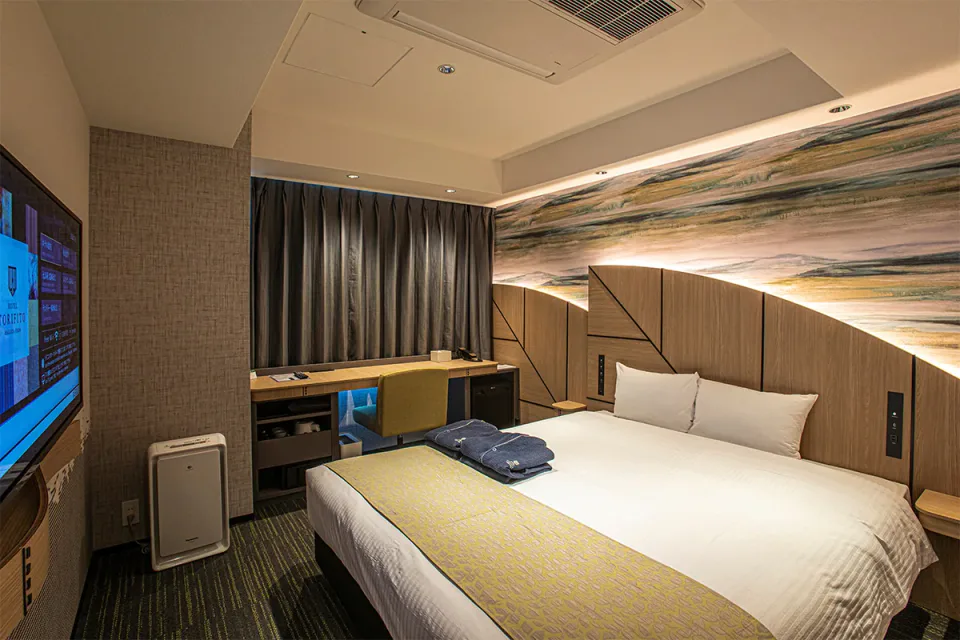
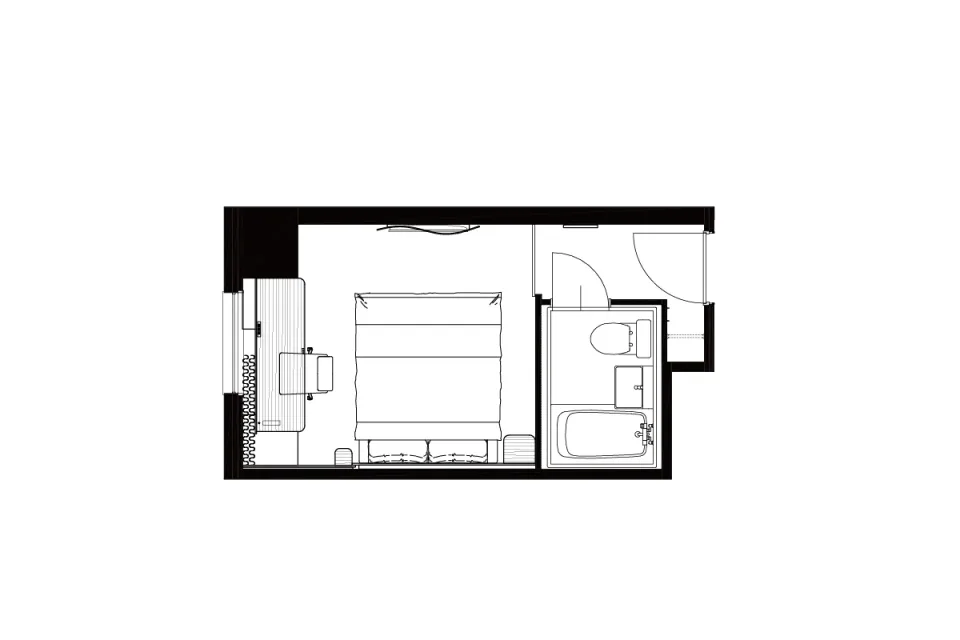
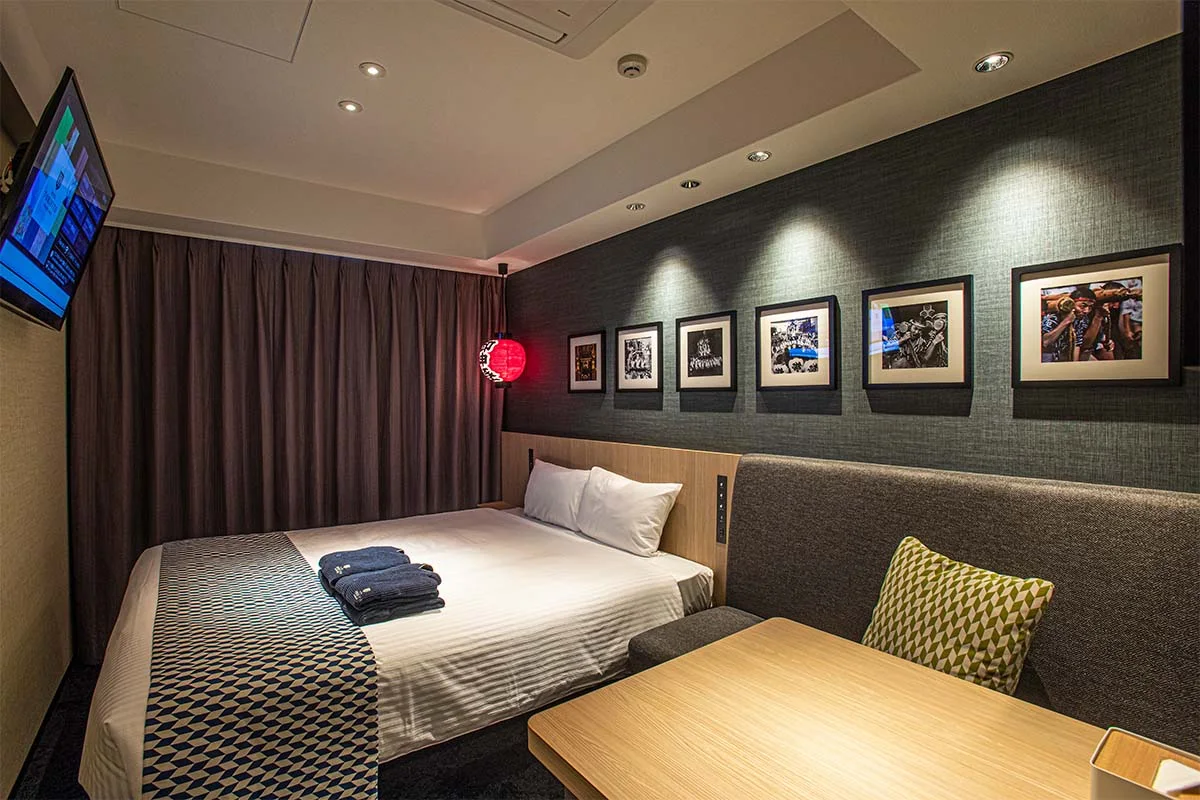
The original photographs on this page show a Double bedroom, its floor plan and another room with a sofa bench. That floor plan belongs to the compact room, so it should not be read as the 23 m² Twin layout. The images explain the design but cannot guarantee a precise future room arrangement. The existing exterior and room photographs are gathered in the swipe gallery below.
The bath has a hard return-time cutoff
Reisen no Yu is on the second floor and opens from 15:00 to 25:00, meaning 01:00 the next day, then again from 05:30 to 09:00. A guest back from dinner by 23:00 can bathe before sleep; a guest returning from a late yatai visit after 01:00 cannot. Someone who leaves early may still fit the morning period. This is a public bath, not a claim that the water is from a natural hot spring.
The hotel does not permit guests with tattoos to enter or use the bath. Bring towels from the room because the bathing area does not provide them. A small complimentary ice pop is offered after bathing. These operating details are more useful than an amenities icon when you are deciding whether to pay more for this hotel. Nakasu, Tenjin and Nagahama yatai locations can help estimate where a food-stall night will actually finish and whether the bath will still be open.
The bath is not the only reason to select Torifito, but it should not be given value twice if you are unlikely to use either session. A trip with late food stops and late starts erases both bathing windows. Conversely, a rainy evening or an early waking time can make the facility a practical part of the daily routine. A rainy-day Fukuoka route leaves more flexibility than a dawn rail departure to return and use the bath.
Breakfast is early enough for some departures, not all
The hotel's breakfast buffet runs 06:30–10:00, with last admission at 09:30. The published walk-in prices are ¥1,980 for adults, ¥1,320 for elementary-school children and free for preschool children. The hotel describes nearly 70 dishes, with Fukuoka or Kyushu choices such as mizutaki, mentaiko, yaki-ramen, chicken nanban, kakuni and satsuma-age. Menus can change by season, so choose the package for the time and total price rather than treating every named dish as guaranteed each morning.
A 06:30 start helps when you can leave after a measured breakfast, but it may clash with a very early reserved train from Hakata. If your breakfast priority is outside food, mentaiko, udon and onigiri morning options can replace an included buffet. For a specific mentaiko stop, the Fukuoka mentaiko comparison may matter more than a hotel's headline dish count.
↔ Scroll table left or right
| Facility | Published condition | Useful in this itinerary | Little value when |
|---|---|---|---|
| Reisen no Yu | 15:00–01:00 and 05:30–09:00; no tattoo entry | You return before closing or rise early. | You arrive after 01:00 and sleep late. |
| Breakfast buffet | 06:30–10:00, last entry 09:30; adult ¥1,980 | Your first departure allows eating and the transfer to Hakata. | You must leave before serving begins. |
| Coin laundry | On the third floor | You wash during a three-to-five-night stay and pack lighter. | You stay one night or already carry full outfits. |
| Luggage storage | Available before check-in and after checkout through reception | Your first or last day remains around Gion. | You go directly to the airport with all bags. |
Test a three-night booking against real day shapes
Consider a city stay that reaches Gion at about 18:00, has dinner around Nakasu, returns at 22:30 and uses the bath at 23:00. The next morning can begin with breakfast at 06:45 and a city outing around Kushida Shrine or Kawabata. On that schedule, the location, larger room and bath all have a job. Luggage storage before check-in or after checkout can also keep the first and last sightseeing hours usable near Gion.
Now replace two mornings with fixed early regional departures and the evenings with late returns. The first train must be reached from Gion, and the bath or buffet may be closed when you are free. Yufuin rail, bus and car options help identify the actual departure point; Yufuin no Mori planning matters if a reserved train anchors the day. A long Aso outing from Fukuoka pushes the same question further: will a bath-centred Gion hotel make daily transport easier or just add a morning transfer?
A slower stay built around cafés, local food and evening wandering points the other way. A Fukuoka coffee-and-dessert walk has fewer early rail constraints, and dinner can finish within the older central districts. One night in a 16 m² Double may be adequate on that plan; on four nights, the 23 m² category can give useful room for purchases and two-person movement.
Our seven Hotel Torifito Hakata Gion ratings
The 23 m² Twin and a return before the bath cutoff are central to this score. A 16 m² Double and daily early JR starts create a different stay.
| Dimension | Our rating | The booking consequence |
|---|---|---|
| Location | Gion and the older central streets are convenient; Hakata rail days add a subway step. | |
| Room | The 23 m² Twin gives separate bath and toilet, unlike the smaller Double. | |
| Cleanliness | Most current room assessments are good, with isolated cleaning lapses reducing confidence. | |
| Service | The current staff signal is steady but less distinctive than the room-and-bath combination. | |
| Facilities | Reisen no Yu has evening and early-morning windows; a late return can miss the last entry. | |
| Food | Breakfast can work before some departures, but must be timed against the Hakata transfer. | |
| Value | A useful twin and two bath visits can outweigh the added rail leg over three nights. |
Our overall three-night Gion read is 8.1/10 in the 23 m² Twin. Price a station-side alternative when JR departures dominate the mornings.
Seven dimensions for the room and location decision
↔ Scroll table left or right
| Dimension | Evidence | When it matters most |
|---|---|---|
| City access | About five minutes on foot from Gion Exit 2. | Several outings around Gion, Kawabata or Nakasu. |
| JR departure access | The property is away from Hakata's platforms. | Two or more early long-distance train days. |
| Room circulation | 16 m² Double versus 23 m² Twin categories. | Multi-night stays with two guests and larger luggage. |
| Bathroom function | Unit bath in Double; separated bath and toilet in Twin and Tatami Twin. | Two people preparing at the same time. |
| Evening bath | Public bath 15:00–01:00, with tattoo restriction. | Return time and eligibility determine whether it can be used. |
| Morning food | Breakfast 06:30–10:00 at a published adult price. | The rail departure leaves time to eat. |
| Rate value | Room category, breakfast, taxes and cancellation can differ. | Compare the same total stay terms, not headline nightly rates. |
The bath and location scores depend on when the guest returns each evening. A guest with a 01:30 return gets no evening-bath benefit that night, while someone eating near Gion and back at 22:00 can use it. The same property can be a strong Fukuoka city hotel and a poor fit for repeated early JR departures. HOTEL FORZA at Hakata Station provides a direct contrast when the train approach is more important than a larger Gion room.
Compare the stay you will actually use
Fix the room first: Double, Twin or Tatami Twin. Then hold dates, occupancy, breakfast, taxes and cancellation deadline constant. The lowest Double rate is not an equivalent substitute for a 23 m² Twin with separated bathroom. Similarly, a bath you cannot use should not be assigned a premium in your personal comparison. The Hakata station-access and bath comparison shows two other ways to balance transport against hotel facilities.
For a two-person Fukuoka stay with central-city dinners and a usable bath window, I would begin by pricing Twin and Tatami Twin against a station-front option. If the trip is a one-night rail connection or has several early Hakata departures, the station-front hotel may be the simpler answer. When the room type is clear, compare Hotel Torifito Hakata Gion stays for the same guest count and cancellation terms.
Related hotel and Fukuoka route choices
morning · itinerary · where to stay in Fukuoka: · checkout · Fukuoka transport guide · three-day Fukuoka itinerary · three-day Fukuoka itinerary · distance · Fukuoka breakfast guide · Fukuoka to Yufuin transport comparison · Hotel Torifito Hakata Gion website · HOTEL GREAT MORNING Fukuoka: Are · Tokyu Stay Fukuoka Tenjin: Is · Hotel Sosei Sapporo Review: Is · Vessel Hotel Campana Nagoya Review: · Lake Biwa Otsu Prince Hotel: · Miyako Hotel Hakata: Is a · voco Osaka Central: Is the · Port of Nagoya Public Aquarium · Hakodate Kokusai Hotel: Is an · THE LUIGANS Spa & Resort · JR Kyushu Hotel Blossom Naha · Vessel Hotel Campana Susukino: Is