
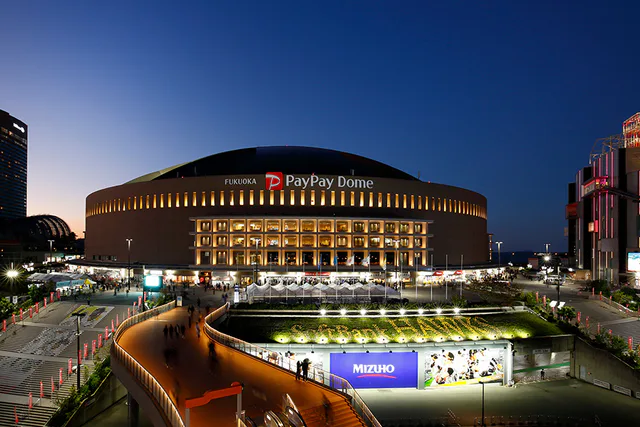
The awkward part of a Fukuoka concert stay often begins when the lights come up. A hotel that looks close to the venue on a map may still leave you in a long crowd, outside the station you need, or with a heavy bag before an early train. For one show, I would usually keep the base that works for the rest of the visit and plan the return carefully. Two nights at the same venue make the late journey important enough to change the hotel calculation.
PayPay Dome and Marine Messe demand different exits. From MIZUHO PayPay Dome, Fukuoka City's visitor guide gives roughly 15 minutes on foot to Tojinmachi Station Exit 3. Marine Messe Hall A lists Gofukumachi at about 15 minutes on foot, Nakasu-Kawabata at about 18, plus direct buses serving Hakata and Tenjin. None of these estimates includes the time spent leaving your seat or joining the post-show crowd. Use the venue and your next morning together to pick a district; the wider Hakata–Tenjin comparison helps weigh the rest of the itinerary.
↔ Scroll table left or right
| Concert pattern | Likely base | What makes it work | When to reconsider |
|---|---|---|---|
| One Dome show, dinner or drinks afterward | Tenjin | The evening can end near the room after the Tojinmachi subway leg. | An early Shinkansen departure makes Hakata more valuable. |
| Two Dome shows | Akasaka or Tenjin | You repeat the same Airport Line return on both nights. | Most other days start with JR from Hakata. |
| Marine Messe or Sunpalace, early train next day | Hakata | One base serves the late return and the morning departure. | A late Tenjin evening matters more and the train is later. |
| Single show within a longer city visit | Your normal Fukuoka base | One crowded trip is less costly than several poorly located days. | The event finishes unusually late or you will attend again. |
| Driving to Marine Messe | Base chosen for the whole trip | Parking alone does not establish a usable late exit. | Your particular event confirms different car-park operation. |
For a hotel shortlist, use seven practical dimensions rather than an invented score: venue return, next-morning rail or flight, after-show food, repeated-show frequency, merchandise and luggage space, car-park dependence, and the complete room rate for the event dates. Tenjin tends to help with an evening meal; Akasaka reduces the repeated Dome corridor; Hakata helps with an early intercity train. Room space, parking and price must be judged for the particular property and performance.
Why a single concert seldom earns a hotel move
A move creates checkout, luggage storage, a new check-in and another journey through the city. If the only gain is a shorter approach to one show, the gain may disappear before the performance even starts. A change makes more sense when it also solves the following morning: for example, a Marine Messe evening followed by a reserved train from Hakata. The Fukuoka hotel-area framework is useful here because daily travel should still count.
With two shows, repeat the calculation rather than treating the nights as one outing. You will walk the venue exit, navigate dispersing crowds and make the late trip twice. Akasaka or Tenjin can then justify its position even if a Momochi hotel is physically nearer the Dome. A long stay also raises laundry and luggage issues; our longer-stay hotel comparison examines those costs beyond the concert hours.
Do not build the return around the advertised end time. Encores, bathroom stops, merch pickup, meeting companions and crowd controls separate the last song from the station platform. The hotel route needs some tolerance for a late exit. If a connecting train works only when you leave immediately at the printed finish, plan another route or a different base. Tokyo concert stays pose the same final-hour problem, although Fukuoka's venue geography is its own.
At the Dome, the walking segment remains whatever your hotel address
Tojinmachi Exit 3 is about a 15-minute walk from MIZUHO PayPay Dome. A Tenjin, Akasaka or Hakata booking does not remove that segment; it determines what happens once you reach the Airport Line. If you are carrying only a small bag, the station walk may be straightforward. A poster tube, light sticks, clothing and a full tote make the same walk and a crowded carriage feel longer. Evaluate the return load, not the empty hands you will have on the way in. The neighbouring BOSS E·ZO stop can be paired with a Dome visit, but it does not solve transport after a concert.
Tenjin is a strong end point if the evening continues with food or friends. Solaria Nishitetsu Hotel Fukuoka is connected to Nishitetsu Fukuoka (Tenjin) Station, placing the room inside the commercial core rather than leaving another long walk after reaching Tenjin. Compare the actual room rate and station entrance on your dates: station connection has value when you will use it for more than one journey. The Solaria versus Miyako comparison addresses the broader choice between Tenjin evenings and Hakata departures. For meals after the show, the food-trip hotel guide focuses on where dinner actually ends.
Akasaka has a narrower advantage: it keeps repeat Dome trips on the Airport Line corridor without making the stadium precinct the centre of the whole visit. Hotel JAL City Fukuoka Tenjin illustrates this location. The chain is Dome exit, walk to Tojinmachi, rail to Akasaka, then room. It fits a guest who wants to sort purchases and sleep after each of two shows. If the plan is a late meal in central Tenjin after both performances, paying for that centre may still be wiser. Our Hotel JAL City location review tests the Akasaka trade-off in more detail.
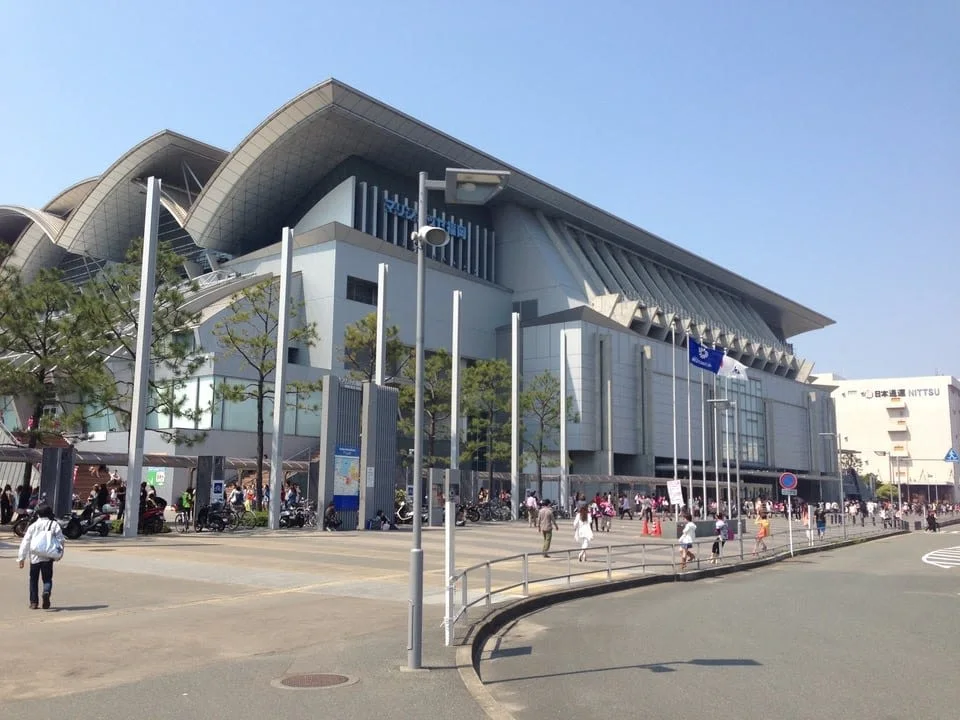
The Marine Messe building in the photograph above is a separate event precinct; the Dome's Tojinmachi walking advice does not apply there. Check the exact show venue before borrowing a hotel suggestion from a concert list.
Marine Messe has a bus option and two walk-to-rail options
Marine Messe Hall A publishes bus access from Hakata Station and Tenjin. Its walking alternatives are approximately 15 minutes to Gofukumachi and 18 minutes to Nakasu-Kawabata. The outbound bus may seem effortless while the post-show bus becomes a queue; rail requires walking first but gives you another way out. The best choice depends on the people travelling, the event's crowd arrangements and the last service, not solely on the scheduled ride time. The Fukuoka transport guide can help place the venue journey within the rest of your days.
For children, older companions or several bags of merchandise, waiting for an operating event bus may be preferable to a lengthy station walk. Adults comfortable walking may favour rail when the venue bus queue is slow. Neither is guaranteed faster after a particular show. Confirm the event's temporary bus arrangements and service status on the day, and leave room in the plan for the alternative. Fukuoka Sunpalace belongs in the same port and convention-area hotel discussion, but use its own entrance and the event's instructions rather than treating every Marine Messe route as identical.
A Hakata room becomes particularly persuasive when you have a JR or Shinkansen departure the next morning. The late trip ends where the train journey begins, sparing a second hotel-to-station transfer with cases and purchases. JR KYUSHU HOTEL Blossom Hakata Chuo is two minutes on foot from Hakata Station's Hakata Exit. It is a practical station-side benchmark, and its room and exit details matter more than a generic “near Hakata” label. The Hakata hotel comparison adds other station-area options.
Miyako Hotel Hakata offers a different station connection on the Chikushi side, near East Exit 7, and lists a noon checkout. Its facilities and extra room time can justify a higher total when you will actually use them, perhaps after a late show and a later train. For a departure first thing in the morning, a premium justified only by facilities you never reach is difficult to defend. The early-flight base decision applies similar logic when the next departure is from the airport instead of JR.
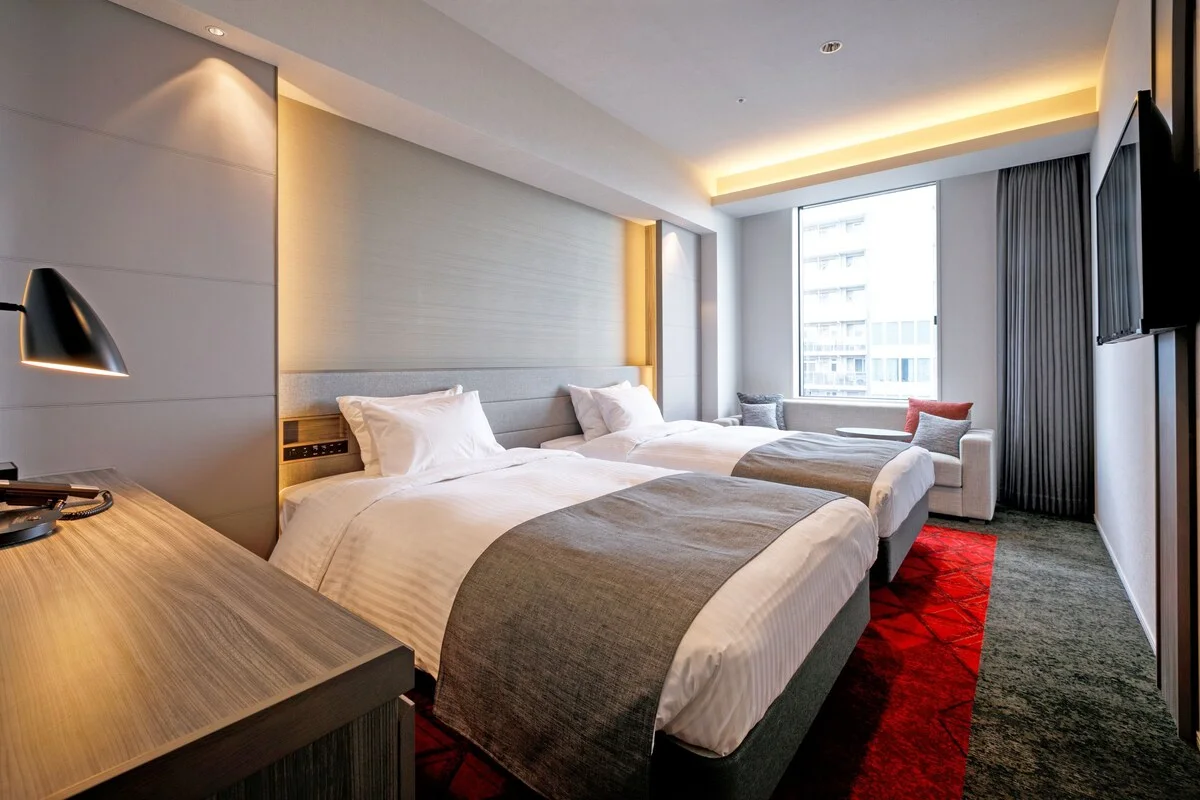
This twin-room photograph shows the Hotel JAL City option in Akasaka. It is a room illustration, not evidence of a particular concert-night rate or a guarantee that every category has this layout. Compare the named room type, occupancy and cancellation terms for the show dates; prices can rise around major events.
Marine Messe parking has a late-exit trap
Parking Lot 1 at Marine Messe normally operates 08:00–22:00, and the venue states that cars cannot leave between 22:00 and 08:00. The hours may change for an event. That makes “parking available” an incomplete answer for a concert with an encore and a slow crowd release. Check the parking notice attached to the specific performance before you commit a rental car to the evening. Do not infer an extended exit window from a daytime parking map.
If the permitted exit does not cover the likely time you reach the car, use transit for the show even if you are driving elsewhere in Kyushu. This avoids forcing the hotel decision around a parking lot you cannot reliably leave. Fukuoka's self-drive hotel guide separates the car days from city days; the car-charter comparison helps only when a staffed pickup suits the group and event restrictions.
The morning after can reverse the night-before preference
Suppose Tenjin gives you a better dinner after one Dome show, but the next morning begins with a reserved Shinkansen and a large case. That next-morning transfer can outweigh the nicer final hour. Conversely, moving to Hakata for one show may burden three days of Tenjin activities when your train leaves later. Look at the whole sequence rather than choosing the district from the concert ticket alone. A three-day Fukuoka itinerary is a useful way to see which hub your non-event days actually use.
For an early departure, pack before the show and decide whether purchases can fit without reopening every bag late at night. A hotel with adequate floor space and an uncomplicated station walk matters more after buying posters or clothing. If the concert is one leg of a wider Kyushu route, the Hakata luggage options can reduce what you carry onward. The next destination, not only the show, should decide whether a station hotel is worth a higher nightly price.
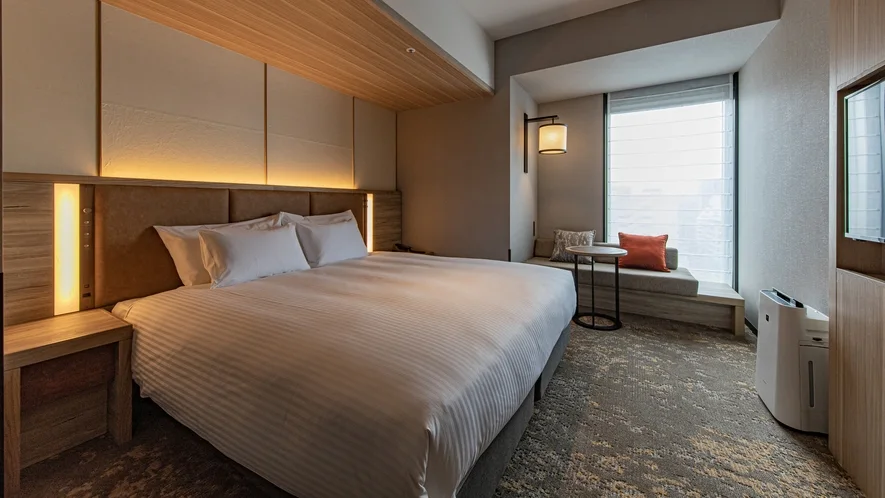
The final photograph shows a Hakata guest room with a double bed and a small sitting area. For a merch-heavy stay, check the actual room dimensions and luggage-storage terms; a photograph alone does not establish either.
A short list for the actual booking
Write down the venue entrance, show date, number of performances, probable merchandise load, and first appointment the next morning. Then compare each hotel on the journey back, not only the journey out. Tenjin is often the evening choice, Akasaka is compelling for repeated Dome returns, and Hakata is powerful when the following morning begins with JR. None is an automatic winner. A one-off show inside a four- or five-night trip generally should not overrule the other days. The late-arrival guide adds a similar first-night constraint if the show follows your flight.
Compare like-for-like room totals for the exact concert nights. For a Tenjin base, see rooms around Tenjin; for repeated Dome trips, compare Akasaka stays; when the morning train settles the decision, look around Hakata Station. Use the same guest count, cancellation deadline and arrival time in each comparison. Event-day transit and parking rules still need a final check for the particular performance.
Further Fukuoka and event comparisons
Hakata vs Tenjin · Hakata vs Tenjin · Fukuoka City Tourist Guide — MIZUHO PayPay · Fukuoka Convention Center — Marine Messe access · Marine Messe Fukuoka — current parking and · Solaria Nishitetsu Hotel Fukuoka — current access · OMO7 Osaka: Is Shin-Imamiya the Right Base · Sapporo Concert Hotels: PREMIST DOME, Makomanai and · Tokyo Dome Hotel: Is Walking Back After · Okinawa Guys’ Trip Hotels: The Best Base · Kagoshima Chuo or Tenmonkan? Pick Your Base · Omagari Fireworks 2026: Train, Drive or Park · Fukuoka Tower: Is the ¥1,000 Ticket Worth · Tokyo Disney Split Stay: Move the Night · Sapporo Station vs Susukino: Which Base Fits · Kushimoto Marine Park Is Worth the Detour · Fukuoka Guys’ Trip Hotels: Four Adults, Real