
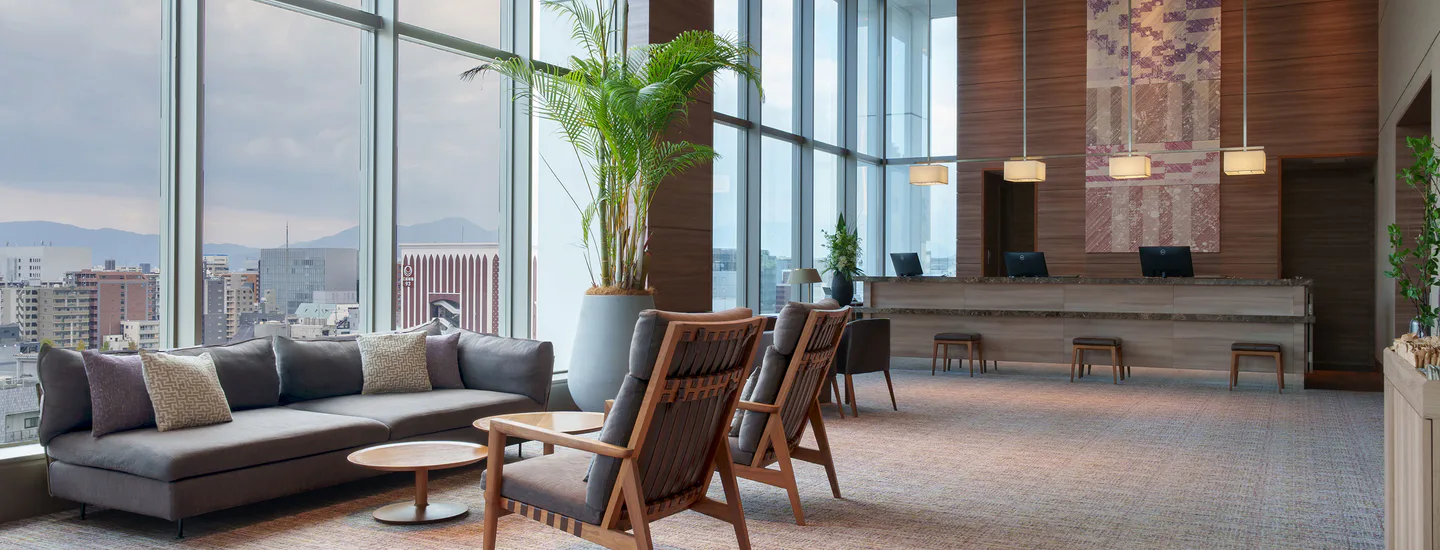
A food trip can end in three different parts of central Fukuoka even when every restaurant on your list looks close on a map. Nakasu or Haruyoshi suits late dinners that often turn into another drink or a yatai stop. Tenjin makes sense when cafés, shopping and Daimyo or Imaizumi evenings form the daily loop. Hakata wins when breakfast, station dining and early JR departures happen on several mornings. Choose the hotel by the trips you repeat after eating and before breakfast, not by a count of nearby restaurants.
One yatai night is rarely enough reason to move a four-night stay to Nakasu. Conversely, three late reservations in Nakasu can make a Hakata base feel unnecessarily far away at the end of every day. Before comparing room rates, write down where the confirmed dinners finish, their reservation times, whether the group will keep drinking and the next morning's first commitment. Hakata versus Tenjin is the broader base decision if the dinners are still mostly undecided.
↔ Scroll table left or right
| Likely food pattern | Base to test first | Repeated benefit | Check before booking |
|---|---|---|---|
| Two or three late Nakasu or Haruyoshi dinners, with drinks | Nakasu or Haruyoshi | Short walk after the last meal. | How often mornings require Hakata Station. |
| Cafés, department stores, Daimyo and Imaizumi evenings | Tenjin | Easy bag drop, rest and return between meals. | Early JR day trips may still begin at Hakata. |
| Station breakfast and frequent rail departures | Hakata | Food and transport start at the same hub. | Repeated late Nakasu returns can offset the morning saving. |
| One yatai visit among varied dinners | Follow the whole itinerary | A one-off evening does not dictate every hotel night. | Accept a longer return that one night. |
| A specific hotel breakfast is a destination meal | Compare that breakfast-included room | The meal is part of the stay, not a generic add-on. | It replaces an outside breakfast and may carry a separate charge. |
Late reservation times change the value of a ten-minute walk
A 17:30 dinner booking and a 21:00 booking at the same restaurant may produce different hotel decisions. After an early meal, a group may still want to walk through Tenjin or catch the subway to Hakata. After a late course menu and one drink, the walk back can be the part of the day that matters most. Rain, shopping bags and tired feet magnify that difference. A train still running does not mean the group wants another transfer.
Plot only restaurants you genuinely intend to reserve, not a long saved list. Place the final meal or bar of each evening on the map. Then put the next morning's first rail or breakfast location beside it. If most of those anchors fall around Nakasu, its hotel premium has a repeatable use. If the nights scatter across the city, choose the base that fits the daytime plan in a three-day Fukuoka route. A party visiting for two nights has less room for a hotel error than one spending a week; the wider Fukuoka hotel decision can help with trip shape before property names.
Hard-to-book sushi, mizutaki, yakitori or course-menu places may offer only an early or late slot. Those actual reservation times deserve more weight than a district's reputation. If two must-do meals in Haruyoshi finish after 22:00, staying nearby becomes more valuable. If the meals end early and the group continues shopping in Tenjin, the last activity should guide the base instead. The distinction matters for a food trip because a restaurant address is not necessarily where the evening ends.
Nakasu and Haruyoshi as a repeat evening loop
Nakasu, Haruyoshi, Kawabata and Tenjin-minami can work as one broad evening zone: a main dinner, perhaps ramen later, and then a bar or yatai without crossing the city again. That density is useful when it describes two or three actual nights. A guest can return to the room between stops or finish on foot. It is less useful if the only plan is one photographable yatai meal; the Fukuoka yatai area guide is the better way to choose that one outing.
Morning travel can reverse the result. If two days begin with an early JR train from Hakata for Yufuin, Kumamoto or another destination, the after-dinner saving comes with repeated morning movements. Decide which leg you would rather repeat when tired. The Tenjin–Nakasu hotel comparison adds room facilities to that evening-distance question. The Hakata–Tenjin base guide makes the morning cost clearer where the trip contains several rail outings.
Hotel Resol Trinity Hakata is a precise Nakasu example. The property lists Nakasu-Kawabata Exit 1 about one minute away. That is a small distinction at midday but a potentially useful final leg after a late meal. Its public bath is a separate amenity, not proof that the location fits every traveller. The existing photo here shows the bath and the dusk view; it does not show a guest room or establish that a breakfast package is included. The Resol room-size and bath guide handles that specific trade-off.
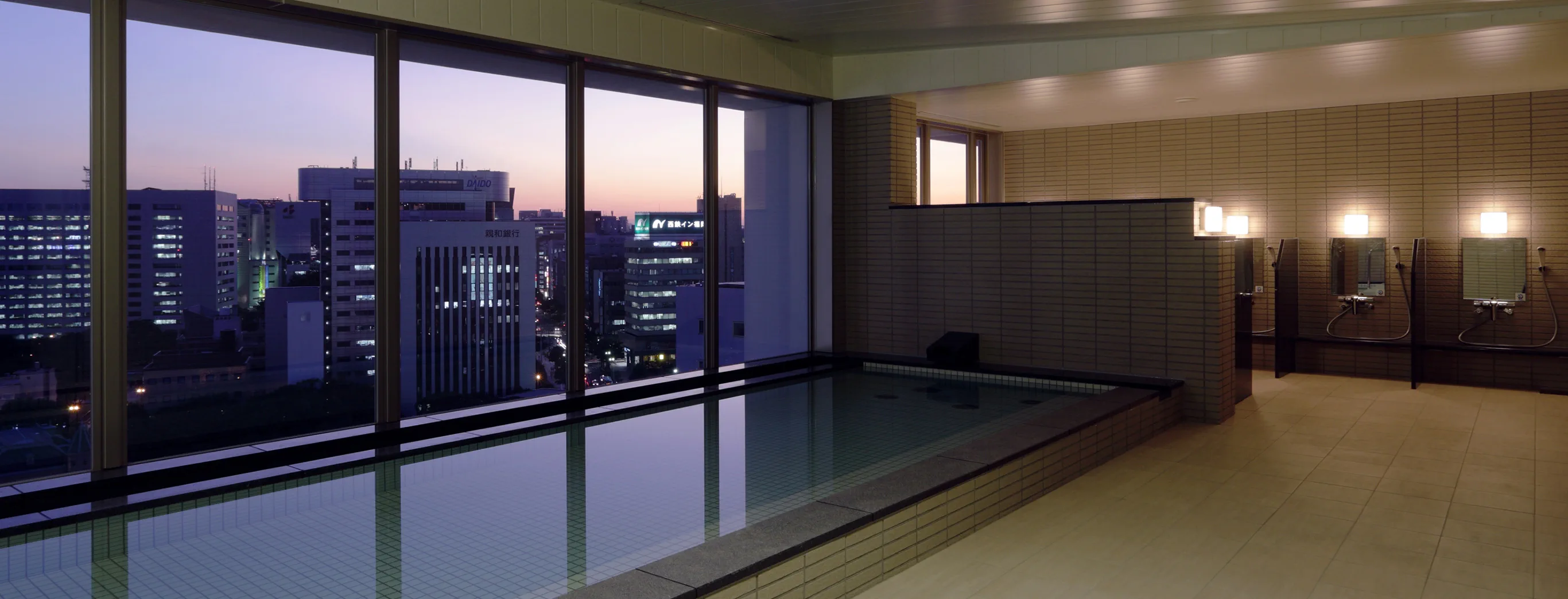
Resol's breakfast is listed from 07:00 to 10:00 with final entry at 09:30. The current hotel FAQ quotes ¥2,300 per adult when added by the previous day and ¥2,500 on the day. A traveller who already wants udon or a market breakfast may prefer the room-only rate; another catching a later train may find the on-site meal useful. The bath is open in two periods, 15:00–02:00 and 06:00–09:00, for guests. Those hours matter only if your actual return or departure fits them.
IL PALAZZO makes the hotel itself a food stop
Hotel Il Palazzo in Haruyoshi has a different reason to charge a premium. The hotel places the Nakasu yatai street about one minute away and central Nakasu about two; its own basement EL DORADO lounge offers breakfast, lunch and an evening guest-lounge service. The property also describes a seven-minute walk from Nakasu-Kawabata Exit 1 and about six minutes from Tenjin-minami Exit 6. That is not the same one-minute station access as Resol, even though both are useful for nearby food nights.
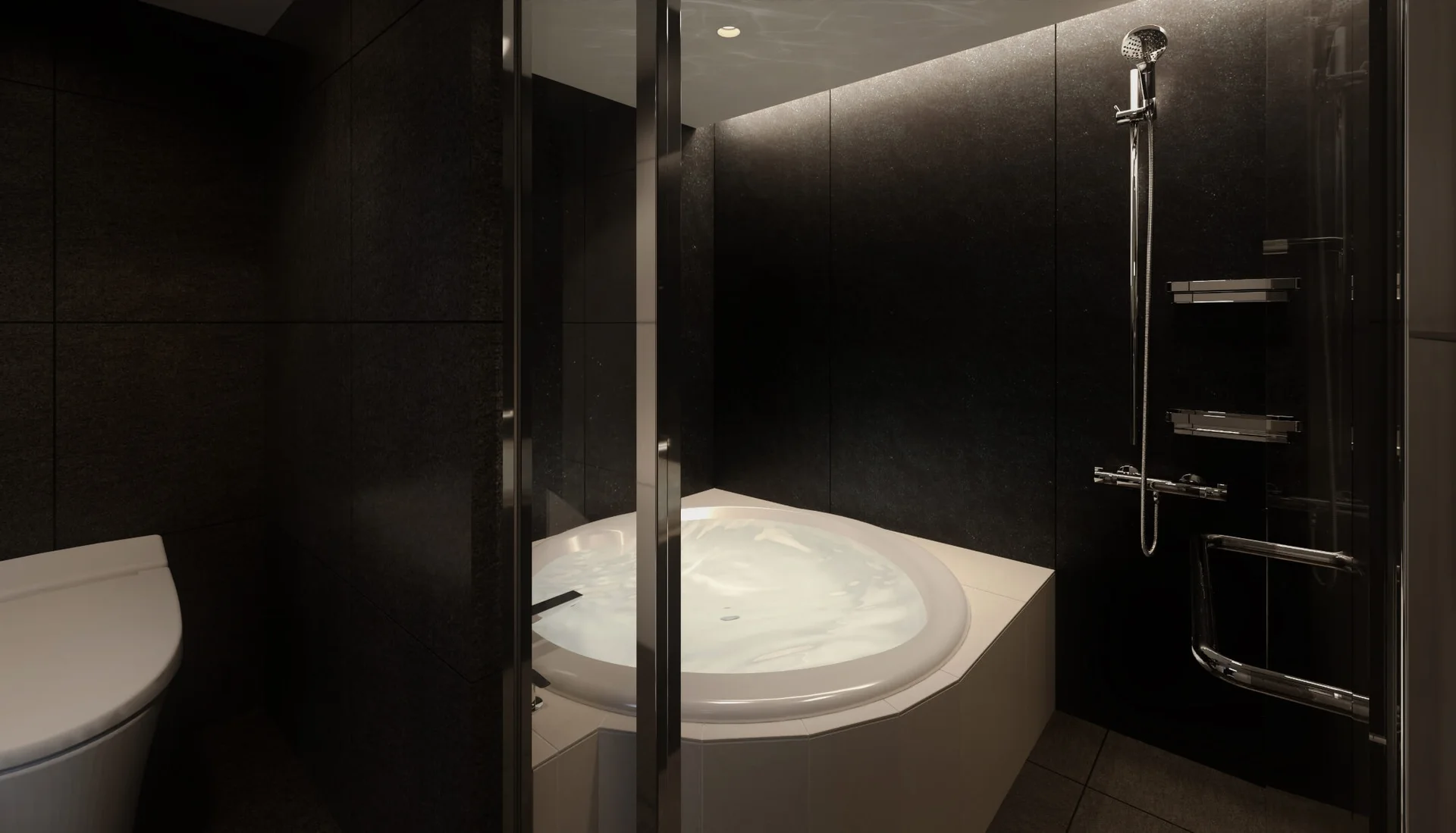
Choose IL PALAZZO when you will actually spend time in its dining spaces, perhaps returning for lunch or enjoying a slower morning before Haruyoshi dinner. If every meal is booked elsewhere and the room is used only for sleep, the in-house food programme may have little value. The IL PALAZZO property guide is useful for deciding whether the design and lounge justify a particular nightly rate. The existing photo below shows a dark-tiled bathtub and separate shower area at the property; it should not be read as an image of EL DORADO.
For the same late-dinner zone with a breakfast-led choice, Mitsui Garden Hotel Fukuoka Nakasu lists about two minutes on foot from Nakasu-Kawabata Station. Its Ono no Hanare Hakata Main Store serves breakfast 06:30–11:00, with last entry at 10:00. The menu centres on seasonal seafood from Nagahama Market alongside Kyushu and Hakata dishes. The current adult buffet price is ¥2,860. That could reasonably be one of the meals you choose deliberately, especially before a morning departure. It can also crowd out the outside udon or market breakfast you planned before booking.
Compare Mitsui's breakfast value against the exact room-only rate, not an abstract claim that breakfast is convenient. For a trip with two mornings and two outside breakfast priorities, a paid buffet is competition. For a group that enjoys a substantial early meal before a rail trip, its 06:30 opening is a genuine timing advantage over a later-starting hotel. The menu and opening hours have more decision value than generic review labels.
Tenjin rewards a day that returns to the room twice
Tenjin food travel may mean coffee, Iwataya or PARCO department-store dining, Tenjin Underground Mall, Daimyo, Imaizumi and Kego, rather than a nightly Nakasu finish. In that pattern, a hotel can be useful twice each day: a midday bag drop and rest, followed by a short walk home after dinner. That gives Tenjin a stronger case than a simple restaurant-count comparison suggests. Solo hotel choices in Fukuoka raise the same issue when the evening return is personal rather than a group decision.
Solaria Nishitetsu Hotel Fukuoka connects directly with Nishitetsu Fukuoka (Tenjin) Station. The hotel lists about five minutes on foot from the subway's Tenjin and Tenjin-minami approaches. Its 17th-floor Red Flamma serves a breakfast buffet with a view across Tenjin. The Solaria stay guide is the right property-level follow-up when both lunches and late evenings cluster there. Solaria versus ONE FUKUOKA HOTEL helps if the question is how much time you will spend using hotel spaces.
Tenjin is not automatically easier for an early Hakata Station train. If your group crosses to Hakata on two of three mornings, include that repeated departure in the price comparison. If the food trip is mostly cafés and shopping with one JR excursion, the Tenjin day loop may still be more valuable. The JR, subway and Nishitetsu transport guide helps distinguish the rail network used by each trip rather than treating every station as interchangeable.
Hakata combines breakfast and onward travel
Hakata is often labelled only as a transport base, yet station dining, quick breakfasts and meals after day trips can make it a food base too. A guest returning by rail can eat near the station and reach the hotel without adding a late cross-town leg. It works particularly well when two or more mornings require JR departures. The same logic is weaker when several confirmed dinners end in Nakasu or Haruyoshi and every evening brings a return to Hakata after the meal.
The choice is therefore not whether Hakata has enough restaurants. It is whether the meals you actually want line up with the station and the departure pattern. Miyako Hotel Hakata versus Solaria gives a concrete station-versus-Tenjin property comparison. The longer-stay hotel guide becomes more relevant if the trip lasts enough nights for laundry and repeated returns to dominate small differences in restaurant density.
For a food itinerary built around Yufuin, a north-Kyushu rail outing or several station breakfasts, it can be sensible to sleep near Hakata and accept one longer Nakasu night. The reverse applies when the rail day is a one-off and late food is the constant. The Fukuoka-or-Yufuin extra-night decision can settle whether that excursion deserves a hotel move at all. The concert-hotel return guide illustrates how a fixed late finish can outweigh a morning map advantage.
One yatai evening is a meal, not a four-night address
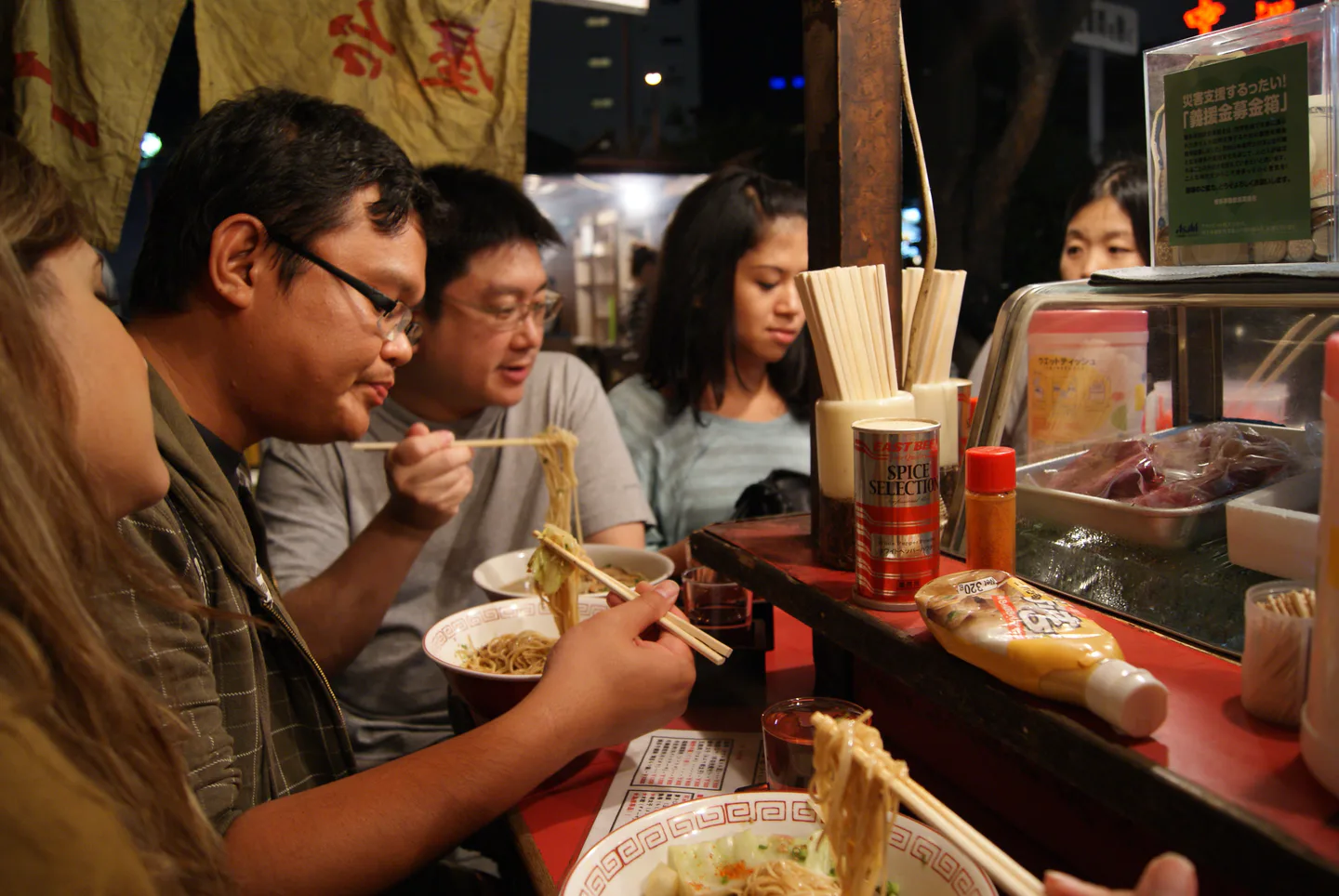
Visitors often want one yatai dinner because the stalls are distinctive. The rest of the meals may be sushi, hotpot, yakiniku, yakitori, ramen or a reserved course elsewhere. Mark the firm bookings first and put a tentative yatai stop afterwards. If only one night ends by the river, a hotel in Tenjin or Hakata can still be the right base for the whole stay. If yatai are part of a repeated late Nakasu routine, the walk home gains weight. The photo below shows diners at a stall; it illustrates that kind of evening without proving every food trip should stay nearby.
Drinks make the last segment more important, even well before the final subway. After two or three bar or izakaya nights, some travellers will gladly pay for a shorter walk. A group that rarely drinks and normally eats at 18:00 may value station access or room size more. The hotel decision should follow the group's real behaviour. The four-adult late-night hotel comparison adds bedding and sauna trade-offs; the rainy-day access guide shows why the final outdoor metres can matter even in a compact city.
Hotel breakfast can displace the food you came to eat
An included buffet is valuable only if you would deliberately choose it. Put your outside breakfast list next to the hotel's actual menu and hours. Someone who definitely wants Mitsui's seafood-led buffet can compare a breakfast-inclusive room with the same room without it. Someone who wants udon, coffee and a market morning should avoid paying in advance for a meal that competes with those plans. A third traveller may want breakfast only if rain or an early start changes the day; that person should check whether adding it later is possible.
Resol's 07:00 opening and Mitsui's 06:30 opening have different usefulness before a 09:00 JR departure. IL PALAZZO's hotel dining programme is a broader in-house experience rather than simply a fast pre-train buffet. Solaria's Red Flamma has a Tenjin view, but only a guest who makes time for it benefits. The question is not whether any of these meals is good in the abstract. It is which one deserves one of your limited Fukuoka mornings. Fukuoka shopping hotel choices are another reminder that afternoon bag drops may matter as much as breakfast on a food-and-shopping trip.
A seven-part check for the room you actually buy
↔ Scroll table left or right
| Dimension | Nakasu / Haruyoshi | Tenjin | Hakata |
|---|---|---|---|
| Late dinner return | Strong when several meals end nearby. | Strong for Daimyo, Imaizumi and Tenjin meals. | Requires a return leg after repeated Nakasu nights. |
| Morning rail start | Extra movement to JR Hakata for many day trips. | Useful for Nishitetsu routes; check JR transfer. | Strongest for repeated Hakata rail departures. |
| Airport approach | Subway access via Nakasu-Kawabata. | Subway access with a hotel-specific last walk. | Rail hub proximity depends on chosen property. |
| Room function | Compare exact Resol, IL PALAZZO or Mitsui room type. | Compare Solaria's category and rate. | Do not infer room size from station location. |
| Food within the hotel | Several distinct breakfast and lounge models. | Red Flamma gives a Tenjin breakfast option. | Station dining may reduce the need for a hotel meal. |
| Group comfort after drinks | Shorter return for Nakasu-focused nights. | Shorter return for Tenjin-focused nights. | Best if the group eats near the station or returns earlier. |
| Value of nightly price | Pay for repeated late-location use, not one yatai stop. | Pay for repeated shopping and dinner returns. | Pay for morning departures and station meals. |
These are qualitative area judgments based on the route; they are not fabricated property scores. Room area, bed type, cancellation terms and the breakfast package can still change the answer within an area. For instance, Resol's one-minute station approach does not make a too-small room right for a family, and IL PALAZZO's lounge cannot add value to a party that will never be there. Resol's room trade-off and IL PALAZZO's hotel-time case deserve separate review after the district choice.
Decide with the actual dinner calendar
For a three- or four-night food trip, identify the three most important evening meals and their likely finishing times. Add whether the group will drink, whether one hotel breakfast merits a reserved morning and where the first commitment starts each next day. If the answer repeats Nakasu, compare stays around Nakasu-Kawabata. If it repeats Daimyo and Tenjin, compare Tenjin rooms. For rail mornings and station meals, compare Hakata stays.
A booking near the last meal can save a repeated tired trip; a booking near the first train can save a repeated rushed morning. Neither is automatically the superior Fukuoka food hotel. The final room choice should include the exact breakfast terms, bed layout and total rate on your dates, after the dinner and departure pattern has chosen the area.
More Fukuoka hotel and food routes
Hakata vs Tenjin hotel areas · Hakata vs Tenjin hotel areas · Hakata vs Tenjin hotel areas · Fukuoka 3-day itinerary logic · Tenjin and Nakasu hotel comparison · Tenjin and Nakasu hotel comparison · HOTEL IL PALAZZO Fukuoka guide · Fukuoka yatai guide · HOTEL RESOL TRINITY HAKATA | · HOTEL RESOL TRINITY HAKATA | · Mitsui Garden Hotel Fukuoka Nakasu · Mitsui Garden Hotel Fukuoka Nakasu · HOTEL IL PALAZZO | site, · Solaria Nishitetsu Hotel Fukuoka | · Sapporo Shopping Hotels: Stay Where · Where to Stay in Tokyo: · Oshima Island Fukuoka Day Trip: · Okinawa Guys’ Trip Hotels: The · Osaka Kuromon Market Food Tour · Where to Stay in Osaka · A Mount Fuji Day Trip