
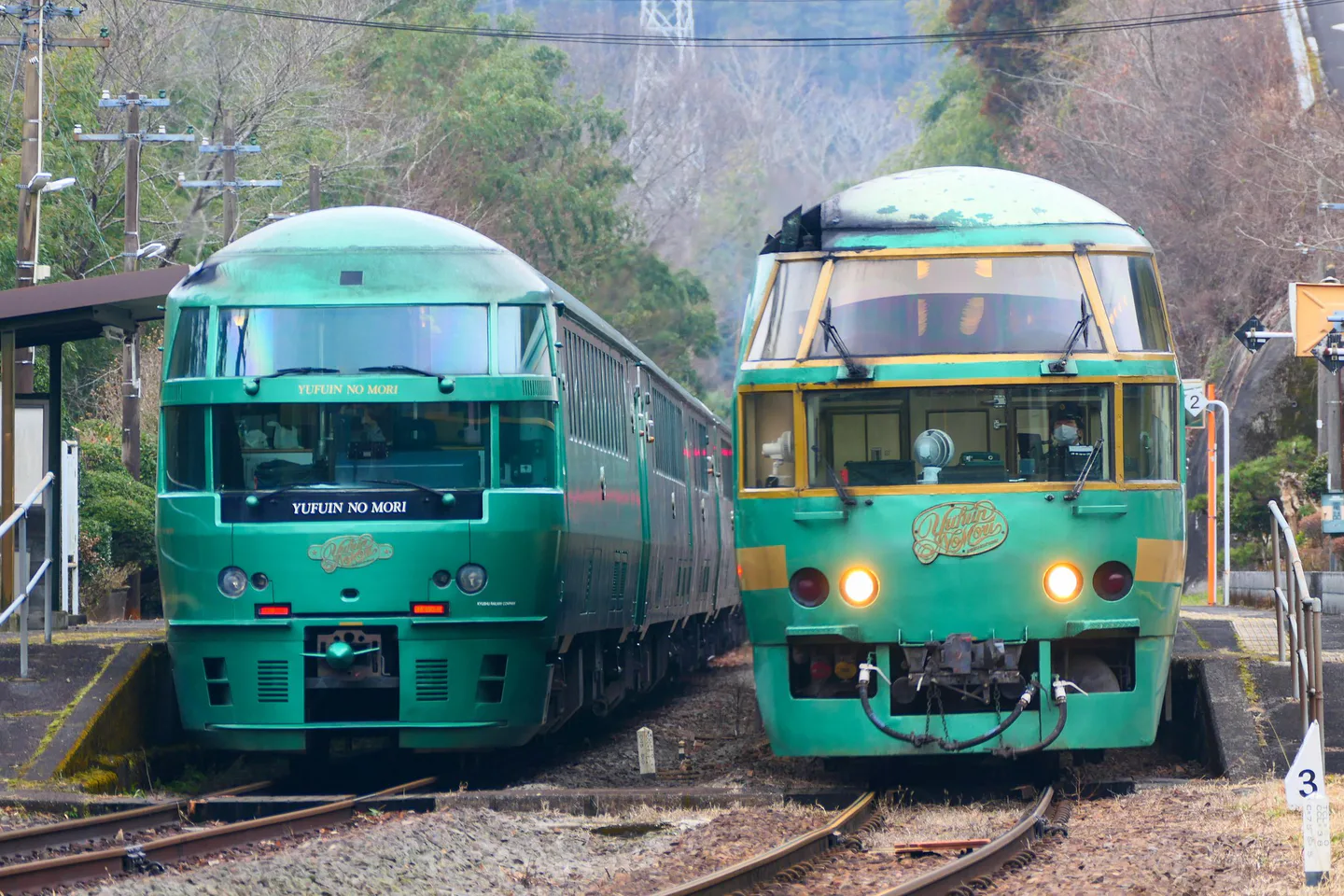
The best way from Fukuoka to Yufuin depends first on where you begin and when your accommodation expects you. From a Hakata hotel, compare both the Yufuin no Mori sightseeing train and the ordinary Limited Express Yufu; they share the useful rail corridor but serve different priorities. From a Tenjin hotel or Fukuoka Airport International Terminal, the direct Yufuin-go coach may avoid several transfers. A rental car starts making sense when Hita, a rural hotel or several other stops are part of the same drive. For a single central Yufuin stay, rail and bus already provide direct options.
A ryokan with dinner can change the answer. An attractive train that arrives at Yufuin at 16:50 leaves very little room for a taxi, check-in and a fixed meal if the property asks for arrival by about 17:00. A less celebrated departure reaching the town in mid-afternoon may be the better use of the room you paid for. If you are still choosing the overnight itself, Fukuoka versus Yufuin for an extra night looks at the stay rather than the transport; the Yufuin ryokan guide covers bath and meal choices.
Pick the arrival that protects the rest of the day
↔ Scroll table left or right
| Starting point and purpose | First option to price | What could change it |
|---|---|---|
| Hakata, with the train ride itself a highlight | Yufuin no Mori | The service may not run as the branded train on your date; its reserved seats can sell out. |
| Hakata, with hotel arrival more important than the train interior | Limited Express Yufu as well as Yufuin no Mori | Earlier or later Yufu departures may fit dinner and daylight better. |
| Fukuoka Airport International Terminal | Direct reserved-seat Yufuin-go bus | Road time and the buffer after immigration still matter. |
| Tenjin hotel | Direct Yufuin-go bus from Tenjin | Choose rail if the sightseeing train is a specific holiday goal. |
| Northern or All Kyushu Rail Pass already bought | Reprice the train using the pass | A valid pass does not create a reserved seat on a sold-out service. |
| Late international arrival and a ryokan dinner | Overnight in Fukuoka, then travel earlier next day | Only a generously buffered same-day journey avoids gambling the meal. |
| Three or four people, large bags and multiple rural stops | Full-cost, luggage-capable rental car | The car needs to save several onward transfers, not just one intercity ticket. |
The decision changes with your next move too. Someone visiting Yufuin for one daylight walk can work back from a return departure; someone continuing to Beppu needs the through service and its actual train identity. Beppu versus Yufuin helps with the overnight base, while a three-day Hita–Yufuin–Beppu route tests whether you should link the towns at all. A car may be valuable on that wider route even when it is unnecessary for Hakata to Yufuin alone.
Rail is a choice between two trains, not one famous train and a bus
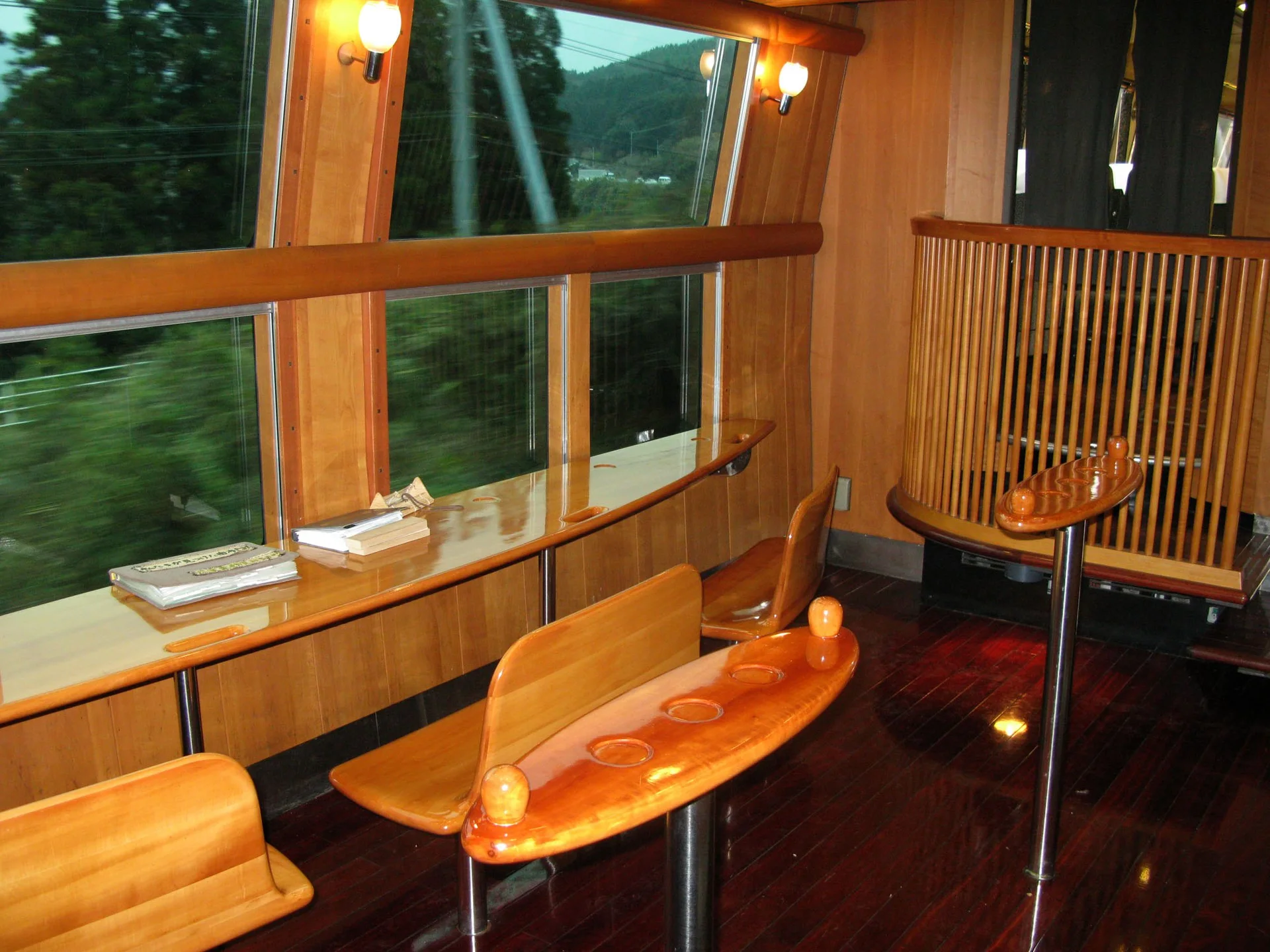
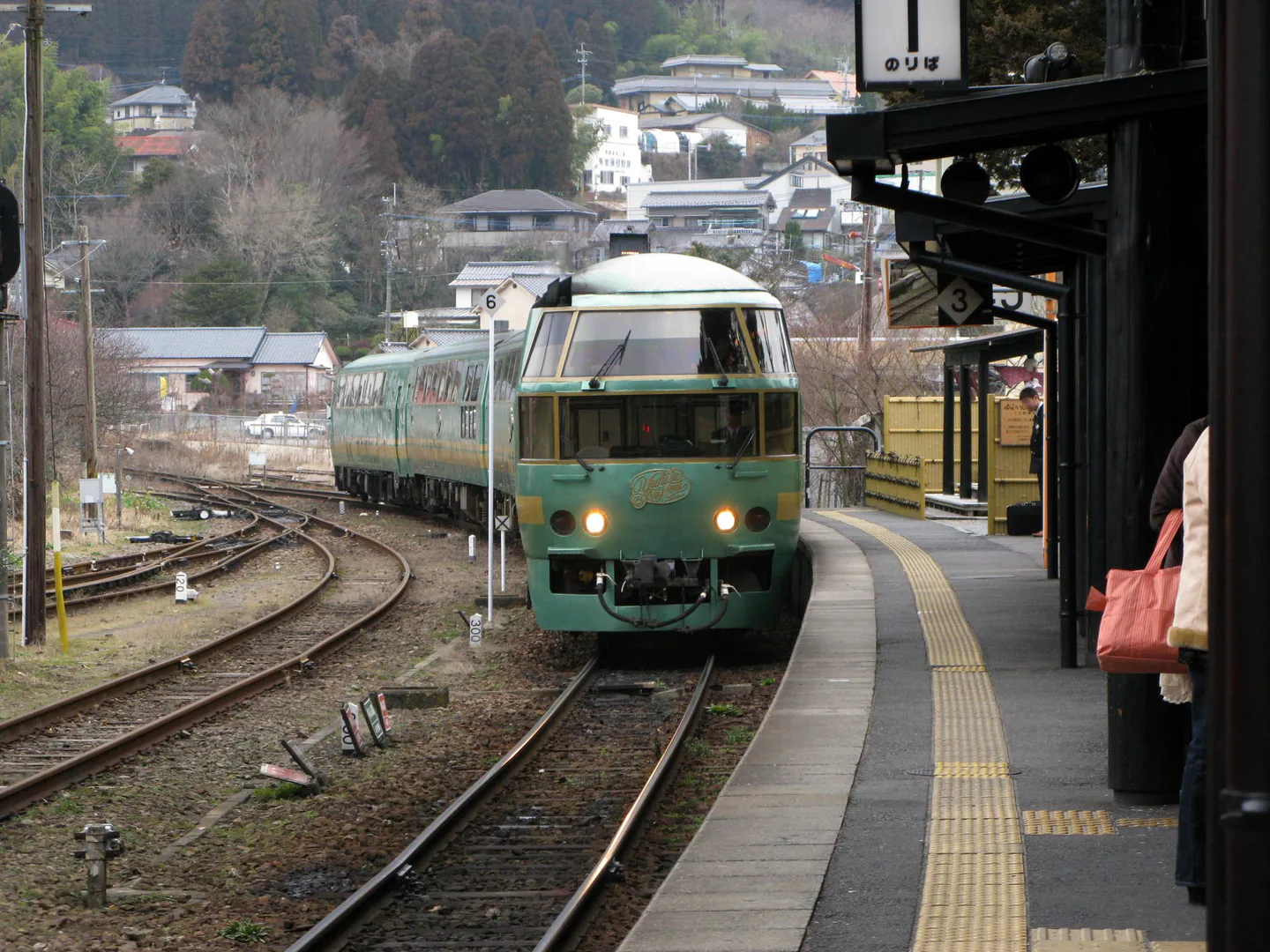
Yufuin no Mori is a Design & Story train with reserved seating throughout. Its distinctive exterior, raised views and interior are reasons to choose it in their own right. The regular Limited Express Yufu has a different job: it broadens the departure choices and offers reserved as well as non-reserved accommodation on its normal services. A sold-out sightseeing train therefore does not mean every rail journey to Yufuin is sold out. Check Yufu seats and times before rebuilding the entire trip around a bus or rental car.
For travel after the September 2026 vehicle substitution, treat Yufuin no Mori Nos. 3 and 4 as date-dependent, not permanently cancelled. The earlier substitution of those two services by Yufu 73 and 74 through 18 September is historical. JR Kyushu's later plan restored the branded services from 19 September, subject to its operating calendar and inspection days. When a Yufuin no Mori service does not operate on a particular date, Yufu can run in that timetable slot. The train-specific reservation guide explains the seat release and calendar; the booking screen for your day determines the train and seat you can actually buy.
If the 10:11 Hakata departure is a Yufuin no Mori 3 on your date, its interior is part of the purchase. If it is a Yufu substitute, the arrival can still suit the trip, but the experience you intended has changed. This is important for a passenger paying for the train rather than simply transport. Likewise, when you plan to remain aboard to Oita or Beppu, the usual timetable shows No. 3 continuing beyond Yufuin; a substitute or operating-day change needs a fresh look before you rely on that through journey. The Fukuoka–Hita–Yufuin–Beppu plan puts that rail decision into a multi-stop route.
The Hakata departures give different amounts of Yufuin time
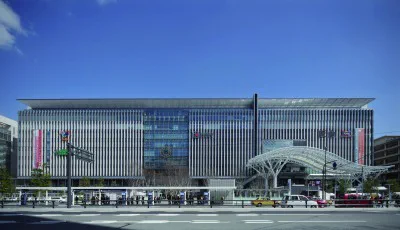
JR Kyushu's 2026–27 major-train pattern provides a useful framework for Hakata to Yufuin. The earliest listed Yufu reaches town shortly after 10:00; the later branded departure reaches it at 16:50. Timetables and operating dates still need to be matched to the booking date. Use these as route choices rather than assuming every train name shown in an annual table is the consist that will arrive on the platform.
↔ Scroll table left or right
| Departure from Hakata | Arrival at Yufuin | Train and useful role |
|---|---|---|
| 07:43 | 10:05 | Yufu 1; maximum daylight and a straightforward bag drop. |
| 09:17 | 11:31 | Yufuin no Mori 1; scenic ride with time for lunch and town. |
| 10:11 | 12:32 | Yufuin no Mori 3 on operating dates, with a Yufu service in its place on non-operating dates. |
| 12:14 | 14:45 | Yufu 3; a useful early-afternoon arrival for a dinner-included ryokan. |
| 14:38 | 16:50 | Yufuin no Mori 5; choose only if the hotel can receive you with enough time. |
| 18:30 | 20:54 | Yufu 5; room-only or flexible late check-in, not a normal half-board arrival. |
The clearest trade-off is the midday Yufu versus the late-afternoon Yufuin no Mori. Yufu 3 arrives at 14:45, roughly two hours before the 16:50 arrival of No. 5. A traveller who wants the wood-lined train may happily choose the latter for a room-only stay. Someone with a paid dinner and an out-of-town ryokan should price the earlier ordinary train first. Yufuin Station is a transport node, not necessarily the hotel door. Ask about the final taxi, walking distance or pickup before judging a 16:50 arrival as safely before a 17:00 deadline.
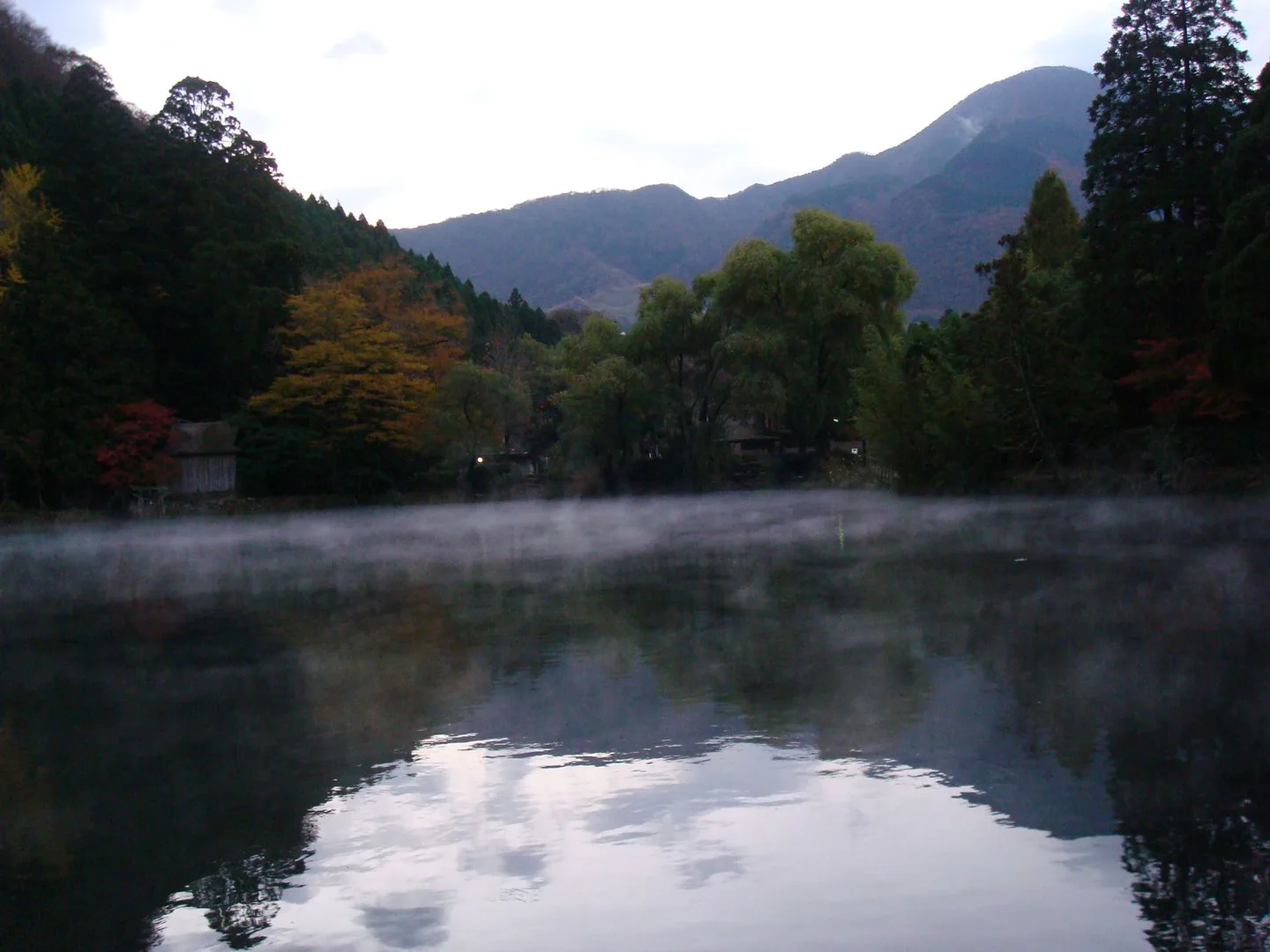
On the return, the ordinary train also extends the range of choices. The published pattern includes Yufu 2 around 09:08–11:20, Yufu 4 around 14:15–16:31 and Yufu 6 around 19:27–21:34 for Yufuin to Hakata. Yufuin no Mori 6 leaves Yufuin around 17:17 and reaches Hakata around 19:27. A day visitor who searches only for the branded train might give away about two hours in Yufuin. The later Yufu should still be judged against a fragile onward connection or a very early Fukuoka morning. Lake Kinrin's morning conditions also make an overnight different from simply taking the last train home.
International arrivals and Tenjin shift the advantage to the bus
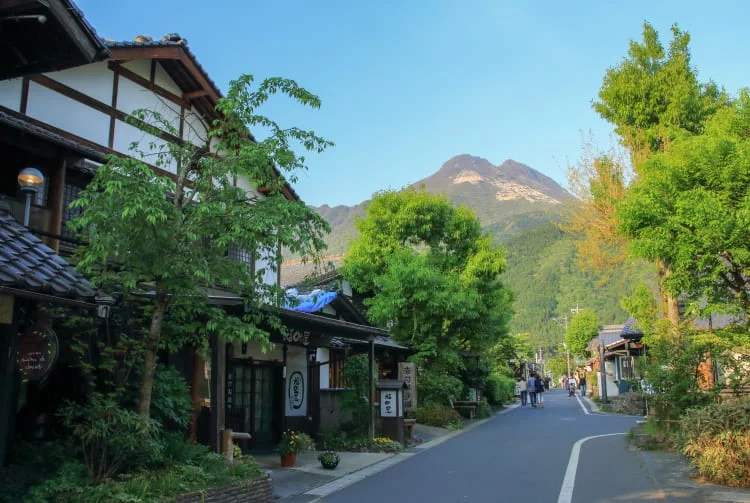
Hakata-to-Yufuin train time is only part of an airport passenger's journey. Fukuoka Airport's rail station is on the Domestic Terminal side. An arrival at International needs the inter-terminal transfer, a subway to Hakata, station navigation with bags and then the intercity train. The direct Yufuin-go highway bus serves the International Terminal on relevant departures. It can remove those handoffs even when its scheduled road journey is longer than the train ride measured from Hakata.
The Yufuin-go operator lists 14 round trips in normal service, reservations required, and about 2 hours 20 minutes between Tenjin and the Yufuin bus centre. It calls at Tenjin Expressway Bus Terminal, Hakata Bus Terminal and the airport International Terminal on the applicable route. Check the boarding stop and direction before paying; an international flight delay and road congestion affect different parts of the same trip. For a dinner-included ryokan, leave a real arrival buffer rather than selecting the last bus that could theoretically make the meal. a three-day Fukuoka route can absorb the flight day if sleeping in town is more dependable.
Tenjin has a similar geographic advantage. A guest already near the bus terminal can board a direct coach instead of reaching Hakata by subway and finding a rail platform. A rail pass or a deliberate wish to ride Yufuin no Mori can still justify that detour. Distinguish the value of the train as an activity from the job of getting to your hotel. The Fukuoka food-and-hotel base guide helps choose Hakata or Tenjin before the Yufuin travel day; the Tenjin–Hakata area comparison looks at their wider transport trade-offs.
A rail pass changes the marginal price, not the seat rules
If your Northern Kyushu or All Kyushu Rail Pass already makes sense for other journeys, calculate what another covered train costs you rather than comparing the full ordinary train ticket with a separate bus fare. Both passes can cover eligible Yufuin no Mori travel in their area, but the train still needs an actual reserved seat. The Northern pass includes up to six ordinary reserved-seat uses under its standard rule; the All Kyushu pass has no such count limit. Advance online reservations can carry their own fees and availability rules, so pass coverage should not be mistaken for a free seat in every channel.
The Fukuoka Wide Pass is a different product. Its non-reserved limited-express coverage is restricted to the listed area and specifically excludes Yufuin no Mori, whose entire train is reserved. It also does not take you all the way to Yufuin on the Yufu corridor. Do not buy it because its name says Fukuoka and expect it to solve this trip. The five- or seven-day Kyushu route comparison is a better place to test whether a broad rail pass has sufficient use beyond this one journey.
Even without a pass, the usual rail fallback is simple: look first at a Yufuin no Mori departure if its interior is the goal; if unavailable or awkward, examine the Yufu services before abandoning rail. The all-reserved rule is absolute for the sightseeing train. Do not assume you can board and stand in an unreserved car. Conversely, an ordinary Yufu may still have a suitable non-reserved or reserved option. A last-minute boarding decision is weaker than securing the seat when your itinerary or dinner has a fixed deadline.
Yufuin Station's temporary building changes the wait, not the route
JR Kyushu began using a temporary station building on 26 March 2026 while the older Yufuin structure is repaired. The ticket counter is listed as 07:00–18:00. The former Art Hall or waiting-room arrangement and the platform footbath are unavailable during the work. Trains still use Yufuin as the rail stop; the difference is what you can do with a long gap before departure. Plan luggage storage, hotel pickup and indoor waiting without relying on an older station visit that includes the footbath.
A family or anyone carrying large bags should solve that last step before filling the day with sightseeing. Hakata-to-Yufuin luggage options compare forwarding and storage; the general luggage guide explains when to send a bag ahead. Temporary station arrangements make a room pickup or early bag drop more valuable than assuming the station can be your comfortable lounge.
The rental calculation starts beyond Yufuin Station
A car can improve a wider trip through Hita, Route 210, rural accommodation or multiple Kyushu stops. It also gives a group with large bags more control over stops and pickup points. For a journey ending at a central Yufuin ryokan, however, a rental adds collection time, paperwork, insurance or non-operation-charge decisions, fuel, tolls, parking and return arrangements to a route already served by direct transport. The private-car charter comparison and Kyushu train, bus and car itinerary help judge the vehicle over several days rather than only this leg.
Do not divide a sample compact-car price by four and call it a saving until a vehicle that actually takes four travellers and four long-haul suitcases is priced. A meaningful quote includes the correct class, full protection package, fuel, tolls, parking, pickup and drop-off hours, and any one-way return charge. A graphic in the earlier article used a July 2026 representative 48-hour same-office figure of ¥34,250, including a ¥15,840 base rate, ¥3,300 protection, ¥550 ETC card, ¥4,560 fuel allowance, ¥8,000 toll allowance and ¥2,000 parking. Those amounts are a dated illustration, not a live booking quote: class, route, supplier and actual usage change every component. The underlying group arithmetic was roughly ¥34,250 for one, ¥17,125 each for two, ¥11,417 each for three and ¥8,563 each for four, before checking whether the car fits their bags. Price the real route instead.
If you only want a no-car Fukuoka–Hita–Yufuin–Beppu sequence, the two-night route split tests whether the public connections leave enough time. A dedicated Hita-to-Yufuin outing is a better test of whether a car helps with the stops you actually want. If Lake Kinrin and the town are the main aims, a train or bus arrival still leaves the local Yufuin walking day intact. A car becomes worthwhile through a distinct rural programme, not because the train is famous and its reserved seats happened to sell out. Those arranging rental days around a Fukuoka hotel can use the Fukuoka self-drive hotel comparison to avoid paying for an idle city car.
Book the fixed commitment first
Begin with the accommodation's latest comfortable arrival, including dinner seating, bathing time, pickup cutoff and the time from Yufuin Station to its door. Then identify whether you are actually leaving from Hakata, Tenjin or the International Terminal. On rail, check the service running on your travel date as well as the seat you can reserve; the old September 2026 Yufuin no Mori 3/4 substitution is no longer a current disruption to plan around. If the branded train is unavailable, try Yufu. Compare a coach when it deletes a terminal or city transfer, allowing for road variability. Only after that price a car for the full route it would enable.
For a late international arrival, a night in Fukuoka can protect an expensive Yufuin ryokan stay better than a tight same-day transfer. For a day trip, compare the late Yufu return as well as the last Yufuin no Mori. For a hotel outside the town centre, the final taxi or shuttle can outweigh small differences in intercity running time. These are the details that make the most familiar train either a sensible treat or the wrong arrival for this specific booking. The extra-night comparison and Beppu-or-Yufuin stay guide can settle the bigger route if transport alone is not the only open choice.
More Kyushu routes and services
JR Kyushu — latest · JR Kyushu — current · JR Kyushu — Yufuin · JR Kyushu Rail Pass · Kamenoi Bus — Yufuin-go · YUFUINFO — temporary Yufuin · New Chitose Airport to · Do You Need a · 5- or 7-Day Kyushu · 5- or 7-Day Kyushu · Okinawa Car Rental: OTS · Fuji Speedway Driving Experience: · Hokkaido 7-Day Car Rental: · Okinawa Without a Car: · Hokkaido Winter Rental Car: · New Chitose Airport Car
If the return timetable feels too tight, compare Yufuin rooms for an overnight stay before choosing the last train or bus.