
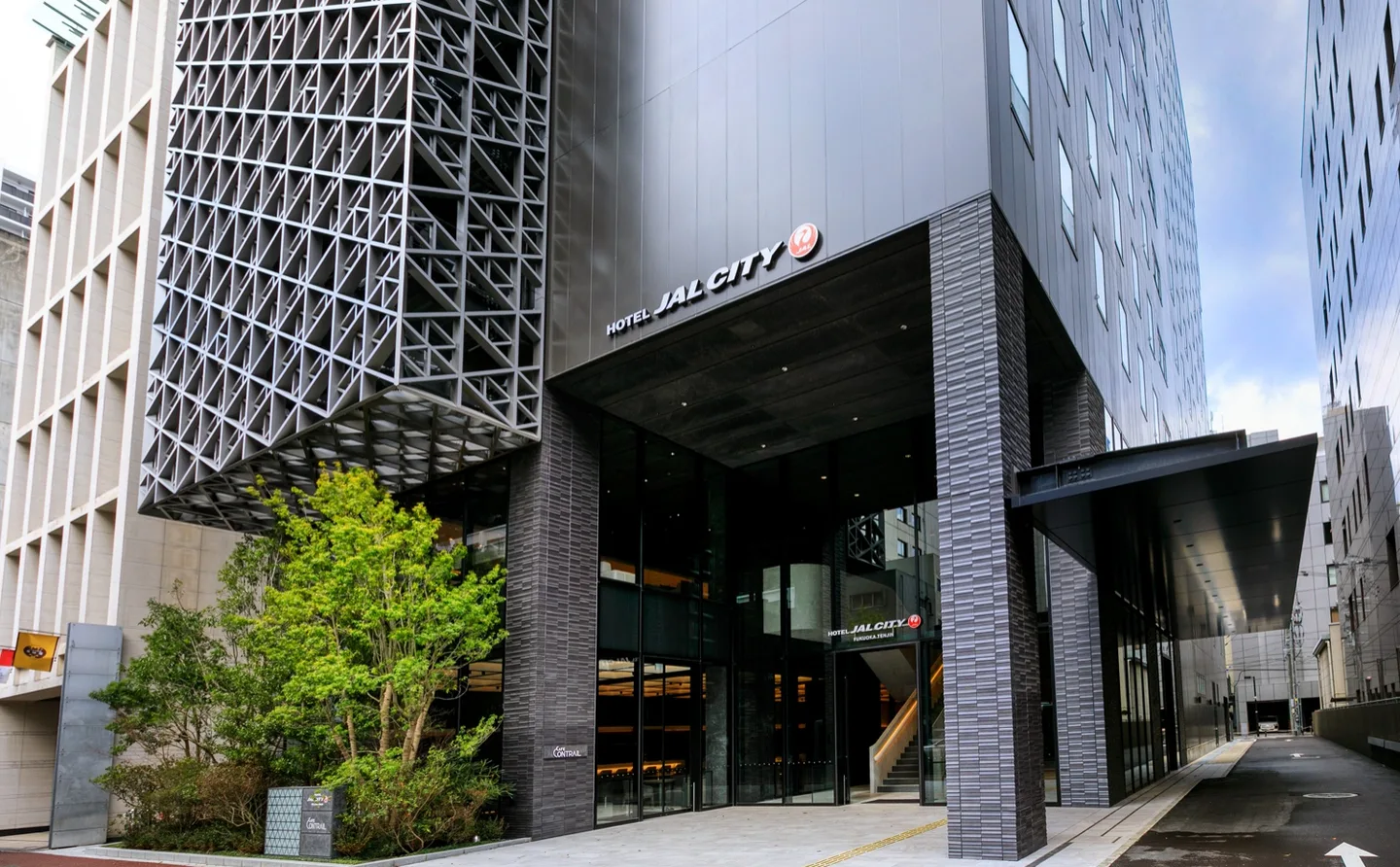
The hotel’s name points to Tenjin; its nearest platform is Akasaka. Hotel JAL City Fukuoka Tenjin sits roughly one minute on foot from Akasaka Station Exit 3, on the Daimyo side of central Fukuoka. For an airport arrival, that can be remarkably simple: stay on the Airport Line and get off at Akasaka. For a traveller who needs Tenjin Station or Hakata’s JR platforms every day, the same address creates a different routine. The useful decision is where your mornings begin and where your evenings end.
The shortest exit is not the accessible exit. Exit 3 supplies the hotel’s one-minute figure; travellers needing a lift should take Exit 6. That matters with a stroller, mobility aid or a large suitcase. It does not make the property distant from rail, but the last walk is no longer the idealised one-minute route. Write the actual exit on your arrival plan. The Hakata versus Tenjin area guide can help decide whether an Akasaka address fits the whole trip before the room comparison begins.
Akasaka makes airport arrival easy; Hakata days still need a transfer
The hotel currently gives about 13 minutes by subway from Fukuoka Airport to Akasaka. There is no interchange at Hakata or Tenjin on that route, so a traveller with a cabin bag can leave the airport, reach Exit 3 and make a short final walk. A case that requires the Exit 6 lift changes the path. Use the lift route without trying to force the one-minute claim to describe it. For an early or late flight, check train operating times separately from the hotel’s access estimate; the 13-minute ride says nothing about waiting for the first or last train.
Hakata Station is also on the Airport Line, about eight minutes away by the hotel’s access guidance. One regional departure during a city stay is a modest extra leg. Three or four JR mornings change the equation: every day begins with the Akasaka-to-Hakata subway before you board the train you actually came to catch. A Hakata hotel may reduce that repeated transfer. The Fukuoka subway and rail guide is useful for counting movements, and the three-day first-visit plan shows how often a city-focused trip really needs the JR station.
Evenings pull in the opposite direction. Daimyo and the western side of Tenjin can be easier to use from Akasaka than from a distant Hakata room. If your plans end with dinner, shops or coffee in that area, the direct airport ride and short walk home may offset one regional transfer. A property at Tenjin Station itself remains better for someone repeatedly using the underground mall, PARCO or Nishitetsu Fukuoka Station. “Tenjin area” and “beside Tenjin Station” are different purchases; this hotel sells the former with immediate Akasaka access.
↔ Scroll table left or right
| Repeated movement | What the location supplies | Where to look again |
|---|---|---|
| Airport Line arrival and departure | Direct train to Akasaka; Exit 3 is about one minute from hotel. | Exit 6 for a lift; train hours for unusual flight times. |
| Daimyo and western Tenjin evenings | City dining and shopping can finish on the hotel’s side of the centre. | Distance to the particular venue, especially in rain. |
| Occasional Hakata JR departure | About eight minutes by subway to Hakata. | Allow interchange and platform time. |
| Several early regional trains | Akasaka remains rail-connected. | Repeated pre-transfer may justify a Hakata base. |
| Nishitetsu or Tenjin Station every day | Tenjin district is reachable. | A literal station-side hotel may save repeated walks. |
A trip to Yufuin illustrates the distinction. If it is one day among several Daimyo and central Fukuoka days, the extra subway hop may be harmless. If the itinerary adds Aso and multiple regional departures, Hakata becomes the true hub and the hotel’s attractive Akasaka frontage has less influence. Map the Yufuin journey and the Aso departure before choosing the room. Autumn travellers can apply the same count to foliage day trips from Fukuoka. The full departure and return, not a hotel-name keyword, determine the best base.
Two adults: the real choice is 21 m² or 28 m²
The Moderate Queen has 21 m² of published floor area, sleeps one or two, and uses a 1600 × 2000 mm bed. It is the rate to compare first for a couple who prefer one bed. The number does not establish how easily two large suitcases lie open beside furniture; a floor plan would be needed for that. It does, however, put the entry room above the tiny mid-teen-square-metre categories found at some city hotels. A short stay with cabin baggage may have no reason to pay for more space.
The Superior Twin is 28 m² with two 1200 × 2000 mm beds. The extra seven square metres should be valued for how the room will actually be used: separate sleepers, full-size cases, a longer stay or more time inside on rainy days. For friends who need distinct beds, it solves the bed question and adds area. For a couple who will barely enter before bedtime, a lower Queen rate may be a better purchase. A photo cannot prove which room has a more useful desk or clearer circulation; confirm the sold category and view if either matters to you.
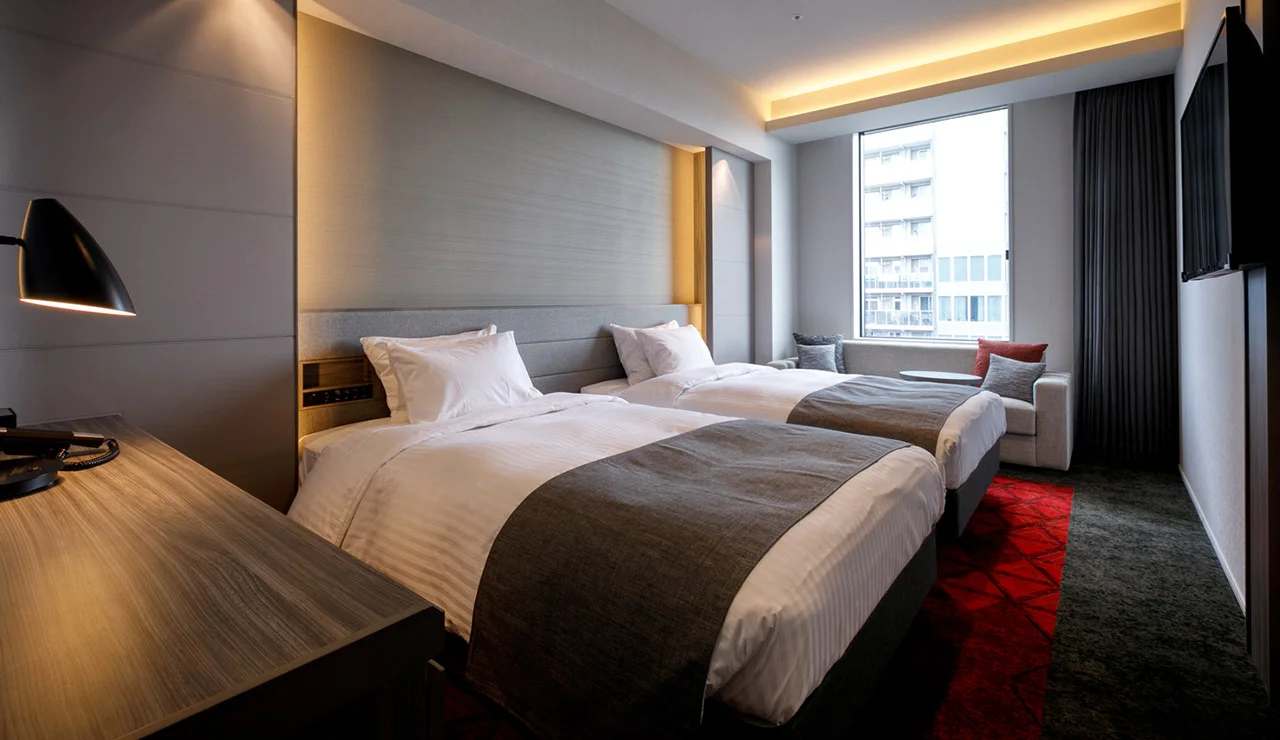
The Superior Twin with an extra bed is still 28 m². Its added bed measures 970 × 1880 mm; the original twins remain 1200 × 2000 mm. Three people can sleep in the room, but the third bed occupies circulation space inside the same floor area. An adult group planning several nights should compare that layout against two rooms or a larger product. The Deluxe Twin has 37 m² and two 1200 × 2000 mm beds, yet the hotel lists only two rooms in that category. Build the base plan around an available 21 or 28 m² product and treat a Deluxe opening as an option, not the assumption.
↔ Scroll table left or right
| Bookable category | Published area and bedding | Practical reason to compare it |
|---|---|---|
| Moderate Queen | 21 m²; one 1600 × 2000 mm bed; one or two guests. | Price baseline for two people sharing one bed. |
| Superior Twin | 28 m²; two 1200 × 2000 mm beds; one or two guests. | Seven extra square metres and separate beds. |
| Superior Twin + Extra Bed | 28 m²; two twins plus a 970 × 1880 mm bed; up to three guests. | Three-person capacity without an increase in room area. |
| Deluxe Twin | 37 m²; two 1200 × 2000 mm beds. | More area, but only two rooms are listed. |
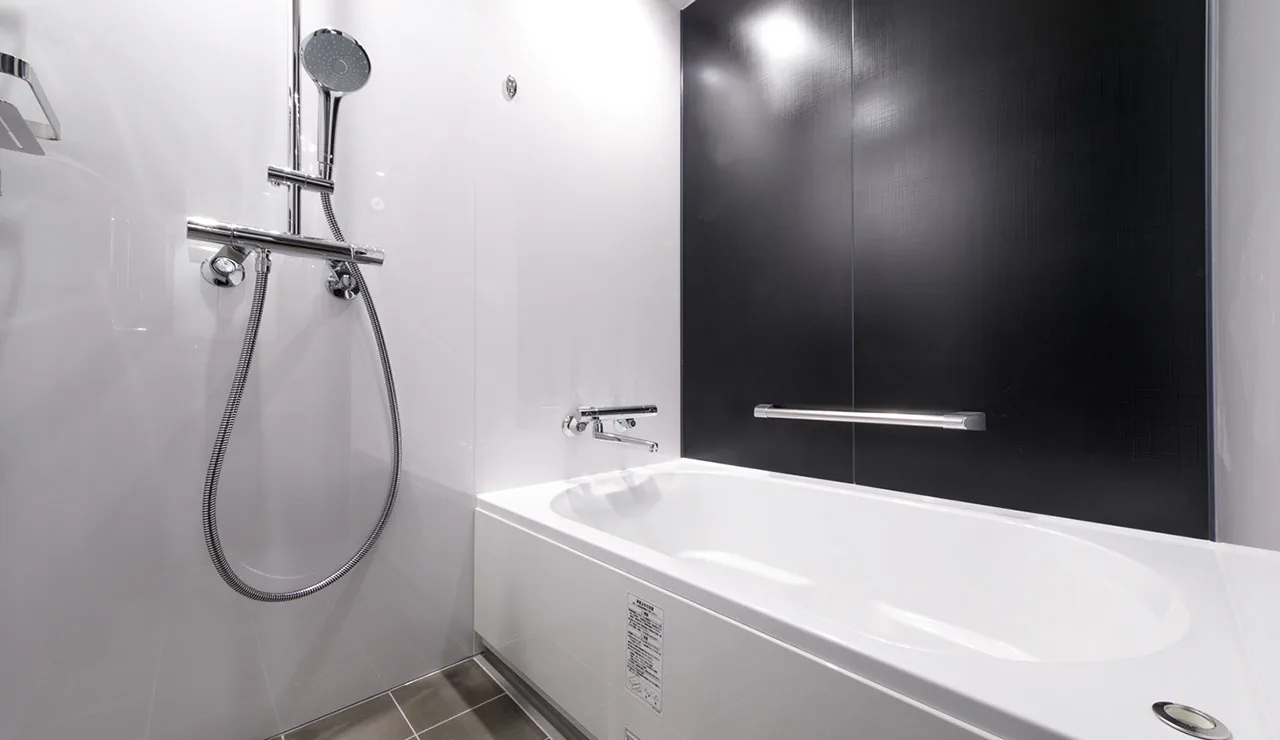
Every guestroom has a separated bath and toilet. That matters when two people are preparing to leave together: one can use the toilet while the other bathes. It is a more concrete washroom advantage than an abstract statement that the hotel is “comfortable.” The property does not have a large communal bath. A traveller booking chiefly for an evening soak with other guests should choose a different hotel; someone who wants privacy may prefer this split washroom. The bathroom image shows a specific tub and shower arrangement, so inspect the selected room’s details if bathing layout is crucial.
Families need another layer of checking. The hotel’s child bed-sharing rule allows an elementary-school child to share an adult bed without a separate room charge, generally one child per adult. Breakfast for a child aged six to twelve is a separate charge. There are no connecting rooms; asking for neighbouring rooms is a request, not a guarantee. That combination may work for one family in a suitable configuration but does not replace an internally connected suite for two households. Check the exact occupancy and bedding before using “sleeps three” or free bed-sharing to estimate the final bill.
Breakfast and laundry need their own timetable
Cafe Contrail currently serves breakfast 06:30–10:00, with last entry at 09:30. The displayed prices are ¥2,970 for an adult, ¥1,485 for ages six through twelve, and no charge for ages zero through five. These are time-sensitive restaurant prices, verified for this revision, not an estimate for every future stay. A morning meal at 06:30 may fit a moderate departure, but an early JR train also requires checkout, luggage collection, the walk to Akasaka, the subway ride and Hakata platform time. Evaluate that entire sequence before adding a breakfast-inclusive rate.
Travellers who would rather eat outside can use the Fukuoka breakfast choices. Akasaka and Daimyo are especially attractive when the trip includes local eating and evening walks. The yatai district guide helps work out where dinner might finish; the coffee and dessert walk is a different afternoon use of the area. Neither requires paying for a hotel breakfast that conflicts with a regional train.
For a longer visit, the second-floor self-service laundry has three washing machines and three dryers. The room TV can show machine availability, saving a pointless trip downstairs. Limited machine numbers can still produce a queue, particularly after dinner. A person who wants a guaranteed wash-dry cycle in a private room should compare Tokyu Stay Fukuoka Tenjin; a traveller happy with shared facilities and smaller private space can look at lyf Tenjin Fukuoka. Those properties solve different problems and should be compared at the actual guest count.
↔ Scroll table left or right
| Facility or condition | Current hotel detail | Why it changes a booking |
|---|---|---|
| Private bath | Bath and toilet are separated in every room. | Two guests can use them more independently. |
| Communal bath | There is no large public bath. | Choose another property if that is central to the stay. |
| Self-service laundry | Second floor: three washers and three dryers; TV availability display. | Useful for longer stays, with finite machine capacity. |
| Breakfast | 06:30–10:00; last entry 09:30. | Check against checkout and regional departure. |
| Connecting rooms | Not offered. | Nearby rooms cannot be assumed or treated as connected. |
| On-site parking | 26 guest parking spaces are listed. | Ask about availability and fees when arriving by car. |
A five-day Fukuoka base should be judged differently from a one-night airport stop. The seven additional square metres in a Superior Twin, a separated bathroom and self-service laundry may gain importance after several days with bags. If most mornings begin on Hakata’s platforms, the accumulating subway transfers can outweigh those benefits. If most evenings end in Daimyo and the Airport Line is used only for arrival, departure and an occasional train day, Akasaka’s short final walk becomes the recurring advantage.
Our seven JAL City Fukuoka Tenjin ratings
The station here is Akasaka rather than Tenjin. We score an airport-line arrival and Daimyo evenings, then account for repeated Hakata rail departures in the value judgement.
| Dimension | Our rating | The booking consequence |
|---|---|---|
| Location | Akasaka Exit 3 is close; lift access uses Exit 6, while Hakata JR mornings add a subway leg. | |
| Room | The 21 m² option suits a lighter pair; the 28 m² twin makes a longer two-case stay easier. | |
| Cleanliness | Room and bath upkeep perform strongly in current multi-category stay feedback. | |
| Service | The staff signal is consistently positive, including practical arrival help. | |
| Facilities | Bath separation helps, but this is a city base rather than a facility-led resort stay. | |
| Food | The regional breakfast is strong; the earliest departures may instead need a room-only rate. | |
| Value | The airport-line arrival and western Tenjin evenings justify the base better than multiple JR day trips. |
Our overall Akasaka-base read is 8.4/10. Use the same room size and breakfast terms when comparing a Hakata address.
What the name can obscure
The word Tenjin in the hotel name places it within the broader central neighbourhood, but it should not be read as Tenjin Station frontage. That is the first trade. The second is the absence of a communal bath, exchanged for private room layouts with separated bath and toilet. The third is group accommodation: an added bed and free child bed-sharing do not provide a physically larger room or connecting doors. None makes the hotel unsuitable on its own. They make its appeal specific: good Airport Line access, a short Akasaka approach and usable private rooms for the right party.
Suppose the flight lands around late afternoon. The Airport Line takes you directly to Akasaka; after leaving the bags, the rest of the evening can be spent around Daimyo and Tenjin. A city day next allows a return for shopping bags or a break. Here the Queen or Twin room becomes useful after the location has already saved an interchange. Change the trip to early JR starts and late sleep-only returns, and the Hakata pre-transfer reappears every morning. The Solaria Tenjin comparison helps for a station-centred shopping stay, while the Haruyoshi hotel comparison tests a different walk and night-time neighbourhood.
Seven hotel dimensions can be assessed without inventing a single aggregate score. Access is very short from Akasaka Exit 3, with a different lift route at Exit 6. Space spans a 21 m² Queen and 28 m² Twin baseline. Comfort depends on a separate private washroom rather than a public bath. Cleanliness needs recent guest evidence, not a room photograph. Neighbourhood value rises when Daimyo and western Tenjin recur. Service includes restaurant, laundry and the hotel’s response to individual requests, which published facility lists cannot grade. Value is the final same-date room rate after breakfast, transport and cancellation terms are included.
↔ Scroll table left or right
| Dimension | Evidence you can use now | Check tied to your stay |
|---|---|---|
| Access | Akasaka Exit 3 about one minute; Exit 6 has lift. | Flight hour, luggage and number of Hakata transfers. |
| Space | 21 m² Queen, 28 m² Twin, 37 m² scarce Deluxe. | Exact category, bags and bedding. |
| Comfort | Separate bath and toilet; no public bath. | Whether private bathing is enough. |
| Cleanliness | Product photographs show layout, not cleaning consistency. | Recent category-specific accounts. |
| Neighbourhood | Daimyo-side address and Airport Line station. | Actual restaurants, shops and departure hubs. |
| Service | Breakfast and laundry have stated hours and capacity. | Needs outside those schedules or individual requests. |
| Value | Published rooms and routes permit like-for-like comparison. | Full price, tax, meals and cancellation deadline. |
To compare prices, hold the guest count, named room, bed type, breakfast, tax treatment and cancellation deadline constant. The first rate shown for a Moderate Queen is not equivalent to a Superior Twin or a three-person extra-bed plan. If a 37 m² Deluxe appears, remember that its two-room inventory makes availability unusual. The Fukuoka hotel and car-day guide adds parking and rental timing for road trips; it is unnecessary to pay for parking on a stay conducted by subway.
Compare the named Hotel JAL City Fukuoka Tenjin rooms for your dates. For an Akasaka-based city stay, begin with the 21 m² Queen and 28 m² Twin rates. For a party of three, select the extra-bed product rather than relying on a maximum-occupancy badge. If most mornings depart Hakata or Tenjin Station itself, compare the same final terms at a hotel nearer that repeated departure before booking.
Nearby Fukuoka routes and room details
Where to Stay in Fukuoka: Hakata or Tenjin · Fukuoka Transport Guide · Fukuoka 3-Day Itinerary · Fukuoka Breakfast Guide · Fukuoka Yatai Guide · Fukuoka Coffee and Dessert Walk · Hotel JAL City Fukuoka Tenjin website · Hotel JAL City Fukuoka Tenjin access information · Moderate Queen room information · Superior Twin room information · Hotel JAL City Fukuoka Tenjin · Cafe Contrail restaurant information · Independent hotel rate listing · Independent hotel rate listing · Hakodate Kokusai Hotel: Is an 8-Minute Station Walk Worth the 202 · Hotel Gracery Sapporo: Is a 1-Minute Station Walk Worth a 15 m² R · Hotel WBF Grande Asahikawa: Is a 2-Minute Station Walk Worth It f · OMO5 Otaru: Is a 9-Minute Station Walk Worth Staying by the Canal · Hotel Torifito Otaru Canal: Is a 7-Minute Walk from Otaru Station · La Vista Hakodate Bay: Is a 15-Minute Walk from Hakodate Station · Hotel Hankyu RESPIRE OSAKA: Is a 3-Minute Osaka Station Walk Wort · karaksa hotel grande Shin-Osaka Tower: Is a 5-Minute Station Walk · The Naha Terrace: Are 35m² Rooms and 12:00 Check-Out Worth a 15–2 · Hotel Sonia Otaru: Is a Canal-View Room and Rooftop Onsen Worth t · Hotel Sosei Sapporo Review: Is a 39 m² Twin-Queen Room Worth a 15 · OMO7 Asahikawa: Is Sauna Plateau Worth a 15-Minute Walk from JR A · ONSEN RYOKAN YUEN SAPPORO: Is the Karurusu Hot Spring Worth a 13-