
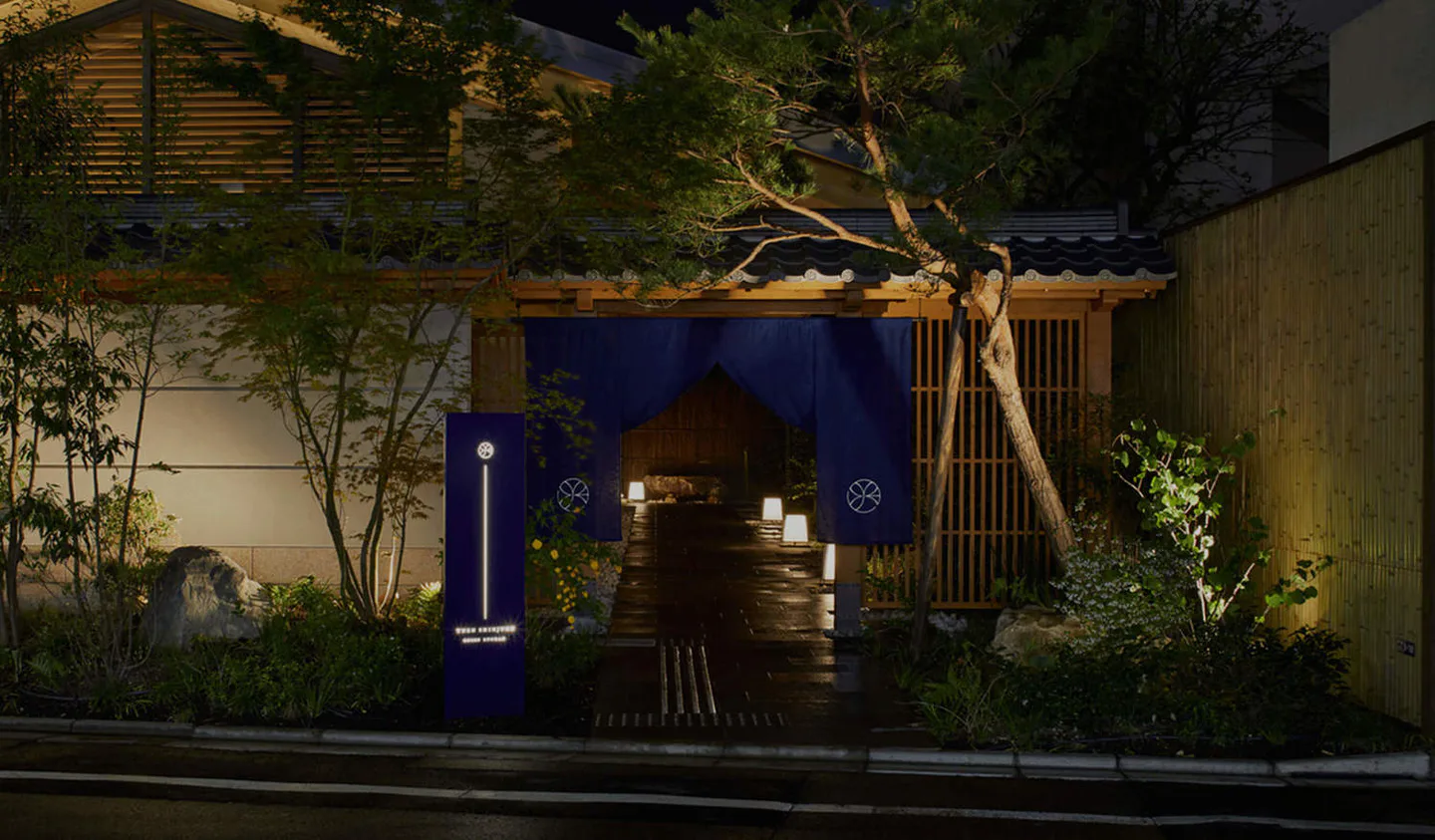
The hot spring is the reason to consider YUEN SHINJUKU, but its practical value depends on the hours you will actually spend there. Its outdoor bath sits on the eighteenth floor and uses water brought from the Hakone area. The hotel, however, is east of the large JR Shinjuku complex: a walk that looks harmless on an evening without bags can become a repeated tax on early JR departures. For a Tokyo stay centred on nearby Metro stations, the same address feels quite different. Ueno and Shinjuku as city bases helps place that location choice in a wider itinerary.
There is also a date on this review. On 24 October 2026, building work is scheduled into February 2027, the old restaurant is shut, and the bath closes earlier from 1 November. A newer private-bath suite is planned for mid-November, but it does not describe the current standard rooms. Judge a booking by its stay date, room category and likely bathing routine. A feature you use three evenings can justify some inconvenience; a single quick dip usually cannot compensate for tight luggage space or a longer daily route.
The real location is between two Metro stops
From the hotel, the stated approaches are roughly seven minutes to Shinjuku-gyoemmae Exit 3, eight minutes to Shinjuku-sanchome C7, and sixteen minutes to JR Shinjuku East Exit. Those are walking estimates, not promises for a person pulling large cases through rain or crowds. The hotel access page gives the relevant exits. A visitor riding the Marunouchi Line to Ginza or Tokyo Station may have little reason to touch the JR concourse on most days. Someone repeatedly taking the Chuo Line, Yamanote Line or a west-side highway bus must count the additional approach each time.
The difference is sharper on departure mornings. A 07:00 train from JR Shinjuku means leaving the room early enough for the street walk, station circulation, ticket gates and platform. A 07:00 trip beginning at Shinjuku-gyoemmae involves a different station and a shorter street leg. If your plan calls for two or three early JR departures, compare a hotel closer to that concourse such as Hotel Century Southern Tower or JR Kyushu Hotel Blossom Shinjuku before assigning a premium to the bath. Hotel Groove near Kabukicho solves another location problem, late entertainment on the west side.
Arrival matters as well. A person coming through Tokyo Station can ride toward Shinjuku-gyoemmae rather than forcing the final leg through JR Shinjuku. A late arrival at Narita may have an entirely different endpoint and service limit; the Narita first-night decision belongs before committing to this room. If the broader Tokyo neighbourhood is still open, the first-time Tokyo area comparison and Tokyo Station versus Shinjuku as a base are more useful than comparing room photos alone.
↔ Scroll table left or right
Itinerary pattern | Likely fit at YUEN | Pressure to include in the room comparison |
Three to five nights, Metro-oriented sightseeing, several returns near 22:00 | Good potential for repeated bathing | Check the same-date price of a room large enough for your bags |
Several early departures through JR Shinjuku or the highway-bus terminal | Location becomes weaker | Price the extra station walk and early bedtime honestly |
First Tokyo night after an overnight flight, with an afternoon nap planned | Construction may intrude | Consider a quieter first-night room during the works |
August–October 2026 stay expecting dinner and breakfast inside the hotel | Restaurant closure breaks that plan | Arrange meals elsewhere or choose another property |
Hakone ryokan already booked on this trip | The urban bath has less unique value | Choose YUEN only if it still wins on Tokyo location and room |
Two people with two large cases for four or five nights | Entry room may dominate the experience | Compare Comfort Twin or larger instead of only entry price |
What happens in the eighteenth-floor baths
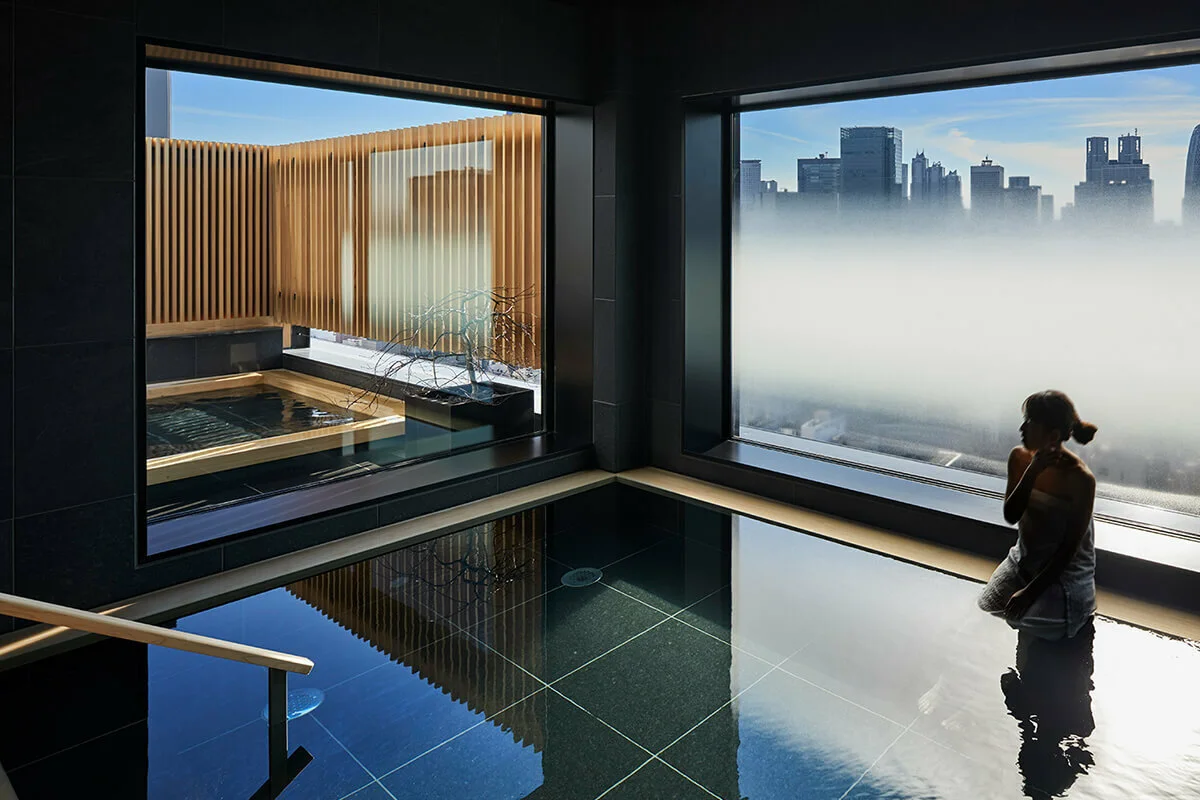
The outdoor pool contains alkaline simple spring water carried from Lake Ashi Onsen in Hakone, identified as Tsutsuji no Yu from Hotel de Yama. The adjacent indoor bath is a regular bath, not a second natural hot spring. This distinction matters if the spring water is the main reason to book. The bath details describe the water and facilities; the public bath is a guest amenity rather than a day-use attraction. You cannot count on using it before check-in or after checkout simply because you have a reservation for that night.
Through 31 October 2026, evening access is 15:00–02:00, with final entry at 01:45. Morning access runs 06:00–10:00, final entry 09:45. Beginning 1 November, the evening closes at 00:30 with final entry at midnight; morning remains 06:00–10:00 but final entry becomes 09:30. These are more useful than a generic claim that the bath is open late. A concert night ending at 23:30, followed by dinner and the walk back, may still work in October yet become impractical in November. The change notice gives the date switch.
For a four-night stay, write down the evenings when you will actually be near the hotel before the relevant last-entry time. Three returns around 21:30 or 22:00 give the bath a real role in the trip. One bath after check-in and no return before midnight on later days leave you paying for a facility you scarcely use. A Tokyo-to-Hakone overnight is a separate experience: YUEN provides a city rooftop soak, not the meal, room and landscape rhythm of a Hakone ryokan. One or two nights in Hakone helps put that larger trip choice in proportion. If a private bath is essential because of tattoo concerns or family privacy, Hakone private-onsen choices solve that problem differently.
↔ Scroll table left or right
Four-night routine | Bath opportunity | Likely counterweight |
Back in east Shinjuku by about 21:30 on three evenings | Several useful sessions | The longer JR walk has less effect on Metro-led days |
Early Fuji, Hakone or Nikko starts with late returns | A bath remains possible on paper, less likely in practice | Sleep and repeated JR or bus access |
A first-night bath followed by three nights elsewhere until late | One use | Room area and daily transport should decide |
Bathing after a normal city day is easy to imagine: arrive from Shinjuku-sanchome, eat nearby, and still enter the pool with time to rest. The opposite itinerary is just as plausible. Leave at 06:30 for a day trip, come back at 23:30, then repack for another early train. Counting the bath as four nights of value in that schedule overstates it. Fuji day-trip logistics and Nikko day-trip planning can expose whether several evenings are already spoken for.
The room ladder matters more than a bath photograph
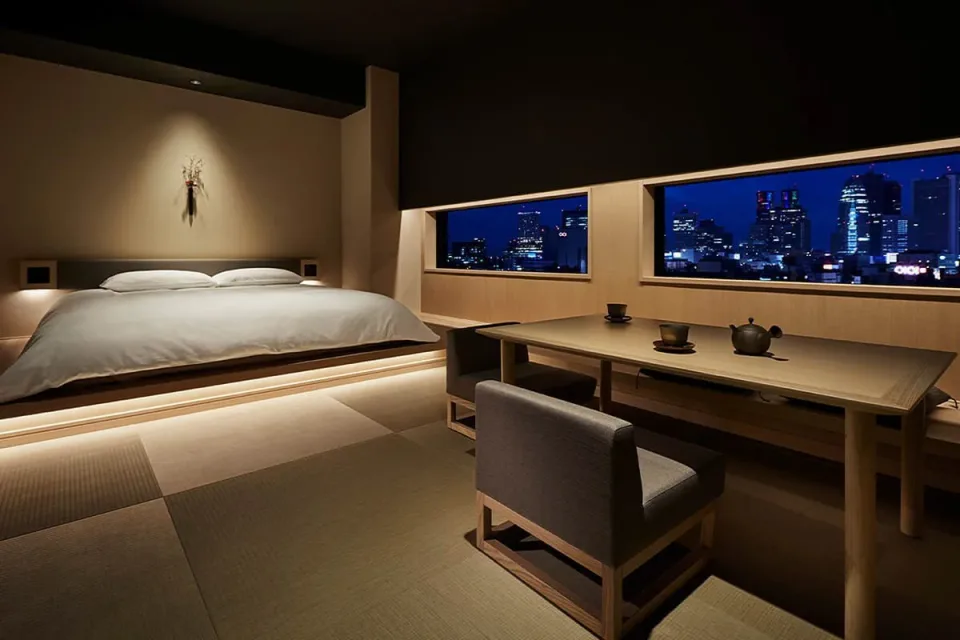
The currently listed standard rooms span a 12 m² Semi Double, 15 m² Twin, 20 m² Comfort Twin, 25 m² Double and 33 m² Premium Double. These dimensions describe different products inside the same hotel; the shared bath does not enlarge a 12 m² room. A solo traveller with a carry-on for two nights may find the smallest category adequate. Two adults with long-haul luggage over five nights should compare at least the 20 m² twin and the 25 m² double, subject to bed preference. Those are judgments about usable space, not claims that every person must buy an upgrade.
↔ Scroll table left or right
Room | Listed size | Practical question |
Semi Double | 12 m² | Will one short-stay guest and small luggage fit the nightly routine? |
Twin | 15 m² | Can two guests avoid living out of open suitcases? |
Comfort Twin | 20 m² | Does its added floor area solve two large cases over three to five nights? |
Double | 25 m² | Will shopping, repacking or time in the room make this space useful? |
Premium Double | 33 m² | Is private room space itself worth the higher quote? |
Compare the exact bed configuration as well as the size. A double room that wins on floor area may be wrong for two people who need separate beds; a twin can be better even when its square metres are fewer. If luggage is the main pressure, measure the price gap between categories for your own dates. A small advertised entry price has limited meaning when the category you could comfortably occupy costs much more. Tokyu Stay Shinjuku Eastside is worth comparing when laundry or longer-stay function matters more than spring water. The case for forwarding a large bag may also change what must be kept in the room.
The 2026–27 works change the kind of stay
Renovation is scheduled from 22 June 2026 through 28 February 2027. The hotel expects noise and vibration mainly from 11:00 to 15:00, with workers on site from 09:00 to 18:00. Rooms and the public bath remain in service, but an open room is not necessarily a quiet room at lunchtime. A traveller who leaves after breakfast and returns for dinner may notice little. A jet-lagged visitor planning to sleep at 13:00, someone working remotely, or a family managing a child nap faces a direct conflict. The works notice is worth checking against the booked dates.
The former KAKATOJO restaurant ended its original service on 31 May 2026. The closure notice describes no hotel meal service through 31 October while a replacement restaurant is being prepared. A new name, GOU, appears in plans, but a promised opening should not be treated as a confirmed breakfast or dinner inclusion for an individual stay. Book the room and meal plan actually offered for your date. This is particularly important for someone expecting a self-contained ryokan evening: the shared bath may operate, while eating still requires going out into Shinjuku.
↔ Scroll table left or right
Date or period | Operating condition | Booking consequence |
Through 31 October 2026 | Old restaurant closed; no on-site meals listed for the closure | Arrange breakfast and dinner separately |
Through 31 October 2026 | Bath evening session 15:00–02:00, final entry 01:45 | Later evenings retain more bathing time |
From 1 November 2026 | Bath evening session 15:00–00:30, final entry midnight | Night events can eliminate the bath window |
Through 28 February 2027 | Renovation with likely 11:00–15:00 noise; work presence 09:00–18:00 | Be cautious if the room must be quiet during the day |
There are planned room changes too. Two ONSEN Suite types, a 50 m² Double and 62 m² Twin with private spring water, are scheduled for stays from 16 November 2026; their stated capacity reaches four. Family rooms of roughly 38–49 m² are planned for March 2027. Those larger and more private rooms are not a description of today’s 12–33 m² standard inventory. If a private bath is the objective, confirm that the booked room explicitly says ONSEN Suite rather than assuming every YUEN room gains one. If the stay precedes the scheduled opening, compare the present shared-bath hotel instead.
Longer stays expose smaller operational details
The hotel questions page lists washer and tumble-dryer facilities on the fifth, tenth and fifteenth floors, with two units on each of those floors, but no laundry service. That is helpful during a four- or five-night stay if you can wait for machines. It does not remove the need to bring the arrival luggage along the station approach. A traveller who is moving onward can send a main case ahead, while keeping an overnight bag for the hotel. Japan luggage forwarding choices explains when that is preferable to hauling the case between cities.
The same principle applies to hotel value. Check the room quote for identical dates, occupancy, bed arrangement, taxes and cancellation terms. Then compare the one you would actually occupy, not the smallest category used as a headline rate. If the onsen will be used once, another hotel with a shorter walk to JR or more room may be the better purchase. Hotel Gracery Shinjuku is a different east-exit trade; the Gracery versus Groove location comparison separates those two alternatives. A Shinjuku honeymoon room comparison shows why paying for a feature on a night spent mostly outside can be wasteful.
Seven site scores for a bath-led Shinjuku stay
Dimension | Site score | Why the current YUEN booking differs |
|---|---|---|
Location | Metro exits are around seven or eight minutes away, while JR Shinjuku East Exit is about sixteen minutes on foot. | |
Room | The 12 m² Semi Double can be tight for two cases; the 20 m² Comfort Twin gives a more workable choice. | |
Cleanliness | The aggregated guest cleanliness category is around 9.0–9.1/10. | |
Service | The current aggregated guest service category is around 9.1/10. | |
Facilities | The eighteenth-floor Hakone-source outdoor bath is a real draw, though scheduled midday construction affects room time. | |
Food | As of 24 October 2026 the hotel restaurant is closed through 31 October; no on-site meal should be assumed. | |
Value | Several evening baths may repay the longer JR walk, but small rooms and renovation noise limit the premium. | |
Overall | A bath-centred Metro base for guests out during works; weaker as a quiet daytime or JR-transfer hotel. |
These site scores are out of ten for an October 2026 stay during the announced works. Cleanliness and service use anonymous guest category aggregates; food reflects the current restaurant closure and needs rechecking for later bookings. A person leaving the hotel every day on the Marunouchi Line may find the access easier than someone catching early JR trains. The 20 m² Comfort Twin is a more sensible starting point for two large cases than the 12 m² Semi Double, regardless of the headline rate.
The useful booking decision
YUEN SHINJUKU works best when its east-side Metro access matches the trip, the chosen room can hold the travelling party comfortably, and several evenings genuinely leave time for the spring-water bath. It is a harder recommendation for repeated early JR or bus departures, a workday nap during construction, or an October 2026 stay expecting on-site ryokan meals. Travellers who already have a Hakone ryokan with a private bath elsewhere may find that the Tokyo hotel should solve station access instead.
For a stay that fits those conditions, compare rooms around Shinjuku-sanchome using the room size and bath access shown on the offer. If the JR walk is the central worry, compare Shinjuku Station-area rooms on the same dates. A spring-water bath is a good reason to pick this hotel only when the rest of the stay still works.
Nearby decisions for the same trip
ONSEN RYOKAN YUEN SAPPORO: Is the Karurusu Hot Spring Worth a 13-Minute Walk? · Hotel Sonia Otaru: Is a Canal-View Room and Rooftop Onsen Worth the 8-Minute Station Walk? · The Naha Terrace: Are 35m² Rooms and 12:00 Check-Out Worth a 15–20 Minute Station Walk? · HOTEL ANTEROOM NAHA: Is a 12-Minute Walk from Miebashi Worth Every-Room Harbour Views? · OMO7 Asahikawa: Is Sauna Plateau Worth a 15-Minute Walk from JR Asahikawa? · Vessel Hotel Campana Susukino: Is the 25:00 Public Bath Worth a 4-Minute Walk? · Hotel WBF Grande Asahikawa: Is a 2-Minute Station Walk Worth It for a Northern Hokkaido Base? · La'gent Stay Hakodate Ekimae: Is a 1-Minute Station Hotel with Overnight Onsen Worth It? · Hotel Gracery Sapporo: Is a 1-Minute Station Walk Worth a 15 m² Room? · Nishitetsu Hotel Croom Hakata: Is 14.6 m² Worth a 1-Minute Bus Terminal and Late Onsen? · Hotel Hankyu RESPIRE OSAKA: Is a 3-Minute Osaka Station Walk Worth the High-Rise Trade-Off? · THE BLOSSOM HAKATA Premier: Is the 7-Minute Walk Worth a 30m² Twin and Public Bath? · Hotel JAL City Fukuoka Tenjin: Is a 1-Minute Akasaka Walk Worth Choosing Over Tenjin Station? · Oriental Hotel Okinawa Resort & Spa Review: Is the 170m Pool Worth a 7-Minute Beach Walk?.