
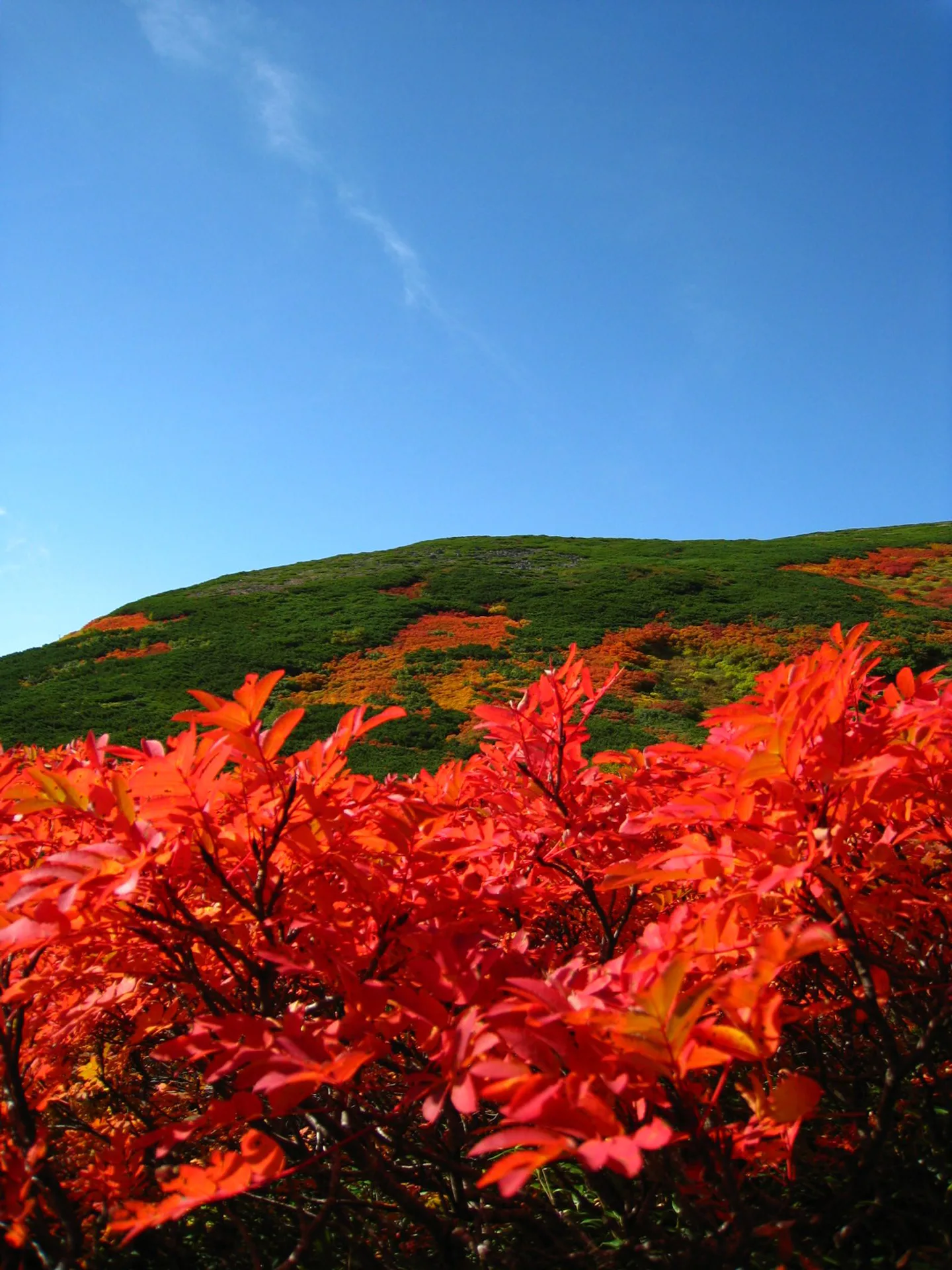
Ginsendai is a trailhead for Mount Akadake, not a ropeway platform. The payoff is early alpine colour across Daisetsuzan's upper slopes, but reaching the view involves mountain walking and a road that closes for winter. The 2026 foliage season has ended: Kamikawa Town lists the Ginsendai road as closed from 29 September 2026 at 11:00. There is no autumn shuttle or private-car access to book for the remainder of this year.
For a future September trip, plan the access before choosing a hotel. The small seasonal climbing bus and the separate autumn traffic-control arrangements can have different dates, reservations and return times. The precise 2026 schedules and fares below describe that past season; they are a way to understand the choices, not tickets for the next one. Kamikawa Town's tourist-road status page and mountain access page are the starting points when a new season approaches.
What the 2026 calendar can teach next year's visitor
↔ Scroll table left or right
2026 period | Arrangement that was published | Why the dates mattered |
Listed weekends and holidays through 6 September | Small Sounkyo–Ginsendai climbing shuttle, with advance reservation | It was not the peak-foliage charter service |
7–11 September | Transition between the summer bus notice and autumn control period | Neither timetable could be assumed to cover those dates |
12–23 September | Autumn vehicle control, with reserved charter buses and timed car entry | Ordinary unrestricted driving was not the default |
From 29 September at 11:00 | Ginsendai road closed for the season on the town's road-status page | Later autumn trips cannot simply drive to the trailhead |
The 2026 summer climbing shuttle was an eight-seat vehicle listed for weekends and holidays through September 6, at ¥2,500 one way, with reservations due by 17:00 the previous day. It was not the autumn charter. A future season could shift control dates, bus capacity, fare, reservation method or road closure. When a trip includes a fixed mountain day, make the current notice a booking prerequisite. A hotel reservation alone does not give access to the trailhead.
The road closure is also a reminder that foliage timing and access timing are not identical. Leaves can still be interesting at lower elevations after the high trailhead is shut, but a photograph labelled “Daisetsuzan in autumn” does not tell you which road was open on the photographer's date. For a future itinerary, identify the particular trailhead, its road and the transport product that reaches it. Use a lower-elevation walk or ropeway for a late-season visit rather than pushing a September Ginsendai plan into October.
Why the trailhead is a hiking choice
Kamikawa Town describes Ginsendai as the Akadake trailhead, at about 1,500 metres. The road reaches a high starting point, but the hillside colour seen in photographs lies along an exposed mountain route. A short look near the trailhead and a hike into the upper slopes are different outings. Do not judge the walking commitment from the fact that a vehicle reaches the start.
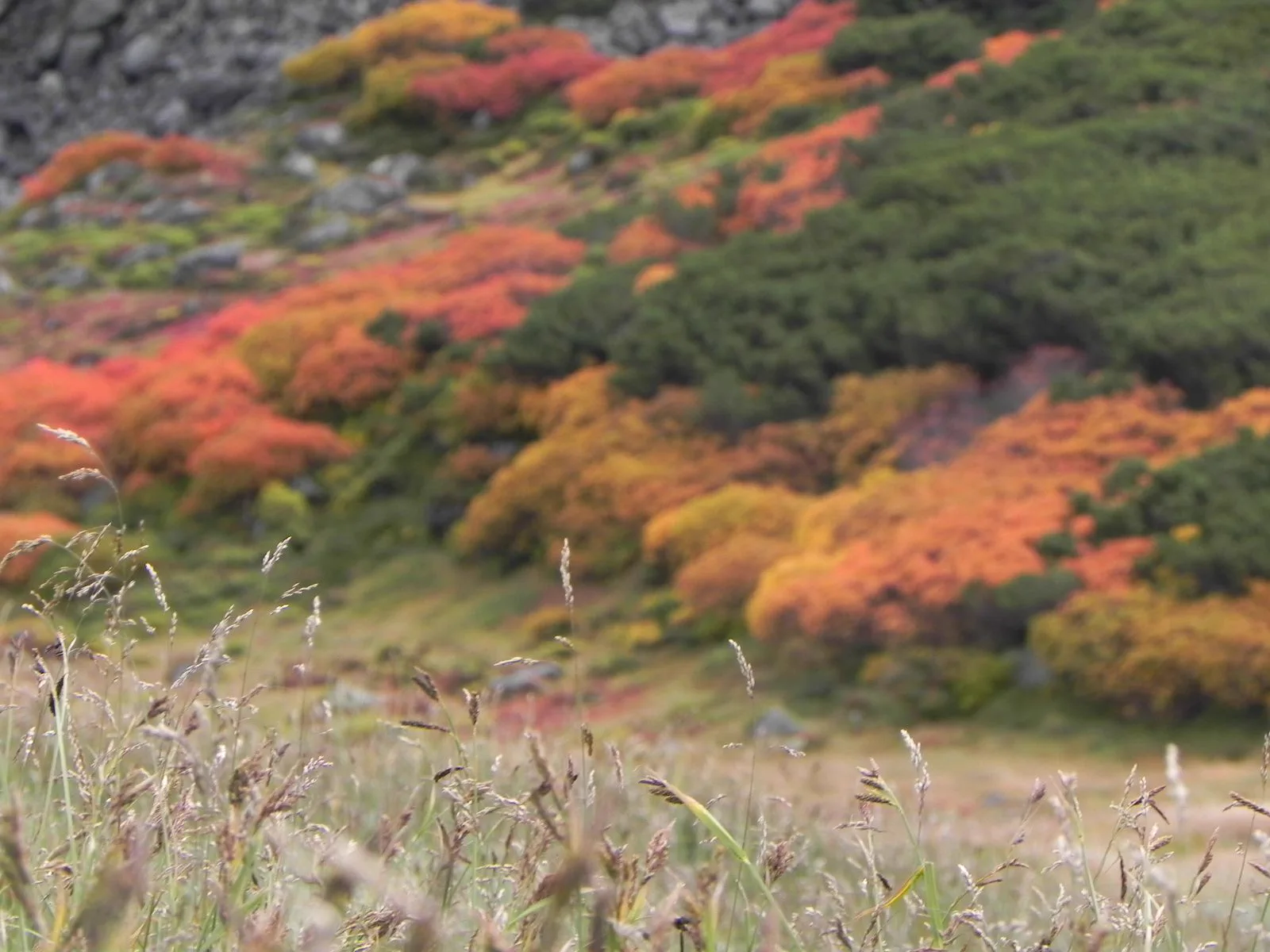
Roots, stones, wet ground and gradient can change the time taken to ascend and, more importantly, descend. Mist or wind can make the day feel colder than a Sounkyo hotel morning suggests. Carry layers, rain protection, water and food appropriate to the route. If footing, mobility or hiking gear is uncertain, choose a viewpoint that can be left more easily rather than treating the mountain as a roadside photo stop.
Mount Akadake reaches 2,078 metres, but a summit is not required for the day to be worthwhile. Turn around at a point that still leaves a safe, unhurried descent. People taking photographs often move slower than a timetable based on walking alone. The view can improve higher up, yet the return bus does not move later because the light became beautiful.
Route length is only one part of the physical demand. A descent over damp stones can be slower than the climb, particularly when knees are tired and a group has stopped repeatedly for photos. Put the slowest person's pace into the calculation. A trekking pole may help on uneven sections, but it cannot replace suitable footwear or weather clothing. The best goal is the farthest point your group can reach and leave comfortably within the available transport window.
Build the day from the return journey
During the 2026 autumn-control period, the published Sounkyo charter departed at 06:00 and 07:00, arriving at Ginsendai about an hour later. Returns left at 15:00 and 15:30, reaching Sounkyo at 16:00 and 16:30. The listed capacity was 40 passengers per bus, with a fare of ¥2,500 one way or ¥5,000 return. These are expired 2026 details. For a future journey, use the new schedule to set a turnaround time before setting foot on the trail.
Subtract the time to descend, use facilities, gather bags and reach the pickup point. A 30–60 minute reserve at the trailhead is a sensible planning allowance; a wet patch or slower companion can absorb it. Returning early may mean waiting, while missing a controlled mountain transfer can be costly and difficult to solve. A reserved seat is most useful when the walking plan respects its departure.
Private-car access did not remove every constraint in 2026. The autumn system required a timed reservation for alternating-direction movement on a narrow road, with a ¥2,000 cooperation fee per car. Parking was limited, overnight parking was discouraged and the gate closed at 16:30. The control period ended September 23, but later general access still depended on road and weather status; the town closed the road September 29. The next season's rules must be read afresh; do not make a self-drive plan from the belief that a rental car bypasses control.
Choose Sounkyo or Asahikawa for a reason
Sounkyo suited the reserved charter in 2026 because the buses departed from its information centre. An overnight there removed a pre-dawn transfer from Asahikawa and left the main suitcase at the hotel while hiking. It also provided a local fallback if weather turned the mountain day into an onsen or gorge day. The trade-off is a hotel move that deserves a purpose beyond a photograph.
Asahikawa can make sense for a longer Hokkaido route with a rental car, city facilities or Biei on another day. The drive to Ginsendai still depends on current road and access rules, and an early trail start adds time on the road. If you are planning without a car, do not assume Asahikawa is equivalent to the Sounkyo departure point simply because both appear on the regional map.
For a Sounkyo base, compare rooms around Sounkyo for the dates you would actually hike. Check whether a ryokan dinner requires arrival at a particular hour. A mountain plan with a late road return and a fixed meal time needs enough margin between those two commitments.
That dinner deadline can decide whether to stay at Sounkyo for the trail night or return to Asahikawa after hiking. Sounkyo removes a pre-dawn journey to the charter departure and gives an onsen or gorge fallback, but a reserved ryokan meal is a fixed appointment after an uncertain mountain day. If the only suitable return bus arrives too late for dinner, book a different meal plan or adjust the walking goal. Do not assume a room in the gorge grants more time on Akadake once the transport and trail turnaround are set.
Asahidake and Kurodake change the effort
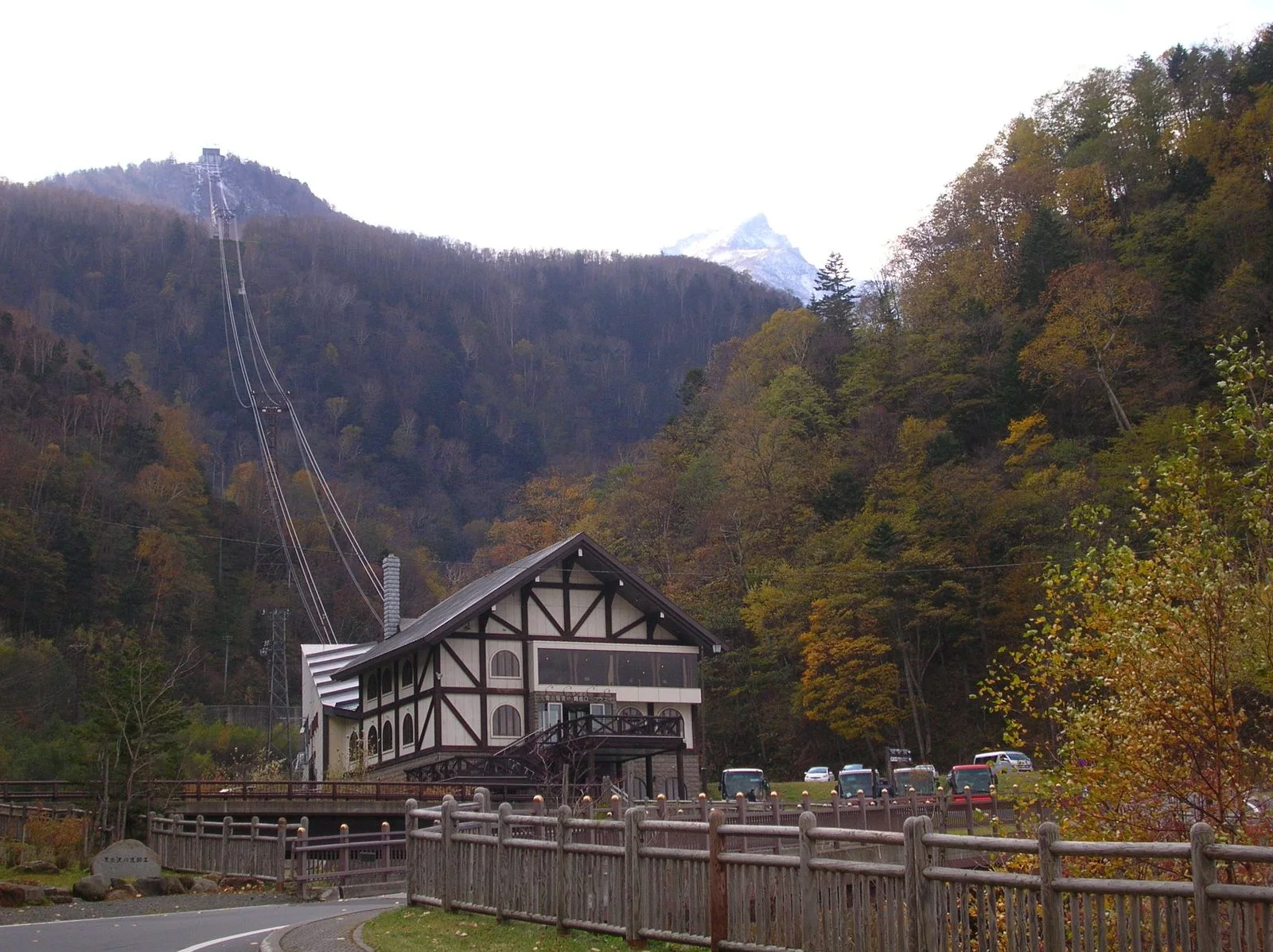
If the main ambition is early Daisetsuzan colour, compare Asahidake and Kurodake before choosing Ginsendai. Their ropeways make a shorter look at high scenery possible without committing to the same trailhead access problem. They remain mountain environments with weather limits, but the entry and exit choices are different.
↔ Scroll table left or right
Area | Main appeal | Constraint to plan around |
Ginsendai | Early alpine slope colour and a genuine Akadake hiking route | Seasonal road, possible vehicle control, fixed transport and trail footing |
Asahidake | Volcanic plateau and Sugatami area from a ropeway | Exposed walking and ropeway weather |
Kurodake | Ropeway view above Sounkyo, with chairlift and hiking options | Mountain visibility and operation of the lifts |
For a family with a pushchair, step-free needs or uncertain balance, Ginsendai is a poor substitute for a managed viewpoint. Kurodake is the easier way to keep the mountain optional while staying in Sounkyo. Asahidake suits travellers drawn to the volcanic landscape. Ginsendai best fits people who specifically want the trail and can accept a dated access window.
When the mountain plan does not survive the weather
Strong wind, fog, rain or early snow can erase the very view the journey was built around. Road restrictions and bus operation can also change, and a reserved place cannot guarantee safe hiking. Decide on a fallback before travelling to Sounkyo or Asahikawa. From Sounkyo, a shorter gorge walk, onsen time or Kurodake's lower facilities may still make the night useful if operating. From Asahikawa, a city or Biei day may be easier to rearrange.
For the next season, the order is road opening, autumn traffic-control notice, bus or car reservation, then the hiking plan. In October 2026 the Ginsendai road is closed, so the useful task now is choosing a different autumn destination or preparing for a later year. When the road reopens, the central question will remain the same: do you want the mountain trail enough to organize the day around its access and return deadline?
A future access notice should be read as four separate decisions. First, confirm that the road itself has opened. Then find the dates of any alternating-direction control and the kind of vehicle reservation or shuttle ticket required. Match the last return to a conservative descent from the point you are prepared to reach, and only then choose the overnight base. A past year with a 06:00 departure and a 15:30 final return illustrates the tightness of the day; it does not establish next September's transport. If any one of those links is missing, Ginsendai is still a possible future trip, but it is not a confirmed one.