
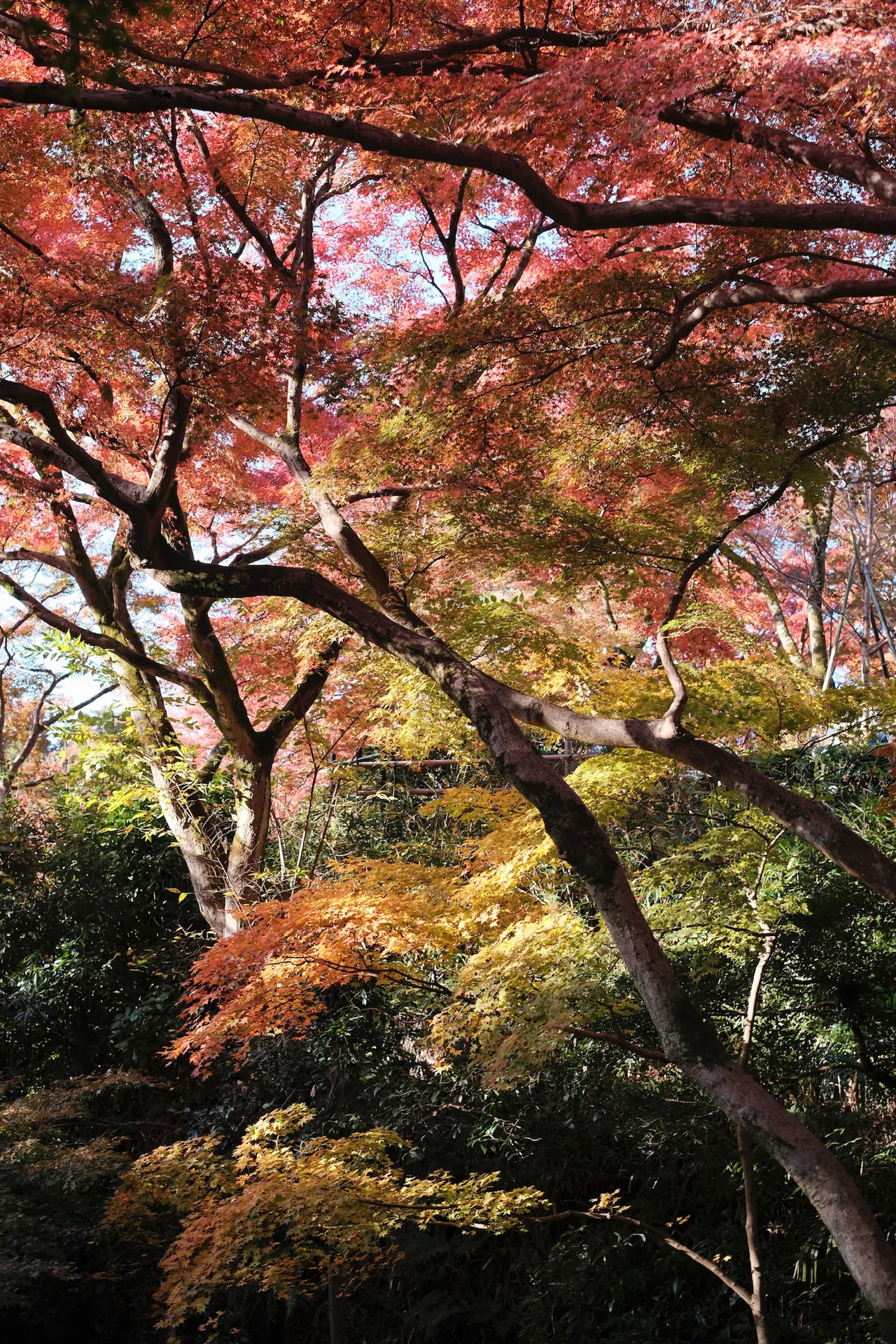
Kyoto’s leaf colour does not arrive across the city on one day. A hotel in the basin can still work while the northern valleys begin to turn, and it remains useful after those valleys lose their leaves. Keep the room you have booked; use the next day to visit a district whose trees, paths and transport suit the conditions you can actually see. The height of a place helps form a shortlist, but wind, sunlight, species and access decide whether the trip is worthwhile.
As of October 24, Kyoto’s 2026 autumn leaf calendar is due to start reporting individual sites on October 30. That means a late-October plan should not treat a previous year’s peak date as a live colour report. Eizan Railway has announced its 2026 Maple Tunnel slow-running and illumination programme, including a peak-season schedule for weekends and holidays from November 14 to December 6. Check the programme for the day you intend to ride; it does not tell you that trees elsewhere in Kyoto will turn on the same dates.
Elevation shifts Kyoto’s colour calendar
Place and date: find a recent image of the entrance, garden or slope you will visit, rather than a district-wide peak label.
Weather since the image: wind can remove mountain leaves quickly; rain changes the safety of stone paths and the Kurama crossing.
Journey and light: work out the first useful arrival, a comfortable return bus or train, and the time the site closes.
Group needs: stairs, footwear, mobility aids, children and luggage determine whether the attractive viewpoint is realistic.
One attractive photograph is a weak reason to cross Kyoto if it shows a different garden, an older date or a viewpoint you cannot reach. Put the likely arrival and return times beside it. Takao may have the colour you want, yet Jingoji’s approach can be unsuitable for a group that cannot manage repeated steps. A less dramatic city garden can give that group a fuller, safer afternoon. Make the route decision with the people travelling, not only the tree canopy.
The October 30 start of Kyoto’s colour calendar creates a useful distinction. Before it begins, you can choose a district for its temples and access, but you cannot claim a particular 2026 grove has peaked. Once entries appear, look for the update date and the named site. A report on a hillside is not a report on a courtyard at its foot.
Early colour: give a northern district the whole day
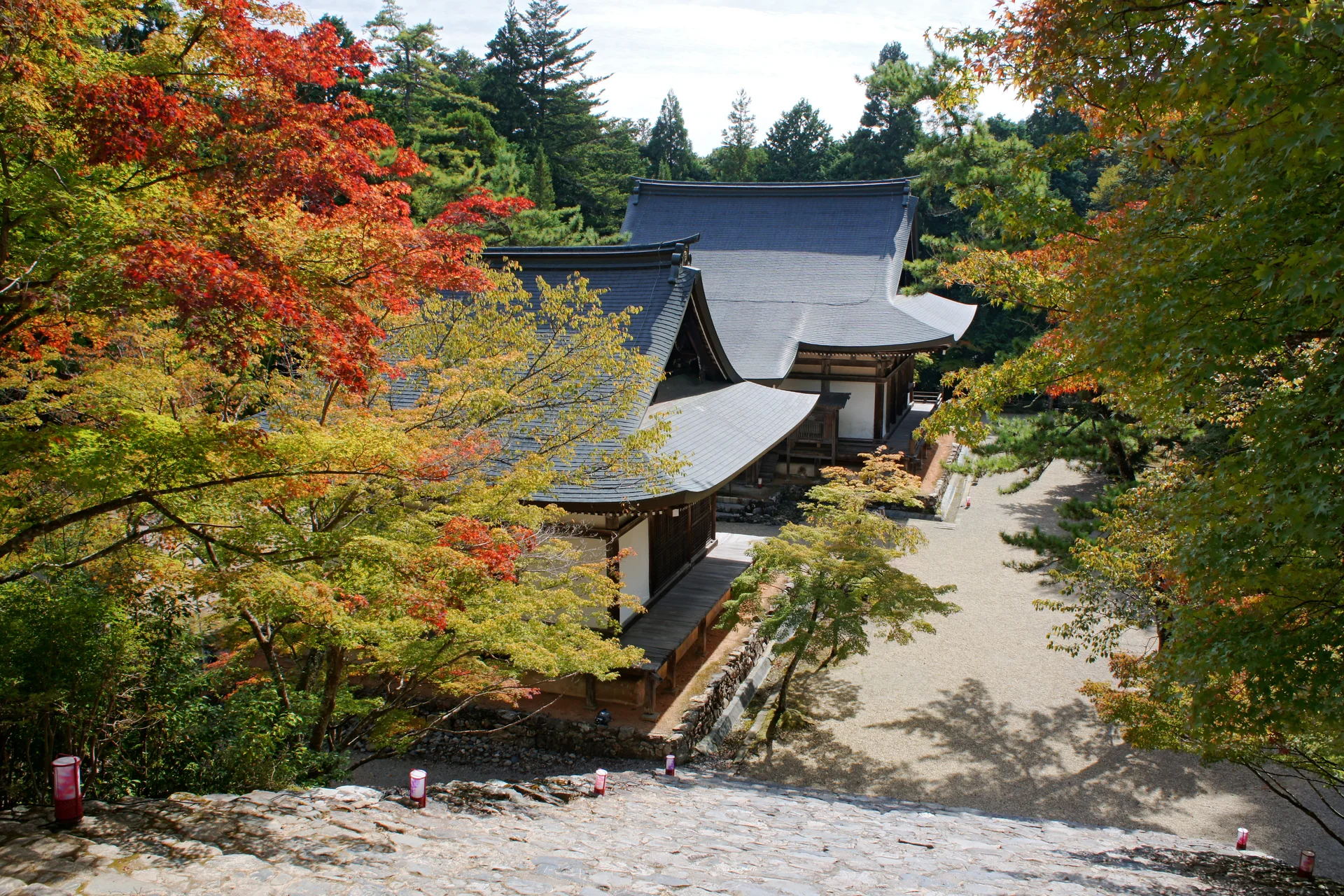
When city gardens are still mostly green, look north or uphill. Takao is a temple day with a demanding stair approach at Jingoji; Kibune gives you a river valley and Kifune Shrine after the Eizan train and a local bus. Kurama requires care if you intend to cross the mountain trail. Ohara can centre on Sanzen-in with another nearby temple, while Yase and Mt Hiei are separate trips with different transport. Pick one corridor. A transfer across several northern districts spends the daylight on vehicles and leaves little time at the site whose colour prompted the journey.
Takao and Kibune ask for different kinds of effort
Neither valley is guaranteed to colour first. Compare images taken within the same few days, then choose by the visit you want. Takao rewards time inside its temple area and along the approach, provided the stairs are manageable. One useful route is rail to Enmachi followed by a bus, avoiding some of the central-road journey. Kibune follows the Eizan Railway to Kibuneguchi, then Kyoto Bus 33 or a longer walk up the valley. That rail approach is straightforward, but a crowded or missed final bus still affects the meal and shrine time. Leave a comfortable return departure rather than treating the last service as the plan.
Kurama’s trail is a separate decision from its foliage
The Kurama cable car does not carry visitors all the way to the main hall. Continuing over the mountain towards Kibune means roots, steps and uneven slopes; it is a hike even when the map makes the two villages appear close. With wet ground, a closure, a wildlife notice or little daylight left, visit the main hall and return the way you came. Ohara offers a gentler alternative for a mixed-ability group: temple grounds and moss still give the day substance when the maples have not fully changed. It is also easier to shorten in poor weather without leaving a walker midway across a mountain.
If your group splits over a hard mountain route, agree on a meeting point with reliable transport rather than pressuring the slower walkers into the full crossing. A temple visit and a trail hike need different shoes, pacing and return plans. The choice can be made on the morning when ground conditions are visible.
After the northern leaves fall, follow the colour into the basin
A storm can empty a mountain canopy before the city reaches its best week. Start with the photographs for the specific district you had planned, then look at the west, east and south of Kyoto instead of assuming every lower site is identical. Arashiyama or Okusaga may hold a mix of slope and garden colour. Nanzen-ji and Eikan-do make an eastern day with a short subway approach. Tofuku-ji, Uji and Daigo-ji offer other late-season directions. The easiest choice often follows your hotel’s railway line: Kyoto Station is well placed for Tofuku-ji and Uji; Kawaramachi is useful for eastern Kyoto and the Hankyu route west. Moving hotels to gain a few hours of foliage usually costs more usable time than changing the day trip.
Arashiyama has several leaf clocks within one neighbourhood
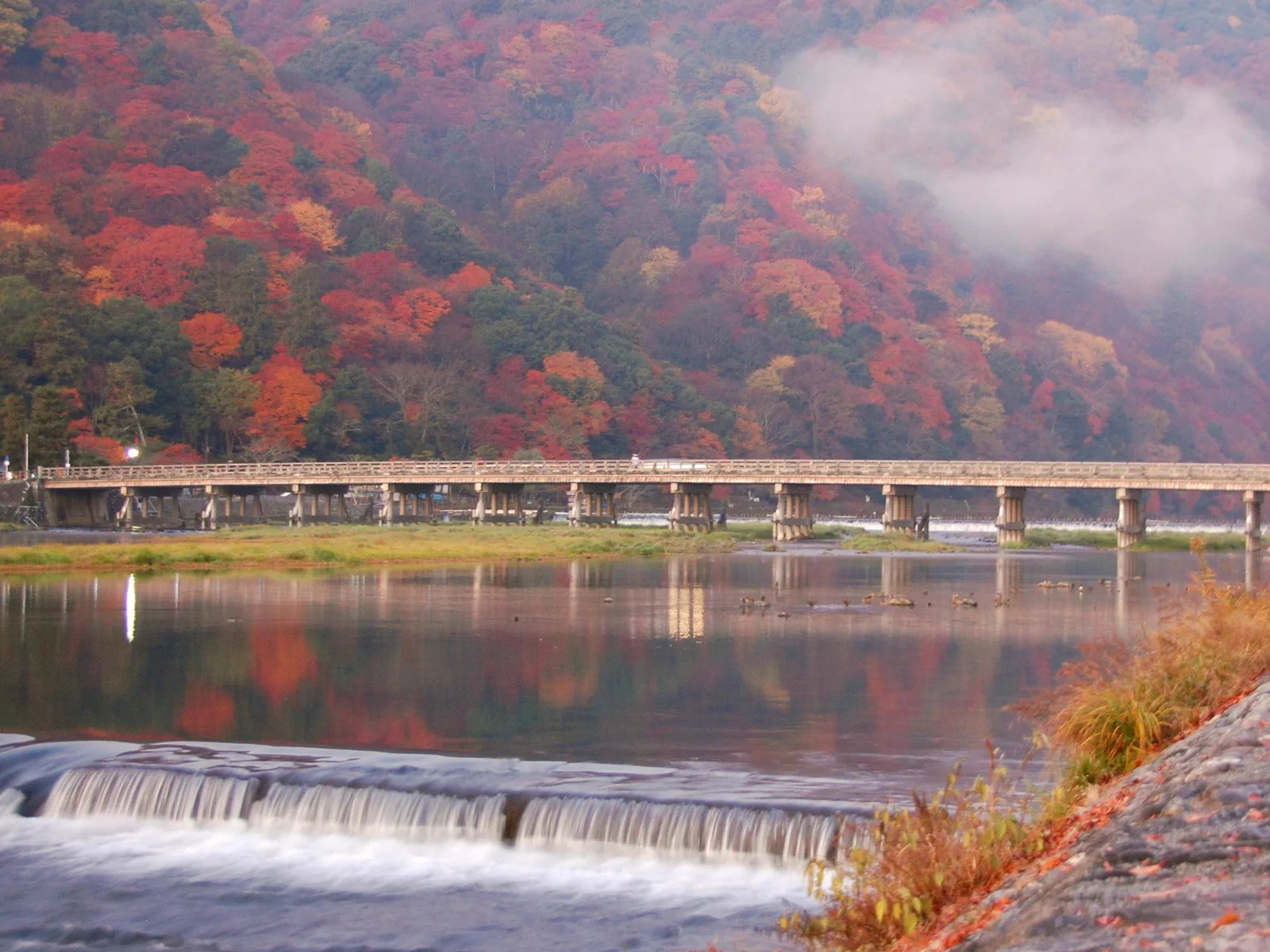
The wooded hills above the river, Togetsukyo Bridge, Tenryu-ji’s garden and the quieter paths towards Okusaga will not all look the same on one date. Decide which setting matters before setting out. If the hills are colourful but a garden is still green, spend the morning on the riverside view and a western walk. If a garden is the reason for the trip, reach it near opening rather than saving it for a crowded midday slot. A west-Kyoto day is easier to enjoy when you stay there, instead of trying to recover an eastern schedule after the busiest hour.
Late colour can still make a coherent city day
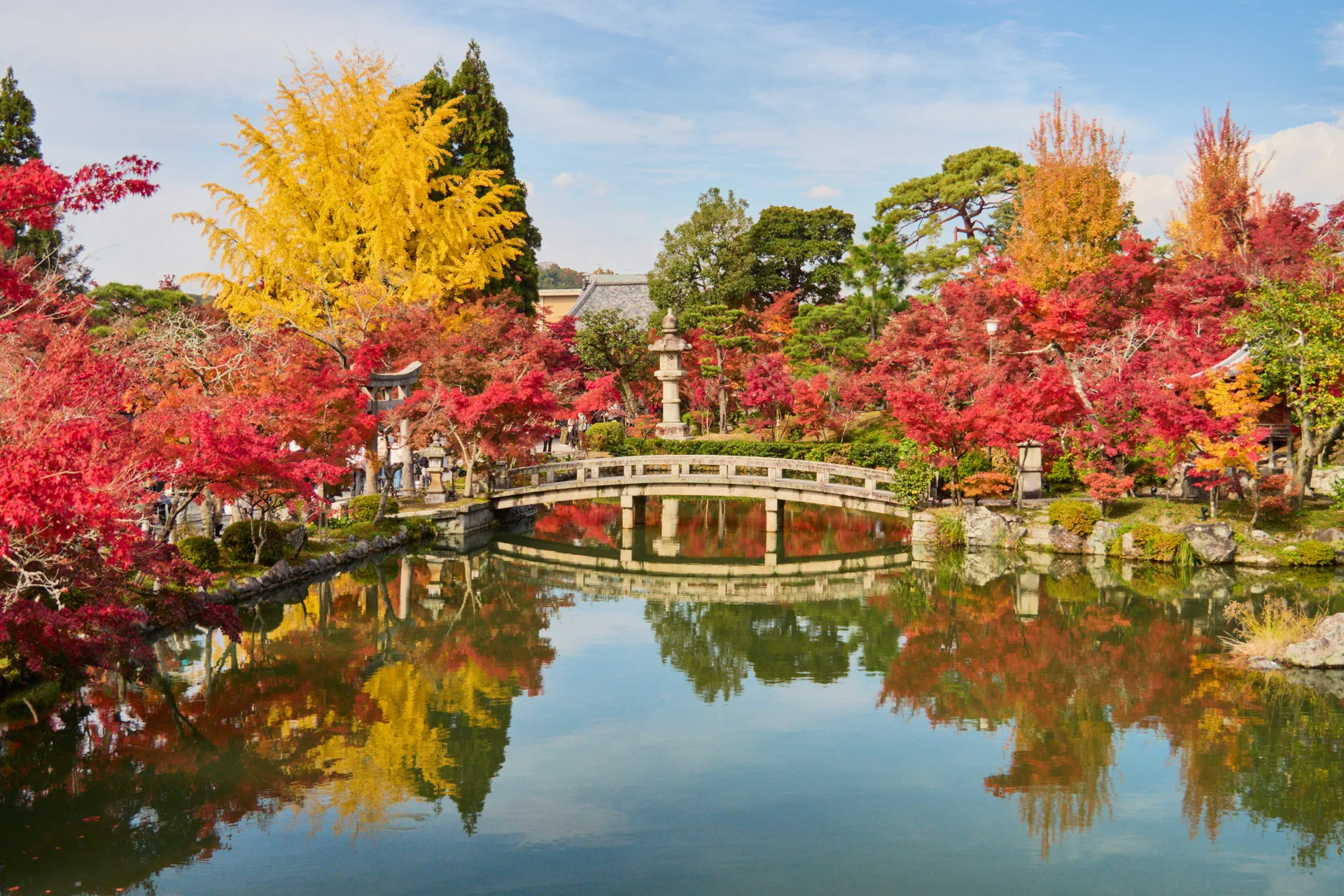
Northern Higashiyama can start at Keage and connect Nanzen-ji, Eikan-do and part of the Philosopher’s Path as time allows. In the south, Kiyomizu-dera and Kodai-ji involve steeper streets, with Yasaka and Gion closer to evening food and transport. For a late-November or early-December visit, Uji and Daigo-ji are sensible candidates because tea streets, temple architecture and riverside walking provide a day even if the leaves are uneven. If the pictures show only scattered colour across Kyoto, choose the places you would still want to see without peak foliage rather than spending the day chasing a narrower and narrower patch of red.
For a late trip, keep one indoor or non-foliage anchor in the chosen district. Uji’s tea streets, a temple interior or a museum can fill a wet hour without a cross-city transfer. This matters most when the remaining leaves are scattered: the day still has a purpose even if the best tree in yesterday’s photograph has already dropped.
Make the change the evening before
Put two possible districts on the table while you still have hotel Wi-Fi. For each, find the morning route, the return service you would be comfortable taking, sunset, expected walking and any admission or dinner reservation. Then compare recent site-level images and the next day’s weather. Keep the main suitcase at the hotel and carry a small bag with water, a layer, rain protection and a charged phone. In the morning, look once more for rail, bus, temple and trail notices. A disrupted line or closed path means choosing the other district, not improvising a risky crossing to rescue yesterday’s idea.
The Eizan Maple Tunnel is part of the Kibune and Kurama transport experience, not a substitute for the destination. The railway’s 2026 programme lists slow running and evening illumination, with a separate peak-season pattern on specified dates. If that ride is important, read the operating dates and times before placing it after a shrine visit; the train, the valley bus and the last daylight each have their own clock.
Choose a hotel base by the directions it opens
Kyoto Station makes intercity arrivals, luggage handling, Uji and Tofuku-ji straightforward. Shijo-Kawaramachi and Gion put eastern walks, Keihan and Hankyu within easier reach, along with dinner choices after dark. Karasuma Oike connects two subway axes and works well when the daily direction remains uncertain. Demachiyanagi particularly suits repeated Eizan Railway trips, while Kokusaikaikan can shorten the northern bus leg but gives a smaller choice of hotels and evening meals. When comparing rooms, check the actual room size and bedding, the station entrance you will use, cancellation time zone, card acceptance and luggage service. If booking a ryokan, ask whether meals and transfers can be confirmed in English. A vague “Kyoto centre” label does not reveal the first journey of a cold November morning.
Compare Kyoto Station hotel locations · Compare Kyoto hotel locations on the map
Compare central Kyoto hotel locations
When a better leaf report should not change the day
Heavy rain, strong wind, a closed path or a thin daylight margin are reasons to stay off the mountain. The same applies if a wheelchair, stroller or large case would make the necessary stairs and transfers impractical. Choose a city garden, Uji or a shortened temple route with accessible transport instead. If you have an evening illumination booking, leave enough time to return from a northern district in daylight, eat and rest. No ticket is improved by a hurried descent on an unfamiliar trail after sunset.
How to apply the elevation idea
Will a higher site always turn first?
No. A sunlit slope, a sheltered garden and a riverside path can differ even within one district. Use height to find candidates, then compare dated views of the places you can actually visit.
Can the Kurama–Kibune crossing be treated as a short stroll?
Plan it as a hike. Roots, stone steps and weather matter more than the distance between the two station names. An out-and-back visit to Kurama remains possible if the crossing is unsuitable.
Does a late or early season require a new hotel?
Usually the better adjustment is a new day route. A Kyoto base with useful rail connections lets you switch between the north, west, east and south without checking out and moving luggage.
Related Reading
Where to Stay
Kyoto Autumn Illumination 2026: Temples, Tickets, Transport and Hotels
Avoid Kyoto Autumn Crowds in 2026: Rail Corridors, Early Starts and Hotel Bases
Kyoto Hotels Sold Out in Autumn? Backup Bases in Otsu, Uji, Nara and Osaka
Continue Planning
3-Day Kyoto Autumn Leaves Itinerary
Kyoto Station vs Shijo Kawaramachi With Older Parents
Japan Autumn Leaves in Mid-November
Related guides: Osaka Autumn Leaves Guide: Minoh Falls, Osaka Castle and City Day Trips · Mt. Takao Autumn Leaves Day Trip: Cable Car, Trails and Timing · Tokyo Autumn Leaves: Timing for Mt. Takao, Okutama, Gardens and Ginkgo · Free Autumn Leaves in Kyoto 2026: Parks, Paths, Ginkgo and Routes · Japan Autumn Leaves December: Tokyo, Kyoto, Osaka, Nara and Kyushu · Kyoto Autumn Leaves November: Early, Mid and Late Routes · Japan Autumn Leaves Late November: Kyoto, Tokyo, Nara, Miyajima and Kyushu · Japan Autumn Leaves with Seniors and Children: Easy Routes and Hotels · Ginsendai Autumn Leaves Guide: Shuttle Buses, Access Restrictions and Hiking · Okutama Autumn Leaves Guide: Mitake Gorge, Lake Okutama and Car-Free Routes
Tokyo to Nikko Autumn Leaves: Trains, Passes, Day Trips and Overnight
Hakone Autumn Leaves Guide: Foliage Timing from Gora to Lake Ashi and Hakone-Yumoto
Hokkaido Autumn Leaves 2026: Daisetsuzan, Sapporo and Hakodate Routes
What to Wear for Japan Autumn Leaves: Cities, Mountains, Rain and Snow
Japan Autumn Leaves Late October: Tohoku, Nikko and Central Japan