
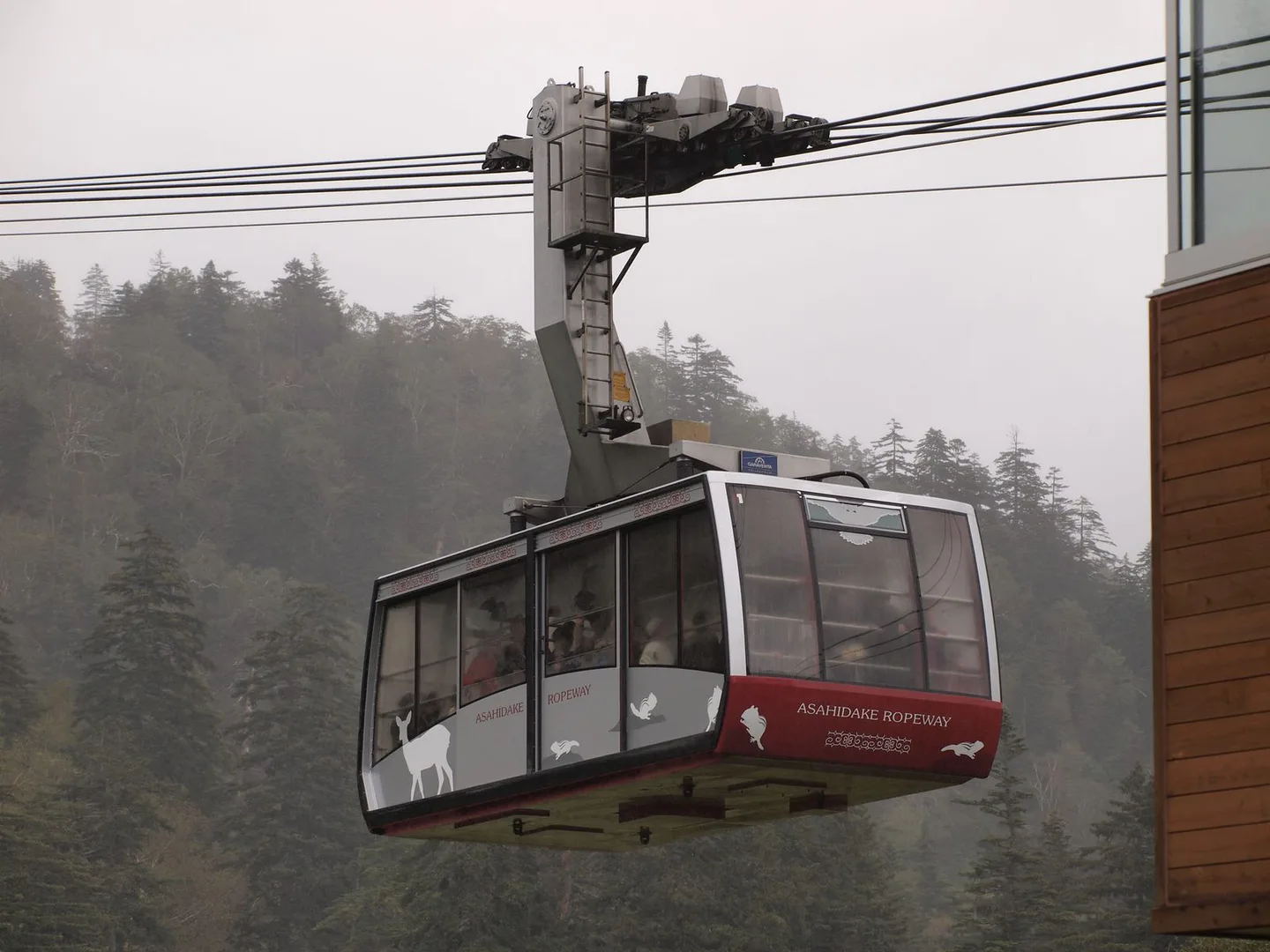
Asahidake and Kurodake share the Daisetsuzan mountain range, but they solve different travel problems. Asahidake is the stronger choice for a volcanic landscape around Sugatami Pond and a day based in Asahikawa. Kurodake gives you a short ropeway outing above Sounkyo, with an onsen town to return to if the mountain closes in. Their early-autumn colour moves downhill over several weeks; the view at one station says little about the other.
For anyone travelling now, the August 2026 “first colour” watch is history. On October 23 the Asahidake operator showed 0°C at its 1,600 m upper station. Kurodake's live notice said the fifth station and higher were already snow covered and summer hiking equipment was unsuitable. Its chairlift closed for maintenance on October 16 and is scheduled to remain closed through November 30. The ropeway was running on October 23, but a morning status can change. An October 24 visit should be planned as a cold mountain outing with limited access, not advertised as a fresh alpine foliage peak. The regional autumn status page helps place the mountains within the wider season.
The route you can actually take matters more than the mountain name
↔ Scroll table left or right
| Decision | Asahidake | Kurodake and Sounkyo | What can change the answer |
|---|---|---|---|
| Landscape | Sugatami Pond, fumaroles and open volcanic slopes | Forest and rock above a gorge and onsen town | Cloud can hide the upper mountain at either site |
| Shortest outing | Ropeway and a shortened walk near Sugatami Station | Ropeway to fifth station and a short station-area walk | Snow, wind and uneven ground can shorten both |
| Upper extension | Exposed Sugatami circuit or a separate serious hike | Open chairlift to seventh station during its operating season; summit hike is separate | Kurodake chairlift is closed October 16–November 30, 2026 |
| Car-free base | Asahikawa with Route 66 to the ropeway | Sounkyo overnight often gives a second morning | Last bus, meal deadline and luggage move |
| Bad-weather use of the base | Asahikawa, Biei or Higashikawa | Onsen and lower-gorge time | Check road and local access before substituting a stop |
The published 2026 mountain notices should also prevent a false equivalence: a Kurodake ropeway ticket no longer includes the possibility of adding its summer chairlift this late in October. If that upper ride was the reason to choose Kurodake, revisit the itinerary. The ropeway itself is scheduled 08:00–16:00 from October 16 to November 8, with the last ascent 40 minutes before closing; the operator lists a November 9–30 maintenance shutdown. Those are scheduled hours, never a guarantee against a same-day weather suspension. The Sounkyo two-day plan is most useful when the onsen overnight has its own value.
What the two mountain walks ask of you
At Asahidake, the ropeway brings visitors close to volcanic scenery quickly. The Sugatami walking loop is roughly 1.7 km and about an hour in good conditions, but that reference time does not make the ground paved or sheltered. Uneven gravel, wind and sudden visibility changes require shoes with grip and weather protection. Sugatami Pond and the fumaroles are the reward for taking the exposed section; a traveller with limited balance can turn back early without treating the circuit as compulsory. The summit climb is a different undertaking from that sightseeing loop. If this mountain is the first stop of a longer Hokkaido journey, the Asahikawa-in open-jaw itinerary explains when the northern arrival actually saves travel time.
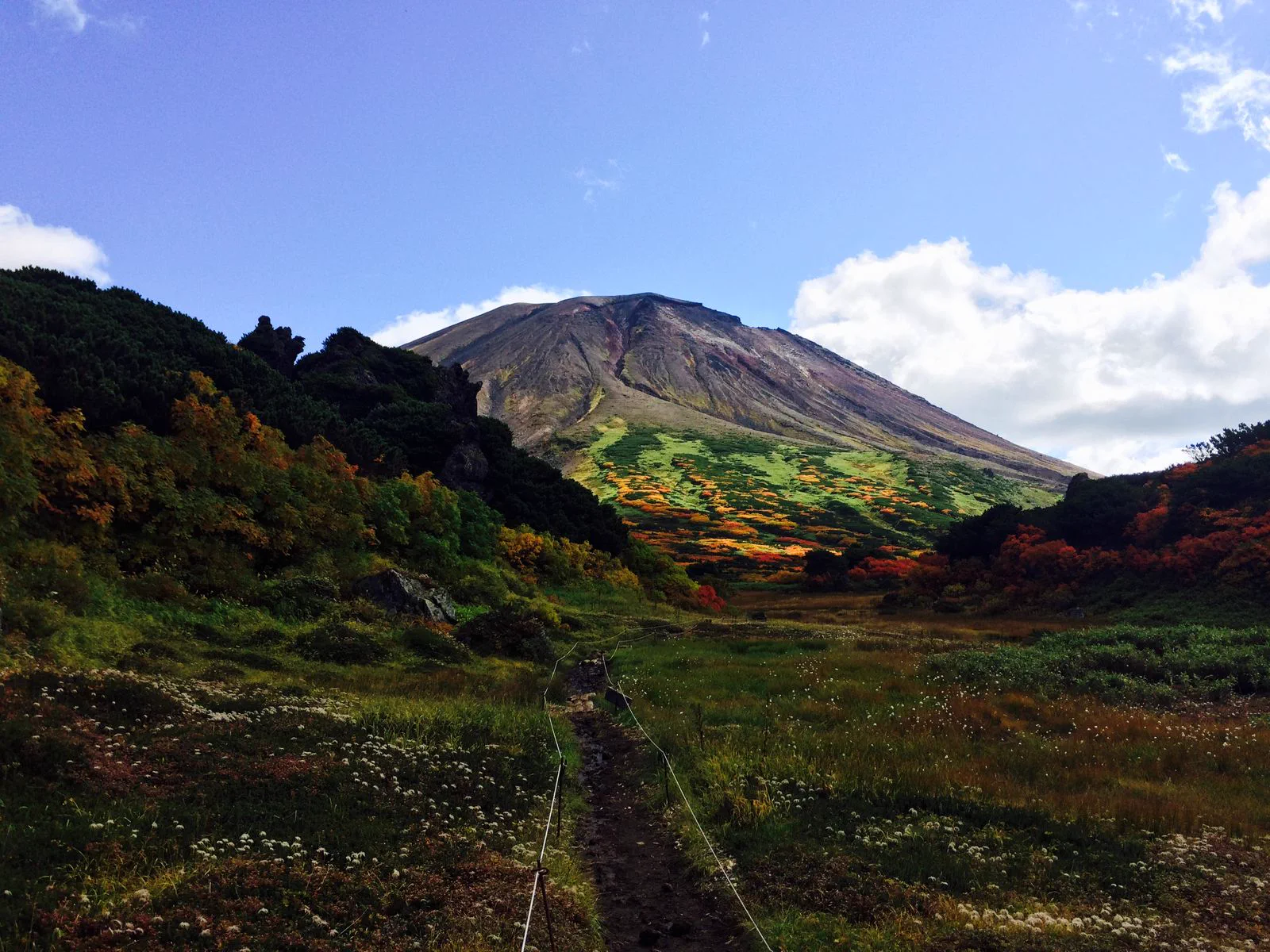
This photograph shows the bare volcanic upper slope above pockets of orange and yellow shrubs. It illustrates why the colour on a mountain is not one uniform date: the upper ground, lower bushes and forested approach can each be in a different season. It is an older scene, not a live 2026 condition report.
Kurodake is easier to stop early when the ground is clear. The roughly seven-minute ropeway runs from Sounkyo at about 670 m to the fifth station around 1,300 m, where a circuit is listed at about 30 minutes. In the summer season, the open chairlift extends the ride to the seventh station, around 1,520 m; riding it still does not turn the summit into a simple sightseeing stroll. The October 2026 snow notice means even the fifth-station walking option now needs an on-site assessment, and the chairlift is unavailable. Ginsendai's access restrictions are a separate mountain decision, not a shortcut between these two ropeways.
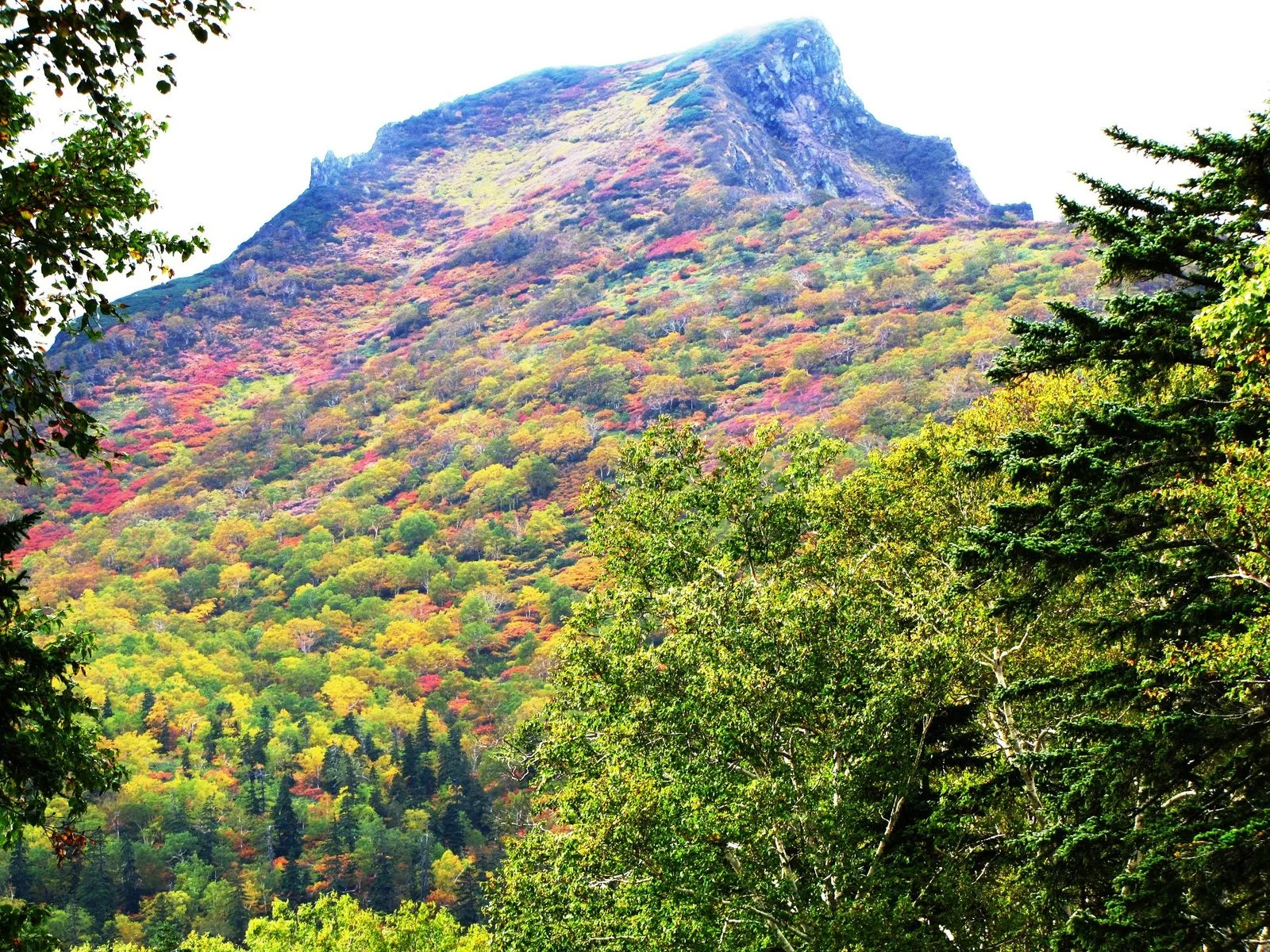
The Kurodake image shows mixed red, yellow and green vegetation below a rocky top. A family that wants this kind of broad slope view may be content with the ropeway and terrace when conditions permit. A photographer seeking an exposed high-altitude composition may prefer Asahidake, provided the weather allows the Sugatami walk. Neither image supplies today's colour or trail safety.
Asahikawa's bus day versus a Sounkyo night
Route 66 links Asahikawa Station, Asahikawa Airport and Asahidake. That gives a car-free Asahikawa hotel a workable mountain day, but the bus is infrequent. The operator's published timetable lists four departures each way, with Asahikawa Station departures at 07:15, 09:15, 12:15 and 14:15 and returns from Asahidake at 09:55, 11:55, 14:55 and 16:55. Check the date-specific schedule before travel; a missed return is more consequential than a missed city bus. Airport routing is available but the service is a regular bus, not a flight connection guarantee. The no-car Hokkaido route shows why protecting the last bus matters more in mountain weather.
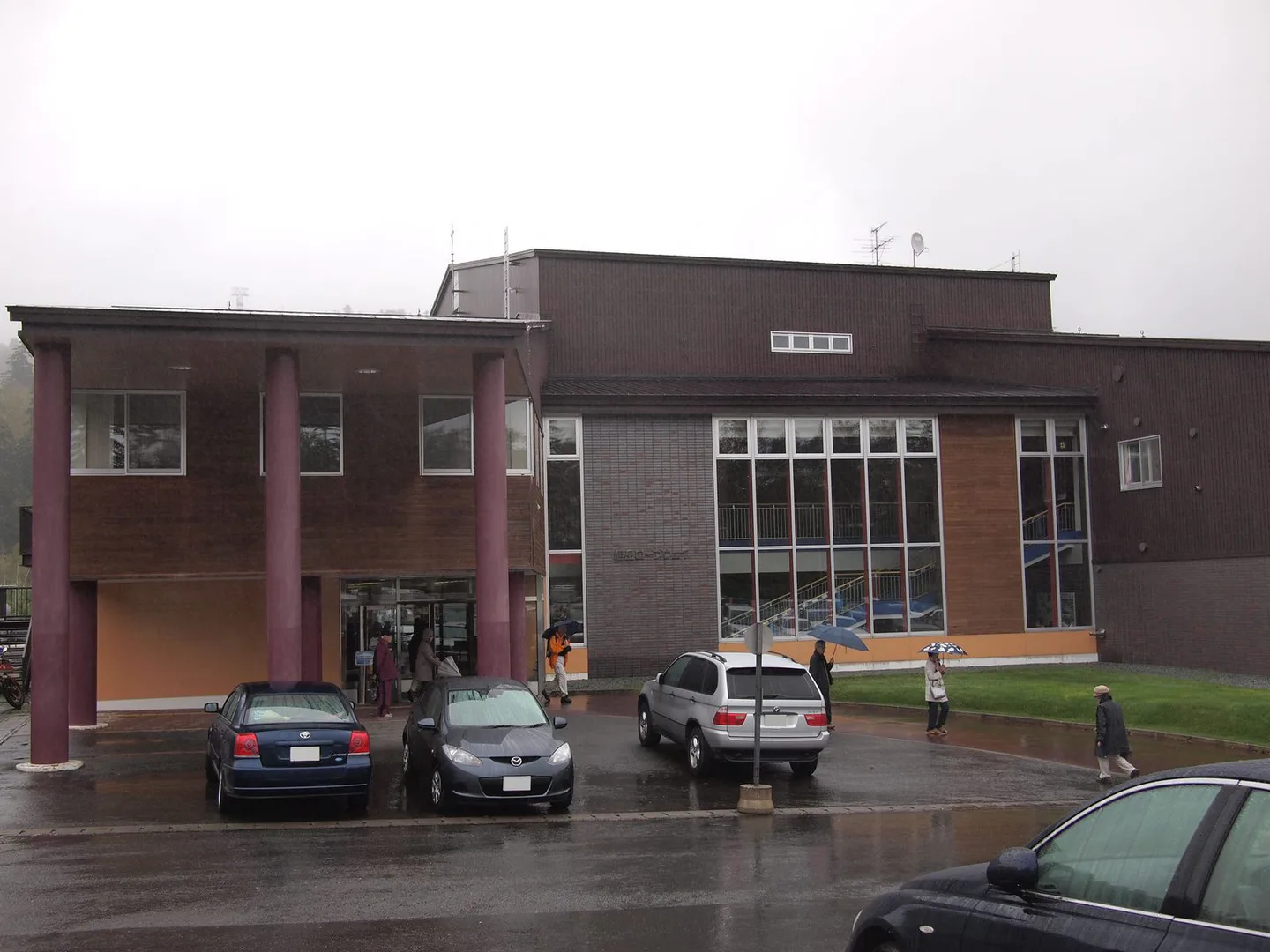
The station image is a rainy forecourt with cars and people carrying umbrellas. It shows the base station building rather than a sunny ropeway ride. Pack for the upper-station temperature, which can be far colder than Asahikawa; do not infer the mountain's visibility from the city forecast.
Sounkyo asks for a different commitment. Reaching the gorge, checking in and meeting a ryokan's dinner time can consume enough of the day that the second morning becomes the valuable mountain window. Staying there makes sense when an onsen evening and a lower-gorge walk are part of the trip even if Kurodake is clouded over. A rushed same-day transfer from Asahikawa buys one narrow shot at the ropeway. The six-base Hokkaido comparison weighs Sounkyo against larger service hubs, and the five-day foliage route shows where one mountain fits without a daily hotel change.
Asahikawa is usually the simpler bed if the mountain is one optional day beside Biei, an airport departure or other northern-Hokkaido travel. It offers a wider range of food and weather alternatives and avoids moving luggage for a single extra chance. Compare stays around Asahikawa when Route 66 and other day trips are your priority. If an onsen evening and next-morning Kurodake look are both worth the transfer, look at rooms in Sounkyo Onsen with the arrival, dinner and cancellation rules in view. Neither lodging choice should be based solely on an old photograph of red leaves.
For mixed-age groups, set the turning point in advance
Kurodake's fifth station is the simpler fair-weather finish line for someone avoiding a long exposed walk. The open chairlift has boarding and wind considerations even when in season; a child or older companion may not want it. On Asahidake, make a short station-area walk the initial plan and continue around Sugatami only if footing, wind and visibility suit everyone. Paying for a ropeway ticket does not oblige the group to complete a circuit. In October 2026, snow above Kurodake's fifth station overrides the older easy-walk description. Hokkaido's broader seasonal route can move the group to a lower elevation instead.
If the purpose is early-season alpine colour, treat late August and early September as the period to begin monitoring rather than a confirmed peak appointment. The Asahidake operator's August 19 transition note was a dated hint, while Kurodake's mid-August spring/summer feed still described alpine flowers. Neither was a numeric red-leaf stage. A later dated colour photograph at the exact elevation is better evidence. By late October, the new live snow and temperature notices have superseded that August comparison. The ten-day regional plan can place a Daisetsuzan stop early and lower sites later without promising one fixed peak.
The elevation printed beside a report is as important as its date. Colour beside a lower station does not establish that the upper pond circuit is at the same stage, and an upper-slope snow photograph says little about the gorge below Sounkyo. For a non-hiking party, separate the scenery available from a station terrace from the walking route beyond it. This prevents a paid ride being treated as a commitment to cross ground that the group has not seen or assessed.
The morning check can reverse yesterday's choice
First look at the date and elevation of the latest colour report. Then look at ropeway and chairlift service, wind, visibility, surface condition, return transport and remaining daylight. Asahidake's service may stop in strong wind or lightning. Kurodake publishes live operation, weather and parking information; its October 23 notice described snow from the fifth station upward. A visible mountain with weaker leaf colour can be the better day than a vivid forecast behind cloud. Hachimantai's road closures are another example of why seasonal access must precede a colour ranking.
When Asahidake is hidden or its ropeway suspended, keeping an Asahikawa room makes Biei, Higashikawa or indoor city time plausible alternatives, subject to their own transport. With a Sounkyo booking, keep the onsen and lower gorge as the fallback rather than buying an emergency cross-island journey. A four- or five-night Hokkaido stay usually gains more resilience from one good base than from switching rooms for a single possible clear morning. Hakodate and Onuma sit in a later southern window, whereas Tohoku bases belong to a different regional itinerary.
If you are still choosing a region rather than trying to rescue a booked Hokkaido hotel, lower mountain corridors may now offer a different foliage window. Oirase and Lake Towada need their own bus-and-base plan; Nikko and Okunikko have an elevation split; and Kankakei depends on island ferry and ropeway access. These are advance route choices, not emergency day trips from Asahikawa.
Asahidake remains the more distinctive volcanic and pond landscape; Kurodake is the shorter ropeway visit with a Sounkyo overnight option. The right choice for the rest of autumn 2026 starts with the current snow, closure and timetable notices. Save the early-colour comparison for a future September journey, and give either mountain only the walking and weather margin it earns on the day.
Other route comparisons
Daisetsuzan Asahidake Ropeway — current operation, live weather, schedules and dated blog · Asahikawa Denkikidou — Route 66 timetable · Kurodake Ropeway — live operation and seasonal information · Kurodake Ropeway / chairlift details and 2026 operating periods · Kamikochi Autumn Leaves: Timing, Buses, Five Walks and Where to Stay · Mt. Daisen Autumn Leaves: Driving, Buses, Hiking and Hotels · Kokonoe Dream Suspension Bridge Autumn Leaves and Kuju Mountains Guide: Access, Hiking and Onsen · Where to Stay in Kyoto for Autumn Leaves: Kyoto Station, Kawaramachi, Gion or Osaka? · Where to Stay at Lake Kawaguchi for Autumn Leaves: Station, North Shore or Fuji-Yoshida? · Karuizawa Autumn Leaves 2026: Kumoba Pond, Shiraito, Cycling and Trains · Takachiho Gorge Autumn Leaves 2026: Boat Booking, Kagura and Overnight Strategy