
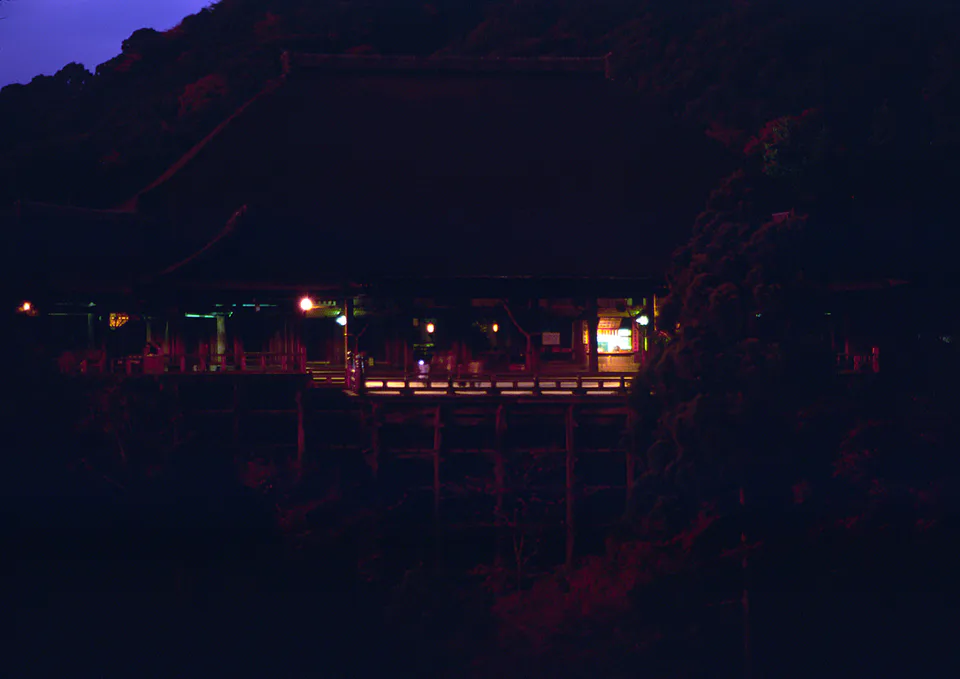
Kyoto’s autumn evening is easier to enjoy when one illuminated temple carries the night. Kiyomizudera gives the broad Higashiyama view, but the climb and exit crowds are substantial. Eikando puts the maples at the centre of the visit and suits a northern Higashiyama day with an afternoon break. Toji is the straightforward choice from Kyoto Station or after a rail-heavy day. Admission cutoff, dinner and the journey back to your hotel matter as much as the photograph that made you choose the site.
The three 2026 programmes do not share one calendar. Toji runs from 31 October to 13 December; Eikando’s dedicated autumn pages give 20 November to 6 December; Kiyomizudera opens at night from 21 to 30 November. A broad search result saying “Kyoto night illumination” can therefore point to an event that does not operate on your date. Decide with the exact evening first, then match the district to your daytime route and hotel. The Kyoto autumn timing guide for early, middle and late November helps place the evening within the wider foliage trip.
The three event clocks are different
| 2026 night anchor | Operating dates | Entry and close | Ticket/booking point | Main physical cost |
|---|---|---|---|---|
| Eikando | 20 Nov–6 Dec | Night reception 17:30–20:30; close 21:00 | ¥1,000; day and night admission separate | Northern Higashiyama approach and evening exit |
| Kiyomizudera | 21–30 Nov | Last entry 21:00; close 21:30 | No reservation required for special night opening | Uphill walk and crowded approach |
| Toji | 31 Oct–13 Dec | 18:00–21:30; last entry 21:00 | Night adult ¥1,000; high school ¥500 | Simpler Kyoto Station-area return |
A 21:00 final entry at Kiyomizudera or Toji is not a sensible target arrival time. The queue, final approach and security flow happen before you cross the gate. At Eikando, reception ends at 20:30 and the temple closes at 21:00, leaving less freedom for a delayed dinner. Put a practical arrival on your own schedule earlier than the printed cutoff, especially on a weekend. The Kyoto autumn crowd and rail-corridor guide is useful when a day that looks short on a map still fills up with queues.
Eikando is a maple night with a compulsory break between visits
Eikando’s 2026 autumn programme separates its daytime exhibition and illuminated evening. Day visitors leave before the night opening and buy a different ticket for the later admission. The dedicated Japanese and English programme pages both list night visits from 20 November to 6 December, reception 17:30–20:30 and closing at 21:00. An older English news entry still shows 10 December; do not build a 7–10 December Eikando night from that stray date when the programme pages end on the 6th. A traveller whose only Kyoto evening falls after 6 December should choose a different confirmed event.
The separation can improve a day if you use it as a rest window. Walk Nanzenji, the Philosopher’s Path or Eikando by daylight, leave the district before fatigue takes over, eat and warm up, then return for the illumination. Trying to stay on your feet in northern Higashiyama from morning until 21:00 can make the paid night the least enjoyable part of the route. The Eikando night-maples and hotel-location guide considers whether to sleep around Okazaki or use a more connected Sanjo base; the Higashiyama autumn day sequence helps prevent a north–south day from becoming too long.
Private cars and large tourist coaches are restricted during Eikando’s autumn special period. Public transport or a reasonable walk should be the base plan. Its dedicated page gives a three-minute walk from the Nanzenji-Eikando-michi city-bus stop and about 15 minutes from Keage subway station. Keage gives a rail-based exit that may be easier to predict than competing for a bus with everyone leaving at closing. For a wider walking day, the free Kyoto autumn paths guide can provide a daylight complement without a second paid-night deadline.
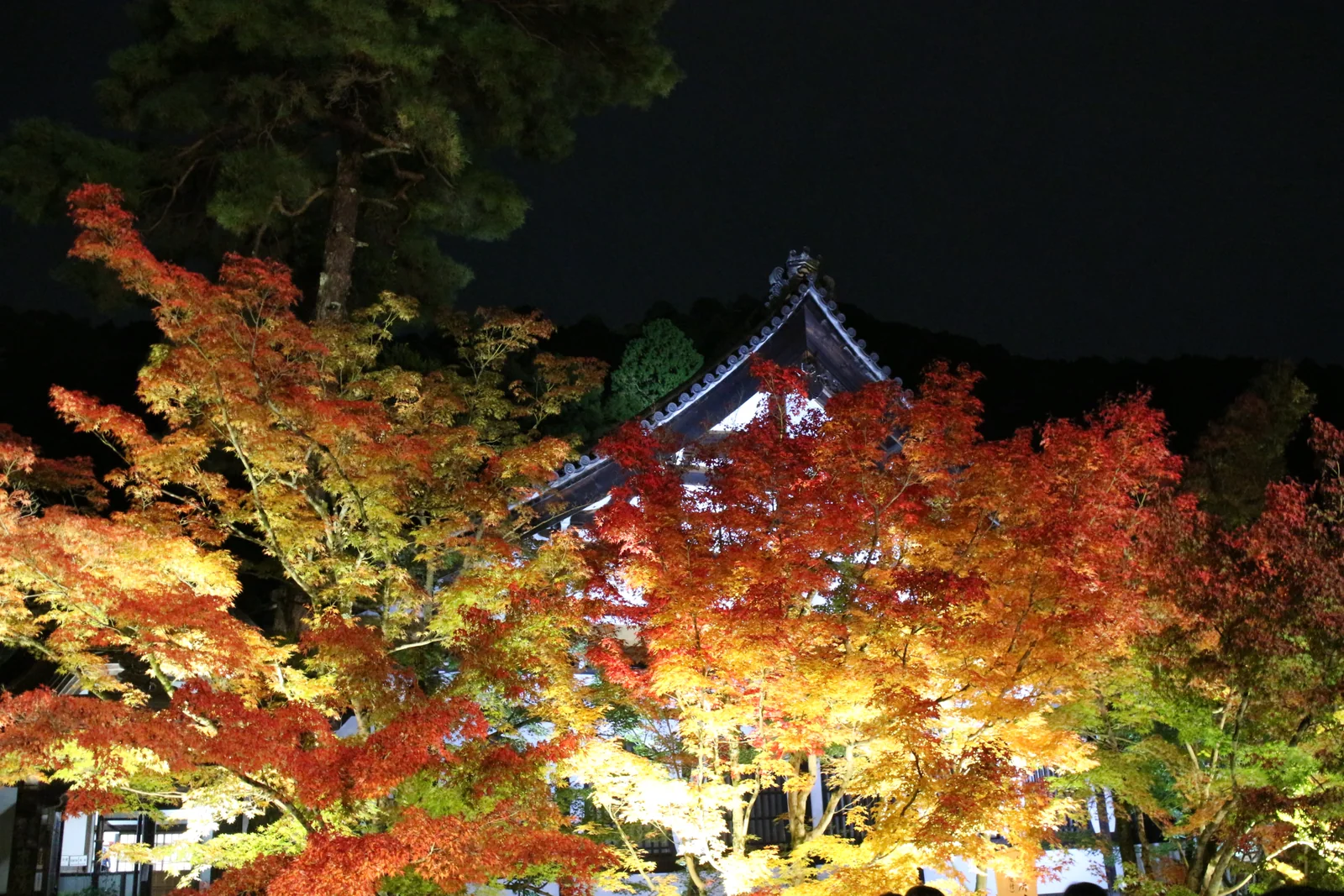
Eikando’s night admission is ¥1,000 for adults and junior-high or high-school students in the published programme. Advance admission is not offered on its current visitor page, so being near the temple does not convert the visit into a reserved time slot. If a queue stretches the arrival, protect the evening by skipping an optional earlier stop. The three-day Kyoto autumn route planner is a better place to distribute other temples than packing them into this single night.
Kiyomizudera pays off when the iconic view is the purpose
Kiyomizudera lists its 2026 autumn special night opening from 21 to 30 November, with last admission at 21:00 and closing at 21:30. No reservation is required. Those are generous clock times by temple standards, but the entrance is not beside a railway platform. The access directions put a roughly ten-minute walk after the Gojo-zaka bus stop; that final approach climbs and can slow dramatically when the streets fill with visitors.
For a first visit, a coherent day stays in Higashiyama, moves dinner earlier than usual, and finishes at Kiyomizudera. Arashiyama may also be beautiful in autumn, but crossing Kyoto after a long day there spends walking and transfer energy before this night begins. The Arashiyama autumn morning route is better treated as a different day; the Kiyomizudera night-viewing hotel comparison can settle whether the tired return should end nearby or at a station-area hotel.
The temple is less forgiving for an older parent, a young child or someone in formal shoes after a full walking day. The ten-minute published walk describes distance in normal conditions, not queuing, gradients or slippery stone in rain. Leave time to stop without putting admission at risk. The Kyoto Station versus Gion hotel guide matters here because the return from eastern Kyoto is a different experience from a return after Toji.
Toji removes the most transport friction
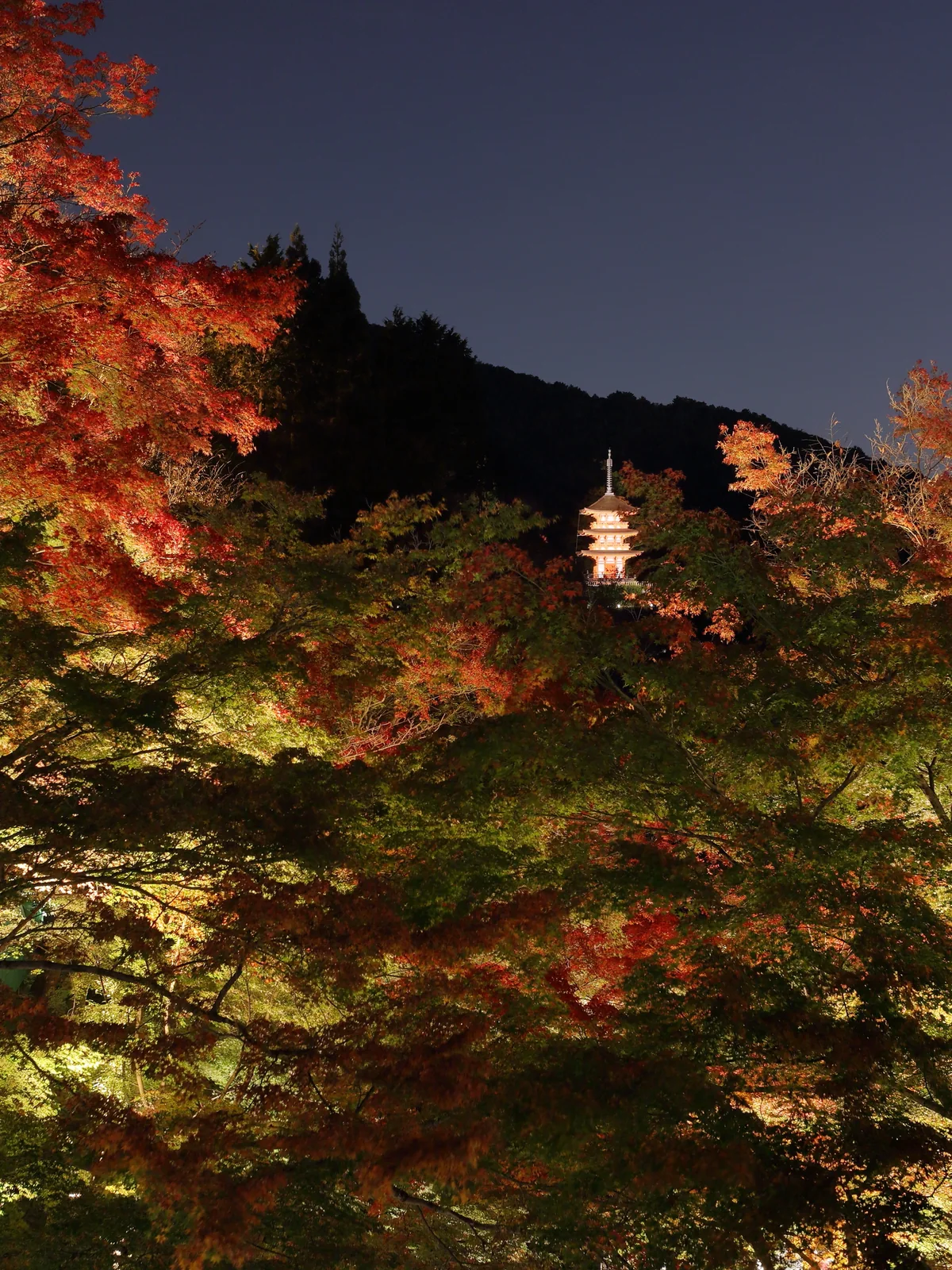
Toji’s 2026 autumn illumination runs from 31 October to 13 December, 18:00–21:30, with the last admission at 21:00. The published night price is ¥1,000 for adults and ¥500 for high-school students; younger children are covered by the same ¥500 line in its night table. The pagoda, lit trees and reflection are a different composition from Kiyomizudera’s eastern hillside, but the access suits a Kyoto Station stay or a Shinkansen arrival much better.
The easy sequence is hotel rest, dinner near Kyoto Station or Toji, then the night viewing and a short return. That can be particularly valuable on a final Kyoto night before an early JR departure, or for parents who will not enjoy another steep approach. The Kyoto Station versus Shijo-Kawaramachi guide for older parents tests the larger hotel-base decision, while the Granvia Kyoto final-night move addresses whether changing hotels solely for the departure day is worth it.
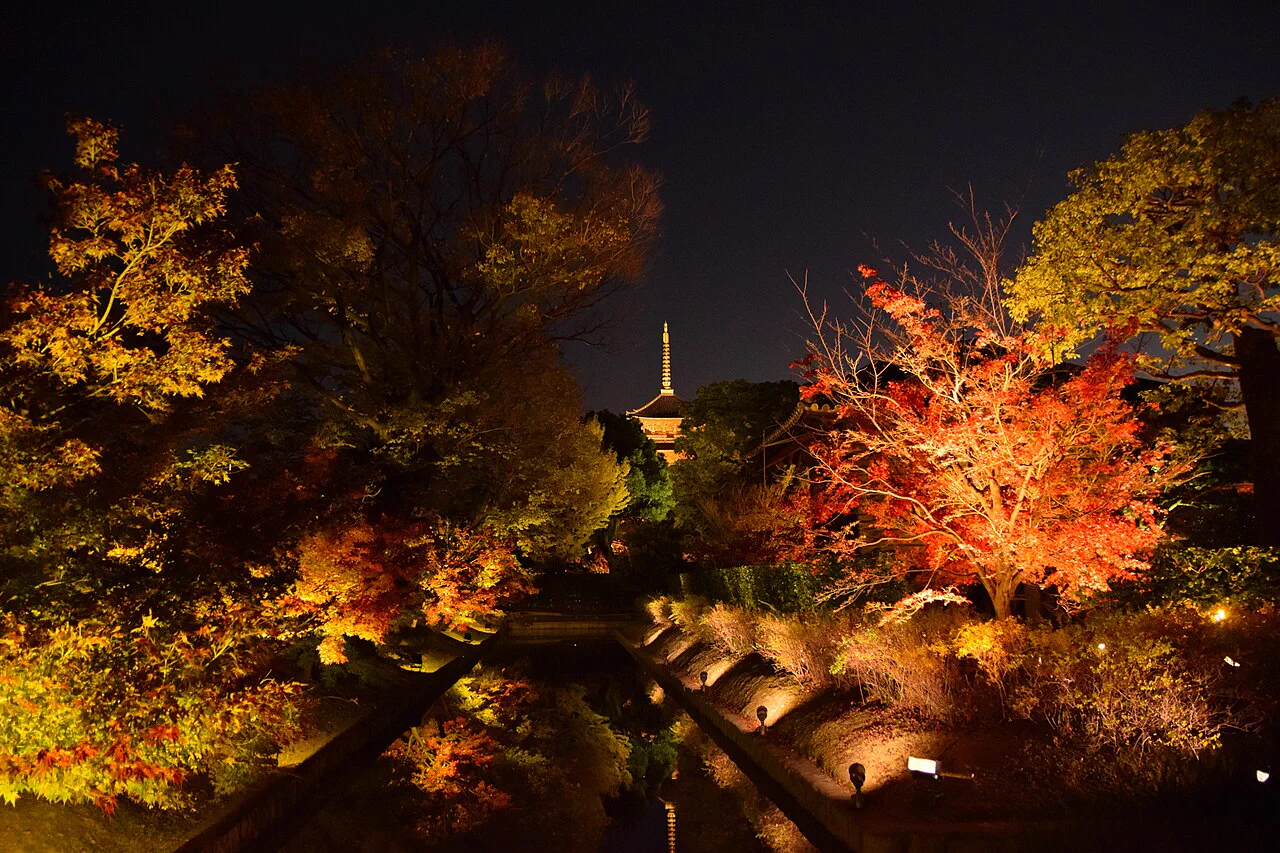
Toji’s easier logistics do not make it interchangeable with a Gion or Higashiyama evening. Someone whose priority is walking eastern Kyoto’s lanes after dark should not choose Toji only because it is simple. Someone returning tired from several trains may value that simplicity more than a slightly more famous view. The one-day Kyoto route decision is useful when the daytime itinerary itself is already ambitious.
A second paid illumination rarely fits the same evening
A pair of 21:00 closing times does not create two independent visiting windows. Leaving the first garden, joining the exit flow, travelling across Kyoto, finding the next entrance and queuing for a ticket all consume time before the second viewing starts. This is why Toji plus Kiyomizudera is a poor “best of Kyoto” single-night plan: they are far apart for this purpose. Eikando plus Kiyomizudera has a similar problem even though both are on the eastern side. Each deserves a relaxed approach, not a dash to another final admission.
A possible exception is one paid anchor followed by an unticketed walk in the same district. With no second entry cutoff, you can end the evening whenever the group is tired. If you insist on two events, the honest test is whether you would cheerfully abandon the second if the first takes half an hour longer. If abandoning it would ruin the night, the pairing is too tight. The Kyoto Gozan Okuribi exit-plan article concerns a different event but makes the same point about end-of-evening crowd movement.
| Before a second venue | Time that is easy to forget | Effect on the plan |
|---|---|---|
| Inside the first site | Final garden loop and photographs | You may leave later than expected |
| At the exit | Crowd, toilets and a warm drink | The nominal closing time is not your departure time |
| Between districts | Walk, bus or subway plus waiting | Map distance is not usable viewing time |
| At the second gate | Queue and last-entry rule | The visit may fail even while the site is still open |
One major paid site with a proper meal is normally a better first-trip evening than two truncated admissions. The saved time is not empty. It gives space for a wet-weather adjustment, a slower walk with family, or simply a return before everyone is cold. The Kyoto hotels sold out in autumn backup-base guide is relevant if accommodation outside the city lengthens that return further.
Where you sleep changes the ending
Kyoto Station is the simplest base for Toji, luggage-heavy arrivals and early Shinkansen or JR departures. Kawaramachi or Gion can make an eastern Kyoto dinner and post-Kiyomizu return more natural. Keage, Okazaki or another easy Tozai Line connection can take some bus dependence out of an Eikando exit. The exact hotel still matters: a district label does not describe the last walk from a station or stop. Use the Kyoto Station versus Gion comparison after choosing the night that matters most.
Staying in Osaka for a Kyoto illumination is possible. It becomes less appealing if you also want a very early Kyoto start on the same day or next morning, because you pay the intercity journey on both ends of an already long day. The Osaka hotels for Kyoto and Kobe day trips is a good check when that is the actual lodging plan. The Kyoto versus Osaka first-trip base guide covers the broader decision when several evenings, rather than one, are at stake.
Compare Kyoto hotels around the night you choose. If the key night is Eikando, check an Okazaki or Tozai Line return; for Kiyomizu, compare eastern Kyoto with a more central base; for Toji, price the Kyoto Station area. The booking total matters only after the tired walk back is realistic.
Dinner and rain are part of the temple choice
Dinner after a 21:00 finish sounds efficient until the same crowd leaves and nearby restaurants are full or closed. For Kiyomizudera, eat before the climb unless you have confirmed a later table. Eikando’s day/night clear-out creates an intentional food and rest window. Toji lets a Kyoto Station guest eat before or after with more options nearby. Families and travellers with dietary constraints should be especially wary of a vague “we will find something” plan at closing time.
Light rain can make illuminated leaves and pools reflective. It also makes stone and slopes slippery, slows the approach and compresses umbrellas into narrow passages. Toji may gain relative appeal because its access is simpler. Kiyomizu’s uphill last stretch becomes less attractive for anyone already tired or unsteady. An Eikando day plus night can lose its charm if the group has been wet since afternoon; the planned rest becomes more valuable. The Kyoto autumn free paths guide offers lower-commitment daytime alternatives when weather changes the plan.
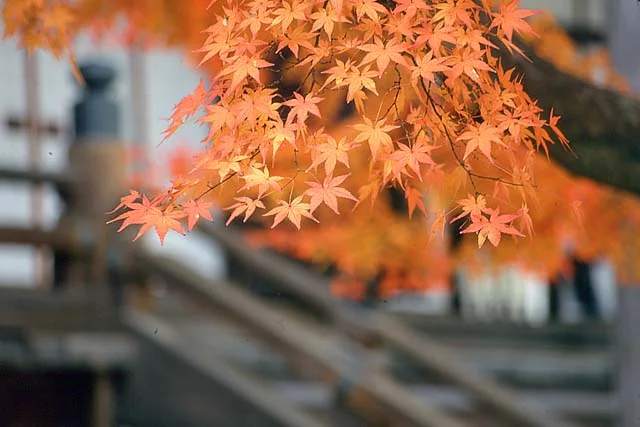
The photograph above shows daytime foliage, not an illuminated night programme. Colour timing also changes with weather, so event dates guarantee an opening, not peak leaves. The Japan mid-November foliage timing guide and late-November Kyoto route guide can help position the night within a wider trip without pretending every tree peaks on the same date.
Three nights with a clear purpose
An iconic first Kyoto evening stays in Higashiyama during daylight, takes an early dinner and then visits Kiyomizudera. The viewing platform and illuminated hillside are the reason to accept the climb and crowd. Do not add Arashiyama to that same day merely because both are famous autumn places. The Kiyomizudera hotel-return guide can decide whether to keep the hotel nearby after the night.
A maple-first night uses Nanzenji or another northern Higashiyama stop in daylight, pauses in the afternoon and returns to Eikando for the 17:30–20:30 reception window. If your date is 7–10 December, replace Eikando with a programme whose event page actually confirms those dates; do not rely on the conflicting older news entry. The Eikando and Okazaki hotel choice helps decide how the evening ends.
A low-transfer night uses a JR-heavy day or Kyoto arrival, a rest near Kyoto Station, an early meal and Toji. It is especially useful for an older group, a rainy forecast or the final night before an early train. The trade-off is that you are buying the pagoda-and-garden scene rather than a walk through Gion. The Kyoto autumn hotel-area guide puts the choice alongside the rest of the itinerary.
Temple pages for dates and entry
Eikando’s Japanese notice, English news entry and 2026 programme page give its autumn opening details. Kiyomizudera lists 2026 special night viewing, and Toji lists 2026 autumn night admission. Temple schedules and admission arrangements can change by date or crowd conditions; make the final plan from the programme for your actual evening.
Other seasonal routes: Mifuneyama Rakuen Autumn Illumination 2026: Tickets,, Kenrokuen Autumn Leaves 2026: Early Entry,, Aichi-Nagoya Asian Games 2026: Tickets, Venues,, USJ Halloween 2026 Guide: Dates, Tickets,, Rikugien Autumn Illumination Guide: Tickets, Entry.
Other seasonal routes: Takayama Autumn Leaves: Old Town, Hida, Japan Autumn Leaves 2026: Forecast Calendar,, Okinawa Travel Guide: First-Time Itinerary, Hotels, Dazaifu Shinko-sai 2026: Mikoshi Route, Candlelight, Iya Valley Autumn Leaves Guide: Driving,.