
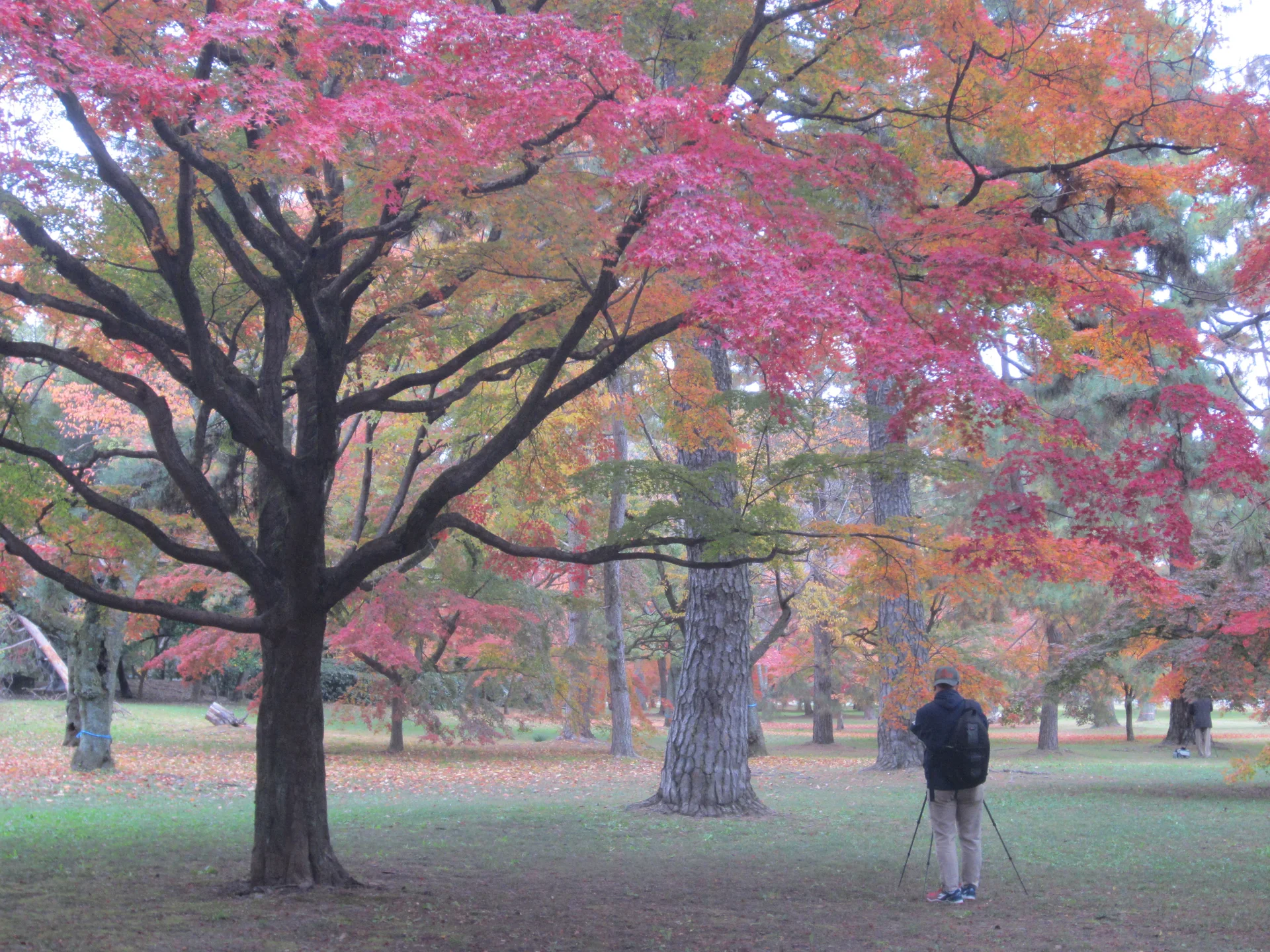
Kyoto has plenty of autumn colour that can be seen without an admission ticket: river paths, public parks, the outer spaces of some temples and the wooded approaches to shrines. A free day still needs a route. Travelling across town for three separate zero-yen stops can cost more in fares and fatigue than choosing one district and paying for a garden along the way.
Choose a corridor first, then follow the trees that are actually changing colour during your week. The early-, mid- and late-November Kyoto route guide helps with the broad season, but no calendar can promise that ginkgo at Nishi Hongwanji and maples near Nanzenji will peak together. Free public paths are especially useful when dates are fixed: you can change the day's neighborhood without losing a prepaid garden ticket.
Where “free” ends
↔ Scroll table left or right
Kind of place | Examples | Admission boundary |
Public landscape | Kyoto Gyoen paths, Kamo River banks, Philosopher's Path, Maruyama Park, public Arashiyama paths | No entry ticket for the public route; transport and separate facilities can cost money |
Open precinct or general worship | Nanzenji outer grounds, Shimogamo approach, Honganji worship area, Kitano Tenmangu grounds | Special gardens, halls, towers or seasonal enclosures may charge |
Ticketed foliage focus | Eikando, Tofukuji's Tsutenkyo area, Kodaiji, Hogonin, Kitano Momiji-en | Do not count the famous enclosed view as a free stop |
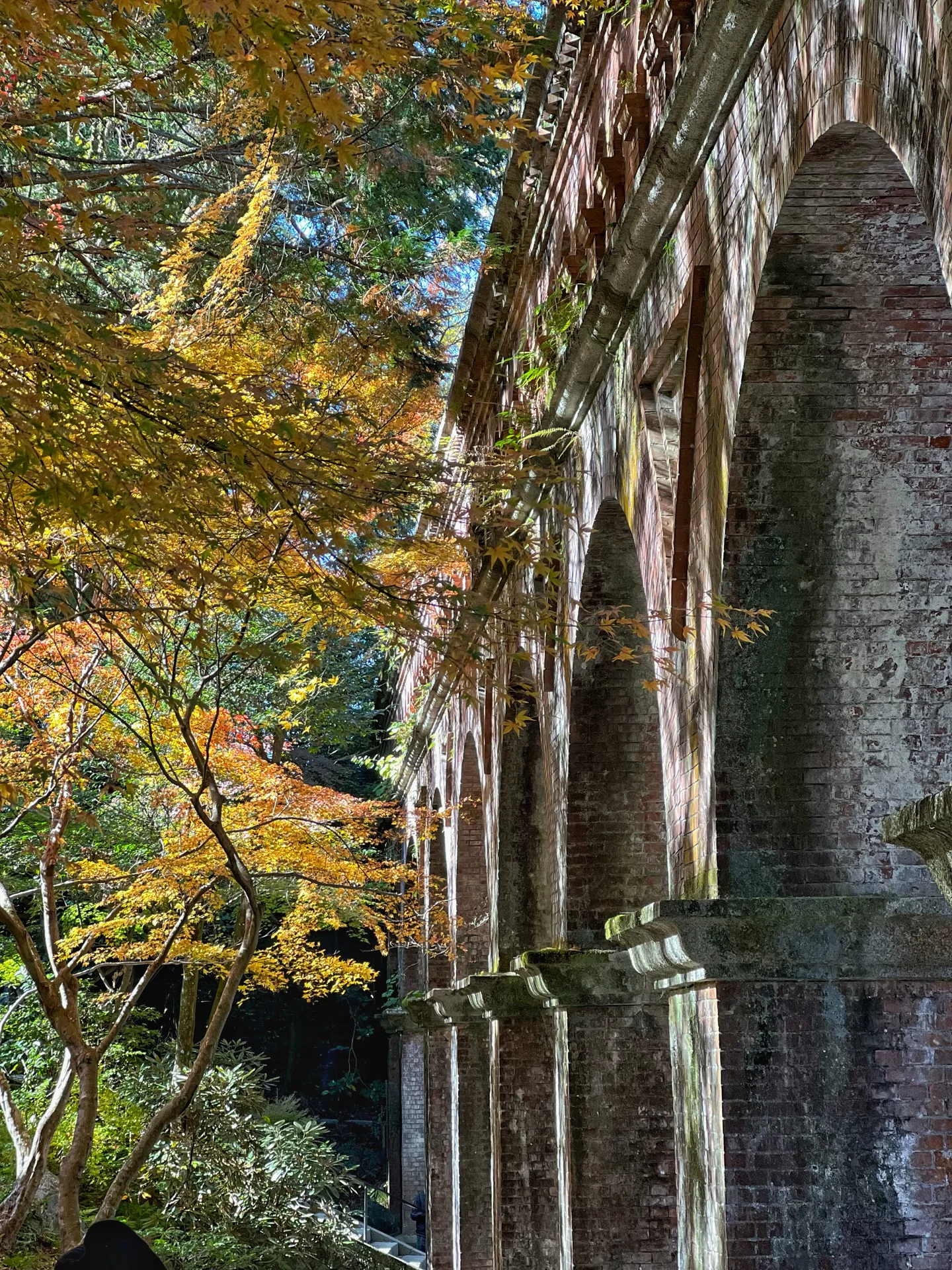
Nanzenji illustrates the distinction. Its outer setting and Suirokaku aqueduct can be enjoyed on a walk, while the Hojo, Sanmon and subtemples have separate tickets. At Kitano Tenmangu, general worship is different from entry to the Momiji-en maple garden. A route described as “free temple foliage” may still lead to a ticket counter at the best-known view; decide whether the open space is enough for you before crossing town.
Kyoto Gyoen and the Kamo River: a roomy first day
Start from Imadegawa or Marutamachi subway station and enter Kyoto Gyoen without buying admission for the garden paths. The broad grounds make it easier to change pace than in a narrow Higashiyama street. After walking among the trees, head east toward Demachiyanagi and choose the river delta or the wooded Tadasu no Mori approach. That creates a day with natural meal and transport exits rather than one long forced march.
Kyoto Gyoen's public grounds are open at all hours, but buildings such as Shusuitei have their own hours and admission rules. Allow 60–90 minutes for an unhurried first loop. Families can stop at a rest area; walkers with limited stamina can leave from another gate. Extending the outing to Demachiyanagi and the forest can bring the day to roughly five to seven kilometres on foot, with stations and meal stops along the way.
Ginkgo and mixed woodland do not change on the same day. Tadasu no Mori often offers a later-feeling forest walk than a yellow-tree stop in the city centre, but weather can still shift the leaves. After rain, its paths can be damp and the Kamo River edge needs care with children. Keep the river portion optional rather than promising a fixed distance from the hotel.
East Kyoto: Nanzenji without a temple-ticket chain
From Keage, walk into Nanzenji's open grounds and under the Suirokaku aqueduct. The architecture is interesting even when individual maples are early or past their best. Continue toward Okazaki and, if the group still wants to walk, take a section of Philosopher's Path. There is no need to cover the entire canal and then cross the city for Arashiyama on the same afternoon.
The Philosopher's Path is a public route, not a continuous corridor of brilliant leaves. Side streets, water and ordinary trees make up much of the experience. Temples beside it charge their own entrance fees. If one paid garden has strong colour on the day, adding it to this walking corridor may be a better use of money than taking extra buses to another free but weaker district.
This route can shorten easily. A visitor who wants the aqueduct and nearby foliage may return via Keage or Okazaki. Someone with a full afternoon can keep following the canal. The freedom to stop is part of the value of a free path, particularly when autumn crowds slow every narrow section.
A yellow-tree stop near Kyoto Station
Nishi Hongwanji's large ginkgo, designated a Kyoto City natural monument, gives the station area a distinct autumn goal. The tree is part of the temple precinct, and general worship does not require an attraction ticket. Higashi Honganji offers another accessible temple setting nearby. Both are within walking reach of Kyoto Station, so they suit arrival or departure day; expect other photographers around the ginkgo at peak colour.
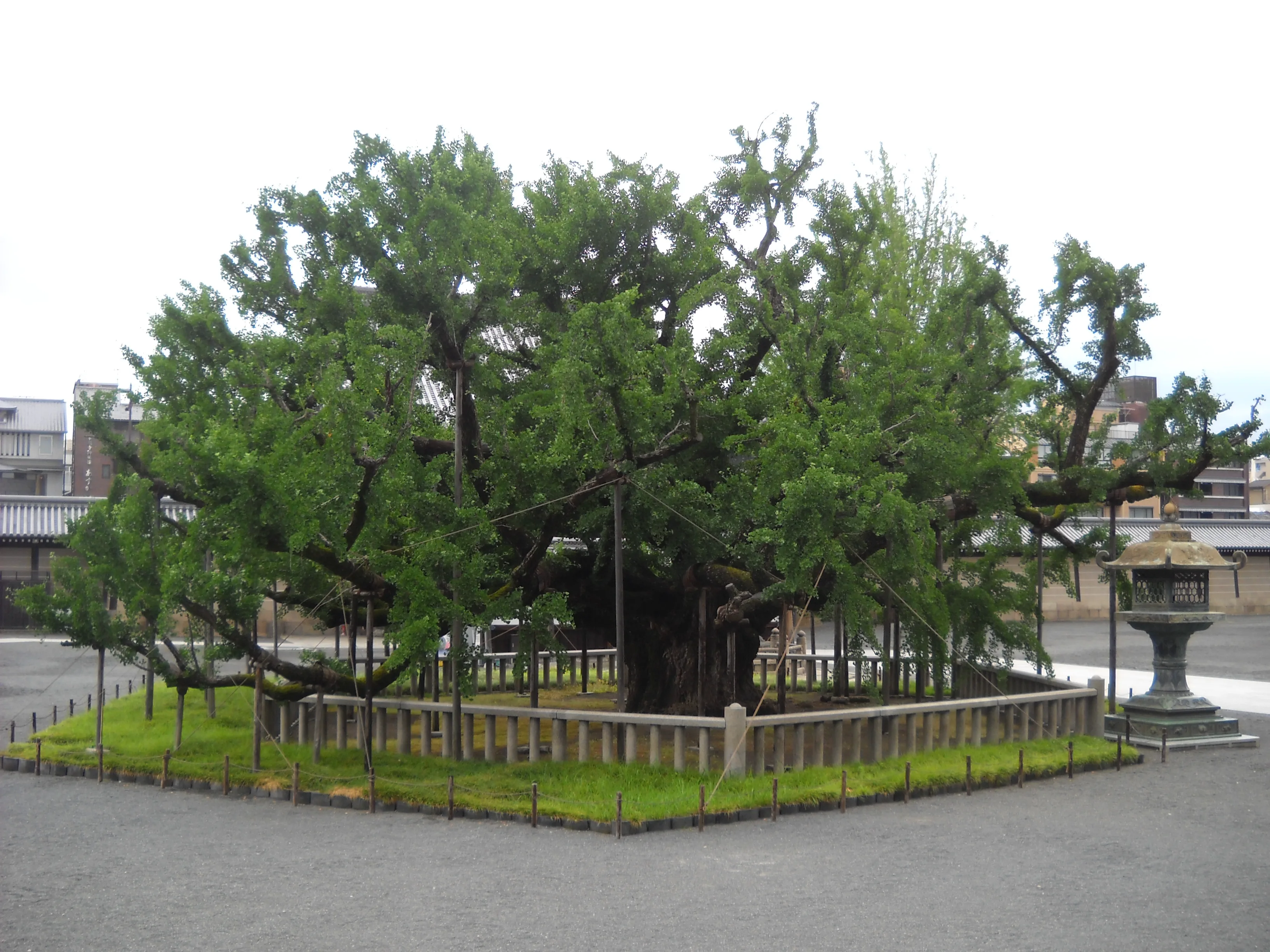
Leave bags at the hotel or station before walking the precinct. If the ginkgo is still green, use the temple architecture, Kyoto Station or Umekoji instead of chasing another yellow tree across town. The Japan luggage-forwarding guide helps when a bigger case would otherwise dictate every stop. Shoseien and special openings should be treated separately from general temple entry.
A short Honganji walk can also make an imperfect weather day worthwhile. You are close to Kyoto Station for an early train, and you can decide after arrival whether to extend the walk. That flexibility can matter more than finding a theoretically richer garden that demands two transfers and a fixed afternoon.
Arashiyama, Gion and Kitano are different kinds of free
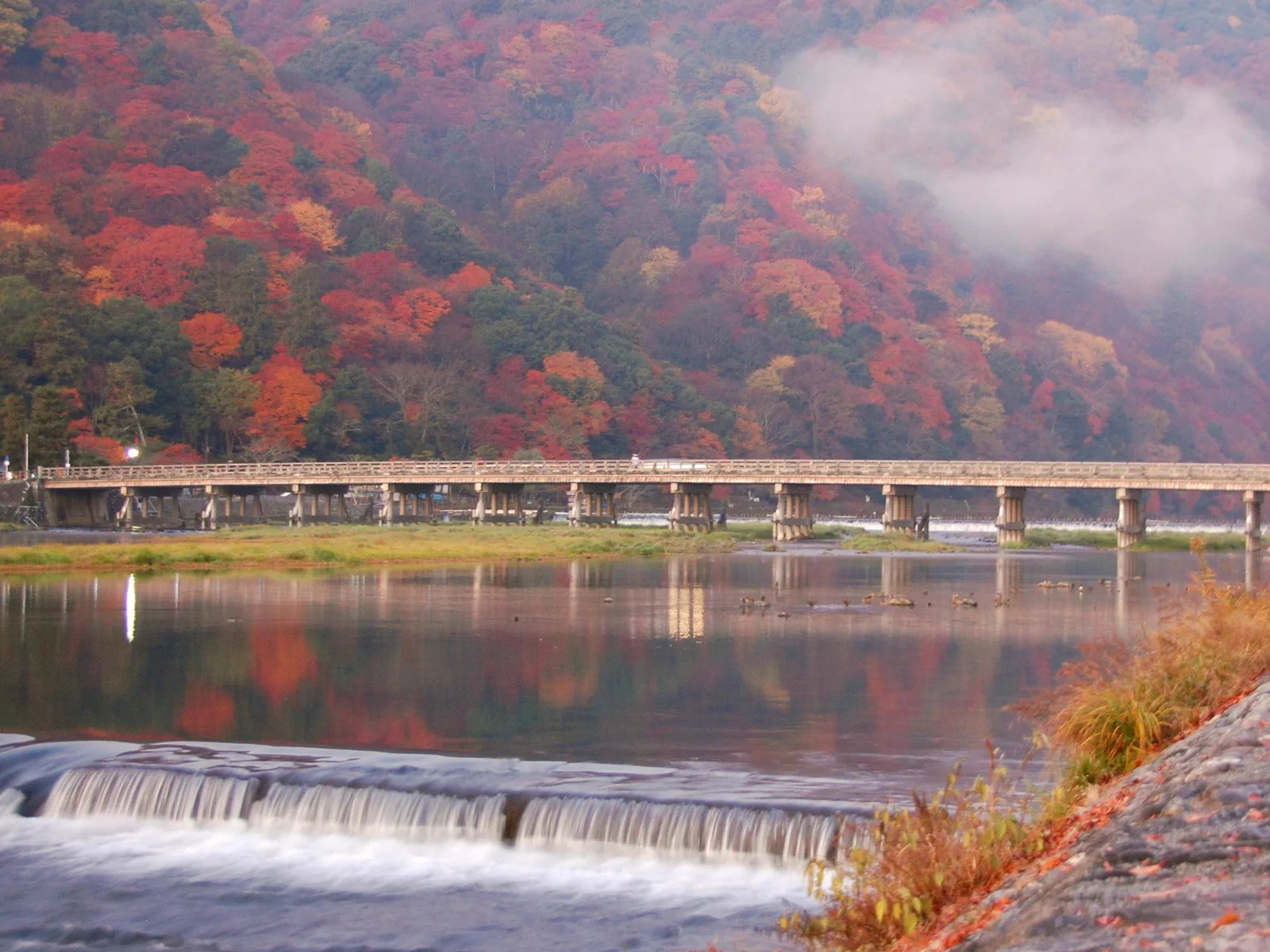
At Arashiyama, Togetsukyo Bridge, the riverbanks and public paths give a river-and-mountain view without entering a temple. The Arashiyama route guide helps choose the station and length of visit. The district can become crowded during peak foliage, and distant hillside colour looks flatter in rain. Going early and staying within one riverside area is often more useful than trying to turn every temple gate into a free photo stop.
Yasaka Shrine, Maruyama Park and Gion make a walkable public afternoon on the eastern side, with food and transport nearby. They do not reproduce a ticketed temple illumination after dark. Kitano Tenmangu suits someone already interested in the shrine and Nishijin, but its celebrated Momiji-en is a separate paid area. For 2026, the shrine lists Momiji-en from 31 October to 6 December, with adult entry at ¥1,500; that price belongs to the enclosed garden, not general worship.
Choose Arashiyama for river and mountain scenery, Gion for an easy urban evening, or Kitano for the shrine and its neighborhood. Moving among all three solely to avoid one entrance fee loses the geographic advantage of the free route.
Tree timing without a false forecast
Mid-November often favours ginkgo and earlier urban trees; late November is a broad planning period for Gyoen, Nanzenji's outer grounds and Arashiyama. Tadasu no Mori and some lower-elevation colour can linger into early December. These are historical patterns, not a 2026 forecast. The late-November regional guide helps compare destinations. For a particular Kyoto day, compare recent dated photographs from Gyoen, your eastern or Arashiyama corridor, and Tadasu no Mori; decide in the final one to three days if weather allows.
Decide what to do with a mismatch. If the maples are green, favour a ginkgo or the architecture on your chosen route. If ginkgo leaves have fallen, try a mixed garden or a later wooded path. Free public routes let you change this decision close to travel without a refund issue. They are less helpful when used as a reason to ignore weather and spend hours in transit.
Keep the transport cheap as well as the admission
Kyoto's subway, city buses, JR, Keihan, Hankyu and Randen form overlapping but different networks. An IC card is simple for a few ordinary rides. A day pass needs a fare comparison against the actual legs you will take. A nationwide JR Pass will not pay for city buses or most private railway sections, so it does not turn a scattered foliage route into a free day.
Kyoto Station is convenient for Honganji, luggage and onward JR travel. Karasuma Oike has two subway lines for Gyoen and the journey toward Keage. A Gion or Higashiyama base helps with Yasaka and local evening walks, but can add work to a western or northern day. Hotel Granvia Kyoto, The Royal Park Hotel Iconic Kyoto and Hotel The Celestine Kyoto Gion illustrate those different bases; check your own dates for rooms and rates.
Compare Kyoto stays for your leaf-viewing nights. A room on the route you will repeat can save more travel than a small difference in nightly price.
When colour, weather or crowds disappoint
In heavy rain, riverbanks and long gravel paths are less pleasant. The Japan rain-plan guide helps decide whether to shorten the outdoor day. Honganji, Kyoto Station and the Okazaki museum area can provide a more compact alternative. If the main route is simply busy, start earlier or cut its farthest segment instead of transferring to another crowded attraction.
The Kyoto autumn crowd guide explains why rail corridors and hotel position matter. A free Gyoen loop, a short Honganji stop or a portion of the Okazaki path can each stand alone. You do not need to fill a whole day with unpaid sights for the outing to be worthwhile.
Pick the district with the best reachable colour, then let the walk expand or contract with the weather and your group. The public landscape is Kyoto's budget advantage. Use it for flexibility, not as a reason to spend the day crossing the city in search of a zero-yen gate.
Where to Stay
Kyoto Autumn Illumination 2026: Temples, Tickets, Transport and Hotels
Avoid Kyoto Autumn Crowds in 2026: Rail Corridors, Early Starts and Hotel Bases
Kyoto Hotels Sold Out in Autumn? Backup Bases in Otsu, Uji, Nara and Osaka
Related guides: Kyoto Autumn Leaves November: Early, Mid and Late Routes · Okutama Autumn Leaves Guide: Mitake Gorge, Lake Okutama and Car-Free Routes · Hokkaido Autumn Leaves 2026: Daisetsuzan, Sapporo and Hakodate Routes · Japan Autumn Leaves with Seniors and Children: Easy Routes and Hotels · 3-Day Kyoto Autumn Leaves Itinerary: Four Seasonal Routes · Takachiho Gorge Autumn Leaves 2026: Boat Booking, Kagura and Overnight Strategy · Japan Autumn Leaves Reservations 2026: What to Book Early and What to Keep Flexible · Japan Autumn Leaves 2026: Forecast Calendar, Regions and Route Planning · 5- or 7-Day Kyushu Autumn Leaves Itinerary: Fukuoka, Yufuin, Beppu and Mountain Routes · Japan Autumn Leaves in September: Hokkaido, Alpine Routes and Grass Foliage
Tokyo Autumn Leaves Day Trip by Train: Gardens, Ginkgo and Evening Foliage
Kyoto Higashiyama Autumn Leaves Itinerary: Kiyomizudera, Kodaiji, Nanzenji and Eikando
Karuizawa Autumn Leaves 2026: Kumoba Pond, Shiraito, Cycling and Trains
Kenrokuen Autumn Leaves 2026: Early Entry, Illumination, Transport and Hotels
Japan Autumn Leaves in Mid-November: Kyoto, Tokyo, Fuji, Miyajima and Kyushu