
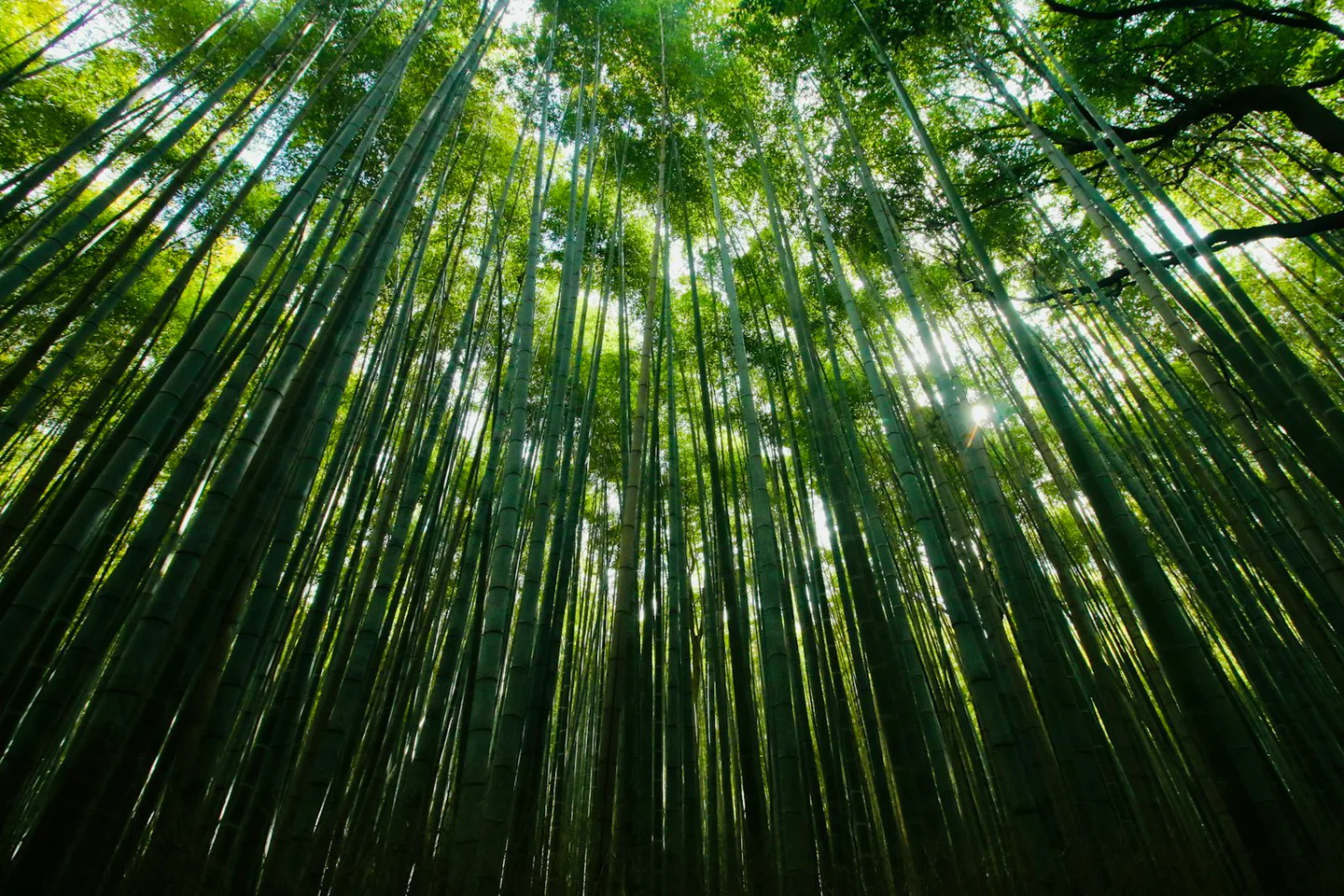
Arashiyama is usually a half-day decision. Allow about three hours for the bamboo path, Tenryu-ji garden and the Togetsukyo riverfront, including the walks between them. A fourth or fifth hour can buy one substantial extension: the uphill Monkey Park or the smaller temples and lanes of Okusaga. The district can occupy a whole day, but only when cycling, a long lunch or the quieter northern area is actually part of the plan. Treating every nearby name as a compulsory stop makes the route longer without making it more coherent.
The arrival station matters as much as the time budget. JR, Randen and Hankyu leave you on different sides of the sights and river. A visitor coming from Kyoto Station with a three-hour window has a different route from one arriving from Kawaramachi and heading straight toward Monkey Park. The tables below put the destination, the first walk and the sensible exit together. If Kyoto itself gets only one day, the choice between Arashiyama and Fushimi Inari belongs before either train ticket.
↔ Scroll table left or right
| Available time | Route that fits | What gives way |
|---|---|---|
| Two to three hours | Bamboo Grove and Kameyama side, Tenryu-ji garden, then Togetsukyo | Skip Monkey Park and deep Sagano |
| Four to five hours | The central circuit plus either Monkey Park or one Okusaga block | Do not put both extensions on a normal-paced half-day |
| Six hours or longer | Central circuit, one meaningful extension and a proper lunch or rest | Still avoid a collection of temples chosen only because they appear nearby |
| Restricted mobility or a very hot day | Shorten the walking circuit to bamboo, garden and river | The Monkey Park climb is the first omission |
| 14–30 November 2026 | The scheduled 07:30 garden admission may change the first stop | Do not assume Tenryu-ji's usual 08:30 garden start on those dates |
The rail arrival changes the shape of the walk
Tenryu-ji lists Randen Arashiyama at roughly five minutes' walk, JR Saga-Arashiyama at about 13 minutes and Hankyu Arashiyama at around 15 minutes. Those are access estimates for the temple, not total times from a Kyoto hotel. JR is a straightforward choice from Kyoto Station, though the Sagano Line can be crowded. Kyoto City's visitor routing also gives a subway-to-Randen alternative and warns that the direct bus from Kyoto Station can be slow and crowded. From Shijo-Kawaramachi, Hankyu via Katsura is a practical rail approach.
↔ Scroll table left or right
| Station | Useful starting situation | Walk or transfer to allow for |
|---|---|---|
| JR Saga-Arashiyama | You begin at Kyoto Station or are already using JR | About 13 minutes to Tenryu-ji, before time inside the district |
| Randen Arashiyama | Your connection suits the tram and the central temple area comes first | About five minutes to Tenryu-ji; the tram is not automatically shortest from every hotel |
| Hankyu Arashiyama | You approach from Kawaramachi or want the bridge and Monkey Park side | About 15 minutes to Tenryu-ji; the south-of-river arrival affects the order |
There is no reason to promise yourself the same station for the return. Someone finishing after Monkey Park may find a south-bank Hankyu departure convenient. A visitor ending deep in Sagano may face a long walk if they insist on retracing a morning path to the river. Check the next Kyoto stop before choosing the final station. The Kyoto Station versus Gion base comparison helps explain why the same Arashiyama route feels different from different hotels; the Kyoto charter trade-off is relevant if rail walking is a major constraint.
Spend the quietest part of the morning on the bamboo path
The Bamboo Grove and Togetsukyo attract crowds through much of the day. Kyoto's congestion forecast and live camera views can help judge the actual morning, but a nominal 07:00 arrival cannot guarantee solitude. If photographs or the feeling of walking among the bamboo are central to the visit, start on the grove and Kameyama Park side while that corridor has its best chance of being calmer. Walk through; a busy path rarely improves because a whole group waits for a gap in the crowd.
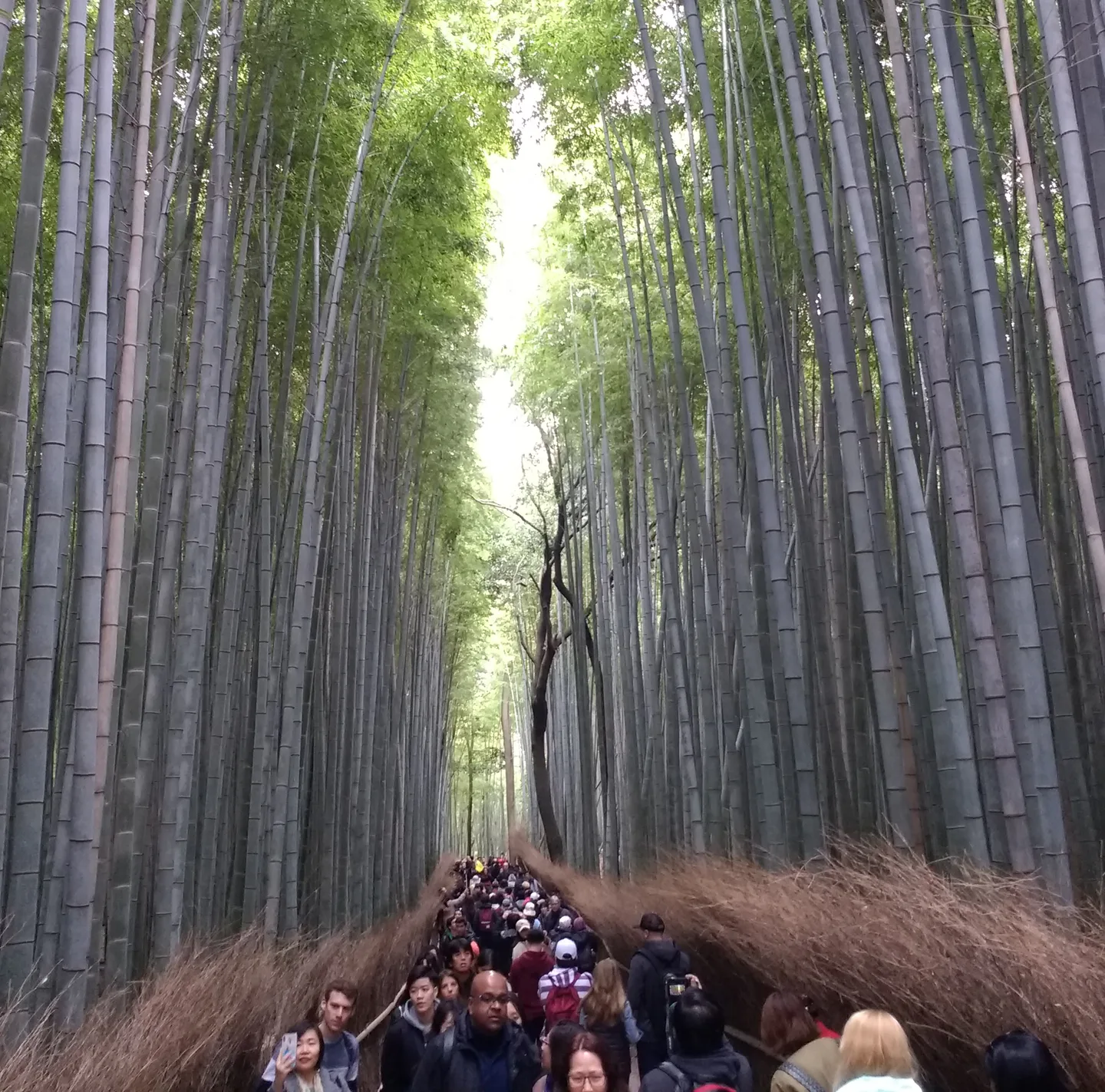
The inline photograph shows visitors on a narrow bamboo walkway. It is a more honest view of how the passage can feel than a completely empty stock scene. The page's hero shows sunlight through green bamboo, but neither photograph tells you today's congestion. A family prioritising a relaxed breakfast over photographs can arrive later and accept a lively core. An autumn foliage trip needs a different first-stop calculation, covered in the seasonal Arashiyama route and the November Kyoto timing guide.
Tenryu-ji sets a reliable boundary for the core route
After the open-access bamboo and park walk, Tenryu-ji provides a defined paid visit. The garden's ordinary hours are 08:30–17:00, with last admission at 16:50. The garden ticket is ¥500 for high-school students and adults, ¥300 for elementary and junior-high students, and free for preschool children. Entering the main buildings adds ¥300. Viewing the Cloud Dragon costs another ¥500 and is offered only on specified dates and periods; it is not a standing inclusion in the basic garden ticket.
On a short visit, buy the garden experience you actually have time to see. The buildings and Cloud Dragon can add value for someone interested in temple art, but their prices and time should be counted rather than silently added to the circuit. In summer, check the hall's operating period and heat arrangements instead of assuming every optional interior works as an afternoon cooling stop. Kyoto's rain-day keep-or-cut approach is useful when the garden and riverside are part of a wet forecast.
There is a specific calendar exception ahead: Tenryu-ji currently schedules early garden entry at 07:30 from 14 through 30 November 2026. A visitor on those dates may put Sogen Pond Garden into the first block, then take the bamboo route. That is different from the ordinary 08:30 opening, and it does not mean every temple building opens at 07:30. Autumn rail and crowd planning can help decide whether the early start is worth moving the rest of a Kyoto day.
Monkey Park costs a climb and roughly another hour
Arashiyama Monkey Park Iwatayama sits across the river from the bamboo and temple side. Its published admission has been ¥800 for high-school age and above and ¥400 for children from four through junior-high age; entry has commonly been around 09:00–16:00. Check the operator's current date and conditions before paying or routing around it, because operating days and admission can change. Kyoto's family visitor material places the monkey area about 160 metres above the entrance and describes an approximately 20-minute walk uphill.
That 20-minute ascent is only one component. Add the summit visit and the descent, and reserve roughly 60–90 minutes as an itinerary allowance. It is a planning range, not a timed guarantee from the park. The choice is attractive when animals and the elevated city view matter to the group, especially if a bridge crossing is already on the route. It is less sensible in a three-hour visit, in severe summer heat or with someone who finds a steep walk difficult. A stroller, a tired toddler or an older relative changes the cost more than the word “monkey” on the map suggests.
If the park becomes the family highlight, let it remain the extension. Adding multiple northern temples afterward creates a long zigzag between the river and Sagano. For a broader family plan, Kyoto's one-to-three-day options can help place an active west-Kyoto morning beside a gentler afternoon. A Fushimi Inari uphill route also demands energy; the two climbs should not be casually bundled into one compressed day.
Okusaga turns the day toward lanes and smaller temples
North and west of the core, Sagano opens into a different sort of visit. Gio-ji, Adashino Nenbutsu-ji and Otagi Nenbutsu-ji are spaced progressively farther from the central stations. The appeal is slower walking, moss, temple grounds and neighbourhood lanes, not another quick photo stop next to Togetsukyo. Kyoto's area guidance separates these quieter places from the crowded Bamboo Grove and bridge. Walking time increases quickly as you continue north; the farthest Otagi visit may justify a bus back toward Saga-Arashiyama or Hankyu Arashiyama.
Choose this extension if smaller sites and the route between them matter more than seeing monkeys. A half-day still needs a boundary: pick a coherent northern block rather than putting every temple on a checklist. A full day can absorb the farther distances and a slow meal. If the aim is autumn colour, the Kyoto foliage elevation sequence shows why a northern temple and the city centre may peak differently. The three-day leaf routes offer room to distribute those areas across separate days.
Three workable versions of an Arashiyama visit
The first-time core, about three hours: reach the Kameyama and bamboo side in the earlier part of the day, visit Tenryu-ji garden after it opens, then take in the Togetsukyo riverfront before leaving. The result includes the district's strongest contrasts without requiring a hill or northern detour. It is the most defensible version when another Kyoto district owns the afternoon. A two-hour stay is possible if the garden or riverside is shortened, but it leaves little room for a queue or unhurried meal.
The active family version, roughly four to five hours: use the central circuit, cross toward Monkey Park and keep a real allowance for the ascent, time at the top and return. A child's interest in the monkeys can justify the extra effort; the route should then finish rather than collect further temples. Keep lunch and a train departure in the allowance if everyone is walking at different speeds. The evening Kyoto opening guide is relevant only if a late activity genuinely fits after recovery, not because it can be added on paper.
The slower Sagano version, five to six hours: start with bamboo and Tenryu-ji, then move north into one Okusaga corridor. Allow lunch and choose a return that does not force a complete retrace. The quiet extension gives a different pace from the main crowd corridor. You give up the Monkey Park summit and likely end farther from the station you first used. If long walks are the point, that trade can be a reason to visit rather than a drawback.
A whole day becomes convincing when its second half has a defined purpose. Kyoto City publishes a Saga–Arashiyama cycling route of about five hours that reaches deeper into Sagano and Okusaga. Cycling, several small temples or a lingering riverside meal can each create a full west-Kyoto day. Simply appending Monkey Park, every northern temple and more shopping to the three-hour circuit creates a route with repeated direction changes. Compare the attraction list with how far the group will actually walk, where it will eat and what time it must be elsewhere.
Weather and the rest of Kyoto determine what to cut
Light rain need not erase the bamboo, moss, garden or river. Shoes, slippery paths and the group's comfort become the limiting factors. In a wet spell, the uphill Monkey Park leg is an easier cut than the entire district. Summer makes that choice sharper: the long exposed links plus the 160-metre rise are a different proposition from a cool autumn walk. The August regional heat guide explains why the same sightseeing hours demand a shorter outdoor circuit. In autumn, the visual gain often comes with heavier crowding and an earlier start worth considering.
Arashiyama and Fushimi Inari can fit into one physical day, but both benefit from the same scarce early hours. One will usually be visited later and busier. If Arashiyama gets the morning, choose an afternoon whose appeal does not depend on an empty outdoor corridor. A central Kyoto tea ceremony may fit better than another distant crowd-sensitive site. If the broader route is already crowded, the first-trip itinerary comparison is a better place to remove a half-day than forcing every icon into Kyoto.
Large cases also change the route. The area involves station approaches, narrow pedestrian paths and perhaps a long northern walk or hill. When returning to the same hotel, leave luggage there. On an intercity transfer day, arrange storage or forwarding that works with the next accommodation before using Arashiyama as a stopover. The rail ride may look short, but the final carry through the district uses time and attention that a map does not show. The luggage-forwarding guide can help decide whether sending bags ahead suits the schedule.
For most first visits, the decision remains simple: give the bamboo, garden and bridge a genuine three-hour block, then select one extension only if it reflects the group's interests and stamina. Choose Monkey Park for animals and a climb; continue to Okusaga for slower streets and temples. A Kyoto stay built around west-side cycling or deep Sagano can reverse that half-day default. A hot day, restricted mobility or another early-morning priority can shorten it further. The station and exit should follow the chosen route, rather than dictate an unnecessary loop.
If an early bamboo-grove visit or a late west-Kyoto dinner is the reason for staying nearby, compare Arashiyama rooms with the extra travel they save over a central Kyoto base.
Related routes and places
Japan rainy-day itinerary guide · Arashiyama autumn leaves guide · Kyoto tea ceremony guide · first-time Japan itinerary · luggage forwarding · Kyoto Station vs Gion · Kyoto City Travel Guide · Kyoto City Travel Guide · Kyoto Travel Congestion Forecast · Tenryu-ji — admission, hours · Kyoto Prefecture Tourism Federation · Port of Nagoya Public · Lotte Hotel Busan vs · FUTURE OF LIFE+ at · How to Book the · Yamaga Lantern Festival 2026: · Osaka Long-Stay Hotels for · HOTEL GREAT MORNING Fukuoka: · Where to Stay in · Hakodate Kokusai Hotel: Is · Fukuoka, Hita, Yufuin and · Edogawa Fireworks 2026: The · Japan January Weather: What · Kochi Yosakoi Festival 2026: · Hotel Sonia Otaru: Is · Is Fukuoka Worth Visiting