
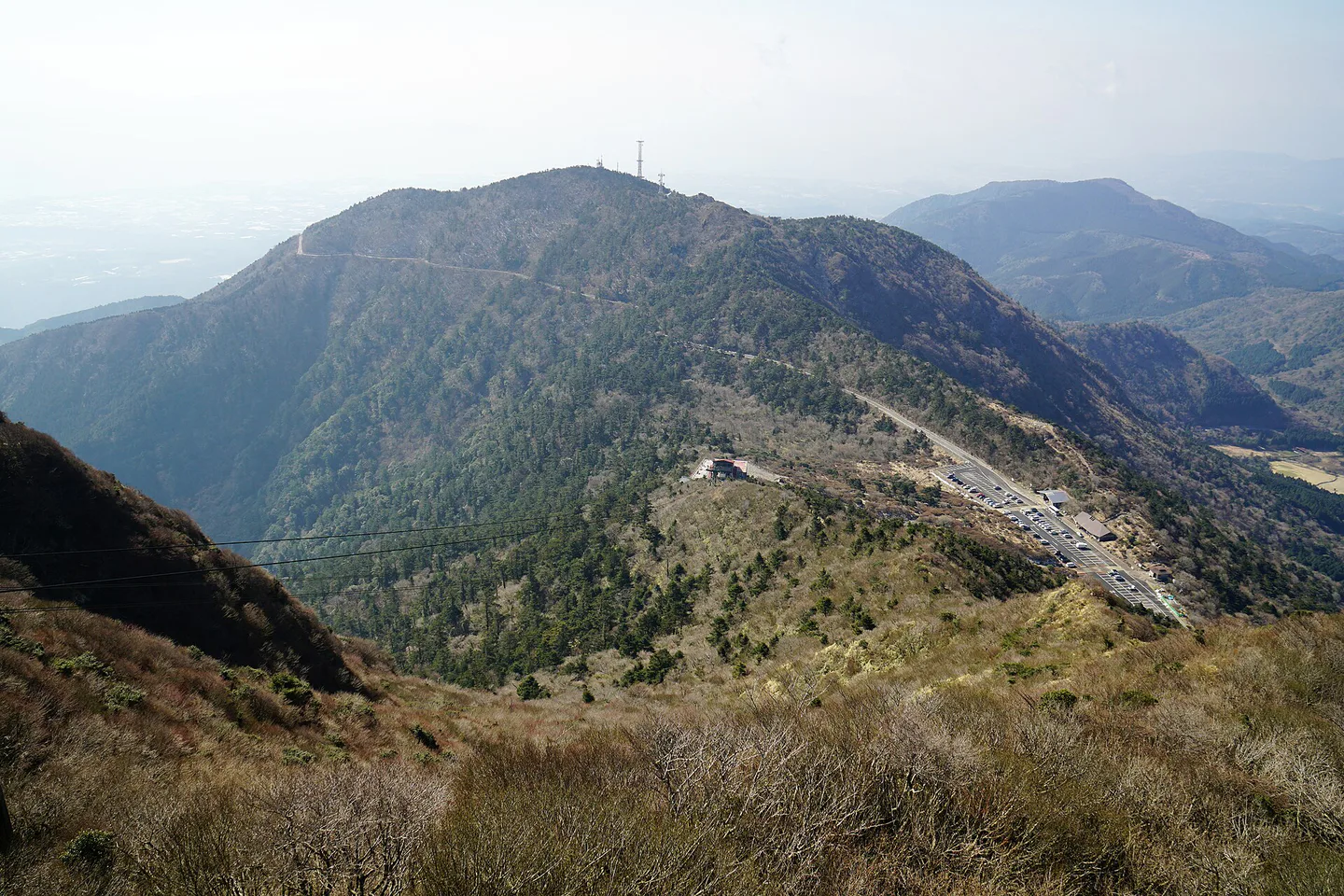
A view from Nita Pass can justify the drive up from Unzen Onsen in autumn. It is a weaker reason to improvise a car-free day trip from Nagasaki. The ordinary bus brings you to the onsen town, while the shared taxi once described as the final connection to the pass is suspended. An earlier seasonal direct bus ran only from November 2025 to January 2026; it is not a service to assume for this autumn. Before choosing a hotel or an excursion, decide how you will cover the last climb and get back after the ropeway visit. A reserved private taxi, your own car or a new confirmed seasonal service changes the answer; a vague hope of finding a ride at the pass does not.
The second boundary is November 1. The Nita Pass loop road closes to entering traffic at 17:00 from November through March, an hour earlier than in the April–October period. The ropeway also moves to a shorter published operating window. Those changes matter even if a late October and an early November photograph show the same colour. You need a descent plan before buying the return ropeway ticket, especially if you reached the mountain late or expect to wait in foliage traffic.
First choose which Nita Pass visit you mean
| Visit | What you actually do | Who gets value from it | Main limit |
|---|---|---|---|
| Drive-up viewpoint | Use the pass parking area and lookouts, then return to town | Visitors after mountain scenery with minimal walking | Cloud can remove the panorama; autumn road queues can consume the time saved |
| Ropeway and upper viewpoint | Ride roughly three minutes toward Myokendake, see the high slope and return | First-time visitors who want the elevated view without a long climb | Paying for the ride is less useful when the upper station is in fog |
| Mountain walk | Continue beyond the ropeway area on a suitable trail | Travellers prepared for a longer outdoor route | Trail status, footwear, weather and turnaround time become separate decisions |
That distinction prevents two common mistakes. A family wanting a short foliage view does not need a hiker's timetable. Someone hoping to walk toward Myokendake or farther should not treat the three-minute gondola ride as the total time on the mountain. The ropeway is transport to the upper viewing area, not a guarantee that every trail is open. Recent notices describe restrictions on the Azamidani route toward Fugendake after a landslide, so anyone planning a real hike needs the current route status rather than a scenic-access description.
For a wider Kyushu route, place Nita Pass beside the region's elevation and colour sequence. That prevents a late-season trip from treating one mountain viewpoint as a verdict on all Kyushu foliage. The car-versus-public-transport decision is also more consequential here than the ropeway fare: the last transfer determines whether the day works at all. If you are still choosing the travel month, the month-by-month foliage comparison puts this late Kyushu mountain stop in a national sequence.
November shortens the mountain window
The loop road's published April–October window is 08:00–18:00, with the downhill gate locked at 18:45. From November through March, entering traffic is limited to 08:00–17:00 and the downhill gate locks at 17:45. Do not interpret the later gate-lock time as permission to start sightseeing then; it is a departure limit. Fog, parking congestion and a line at the ropeway can all delay the sequence after you enter the road.
The ropeway's published seasonal timetable also changes at the same date. It operates from around 08:51 in both periods, with an April–October window extending toward 17:23 and a November–March window ending earlier. The operator's displayed table does not express the final uphill and final downhill times in a way I would use to time a last-minute arrival. Check the day's displayed last boarding at the station and leave a generous margin for the descent. It runs approximately every twelve minutes, with a one-way ride of about three minutes; wind and poor weather can stop service. A clear forecast in Nagasaki city is not proof of visibility at the upper station.
A round trip is listed at ¥1,500 for adults and ¥750 for children, with one-way fares of ¥830 and ¥420. The service is first come, first served, and the operator currently says to bring cash. The loop road itself requests an environmental contribution beginning at ¥100; it is distinct from the gondola ticket. The parking area is listed for roughly 200 passenger cars plus bus spaces. Those numbers help with budgeting but say little about the queue on a peak foliage weekend. If you can choose, a mountain-first morning protects more of your day than arriving after lunch and hoping the published closing time will be enough.
The no-car route has a missing final leg
Public transport to Unzen Onsen is possible. It does not place you at the Nita Pass ropeway. Unzen's current tourism information says the shared taxi to the pass is suspended, while some older model itineraries still mention it. A limited direct bus connected the onsen town's Keyaki Square and the pass from November 1, 2025 to January 4, 2026, but that past timetable is not evidence of a 2026–27 autumn service. A traveller planning for late October or November needs a current, date-specific connection or a private taxi booked for both directions.
The road climb from Unzen Onsen to the pass is roughly fifteen to twenty minutes by car. The bus journey that gets you to the town can take much longer, and the last-leg taxi must be available at the hour you need it. Ask for a return arrangement when arranging the outward car; a scenic parking area is a poor place to discover there is no easy pickup. If the transfer cannot be confirmed, keep the day in the onsen town. The Nagasaki overnight decision from Fukuoka and five- or seven-day Kyushu route help show whether Unzen deserves a night rather than an uncertain mountain detour. The Kyushu Odan Bus example is another reminder to separate an intercity bus service from the final connection to a mountain attraction.
Some no-car visitors can make a private transfer worthwhile by travelling with companions and treating the ropeway as their main outing. A solo traveller relying on a tight Nagasaki day-trip chain has less room for cancellation or an expensive last-minute return. Do the total calculation: bus to Unzen, reserved car uphill and down, gondola ticket, waiting time and the trip back to Nagasaki. At that point an overnight in Unzen may be a better use of the same travel effort, provided the onsen town is somewhere you want to stay.
Pay for the ropeway when the higher view is still there
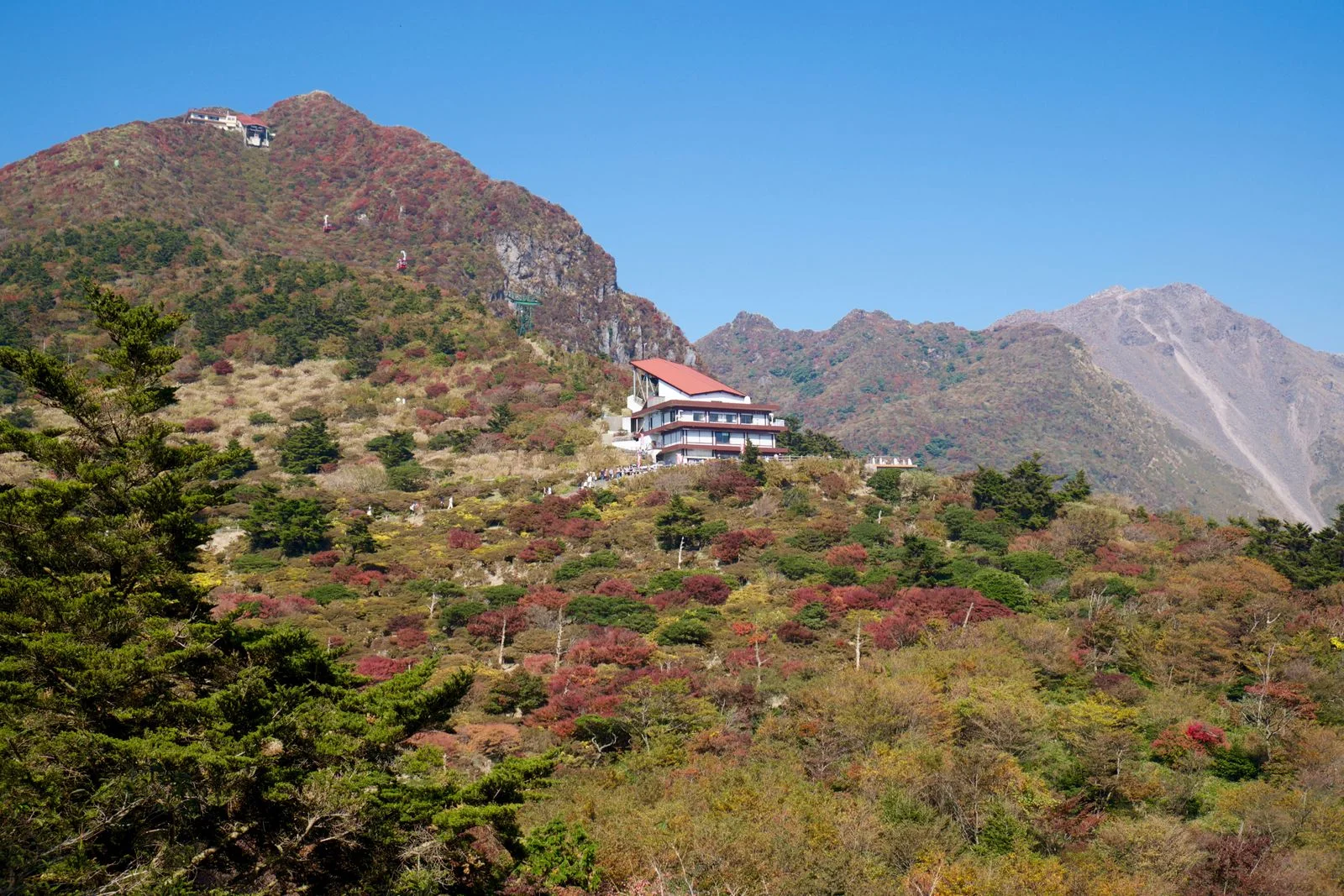
The gondola lifts you from the pass toward Myokendake's high viewpoints, where clear conditions can reveal the volcanic slopes, surrounding seas and the shape of Heisei-Shinzan. It saves the climb for a traveller who wants that perspective. A ticket is less compelling when the top is inside dense cloud, the upper leaves have already faded or your remaining road time leaves no space to look around. The service may still be running under a view you would not choose to buy. Check the conditions at the pass and keep the drive-up view as a complete visit if that is the better scene.
Autumn colour in Unzen changes by altitude. Nita Pass and the upper Myokendake area can be strong while the onsen town still looks green; later, lower slopes may carry more colour after the top has passed its best. The broad late-October to mid-November window is a starting range, not a peak-day promise for 2026. Use recent local observations and visibility together. A photograph from a previous year tells you the possible view, not what the cable car will reveal on your date. The current foliage status page and regional forecast calendar are better for deciding whether to hold the mountain day or switch to another elevation.
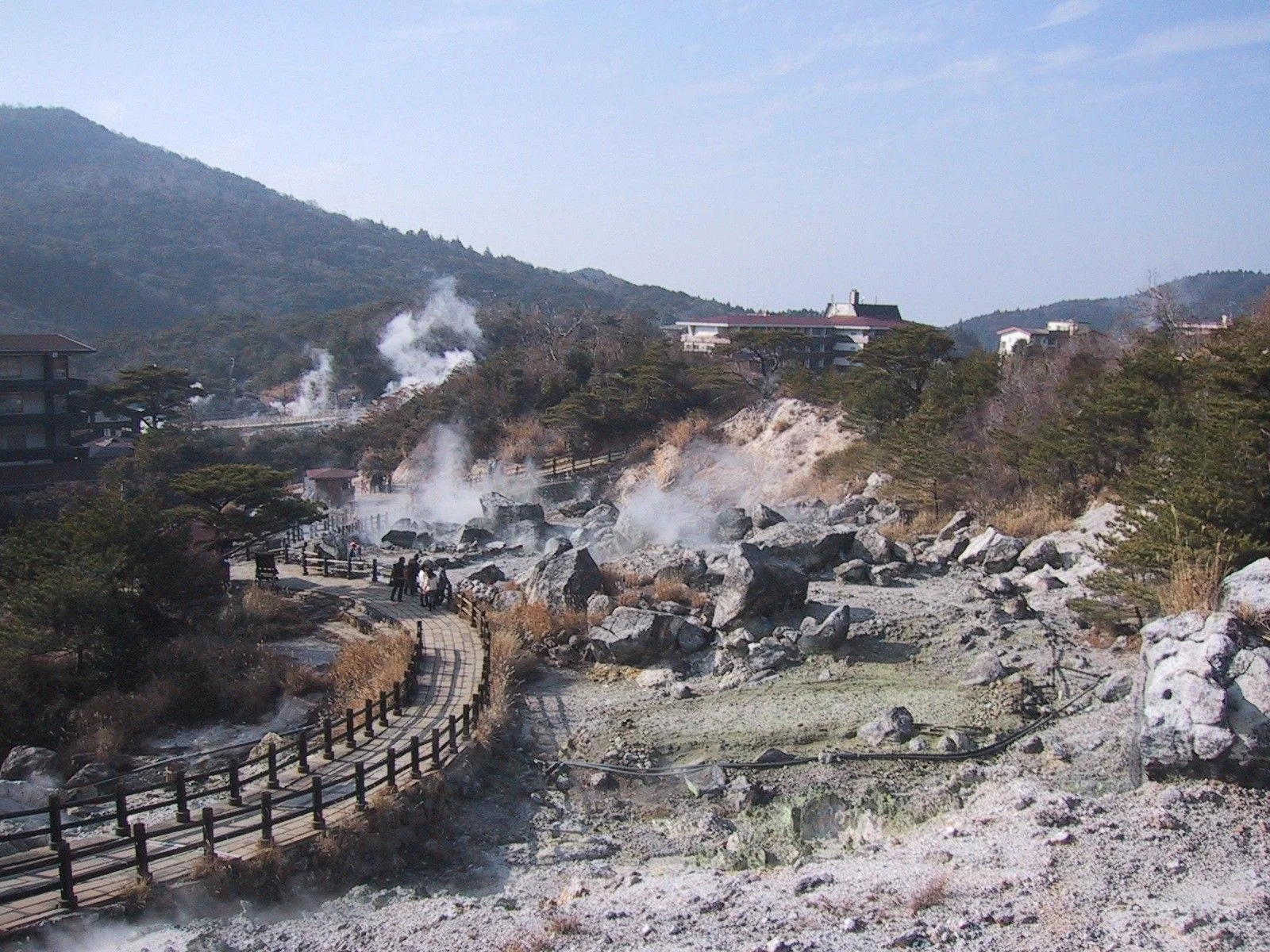
Weather can improve after a foggy morning, which makes a car and an Unzen night useful. Set a latest departure from town before waiting for the sky to clear. Otherwise the flexibility turns into an unplanned late dash against the road and ropeway windows. If the summit remains hidden, descend in your planning rather than driving across the prefecture after another uncertain high view. The Unzen Jigoku steam area, a bath and lower-level foliage form a coherent Plan B near the town. They also give a family a usable afternoon when the mountain is windy or closed.
A car gives a weather pivot; peak-season queues still apply
Self-driving is the straightforward way to solve the final leg, and the loop road is attractive in its own right. It does not make the autumn visit immune to traffic. A car park with many spaces can still fill when arrivals bunch around a clear weekend. If Nita Pass is your main reason for being in Unzen, go up early, see the high area and then descend for lunch, Jigoku or a bath. If upper cloud is clearly persistent in the morning, use the town first and go up only if conditions improve before your cutoff. Both patterns are better than joining a midday queue because you feel obliged to use the rental car.
This is one case where the Kyushu driving plan changes the itinerary itself. If the car is hired solely for Nita Pass, count pickup, parking and return as well as the short uphill drive. If the vehicle also connects the Shimabara Peninsula and a later stop, the mountain becomes an easier option. Do not turn it into a compulsory stop on a day that already includes a long drive to Takachiho Gorge; a mountain queue can consume the buffer that a boat booking or evening programme needs. Compare the different road commitments in the Fukuoka-to-Aso decision before stringing two mountainous detours into one short stay.
Does an Unzen Onsen night earn its place?
| Route shape | Better default | Reason |
|---|---|---|
| Rental car, mountain is optional | Keep it as a flexible day visit | A poor upper view can be dropped without losing a hotel move |
| Rental car, Nita Pass and an onsen are central to the trip | Sleep in Unzen Onsen | Arrival afternoon and next morning give two visibility windows |
| No car, only one free day from Nagasaki | Do not assume the pass is possible | The suspended shared taxi leaves a transfer to confirm |
| No car, an Unzen night is welcome | Arrange the final car from the hotel | A return taxi can be planned without a same-day chain of connections |
An overnight is strongest when the onsen stay is part of the trip rather than insurance on a photograph. Arrive, walk the Jigoku area or take a bath, have dinner, and judge the mountain the following morning. If the high view is poor, the hotel night still delivered the town experience. The western Kyushu base comparison shows the trade-off against a Nagasaki city or Huis Ten Bosch night. Fukuoka versus Yufuin offers a different onsen-night decision if your route stays in northern Kyushu; it should not be substituted merely because the names are familiar. If Unzen is the better fit, compare rooms in Unzen Onsen against the taxi departure you can actually arrange.
A day trip remains reasonable when you already have a car and are comfortable dropping the mountain in fog. It is weaker when you are buying a room in Nagasaki and then committing to two long transfers for a single uncertain high-elevation view. If you want autumn colour without a difficult last leg, compare the broader Kyushu colour map and choose a site along the route you are actually travelling. A visit to Lake Kinrin is a different kind of morning, with different transport and accommodation logic; it is not a like-for-like ropeway replacement. A longer journey can allocate a genuine Shimabara Peninsula block; the ten-day autumn routes show the trade-off against moving to another region.
Walking beyond the upper station is a separate plan
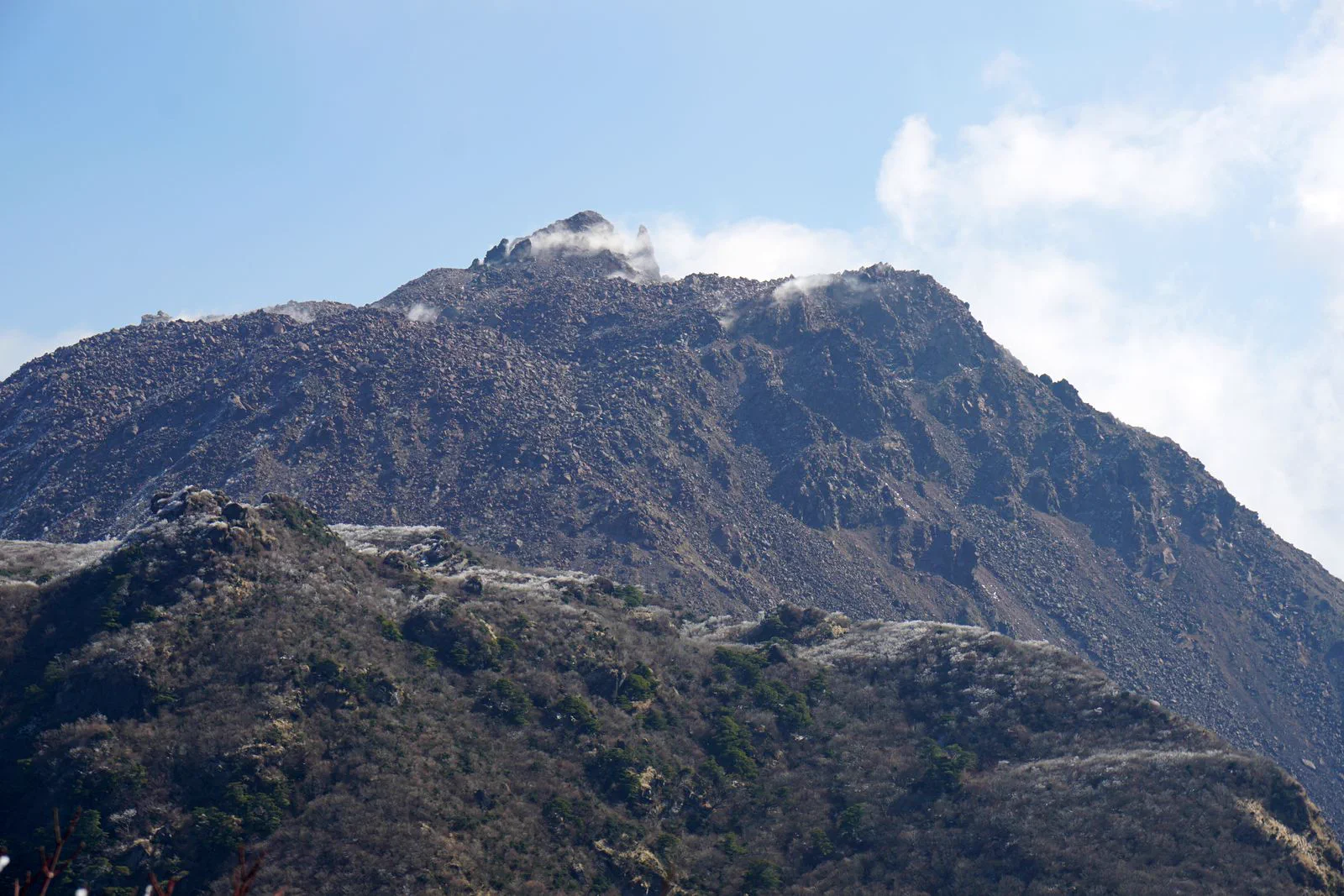
The ropeway gives access to a higher viewpoint without requiring a summit hike. Continuing onto a mountain path changes the footwear, weather exposure and time you need to return before the last service. Trail restrictions also change independently of gondola operation. Do not infer a safe hiking route from an open ticket window or a clear sky over the parking area. If you want a long mountain day, establish the trail status, likely walking time and a turnaround point before leaving the hotel. If anyone in the group is there mainly for the autumn panorama, the short ropeway visit can stand on its own.
This matters when comparing Kyushu autumn sites. Road-and-rail access across Kyushu varies sharply. Kankakei Gorge is another ropeway-led foliage trip, but its island ferry and bus chain is the main planning problem. At Nita Pass, the unusually important questions are the last climb from Unzen Onsen, the November road timetable and visibility at the high viewpoint. Solve those and the ¥1,500 ticket is a straightforward choice on a clear day.
My practical cutoff is simple: without a car or a confirmed transfer, keep Nita Pass conditional. With a car, go early enough to protect the road exit and choose the gondola only when the higher view adds something. Stay in Unzen when both the town and a second weather window appeal; stay in Nagasaki when the mountain is merely an optional branch. On November dates, use the shorter road and ropeway windows even if the weather feels like October.