
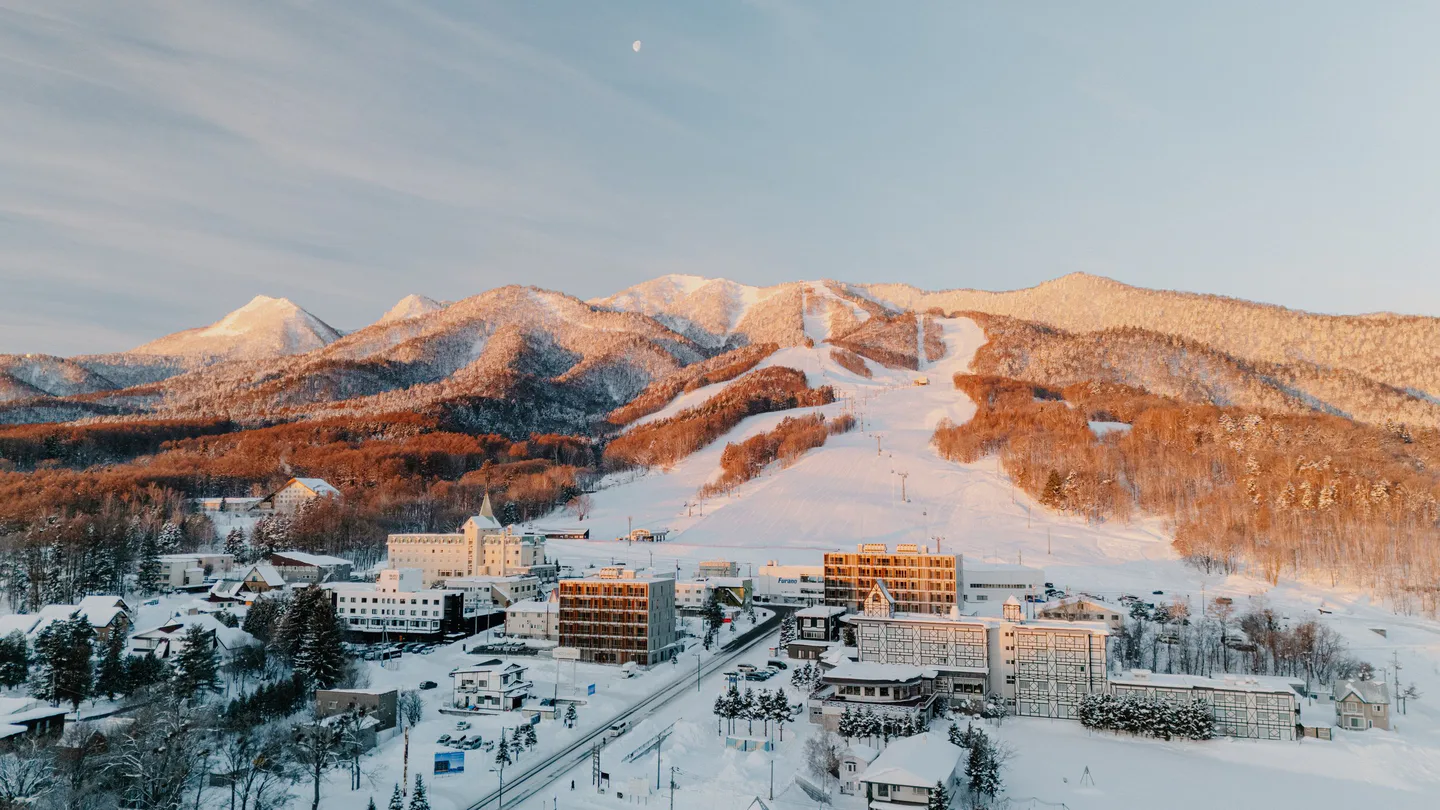
Furano and Kitanomine are two entrances to one ski resort, so the hotel should simplify what happens before and after skiing. The resort describes 28 trails across the two areas, a top-of-mountain connection and a lift pass valid across the whole mountain. When the connecting trail and lifts are operating, a competent skier can use both sides from one hotel. Sleeping in Furano Zone does not buy a separate terrain entitlement, and changing hotels after two nights does not unlock a second resort. The important differences lie at the base: rentals, lesson meeting points, dinner, town access and what remains open as spring approaches.
Shin Furano Prince Hotel makes the Furano Zone case especially clear. Its slope-side setting beside the Ropeway can turn breakfast, equipment and the first lift into a short sequence. Kitanomine offers a different rhythm: slope-close hotels and lodgings with more independent choices for the evening, plus a shorter journey toward Furano Station. Which is better depends on the traveller who has the least flexible morning, not on the strongest skier in the group.
Seven practical dimensions before choosing a hotel
| Dimension | Furano Zone | Kitanomine | When the judgement changes |
|---|---|---|---|
| First lift and equipment | Strong for a hotel beside the Ropeway and resort rentals | Also strong at a hotel genuinely near the Gondola or No. 1 lift | A particular rental counter or lesson meeting point is on the other side |
| Beginner lessons | Resort-side teaching and rental options | Teaching and rental options at the Kitanomine base | Choose the booked school's meeting zone and check-in time first |
| Evening food | Easier to keep meals within one hotel ecosystem | More freedom to pick a separate dinner venue or lodging style | A hotel meal plan, hours or walking route suits the actual group better |
| Non-skier day | Hotel, bath, dining and resort-side time can be contained | Town-facing errands and independent cafés are easier to imagine | Check what that person will really do from 09:00 to 15:00 |
| Station and luggage | Longer final transfer from JR Furano Station | Modestly shorter road journey from the station | Property shuttle or the new ski bus may erase the difference |
| Spring operations | Historically the more resilient ski base after Kitanomine closes | Check the specific zone end date before buying late-March or April lodging | The 2026–27 calendar and live lift status, once confirmed, govern the trip |
| Total friction and cost | May justify a premium if ski access replaces daily transfers | May offer lodging choice and dining flexibility without a second hotel move | Compare room, meals, equipment transport and taxi or bus costs together |
These are qualitative comparisons, not numerical hotel ratings. A specific Kitanomine property at the gondola can deliver a simpler ski morning than a Furano Zone room away from the Ropeway; a Furano hotel with a meal plan can be preferable to an independent dinner search in a snowstorm. If the broader resort choice is still open, compare Niseko, Furano and Rusutsu before optimising one Furano base. Niseko versus Furano narrows that decision for visitors choosing between those two in particular.
One pass and a high connection, with a weather condition
The resort's two zones meet by a common trail near the top. On a full-operation day, intermediate or advanced skiers can start at one base, cross, spend time on the other side and return before the relevant lifts close. That makes a three- or four-night two-hotel plan unnecessary when its sole purpose is to “ski both sides.” Keep the ski bag in one room and use the mountain. The three- versus four-night Furano plan is about how much ski time to buy, not how many zone check-ins to make.
The connection is conditional. Wind, weather, maintenance or a seasonal lift closure can remove the route between zones on a particular day. Do not assume you can always ski back to the entrance nearest your hotel. Read the live lift and trail status in the morning, identify a road or bus return if you cross, and note the day's last usable uplift. The pass may cover the mountain while a given run is unavailable. Beginners should not treat a high inter-zone crossing as a substitute for a lesson or a known gentle return.
The 2026–27 overview advertises a tentative resort opening on 28 November 2026. That is a planning date as of 24 October, not a promise about snow cover or which lift will open first. Zone-specific spring closing dates should also be confirmed once published. The comparison below uses verified resort geography and last season's closure as evidence, while keeping the new season's operating uncertainty visible.
Furano Zone: a short chain between room, gear and Ropeway
Shin Furano Prince Hotel is directly connected to the Furano side and sits beside the Ropeway approach. The resort lists rental locations at the hotel's ground floor and at the Furano Ropeway Station, as well as at Kitanomine Terminal. A family staying beside the Ropeway can leave the hotel, sort equipment and begin skiing without first arranging a van or a bus across town. That sequence is valuable on the first morning when boots need adjustment, a child needs a bathroom stop, or the lesson has an exact meeting time. The Shin Furano Prince access assessment weighs that benefit against its distance from Furano Station.
The same setting can help a non-skier. The hotel and nearby resort facilities allow a day built around the room, dining, a bath and a limited amount of independent time without travelling into town. If the non-skier would rather visit cafés, shops and the station area, the resort-side calm may feel isolated. Ask where that person will spend the hours while the skiers are on the mountain; “family-friendly” is too broad to choose a base.
The constraint is dinner independence. A group that wants a different restaurant or bar each evening may spend extra time and money getting between a self-contained resort hotel and town. A prepaid dinner plan can make that irrelevant, while a group that prefers spontaneous meals may value Kitanomine more. The Shin Furano Prince versus Nozo choice compares the ski morning against the evening instead of pretending one property wins every dimension.
Kitanomine: slope access with an independent evening
Kitanomine is not a generic budget district. Hotels, lodges and pensions vary in distance from the Gondola and No. 1 lift, so the useful question is the actual walk in ski boots from your room to the counter you need. Nozo Hotel is at the foot of the resort; Furano Tourism lists a restaurant, bakery, large public bath, sauna, kids' room and ski lockers. Hotel Naturwald is another example near the ski base. A Kitanomine stay can be full service while still giving a group more choice about where to eat outside one resort complex. Nozo versus the station-side La Vista shows why Kitanomine and central Furano should not be treated as the same address.
The station journey is somewhat shorter. Furano Tourism's access information places Kitanomine about ten minutes from JR Furano Station by car or bus, compared with roughly fifteen minutes by car or eighteen on the Lavender Bus to Furano Zone and New Furano Prince. A five-minute map difference rarely decides a whole holiday, but repeated trips to town or a rail arrival with luggage can make it useful. Hotel pickup can reverse it. A Kitanomine room up a snowy street with no shuttle may require more effort than a Furano Zone hotel whose bus stops at the door. The wider Furano-area base choice also includes travellers who should not stay beside either ski entrance.
For a couple or confident group staying three or four nights in the core winter season, Kitanomine often offers the attractive balance: ski from a neighbourhood hotel, cross the upper mountain when open, then choose the evening. Keep in mind that bar and restaurant hours vary by date and weather; a named district is not a guarantee of late food. If the group values station dinners above slope-side mornings, a Furano Station hotel may deserve comparison rather than defaulting to either ski base.
For beginners, a meeting point matters more than a zone label
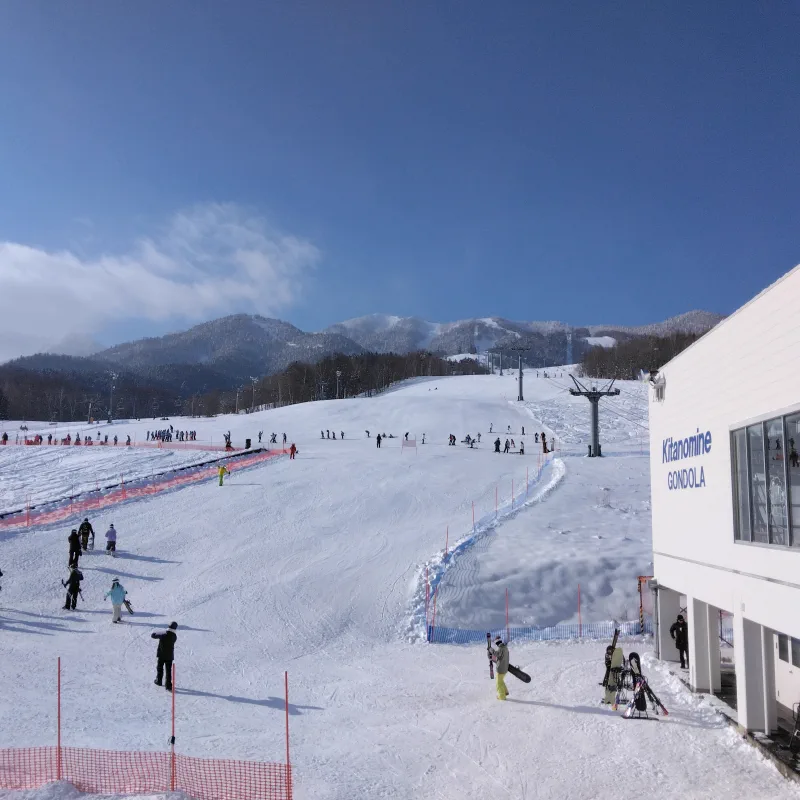
The resort describes beginner terrain and practice features on both sides. It lists rentals at Furano hotel/Ropeway locations and at Kitanomine Terminal. Furano International Snowsports School advertises lessons in either zone, while Furano Snow School is associated with the Kitanomine terminal. That means the claim “first-timers must stay in Furano Zone” is too broad. The right side is the one where the selected lesson, equipment collection and hotel can be made into one reliable morning.
Book in this order: preferred school and date, lesson zone and check-in time, rental counter, then hotel. If a child must be fitted for boots and a helmet before an 08:45 meeting, a hotel near that exact base prevents a sequence of small delays. Even a strong skier in the group gains little from a slope-side room on the opposite side of the lesson. Check whether the school needs learners at the mountain counter before the advertised lesson start. The wider winter Hokkaido itinerary helps decide whether a lesson-led Furano block belongs in a five-, seven- or ten-day trip.
Intermediate and advanced skiers have a different calculation. They are better able to use the high connection and have less reason to move a hotel to reach particular terrain. Their base should therefore be chosen for evenings, first-lift efficiency and the risk that a closed connection leaves them on the wrong side. A weather day can make the resort-side hotel useful even when no skiing happens; a town-oriented group may prefer other indoor plans. Hokkaido's non-ski winter activities are not all reachable as a casual Furano afternoon, so look at actual travel time rather than a broad activity list.
Spring skiing can reverse a January recommendation
Furano Tourism reported that Kitanomine's 2025–26 ski season ended on 22 March 2026 while skiing on the Furano side continued toward the end of Golden Week, conditions permitting. Its 31 March update also said the morning town ski shuttle had finished; the earliest regular Lavender Bus from Furano Station toward New Furano Prince then left at 11:38, leaving an early skier to arrange another transfer. Those are previous-season facts, not a published closing schedule for 2026–27. They demonstrate why a Kitanomine room booked for late March or April needs a date-specific zone and transport check.
There is now a new transport plan for the coming season. Furano Tourism announced a Furano Bus ski shuttle for 1 December 2026 through 31 March 2027, with station departures at 08:08, 09:00, 10:00, 11:20 and 17:00. The published route includes Jujigai, Ichiba Mae, Kisen, Hotel Naturwald and New Prince Hotel; a noon downhill departure from New Prince is also listed. It is announced at ¥500 with no reservation requirement. This can make a downtown or lower-Kitanomine room easier on operating days, but the last 17:00 departure is not a late-night return and the announcement does not confirm Kitanomine's ski closing date. Check the final timetable and zone operations before locking a non-refundable spring stay.
A January traveller can reasonably value Kitanomine dinners; a late-March skier should start by testing whether Kitanomine lifts and the upper crossing will operate on their dates. If not, Furano Zone accommodation may buy the only convenient early start. The number of ski nights should be recalculated around a shortened operating day rather than the resort's broad opening season. A resort that remains open is not the same as every base lift remaining open.
Arrival without a car: plan the last mile twice
JR Furano Station is the rail arrival, not the ski lift. The published access examples give approximately ten minutes to Kitanomine and fifteen to eighteen to the Furano Zone/New Prince side, depending on car or bus. Ski gear, snow, the hotel entrance and the first lesson make those short transfers feel different. Check the arrival service you will actually use, and then check the departure after the final ski day. A late train can miss a useful shuttle, turning a hotel advertised as “near the resort” into a taxi trip. A property with its own pickup may be easier than a nominally closer one.
For a rail-only week, the seven-day Hokkaido without a car route helps account for other hotel changes. Avoid a Furano zone split if it is only an attempt to save one bus ride; it creates two check-ins and extra ski-gear handling. If the main case can travel separately, luggage forwarding can reduce the burden, subject to the next property's acceptance and delivery timing. A visitor debating a vehicle solely for this leg should compare a partial winter rental with the announced ski shuttle before taking on snowy roads. Furano versus Biei overnights is a different move with a possible airport or scenery reason; it should not be confused with swapping sides of one ski hill.
When a hotel move actually earns its cost
A normal three- or four-night core-season ski block is usually better in one property. A move consumes time packing wet clothing, checking out, storing equipment, transferring luggage and fitting around another check-in. Since the same lift-pass system already gives access to both sides when open, terrain alone is a weak reason. A split has a genuine job when it responds to a confirmed Kitanomine closure, changes the family's lesson base, gives a non-skier a different place to spend the day, or buys a hotel experience the group specifically wants. Otherwise, pay for the right first room and spend the saved hours skiing. The Sapporo day-trip versus resort-stay comparison is a separate decision for travellers who have not yet committed to Furano nights.
A first-trip family of four should select the booked lesson zone and rental location, then look for a short route between room and check-in. Furano Zone often suits a contained ski, bath and dinner routine; Kitanomine can win if the school meets there and the room is genuinely near the lift. A confident couple may prefer Kitanomine evenings while using the mountain connection. A car-free late-March skier should begin with Furano Zone and confirm the new season's zone and bus dates. These are different answers because they solve different morning constraints, not because one half of Furano is universally easier.
Compare rooms around Furano Ski Resort for your travel dates by the exact base entrance, included meals, gear storage and available transfer. The first ski morning and the last return to the room are more decisive than the zone name in a listing. One hotel remains the default while the mountain is fully connected; move only when a dated operating limit, lesson plan or non-ski need gives the second check-in a measurable purpose.
Resort and transport details
Furano resort mountain and lesson details · Furano access routes · March 2026 Kitanomine and shuttle history
Other regional base comparisons
Nikko vs Kinugawa Onsen: Where Should You Stay for One or Two Nights? · Happo vs Echoland: Where Should You Stay in Hakuba for Skiing? · Sapporo Snow Festival: Odori vs Susukino — Where Should You Stay? · Shinjuku vs Shibuya: Where Should You Stay in Tokyo? · Ueda or Bessho Onsen: Where Should You Stay for Two Nights? · Beppu vs Yufuin: Where Should You Stay? · Kyoto Station vs Gion: Where Should You Stay in Kyoto? · Kyoto vs Osaka: Where Should First-Time Visitors Stay? · Where to Stay in Hokkaido for Autumn Leaves: Six Bases Compared · Where to Stay in Osaka for Couples: Choose Your Evening Before the Hotel · Hakodate and Onuma Autumn Leaves: Late Foliage Timing, Transport and Where to Stay · Fukuoka or Yufuin: Where Should You Spend the Extra Night? · Where to Stay for Oirase Autumn Leaves: Gorge, Lake Towada, Hachinohe or Aomori · Where to Stay for the Saga Balloon Fiesta 2026: Saga, Tosu or Hakata