
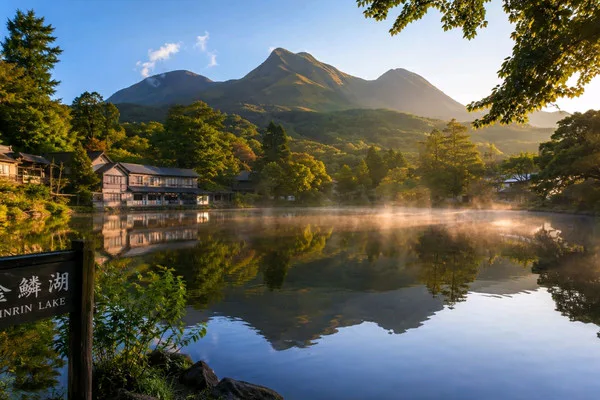
When Fukuoka already has two useful nights, the additional night often belongs in Yufuin. That recommendation depends on what happens after the day visitors leave: a ryokan dinner, time in a bath and a morning that begins in the town. If Yufuin means only Kinrin Lake and the shopping street, a day trip can deliver most of that plan while Fukuoka keeps the luggage and the next departure simple. A third Fukuoka night is valuable for a different reason: no new check-in, one more city evening and a safer start for an early flight or train.
The question is the marginal night, not which destination is better in general. Count what the extra Fukuoka night would add beyond the first two; then count what a Yufuin hotel would allow that a daytime visitor cannot do. A ryokan that is reached too late for dinner or left before breakfast may be an expensive change of bed. Conversely, a carefully timed Yufuin stay can give a different part of Kyushu without taking a second full sightseeing day. The Fukuoka stay-length guide helps establish whether the city has already had enough time before moving a night away.
↔ Scroll table left or right
| Condition for the extra night | Likely better allocation | Reason |
|---|---|---|
| Two Fukuoka nights already, and dinner/bath/morning in a ryokan are desired | Yufuin | The stay adds hours and experiences outside the day-trip window. |
| Yufuin plan is mainly lake, cafés and daytime shops | Fukuoka | Do the town as a day trip without another check-in. |
| Early departure from Hakata or Fukuoka Airport | Fukuoka | Do not put an intercity transfer into the least flexible morning. |
| Next stop is Beppu or Oita | Yufuin | The overnight can progress along the route instead of doubling back. |
| Flight is from Oita Airport and the direct bus fits it | Yufuin | The local airport connection may remove an unnecessary Fukuoka return. |
| Several large bags and an immediate return to the same Fukuoka hotel | Usually Fukuoka | The extra handling needs a strong reason or a confirmed bag solution. |
A Yufuin ryokan night has to earn its evening
For an overnight to beat a day trip, identify at least two meaningful sessions: dinner at the ryokan, an unhurried public or private bath, a walk after the busy shopping hours, or an early start before most day visitors arrive. Continuing toward Beppu or Oita the next day can add a fifth benefit, because the hotel move also advances the route. These are not compulsory attractions to collect. They are a way to notice whether the proposed accommodation is central to the trip or simply a different place to sleep.
Check-in time shapes the value. A half-board meal can have a fixed arrival or dining window, and a property bath may have reserved slots, cleaning breaks or room-specific access. “Private onsen” may describe an in-room bath, a bookable family bath or another arrangement; it is not a uniform room feature. A guest arriving after the last dinner seating and leaving before a slow breakfast has removed much of the reason to pay ryokan rates. Compare the exact property terms in the Yufuin private-onsen room guide before making a city-versus-country price judgment.
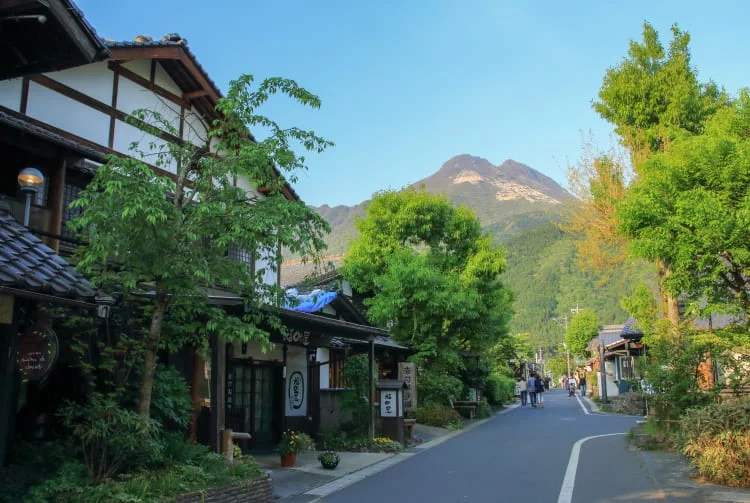
The photograph shows a modest Yufuin street leading toward Mount Yufu, with shops and low buildings rather than a particular ryokan bath. It helps explain the town's walking appeal but does not prove that every accommodation is within easy reach of the station. A property outside the central walking area may require a pickup, a taxi or a longer walk with bags. Read its arrival directions alongside the meal window. Beppu versus Yufuin is a better comparison if the main purpose is bathing and the overnight area is still undecided.
Fukuoka lodging and a Yufuin ryokan also include different things. One price might include dinner and breakfast while the other is room only; a bath that matters to the traveller may be included at the ryokan. That is why a higher Yufuin room rate is not automatically the full premium. Yet included meals are only valuable when they replace meals the party wants to eat. An elaborate dinner for a traveller who prefers eating independently is not a saving. Identify the evening you want before comparing the bill.
The train day begins after the quiet morning has passed
JR Kyushu's 14 March 2026 timetable currently lists Yufuin no Mori 1 leaving Hakata at 09:17 and reaching Yufuin at 11:31. Its other published Hakata departures are 10:11 and 14:38, reaching Yufuin at 12:32 and 16:50 on the shown pattern. A day trip on the first train can include the lake, streets and lunch, but it cannot place you by Kinrin Lake at first light. The timetable alone does not make the overnight superior; it identifies an hour block that only someone already sleeping in or near the town can use.
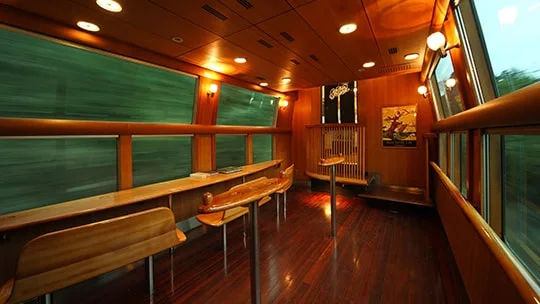
The image shows the wood-lined interior and large windows of a Yufuin no Mori car, not a departure board. Use JR Kyushu's date calendar before assuming a named train runs, and reserve a seat before boarding. The operator has published operating dates into early 2027 and notes that some dates use a regular Yufu limited express at the same times instead. A memorable train ride can be part of either a day trip or an overnight; it is not itself a reason to move the hotel. The Fukuoka–Yufuin transport comparison separates the rail experience from the stay decision.
Yufu tourism describes early-morning mist at Kinrin Lake during cold conditions from autumn into winter. That can be striking, and the hero photograph shows mist lying over water beneath Mount Yufu. It is a weather effect, not something a booking can guarantee. The overnight should still feel worthwhile if the morning is clear. If the only desired photograph depends on fog, make the decision from the reliable dinner, bath, walk and onward route instead. The Kinrin Lake timing guide gives that early start more detail.
Fukuoka buys continuity and a more forgiving departure
A third city night can remove a checkout, luggage movement, intercity ride, new check-in and repacking. That is especially useful on a short trip or when the following morning has a flight, a Shinkansen reservation or another hard connection. Fukuoka may also still have unused value: an evening in Tenjin or a slower meal after two dense days is different from simply adding a hotel night. If the city has only had one useful evening, moving immediately to Yufuin can make Fukuoka feel like an airport staging area rather than a destination.
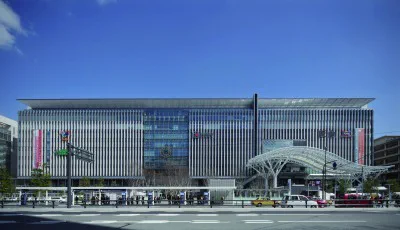
The pictured JR Hakata City frontage is a reminder that an early rail departure is a location problem. A Fukuoka night near Hakata can make a timed train morning simpler; a late-dinner city night may favor Tenjin or Nakasu instead. Hakata versus Tenjin should be resolved after deciding the city keeps the extra night. A late-arrival Fukuoka hotel may also protect the beginning of the itinerary when a rural ryokan arrival would be rushed.
Luggage can determine whether the extra move is reasonable. Two carry-ons are a different undertaking from several large cases, a stroller and shopping bags. If the party will return to the same Fukuoka hotel, ask whether it will hold the main luggage overnight; carry only the Yufuin bag if it agrees. If the next hotel is elsewhere, arrange forwarding only after the receiving property confirms its address, date and acceptance policy. A Yufuin ryokan outside the station area may offer pickup, but confirm its time and booking conditions. Hakata-to-Yufuin luggage choices can rescue a valuable overnight without pretending bags are weightless.
There is a limit to solving the baggage problem. If storage, forwarding and a pickup all remain uncertain while the overnight provides little beyond a bed, keeping Fukuoka is the cleaner route. Likewise, if Yufuin has been chosen for a substantial ryokan evening, the manageable task of carrying one small bag should not cancel it. The calculation should include actual service availability and the number of people handling cases, not a generic rule that all hotel changes are bad. Fukuoka's longer-stay hotel issues matter when this is one night in a longer city block.
Yufuin is connected, but the clock still matters
The overnight is not an isolated detour that requires a car. Kamenoi Bus currently describes the reserved Yufuin–Fukuoka highway route as about two hours twenty minutes between Yufuin Station and Tenjin, normally fourteen return services a day. It also serves Hakata Bus Terminal and Fukuoka Airport International Terminal. That makes a return to Fukuoka possible on many ordinary days, yet road traffic, weather and reservation availability still matter. A domestic-flight passenger arriving at the international terminal has another airport transfer. The existence of a bus does not create a safe connection to an early flight.
Rail gives other return choices. The published Yufuin no Mori pattern has Yufuin departures at 12:01, 15:56 and 17:17, arriving Hakata at 14:19, 18:10 and 19:27. Those times make an afternoon or evening return possible if the named train operates and seats remain. They do not put the traveller at Hakata before a morning commitment. Leave a margin before any separately ticketed connection, and treat a late bus or rail disruption as a possibility rather than a surprise. Train, bus and car trade-offs matter more once the next fixed departure is known.
When Beppu follows, the same hotel move becomes route progression. JR's published Yufuin no Mori 3 passes through Yufuin around 12:32 and reaches Beppu at 13:31 on days it operates. Other trains or buses can serve the corridor; do not assume every Yufuin no Mori service continues east. A Fukuoka → Yufuin night → Beppu/Oita sequence avoids the backtrack of Fukuoka → Yufuin night → the same Fukuoka hotel. The Fukuoka–Hita–Yufuin–Beppu short route illustrates how that night affects a compressed itinerary. A car adds intermediate stops only if those stops are wanted; Fukuoka to Yufuin transport comparison is a separate choice.
An Oita Airport flight changes the final-night answer
Oita Airport publishes a non-stop bus between JR Yufuin Station and the terminal at roughly 55 minutes, with a one-way adult fare of ¥2,000. The airport also warns of road delays. If a particular bus reaches the terminal with enough check-in margin for the chosen flight, Yufuin can be the sensible final night: the ryokan evening and airport positioning reinforce each other. Travelling back to Fukuoka merely because it is the bigger city would add distance. If the airport bus times fail, the overnight must be placed earlier or a different final base used.
Do not reverse that reasoning for a Fukuoka Airport flight. A Yufuin–Fukuoka highway bus serving the international terminal can be useful for a later departure, but a two-hour-plus road journey on flight morning deserves a substantial buffer and a credible fallback. The domestic terminal needs an additional connection. A very early flight generally favors a Fukuoka final night, even for a traveller who enjoys Yufuin; place the ryokan night before it. The early-flight hotel-move principle is similar elsewhere, but the exact Yufuin bus makes this a distinct Kyushu calculation.
Compare the extra cost that remains after the swaps
Start with the full Yufuin stay: the room, included dinner or breakfast, bathing arrangement and changed transport. Subtract the Fukuoka night no longer needed, the meals you would otherwise purchase, and any day-trip return fare avoided. What remains is the incremental cost of placing the night in Yufuin. This avoids comparing a half-board ryokan against a bare Fukuoka business-hotel rate as if they supplied the same things. It also prevents treating a dinner you will miss or a bath no one wants as a financial benefit.
There is no universal yen threshold. A more expensive ryokan might be the main purpose of a couple's trip; another party might value a generous Fukuoka room and a simple luggage plan more. Put the transport into the same calculation: if Yufuin sits between Fukuoka and Beppu, one leg is onward travel; if the party returns to Fukuoka, both legs exist to support that one night. Then price any bag forwarding or hotel pickup that makes the move work. Fukuoka room value is similarly about the whole trip cost, not the smallest nightly number.
For a first Kyushu itinerary with three nights between these places and no awkward airport time, two nights in Fukuoka plus one in Yufuin is a sensible starting allocation. Fukuoka has enough time to function as a city stay, while one ryokan night captures dinner, bathing and a morning. Keep all three in Fukuoka with a Yufuin day trip if the party dislikes moves, has no interest in a ryokan or needs a firm Fukuoka departure. Give Yufuin two nights only when a slower countryside stay or nearby exploration has a second job; a second ryokan night should not be added merely because one sounds short. The wider extra-nights choice may matter before locking Kyushu at all.
The decision made from the next morning backwards
↔ Scroll table left or right
| What follows the spare night | What to protect | Likely choice |
|---|---|---|
| Flexible day in Fukuoka | A ryokan dinner and bath, if wanted, with an afternoon return | Yufuin can work. |
| Early Hakata train or Fukuoka flight | The fixed departure and a margin after waking | Sleep in Fukuoka; place Yufuin earlier. |
| Beppu or Oita sightseeing | Forward motion across Kyushu | Yufuin night grows stronger. |
| Oita Airport flight with a matching bus | Airport check-in and road-delay margin | Yufuin may be the better final night. |
| Return to identical Fukuoka hotel with heavy luggage | Manage bags or avoid an unnecessary move | Fukuoka unless the ryokan is central. |
For a traveller who has already given Fukuoka two evenings and genuinely wants a ryokan dinner, bathing and early walk, Yufuin adds a kind of time the city cannot provide. For someone who only wants daytime Yufuin, or whose next Fukuoka morning is unforgiving, retaining the city room is more useful. Make the booking after checking the train or bus on the exact date, the ryokan meal window and the onward flight or hotel. If the Yufuin night survives those tests, compare Yufuin stays for the travel date; if the city wins, compare Hakata-area rooms for the departure.
Rail, bus and local information
Related guides: Hiroshima vs Fukuoka: Where Should You Spend the Extra 2–3 Nights? · Okinawa Guys’ Trip Hotels: The Best Base Is Where You Can Stop Driving at Night · Early Shinkansen from Osaka: Should You Stay in Shin-Osaka or Move Only for the Last Night? · Fukuoka Long-Stay Hotels: What Starts Annoying You by Night 5—Laundry, Luggage or the Trip Back? · Maidreamin Fukuoka Tenjin: ¥880 Entry vs ¥3,800 HYPER — Check the Night System Before You Go · Early Flight or Late Arrival at KIX: Should You Move Hotels for the Last Night in Osaka? · Fukuoka Budget Hotels: The Cheapest Night Can Cost More Once You Add Transfers, Tiny Rooms and Unused Perks · Sapporo or Niseko? Where Should You Spend More Nights? · Fukuoka Late-Arrival Hotels: Make the First Night Easy Before You Chase Tenjin
Fukuoka Hotels for Couples: Decide Where Your Night Goes Before Paying for Views or a Luxury Room
Sapporo Shopping Hotels: Stay Where You Can Drop Your Bags, Not Just Where the Shops Are
mipig cafe Fukuoka: Check Your Last 48 Hours Before You Book the 55-Minute Session
Dazaifu vs Itoshima: Which Fukuoka Day Trip Should You Choose?
Hakone Open-Air Museum 2026: 4:30 Is Last Entry, Not the Time You Should Arrive
Yufuin ryokan with private onsen guide · Beppu vs Yufuin · Hakata or Tenjin · Hakata-to-Yufuin luggage guide · JR Kyushu — Yufuin no Mori timetable effective March 14, 2026 · Kamenoi Bus — Yufuin–Fukuoka highway bus · YUFUINFO — Kinrin Lake · Oita Airport — Yufuin limousine bus