

A Beppu hotel and a Yufuin ryokan buy quite different hours, even when both are sold as an onsen stay. Beppu is more forgiving after a late train or a change of dinner plan: you can use a station-side hotel, look for food in town, and decide how many baths or sightseeing stops fit the next day. Yufuin works best when the property has a dinner, bath and breakfast routine that you have enough time to enjoy. A beautiful room reached after its meal service is a costly way to sleep.
For a single night with an uncertain arrival, Beppu is generally the sounder base. If the private bath and half-board ryokan evening are central to the Kyushu trip, protect an early arrival and take Yufuin instead. With two nights, one in each town can be excellent, but only if the hotel change buys a distinct evening and morning. The order must follow your arrival route and the next departure, rather than a rule that Yufuin always comes first. The five- or seven-day Kyushu route helps place this choice among the longer regional transfers.
What the night needs to do
| Trip constraint | More useful first choice | Reason and condition |
|---|---|---|
| One night, no particular ryokan booked | Beppu | Arrival, dinner and departure can be adjusted more readily |
| One night centred on an in-room bath and half-board dinner | Yufuin | Arrive with enough margin for the meal and any pickup window |
| Large suitcases or limited mobility | Beppu Station first | A short hotel walk may remove an extra taxi, though property addresses matter |
| Family needing flexible meals or a wet-weather day | Beppu property matched to the family | Check real occupancy, internal distances and facility hours |
| Two nights, both towns wanted | One night each only when their jobs differ | Make the ryokan evening and Beppu activity day worth a second check-in |
| Oita Airport departure | Either town can work | Direct buses serve both station areas; compare actual flight-day departures |
| Highway bus back to Fukuoka | Consider Yufuin last | The direct Yufuin–Fukuoka bus can remove a return through Beppu |
The central question is which booked night is least able to absorb a delay. A half-board ryokan may impose a latest dinner or check-in time; a reservable bath or pickup can have its own window. A Beppu room-only hotel near the station may still be useful after those hours pass. Do not assume every property follows the same rules. The actual rate plan, the last-mile transfer and the party's needs can reverse the town-level answer. Fukuoka versus Yufuin for an extra night is a separate question if Oita is only an optional detour.
When you have only one Oita night
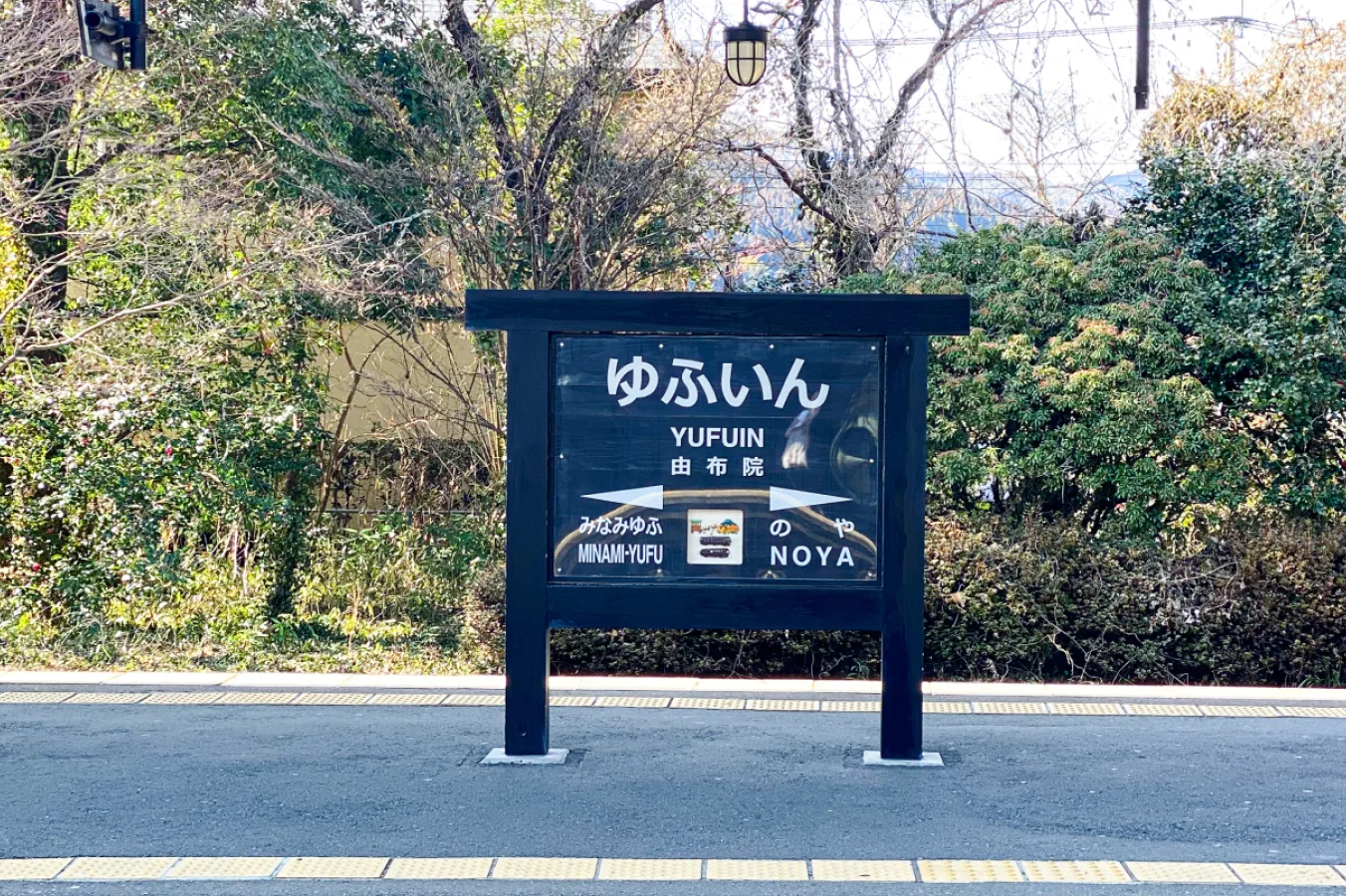
Beppu is easier if the train or flight lands late, several suitcases must reach the room, dinner should be spontaneous, or the next morning has an early departure. A station-area booking can keep the arrival to a short walk and leave the following day open for town sights or a bath. This does not make every Beppu address simple: a resort high on the hillside or a Kannawa onsen property adds a bus, taxi or shuttle to the station journey. The different Beppu bathing options can also determine which district is useful.
Yufuin becomes the stronger one-night answer when the lodging is a principal experience. A room with a genuinely private hot-spring bath, a dinner you want, a slow breakfast and a quiet morning can justify spending the night rather than treating the town as an afternoon stop. Reach the ryokan early enough to use those paid hours. A couple celebrating an occasion may reasonably devote much of a day to the property, while the same room can feel poor value to travellers arriving after dinner and leaving at dawn. Compare Yufuin ryokan bath types before selecting a room category.
Do not equate a picturesque town with a trouble-free arrival. Yufuin's central streets are walkable without luggage, but some ryokan sit beyond a comfortable suitcase walk from the station. Find out whether the property collects guests, whether that pickup needs a booking, its final run and the taxi option if a train is delayed. The same questions apply on checkout. If the promised stay hinges on dinner, leave more arrival buffer than you would for a Beppu room-only hotel.
Two nights: the outbound leg can determine the order
A Yufuin-then-Beppu pair suits a traveller arriving from Fukuoka in time for an unrushed ryokan check-in. The first evening can be devoted to the room, meal and bath; the following morning leads to a Beppu afternoon and a flexible second night. That second night may make sense before Oita Airport, but airport geography alone does not require this order. The Fukuoka–Hita–Yufuin–Beppu route shows how a stop at Hita changes the first-day arrival buffer.
Reverse the sequence if Beppu sightseeing belongs on Day 1 and a Yufuin ryokan finale fits the return. As of 24 October 2026, Kamenoi Bus lists a reservable Yufuin–Fukuoka highway bus with 14 normal daily round trips and an approximate 2-hour-20-minute ride from Yufuin Bus Center to Tenjin. Its Beppu–Fukuoka service is listed at 12 normal round trips and about 2 hours 50 minutes from Beppu Kitahama to Hakata Bus Terminal. The older page said 10 Beppu round trips; the current operator page says 12. Route availability still depends on the date and the departure you can actually catch. Ending at Yufuin can avoid backtracking through Beppu when Fukuoka is next. Compare the Fukuoka–Yufuin rail, bus and car legs before building that return.
A split is weak when both rooms are just beds and the mid-trip transfer eats the most useful daylight. Two Beppu nights with a Yufuin day trip keep one room, one unpacking and a more flexible response to bad weather. The price is the Yufuin evening and early morning: if those hours are the reason you wanted a ryokan, a day trip cannot replace them. For a different onsen-town comparison, Ueda and Bessho Onsen presents another case where a second check-in needs to earn its place.
Flying through Oita: compare the buses, then the hotel
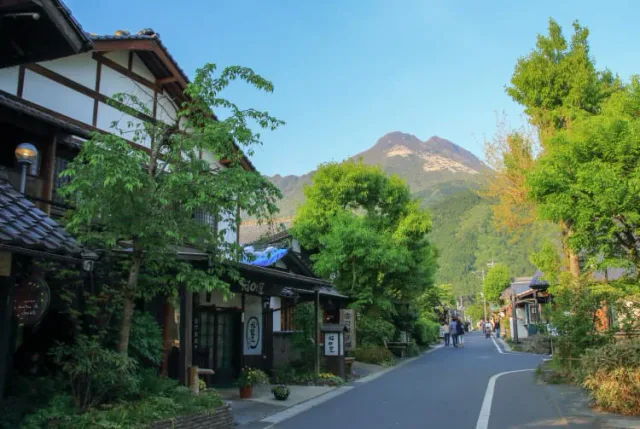
The airport's published route information currently puts JR Beppu Station about 53 minutes away by direct bus and JR Yufuin Station about 55 minutes away. That two-minute headline difference does not prove either town is the better final night. The number and timing of departures, the distance between bus stop and hotel, road conditions and the flight's check-in window matter more. Both connections are direct; an awkward Yufuin departure can still make Beppu the practical choice on a particular date. An early flight is especially sensitive to the first usable bus.
Check the airport-bound journey, not only an arrival example. The airport warns that road congestion can delay airport-bound buses, and bus departure times from the airport may respond to incoming flight arrivals. Give the flight a margin and inspect the current operator timetable before booking a non-refundable room. A remote ryokan whose checkout shuttle misses the bus is not equivalent to a hotel beside JR Yufuin Station. Conversely, a Yufuin station-area hotel with a suitable direct airport bus need not send you back through Beppu. Luggage forwarding between Hakata and the Oita towns may make either final night easier if the hotel accepts delivery.
Between Beppu and Yufuin, the named train is only one option
The towns look close, but a regular rail trip goes by Oita rather than running as a simple direct local service. The Japan tourism access guidance puts the Beppu–Yufuin train journey via Oita at around one hour fifteen minutes and bus travel around fifty minutes. Those are planning estimates, not a reason to build a hotel change around an arbitrary departure. Kamenoi's local route timetable supplies the current road services. The Beppu Hells route helps decide how much Beppu time to keep before crossing.
JR Kyushu's timetable dated 14 March 2026 lists three Yufuin no Mori trains each way, but only the 3/4 pair extends between Yufuin and Beppu; the 1/2 and 5/6 pairs are Hakata–Yufuin services. The 22 October operating calendar update also distinguishes days on which the branded train runs from days a Yufu service runs at the same time. A Yufuin no Mori seat therefore should not be assumed for any convenient Beppu–Yufuin hour. Its seats are reserved and the route may require another service for your date. Pick the overnight order for the lodging and departure, then choose a suitable bus or train, rather than moving hotels to force a particular sightseeing train. The Fukuoka–Aso stay decision applies the same route-first check to a longer Kyushu move.
Beppu is four different last-mile decisions
| Area | Useful when | Trade-off to test |
|---|---|---|
| Beppu Station | Rail arrival, larger luggage, an early onward train or flexible meals | Less of the steam-street atmosphere associated with Kannawa |
| Kitahama and central Beppu | Restaurants, buses and a city evening | Exact hotel-to-station and bus-stop walks vary |
| Kannawa | The Hells, visible steam and an onsen-district night | Road transfer from the rail station with bags |
| Kankaiji and hillside resorts | Staying inside a resort with baths and family facilities | Shuttle times and walks inside a large property |
Station convenience is a property-level claim, not a Beppu-wide feature. A Kannawa lodging can be the best choice for a traveller spending the next morning among the Hells, while it adds an arrival transfer that a station hotel avoids. A hillside resort can shelter a family from rain but also require timed transport and long internal walks. Compare the actual front door, the onward stop and the facilities available during the hours you will be there. Nikko versus Kinugawa offers a useful parallel: a spa setting and a transport base solve different days.
Yufuin's temporary station and the ryokan pickup
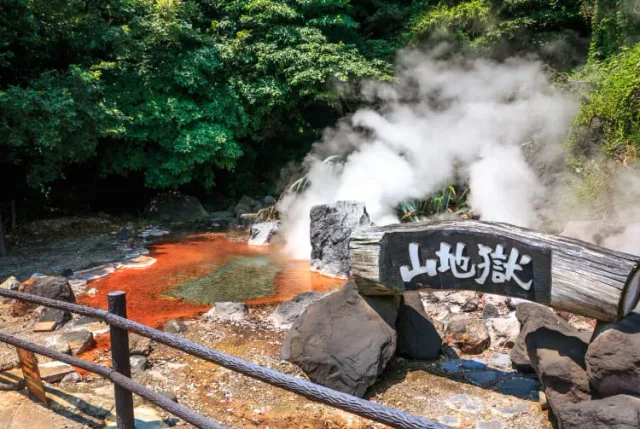
YUFUINFO says JR Yufuin Station is operating from a temporary building during renovations scheduled until around winter 2026. The existing station building is closed while work continues; the art hall and platform footbath are unavailable. The Midori-no-Madoguchi counter is listed at 07:00–18:00. The resort town remains accessible, but older descriptions of the station's waiting room or footbath do not describe the current arrival. A station photograph in this article shows the Yufuin sign, not a guarantee about today's passenger facilities.
For a ryokan beyond the central streets, record the pickup meeting point under the temporary arrangement, the latest collection time and a fallback taxi. Confirm whether the hotel accepts a forwarded case and when it will be available in the room. Some properties have dinner service that starts before a late train arrival, and some baths operate by reservation slots. Ask about both with the exact room and meal plan rather than treating “Yufuin onsen” as one standard service. A Hita-to-Yufuin day needs extra care with those pickup and meal windows.
Suitcases, children and bath promises change the answer
Count luggage transfers twice, once when arriving and again when departing. A Beppu Station room may be train to pavement to hotel. Kannawa can insert a bus or taxi, and a Yufuin ryokan can add a pickup on each side of the night. If you move between both towns, a small overnight bag and confirmed forwarding can preserve the sightseeing hours, but the receiving hotel must accept the item and the delivery cutoff must work. The general luggage-forwarding guide explains when sending, storing or carrying is safer. A party with a stroller or an older traveller may care more about these hand-offs than a small difference in road travel time.
Beppu's larger hotels may provide multi-person rooms, flexible food and indoor facilities, yet a building called a resort is not automatically suitable for a family. Check the occupancy sold for your children's ages, bed setup, bath rules and the distance between room, restaurant and pool or bath. In Yufuin, examine child acceptance, child meals, bedding, stairs and water temperature. A room photograph cannot establish that four guests are allowed under the rate. The one-room-versus-two-room question is similarly a booking rule rather than a photograph question.
“Private onsen” can name an in-room bath, a reservable family bath, an unreserved bath used privately when vacant, or a timed paid facility. Ask which category the booked room actually includes, whether the water is from the hot spring, whether the use is guaranteed and whether it costs extra. Privacy can help a tattooed traveller, but it says nothing on its own about entry to the public bath; ask the hotel about that separately. The private-bath ryokan comparison is the next step if this feature is driving the overnight choice.
Rain and itinerary changes test the value of the room
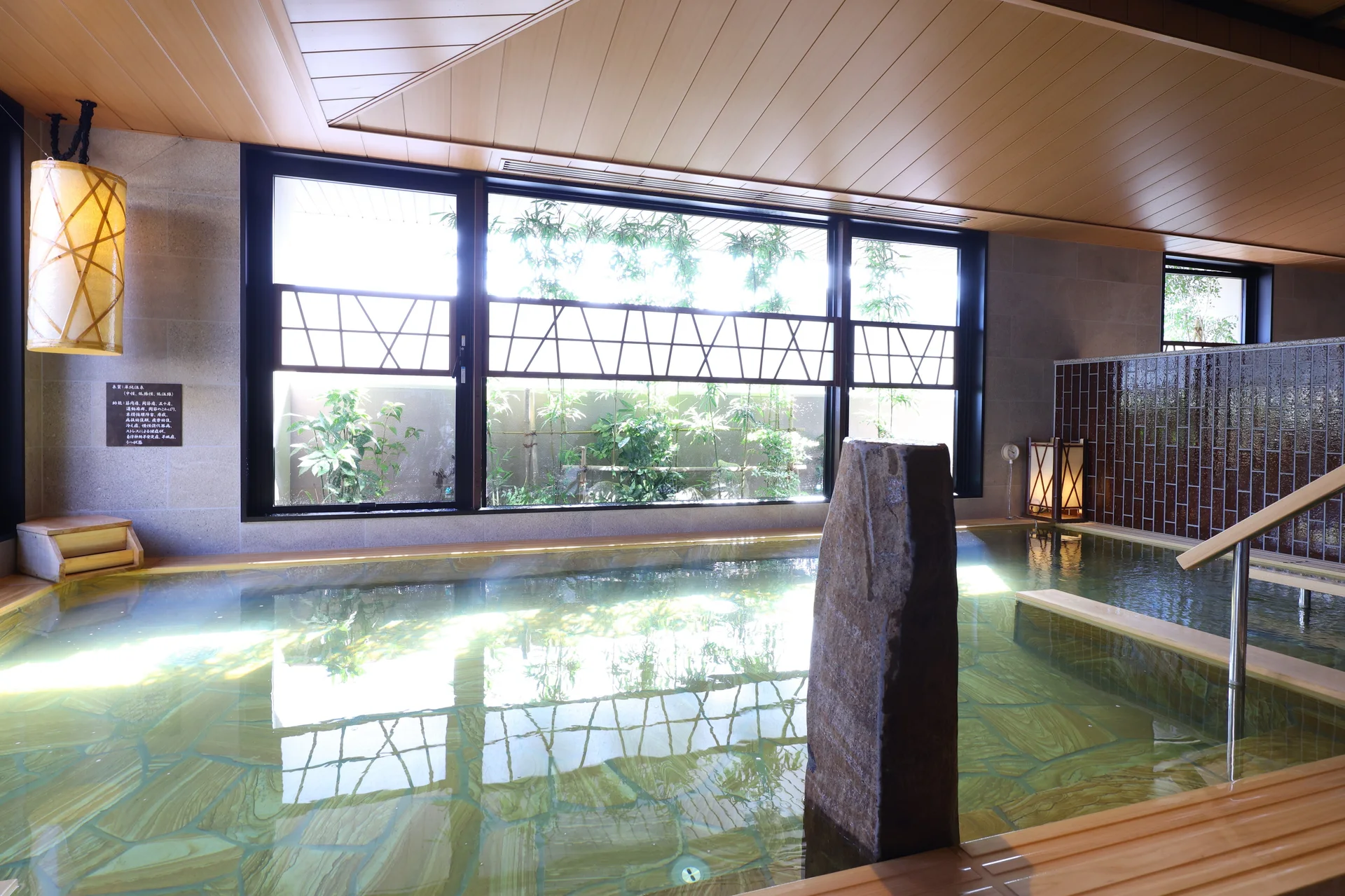
A rainy Yufuin day reduces the pleasure of long outdoor walks, but a room chosen for its bath, dinner and quiet time can still carry the evening. A room chosen only as a place to sleep offers less compensation. In Beppu, a property with several usable indoor facilities can rescue a wet day; a Hells itinerary still has outdoor stretches. Before paying a view or ryokan premium, picture four extra hours indoors and decide whether the particular booking becomes more useful. That is a better weather test than saying one town is always better in rain.
The same test applies to a changed connection. A delayed train may leave a Beppu guest able to buy dinner independently, while a Yufuin guest could lose the meal included in the rate. On the other hand, an early arrival and a deliberately slow morning can make Yufuin's fixed rhythm the point of the stay. If your party needs a single stable base, two Beppu nights and a Yufuin visit by day eliminate checkout friction. If you want the ryokan's evening as a distinct event, make the transfer and arrival buffer part of the plan rather than an afterthought.
Three routes that lead to different hotel orders
Fukuoka → Yufuin → Beppu → Oita Airport: Start with the ryokan only if the inbound leg gets you there in time for dinner and any pickup. Use the next day for Beppu, then a second night that can accommodate more flexible sightseeing. The airport bus from Beppu may align well with the flight, but compare Yufuin's direct service before claiming that airport access dictates the sequence. The three-day route with Hita gives this chain more specific stops.
Fukuoka → Beppu → Yufuin → Fukuoka: Spend the first day on Beppu sights or baths, reach Yufuin with enough time for the room experience, and return from Yufuin Bus Center on a direct reservable highway bus. This order fits a ryokan finale, provided the bus departure after checkout and any hotel shuttle connect. The Fukuoka–Yufuin transport comparison lets you test whether a train or car is more useful on the approach.
Two Beppu nights, Yufuin by day: Keep one room when luggage, children, weather flexibility or budget outranks a second onsen evening. Take the daytime Yufuin visit without a hotel transfer. This does not deliver a Yufuin dinner, private bath and early morning; acknowledge that loss when comparing costs. If the wider Kyushu journey includes another onsen stop, the regional itinerary may make that second overnight elsewhere more valuable.
When comparing rates, use the room's exact meal and bath entitlement, the arrival you can actually achieve, the cost of the last mile and the departure after checkout. View accommodation in Beppu and Yufuin for your dates with those constraints in mind. One night usually favours Beppu when the schedule is uncertain; Yufuin earns it when the booked ryokan hours are genuinely protected. Two nights can justify a split when each town offers something the other night cannot, and the route supports the extra check-in.
Route and station timetables
Oita Airport — current airport bus routes and published journey times · Kamenoi Bus — current Fukuoka highway-bus services · Kamenoi Bus — Beppu/Yufuin route-bus timetables · JR Kyushu — Yufuin no Mori 2026 timetable · YUFUINFO — Yufuin Station renovation notice · JNTO — Yufuin access overview
Other base comparisons
Shinjuku vs Shibuya: Where Should You Stay in Tokyo? · Happo vs Echoland: Where Should You Stay in Hakuba for Skiing? · Furano vs Biei: Where Should You Stay Overnight? · Sapporo Snow Festival: Odori vs Susukino — Where Should You Stay? · Kyoto Station vs Gion: Where Should You Stay in Kyoto? · Sapporo or Niseko? Where Should You Spend More Nights? · Where to Stay in Osaka With Parents: Cut Transfers Before You Pay for More Luxury · Furano Zone vs Kitanomine: Where Should Skiers Stay? · Namba vs Umeda: Which Osaka Area Should You Stay In? · Kyoto vs Osaka: Where Should First-Time Visitors Stay? · Early Shinkansen from Osaka: Should You Stay in Shin-Osaka or Move Only for the Last Night?