
The most expensive mistake in this Furano hotel comparison is to book a room near JR Furano Station and then price it as if the ski lifts were outside the door. Nozo Hotel sits in Kitanomine, around 200 metres from that zone's slopes. La Vista Furano Hills is about a three-minute walk from Furano Station. Those positions solve different problems. Nozo reduces the repeated morning trip with boots and equipment when Kitanomine is operating. La Vista makes rail arrival, dinner in town and an early departure easier, and its rooftop bathing area is a more substantial hot-spring proposition. Neither position automatically wins for a December trip, a mixed skiing group or a family with four people in one room. The date, room category and number of ski mornings decide the purchase.
JapanLayer hotel assessment by dimension
↔ Scroll table left or right
| Hotel | Access | Space | Comfort | Cleanliness | Neighbourhood | Service | Value |
|---|---|---|---|---|---|---|---|
| Nozo Hotel | 8.1/10 | 4.7/10 | 8.4/10 | 9.1/10 | 8.3/10 | 8.2/10 | Insufficient evidence |
| La Vista Furano Hills | 8.8/10 | 7.8/10 | 8.4/10 | 7.7/10 | 8.5/10 | 8.3/10 | Insufficient evidence |
Match the hotel to the repeated journey
↔ Scroll table left or right
| Booking question | Nozo Hotel | La Vista Furano Hills |
|---|---|---|
| Hotel position | Kitanomine, about 200m from slope | About three minutes on foot from JR Furano Station |
| Two-adult twin example | 19 m² Superior Twin or 28 m² Deluxe Twin | About 24–26 m² Superior Twin |
| Bath after skiing | Sugi Spa and sauna | Ninth-floor natural hot spring; private-bath options |
| Morning friction | Walk to Kitanomine when that zone operates | Bus, taxi or car to the ski base |
| Storage | Dedicated ski lockers and heated boot racks | Confirm gear storage on the booked plan |
Swipe to compare the hotels
This article assumes you have already chosen Furano rather than Niseko or Rusutsu. If you have not, the Niseko, Furano and Rusutsu ski-base comparison should come first. A resort can fit the group badly even when its hotel looks attractive. The Furano Zone versus Kitanomine stay guide explains the two lift bases; this page goes further into the choice between a hotel by the Kitanomine side and one in the rail-station part of town. If your visit is mainly summer sightseeing, the Furano Station, Nakafurano, Asahikawa and Sapporo base comparison is the better starting point.
First establish which lift base is actually useful on your dates
Furano Ski Resort is not a single front door. Its Furano and Kitanomine zones are connected within the ski area when relevant lifts and trails operate, but they have different road approaches. A hotel near the Kitanomine base does not put you at the Furano Zone entrance by walking a little farther along the same street. The Furano three- or four-night ski itinerary helps count which mornings you will actually use the slopes. Check the operating map for the week you will travel, particularly early and late in the season, before treating proximity to Kitanomine as a fixed benefit. The scheduled season opening for the resort as a whole does not guarantee that every Kitanomine lift opens on that day.
Nozo's strongest physical advantage is its Kitanomine address. Its ski-locker page puts the slope around 200 metres away and describes heated boot storage and a dedicated gear area. That is meaningful for guests who start at Kitanomine on consecutive mornings. You still need to check the precise walking route with boots, whether the relevant lift is running, and whether every member of the group can ski back to that side. “Near the slope” does not establish ski-in/ski-out access from the locker room, nor does it guarantee a beginner-friendly return at the end of a particular day. The ski-in/ski-out hotel checklist offers questions that also apply here: where is the equipment exit, is a road crossing involved, and which run brings a novice back?
La Vista is a town hotel near the railway station. From there, the Kitanomine base is a separate bus, taxi or car leg. The Furano tourism association describes the station-to-Kitanomine journey as roughly ten minutes by road or bus, but a traveller's door-to-lift time also includes waiting, loading skis and walking from the stop. A morning shuttle is not a permanent amenity that can be assumed across the whole season. For example, Furano's town morning ski-shuttle service ended at the end of March in the previous season, while the remaining regular bus did not support the same early start. Check the timetable for your own winter dates. If you plan to ski four mornings and return for a midday break, that repeated transfer is a larger cost than it appears on a single map screenshot.
The comparison changes if the Kitanomine side is not yet open. Nozo has announced guest shuttle arrangements to the Furano Zone for periods before Kitanomine opens, but a notice for an earlier season is not a promise for the next one. If your dates fall in that gap, request the current schedule and identify the first possible lift time. La Vista also requires transport, but its rail-station location can be simpler for an arrival evening or a non-skiing day. For an early-December booking, compare two actual daily routes rather than assuming that the word “Kitanomine” delivers the same ski morning in every week of winter.
Room categories can reverse the conclusion for two or four guests
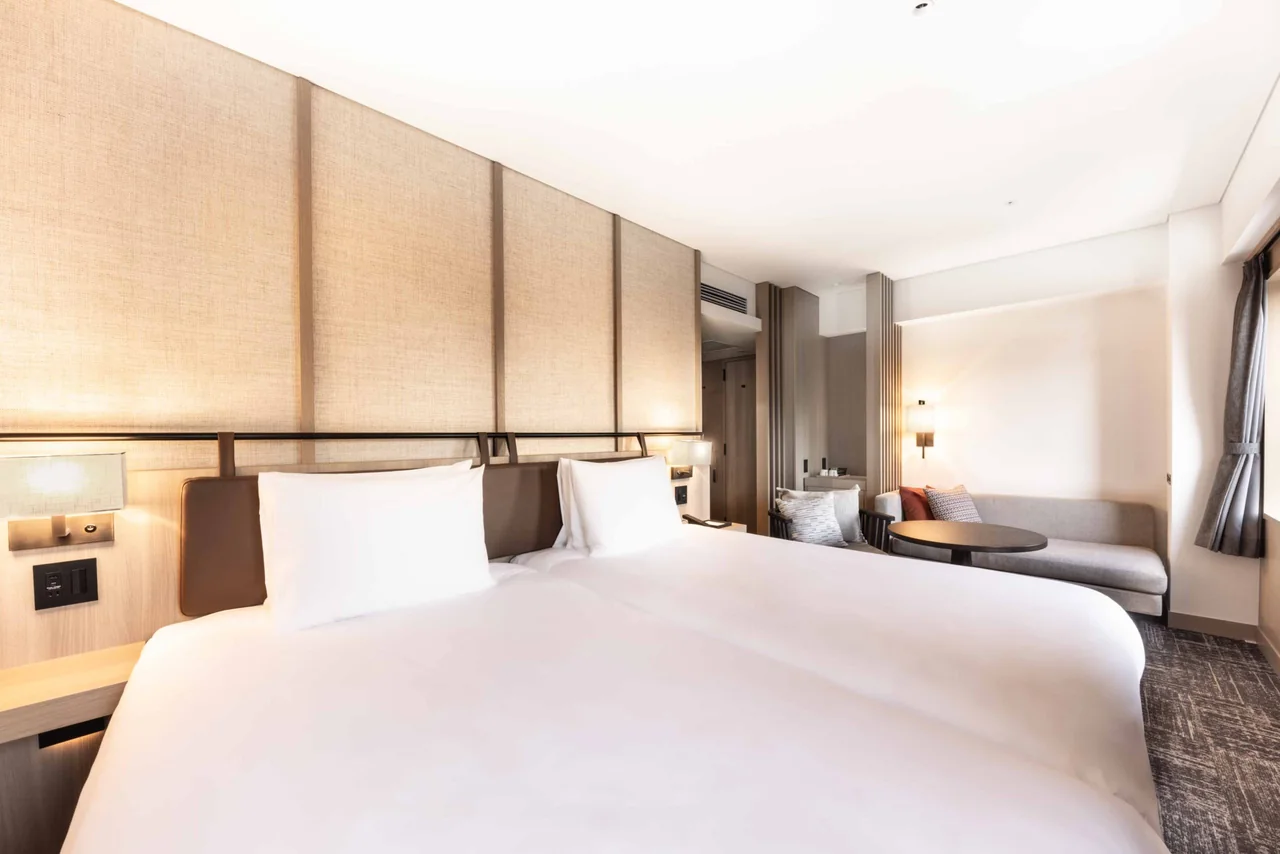
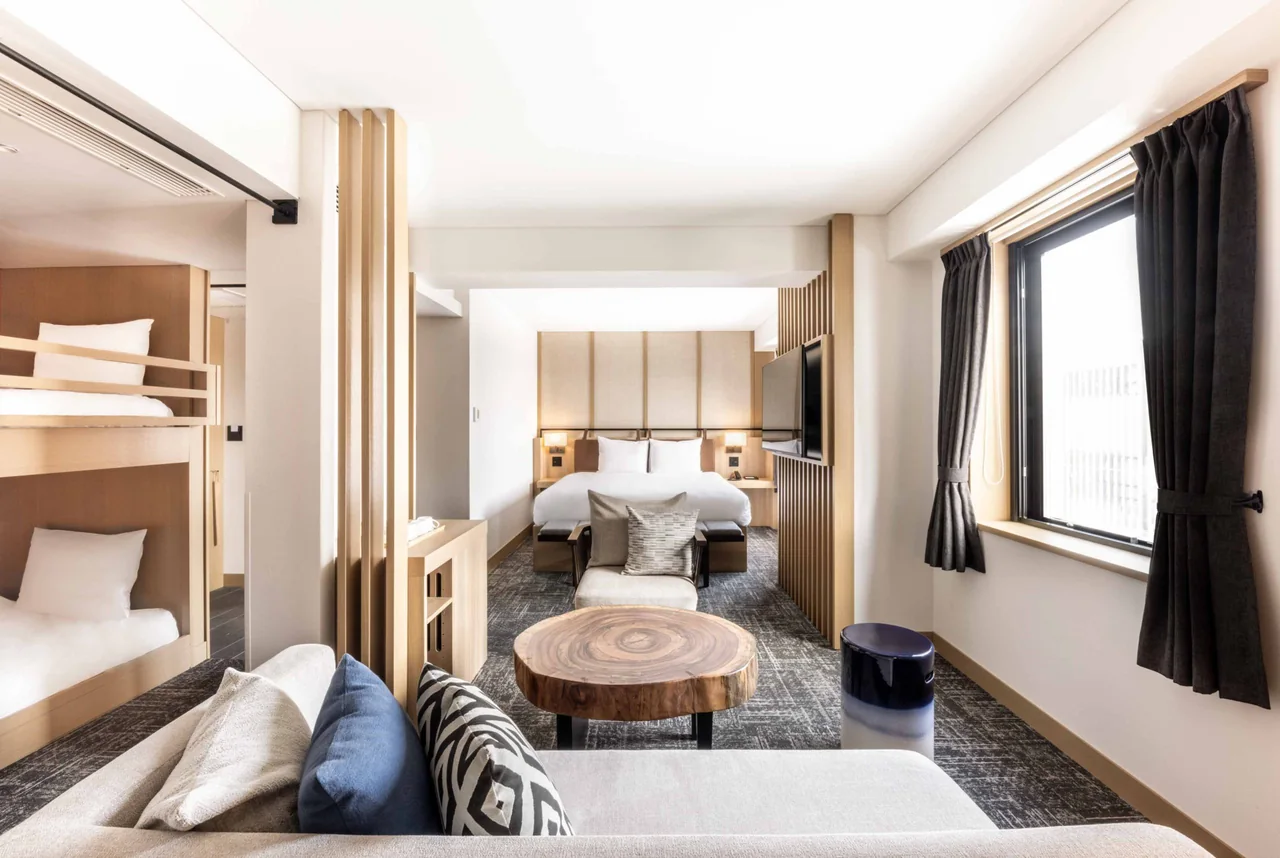
Nozo lists eight categories, and the useful difference is not only the advertised maximum occupancy. Its Superior Queen is 16 square metres with one queen bed and a shower. The Superior Twin is 19 square metres with two beds. A Deluxe Twin is 28 square metres. The 40-square-metre Family Room with Bunk Bed takes up to four guests with one king bed and a bunk bed, while the Junior Suite is 49 square metres and has two bathrooms, one with a bathtub. These are not interchangeable offers. Two adults carrying large equipment bags should not price the smallest queen against La Vista's larger twin and conclude that the hotels offer the same amount of living space. A family should inspect the bunk configuration rather than treating “four people” as four standard beds.
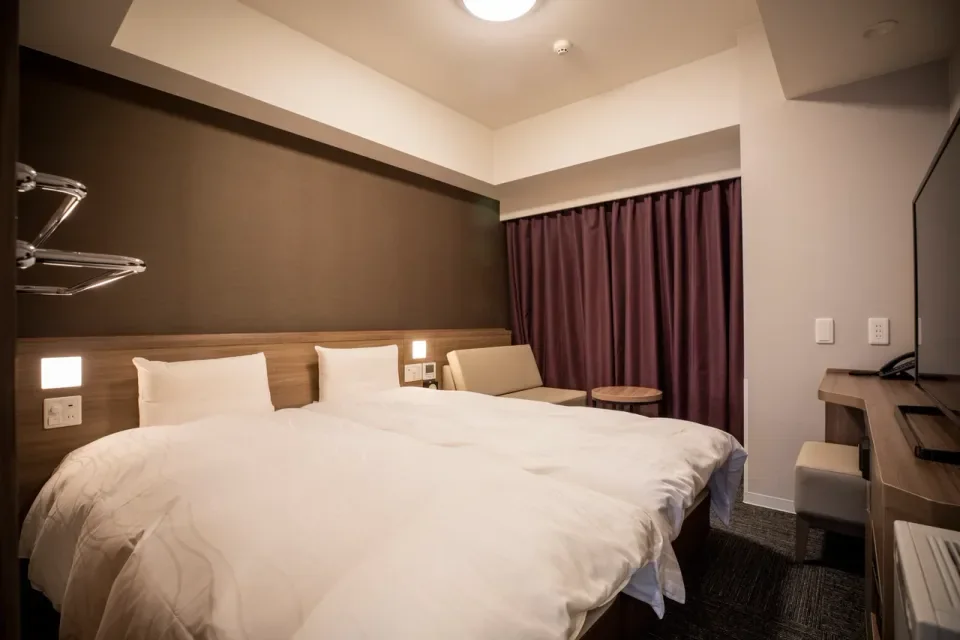
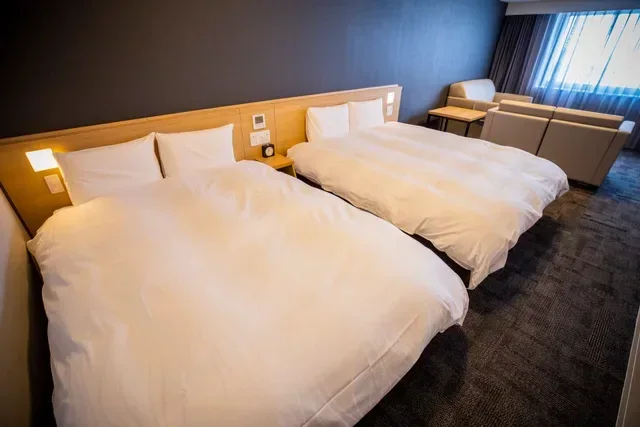
La Vista lists queen rooms around 18–18.6 square metres, Hollywood twins around the same size, superior twins around 24.1–25.8 square metres, and deluxe twins and four-person rooms at about 36.6 square metres. This gives several ways to trade room size against the station-side location. It also means that a four-person La Vista quote should be compared with Nozo's actual Family Room with Bunk Bed, not with a standard twin plus an unsupported assumption about an extra bed. Ask where each person sleeps, whether four large bags can be stored without blocking the entry, and which bathroom arrangements the booked category includes. If the group needs two private showers before lessons, Nozo's suite may solve a different problem from either hotel's standard family room.
For a couple, write down the exact room category beside each quote. A Nozo Superior Twin can be attractive when most daylight hours are spent on the slope and the Kitanomine walk is repeated. A La Vista superior twin can earn its floor-area premium when one person is working in the room, the couple has two suitcases and ski bags, or a non-skier will spend several hours inside. A 16-square-metre room with a good-looking photograph may feel very different once winter coats, wet gloves and two open cases are included. The Furano versus Biei overnight decision addresses a broader base choice, but it cannot replace reading the room plan on the actual rate you intend to buy.
La Vista's private baths should not be used as a substitute for a larger room. A private-bath slot is a separate shared facility with its own availability, and it does not create private space to dry clothing, sort equipment or put a child to bed. Nozo's ski locker likewise is not an extension of your bedroom: it solves equipment storage, while the room still has to work for sleeping and luggage. Keep those functions separate when comparing a small room with richer common facilities against a larger room with fewer hotel amenities.
A ski locker, a bath and a railway station each save different time
Nozo's locker setup is one of the few hotel amenities that a skier can use twice every ski day. The hotel describes dedicated lockers, heated shoe racks, board storage and a gear-return arrangement with a rental partner. That can simplify mornings if your lessons, rental collection and first lift are on the Kitanomine side. Confirm how a late arrival collects rental gear and whether your chosen rental shop uses that hotel return process. If the group is renting elsewhere or starting each day at the Furano Zone, the locker is still useful, but less decisive. The Furano equipment and ski-day planning guide helps connect the lift base with where equipment changes hands.
La Vista's ninth-floor natural hot-spring bath is a different nightly routine. The hotel lists indoor and outdoor baths and three private-bath rooms; its published information shows a long bathing window from the afternoon into the next morning. This makes the station-side hotel appealing if the group will return to town for dinner and wants a defined bath after skiing, or if one member is not skiing. Nozo has Sugi Spa with separate bathing and saunas, with published morning and afternoon/evening sessions. It should not be described as identical to La Vista's rooftop natural-source bath. A traveller choosing primarily for the bath should compare the bathing facilities as deliberately as the beds. The La Vista Furano Hills one-night guide focuses on that hotel by itself.
The railway station is the third time-saving feature, and only La Vista can deliver it. If you arrive by JR in the evening, have dinner near the station and leave for Asahikawa or Sapporo the next morning, a short walk to the hotel avoids a second transfer with luggage. That advantage matters far more on a one-night stop than a four-night ski stay. If you are connecting from New Chitose, use the Hokkaido winter itinerary for five, seven or ten days to distinguish an arrival day from a ski day. Counting the airport-to-Furano transfer as a full day on snow is a planning error that no hotel can repair.
Nozo's published access information says the hotel has 20 first-come, first-served parking spaces, with overflow at the Kitanomine resort if full. La Vista describes multiple free parking areas, including overflow locations that may require a shuttle from the more distant lots. A driver should compare the actual overnight parking arrangement, not simply check whether “parking available” appears in both amenity lists. If you are deciding when to collect a rental car, the New Chitose rental car now-or-later comparison is relevant; paying for a car that sits through rail-friendly town days can outweigh a modest hotel-room saving. The Hokkaido full-versus-partial winter rental guide also places this choice in the whole trip.
The breakfast quote needs a departure time beside it
Do not compare a room-only Nozo offer with a breakfast-included La Vista package and call the difference a hotel premium. Nozo's restaurant states that breakfast may be a buffet or a set menu depending on the season; the displayed autumn hours are not a winter guarantee. La Vista's hotel information lists a breakfast service with local dishes and a morning window. The appropriate question is whether your paid breakfast fits your first lift or train, and whether a child or extra adult is actually included in the plan. A group that eats after reaching the slope has a different cost pattern from a group that wants a full seated breakfast before leaving the hotel.
Dinner also needs a specific plan. Nozo has dining facilities, but its operating schedule changes by season; the currently displayed autumn schedule shows dinner closed even though the hotel describes dinner in other periods. Do not buy a room in Kitanomine on an assumption that a restaurant will be open on your arrival night. Check the date-specific meal plan and nearby alternatives. La Vista is close to station-area restaurants and also describes on-site dinner, yet that does not mean every room rate includes it. If your flight arrival makes dinner late, reserve a realistic fallback rather than building the evening around an unverified restaurant closing time. The Niseko ski food guide deals with a different resort, but its useful lesson applies in Furano too: food hours and the return route belong in the hotel decision.
An early lesson start can make breakfast packaging especially costly. Suppose the group must collect equipment at 08:00 and the hotel's meal service starts at 07:00. A slow breakfast and a ten-minute transfer can consume the buffer for the lesson, particularly with children. At Nozo, you may save the town-to-base travel time but still need to get from breakfast to the locker, gear collection and lesson meeting point. At La Vista, the buffet can be excellent value on a later non-ski day and poor value on a morning when everyone leaves before enjoying it. The ski trip cost and booking timeline is useful for building a full total, even though the resort prices themselves differ from Furano's.
↔ Scroll table left or right
| Booking line | Nozo in Kitanomine | La Vista near Furano Station | Question before paying |
|---|---|---|---|
| Room | Compare the chosen queen, twin, family room or suite | Compare the chosen queen, twin, superior twin or four-person room | Do beds and bathrooms match the actual group? |
| Breakfast | Confirm format and winter service time on the chosen date | Confirm included guests and first service time | Can everyone finish before transport or lessons? |
| Ski morning | Walk to the Kitanomine side when it operates | Budget a separate transfer to the ski base | How many mornings will this repeat? |
| Last night | Check the transfer back to the rail station | Walk to JR Furano Station | Is departure early or luggage-heavy? |
| Bath | Sugi Spa and sauna | Ninth-floor natural hot spring and private-bath options | Which bathing routine will be used? |
One night, three nights and a mixed group lead to different answers
For one night between trains, La Vista is usually the cleaner choice. The station walk works on arrival and departure, and a bath is useful even if a single ski day does not justify moving all luggage to Kitanomine. That conclusion changes if the sole purpose of the night is an early Kitanomine start and the lifts are operating. In that case Nozo can remove a morning transfer, while La Vista would require a bus or taxi before the first run. If the train is already booked for early the next morning, the station-side benefit returns. Keep the entire twenty-four-hour sequence visible instead of comparing hotel pins in isolation.
For three or four ski nights, Nozo becomes more persuasive. Repeated Kitanomine mornings and equipment storage can save practical effort that a one-night comparison misses. Yet if the group skis Furano Zone most days, expects nightly dinners in the station area, or has a non-skier planning train-based outings, Nozo's slope proximity may not be the shared benefit you think it is. A mixed group should count who actually uses each advantage. Paying a premium for three skiers' walk to the lift may be rational even if one person takes the bus into town; paying it for one skier while three others repeatedly need town transport may not be. The ski from Sapporo or stay at a resort guide offers a broader way to count repeated transfers.
For a family, start with beds, not the hotel brand. Nozo's bunk-bed family category has a clearly different sleeping pattern from La Vista's four-person room. A child who is excited by a bunk may make one plan easy; a teenager or two unrelated adults may need something else. Then ask where damp gloves and base layers will dry, whether the family will use the bath together or separately, and who carries equipment to the slope. La Vista's private baths may help a family that wants a separate bathing space, subject to availability. Nozo's children's room and locker facilities may fit a family skiing several days. Neither is a universal “family winner.” The Hokkaido family road-trip hotel-base guide is useful when Furano is only one stop in a longer trip.
Weather can also change the value of a location. When a lift closes for wind or visibility, being able to walk to that lift is less useful; access to town meals, rail or alternative activities may matter more. But the reverse can happen after a heavy snowfall when a bus transfer with equipment feels much harder than a short local walk. Do not pretend to know the weather at booking time. Use a cancellable rate if the room-price difference justifies that flexibility, and compare cancellation deadlines in local time. The Hokkaido winter driving guide is essential if the plan relies on a car, especially if you would otherwise treat the ten-minute town-to-slope distance as trivial.
Make the room-rate comparison on the same trip, not the same calendar square
Take two live quotes for your exact dates and group, then write a two-column total. Include room category, tax, included breakfasts, cancellation rights and any required extra bed. Add the number of town-to-slope transfers that La Vista requires, or the number of Kitanomine-to-town dinner trips that Nozo requires. Add parking or taxi costs only if your route actually needs them. A cheap room can cease to be cheap after three evenings of extra transport; a costly slope-side room can also be poor value if the Kitanomine base is not operating on your dates. The number that matters is the whole stay after the transport and room configuration are fixed.
Choose Nozo first when the Kitanomine base is the repeated anchor, your room category accommodates the group properly and you will use the locker and nearby slope access. Choose La Vista first when JR Furano Station, town dining and its natural-source bath are central to the stay, or when the ski group is small compared with the non-ski group. If the two quotes are close, a date-specific lift and shuttle check is the final tie-breaker. If they are far apart, ask whether the cheaper hotel's extra daily journeys still cost less than the gap. There is no need to assign a permanent winner to two hotels that serve different Furano nights.
Updated 4 October 2026. Seasonal lift, shuttle and meal hours must be checked on the booked dates.