
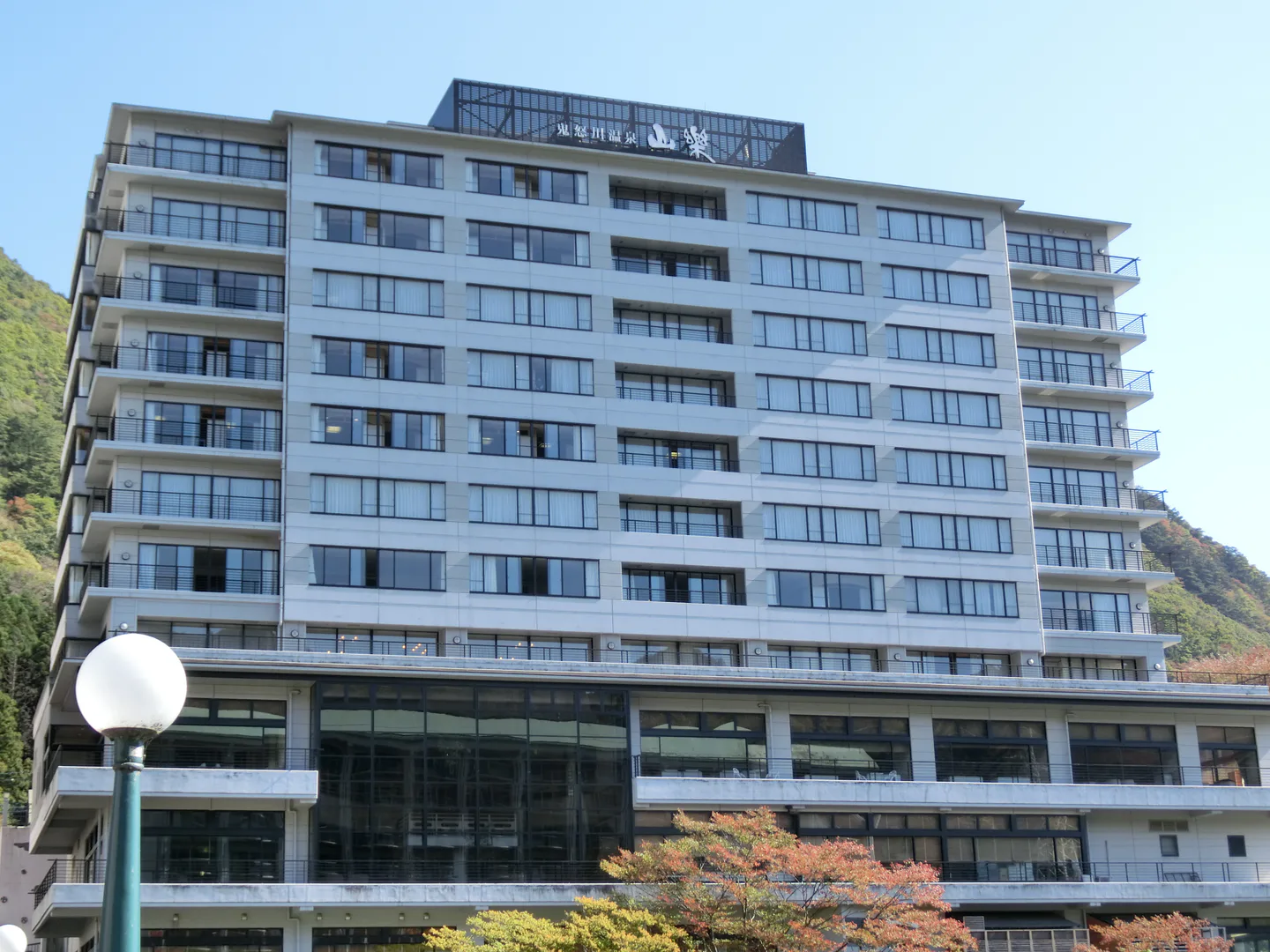
The choice between sleeping in Nikko and sleeping in Kinugawa Onsen is made by tomorrow's first destination. Toshogu and the bus toward Lake Chuzenji begin on the Nikko side. Kinugawa is the better use of a night when dinner, bathing and an unhurried ryokan morning are central to the trip, or when the next stop is already on its branch of the railway. For a first visit trying to cover the shrines and the lake in one night, central Nikko usually saves the more valuable morning.
There is a third answer in a busy foliage period. If the lake, Senjogahara or Yumoto is the main reason to travel, accommodation above Irohazaka in Okunikko can protect a mountain morning that neither town below the road protects. That is a specific response to traffic and itinerary priorities, not a recommendation to change hotels whenever leaves turn colour. Nikko versus Okunikko handles that mountain-side choice in more detail.
↔ Scroll table left or right
Your first important block after the night | Base to compare first | Advantage bought | What you give up |
Toshogu and Lake Chuzenji in a short visit | Nikko | Station-to-shrine access and the mountain bus without a branch transfer | Less time in an onsen-town ryokan |
Main goal is an Okunikko morning during peak road congestion | Okunikko | Cross Irohazaka before the crucial morning | Central Nikko flexibility and an easy train arrival |
Dinner, baths and a slow morning are the point | Kinugawa Onsen | Real time to use the accommodation | Repositioning if the next day turns back to Nikko |
Nikko sights first, Kinugawa attractions or Tokyo next | Nikko then Kinugawa | Hotel move follows the route | One extra checkout and luggage move |
Both full days mainly on the Nikko–Okunikko side | Nikko for both nights | One room setup and no Kinugawa backtrack | No dedicated Kinugawa evening |
A fork at Shimo-Imaichi changes the hotel calculation
On Tobu's railway map, Shimo-Imaichi is the junction. One branch reaches Tobu-Nikko; the other continues toward Kinugawa-Onsen. That geometry is easy to miss when a booking site lists both places under “Nikko area.” Tobu's Nikko access page gives a direct Asakusa limited express journey of roughly one hour fifty minutes, and its Kinugawa page gives a similar Tokyo-to-onsen journey. The Tokyo leg therefore does little to distinguish them. Where the morning begins after check-in matters more. Tokyo to Nikko day trip or overnight is useful if you have not yet decided to sleep in the region.
The older version of this comparison used about an hour between Tobu-Nikko and Kinugawa-Onsen. Tobu's current sample route explicitly gives a 35-minute Kinugawa-Onsen–Tobu-Nikko train journey with a change at Shimo-Imaichi. The Nikko visitor transport overview independently describes a 35–45-minute rail journey. Use a dated itinerary for the exact departure: waiting or a missed connection can lengthen the elapsed trip, while a well-timed train can be much quicker than the inherited one-hour general estimate. The branch transfer is real, but it should not be inflated into a fixed hour on board.
The Tobu access diagrams show Shimo-Imaichi to Tobu-Nikko at about ten minutes and the Kinugawa branch at about twenty. Tobu's historical-sites itinerary shows how the connection can fit into a 35-minute station-to-station run. Neither figure includes the walk from a particular ryokan to the platform. If a hotel shuttle requires advance reservation or ends early, that last mile can outweigh ten minutes on a train chart.
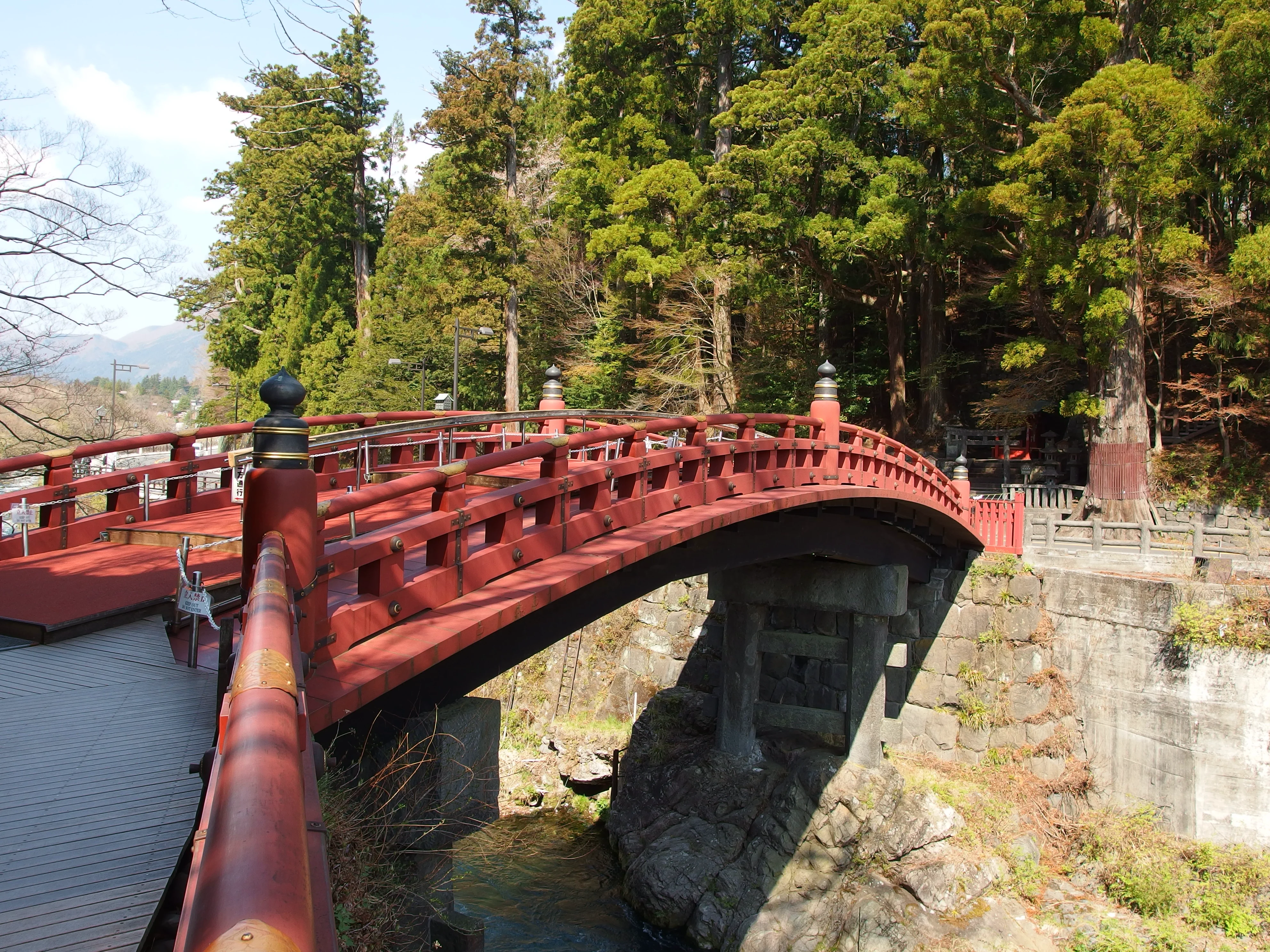
A lake morning is easiest from Nikko, but autumn changes the clock
The ordinary bus journey from Tobu-Nikko toward Chuzenji Onsen is around 45–50 minutes. Tobu's route information places Lake Chuzenji and Kegon Falls at the mountain end of that ride; the bus guide cautions that weather and traffic affect arrivals. The city's English transport booklet maps the lake and onward stops. Starting from a Kinugawa hotel adds the rail journey to Tobu-Nikko first. With Tobu's current 35-minute example and an approximately 48-minute bus, the two in-vehicle legs total about 83 minutes before a train connection, the station transfer, bus waiting or the ryokan approach. That is still meaningful for a short trip, but it corrects the former article's 105–110-minute arithmetic, which treated the rail segment as a fixed hour.
For a normal one-night visit, the efficient sequence is to reach Nikko, see some of the World Heritage area if arrival time permits, sleep, and take the mountain bus the following morning. You can choose Lake Chuzenji, Kegon Falls, Senjogahara or Yumoto according to season and energy rather than spending the first portion of the day travelling back from a Kinugawa address. The Lake Chuzenji two-day route may be useful when the lake is the priority over Toshogu.
Late October is the part of the year when a normal bus estimate needs the most caution. Nikko's 2026 traffic guidance identifies the middle of October through early November as a particularly crowded foliage period; weekends and public holidays are difficult, and peak colour can also produce weekday queues. It describes 09:00–15:00 as a high-pressure window, sometimes extending later on weekends. The same guidance warns that an Irohazaka ascent can take more than three hours in severe congestion. An earlier article described a greater-than-four-hour Nikko Station–Chuzenji case; that is best treated as a possible extreme, not a timetable for every October bus. Nikko's elevation-by-elevation foliage timing helps decide whether the mountain road will even be the priority on your dates.
This creates the Okunikko alternative. A traveller who mainly wants the first light on the lake, a waterfall walk or the start of a Senjogahara hike might be better served by crossing Irohazaka the previous day. A room in the mountain area reduces exposure to that bottleneck on the most important morning. It also means less evening freedom near the station and more care with luggage and the journey home. The Nikko autumn transport plan can help decide whether the mountain trip deserves an overnight at all. If winter conditions replace foliage, Nikko Kanaya versus Chuzenji Kanaya poses a more seasonally appropriate hotel-location comparison.
Avoid locking a fixed Kinugawa ryokan dinner immediately after a long Okunikko outing at foliage peak. If the road descent or bus is delayed, dinner check-in can become the day's second immovable commitment. An onsen stay should restore time, not create a race against Irohazaka. Size the Kegon Falls and Senjogahara stops realistically before promising an early ryokan arrival.
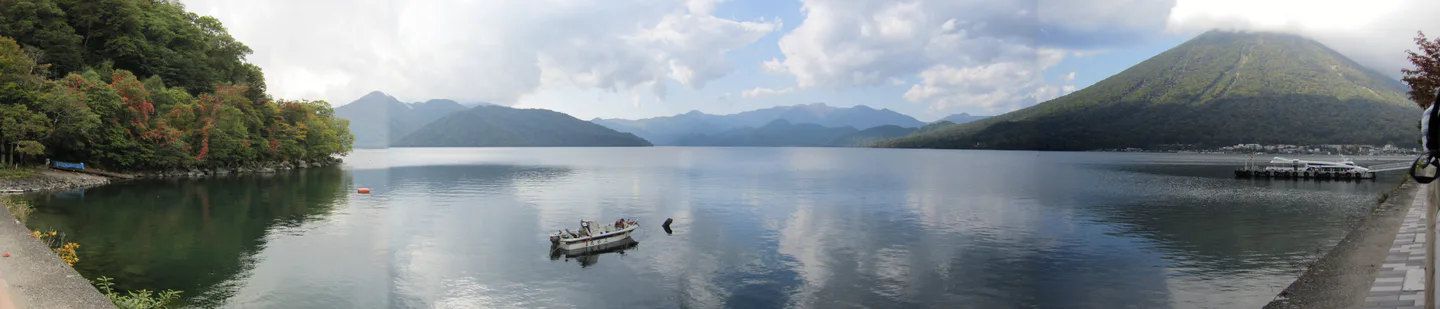
Kinugawa works when the accommodation is the destination
Kinugawa is not a poor choice; it needs a different purpose. The strongest version arrives early enough for the hotel's check-in rule, gets a bath or quiet room hour before dinner, eats the meal without watching the clock, and keeps enough time afterward for another bath or an unhurried morning. You are buying that evening and the following morning. The branch journey is an acceptable price when it delivers several hours you genuinely want.
The weakest version leaves Toshogu late, reaches the ryokan close to dinner, sleeps, and departs early for Lake Chuzenji. Only the bed may have been used. If the party chose Kinugawa because “onsen town” sounded appealing but never gave the inn a usable window, a station-side Nikko room would probably have served the sightseeing plan more honestly. How to choose a Japanese ryokan can resolve whether half board, bath access, room type and dinner timing justify the cost at a specific property.
Count four possible ryokan sessions before booking: a bath or room pause before dinner, the fixed meal, an evening bath or river-valley walk, and a slow breakfast. Three useful sessions make a different argument from one rushed sleep. The exact hotel may still change the answer. A bath with limited hours, a dinner deadline the train cannot meet or a remote shuttle stop weakens it; a convenient transfer and genuinely desired room can strengthen it. Beppu versus Yufuin and Ueda versus Bessho Onsen use similar accommodation-time questions in other onsen regions.
Kinugawa's branch is also sensible when Day 2 is already its side of the map: Tobu World Square, Edo Wonderland, a local river activity or a direct train back toward Tokyo. You then avoid repeating Nikko's mountain corridor and get an itinerary transition rather than a detour. If the full day is again Toshogu plus Okunikko, the ryokan night has to be compelling enough to pay for a return to the same branch point.
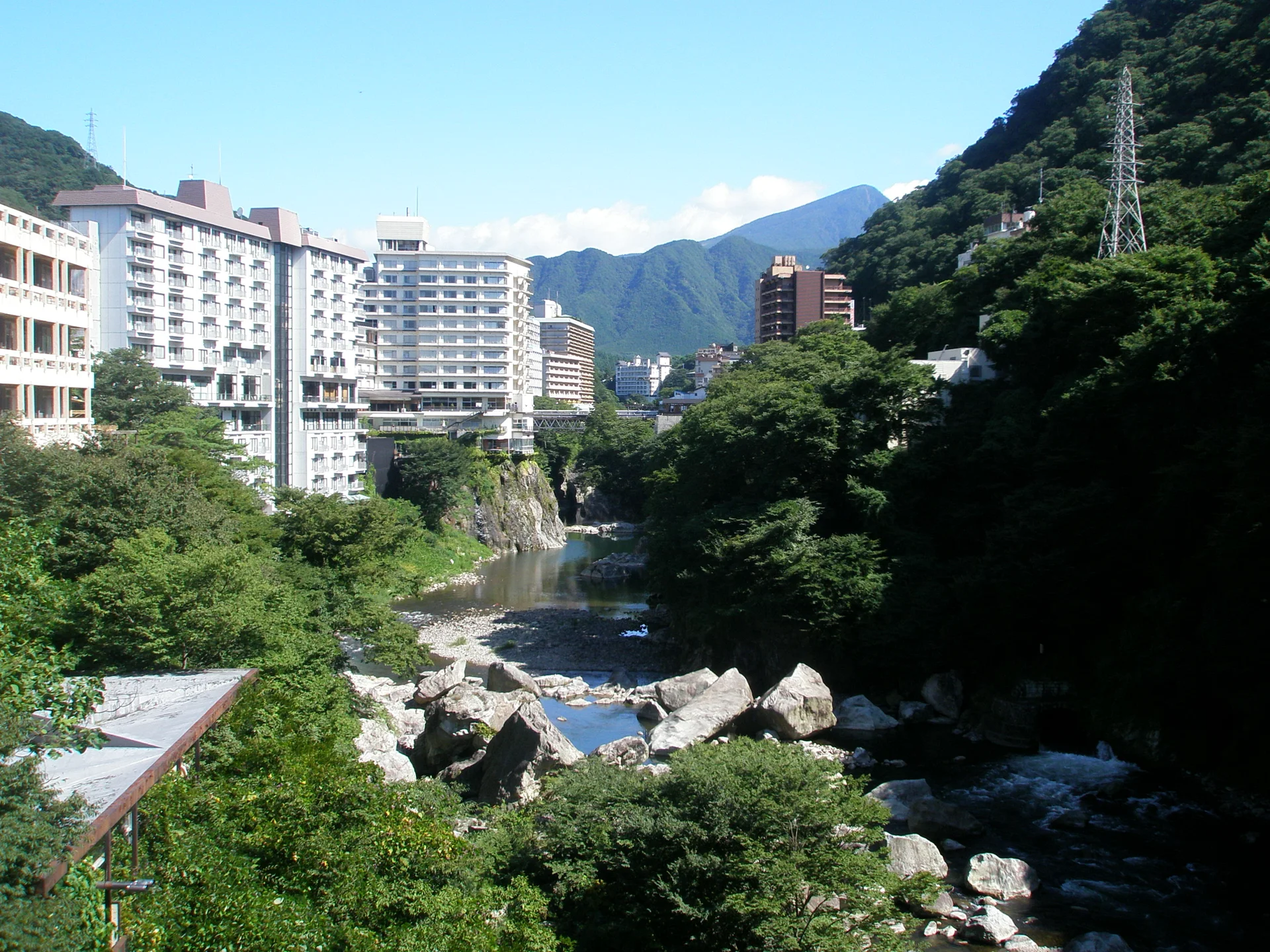
↔ Scroll table left or right
Kinugawa time you will use | What the night can buy | Warning sign |
Pre-dinner room or bath | Recovery after travel, without another trip out | Arrival depends on a tight train connection |
Fixed ryokan dinner | Meal is part of the stay rather than another restaurant search | Mountain sightseeing threatens the dinner deadline |
Post-dinner bath or walk | An actual onsen-town evening | The party expects to sleep immediately |
Slow breakfast and departure | Second meaningful hotel window | First train sends you back toward Nikko at dawn |
Two nights favour a route that keeps moving forward
Two nights in Nikko are the clean first-visit default when both major sightseeing blocks lie around Toshogu, Lake Chuzenji and Okunikko. One luggage setup serves both days, and the mountain bus begins in the right town. During extreme autumn traffic, Nikko followed by Okunikko may be better: the second move has a job because it places you beyond Irohazaka for the next morning. Outside peak periods, the same hotel change may consume more time than the normal bus ride it avoids.
Nikko first and Kinugawa second can also work well. Do Nikko sightseeing, move toward Kinugawa before the ryokan dinner window, then use Day 3 for a Kinugawa-side stop or the return to Tokyo. Kinugawa first and Nikko second is less often the efficient arrangement, but it can suit a deliberate arrival-day ryokan stay followed by a single move into Nikko. It is weak when the first arrival is late and the next departure is early. A split should replace tomorrow's difficult movement or buy a distinct evening, not merely add a different postal address.
With large suitcases, a stroller, rain or an older traveller, the price of a move is higher than the rail fare. Packing, checkout, a platform connection, bag storage and a new check-in all use travel time. Shimo-Imaichi has station facilities, but an elevator or locker does not make a two-hotel plan effortless. If your wider Japan route already changes hotels frequently, the luggage-forwarding guide is worth reading before adding a Nikko–Kinugawa move. Hotels with older parents give a cross-destination example of why the last transfer may matter more than a small room upgrade.
↔ Scroll table left or right
Two-night structure | Works best when | Main friction |
Nikko both nights | Both sightseeing days use Toshogu or the mountain corridor | Less ryokan-town atmosphere |
Nikko then Kinugawa | Second afternoon and evening are for the ryokan; Day 3 heads along Kinugawa branch or to Tokyo | Second checkout and branch move |
Kinugawa then Nikko | Arrival day is intentionally devoted to the inn | Late arrival plus early exit can squander the inn |
Nikko then Okunikko | Autumn mountain morning is the scarce resource | More luggage handling and fewer central-Nikko options |
Weather and mobility do not choose the town for you
Poor visibility can make a lake day less rewarding, but weather alone does not turn Kinugawa into the correct fallback. A ryokan with meals, baths and comfortable room time can absorb a lost sightseeing afternoon. A basic room with no useful hotel experience cannot. If a mountain day is cancelled, central Nikko may still be the simpler base for a changed sightseeing plan. The property, not the word “onsen,” has to earn the transfer.
For families or older travellers, check the last mile at the actual hotel: station distance, shuttle booking and last departure, dinner arrival deadline, lifts, room arrangement and bath accessibility. A Kinugawa hotel that collects guests at the station and feeds them on site may be easier than a remote Nikko inn. The reverse can hold when the next morning requires Toshogu and the mountain bus. During foliage congestion, time seated in traffic is also a fatigue cost; an Okunikko night may be worth comparing if that mountain morning is non-negotiable.
Other hotel-base decisions illustrate the same principle without changing Nikko's geography. Kamakura or Fujisawa depends on the last stop and next departure; Yokohama or Tokyo depends on which side gets repeated rail trips. Hakuba Happo or Echoland shifts the question to ski-day transport. Hiroshima or Miyajima for one night gives the ferry a similar role, while Furano or Biei asks which Hokkaido morning should begin locally. In each case, count the journeys that happen after check-in, not only the train that brings you from the city.
Put the next morning and the inn on one page
For Toshogu plus Lake Chuzenji in one or two nights under normal traffic, begin your hotel search in Nikko. A Kinugawa ryokan becomes a considered upgrade when dinner, bathing and a relaxed departure are things the party will actually use. At foliage peak, compare an Okunikko night if the mountain morning is the principal goal; Nikko's current traffic guidance makes clear that the ordinary bus estimate can expand dramatically. Always check the exact train, bus and hotel dinner windows for the date.
After defining the route, compare Nikko-area rooms and Kinugawa Onsen stays on identical dates. A lower headline room rate does not repay a missed mountain morning; a more expensive ryokan does not repay a night you will spend only asleep. The better base is the one that protects the scarce hours this particular itinerary was built around.