
The city to sleep in should protect the hours you cannot recover by taking a later train. A first visit built around Kyoto temples and historic streets usually benefits from Kyoto mornings. A visit with Universal Studios Japan, several Osaka evenings or an early Namba-side airport departure often works better from Osaka. Either city can be a day trip from the other, so the choice is less about covering both on a map than about where your day begins and ends. A first-timer’s Kyoto itinerary can reveal how many genuinely early Kyoto starts your plan contains.
For three Kansai nights, one hotel is the sensible starting assumption. Moving bags, checking out and waiting for another room can consume more useful time than one intercity round trip. At four to six nights, a split becomes reasonable when the second base removes at least two awkward journeys. A Kyoto sightseeing block followed by USJ, a late Osaka evening and a Kansai airport departure is one example. A single Osaka dinner during a temple-led stay is not.
↔ Scroll table left or right
Trip as actually scheduled | Likely base | Reason to test |
Two or more Kyoto mornings before busy visiting hours | Kyoto | The first sightseeing hour is easier to keep |
USJ plus late Osaka plans or repeated Osaka rail departures | Osaka | The expensive return is on the Osaka side |
Three Kansai nights without a hard exception | One city | The second checkout costs more than one crossing |
Four to six nights with several anchors in each city | Consider a split | The second hotel should remove at least two crossings |
Last morning near Nankai Namba and a KIX flight | Osaka may gain | Match the actual Nankai departure, not the city name |
Last morning beside Kyoto Station and a suitable HARUKA | Kyoto can remain | Direct airport rail may make a move unnecessary |
Morning sightseeing gives Kyoto its clearest advantage
Kyoto’s temples, gardens and old neighbourhoods do not all have the same opening pattern, but many visits become less pleasant after the busiest arrivals. The city’s congestion forecast includes Gion/Kiyomizu, Fushimi Inari and Arashiyama, with changing comfort estimates by area and hour. Tourist reception at many shrines and temples may close around 16:00. If a Kyoto day starts at a hotel in Osaka, a short rail ride on a timetable is only part of the journey: reach the Osaka station, ride, change or transfer locally, then walk to the first sight. That chain can spend the quietest part of a day.
Two mornings around Higashiyama or Arashiyama make a Kyoto room materially useful. You can walk out before a cross-city visitor has reached the station and return after the last sight without rushing through another interchange. This is a question of timing, not of declaring Kyoto hotels universally better. Travellers who enjoy late starts, have one Kyoto sightseeing day, or focus on Osaka after dark may gain little from that morning edge. Where to stay in Kyoto helps narrow the city to a useful district.
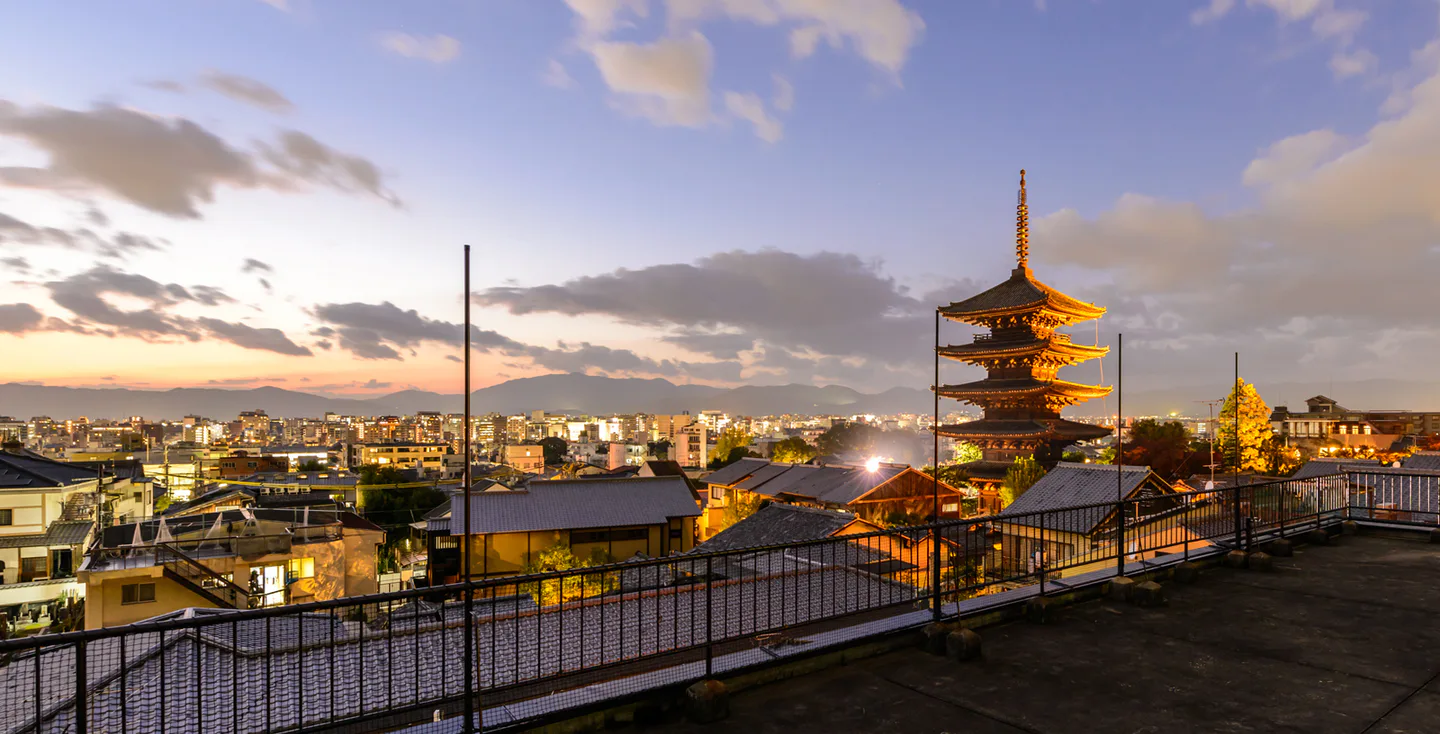
Kyoto Station and Kawaramachi/Gion are different versions of a Kyoto base. Station-area rooms suit JR-heavy regional travel, an onward rail day or a direct HARUKA airport journey. Kawaramachi and Gion make east-Kyoto streets and central evening meals easier to reach, and put Hankyu toward Osaka-Umeda in play. Neither address eliminates local travel to every temple. Kyoto Station versus Gion and Kyoto with older parents show why the hotel’s nearest exit matters.
Osaka earns the booking after the last Kyoto train would feel costly
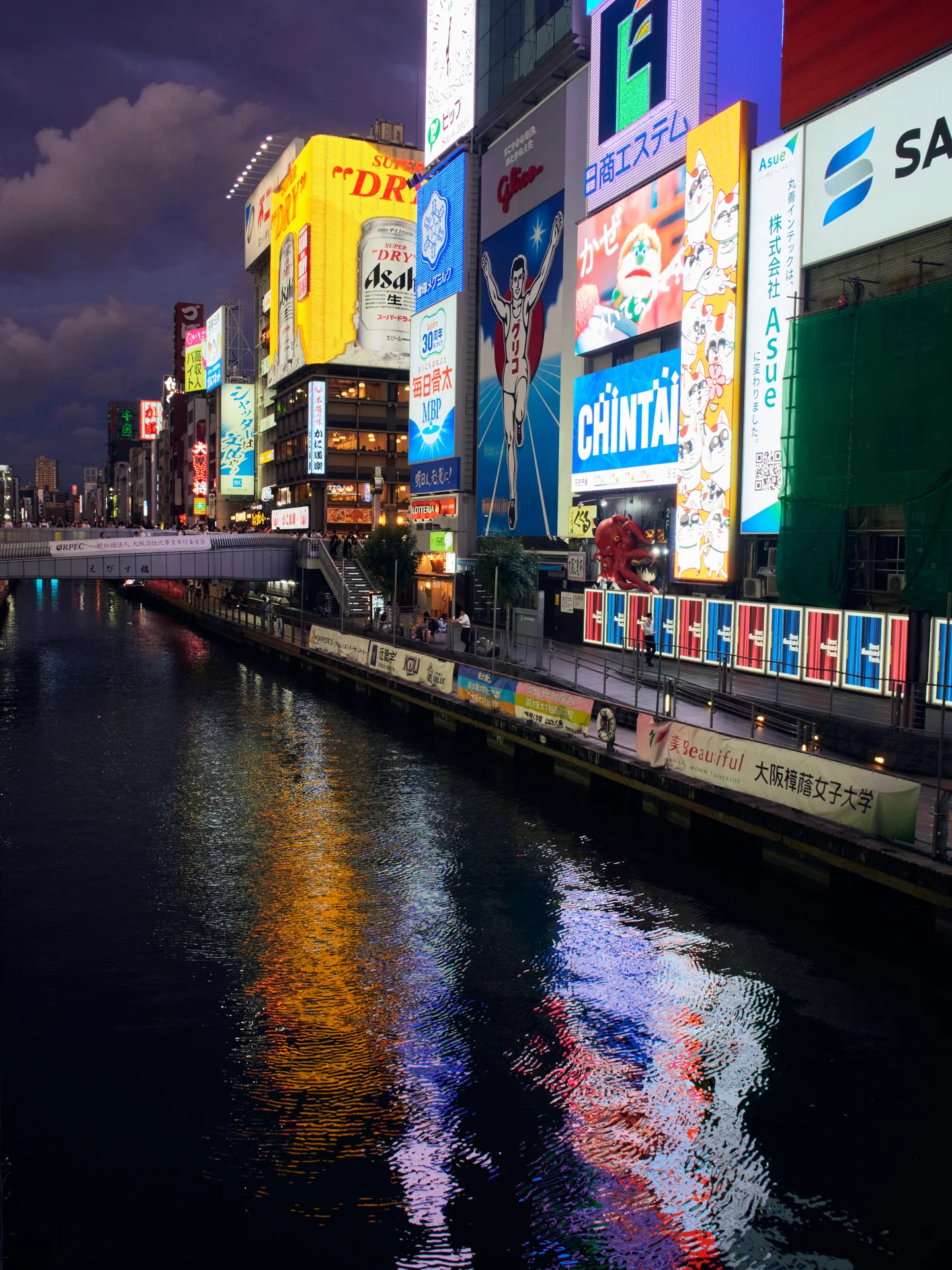
A late meal around Dotonbori or several nights in Namba changes which return trip hurts. If you sleep in Kyoto, the night can end with a cross-city rail leg followed by local transport to the room. An Osaka hotel turns that into a short local finish. The advantage compounds when late Osaka plans appear on more than one night; it is much smaller for one dinner. Namba versus Umeda is the next decision once you know Osaka should be the base.
USJ also pulls the itinerary west. Its rail access map centres on Universal City Station and Osaka-side links. A single park day can be handled from Kyoto if the surrounding nights clearly belong there. Two park days, or one park day combined with a late Osaka evening, make an Osaka base more attractive. For a family arriving with bags, compare the door-to-door time rather than a rail-only number. Osaka hotel areas with children and where to stay for USJ distinguish Universal City, Umeda and Namba.
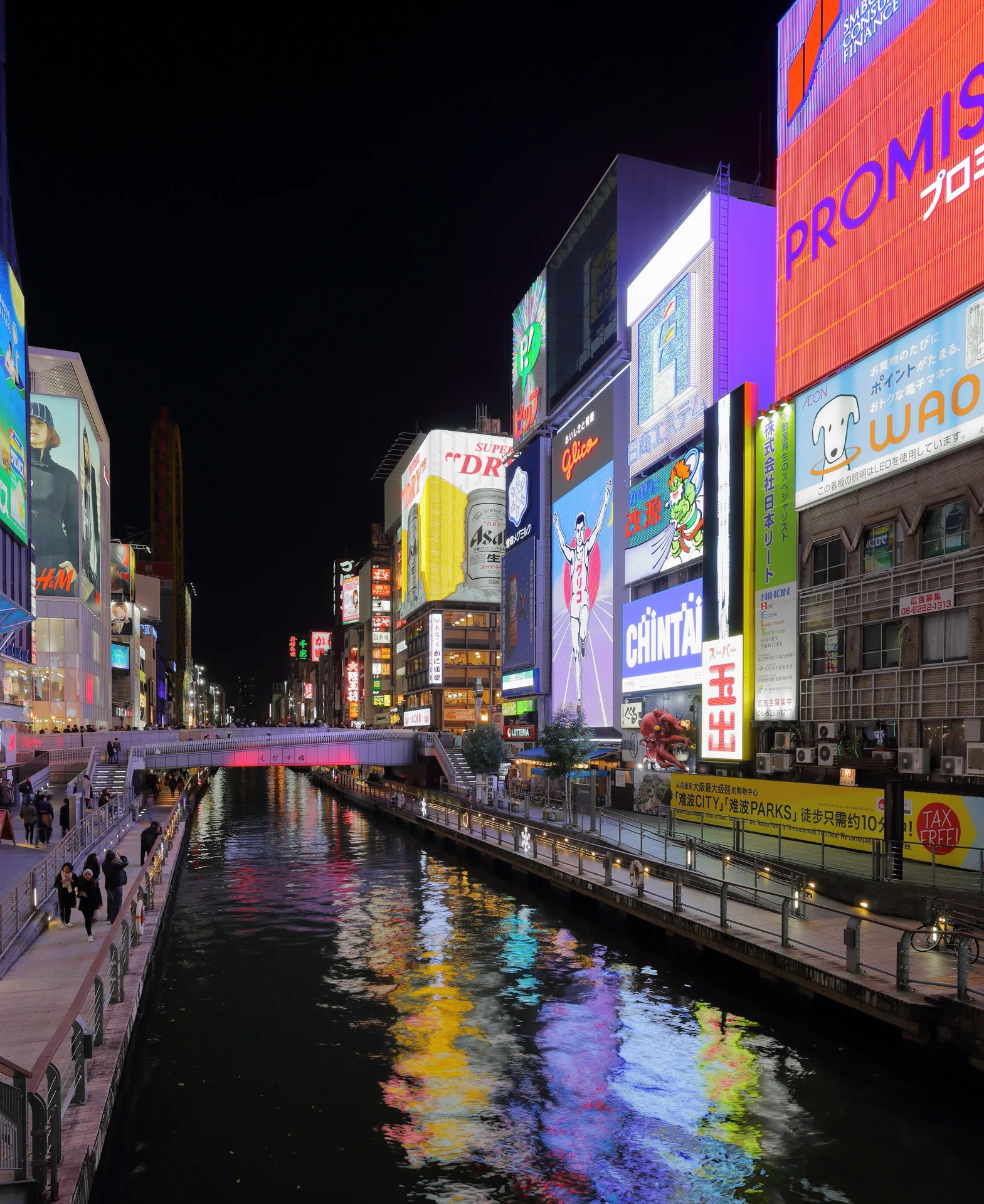
Osaka is not one station. Umeda/Osaka Station is a practical JR and regional rail base; Namba serves late food and Nankai airport departures; Universal City puts the park near the bed. A hotel in Namba does not inherit Osaka Station’s fast Kyoto connection without a local leg. A hotel at Umeda does not put Namba nightlife at the door. An Osaka base by last stop keeps these trade-offs separate.
Use the stations on the ticket, not the cities in a headline
The frequently quoted Kyoto–Osaka rail time is a station-to-station measurement. Around 29 minutes between JR Kyoto and JR Osaka on a Special Rapid is plausible for that exact pair, yet a Gion hotel and a Namba restaurant add local legs at both ends. Hankyu’s current Kyoto-kawaramachi to Osaka-umeda limited-express example takes roughly 44 minutes; it is useful for a Kawaramachi-to-Umeda day, not a universal Kansai commute. Hankyu’s Kyoto-kawaramachi station page and the airport rail overview provide the station context.
Before choosing a room, write down four names: the hotel’s nearest station, the station for the earliest attraction, the station for the latest evening, and the airport or onward departure station. Check the entire chain, including the hotel walk and the last local connection. A Kyoto Station to Osaka Station comparison cannot answer whether a Namba nightlife stay or an Arashiyama dawn is easy.
↔ Scroll table left or right
Hotel area | Trips it handles particularly well | Hidden extra leg |
Kyoto Station | JR day trips, bulky luggage and HARUKA to KIX | Gion and east-Kyoto evenings still need local transport |
Kawaramachi / Gion | Higashiyama mornings, central Kyoto dinners and Hankyu toward Umeda | JR regional departures usually require getting to Kyoto Station |
Umeda / Osaka Station | JR regional days, Kyoto excursions and northern Osaka | Namba food streets and Nankai airport trains are elsewhere |
Namba | Late Osaka plans and Nankai KIX departure | Early Kyoto sightseeing has a longer door-to-door chain |
Universal City | Early or repeated USJ days | Other Osaka, Kyoto and airport plans still need transfers |
A traveller with an early Shinkansen the next day may also value Shin-Osaka for that particular night, which is a different problem from either Umeda or Namba. An early Shinkansen from Osaka explains when an extra move is worthwhile. Likewise, a Kyoto autumn trip may reward neighbourhood access differently from a generic first visit; autumn lodging around Kyoto puts the sunrise and congestion question in season.
Kansai airport is a final-day calculation
Nankai Rapi:t gives Namba a clear airport route: Kansai International Airport lists roughly 34 minutes for the faster α pattern and 39 minutes for β. The same airport lists the direct HARUKA to Kyoto at about 75 minutes. Those figures are station-to-airport train times, not a promise about the room-to-check-in journey. The right comparison includes leaving the hotel, reaching the platform, waiting for a suitable departure, and the airport check-in buffer.
A Kyoto Station hotel already holding your luggage can be a sound last night if the HARUKA schedule suits the flight. Moving to Osaka merely because “KIX is in Osaka” introduces a checkout, transfer and fresh check-in. A Namba night becomes valuable when it also lets you eat late there or spend the preceding day on the Osaka side. Swissôtel’s Namba station access shows what a genuine near-platform premium buys; many hotels labelled Namba are farther from the correct rail entrance.
If arrival and departure airports differ, avoid treating the final flight as the only anchor of the whole stay. A visitor who enters through Kansai airport and leaves by Shinkansen has a different final morning from one flying out of KIX. A 10–14 day Japan itinerary can help place the Kansai hotel decision inside the national route.
A second hotel needs to remove more than the journey it creates
The hotel move itself has several legs: pack, leave the room, manage bags until check-in, travel across the cities, then settle into a second room. A split is productive when it prevents at least two meaningful cross-city movements. Three Kyoto sightseeing days followed by two Osaka-side days can meet that test. A four-night Kyoto stay with a single Osaka dinner usually does not. This is why equal-night splits have no special virtue; the useful boundary is where the itinerary’s geography changes.
For a three-night Kansai stop, one room normally wins. Kyoto-dominant visitors can reach Osaka for an evening; USJ-and-Osaka-dominant visitors can make Kyoto the day trip. Change hotels only for a hard operational reason, such as a very early park strategy or a departure the first base handles badly. Short stays lose a larger share of available time to every checkout.
With four to six nights, count time-sensitive anchors. Two or three Kyoto mornings plus one Osaka dinner point toward a Kyoto base. USJ, two late Namba nights and a Nankai airport morning point toward Osaka. Two or more meaningful anchors in each city make a split worth pricing. Hotel rates change by date, so compare the actual quotes, but do not ignore hours lost crossing cities to save a small nightly difference. Osaka for parents gives a useful mobility-focused version of the same calculation.
Moving with large cases makes the split costlier. You may need station storage, a luggage-forwarding arrangement or time to return to the first hotel. Sending a main case ahead can simplify a sensible move, provided the delivery window matches the next property. It does not create a reason to change hotels by itself. Japan luggage forwarding explains when to send, store or carry; a family should add stroller and stair access at both stations.
Nara and other day trips rarely decide this by themselves
Nara works from both sides of Kansai, so a Nara day should seldom force a Kyoto-to-Osaka hotel move. If Kyoto already holds most of your mornings, keep the Kyoto room and plan Nara within that stay. If Nara deserves a slow evening and another morning, compare a Nara overnight directly instead. What fits into one Nara day and Nara day trip versus overnight answer those different questions.
The same applies to any regional stop that is workable from either city. The strongest evidence for a base is still the repeated early starts and late finishes, plus the station that actually serves them. A single conveniently reachable excursion should not outweigh three nights of poor returns.
Three itineraries, three sensible booking patterns
↔ Scroll table left or right
Kansai pattern | Where to sleep | Why |
Three nights, two Kyoto temple mornings and one Osaka evening | Kyoto throughout | One late rail return costs less than changing hotels |
Five nights, Kyoto sightseeing followed by USJ, Namba and KIX | Kyoto then Osaka | Second room removes multiple west-side journeys and may help the airport day |
Four nights, USJ plus two Osaka evenings and one Kyoto day | Osaka throughout | Make Kyoto the excursion and keep late returns short |
Three Kyoto nights followed by an early train from Shin-Osaka | Kyoto for the visit; examine final-night move only | Price the one important departure rather than shifting the whole stay |
The first plan is a good default for a temple-led first visit. The second earns its split by changing geographic centre. The third shows why “first trip” is not enough reason to insist on Kyoto. The last treats a fixed train departure as its own decision, rather than allowing it to dictate every earlier hotel night. Actual schedules and room rates may change, but the order of the day remains visible before you book.
My booking test is therefore simple: mark Kyoto’s early sightseeing starts, Osaka’s late or early endpoints, and the final airport or rail departure. Put the main room where most hard-to-move hours sit. Add the second room only if it removes at least two costly crossings after its own baggage and check-in costs are counted. Then compare the exact Kyoto Station, Gion, Umeda, Namba or Universal City addresses; the two city names are too coarse to choose a hotel.
For a Kyoto-led stay, compare rooms around Kyoto Station or central Kyoto against the earliest sight and final departure. For an Osaka-led stay, compare rooms around Namba or your actual Osaka endpoint using the same dates and baggage plan. If USJ drives the answer, use Universal City versus central Osaka before selecting a property.
Further regional comparisons
Kyoto Online Tourist Information · Where to Stay in · 3, 4 or 5 · Happo vs Echoland: Where · Furano vs Biei: Where · Where to Stay in · Sapporo Snow Festival: Odori · Nikko vs Kinugawa Onsen:.