
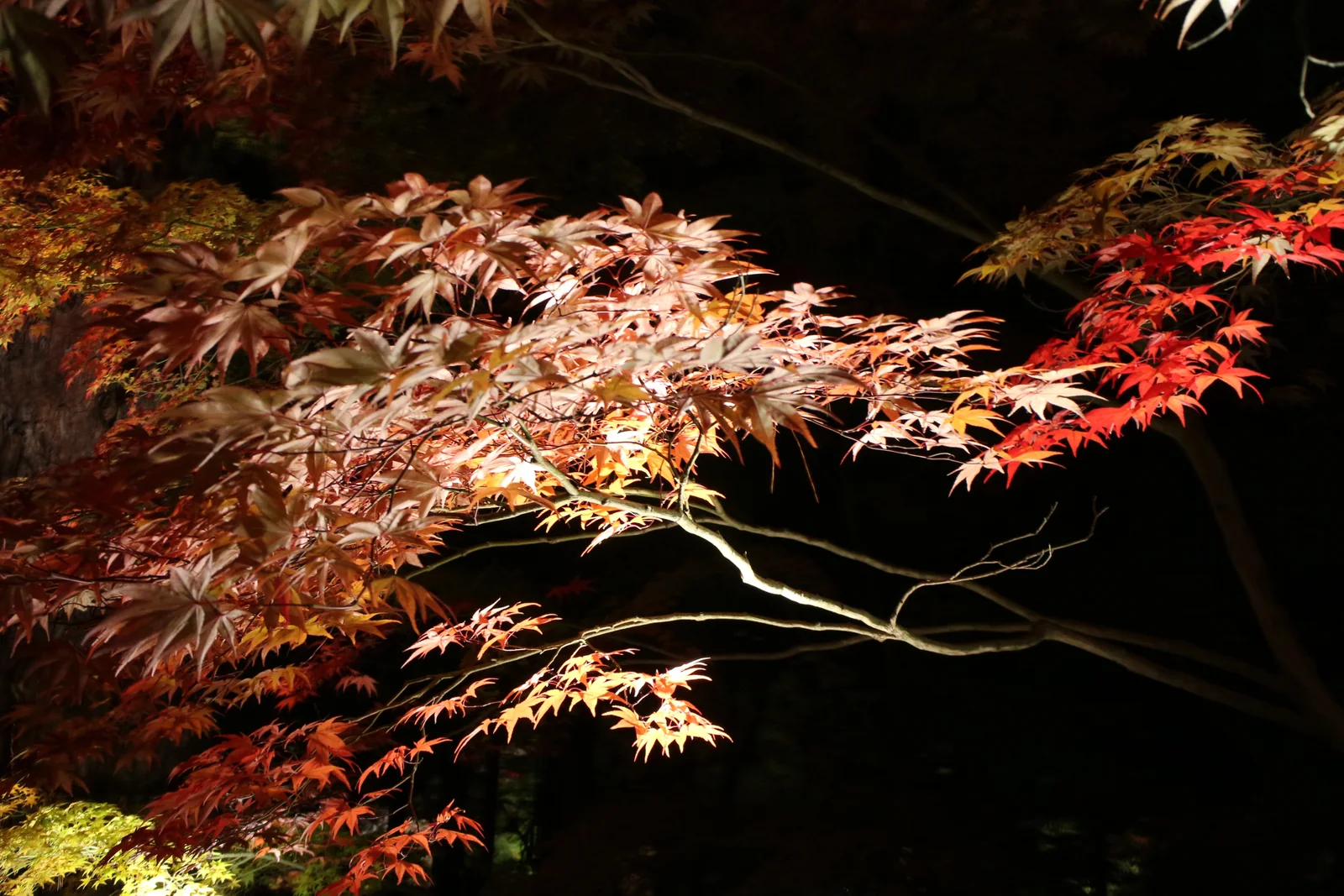
Eikando's 2026 autumn night opening runs from 20 November through 6 December, according to Kyoto's tourism event listing. Reception is scheduled from 17:30 until 20:30, with the grounds closing at 21:00. The last half-hour is an exit window, not a full visit. That matters when choosing a hotel: the easiest room after an evening at Eikando may be in Okazaki or near Keage, but a Sanjo base can make the rest of a Kyoto trip much easier. A reservation map labelled “central Kyoto” does not tell you which of those journeys you will take after dark.
The Westin Miyako Kyoto is a named hotel in the Keage area that can anchor a location search. It is not a guarantee of a room, a particular rate or a view of the foliage. Compare its actual entrance and route with a room around Sanjo Keihan before paying. The Kyoto hotel area guide explains the broader neighbourhoods; the narrower question here is whether you would rather walk back from the temple or take an additional transfer after the last admission period.
Swipe through earlier event photographs
Treat the 20:30 reception close as the governing time
The Kyoto tourism event listing states the 2026 night period, reception and closing times. It also warns that a nearby bus stop may be suspended during the busy season. Check the temple's current site before you travel for any operational changes. A bus route plotted in a general map app is a plan to verify, not a promise that the same stop will take you home. This is precisely why the hotel base matters more than a small difference in headline room price.
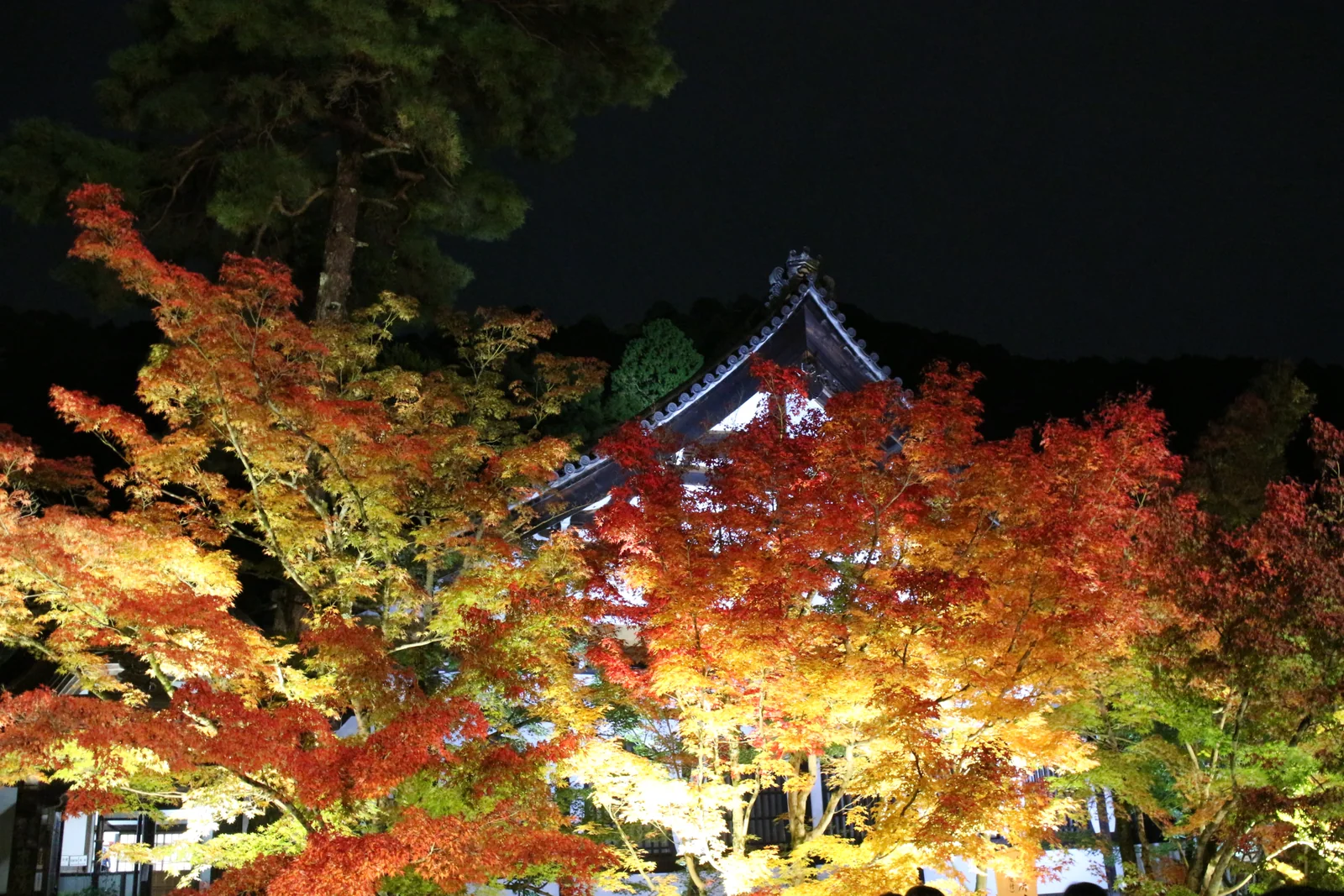
Eikando is a substantial temple complex, and its autumn draw is the combination of illuminated maples, paths and architecture. The historical photographs in this page's gallery show an earlier year. They establish what place we mean, not the colour, lighting design or crowd density of 2026. Foliage timing varies. The Kyoto autumn leaves by elevation guide can help you set expectations, while the Kyoto autumn illumination guide offers alternatives if your date falls outside Eikando's opening.
Do not book the night on the assumption that “last reception 20:30” means arriving at 20:25 yields a worthwhile stroll. You still need to reach the admission point and make your way through the grounds before 21:00. A generous buffer is especially important if you have just arrived in Kyoto, need to drop luggage, or are travelling with someone who cannot walk quickly. The safest itinerary has you in the district well before the posted reception close.
| Traveller's actual priority | What to protect | Sensible base to compare first |
|---|---|---|
| Spend the evening at Eikando without a late transfer | Comfortable walk back after closing | Okazaki or Keage |
| Combine the visit with downtown dining | Return route toward restaurants and other city lines | Sanjo Keihan |
| Leave Kyoto early next morning | Fast access to Kyoto Station and the train | Kyoto Station, with a planned temple return |
| See several east-Kyoto sites over two days | Avoid repeated cross-city trips | Okazaki or lower Higashiyama |
These are starting points, not a ranking of hotels. The same traveller may prefer different bases on a one-night stop and a four-night Kyoto stay. A family carrying luggage from a late train is making a different decision from a couple who are already checked into a hotel near Keage. Keep those differences visible when comparing room offers.
The Okazaki and Keage side: short exit, narrower hotel choice
Okazaki puts the evening walk at the centre of the plan. You can reach Eikando from the district around Nanzen-ji and Keage on foot, subject to the precise hotel entrance and route. At closing, you avoid depending on a potentially altered bus stop. That is valuable when the streets fill with people leaving several autumn sights. A pedestrian route still needs checking in daylight: look for the slope, crossings, lighting and any narrow paths you would rather avoid after dark.
The Westin Miyako Kyoto is one Keage-area property to search. Its location is useful for comparing a walk to Eikando against a downtown hotel, but the availability, room category and cancellation policy require a live booking check. Another property with “Higashiyama” in the name might be much farther from Eikando than its label suggests. Open each map pin and calculate door-to-gate walking time. The Higashiyama autumn itinerary shows why an east-side base can also serve the following morning.
The weakness of the Okazaki choice appears when you arrive or depart with bags. Kyoto Station is not within a short suitcase stroll. A taxi might be simplest, but traffic and a crowded arrival corridor can make its duration hard to predict. Public transport can cost less but may involve stairs or a longer walk. Ask the hotel whether it will hold bags before check-in or after checkout, then decide whether the baggage move is worth the short night return. The Kyoto and Osaka split-stay guide is useful if the temple evening falls between two cities.
If your following morning is the Philosopher's Path, Nanzen-ji or other east-Kyoto sightseeing, the location has a second use. You can leave before peak day-trip crowds without crossing town. If your only other Kyoto plan is a Shinkansen departure, the advantage lasts for one evening and may not justify a higher room rate. The three-day Kyoto autumn itinerary gives the wider city context.
Sanjo Keihan: an easier junction for a mixed itinerary
Sanjo is often a better compromise than a vague “downtown” address. Around Sanjo Keihan, you have rail and subway connections plus restaurant choices, while Eikando remains a manageable eastward journey. The hotel-to-temple leg is longer than from Keage, but a Sanjo room may save time on other days. If you intend to see Gion, central shopping streets or reach another part of Kyoto by rail, that wider utility can outweigh a single late walk. The Kyoto Station versus Gion comparison frames a similar geographic trade.
Sanjo is not one point. A hotel west of the river differs from one beside Sanjo Keihan; the river crossing and subway entrance are real steps when your legs are tired. Check the precise return route before booking. If you expect to leave Eikando near 21:00, identify a walk or reliable rail connection that does not require an event-affected bus stop. Walking the whole way may be pleasant for a fit adult in dry weather, but it is a material distance for small children or someone with limited mobility. The Kyoto hotel choice for seniors is relevant if the return journey, not the temple itself, is the limiting factor.
A Sanjo stay also improves the dinner calculation. You can eat after the temple at a place whose hours you have checked, or have an early meal before travelling east. Do not assume a restaurant will keep its kitchen open because illumination is running nearby. If dining is the centre of your trip, the Kyoto one-day guide can help balance the day so the night visit does not become the third major activity after an exhausting morning.
The decision can be made by counting nights. For one night whose sole purpose is Eikando, an east-side room is attractive. For three or four nights with day trips and different neighbourhoods, a more connected base may win. It is reasonable to pay for the extra trip home once rather than pay for extra cross-city trips every other day. The Kyoto autumn hotel guide covers seasonal pressure across the city.
Kyoto Station: possible, but only with a return plan
A station hotel can work if your train arrives in the afternoon and your departure is early the next morning. Check in, leave luggage and travel to Eikando with enough buffer for the admission window. This avoids a morning taxi back to the station. It also makes the evening more complicated: after closing you still have to reach the transport line and the hotel. A late-arriving train can erase the buffer entirely. The Hotel Granvia Kyoto holiday train guide illustrates the value of a station-linked property for an early departure, not a claim that it is best for every autumn evening.
The comparison should include the whole journey, not just the outbound time shown by a routing app at noon. Check current evening service, whether the stop you intend to use will be available, the distance from Eikando to that stop and the walk from Kyoto Station platform to the hotel reception. A taxi can be a fallback, but you should know where it can pick up passengers on a crowded event night. The station versus Gion hotel guide is helpful for setting the importance of your following morning.
| Base | After Eikando | Next morning | Problem to solve before paying |
|---|---|---|---|
| Keage or Okazaki | Walk home if route suits your group | Good for east-Kyoto start | Baggage arrival and room inventory |
| Sanjo Keihan | Longer walk or a planned connection | Good for mixed city travel | Exact hotel side of the river and route |
| Kyoto Station | Longest local return of these three | Strong for early intercity rail | Late transport and admission buffer |
| Osaka | Intercity return after the visit | Useful only if trip is Osaka-based | Event night becomes a long excursion |
An Osaka hotel can be economical if you are already based there. It should not be chosen simply because an Osaka search result is cheaper than Kyoto without counting the return after Eikando. The Kyoto versus Osaka base guide considers the wider trip. For this evening, a long intercity return after a 21:00 close is a real cost, even when the fare is already covered by a pass.
A day that leaves room for the temple
On the day of the visit, keep the afternoon light. A museum, a nearby garden or a short east-Kyoto walk is more compatible than a distant day trip that returns close to 20:30. The Kyoto autumn crowd guide explains why midday plans at famous spots need slack. Eikando's timing cannot be moved to accommodate a delayed train. If you must travel from another city that day, aim to be in Kyoto early enough to check into the hotel and get across town without racing.
Carry a warm layer and shoes with grip. Late-November evenings can feel colder after standing in a queue than during a daytime walk. Keep bags small enough for paths and other visitors. If rain is likely, check the temple's current rules for umbrellas, photography and access rather than assuming earlier visitors' habits still apply. The aim is a calm viewing, not an obstacle course built from too many reservations.
I would also resist combining Eikando with another night-opening site on a tight schedule. Kiyomizu-dera has a separate 2026 night viewing window, but travelling across east Kyoto, entering two crowded venues and reaching both last admissions is a demanding plan. If you have two evenings, divide them. If you have one, choose the site that fits your hotel and route. The Kyoto autumn leaves guide can help select a broader day route around the chosen evening.
At the end, leave when staff direct you and expect a concentrated flow toward the streets. A hotel within walking distance offers freedom to pause at a less busy point; it does not entitle you to stop in a narrow exit or block another visitor's view. If you have a fixed rail connection, give yourself more time than the map's unimpeded walking estimate.
Price the useful features, not just the room
Search your actual dates for a refundable rate in each district. Autumn hotel prices change with demand, room type and cancellation conditions; an average published months earlier does not settle the decision. For a single Eikando night, ask what you would pay to remove the late transfer. For a longer Kyoto stay, ask how often you would need to cross town from the same east-side room. A cheap room in the wrong part of the city can consume the difference in taxis and missed time.
Check check-in and baggage terms. If you arrive by Shinkansen at midday, can you leave bags safely and begin sightseeing? If you leave early, can breakfast be used before the train? A breakfast-included rate is not useful when service starts after your departure. If someone in your group needs a lift or an accessible entrance, verify the exact hotel and temple route with the operators. A map's shortest walking path may use steps.
Do not overvalue a “temple view” description without a room-specific description and actual photos. A hotel being near Eikando does not mean the illuminated grounds are visible from its windows. The tangible benefit you can verify is the route back after closing. The Kyoto sold-out hotel guide is useful if the closest district has no suitable room; broaden the search along a practical route instead of accepting any hotel with “Kyoto” in its address.
The booking decision in one evening
Choose Okazaki or Keage when Eikando is the main reason for the night and walking home matters. Choose Sanjo when the temple is one part of several Kyoto days and the city's connections matter more. Choose Kyoto Station when an early train is the hard deadline, provided you can arrive at the temple with a comfortable margin and have a confirmed way back. None of those choices changes the temple's 20:30 last reception or 21:00 close.
Before the free-cancellation deadline, check Eikando's current operational notice, the applicable transit service and the hotel's exact address. Re-evaluate if your incoming train time changes. A room that is excellent for a leisurely afternoon arrival may be unusable for an 20:15 arrival at Kyoto Station. By putting the admission window and two hotel transfers on one timeline, you can pay for the location feature you will actually use.