
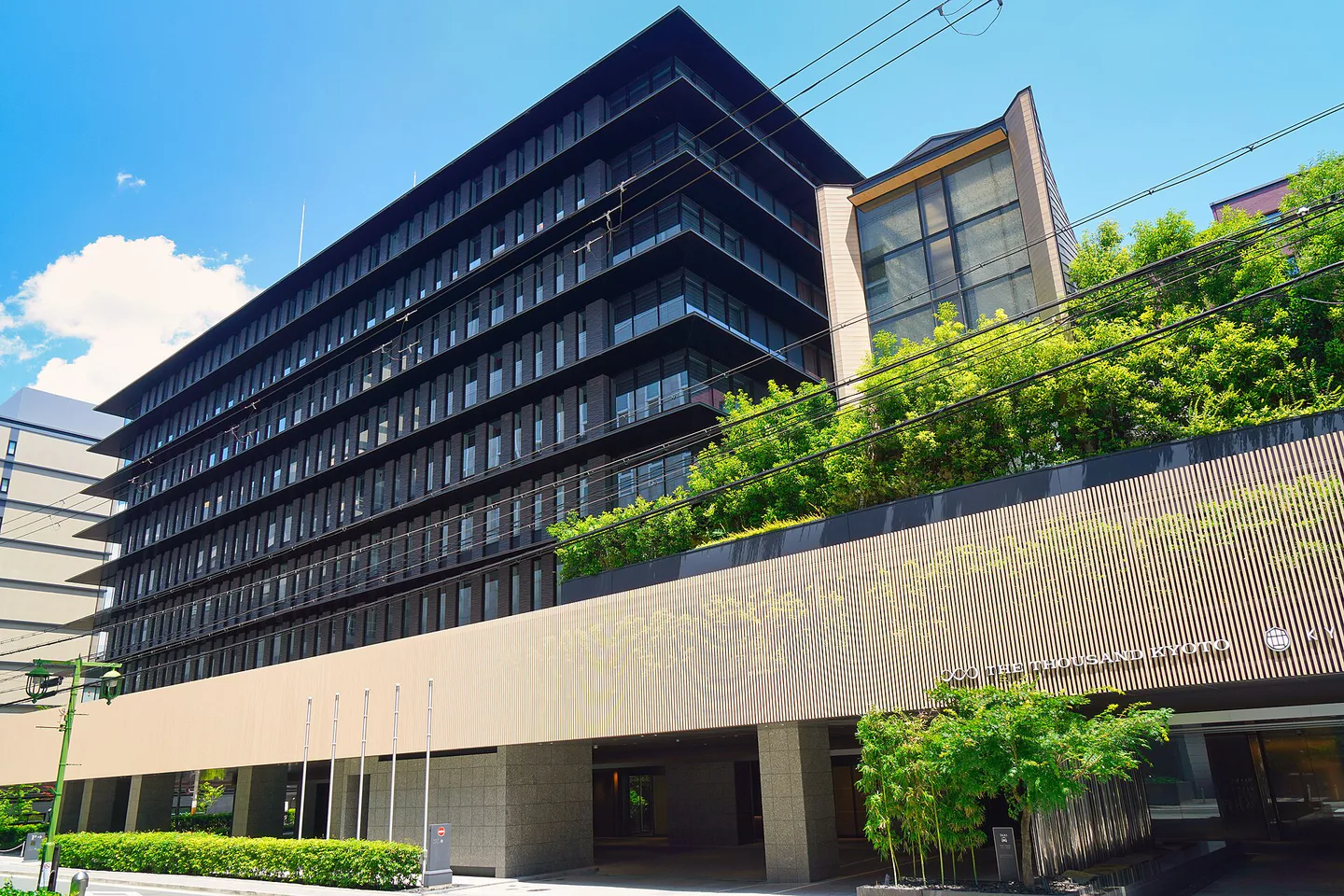
Four autumn nights in Kyoto rarely justify a hotel beside a single temple. Shijo-Kawaramachi or Karasuma usually gives a first-time visitor the most flexible base for routes that change with foliage and weather. Kyoto Station works better when the stay is short, suitcases are large, or JR journeys repeat. An eastern room earns its premium when the itinerary repeatedly starts at dawn or ends after an illumination. Osaka is a sensible base only when the trip is chiefly about Osaka and Kyoto receives a day or two.
Eikando shows why the exact daily sequence matters. A daytime Nanzenji and Eikando walk followed by Eikando illumination has a compulsory break between admissions. A room near Keage or Okazaki could turn that interval into a rest; a hotel across town cannot. Yet one such evening is a weak reason to pay an eastern hotel premium over an entire stay. See the Eikando night and hotel route.
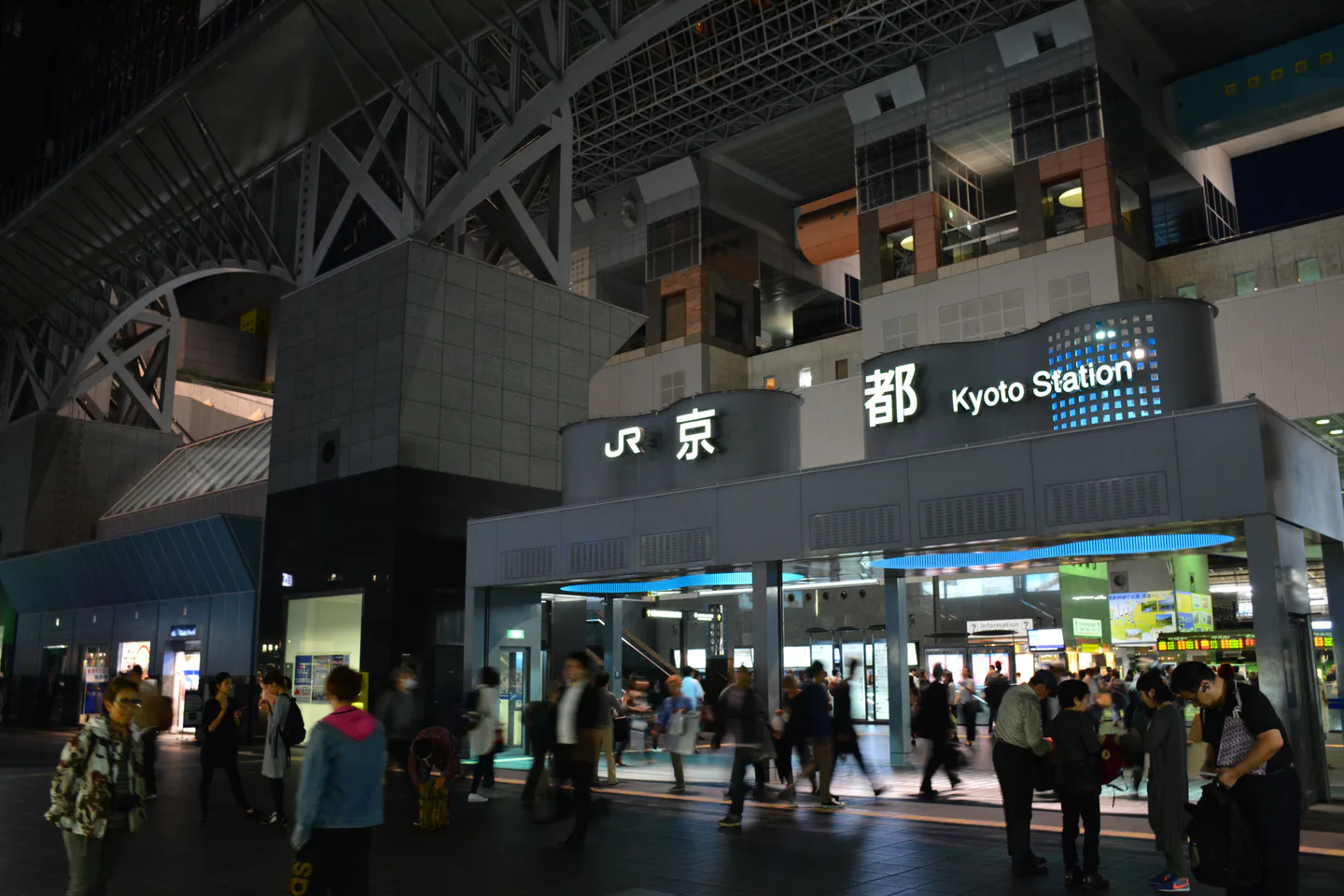
Kyoto Station entrance after dark; the station side suits arrivals with luggage and repeated JR departures.
Match the hotel area to the journey that repeats
↔ Scroll table left or right
Trip pattern | First hotel area to test | Why it fits | When to change the answer |
Three to five nights across several Kyoto districts | Shijo-Kawaramachi or Karasuma | Evening walks and several rail choices without a hotel move | Repeated very early or late eastern visits may favour the east |
Two nights with Shinkansen and large cases | Kyoto Station | Rail and baggage handling are concentrated at arrival and departure | A tightly east-focused itinerary can offset that benefit |
Two Higashiyama dawns or late nights | Gion, Higashiyama, Keage or Okazaki | The difficult local journey is avoided more than once | Check slopes and the last walk to the exact hotel |
Eikando by day and at night on one date | Keage or Okazaki | The forced exit between admissions can become a hotel break | One evening only seldom merits the premium |
Repeated early Arashiyama plus JR trips | Kyoto Station or Nijo | The Sagano Line advantage occurs repeatedly | Late central dinners can reverse the saving |
Kyoto inventory poor, mainly east-side visits | Otsu before Osaka | An eastern overnight may shorten the repeated approach | The exact Otsu stop and a west-Kyoto plan may undo it |
Eikando has separate daytime and evening sessions in 2026
The 2026 Autumn Temple Treasure Exhibition runs November 11–December 6. Day admission starts at 09:00; reception ends at 16:00 and the gate closes at 17:00. The current visitor information lists adult admission at ¥1,500. A booking made for a different autumn season should not be used as the price for this visit. See the 2026 visit information. See the east Kyoto autumn route.
The illumination runs November 20–December 6, with reception 17:30–20:30, closing at 21:00, and admission of ¥1,000 for junior-high-school age and above. Day visitors must exit before returning for the evening on a separate ticket. The interval is real even if the two sessions take place at the same temple. See Eikando — 2026 Autumn Temple Treasure Exhibition and illumination announcement. See the Kyoto autumn event listing.
A Keage or Okazaki room makes that interval useful when the plan genuinely includes both admissions, perhaps after a Nanzenji walk. The gap can hold a shower, warm clothes, a child’s rest, device charging or dinner away from the crowd. For one illumination visit, arrive from a central hotel instead. The hotel saving can outweigh a single extra local journey.
Private cars and large sightseeing buses cannot enter Eikando during the special autumn period. Approach on foot from a suitable rail or subway stop; a hotel car park does not solve the temple access limit.
Kyoto Station: the suitcase and JR base
A Tokyo arrival by Shinkansen, a morning train out, or a short two-night stay makes Kyoto Station easy to use. The Shinkansen, JR Nara and Sagano lines, and the city subway meet here, so bags can go into the hotel before the first local excursion. The advantage is especially tangible when a room is close to the exit actually used. See Kyoto City — luggage services. See Kyoto Station versus Gion lodging.
For Arashiyama, Tofukuji, Fushimi Inari, Uji or Nara, the station-side start can save a cross-city leg. Gion, Kiyomizu, Nanzenji and Eikando are different: return from several eastern evenings and the station commute becomes a daily cost, often after a long walk. See an Arashiyama autumn morning.
One evening in Higashiyama does not normally overturn the rail and luggage benefits. Repeated dawn starts and late returns in the east may.
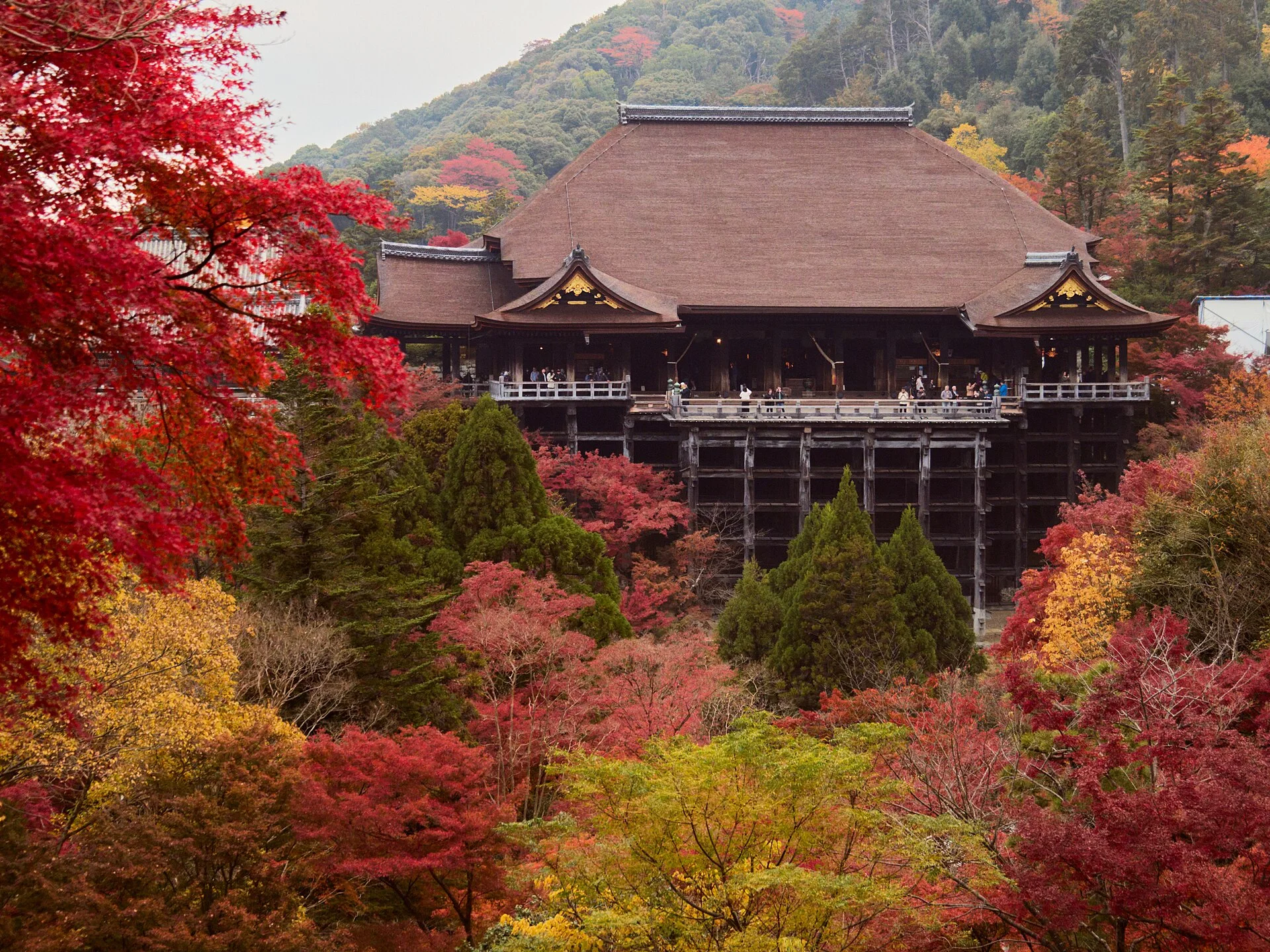
Kiyomizu-dera above the wooded hillside in autumn; this photograph illustrates the district, not the foliage forecast for a particular date.
Shijo-Kawaramachi and Karasuma for a mixed Kyoto stay
Kawaramachi places Pontocho, Kiyamachi, western Gion and the Kamo River near the evening walk home, with Hankyu and Keihan useful for onward routes. Karasuma Oike trades some doorstep atmosphere for the crossing Karasuma and Tozai subway lines. The right side of this central zone depends on the hotel entrance and the routes you will repeat. See Kyoto City travel information — getting around. See Kawaramachi or Kyoto Station with older parents.
On a four- or five-night first trip, this middle ground is useful when an eastern temple day, Arashiyama and a southern rail excursion all appear in the plan. Colour, rain and crowding can shift the best day for each. A central base leaves room to change the order without changing hotels. See Kyoto foliage by elevation.
Check the room floor area against the luggage, especially for a five-night booking. A 15–18 m² room shared by two people with large cases can erase the practical gain of a central address; price the category with enough space rather than assuming the smallest central room is better value. Weekend congestion also makes a precise station exit and hotel approach more useful than a broad area label. See Kyoto Travel Congestion Forecast. See a short Kyoto autumn plan.
East Kyoto earns its price through repeated early and late hours
Gion and Higashiyama make sense for two dawn visits, several late illumination returns, or a planned Eikando day-and-night pair. Keage and Okazaki often fit the Eikando and Nanzenji side of that plan better than central Gion: the Tozai Subway supports the approach and the room can serve the daytime interval. See Kyoto illumination options.
One sunrise photograph or a single Gion dinner rarely earns a whole-stay move. Check the last approach with the actual bags: eastern lanes may be narrow or sloped, and a taxi may still leave a final walk. Older guests and families should check lifts, taxi access, room size and roughly the final 500 metres from rail or subway before paying the premium. See Kiyomizu night-view hotel choice.
For two visits to Eikando on the same day, map the route between its gate and your room before paying extra for a nearby hotel. “East Kyoto” covers more ground than the brief day-to-night break allows.
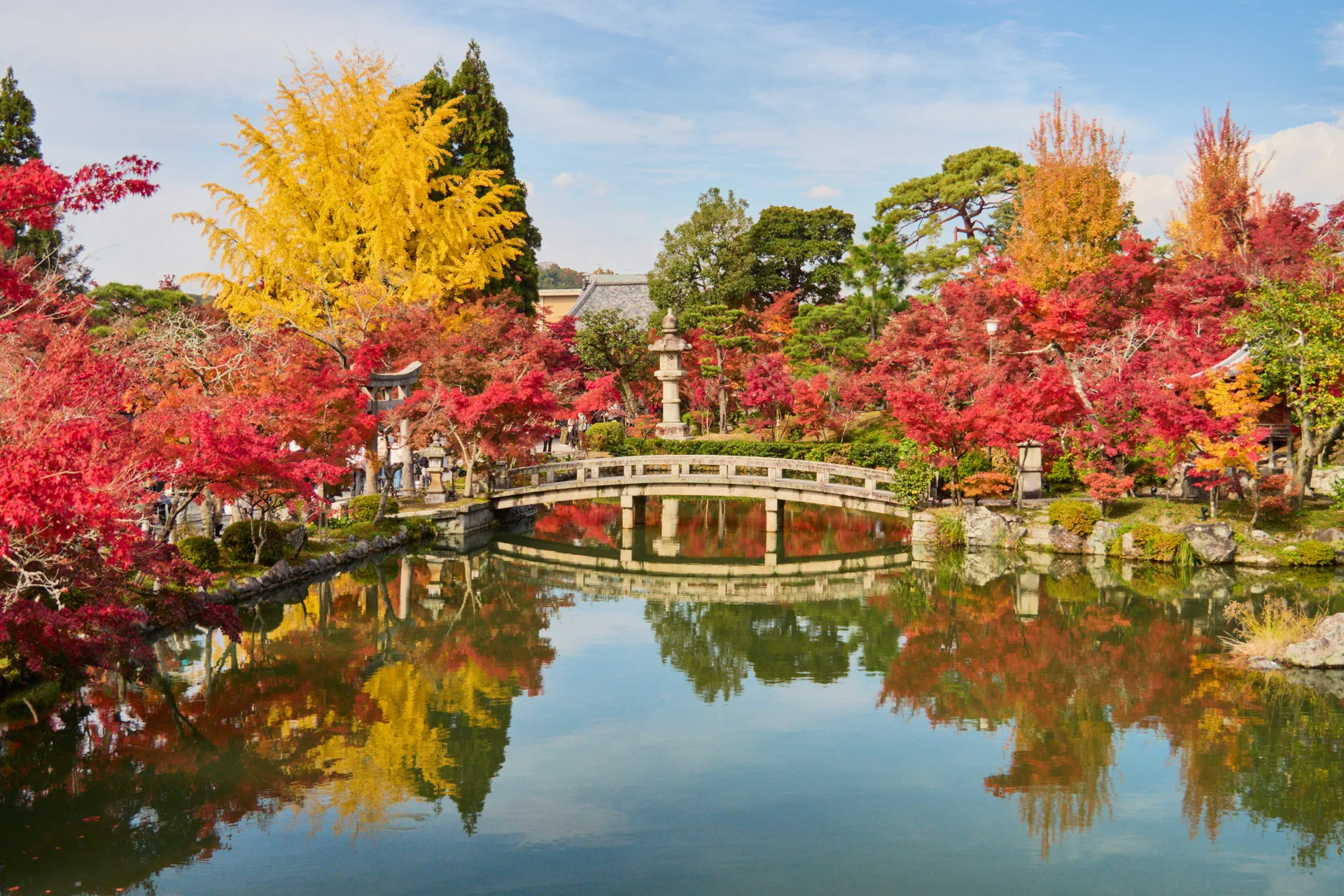
Autumn colour around Eikando’s garden pond and bridge in daylight; evening illumination has separate admission and is not shown here. Foliage peak and the listed illumination dates are separate conditions.
Nijo when the Sagano Line matters twice
Nijo combines JR’s Sagano Line toward Arashiyama with the Tozai Subway toward the east. That combination can suit a trip split between repeated northwestern starts and eastern sightseeing, especially when the hotel sits close to the right station entrance. See an Arashiyama station guide.
The district can be less satisfying after late meals around Pontocho or Gion. If those evenings repeat, a central room may save more effort than Nijo saves on one Arashiyama morning.
The JR advantage needs to recur. A single Arashiyama outing is seldom enough reason to move the entire stay to Nijo.
Otsu when Kyoto rooms are scarce
For an itinerary concentrated around Yamashina, Keage and east Kyoto, Otsu can be a closer overflow choice than Osaka. It keeps the overnight base on the east side of the city and may be worth comparing before accepting a long Osaka commute. See Kyoto Hotels Sold Out in Autumn?. See autumn rooms outside Kyoto.
Do not search “Otsu” as one uniform stop. Otsu Station, Biwako-Hamaotsu, Zeze and Ishiyama connect differently. A plan led by Arashiyama, Ohara or northwestern Kyoto can make an Otsu room awkward despite its apparent proximity on a map. See an Otsu lakeside hotel comparison.
Compare the exact rail stop and the destination that repeats, just as you would for a hotel inside Kyoto.
Osaka Umeda when Kyoto is a day trip
An Osaka-led holiday with one or two Kyoto days can use Umeda well. JR and Hankyu offer different Kyoto approaches, while an Osaka hotel may offer broader room choice and a convenient dining base for the rest of the trip. See Osaka hotels for Kyoto day trips.
Three Kyoto days built around dawn starts and illumination returns change the calculation. Each late return and early departure adds the intercity leg and reduces the hours available between them. A cheaper Osaka room can therefore cost the most useful autumn time.
If the overall trip still needs a city base, compare the full itinerary in the Kyoto-versus-Osaka guide before booking either market. See Kyoto vs Osaka for First-Time Visitors. See the Kyoto-versus-Osaka base comparison.
A second hotel needs to remove a real journey
With three to five Kyoto nights, one base normally beats repacking midway through the stay. A split can work when the second address removes at least two long journeys or protects one fixed, difficult deadline such as a dawn reservation after a late east-side night. See a Kyoto and Osaka split.
Here is the practical test for a proposed move:
Strong: start beside Kyoto Station for arrival and repeated JR days, then move east for two consecutive dawn or illumination sessions.
Weak: move to Higashiyama for one Eikando night and change hotels again the next morning.
Strong: move from Kyoto to Osaka when the national itinerary really shifts its geographic centre.
Weak: move to Osaka for one shorter airport journey while most sightseeing remains in Kyoto.
A hotel transfer consumes checkout, baggage storage or movement, check-in and a portion of the day. Keep the first room when the gain is only a slightly shorter ride to one attraction.
Three itineraries, three different bases
Two nights with large luggage and intercity trains
Use Kyoto Station. Bring the bags off the train, make one or two deliberate local journeys to Higashiyama, and leave the departure day simple. See Kyoto Station and Kawaramachi access.
Four nights with several districts and one illumination
Shijo-Kawaramachi or Karasuma keeps the routes adaptable. A single evening admission does not outweigh central access across the other days. See Kyoto autumn crowd timing.
Four nights with two Eikando or Nanzenji days
Keage or Okazaki deserves a closer look if one day includes both Eikando sessions and another begins early nearby. The room can be a genuine rest stop during the required day-to-night exit interval. See an Eikando illumination hotel comparison.
The booking decision
Count the journeys that repeat. Kyoto Station helps short stays, luggage and JR-heavy itineraries; the Shijo central zone suits mixed first visits; Keage, Okazaki or another eastern address helps only when early and late east-side hours recur. Nijo, Otsu and Osaka each answer a narrower itinerary.
For the 2026 Eikando season, the day exhibition runs November 11–December 6 and the illumination November 20–December 6. Those dates sharpen an eastern hotel case only when the traveller will use both the daytime and evening windows.
Related Kyoto planning
The Eikando and Nanzenji route, an autumn crowd plan, sold-out Kyoto alternatives and the Kyoto-versus-Osaka comparison can help test the hotel choice against the whole itinerary. See Avoid Kyoto Autumn Crowds.
Accommodation search by district
Compare rooms near Shijo-Kawaramachi, Kyoto Station or Keage and Okazaki after the route is fixed. The price alone does not show the cost of repeated transfers. See rooms around Shijo-Kawaramachi. See rooms around Kyoto Station. See rooms around Keage.
Related guides: Where to Stay for Kyoto Summer Events: Station, Kawaramachi, Otsu or Kibune · Where to Stay at Lake Kawaguchi for Autumn Leaves: Station, North Shore or Fuji-Yoshida? · Kyoto Station vs Gion: Where Should You Stay in Kyoto? · Where to Stay in Kyoto: Kyoto Station, Kawaramachi or Higashiyama? · Where to Stay in Hokkaido for Autumn Leaves: Six Bases Compared · Where to Stay in Takamatsu: Station or Kawaramachi for Ferries, Trains and Evenings? · Where to Stay for Tohoku Autumn Leaves: Sendai, Morioka, Aomori and Hachinohe · Where to Stay for Oirase Autumn Leaves: Gorge, Lake Towada, Hachinohe or Aomori · Where to Stay for Kochi Yosakoi: Station, Obiyamachi or Saenbacho · Osaka Hotels for Kyoto and Kobe Day Trips: When 3–5 Minutes to the Station Matter Twice a Day
More Kyoto and autumn routes
Osaka Concert Hotels: Where to Stay for Kyocera Dome, Osaka-Jo Hall or Zepp Namba
Hakodate and Onuma Autumn Leaves: Late Foliage Timing, Transport and Where to Stay
Asahidake vs Kurodake Autumn Leaves: Ropeways, Hiking and Where to Stay
10-Day Japan Autumn Leaves Itinerary: Regional Routes, Transport and Where to Stay