
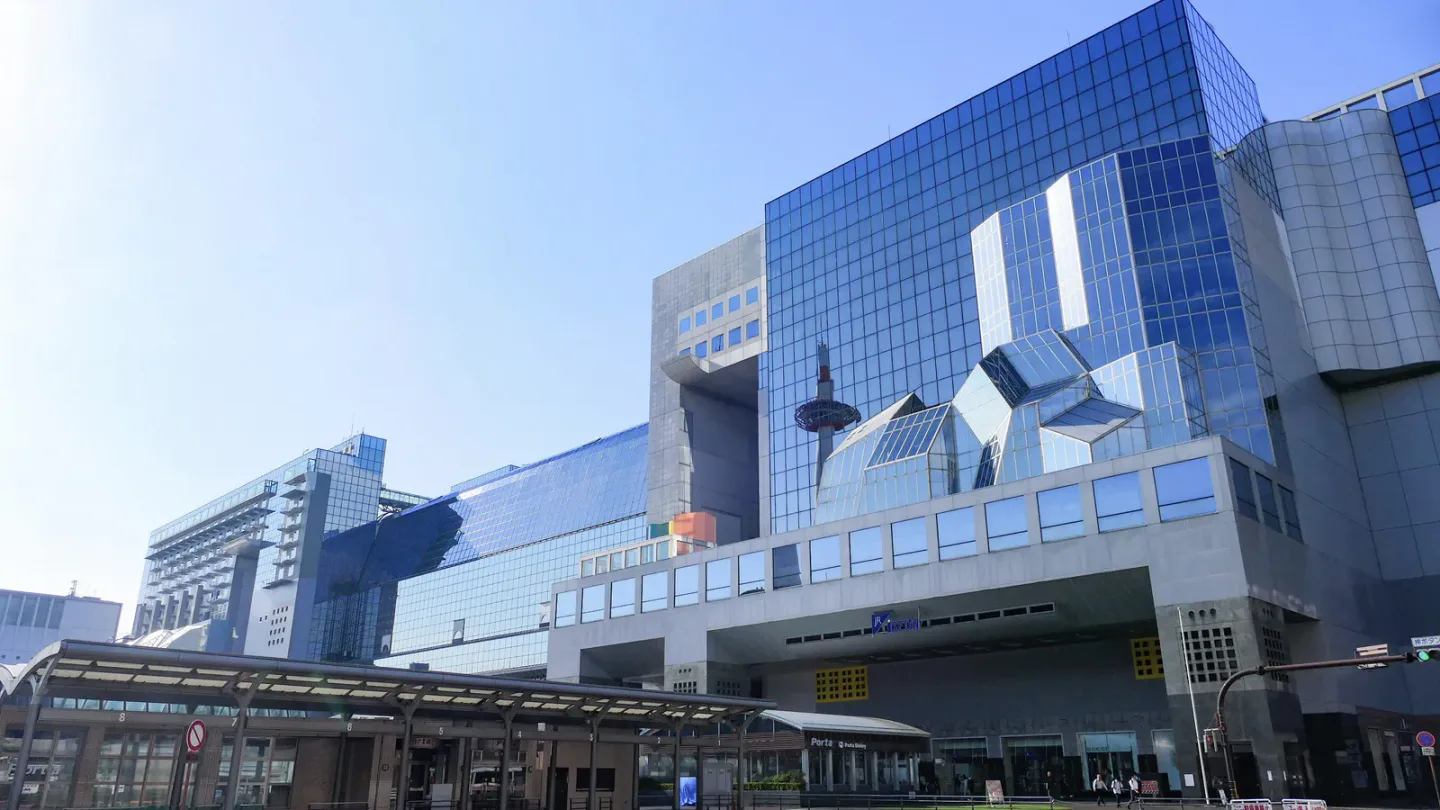
With older parents, the best Kyoto hotel is often the one that removes the journey repeated when everyone is tired. Kyoto Station saves a local transfer on Shinkansen arrival, departure and JR-heavy day trips. A downtown hotel can make dinner and a midday rest much easier to reach. Count those returns across the stay; the rail ride listed on a map is only part of the effort.
The choice has three useful centres. Kyoto Station suits a rail- and luggage-led trip. Shijo/Karasuma puts the Karasuma subway and Hankyu railway near central streets, making it a middle option. Kyoto-Kawaramachi favours Pontocho, Nishiki and Gion-side evenings. “Shijo” alone does not tell you which of those journeys a hotel will shorten. For a parent with limited walking tolerance, the exact door, station exit and taxi approach can outweigh the district label.
↔ Scroll table left or right
Repeated need | First area to examine | What it saves | What you still give up |
Shinkansen both ends and at least two JR days | Kyoto Station | Extra local rides with bags and after rail outings | Central evenings still take a journey |
Mixed sights, Nara or Uji, and parents tired after dinner | Shijo/Karasuma | Direct subway access with a shorter downtown return | Gion and Pontocho are not beside every hotel |
Pontocho, Nishiki, Teramachi and Gion-side evenings | Kyoto-Kawaramachi | Several returns on foot instead of by rail | JR days add a local transfer |
Wheelchair, walking aid or very low walking tolerance | Judge the exact property | A usable lift, curbside approach and simple entrance | A short map distance may hide stairs or a long passage |
Two ends of Shijo serve different journeys
Kyoto’s route guidance gives about four minutes on the Karasuma Line from Kyoto Station to Subway Shijo Station. An underground passage connects Shijo with Hankyu Karasuma Station. That is why a hotel around Karasuma can remain practical for JR arrivals while keeping central Kyoto within reach. This describes the station-to-station ride, not the total time from train platform to a hotel lobby.
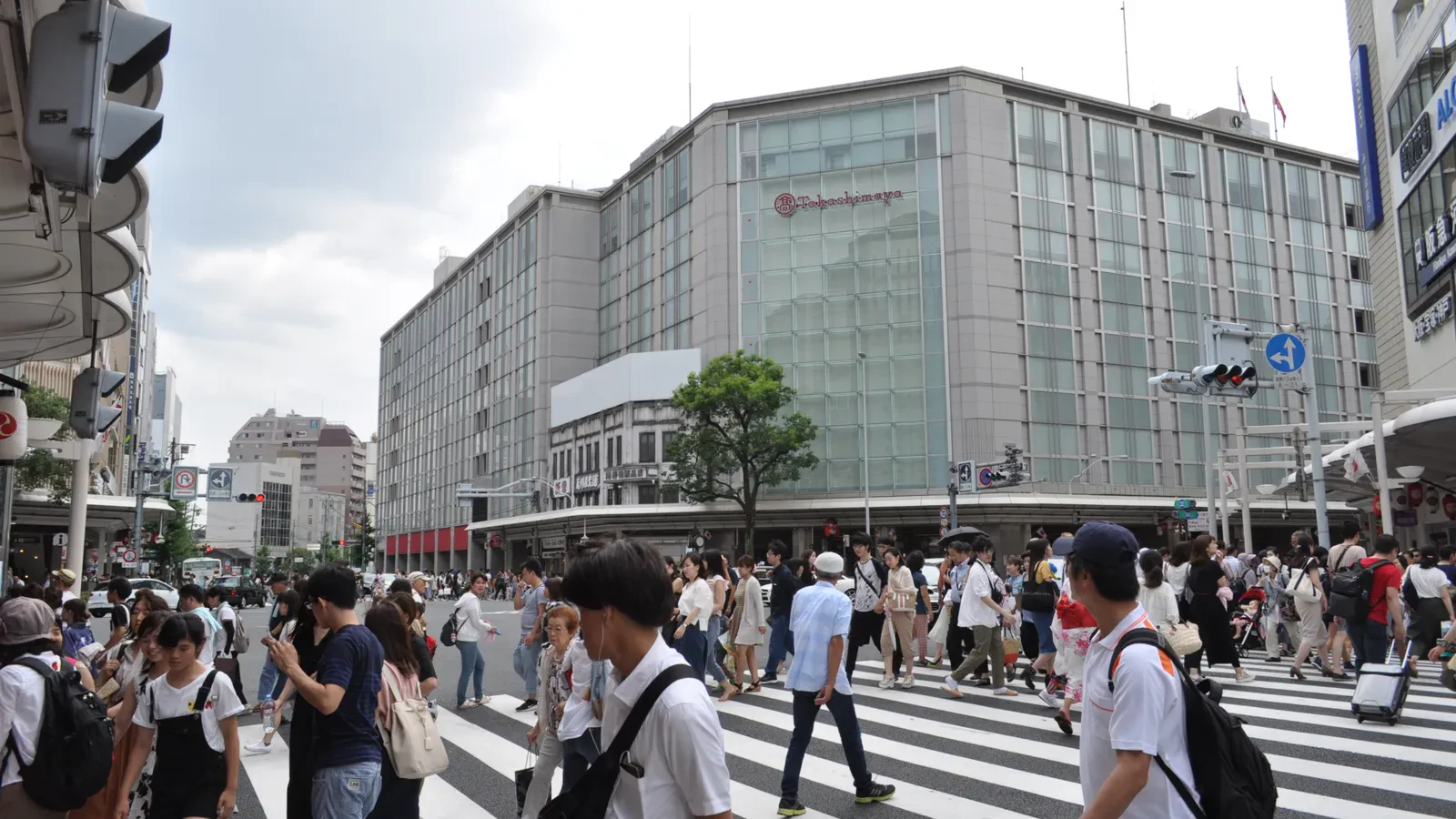
Kyoto-Kawaramachi is one Hankyu stop east of Karasuma. It places Pontocho, Teramachi, Shinkyogoku and the western approach to Gion closer to the end of the day. The separation from the subway is real: Kyoto’s Kinkaku-ji route estimates about thirteen minutes on foot from the Shijo-Kawaramachi intersection to Subway Shijo Station. An underground passage can shelter part of that walk, but it does not eliminate the distance.
A hotel advertised near “Shijo” can therefore be beside a subway entrance, near the Hankyu platform or much farther east by Kawaramachi. Mark the actual property and the exit your parent would use. A two-minute hotel claim may measure from the nearest station boundary, while the step-free exit and the route with a suitcase are elsewhere.
Count demanding legs across the whole stay
A demanding leg can be a large-station transfer with bags, a long underground passage, a packed bus, an exit with stairs or a second walk after dinner. Give each day its real sequence instead of adding only published train minutes. One short connection on arrival is tolerable for many travellers; doing a difficult return every evening has a different cost.
Take four nights with a Shinkansen arrival and departure plus day trips to Nara and Uji. A Kyoto Station hotel can simplify four rail-oriented days, not merely the two days with suitcases. The station area becomes more attractive if the group expects to rest at the hotel between train travel and dinner.
Now consider two Higashiyama days, three dinners near downtown and a parent who regularly returns for a midday break. Kyoto Station may help only at the two rail endpoints, while a central room could remove several evening journeys and make a rest feasible. On this pattern, a small daily saving matters more than an easier single arrival.
Kyoto Station pays off when JR is repeated
A station-side room is useful for Shinkansen travel, a later move to Tokyo or Hiroshima, and JR day trips toward Nara or Uji. The shorter walk between luggage and the hotel is immediate; the less obvious benefit is avoiding another local ride after returning from a long day. Check which side and exit of the large station the hotel actually occupies, because “near Kyoto Station” can still involve a long crossing.
Kyoto also offers station-based baggage storage and delivery to accommodation. The city asks visitors to avoid taking large cases onto crowded city buses, which makes a bag hand-off useful for everyone as well as for older parents. If the only argument for sleeping by the station is carrying cases on the first day, compare that service with a central hotel. Delivery has deadlines and does not cover every property, so confirm the receiving hotel and the hand-off time before relying on it. It can make a downtown base feasible without forcing an older parent to drag luggage there.
Ask how often the station location saves work after arrival. If the answer is a Nara day, a Uji day and departure, the hotel may justify its rate. If the only savings are the first and last journeys, four nights next to the platforms may be the wrong allocation for a trip whose evenings take place elsewhere.
Shijo/Karasuma gives rail access without a station-area evening
Subway Shijo links directly to Kyoto Station, and Hankyu Karasuma lies alongside it beneath Shijo-dori. Nishiki Market and central dining are closer than from the Shinkansen side of Kyoto Station. This can suit parents who walk normal city distances but do not want a long transit tail after every meal. The location still calls for a specific hotel route: the underground connection and street exit add time beyond the four-minute subway ride.
Hankyu lists elevators, escalators, a slope and an accessible toilet at Karasuma Station. These facilities improve the range of workable routes, but not every numbered exit is step-free or equally close to the hotel. Inspect the station map and ask the hotel which exit it recommends for someone avoiding stairs. A lift that deposits you on the wrong side of a busy road may not deliver the easy approach you expected.
For a group that splits its days between JR excursions and downtown meals, Karasuma can reduce the extremes. A return from Kyoto Station still needs one subway leg, but the hotel is closer to Nishiki and the evening streets than a platform-adjacent property. It is less immediate for Pontocho or eastern Gion than a Kawaramachi address; do not describe both as the same “central” location.
Kawaramachi is an evening choice
A Kyoto-Kawaramachi hotel earns its extra connection when the group repeatedly spends late afternoon around Pontocho, Teramachi, Shinkyogoku, department stores or Gion’s western edge. The benefit is getting back to the room after dinner without another metro ride or a long walk. That can be more valuable than saving a few minutes on the morning departure, particularly when a parent needs an unplanned break.
Nishiki illustrates the difference. From the Shijo-Kawaramachi intersection, the market is close by foot through the central shopping streets. From Kyoto Station, the city suggests the Karasuma subway to Shijo and then a short walk. Neither route is difficult for everyone, but a parent who returns to the room before and after dinner will notice the repeated local connection.
There is little reason to pay a Kawaramachi premium for a group that eats early near its hotel and rarely goes out afterward. In that pattern, Shijo/Karasuma or Kyoto Station can offer a better balance of transport and rest. Choose the evening location because you will use it, not because an area guide calls it lively.
A bus terminal does not guarantee an easy bus day
Kyoto Station has many bus departures, yet boarding a crowded vehicle after a day on foot can be harder than an extra train ride. Kyoto’s route advice recommends rail where it reduces congestion and notes that the city-centre bus can be slow at stops and on the road. The bus network remains useful; the point is to choose it for the actual journey, rather than assuming proximity to the main terminal makes a hotel accessible.
Build most days around JR, subway or Hankyu where those lines fit, and reserve a short taxi for the final approach that would otherwise involve a slope or a long walk. A taxi need not replace the whole day’s transport. The useful question is which single segment causes the older traveller the most strain and whether a car can remove it.
Kyoto publishes congestion information for places including Gion/Kiyomizu, Nishiki, Kyoto Station and Fushimi Inari. Consult it for your actual date and time. A bus route that looks short in a timetable can be unpleasant at a peak stop, while an early or later departure may change the experience. Keep the plan adaptable rather than promising a fixed bus ride time.
A lift in the station is only one piece of the route
Hankyu lists elevators and accessible facilities at both Karasuma and Kyoto-Kawaramachi. Kawaramachi also has exits spread across a wide central area. The existence of a station lift does not mean the nearest signed exit to a hotel is the easiest one. A route can be step-free but still require an extended underground walk or an inconvenient street crossing.
Before accepting a short advertised station walk, check the actual approach:
Which station exit has a working lift for the direction we will travel?
How far is that particular exit from the lobby when walking at our group’s pace?
Can a taxi stop near the entrance without a difficult crossing or a long arcade approach?
Will the same route still work with luggage, in rain and after a tiring day?
A hotel 150 metres farther away can be the better mobility choice if its route is flat, easy to recognise and accessible by taxi at the curb. Distance alone misses stairs, arcades, crossings and the need to backtrack inside an underground passage.
The itinerary can settle the district
Four nights with Nara and Uji by rail
Use Kyoto Station as the first shortlist if Shinkansen travel brackets the stay and Nara and Uji occupy separate days. The hub removes repeated local connections. Downtown dinner still takes another journey, so include a meal near the station or budget a taxi back when a day has already been long.
Four mixed days with Nishiki and Gion
Start with Shijo/Karasuma when the group has one Nara day but spends other afternoons downtown. Direct subway access keeps Kyoto Station practical, and Hankyu expands rail options. A walk to Pontocho or Gion remains, so compare actual hotel locations rather than expecting those streets at the lobby door.
Slow Kyoto days with a room break
Kyoto-Kawaramachi or the western edge of Gion can work better for three or four days centred on evening walks and an afternoon return to the room. It earns its cost through repeated nearby outings. The group pays for that convenience on JR and Shinkansen days with an additional local connection.
The hotel door can overrule the area result
A district is only a starting filter. For older parents, the more comfortable property might have a clear curbside entrance, a larger room, suitable separate beds, an easier bathroom threshold, a dependable lift or a better taxi stopping point. Compare those concrete features before paying for the theoretical winning area. Two hotels in the same block can offer very different arrival routes.
Avoid splitting a two- or three-night Kyoto stay simply to sample both locations. Checkout, luggage transfer and a second check-in add work to a short trip. Four or five nights may justify a move only if the itinerary truly changes phase—for example, rail excursions first and slow central evenings later—and the group gains more than it loses in the move.
Pick the location that removes the repeated hard leg
Kyoto Station is the starting answer for repeated JR movement and luggage. Shijo/Karasuma balances station access with central dining. Kyoto-Kawaramachi works when Gion-side evenings and room breaks are used often enough to repay the extra rail connection. Test these against the actual daily route and each parent’s walking capacity.
Do not merge Karasuma and Kawaramachi into one point. The city estimates about thirteen minutes on foot between Shijo-Kawaramachi and Subway Shijo; that distance can matter at the end of a long day even when it looks negligible on a city map. Mark which station, platform, exit and hotel entrance each planned journey really uses.
For a parent using a wheelchair or walking aid, or with very limited tolerance for distance, stop ranking districts in the abstract. Ask the hotel for its step-free route and nearby taxi drop-off, then compare that with the places you will visit most. A room reached reliably can beat a more central address with an awkward last few hundred metres.See hotels near Kyoto Station · Compare Kyoto Station and Kawaramachi hotel locations on the map or See hotels near Kawaramachi; compare the exact hotel entrance and step-free route before booking.
Related Kyoto stays and routes
Where to Stay in Kyoto: Kyoto Station, Kawaramachi or Higashiyama?
Kyoto Station vs Gion: Where Should You Stay in Kyoto?
Nara from Kyoto or Osaka: Which Day Trip Is Easier?
Avoid Kyoto Autumn Crowds: Rail Corridors, Early Starts and Hotel Bases
Station and visitor-service pages
Nishiki and Shijo access · Kawaramachi to Shijo walking route · Kyoto congestion map · Kyoto Station luggage delivery · Karasuma station facilities · Kyoto-Kawaramachi station facilities
Related guides: Where to Stay in Kyoto for Autumn Leaves: Kyoto Station, Kawaramachi, Gion or Osaka? · Where to Stay for Kyoto Summer Events: Station, Kawaramachi, Otsu or Kibune · Osaka With Parents for 7 Days: Cut Transfers, Not Kyoto, Nara or USJ · Sapporo Hotels With Parents: Snow, Stairs and Daily Transfers Matter More Than “5 Minutes from the Station” · Where to Stay in Osaka With Kids — USJ, Namba or Osaka Station? · Osaka Cultural Itinerary: 7 Days of Sumo, Tea Ceremony, Samurai and Sake — With One Night in Kyoto · Where to Stay in Takamatsu: Station or Kawaramachi for Ferries, Trains and Evenings? · La'gent Stay Hakodate Ekimae: Is a 1-Minute Station Hotel with Overnight Onsen Worth It? · Okinawa With Parents: The Best Hotel Is the One That Removes the Last 10 Minutes · Where to Stay in Osaka With Parents: Cut Transfers Before You Pay for More Luxury
More trip planning
Osaka Budget Itinerary: 7 Days With USJ, Kyoto, Nara and Kobe — Without Buying Every Pass
Fukuoka Hotels With Parents: Reduce Repeated Walking, Transfers and Bathroom Friction
Osaka Hotels for Kyoto and Kobe Day Trips: When 3–5 Minutes to the Station Matter Twice a Day
Osaka and Kyoto 4-Day Itinerary With USJ: Does Kyoto Still Fit?
Where to Stay in Tokyo With Parents: I’d Eliminate These “Convenient” Hotels First