
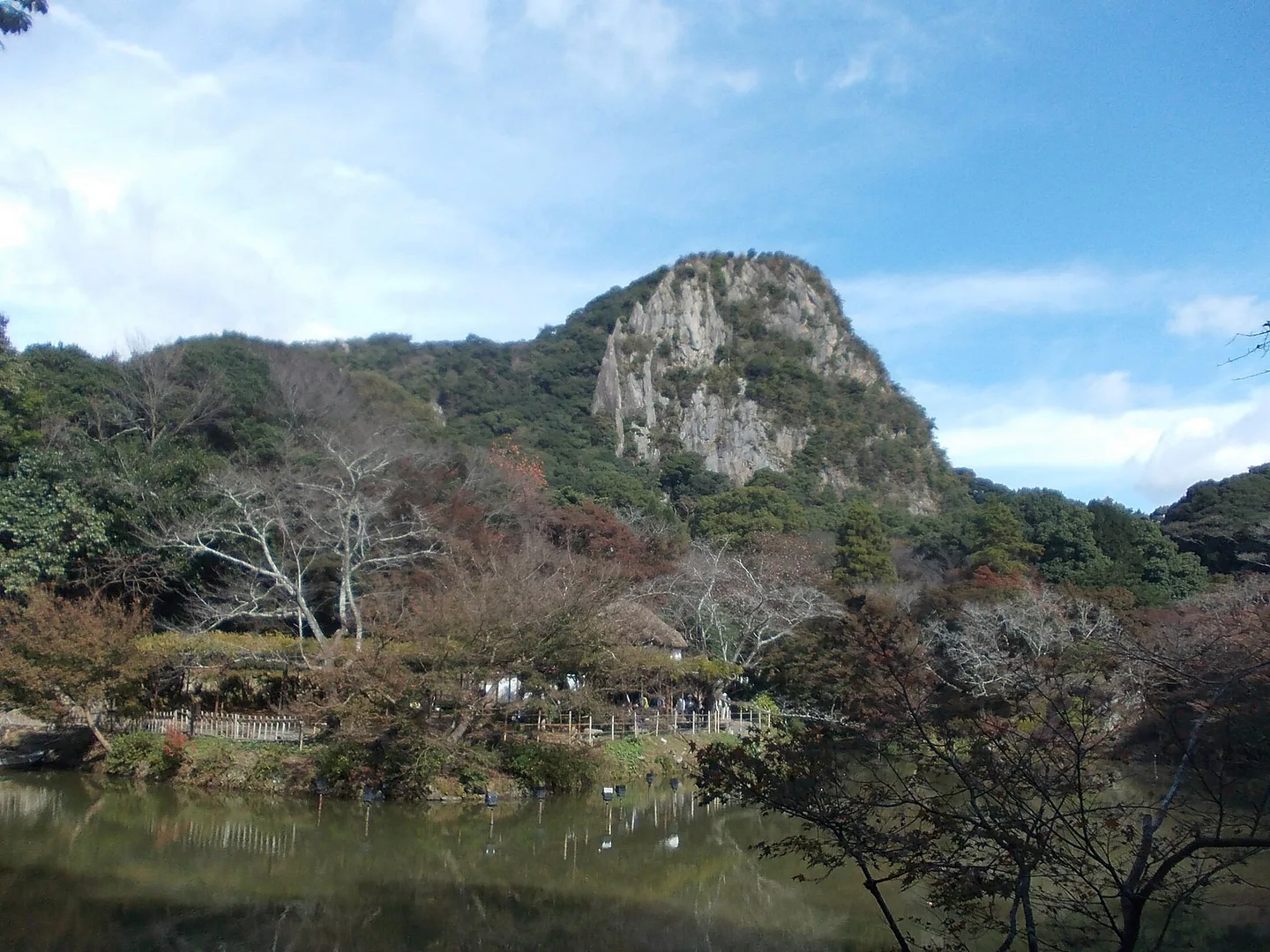
Mifuneyama Rakuen gives you two quite different autumn visits in the same garden. Natural colour is visible during the day; Tamayura no Yube lights parts of the grounds after dark. For 2026 the festival runs from 6 November through 6 December, with daytime admission 08:00–17:30 and evening admission 17:30–22:00, including rainy days. A date inside that window confirms an event, not that the trees will be at their best. If your main reason to travel is the foliage rather than the lighting, leave room in the itinerary to adjust once colour develops. The wider Kyushu autumn timing map helps decide where else to spend that day.
The apparent low ticket price can hide the harder part of the trip: getting from the garden to a useful train after a night visit. A weekend shuttle is planned, but weekday visitors need another exit. Staying in Takeo is particularly valuable if you want both natural colour and the illuminated paths without watching the clock. If you can only spare an afternoon from Fukuoka, choose daylight unless a firm evening ride and rail backup are already arranged. Kyushu by car or public transport explains how that choice changes a regional foliage route.
↔ Scroll table left or right
2026 festival product | Adult / junior-high age and older | Elementary-school child | Hours |
Day garden only | ¥600 | ¥300 | 08:00–17:30 |
Evening illumination only | ¥600 | ¥300 | 17:30–22:00 |
Combined day and evening | ¥900 | ¥400 | Both published sessions |
Hotel guests at Mifuneyama Rakuen Hotel or Onyado Chikurintei | Standard garden entry included | Confirm covered guests and dates | Garden admission is separate from other hotel or art access |
The combined ticket buys two light conditions, not a promise of peak colour
A single day or evening entry costs ¥600 for adults and students from junior high onward, or ¥300 for elementary children. The combined admission is ¥900 and ¥400 respectively. That makes the incremental cost of seeing both garden sessions modest, but a combined ticket is useful only if your transport, mobility and energy allow a second walk. The garden publishes the two time blocks; it does not spell out every handover or re-entry detail on its main event page. Check the current gate arrangement for your date if you plan to leave for dinner between sessions. Do not assume a ticket lets you remain in one place continuously from afternoon to late night.
The outdoor space covers about 500,000 square metres, with an illuminated section described at roughly 13 hectares. The 170-year-old maple, Azalea Valley, Furimuki Slope and reflections across the pond give daylight visitors more than a single photo stop. At night the same contours and trees become a route of lit scenes. That difference is a reason to buy both sessions if this is the centrepiece of a Takeo stay; it is a poor reason to miss the last sensible train home. Japan’s 2026 autumn colour calendar provides regional context, while the live condition of this garden still depends on weather closer to arrival.
If only one admission fits, pick it by what you want to see. Daylight reveals the actual leaf colours, the terrain underfoot and views across the water. Night entry is about the illumination; it is less useful if your goal is to judge subtle red and yellow foliage. A late-afternoon arrival with a combined ticket can capture dusk, but build in enough time for the steep paths before darkness. A traveller whose mobility is limited may enjoy a focused pond-and-maple visit far more than a rushed circuit intended to justify both tickets.
The garden, the hotel art and the sauna are separate bookings
The autumn garden ticket covers the foliage festival and Tamayura evening within the session printed on the ticket. Mifuneyama Rakuen Hotel also houses teamLab installations. That indoor art has its own viewing rules: the hotel currently lists general-viewer art admission at ¥700, while hotel guests and Rakan no Yu day users can enter under their respective arrangements. It is open year-round except closed days, with hotel-listed viewing hours of 11:00–22:00 and last admission at 21:30. Those rules do not turn a ¥600 garden ticket into a combined art-and-sauna pass. The historic outdoor Forest Where Gods Live project is a separate seasonal programme; do not buy autumn garden admission expecting every previous teamLab installation to be running.
The same separation applies inside the grounds. Haginoo Ochaya offers daytime tea with skewered sweets and an evening tea-and-zenzai set during the foliage festival. Its late Chaya Bar is for guests of Mifuneyama Rakuen Hotel and Onyado Chikurintei. Rakan no Yu bathing has its own eligibility and sessions, while selected room categories may have private paths or other benefits. Garden entry for hotel guests is listed without the standard charge, yet the exact stay dates, party and access period should still be matched to the reservation. A non-guest should budget for each chosen product rather than assuming a hotel photograph shows facilities included in garden admission.
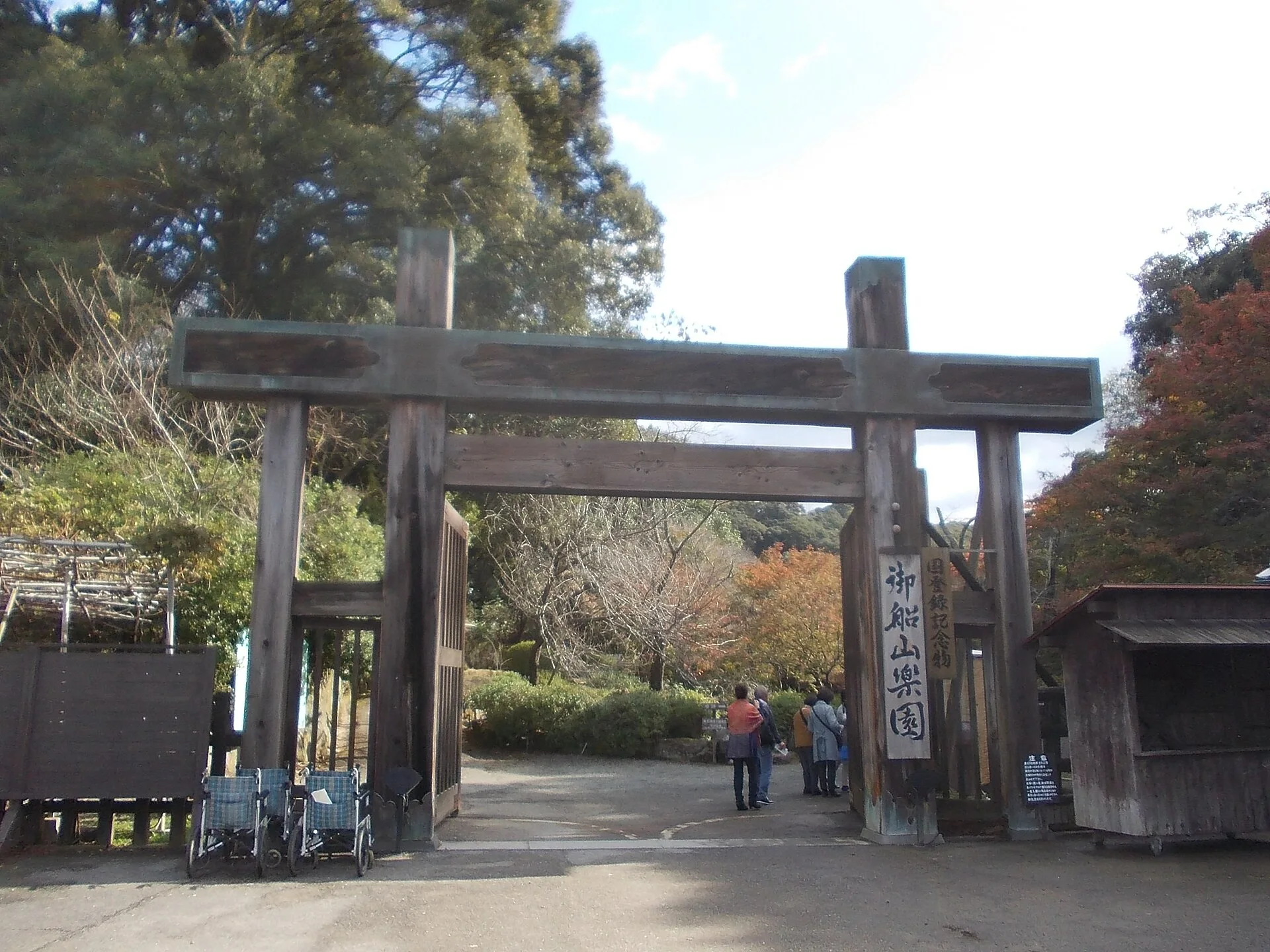
A meal can also affect the route. The garden lists the kaji synergy restaurant with lunch last order at 14:00 and dinner last order at 20:30, closed Mondays and the third Sunday. A booking there is a separate decision from a garden ticket. If you intend to leave the garden, eat and return for lighting, confirm both the restaurant booking and the event’s re-entry handling. For travellers with a reserved ryokan dinner in Ureshino, this is especially important: the meal clock may make a long night garden visit impossible even when the rail journey looks short on a map. How dinner plans change a one-night ryokan stay sets out that general booking trade-off.
A dark sloping garden needs a shorter route for some visitors
A comfortable circuit is often around 60–90 minutes before photography stops and crowding; a visitor spending substantial time on the colour and illumination can take more than two hours. These are planning allowances, not a guaranteed route duration. The garden identifies two steep slopes that become slippery in rain. Good grip matters more than a polished city shoe, and a waterproof outer layer lets you stay warm without carrying an umbrella through a crowd. Rain does not cancel the festival, but it can reduce the portion of the dark path that a family or older visitor wants to attempt.
The park has five loan wheelchairs, subject to availability. Its access advice is quite specific: for Haginoo Ochaya, wheelchair users should return toward the entrance along the approach they used, then take the path to the tea house, because the signed return path has stairs. Treat the entrance, pond and main maple section as a complete visit if the steeper ground is unsuitable. A stroller will face the same gradient and uneven-surface questions, especially at night. Do not promise a step-free complete circuit merely because loan wheelchairs are available at the entrance. Unzen Nita Pass in autumn is another Kyushu landscape visit with very different access constraints.
Drones are prohibited, as are tarps and bringing alcohol into the garden. The event page does not give a blanket answer to every camera accessory or commercial-shooting case. If a tripod, bright flash or other gear is essential to your work, settle its use with the venue before carrying it across the slopes. People primarily taking personal photos can avoid the problem by travelling light and keeping a clear path for other visitors. There is no need to treat the darkest section as obligatory if crowding or wet ground makes it uncomfortable.
The weekend shuttle is useful; the return is the real timetable
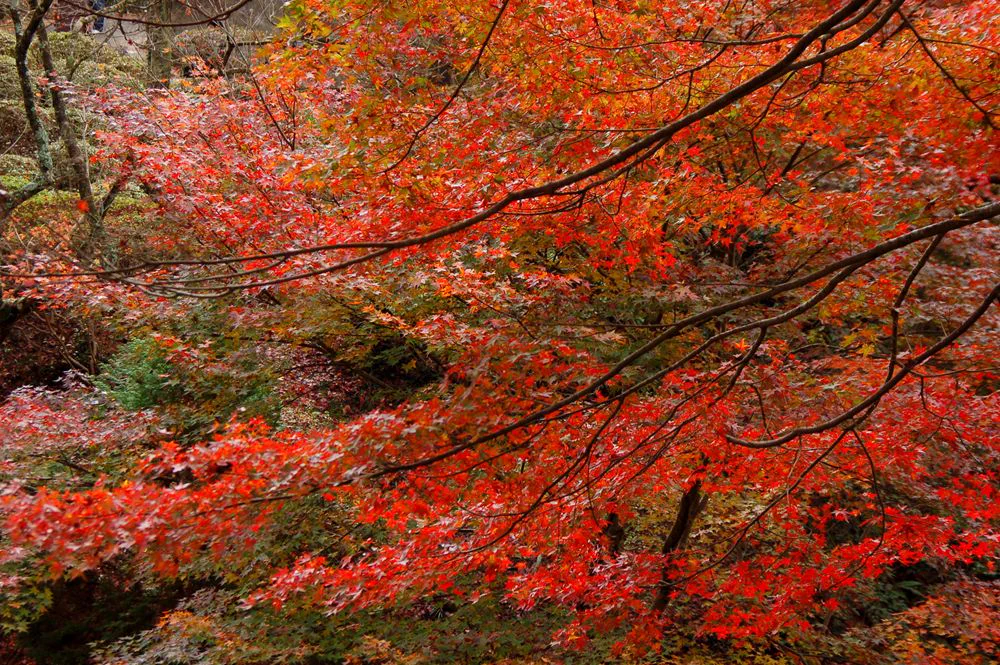
During the 2026 foliage festival, the Takeo tourism association lists a free shuttle on Saturdays, Sundays and Japanese public holidays between Takeo-Onsen Station North Exit and Mifuneyama Rakuen. Its stated operating span is 08:00–22:00, with about three return trips an hour planned and no reservation. “Planned” matters: it is an operating outline rather than permission to arrive at the stop at 21:59 and expect an immediate departure. Save the train you intend to catch and an earlier rail fallback before entering the garden. On a weekday, do not wait for a festival shuttle that is not scheduled.
The ordinary alternative is a JR Kyushu bus from the station South Exit in the Ureshino direction, alighting at the Mifuneyama Rakuen stop, or a taxi. The garden places Takeo-Onsen Station roughly five minutes away by taxi. Bus frequency and the final departure can differ from the festival hours, so the public bus is most useful when its particular service matches your session. At the dark end of an evening, a taxi can become the practical fallback; save the garden address and allow time to request one. A family with large bags should deposit them at the station or hotel before travelling to the entrance, not drag them across the garden.
↔ Scroll table left or right
Starting point and timing | Outbound plan | Safe return question |
Takeo station, weekend or public holiday | North Exit free festival shuttle, if running | Which departure gets you to your booked train? |
Takeo station, weekday | South Exit route bus or taxi | Is there a bus after the evening session, or must you book a cab? |
Fukuoka day trip | Early rail arrival and garden in daylight | Can you leave before night transport narrows? |
Takeo hotel stay | Leave luggage and use garden as an evening outing | How will you reach the room on a wet or crowded night? |
Ureshino ryokan stay | Coordinate onward bus or vehicle with dinner | Does the dinner arrival time rule out the lights? |
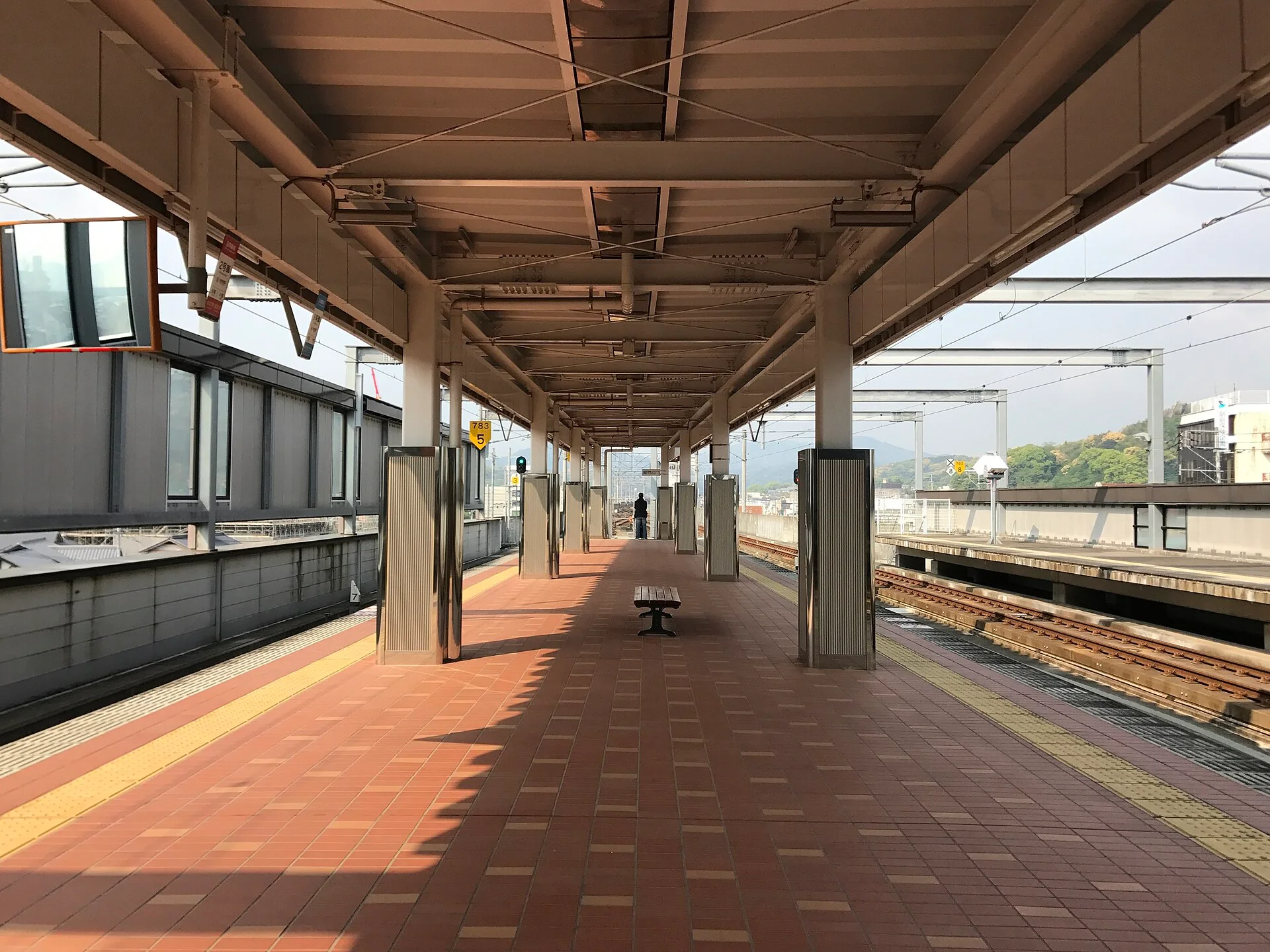
Fukuoka makes a natural rail starting point for a daylight visit. Hakata to Takeo-Onsen is a straightforward limited-express route, with the garden then a short taxi or a suitable bus ride away. Nagasaki or Saga may fit better into a wider route, but neither removes the final transfer between the garden and station. The risky itinerary is a Fukuoka night outing that depends on the last garden shuttle, an immediately available taxi if that fails, and the final useful train, all in sequence. This is a single-chain plan with no slack. A five- or seven-day Kyushu leaf route is easier to sustain when the night visit is placed within a Takeo stop rather than bolted to the far end of a Fukuoka day.
Three visit shapes that respect the light and the last train
For a daylight-only visit, arrive early, ideally near the 08:00 opening or in the first part of the morning. See the pond and principal maple area while energy and light are good; take the steeper part before lunch if your party is comfortable with it. An afternoon in Takeo Onsen or an onward rail connection then remains possible. This shape works for people who want actual leaf colour, families who do not want a dark path and travellers unwilling to base an evening on a taxi. The ticket is inexpensive enough that skipping illumination need not be treated as an incomplete visit.
For dusk and lighting on one day, reach Takeo by midday, store your luggage, eat before the night session and enter with enough daylight left to read the terrain. A combined ticket is the natural candidate, subject to the day-to-night gate rule for your date. Plan the route around sunset rather than trying to walk every corner twice. If travelling back to Fukuoka, choose a departure from the garden early enough that a missed shuttle does not strand the whole day. Kyoto’s autumn evening openings pose the same late-transport problem in a very different city setting.
For a Takeo overnight, see the illuminated portion after an unhurried hotel check-in and return the following morning for natural colour. This separates the two visual experiences, the crowd and the practical burden of a late intercity journey. It can also pair with Takeo Onsen. It is the strongest arrangement for a photographer, a visitor wanting both sessions without rushing or a group that may walk slowly. A second garden visit is not mandatory if the first gave you what you came for; the point of the overnight is control over time, not accumulating admissions. Lake Kinrin at morning light offers a different dawn-based Kyushu stop if the trip has several nights.
Where to sleep depends on the final five kilometres
A garden-side stay at Mifuneyama Rakuen Hotel or Onyado Chikurintei removes much of the after-dark transfer and includes standard garden admission for eligible guests. It may also put particular baths, art or tea-house privileges within reach, though inclusions depend on the property and room plan. These hotels have limited inventory and can cost much more than the entry ticket, so calculate what you will actually use. Mifuneyama Rakuen Hotel has no elevator between its levels and some routes to Rakan no Yu require stairs; a garden-side room does not automatically solve mobility concerns. Its station shuttle is a reserved hotel service with its own operating window and advance notice, separate from the festival’s weekend public shuttle.
Near Takeo-Onsen Station, a room makes train departures, bag storage and flexible dining simpler. In Takeo’s old onsen area, atmosphere may matter more than the shortest station walk. Ureshino is appealing as a two-day hot-spring stay but needs a concrete evening vehicle and a dinner time compatible with the garden. Ask the selected property exactly when a shuttle or meal is available; written confirmation is particularly useful when booking interfaces are incomplete in English. Compare Takeo Onsen area rooms with the final transport in mind, or compare Ureshino ryokan stays if the hot-spring night is the anchor. Neither lodging map replaces a room-level check for stairs and meals.
↔ Scroll table left or right
Stay base | Why it can work | Condition to check before paying |
Mifuneyama Rakuen Hotel / Onyado Chikurintei | Garden proximity and eligible garden admission | Room accessibility, dinner, art/bath inclusion and station transfer |
Takeo-Onsen Station area | Rail, luggage and a simpler next morning | Evening ride from garden to hotel |
Takeo old onsen district | Hot-spring setting after the garden | Walk or taxi after dark |
Ureshino | Longer two-day onsen route | Dinner cutoff and vehicle from the garden |
A small admission should not obscure ticket and payment details
The 2026 event page gives the basic date, hours and admissions clearly. It does not settle every online-sales, timed-entry, final-admission, re-entry, clear-out or cancellation question a visitor may need. Start from the garden’s event page if a digital ticket appears, confirm the chosen date and whether the purchase covers day, night or both, and save the ticket for offline use. Elementary-school pricing differs from the adult band; children younger than that should be checked against the actual checkout rather than assigned an invented price here. If a foreign card or 3-D Secure flow fails, buying at the gate may be possible only under the then-current sales rules.
A hotel guest should identify the reservation and number of eligible people when checking the garden admission benefit. This is a useful exception to the public entry charge, not an all-access wristband for every art installation, bath or bar. A day visitor considering the indoor hotel art needs to account for its separate ¥700 general admission and viewing hours; a sauna day user has a different product again. Readers comparing other illuminated landscapes can use Rikugien evening entry or Kenrokuen autumn opening, where access and ticket structures are not interchangeable with Takeo’s.
Foliage and weather are the final moving parts. Early colour can still make a worthwhile garden, mountain and onsen outing; after leaves fall, the lit route and hot spring remain but the expected red canopy may be gone. Heavy rain or wind reduces the appeal of dark slopes even though the event operates in rain. If the shuttle is missed or trains are disrupted, a Takeo overnight is the clean fallback. A weekday has no planned free festival shuttle, so set a bus or taxi plan before arrival. Anyone unable to negotiate the gradients can spend a shorter session around the accessible sections without claiming to have walked the whole site. Lake Kawaguchi’s maple corridor and Lake Kawaguchi versus Yamanaka show why a backup destination must be chosen for its own route rather than just another red-leaf photograph.
For a longer car-free trip, it helps to decide whether Takeo is a destination night or a stop between cities. Saga without a car shows how quickly separate Saga sights can consume transfer time. Nagasaki as a day trip or overnight from Fukuoka helps decide whether to continue west after Takeo. If Fukuoka remains the base, Hakata versus Tenjin for trains and day trips makes the early outbound train easier to arrange. A multi-stop traveller carrying a large case can use Japan’s luggage-forwarding decisions to keep it off the garden paths; forwarding must still fit the next hotel’s receiving policy and delivery time.
A practical final decision is to choose the light condition first, then secure the return or a nearby room, and only then decide whether an extra ticket or hotel benefit is worth buying. The autumn dates and fares are published for 2026, but real foliage, equipment permissions, ticket handover and train connections are date-specific. The Mifuneyama autumn event details, Takeo’s festival transport details and the hotel art access details contain the relevant current particulars. You should leave the garden with a known way back, not discover the last-mile problem at 22:00.