

A shorter walk to Osaka Station pays off on both halves of every day trip
Three minutes between a hotel door and a station exit can seem trivial when choosing one night. Over several days based in Osaka, the same walk happens every morning and again when you return from Kyoto, Kobe or Himeji. It is more noticeable after a long sightseeing day, in rain, or with a parent who has had enough of stairs. The useful question is how often you will use the exact railway and gate nearest the hotel, rather than how near the property looks to the centre of Umeda.
This is a station-use decision, not a blanket rule that every Kansai traveller should stay north of the city. If you have not settled the Osaka area, compare Namba and Umeda as hotel bases against your nights out before choosing one of these four hotels.
The railway you use most should decide the hotel shortlist
| Repeated trip pattern | Hotel to compare first | What it saves or adds | Limit |
|---|---|---|---|
| At least three JR days toward Kyoto, Kobe or Himeji | Hotel Granvia Osaka | Direct connection to JR Osaka removes most outdoor walking. | The station still has long internal routes to some platforms. |
| Several JR days without needing a station-top room | Hotel Hankyu RESPIRE OSAKA | About three minutes on foot from JR Osaka. | Ninth-floor lobby and large-hotel lifts add circulation. |
| Day trips end around 7–9 p.m. | Hotel Intergate Osaka Umeda | Lounge and guest bath support evening recovery. | A much later return reduces that amenity value. |
| A multi-night room matters more than the shortest approach | Hotel Vischio Osaka | Room category choice can improve the nights. | The five-minute station walk is repeated each way. |
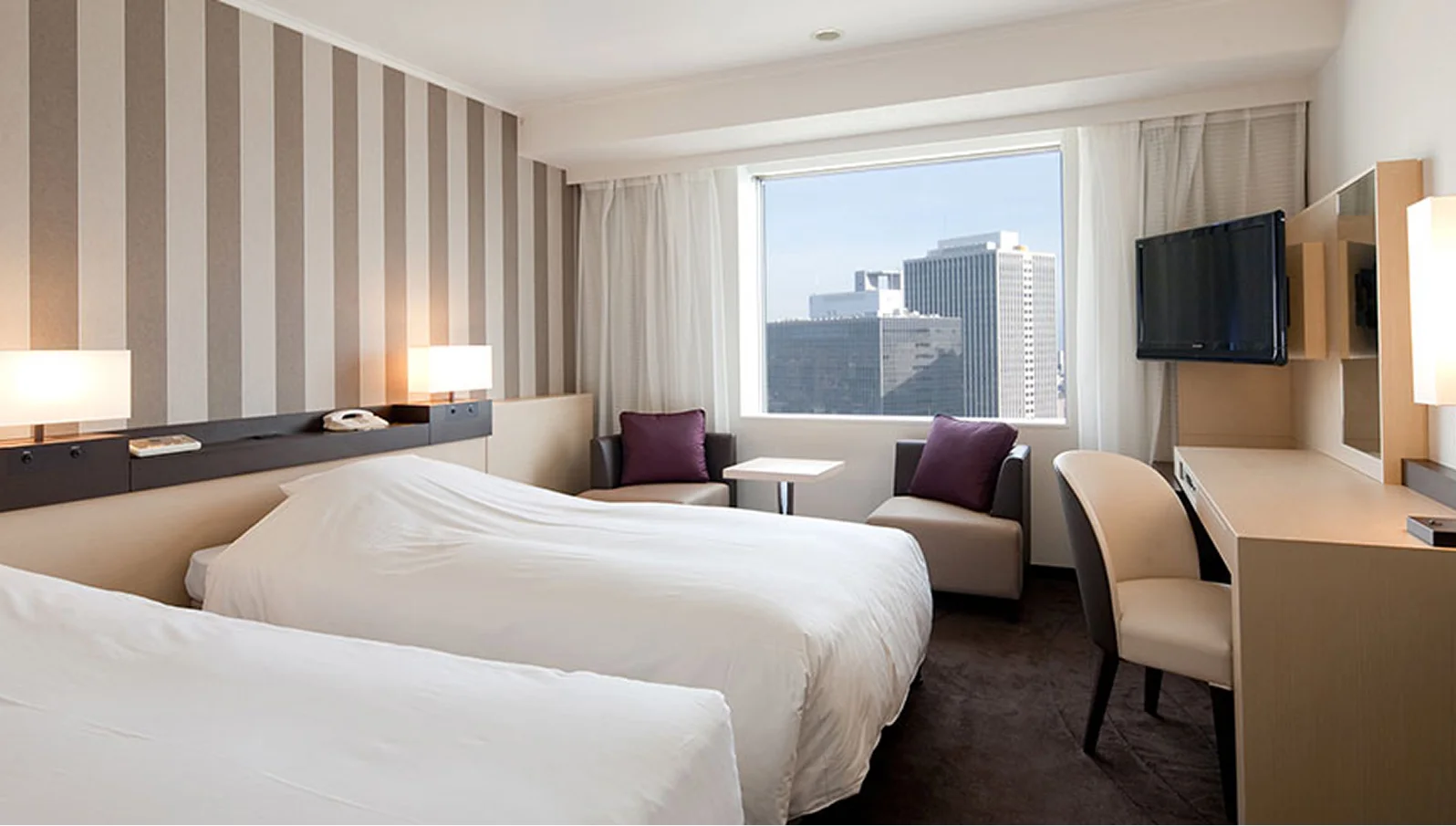
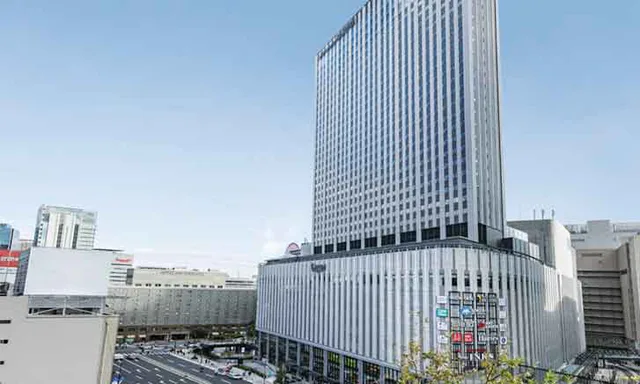
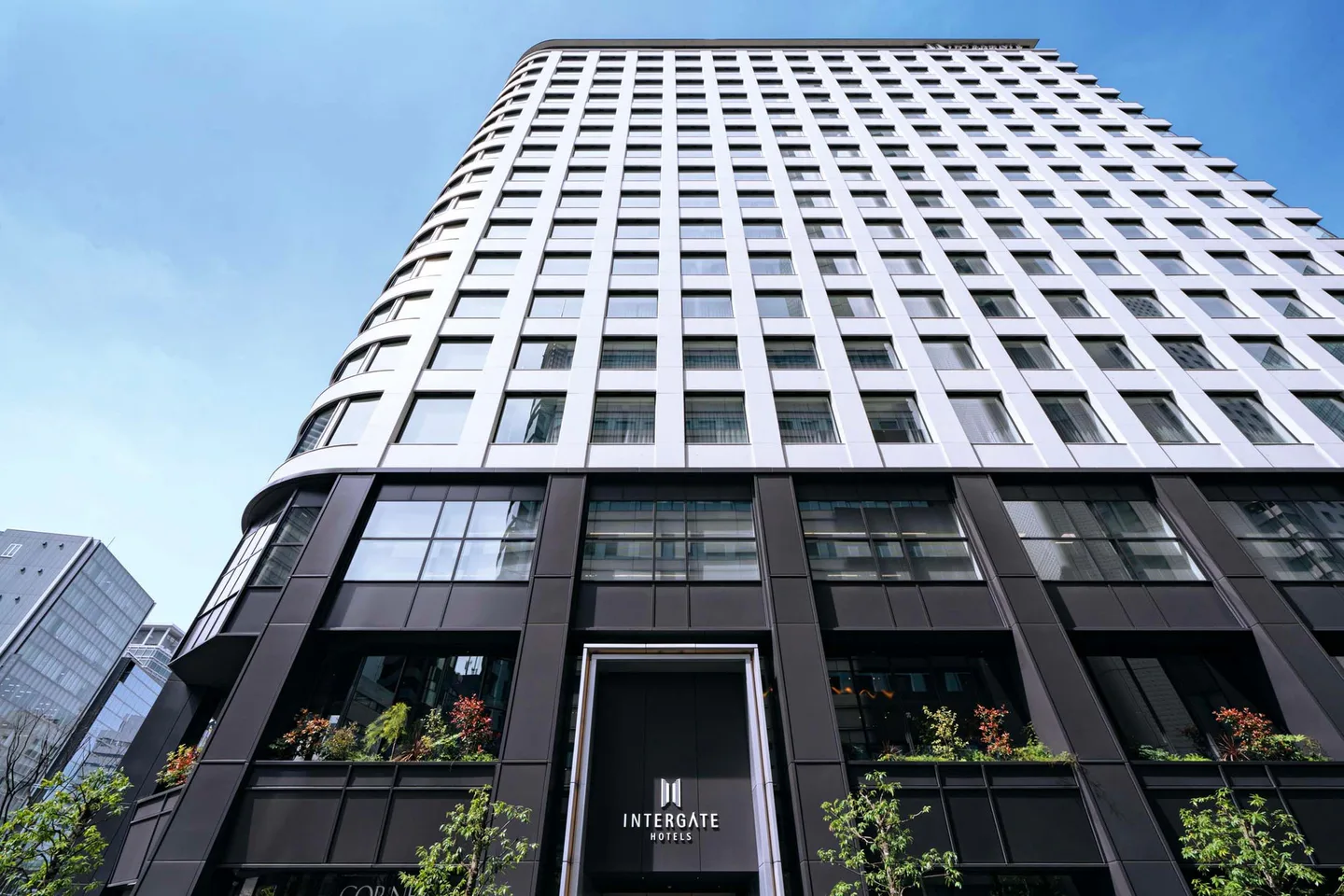
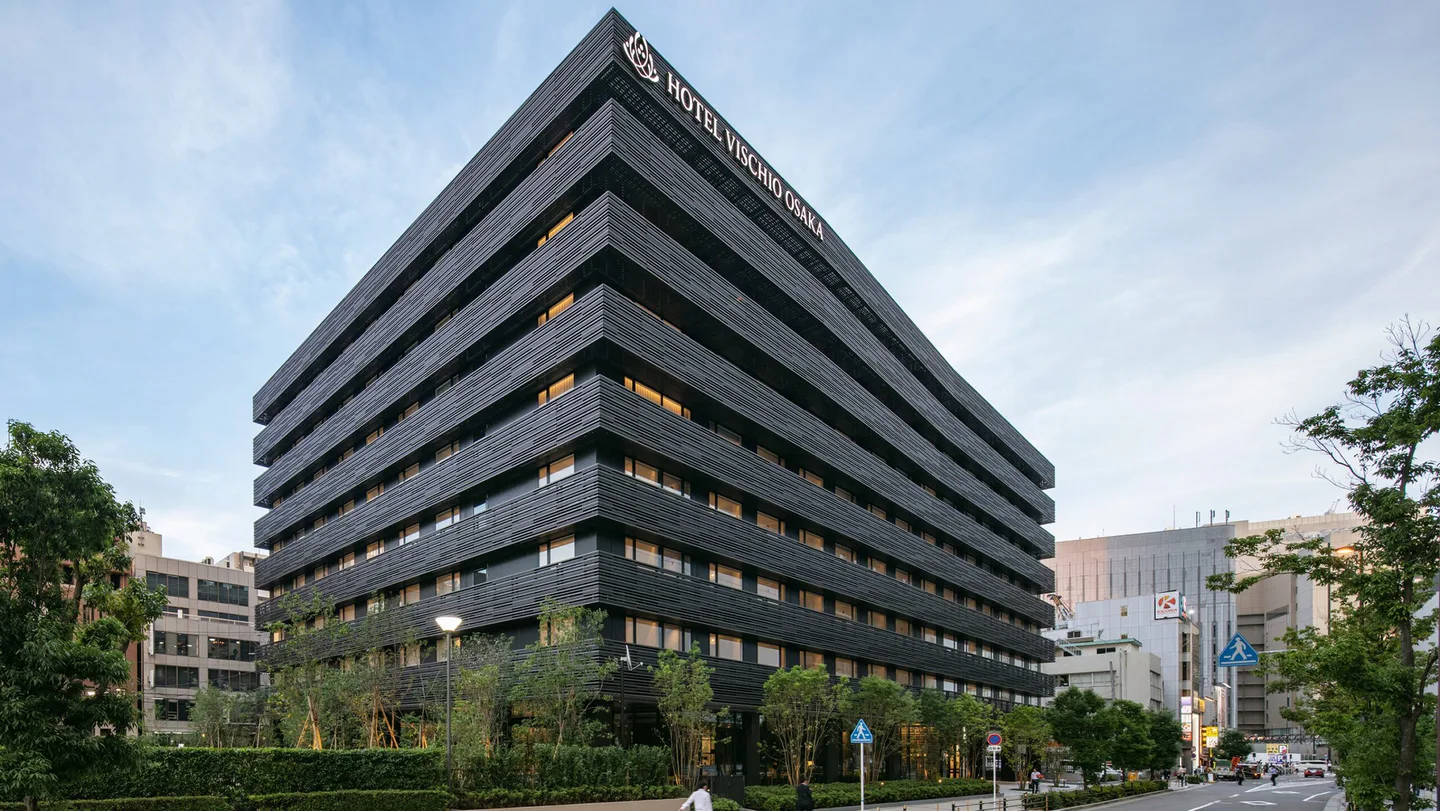
Each property exchanges station access for a different kind of stay. Granvia almost eliminates the outdoor leg to JR Osaka; Hankyu RESPIRE keeps that walk short but adds movement through a large high-rise. Intergate is a better proposition when its lounge and bath will be part of your evenings. Vischio accepts a longer last leg in exchange for room choices that can make a longer stay easier. Compare those costs across the whole trip, not one morning.
Hotel Granvia Osaka: when JR is the repeated route
Hotel Granvia sits directly in the JR Osaka Station complex. If several days begin on JR services toward Kyoto Station, Sannomiya or Himeji, its position removes the street crossing and weather exposure you would otherwise repeat. It is the clearest transport-first pick for a group whose Kansai plans genuinely revolve around JR Osaka, including a tired return in the evening.
The station connection does not place every JR platform outside the bedroom door. Granvia’s Central, Sakurabashi, Bridge and West approaches serve different needs. For the room categories behind the access advantage, use the Granvia room and station guide.
Granvia shares the Osaka Station building; the saving is strongest when JR departures and returns dominate the itinerary.
Compare Hotel Granvia Osaka rooms against the station-access premium.
Hotel Hankyu RESPIRE OSAKA: a short station walk with high-rise circulation
Hankyu RESPIRE is about three minutes on foot from JR Osaka Station’s Bridge Exit. That keeps the daily approach brief without placing the room directly above the concourse. Its front desk and lobby are on the ninth floor, however, and the building operates at large-hotel scale. Include lifts and indoor movement when comparing its door-to-platform journey with Granvia, rather than treating the three-minute exterior walk as the whole trip.
Hankyu Osaka-Umeda also serves Kyoto and Kobe routes, so a rail plan may use more than JR. The Osaka Station hotel comparison compares how its hotel circulation feels beside Granvia and Intergate.
Hankyu RESPIRE lies close to JR Osaka but still requires a walk and a lift to its ninth-floor lobby.
Check Hotel Hankyu RESPIRE rooms with the real guest and bed count.
Hotel Intergate Osaka Umeda: a longer walk with a useful evening return
Intergate is about five minutes from JR Osaka Station’s Sakurabashi Exit. That is a real extra walk beside Granvia or the shortest approach to RESPIRE. In exchange, guests have a lounge and a communal bath; the bath’s current hours run in morning and afternoon-evening sessions. The trade can work well when day trips end early enough that you will actually spend time in the hotel.
Imagine your normal return, not your ideal one. If you are back in Umeda at seven or eight, the lounge or bath can become part of the day. If dinner is usually in Namba and you arrive at the hotel near midnight, you may be paying for facilities you seldom use. Check the schedules for your stay before assigning them value.
The Intergate lounge and bath guide covers the lounge and bath rhythm in more detail. Match it to your expected return times.
Intergate is the stronger choice when its lounge or guest bath fits the hours after a day trip.
Compare Intergate Osaka Umeda offers for the dates you will use its facilities.
Hotel Vischio Osaka: room comfort beyond the station exit
Vischio is about five minutes north of JR Osaka Station. Its appeal is strongest when you are staying several nights and a room category with more working space matters every evening. A couple or group may willingly take the longer approach if the bed layout, suitcase space or bathroom fits better than a closer alternative. Compare the exact room categories, since the hotel name alone does not settle that question.
The walk changes character with the people making it. Two quick-moving adults with small bags may barely notice it. A stroller, older traveller or several large cases can turn five minutes on a hotel map into a daily effort. Consider the return journey after your longest outing, when everyone is less willing to extend the route.
The Vischio room guide sets out the small economy room against larger twins; category matters more than the five-minute access line alone.
Vischio trades a five-minute JR Osaka approach for room options suited to a longer stay.
Check Hotel Vischio Osaka beds and room categories for your stay.
One day in Kyoto rarely justifies moving every Osaka night to Umeda
Suppose Kyoto appears once in a five-night Osaka trip, while your evenings are mostly in Dotonbori, Shinsaibashi and Namba. A northern hotel might improve that one departure but lengthen most nights. The Osaka Station area becomes compelling through repetition: several intercity mornings, repeated returns, or a last-day route that genuinely uses the same hub.
If you are deciding whether to sleep in Kyoto at all, the Kyoto versus Osaka base guide addresses that wider itinerary choice.
Count departures and returns through Osaka Station
Three separate day trips produce six station uses before airport or Shinkansen travel is added. One Kyoto excursion produces two. Mark these legs on your itinerary and identify the railway on each, rather than assuming every destination requires JR Osaka. This exposes when a small hotel-to-gate saving will happen often enough to matter.
A centrally located hotel can still be awkward for the actual trains you take. The operational centre of a trip is the station and exit you repeatedly pass through, plus the place where most evenings end. Map those movements before comparing hotel prices.
JR and Hankyu can point you toward different Umeda exits
Kyoto Station, JR Sannomiya and Himeji generally make JR Osaka a natural departure point. Kyoto-Kawaramachi and Hankyu Kobe-Sannomiya can make Hankyu Osaka-Umeda more relevant. Both railways serve major Kansai trips, but they do not deliver you to the same part of each city. Decide which destination station suits your sightseeing route first.
Within Umeda, a north-side hotel and one nearer the west or south edge of JR Osaka will feel different in daily use. The route from room to gate, any vertical movement and the walk after returning all count. A single straight-line map distance misses those details.
Kyoto Station and Kyoto-Kawaramachi lead to different Kyoto days
A Kyoto plan beginning around the station or connecting toward Fushimi Inari may favour JR from Osaka. A day focused on Gion, Shijo and the central shopping streets may fit Hankyu to Kyoto-Kawaramachi more naturally. “Kyoto day trip” is therefore too broad to choose a hotel; sketch the first and last Kyoto stops before deciding which Osaka platform matters.
The wrong rail choice can erase the benefit of a dearer station hotel. You may save a few minutes at the Osaka end only to spend more time crossing Kyoto after arrival. Match the full sightseeing route, not just the name of the city on the train.
Kobe gives you more choice, but the return leg still matters
Sannomiya is close enough for a straightforward Osaka day trip, and both JR and Hankyu can work from the Umeda area. The better one depends on where you begin and finish in Kobe. On consecutive travel days, even an easy route feels different when you get back hungry and have another walk before reaching your room.
For a concrete route that mixes a Kobe day with other Kansai travel, see the Osaka, Kobe and Koyasan itinerary.
A very early departure raises the value of a shorter approach
A 6:45 train to Kyoto for Arashiyama or Higashiyama makes the last five minutes more consequential than a relaxed 9:30 departure. A station-connected hotel can reduce one source of uncertainty, although the station itself still requires navigation. Work backward from the actual platform and gate, leaving enough time for a first morning when the route is unfamiliar.
If you normally eat breakfast slowly and set out later, do not pay a large premium for an early-start pattern you are unlikely to follow. Your habits are a better guide than an ideal itinerary made before the trip.
Amenities only count on evenings when you are at the hotel
The same arrival at Osaka Station around seven can lead to two different nights: one group heads straight to the hotel, another goes across town for dinner. A lounge, guest bath or larger room has practical value when you are there to use it. Those features are weaker as reasons to pay more when your evenings take place elsewhere.
Think about the third tiring day trip rather than the first morning when everyone is fresh. Can the group buy dinner, get back, dry an umbrella and settle in without one more awkward transfer? That is when room comfort and a manageable last leg become more than a map exercise.
Dinner plans can create a second commute after the train
Returning from Kyoto to JR Osaka is not necessarily the end of travel. If dinner is in Namba, going there and then back north may outweigh the station proximity you paid for. If most meals are around Umeda, the same hotel location can simplify both the train day and the evening. Your nightly pattern belongs in the calculation.
If nights out, rather than train trips, dominate the week, revisit the Osaka hotel-area guide before selecting a station-area hotel.
Luggage days should be calculated separately
Most Kyoto and Kobe day trips happen after the suitcase has been left in the room, so the station walk is made with a daypack. Arrival and departure are different: cases, a stroller or a tired parent magnify lifts, gates and crossings. Do not let one difficult KIX arrival decide a week of hotel location, but do plan it as its own route.
The last day can be more complicated than a normal day trip if you leave bags, go sightseeing, return to collect them and then continue to an airport or Shinkansen. In that case, storage rules and the pickup route may matter more than the five-minute morning comparison.
Families and parents should test the hardest return
Picture the group coming back from Kyoto at nine in the rain, with a sleeping child or an older parent who needs a slower walk. A route that looked negligible at booking can feel long after another transfer and a station crossing. The best base is the one the whole group can still manage on that evening.
Consecutive day trips also create work at the hotel
By the third Kyoto, Kobe or Himeji outing, transport is only part of the fatigue. Dinner, charging devices, repacking a bag and drying wet clothes all happen before the next departure. A hotel farther from the gate can still be the better base if its room and facilities make those repeated evenings easier.
On longer stays, room layout repeats every night
A seven-night trip can make a small room feel more costly than a few minutes outside. If two suitcases cannot be opened, or everyone waits for the bathroom, time saved beside the station is spent inside the hotel. Compare the bed layout, bathroom and usable space of the actual bookable room, then weigh that against the daily approach.
For five to seven Osaka nights, the room decision also overlaps with laundry and the question of whether to move areas. Keep the hotel choice tied to the complete stay, rather than letting one station metric overrule everything else.
When Umeda is the wrong Osaka base
If only one or two days leave Osaka and your other evenings end in Namba, Shinsaibashi or near USJ, Umeda can add repeated local travel. Its advantage grows when JR Osaka or Hankyu Osaka-Umeda handles several trips and you also finish most nights nearby. Count both kinds of journeys before committing.
A split stay needs to remove several journeys to repay the move
Changing hotels means packing, checking out, storing bags, waiting for access to the next room and unpacking. It can still make sense when an itinerary has clear blocks, such as three JR-heavy outings followed by several evenings centred on Namba. Without that division, the move may simply replace train friction with luggage work.
Ask what the move removes. Several repeated station legs may justify it; one slightly awkward morning usually does not. The answer will depend on room prices and how much of a travel day the relocation consumes.
A small walking difference needs multiplying by actual uses
If one hotel saves five minutes each way and the approach is used eight times, the arithmetic is forty minutes of walking saved. Rain, mobility and fatigue can increase its practical value. If the route is used only twice, the gain is ten minutes and may not justify a dearer or less suitable room.
Run the same repeated-use test on the room. A better bed, bathroom or place to open luggage matters every night. The useful comparison is daily station effort against nightly room comfort, with the actual price difference beside both.
The best base depends on repeated gate use and the evening route
For three or more Kyoto, Kobe or Himeji outings that repeatedly pass through JR Osaka, Granvia is the shortest access choice. Hankyu RESPIRE keeps the station walk brief with a different hotel setup. Intergate rewards travellers who return in time for its facilities, while Vischio can justify its extra walk through a better-fitting room. None is automatically the answer to a single Kyoto day.
The Osaka Station hotel comparison compares Granvia, RESPIRE and Intergate directly. If Nara is also on your list, Nara from Kyoto or Osaka explains how the departure city changes the day.
Further Osaka hotel decisions
The Osaka hotel decision hub lets you narrow the base again by evening destination, group needs and luggage.
Where to Stay in Osaka for First-Time Visitors · Namba vs Umeda · Osaka Station Hotel Comparison
Hotel and railway details
The Granvia access map shows JR gate routes; Hankyu RESPIRE hotel information lists the ninth-floor lobby and station approach; Intergate facility and access details explains the five-minute walk and guest facilities; Vischio station approach maps the north-side approach; and the Hankyu Osaka-Umeda lines shows the Kyoto and Kobe services.
Use the entrance and railway gate relevant to your room and train: station size, platform position, crowds, rain and luggage can change the time shown on a hotel access page. Timetables also change, so build the departure around the service you will actually board.
Related guides: Kansai 7-Day Itinerary From Osaka: One Hotel for Kyoto, Nara, Kobe and USJ — When Not Moving Is Better · Osaka for Couples: A 7-Day Itinerary That Saves the Best Nights for Kyoto, Kobe and One Big View · Nada no Kenka Matsuri 2026: If You Only Go One Day, Choose Oct 15 · Best Day Trips from Osaka: Kyoto, Nara, Kobe or Himeji — When Does a Tour Actually Save Time? · Sapporo Hotels With Parents: Snow, Stairs and Daily Transfers Matter More Than “5 Minutes from the Station” · 20 Things to Do in Osaka When It Rains: Indoor Plans for Couples, Families and Full-Day Rain · Osaka Night Views: When Free Beats the Observation Deck — and When HARUKAS 300 Is Worth Paying For · Osaka Hotels for 4–6 Friends: When One Big Room Stops Being the Better Deal · Osaka Shopping Hotels: Why the Last 10 Minutes Back from Dotonbori Matter More Than the Metro Map · Where to Stay in Osaka for a Guys Trip: Beds, Two Bathrooms and the Late Ride Home Matter More Than Price Per Head
More Japan trip ideas
Osaka Long-Stay Hotels for 5–7 Nights: Laundry, Kitchens and When Not to Change Areas
Osaka Solo Travel Itinerary: 7 Days of USJ, Kyoto and Kobe — Without Filling Every Hour
Things to Do in Kyoto: 1-, 2- and 3-Day Itineraries for First-Time Visitors
Hotel Hankyu RESPIRE OSAKA vs CANDEO HOTELS Osaka The Tower: Osaka Station or 31F SkySpa?
The repeated train walks matter more than a district label; compare Osaka Station stays for the entire day-trip block.