
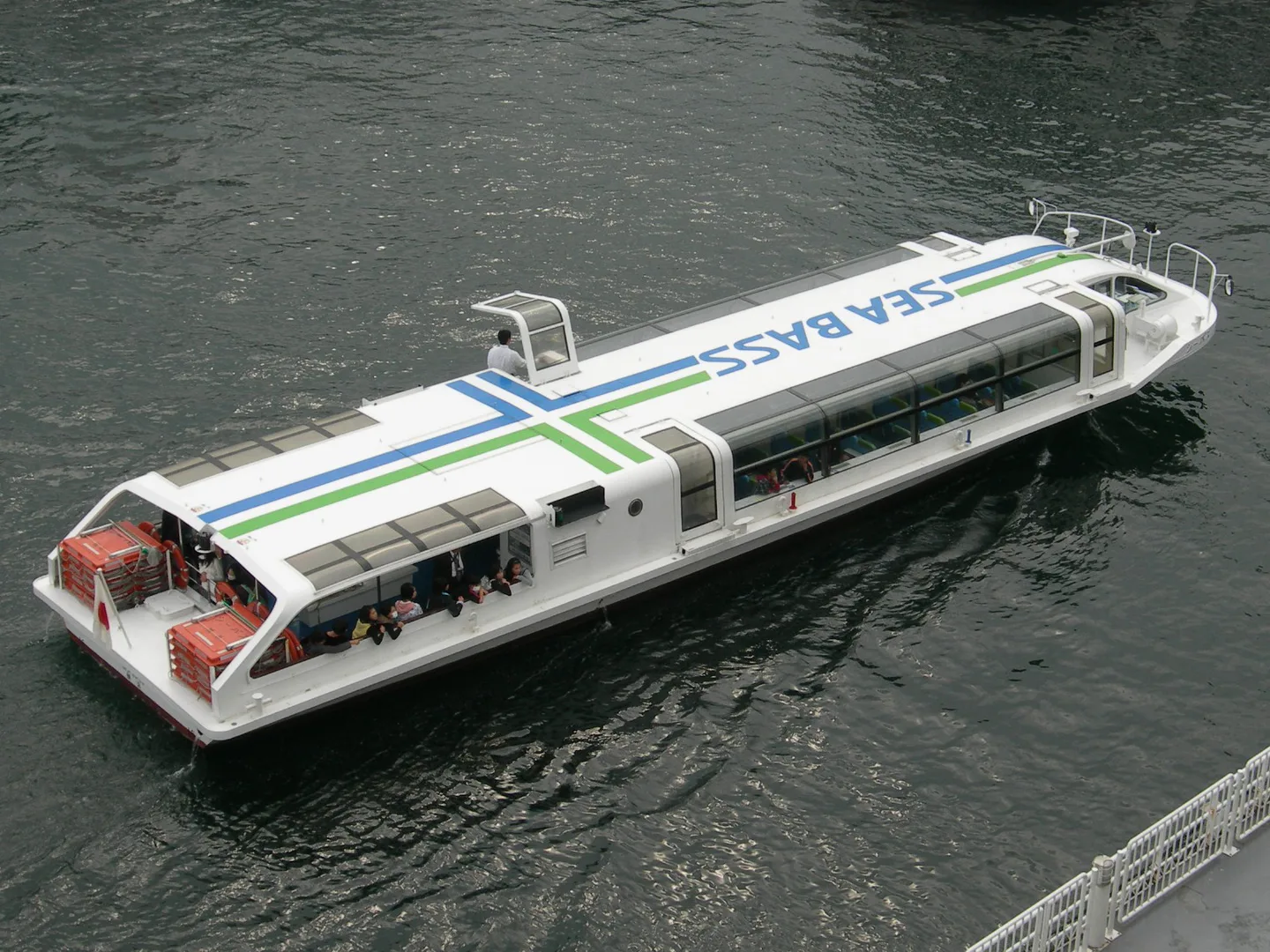
At Yokohama Station, the Sea Bass can turn an awkward transfer into a harbour arrival. That is its strongest use: the boat deposits you at Hammerhead, Pier Aka Renga or Yamashita Park, already on the waterfront. It is a weaker shortcut when the next departure is far away or the place you actually need is beside another rail station. Check the sailing for your intended stop before walking to the pier: some departures pass Hammerhead or Red Brick without calling.
A ride taken for the water view can still be money well spent. It simply needs to fit the day's time and fare as a short cruise. A boat taken as transport should remove a walk, rail change or return trip along the waterfront. Travellers deciding whether Yokohama even belongs in a Tokyo block can start with the Tokyo day-count guide; those choosing a base can compare two nights in Yokohama or Tokyo.
The useful route runs between four waterfront piers
The regular route connects Yokohama Station East Exit at Bay Quarter, Yokohama Hammerhead, Pier Aka Renga at the Red Brick Warehouse and Yamashita Park. It is a route with different stopping patterns, not a train line where every boat serves every station. The operator gives approximate sailing times of 15 minutes from Yokohama Station to Hammerhead, 10 minutes from Hammerhead to Red Brick and 10 more to Yamashita Park; a direct Yokohama Station–Yamashita Park run takes around 20 minutes. Those are on-water times. Add the pier walk, ticket purchase and wait before comparing it with a land route.
↔ Scroll table left or right
| Next movement | What a useful Sea Bass sailing can save | When land travel or walking wins |
|---|---|---|
| Yokohama Station to Red Brick or Yamashita Park | An extra local rail leg and part of the waterfront approach | The boat skips the intended pier or a long departure gap follows arrival |
| Yamashita Park back to Yokohama Station | Retracing the full promenade with tired legs | A fixed onward train leaves too little margin |
| Red Brick to Yamashita Park | A repeated waterfront walk after a full sightseeing day | Fresh legs, dry weather and a walkable sightseeing route |
| Short gap before an airport or reserved train | Little dependable time | Use a frequent land connection |
| A harbour ride for its own sake | Scenery rather than transfer time | Only if its fare and wait crowd out something more important |
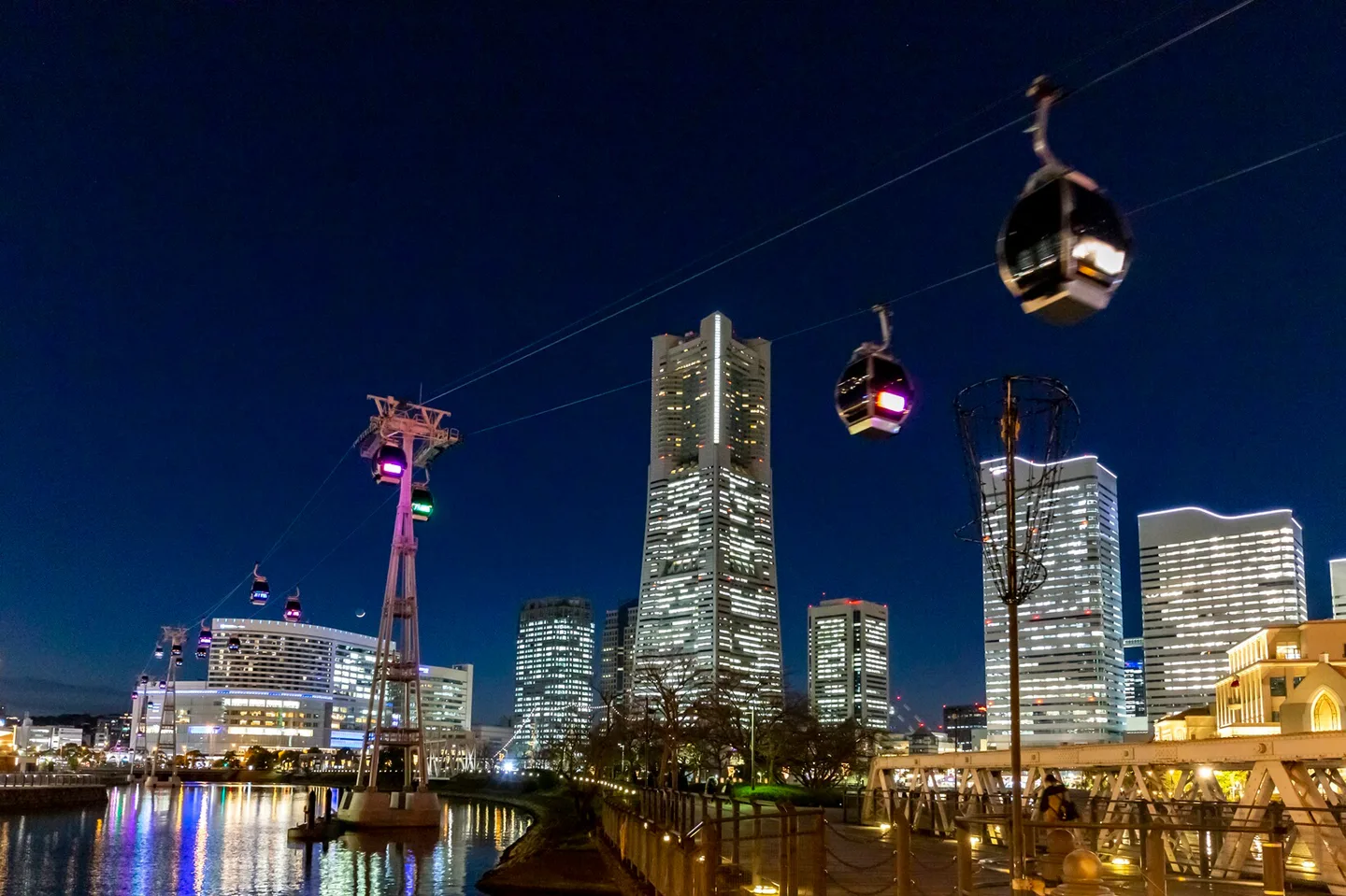
The same route can change its value with the direction of travel. Arriving from Tokyo, a useful departure from Bay Quarter makes the water the transition into sightseeing. Returning from Yamashita Park after a long walk makes the ride a seated exit. A short Red Brick–Yamashita hop can be pleasant after dark or with a tired child, yet in good weather the promenade itself is part of Yokohama. The Air Cabin to Osanbashi evening route shows where an unbroken walk may be the better experience. If the evening instead ends near the stadium, Kannai's BASEGATE district is farther inland than a Sea Bass pier.
Fare and timetable: the wait can exceed the sailing
The current fare table lists adult one-way tickets from Yokohama Station at ¥1,300 to Hammerhead, ¥1,300 to Pier Aka Renga and ¥1,500 to Yamashita Park; the corresponding child fares are ¥650, ¥650 and ¥750. Adult journeys between the waterfront stops are ¥1,000 or ¥1,300 depending on the pair. These are route fares, not a single all-stops sightseeing pass. The published schedule includes gaps of more than half an hour in some directions and particular boats that omit an intermediate pier. A missed useful boat can change the next hour of the day.
↔ Scroll table left or right
| From Yokohama Station East Exit | Adult one-way | Child one-way | Approximate boat time |
|---|---|---|---|
| Hammerhead | ¥1,300 | ¥650 | 15 minutes |
| Pier Aka Renga | ¥1,300 | ¥650 | Depends on intermediate calls |
| Yamashita Park | ¥1,500 | ¥750 | 20 minutes on a direct sailing |
↔ Scroll table left or right
| Wait for a boat serving your actual pier | How to treat it |
|---|---|
| About 0–15 minutes | Compare the complete boat trip with your land connection, including both pier walks. |
| About 15–30 minutes | The harbour ride, baggage relief or seated rest must add some value beyond speed. |
| More than 30 minutes | Count it as sightseeing; walk or use rail unless fatigue or baggage materially changes the calculation. |
| The next boat skips your destination | That departure is not a useful transfer; inspect the following stopping pattern. |
Individual passengers do not normally reserve seats on regular sailings. The operator accepts regular-service advance bookings for groups of at least 15; special cruises follow separate arrangements. Its timetable says sectors and departure times can change, and the last sailing may be cancelled. Buy or complete the boarding process at the pier with enough time before departure, rather than arriving at the printed minute. A dinner reservation, Shinkansen or airport train needs a more resilient land connection.
The boarding guidance asks regular passengers to buy a ticket or complete counter procedures at least ten minutes before departure, with access to the boat beginning around five minutes before sailing. That matters when a timetable appears to offer a perfect connection: a five-minute dash from the station is already too tight once ticketing is included. The weekday table and the weekend or holiday table also differ, especially in the number of direct Yokohama Station–Yamashita Park runs. Read the right day column and its symbols for omitted calls instead of planning from a remembered departure time.
Bay Quarter adds a walk before the boat
The Yokohama Station landing is on the second floor of Bay Quarter. From JR North East Exit the operator estimates about five minutes on foot. From the main East Exit or Minatomirai Line side, the walk is closer to ten minutes. A traveller who simply follows “East Exit” signs without locating Bay Quarter can spend much of the supposed time saving inside the station complex. Tokyo hotel-base choice, Shinjuku versus Shibuya and Tokyo Station versus Shinjuku affect the bigger door-to-door journey more than one scenic segment.
Hammerhead is about ten minutes from Bashamichi Station Exit 6 or 15 from Sakuragicho; Pier Aka Renga is roughly seven minutes from Bashamichi Exit 6 or 20 from Sakuragicho. Yamashita Park is approximately five minutes from Motomachi-Chukagai Exit 4 and 15 from Ishikawacho. Those access walks explain the boat's sweet spot. If your next activity is Red Brick Warehouse or the park itself, the pier is close to the destination. If it is inland, you may only move the transfer to the far end. The Anpanman Museum and Cup Noodles Museum, for instance, call for their own access and timed-entry decisions rather than an automatic harbour boat.
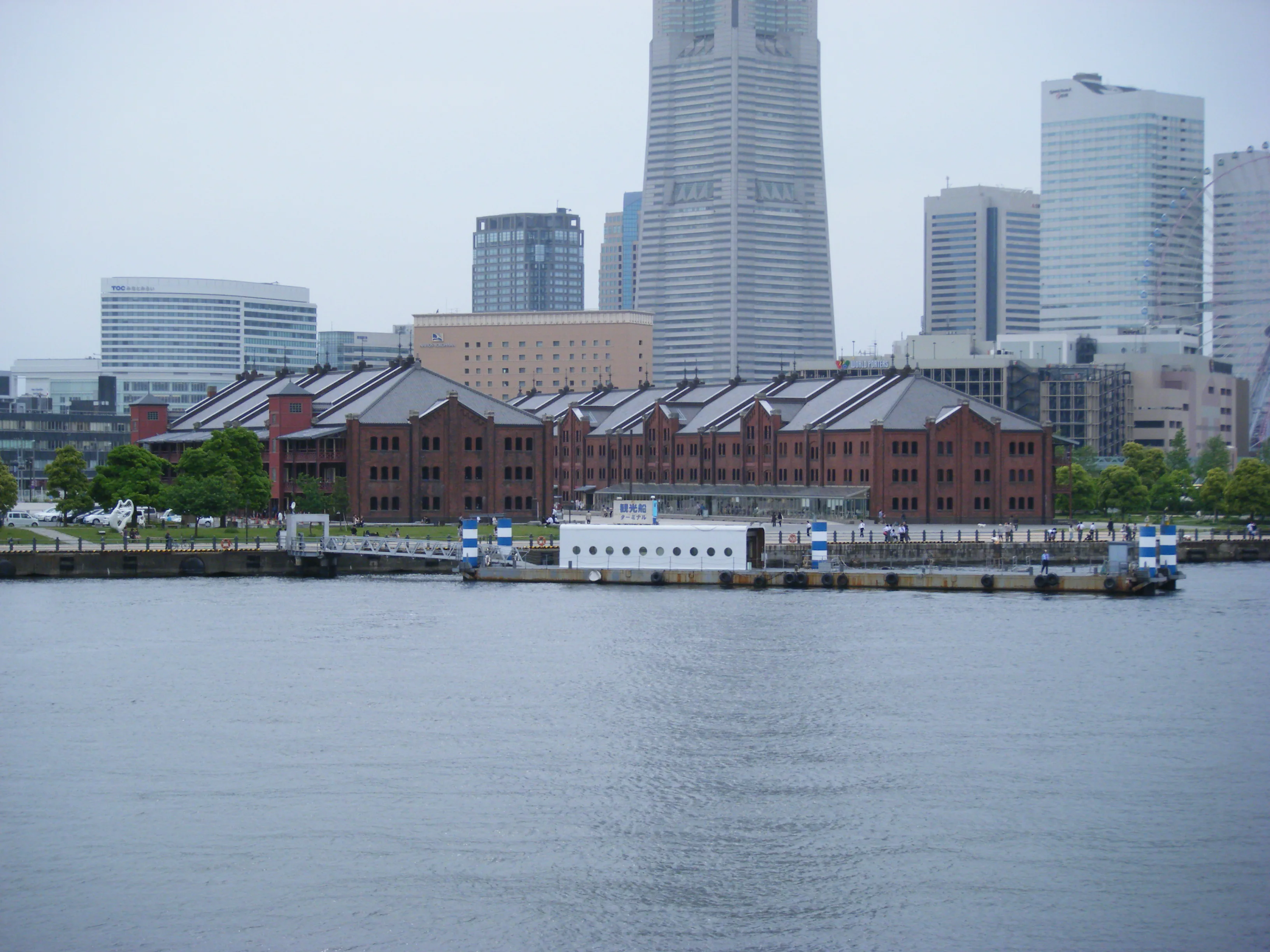
A suitcase may save effort and add a fare
Replacing one rail change with a seated boat is appealing when carrying bags to a waterfront hotel. The operator allows up to two hand-luggage items per passenger, including suitcases, but applies an additional charge equal to a child fare if an item exceeds 1.2 metres across its three dimensions in total or the combined hand-luggage weight exceeds 10 kg. Each piece beyond the two-item limit can also incur that child-fare-equivalent charge. On the Yokohama Station–Yamashita Park route, that can add ¥750 to the adult ¥1,500 ticket. Measure and weigh the bag before assuming the headline fare covers it.
The benefit also disappears when you disembark and immediately enter another station with the same suitcase. If luggage dictates the whole day, sending, storing or carrying it is a broader decision than this boat fare. A waterfront hotel can make the Sea Bass the last movement of the day; a Yokohama hotel move is a separate decision and should earn its own time.
Rain, mobility and missed boats change the answer
Ordinary rain does not automatically suspend regular service, though the open deck offers no rain cover. Unsafe weather or sea conditions can halt boats, and the day's operation notice is the place to check before setting out. A wet day may also make the waterfront walk less appealing; the rainy-day itinerary guide helps decide what to shorten. If the group mainly needs a longer recovery period rather than another conveyance, Toyosu Manyo Club is a separate Tokyo-day option.
Wheelchair access depends on the vessel assigned to the departure. Sea Bass ZERO accommodates at most two wheelchairs and ACE one; Sea Bass No. 5 is not wheelchair compatible. The operator requires one companion per wheelchair user and says its staff cannot provide lifting assistance. The Yokohama Station pier uses a lift, while tide can make a landing ramp steep. Confirm the actual sailing and vessel in advance; a step-free approach alone does not settle boarding. The operator also publishes wheelchair-size and weight limits for the accessible boats.
For ZERO and ACE, the published lift limit is 250 kg including the rider, with a width limit of 80 cm and length and height limits of 140 cm each. Those dimensions can decide whether a particular chair can board. The operator says the accessible vessels have wheelchair toilets, while No. 5 does not. A person using a mobility aid should ask which boat is scheduled rather than relying on a generic route map or the existence of a lift at Bay Quarter. The companion requirement and potentially steep tidal ramp may matter just as much as the sailing duration.
Three ways to place the ride in a day
Arrive at the harbour from Tokyo
Take the train to Yokohama Station, walk toward Bay Quarter and board a sailing that stops at Red Brick or Yamashita Park. Then continue on foot to Chinatown or along the waterfront. The Sea Bass removes a local transfer only when the pier you need is on that sailing and the wait fits. A first-time visitor balancing this with other Japan stops can use the 10-, 12- or 14-day route comparison to protect enough time for the city, or compare Yokohama with other Tokyo day trips before committing the day.
Walk outward; sail back
Begin around Minato Mirai, walk toward Red Brick and Yamashita Park, and keep a return sailing to Yokohama Station as an option after the waterfront outing. This uses the boat when backtracking would feel most costly. Check the last useful service before dinner near Chinatown. The night-walk route can be followed on foot if the timing or stop pattern is wrong.
If dinner ends after the last sailing, the boat is an outward choice only. Reverse the sequence or plan a land return. The ship is especially attractive when a child is tired or the same promenade would otherwise be walked twice. When the group still wants to see the illuminated waterfront, a return boat can remove the very view you came to enjoy; walking one direction and sailing the other keeps both options open. A waterfront attraction with a fixed entry time should sit before a flexible boat ride, not depend on one sparse connection arriving exactly on schedule.
Leave the boat out of a fixed two-hour gap
A short window before a reserved evening train gives little room for an omitted stop, a long departure gap or cancellation. See the harbour from a walk near the station or take a land connection that leaves more margin. The first-trip planning sequence is a better place to resolve fixed bookings than trying to make a scenic ride carry a deadline.
↔ Scroll table left or right
| What goes wrong | What it costs | Useful check |
|---|---|---|
| Exit Yokohama Station on the wrong side | The five-minute pier approach becomes a longer station walk | Follow JR North East Exit and Bay Quarter signage |
| Board a sailing that skips the desired pier | An extra walk or transfer after disembarking | Read the individual stop pattern |
| Assume every suitcase is included | A child-fare-equivalent baggage supplement | Check number, dimensions and weight |
| Miss a sparse departure | A long wait or a lost onward connection | Leave a land fallback and avoid hard deadlines |
| Use the boat for every short waterfront hop | Time spent waiting rather than seeing Yokohama | Walk while the group is comfortable |
| Assume every boat takes wheelchairs | The assigned vessel may not accommodate boarding | Ask about ZERO or ACE for the sailing |
The fare is earned when the route becomes simpler
Yokohama Station to Red Brick or Yamashita Park is the clearest first ride; the return from Yamashita Park can work when a long waterfront walk is finished. Between neighbouring piers, use your legs while the route itself is pleasant and buy the short crossing for scenery or a needed rest. Check the current sailing, the actual pier, any luggage supplement and the day's operating notice. If the boat would only add another transfer, spend the money on the harbour visit itself. If it deletes a difficult transfer, the water view comes with useful transport.
More Yokohama and Japan travel guides
How Many Days in Tokyo? · Japan luggage-forwarding guide · How to Plan a Trip to Japan · Y Cruise — Sea Bass route, FAQ and operating information · Y Cruise — pier access information · Y Cruise — wheelchair and accessibility information · Osaka Night Views: When Free Beats the Observation Deck — and When HARUKAS 300 Is Worth Paying For · Ryukyu Hotel & Resort Nashiro Beach: Is the Last Night by the Sea Worth Moving Hotels? · Kyushu National Museum Tickets: When ¥700 Is Enough — and When the Special Exhibition Is Worth It · Toba Aquarium 2026: Is the Sea Otter and Dugong Detour Worth It? · MUWA Niseko Review: When Is Ski-in/Ski-out Worth the Premium? · Narita or Haneda to Tokyo: Don’t Pick the Fastest Train — Pick the Last Easy Transfer · Kanmon Strait Museum: When the ¥500 Ticket Is Worth It—and When the Free Areas Are Enough · Fukuoka Tower: Is the ¥1,000 Ticket Worth the Detour? Timing Changes the Answer · THE LUIGANS Spa & Resort Fukuoka: Is a 33m² Sea-View Room Worth Leaving Hakata for One Night? · Lake Kawaguchiko Bass Fishing: DIY Boat, Local Guide or English Private Tour? · Kawagoe Castle Is Worth Leaving the Old Town For — The ¥100 Honmaru Palace Is the Easy Part · BEB5 Mojiko Just Opened: Is the Kanmon Strait View Worth an Overnight Stay? · Sakura Castle: The Stamp Is Open 24/7 — The Castle Is in the Moats, Not a Keep · Mt Fuji Day Trip or Overnight: When an Extra Night Is Worth It · Osaka and Kyoto in 7 Days: 3 Nights Each — When One Hotel Move Is Actually Worth It
If the harbour route becomes an evening in Yokohama, compare rooms near the pier where you finish before adding a late rail transfer back to Tokyo.