
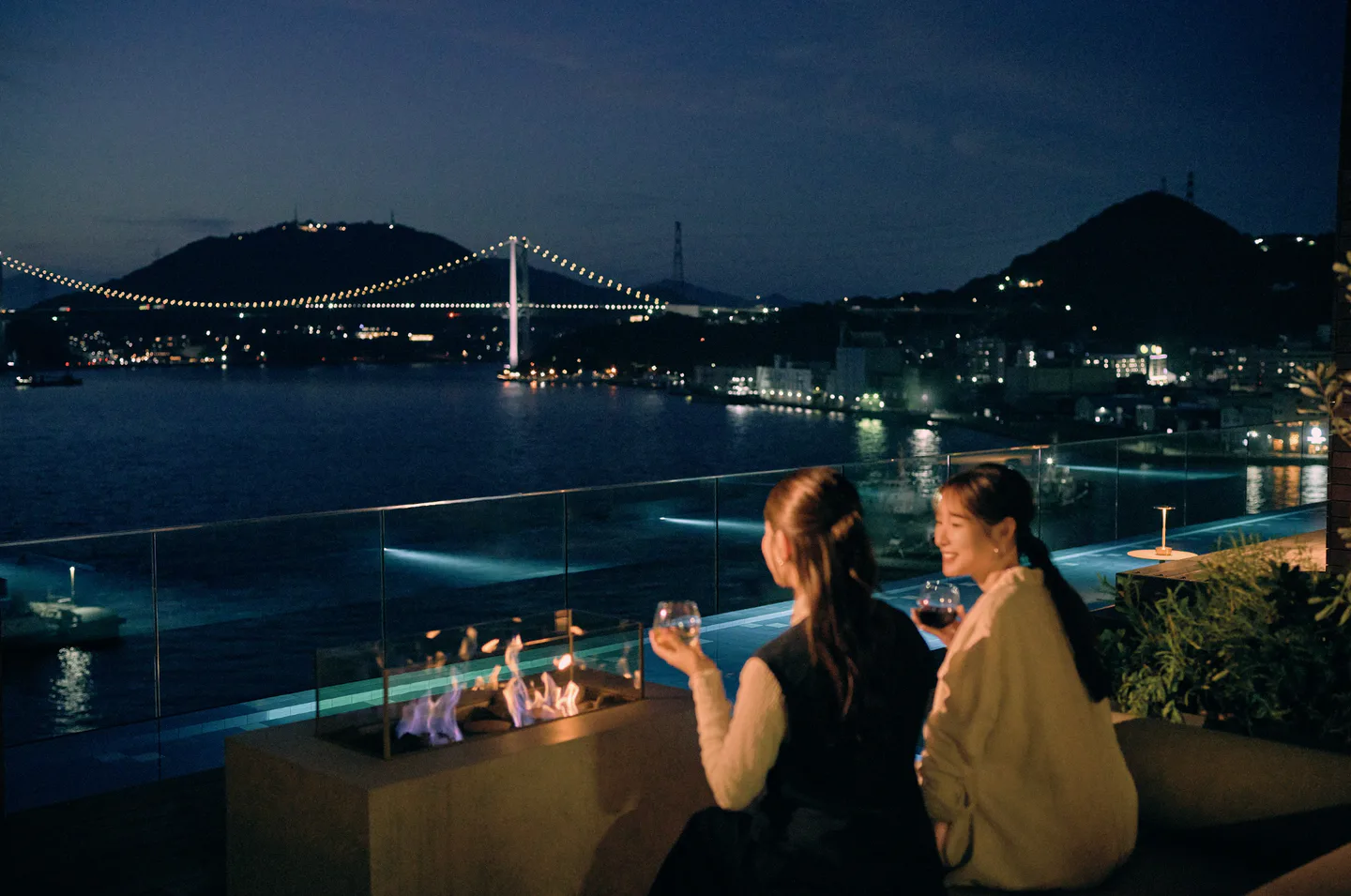
The strongest reason to sleep in Mojiko is the morning after, not just a photograph of the Kanmon Strait. A night at BEB5 Mojiko lets you stay for sunset and the quiet waterfront, use the bath or lounge, then begin the next day close to the Karato ferry. If the hotel is only a stop between late arrival and an early train from Kokura, moving your suitcase for a view may add more inconvenience than value. Work backward from the hours you want on each side of the strait.
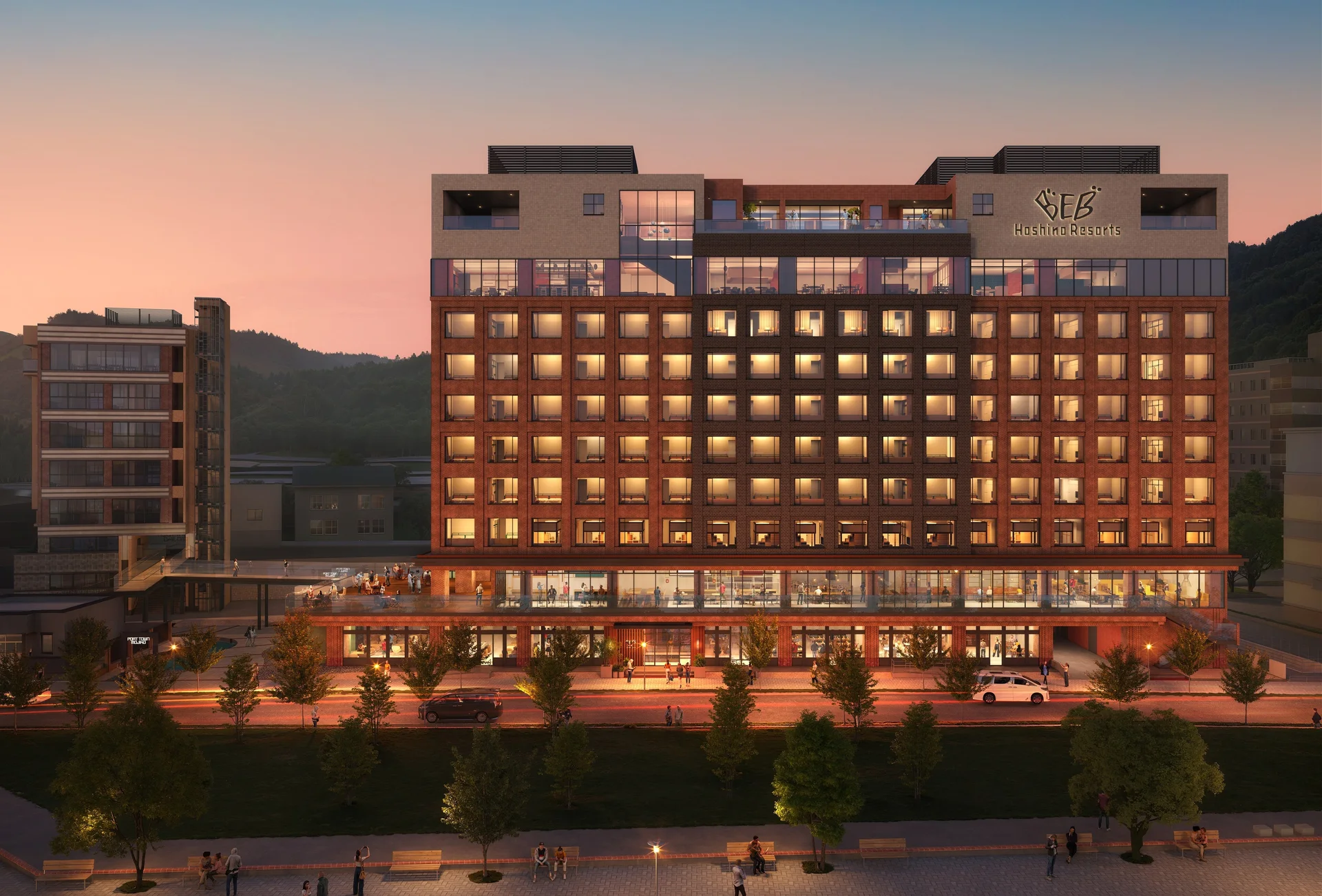
Image: Hoshino Resorts press release.
BEB5 Mojiko opened on 24 July 2026, about four minutes on foot from JR Mojiko Station. It has 119 rooms for one to four guests, and the hotel says each room faces the strait. A visitor staying in Hakata or Tenjin can already see Mojiko Station, the historic streets, museums, baked curry and the harbour on a day trip. The overnight changes the timing: it keeps you in town after the day-trippers leave and removes the train approach before a Shimonoseki morning.
What the hotel night adds to a day trip
Think in usable periods. Arriving by mid-afternoon leaves time to walk the port before the sun drops. The tenth-floor MIZUBA terrace runs a Sunset Hour beginning about an hour before sunset, so its clock shifts through the year. After dinner, the hotel’s Retro Night Lounge occupies TAMARIBA from 21:00 until midnight, while the shared space itself remains accessible around the clock. The bath is another late or early option. Crossing the strait the following morning makes the hotel a route choice as well as a view choice.
You do not have to attend every programme. Two genuinely usable periods are a reasonable test: perhaps sunset and a Karato morning, or waterfront dinner followed by the bath and lounge. If your arrival rules out sunset and your departure rules out the morning, keep a Fukuoka or Kokura room unless another clear purpose remains. The hotel change also costs packing, checkout, transport, another check-in and moving baggage on the next day.
↔ Scroll table left or right
Itinerary | Base to examine | What changes |
Afternoon in Mojiko, sunset and next-morning Karato | BEB5 Mojiko | The hotel protects evening time and starts day two beside the ferry. |
Mojiko is one daytime stop in a short Fukuoka visit | Keep Hakata or Tenjin | A second hotel adds work without buying much more waterfront time. |
Early Shinkansen from Kokura | Kokura | Shorter morning railway logistics matter more than a Mojiko night scene. |
Evening bath, lounge and harbour walk with friends | BEB5 Mojiko | The hotel facilities sit within the hours a day trip tends to lose. |
Only a water view from the bedroom matters | Compare room functions first | The room list already gives every category a strait-facing design. |
A four-minute station walk is especially helpful with a suitcase: you can reach the hotel without arranging a taxi across town, then explore on foot. It does not make Mojiko the ideal base for every rail departure. When the following morning begins on the Shinkansen, a Kokura hotel can save a transfer before a time-sensitive train. When the next stop is Karato, the port hotel places you near the water crossing instead.
The view is the baseline, not the upgrade
All 119 rooms are presented around Kanmon Strait views. That removes a common reason to buy a higher category out of fear that the basic room faces a wall. Judge an upgrade by what it adds inside: seating, room arrangement for a group, a terrace, or the private sauna. The view angle may still differ between categories and floors, so compare the named room photographs and booking description rather than assuming all windows frame the bridge identically.
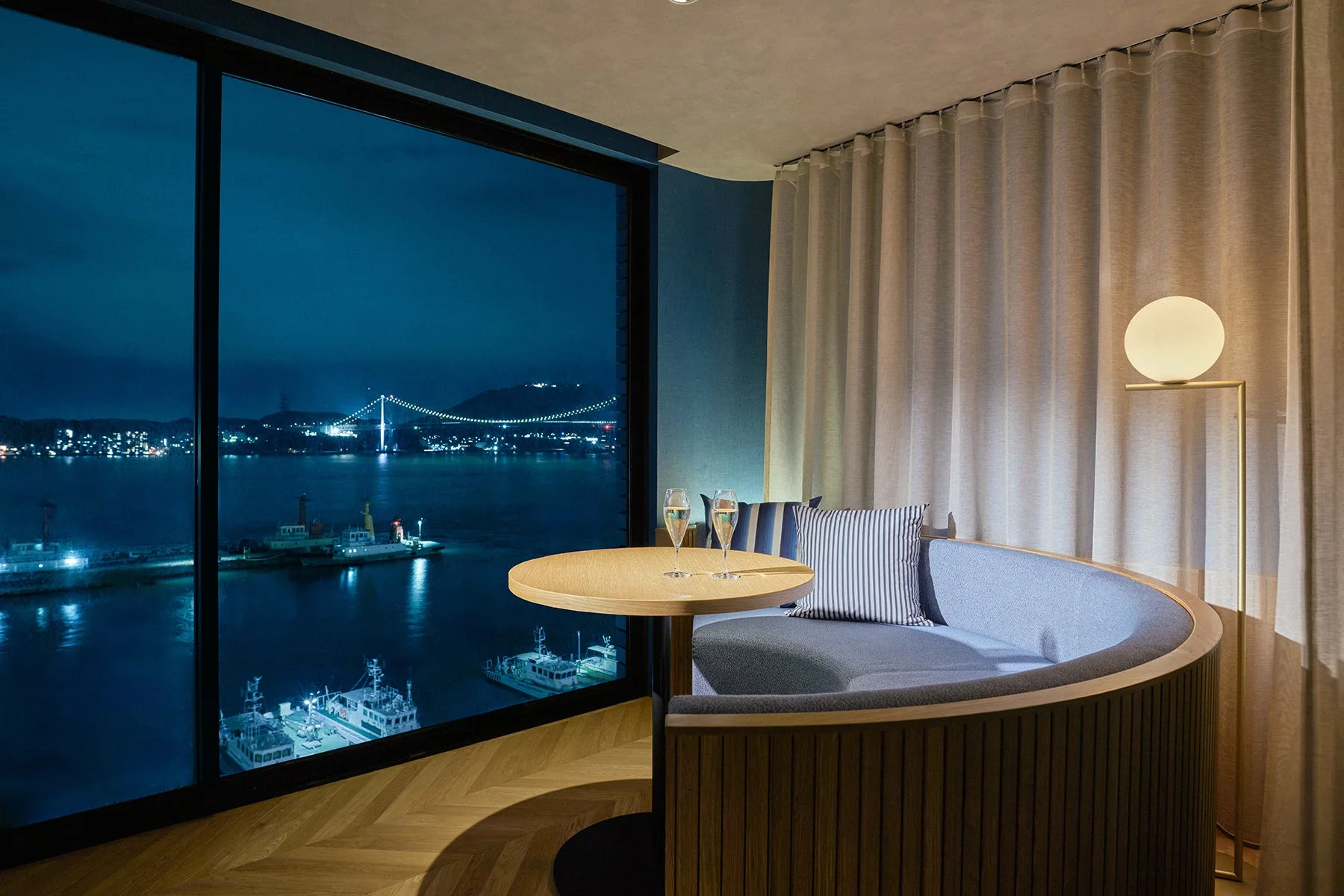
Image: Hoshino Resorts press release.
The Strait View Sauna Room with Terrace is a distinct product because it includes a private dry sauna and outdoor space. It can make the room itself an evening activity when companions plan to stay in. Paying for it makes less sense if everyone returns only to sleep. Likewise, a group of four should assess beds and usable sitting space rather than relying on the maximum occupancy number alone. The public bath exists for ordinary hotel guests, so a private sauna should earn its own premium.
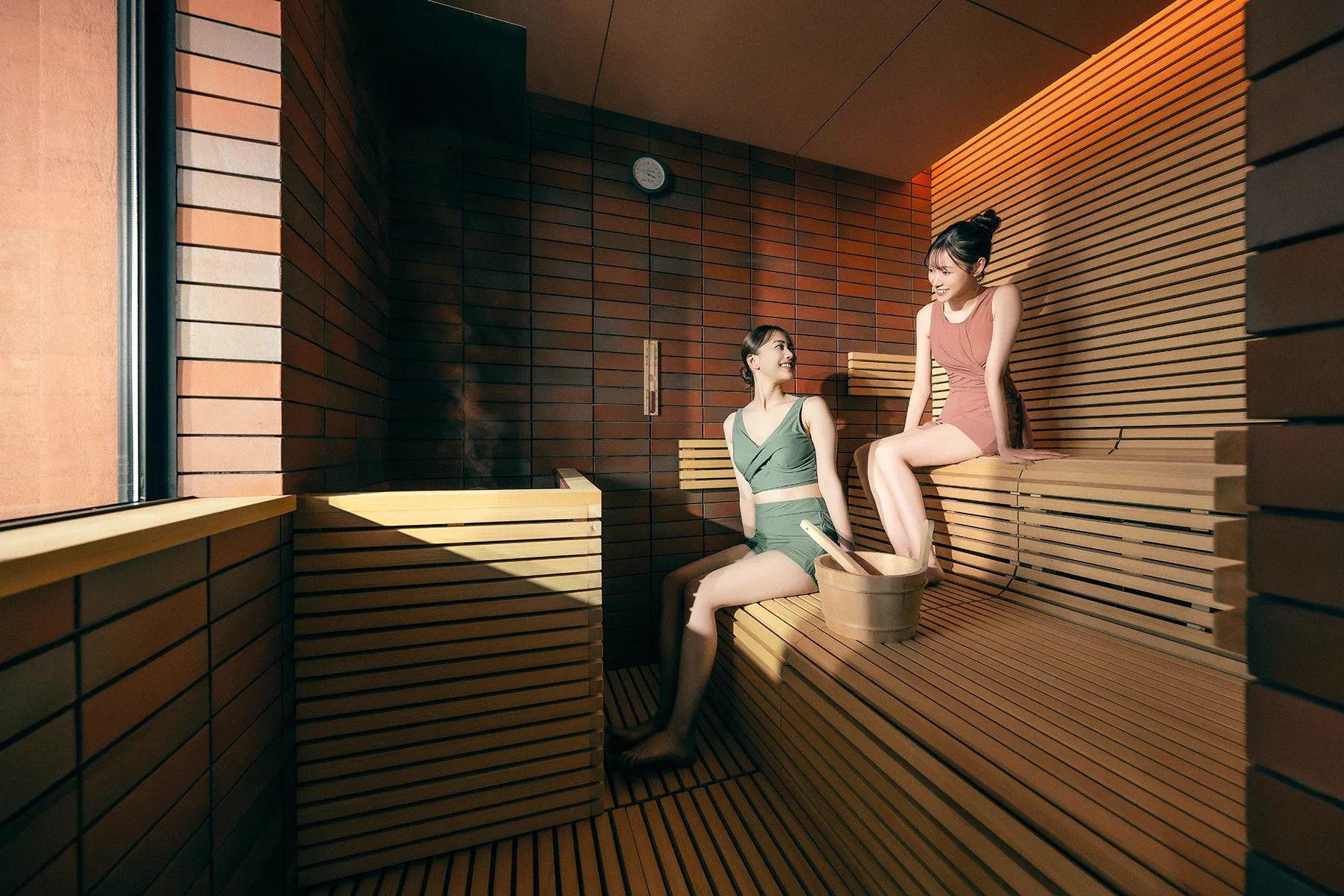
Image: Hoshino Resorts press release.
Bath time and late lounge time have different clocks
The top-floor semi-open-air grand bath looks over the water and is included for staying guests. Current bath hours are 15:00–01:00 and 05:00–10:00. It is a scenic public hotel bath; the hotel’s facility description does not establish that the water is a natural hot spring. A Kyushu route that already includes a Beppu or Yufuin onsen night should value Mojiko’s bath as a convenient post-walk reset, not as a replacement for that destination.
The split bath schedule is unusually useful to a one-night stay. Someone who arrives before dinner can bathe after the waterfront has gone dark; an early riser can return before checkout even if the first evening was spent with friends. The bath is shared, however, so a guest who is uncomfortable with communal bathing should not count both windows as benefits. A private sauna room answers a different preference, but that room category needs its own price comparison.
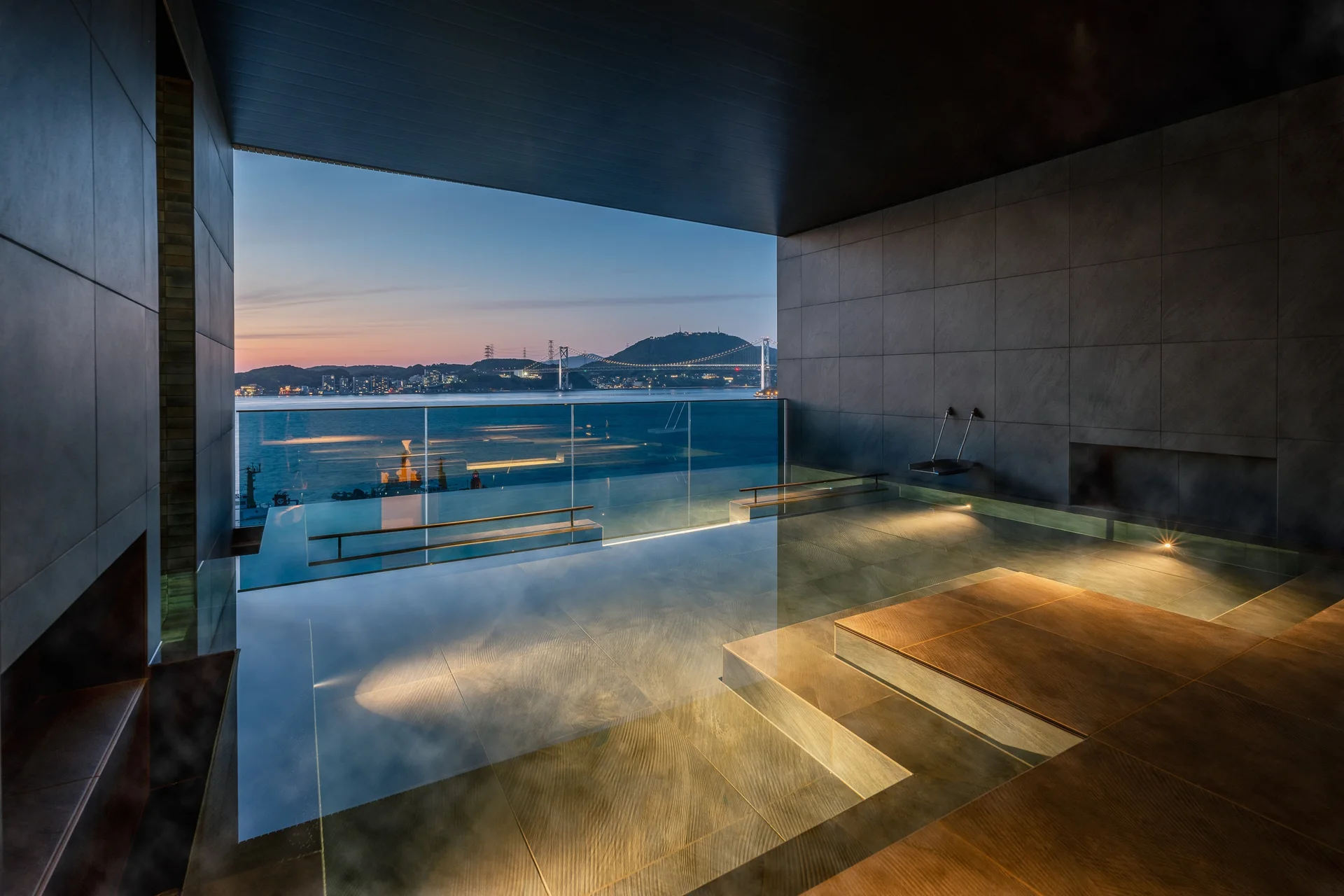
Image: Hoshino Resorts press release.
By contrast, the Retro Night Lounge’s 21:00–00:00 programme is a social space with Taisho-era styling, café treats and a vintage typing activity. Entry is free for guests, while drinks and café items are separate purchases. TAMARIBA can also be used as a shared place to sit outside those programme hours. The terrace and lounge offer different ways to spend the night: one takes advantage of the water and bridge, the other gives a place to return to after a town dinner.
A photograph of the empty lounge does not prove how lively a particular weeknight will be. If the social element is decisive, plan to enjoy the space with your own companions rather than depending on an unknown crowd. A quiet terrace remains worthwhile to someone who wants ships and the lit bridge; a group that wants a late café atmosphere may prefer the lounge. These are separate reasons for the hotel, and neither requires a premium room category.
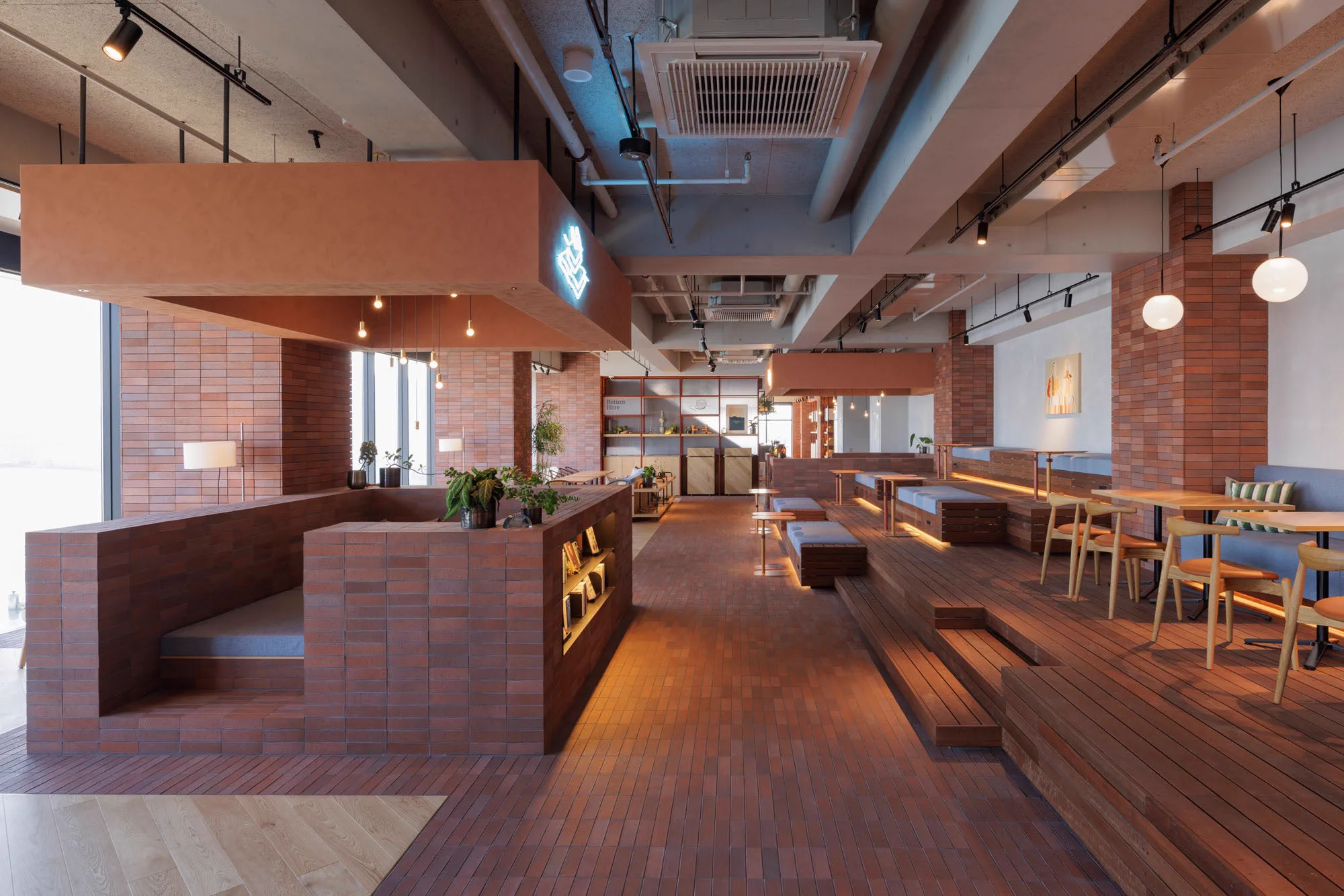
Image: Hoshino Resorts press release.
The hotel activities page lists the bath, Sunset Hour, lounge, 24-hour MIZUBA terrace and private-sauna room. Sunset timing and any special-event access restrictions should be checked against the travel date. A one-off fireworks restriction from an earlier year does not describe ordinary access for the rest of the season. The same principle applies to the bath and lounge: a listed daily hour is useful for planning, but a special event can temporarily alter it.
Dinner and breakfast can help or crowd out the port
The current Noodle Bar Buffet serves dinner from 18:00 to 21:00, with last orders at 20:30. Posted charges are ¥4,000 for adults and ages seven to eleven, ¥2,000 for ages four to six, and free for younger children. Adult dinner reservations must be arranged in advance, by noon on the day before the stay through the hotel’s booking process; on-site additions are limited to children aged four to six. Those are restaurant terms, so compare them with the exact meal plan in any room offer.
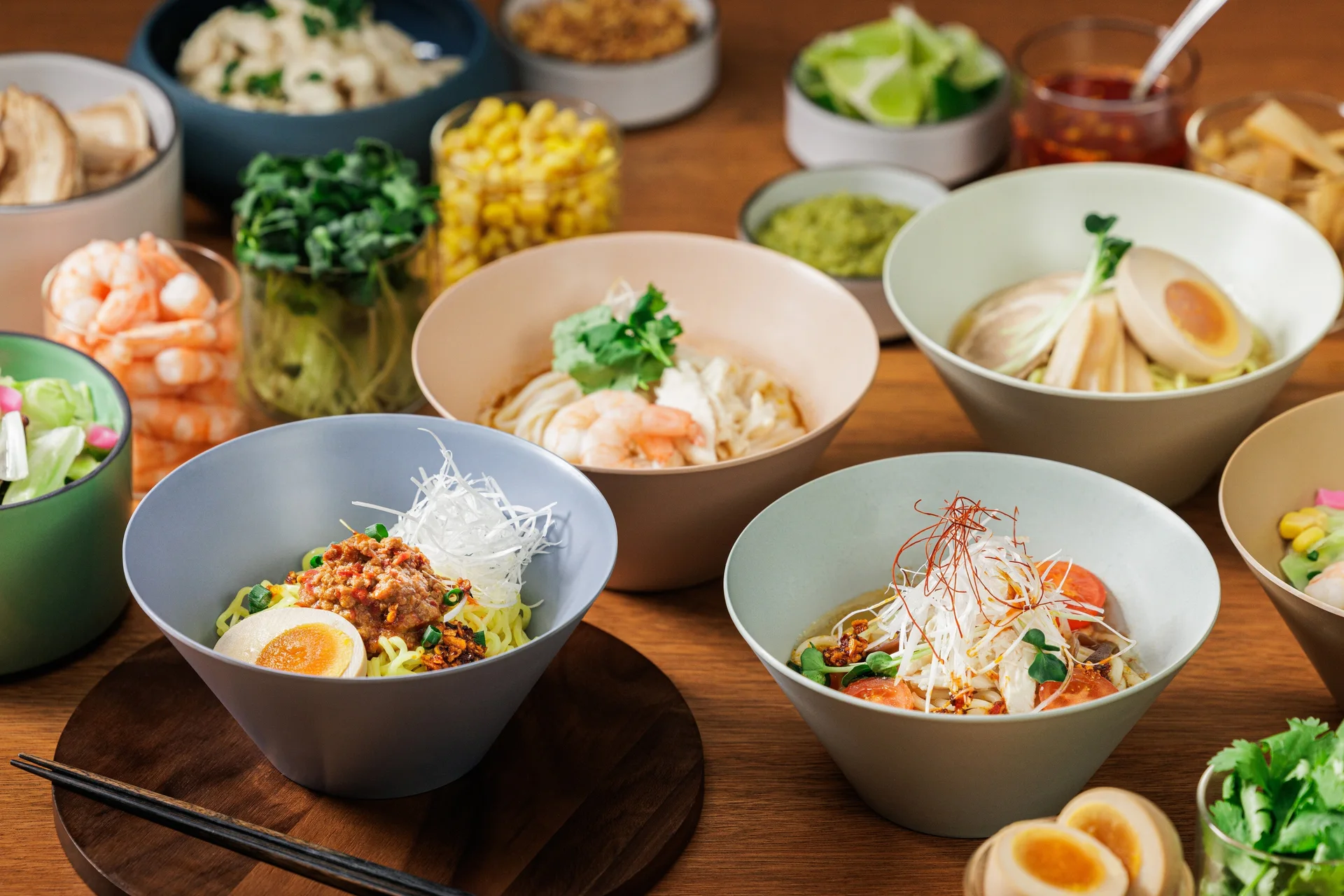
Image: Hoshino Resorts press release.
Guests may bring outside food and drink into TAMARIBA. That makes a local baked-curry dinner followed by hotel lounge time a feasible alternative to the buffet. The hotel does not need to provide every meal for the overnight to work. If the buffet itself appeals to your group, its 18:00–21:00 window should be planned around sunset; the meal and terrace programme can compete for the same stretch of time.
Breakfast is listed for 07:00–10:00, with last entry at 09:30. The posted adult and ages-seven-to-eleven price is ¥2,300; ages four to six are ¥1,150, and ages zero to three dine free. There is no advance breakfast reservation requirement in the dining information. A leisurely breakfast suits a late ferry or second Mojiko morning. If Karato Market or another Shimonoseki stop is the main purpose of sleeping here, breakfast may consume the very morning you intended to save.
Karato is five minutes away on the water, weather allowing
Kanmon Kisen lists the Mojiko–Karato crossing at about five minutes, with an adult one-way fare of ¥400 and frequent daytime departures. That makes a sensible sequence possible: arrive in Mojiko on day one, spend the afternoon in the historic district, keep sunset and the evening, then cross to Karato or Shimonoseki on day two. The ferry changes the next day’s starting position; it is a stronger reason for an overnight than collecting extra attractions merely to justify a room.
Ferry departures are subject to weather and operational changes. Keep the rail route through Kokura in mind as a fallback rather than treating a five-minute boat ride as guaranteed. If a crossing is essential for a fixed appointment, check the live timetable near departure. The Kanmon Strait Museum comparison can also help decide whether to spend more time on the Mojiko side before crossing.
The crossing is short, but a morning still has three parts: getting from the hotel to the pier, allowing for the next sailing, and walking onward after Karato. A hotel near Mojiko Station reduces the first part without removing the other two. If your interest is Karato’s market, examine its operating day and the timing of the specific stalls you want before purchasing breakfast at the hotel. A rushed ferry crossing solely to claim you visited both shores is a poor exchange for a relaxed waterfront morning.
There is another shape to the journey if you plan to continue by rail. You could leave luggage at the hotel while walking Mojiko in the morning, collect it, then travel through Kokura to the next city. If you cross to Shimonoseki with all bags, onward rail and luggage handling may take more work. The room’s proximity to the station matters when deciding which shore to visit before checkout, particularly for a group with large cases. Treat the ferry as a helpful route option, not an automatic shortcut for every onward destination.
How many nights belong on the strait?
For a first visit, one afternoon, one evening and one morning usually capture the part a day trip misses. A second night needs an actual second-day programme: Shimonoseki and Karato, museums, a slow port day or another Kitakyushu interest. Otherwise the night competes with Fukuoka, Nagasaki, Yufuin, Beppu or another Kyushu stop that would change the trip more. Compare the Fukuoka versus Yufuin extra-night decision if the route is still flexible.
Rain or strong wind can weaken a waterfront walk, sunset view or ferry plan. The shared lounge, restaurant and bath still give an overnight some indoor value, but the booking is less compelling if the only reason for the rate was a sunset outdoors. Cancellation terms deserve attention when the whole night depends on that atmosphere. A cheaper non-refundable room is not automatically better value if a forecast change would leave you wishing to skip the stop.
The decision changes across a wider Kyushu itinerary. A traveller with three nights for Fukuoka city may lose a full urban evening by moving to Mojiko, and another morning by reversing the journey. In that case the three-day Fukuoka route is a better first framework than the hotel photograph. By contrast, a route already moving north from Fukuoka through Kokura toward Shimonoseki can place Mojiko between destinations without a backtrack. The same room therefore carries a different transport cost in two otherwise similar trips.
For companions, the night should have a shared purpose. A couple may want a quiet bridge view from the room and a late bath. Friends may use TAMARIBA and the evening programme after a town meal. A family with young children may need to be back before the 21:00 lounge event, making the earlier sunset and an easy station walk more valuable. The hotel allows one child aged six or younger to share a bed per adult, but that policy is no substitute for checking the exact bedding in a one-to-four-person room. Two adults and two children have a different layout problem from four adults.
Driving introduces a different comparison. The hotel lists 25 on-site parking spaces at ¥1,100 and a larger Kanmon Kaikyo Museum option at ¥800 using the hotel voucher. These are posted parking arrangements rather than guaranteed availability for every arrival. Rail guests can reach the property on foot from Mojiko Station and avoid that question. Drivers should include parking and the next day’s route in the rate comparison, especially if they will cross the strait by ferry as passengers while the car remains on the Mojiko side.
Seven things to compare before you book
↔ Scroll table left or right
Dimension | Evidence and decision |
Access | JR Mojiko Station is about four minutes on foot; Kokura is stronger for an early Shinkansen. |
Space | Rooms accept one to four guests, all designed for strait views; inspect bedding and seating by category. |
Comfort | The included scenic bath runs late and early; the terrace sauna room offers a separate private amenity. |
Cleanliness | The hotel opened in July 2026, but opening date alone does not prove housekeeping consistency; compare recent stays. |
Neighbourhood | Mojiko’s waterfront and Karato ferry are the attraction; Hakata or Tenjin suit a city-centred Fukuoka trip. |
Service | Published bath, lounge and dining hours define access; response to specific guest needs needs current experience evidence. |
Value | Compare room, guests, meals and cancellation terms on the same dates, then count the evening and morning hours gained. |
Use the same room category, occupancy, meal inclusion and cancellation deadline when comparing rates. A private-sauna room and an ordinary strait-facing room are different products even if both belong to BEB5. The hotel’s water-facing concept gives the basic stay its appeal; a higher category should solve a distinct need. For a short Fukuoka trip with only a Mojiko daytime visit, keeping the main hotel is the simpler choice. For a dedicated Mojiko evening and a Karato morning, the overnight has a clear role.
The wider base decision should come before a room upgrade. Hakata versus Tenjin determines how easily your city stay handles airport arrival, food evenings and day trips. Once that base is set, ask whether moving to Mojiko changes the next day enough to pay for packing and another check-in. If it does, compare the actual BEB5 room types. If not, a day return from the main base may deliver the port without sacrificing a night elsewhere in Kyushu.
Further itinerary decisions:
Fukuoka 3-Day Itinerary · Hakata vs Tenjin: Where to Stay in Fukuoka · How Many Days in Fukuoka? · Nagasaki Day Trip or Overnight from Fukuoka
More places to compare: Kanmon Strait Museum · Lake Biwa Otsu Prince Hotel · Lotte Hotel Busan vs Arban Hotel · La'gent Stay Hakodate Ekimae · MiraCosta Balcony Room vs Harbor View: Is the Balcony Worth It? · Okinawa Ocean-View Rooms · Hilton Okinawa Chatan Resort Review · Lequ Okinawa Chatan Spa & Resort · Sapporo Shopping Hotels · Kushimoto Marine Park Is Worth the Detour — Just Don’t Let S…